Weekly Digest Number 20 - May 17th, 2022 |
|
Welcome to the RWU Rail & Labor News! This news bulletin is produced and emailed out each Tuesday morning. We hope you find each week's news and information useful. If so, please share with co-workers, friends, and colleagues. If you like, you can sign them up to get all the news from RWU HERE. Or forward them the link. Note: If you read over this news bulletin each week, you will be sure to never miss the important news of what is going on in the railroad world from a worker's perspective!
|
|
(Editor's Note: While the carriers are intent on achieving 2-person train crew operations, the movement to legislate 2-person train crew laws continues. The more states we can get to adopt such laws in the coming months, the harder it might be for any kind of "bargained agreement" to hold up.) |
|
New York Legislators Introduce State Bill to Require Two-Person Crews |
|
ALBANY, N.Y. — Legislators in New York state have introduced bills requiring two-person crews for most freight operations in the state.
Senate bill S3953, introduced by Sen. Timothy M. Kennedy (D-Buffalo), would require two-person crews for Class I and Class II railroads, except for those engaged in switching, and specifies penalties beginning at $250 to $1,000 for the first violation, escalating to as much as $10,000 for the third. The corresponding assembly bill, A1287B, was introduced by Assemblyman Bill Magnarelli (D-Syracuse).
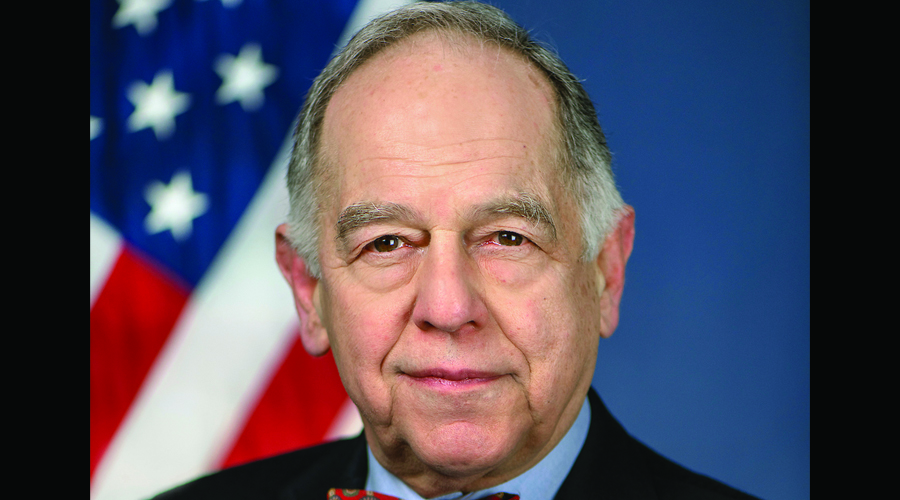
Both legislators introduced similar bills in 2020. At least seven states — Arizona, California, Colorado, Nevada, Washington, West Virginia, and Wisconsin — have passed such bills, and Amit Bose, administrator of the Federal Railroad Administration, has indicated longer trains warrant two-person crews
|
|
Renoites Interviews RWU General Secretary on the State of Rail Labor
|
|
Renoites - which describes itself as "Interviews on politics, culture, society, business, and much more with the most interesting and important people from in and around Reno, Nevada" sat down with RWU General Secretary and conducted this interview in early May. The interest in rail and rail labor by the media of all forms has skyrocketed in recent months, largely due to the mess that PSR has made of the nation's rail network, and accompanying disasters such as BNSF's "Hi Viz" attendance policy. Railroad workers have a great opportunity to get our side of the story out there! |
|
(Editor's Note: You may notice that while BNSF disputes the numbers, they refrained from providing their own figures for the number of workers who have resigned in recent months since the advent of the new attendance policy.) |
|
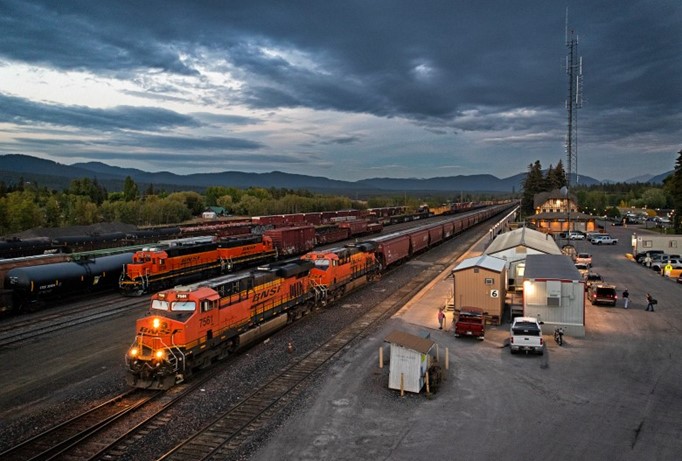
Railroaders Quit After BNSF Institutes ‘Draconian’ Attendance Policy
Union officials say hundreds of people have left the railroad in the last three months, adding to BNSF’s struggles to move freight through Montana.
|
|
Brady Wassam knew what to expect when he took a job on the railroad. Wassam, 30, of Columbia Falls, came from a family of railroaders who have spent years moving freight over the mountains of northwest Montana.
“It’s a family affair [and] I knew what I was getting into,” he said. “I knew I would get called to work in the middle of the night. I knew I’d have no regular schedule. I knew that because that’s how my family lived.”
Freight trains don’t usually run on a set schedule and they don’t stop moving just because it’s a weekend or holiday. However, on the flip side of that unpredictable lifestyle was the fact that for many years railroads could provide workers with great compensation and benefits without requiring a college degree. The good pay and benefits were the reasons Wassam hired on back in 2014.
But Wassam says working conditions on BNSF Railway, one of the largest railroads in the country, have worsened in the last few years, and the introduction of a new attendance policy earlier this year — one union officials have called “the worst and most egregious attendance policy ever adopted by any rail carrier” — was his last straw. He resigned in March and he’s not alone. In the last three months, more than 700 railroaders have walked off the job at BNSF because of it, according to the union.
“It felt offensive,” Wassam said of the new attendance policy. “I gave so much to this job, and this new system made it seem like it wasn’t enough.”
CHAOTIC SCHEDULES
Federal law mandates that locomotive engineers, conductors and other railroad employees work no more than 12 hours a day and have a minimum of 10 hours off between shifts. But even with those hours written in stone, working for the railroad can be a chaotic existence — one day an engineer might go to work at 9 a.m., and the next day they might start at 5 p.m. Not to mention the fact that half the time they would be spending their off time away from home, taking their 10 hours rest and waiting to take another train back to their home terminal. Wassam said the unusual hours made living a normal life nearly impossible, even more so with a family.
“You give up so much when you work for the railroad, but it impacts your family even more,” he said, adding that for years he’s never known if he’ll be able to be home for holidays and other special events.
|
|
(Editor's Note: This is a start, but only a start. At least it is something, but it is going to take a lot more than this to get the nation's freight rail carriers back on track.) |
|
STB to Class I’s: ‘Industry-Wide Transparency, Accountability, and Service Improvements’ |
|
On May 5 - a little more than a week after its April 26-27 “Urgent Issues in Freight Rail Service” hearing - the Surface Transportation Board, voting unanimously, has issued updated, more-comprehensive rules for reporting performance and employment metrics. The eight-part regulations, which mostly affect the “Big 4”—BNSF, CSX, Norfolk Southern and Union Pacific—include filing of service recovery plans by May 20, followed by frequent progress reports and biweekly conference calls with STB staff.
“The Board is requiring service recovery plans and progress reports from the four largest U.S. rail carriers and is directing those carriers to participate in biweekly conference calls to further explain efforts to correct service deficiencies,” STB summarized. “The Board is also requiring all Class I rail carriers to report more comprehensive and customer-centric performance metrics and employment data for a six-month period. In response to concerns raised at the recent hearing and related communications, the Board is taking this action to inform its assessment of further actions that may be warranted to address the acute service issues facing the rail industry and to promote industry-wide transparency, accountability, and improvements in rail service.”
|
|
(Editor's Note: It appears that Canadian regulatory agencies are following a similar path that STB is blazing in the U.S. There - like here - hopefully this is only the beginnning. ) |
|
Canadian Regulators Propose More Detailed Requirements for Reporting Railroad Performance Metrics |
|
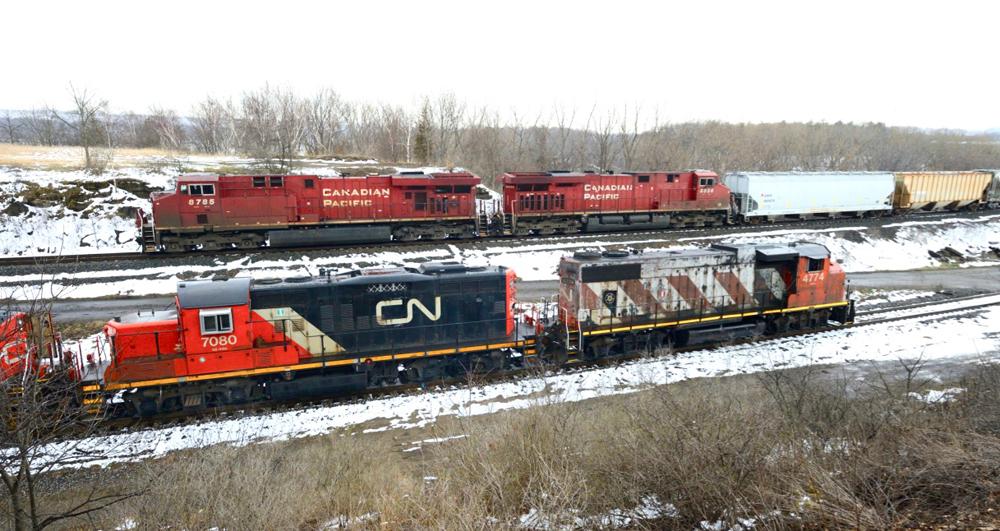
The U.S. regulations were issued after a two-day hearing last month on rail service issues faced by the four American Class I railroads, BNSF Railway, CSX Transportation, Norfolk Southern, and Union Pacific, all of which are experiencing shortages of train crews.
Transport Canada said its proposed amendments to Transportation Information Regulations would “enhance the transparency and competitiveness of the freight rail system.”
“Having access to more detailed service and performance information for Canada’s rail sector would contribute to even more productive exchanges among supply chain members, as they work to move Canadian goods in support of Canada’s future economic success,” Transport Minister Omar Alghabra said in a statement.
|
|
(Editor's Note: This segment aired in late April on 90.1 FM, KKFI in Kansas City. They do a great job with Labor Radio every week. It is well worth tuning in!) |
|
Remembering the Railway Shopmen’s Strike and What’s the State of Current Rail Negotiations? |
|
The railroad segment starts at 12:00 minutes into the show.
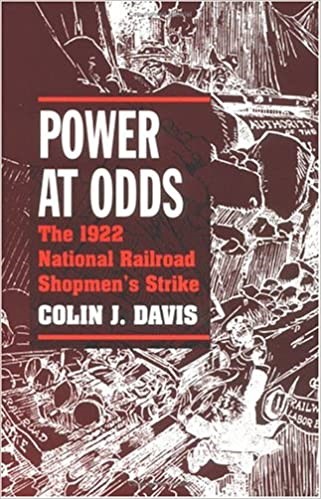
In 1922 Railway shopworkers went on strike against wage cuts and union busting in the largest and most violent rail strike of the 20th Century. This week on the Heartland Labor Forum, we’ll mark the centennial of the Railway Shopmen’s Strike then talk about the current rail negotiations that have dragged on for two years with no raise for workers. The carriers still want to one-man crews on a train.
|
|
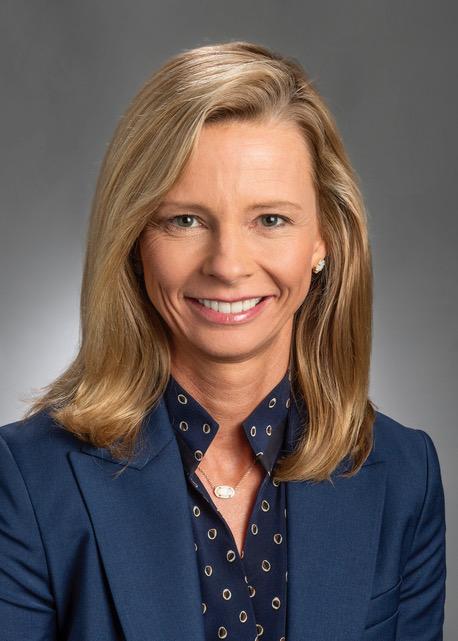
(Editor's Note: BNSF CEO Katie Farmer has opted to run point for the single person crew push by the Class One carriers. She is using the same disingenuous arguments made by industry hack Frank Wilner eight years ago when the BNSF last attempted to shove single crew operations down the throats of unwilling BNSF workers, claiming that PTC should allow BNSF to operate "just like many parts of the world, just like with Amtrak, just with commuters, to operate with one person in the cab of a locomotive. What she and Wilner both fail to mention is that the operations referenced are very different from Class One freight operations. See an updated version of an article written by the RWU General Secretary in 2014 that is as applicable to today's absurd comments by CEO Farmer as they were in 2014 in response to Wilner's drivel. READ ARTICLE HERE.)
|
|
BNSF Taking ‘Aggressive Measures’ to Restore Service, CEO Farmer Says |
|
..... Addressing a different aspect of the railroad’s labor situation, Farmer said recent history shows negotiations for a new national labor contract is a two- to three-year process, although that timeline has been extended in the current negotiations by pandemic-related delays. She said BNSF was setting aside funds for raises in anticipation of an agreement.
But she also reiterated the industry’s desire to move to one-person crews, which is a sticking point in those negotiations.
“Railroad jobs, as most jobs, have always evolved over time,” Farmer said. “At one point we had five employees on our trains … As new technologies have become available to us, once implemented, it changes the face of work.”
And she linked BNSF’s positive train control efforts its efforts to introduce the one-person crews, noting that the railroad has installed the safety system beyond what was required by federal law. “We’re actually at the point right now where fully 93% of all of the volume that moves on our railroad has positive train control as a safety overlay,” she said. “And what that allows us to do is it allows us, just like many parts of the world, just like with Amtrak, just with commuters, to operate with one person in the cab of a locomotive.....”
|
|
Story of Black Rail Workers Inspired by Historical Events told in New Drama “The Porter” |
|
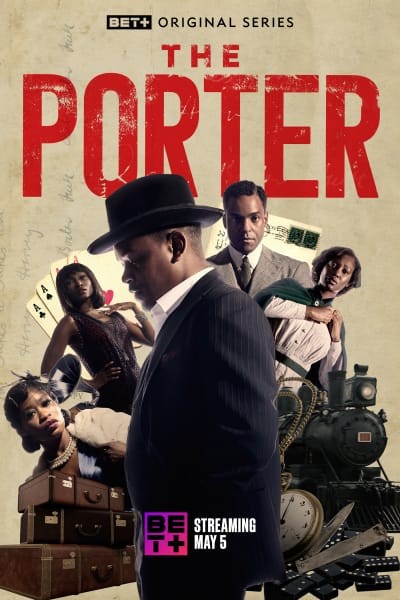
Set in the early 1920s, “The Porter” follows the journeys of train porters who hustle, dream, cross borders, and pursue their ambitions in the fight for liberation as they traveled the railways across North America. It is a gripping story of empowerment and idealism that highlights the moment when railway workers from both Canada and the United States joined together to give birth to the world’s first Black union. Set primarily in Montreal, Chicago, and Detroit as the world rebuilds after the First World War, THE PORTER depicts the Black community in St. Antoine, Montreal – known, at the time, as the “Harlem of the North.”
THE PORTER follows train porters Junior Massey and Zeke Garrett and their friends and families as a tragedy on the job sets them on starkly different paths to better lives and on a direct collision course with each other. One chooses to exploit the racist system by getting involved in crime and bootlegging and the other wants to inspire change by forming a union. The result will test their friendship and their choices could put each of their lives in jeopardy....
...Intertwined in “The Porter” is a historical story of how the first Black labor union was created and the pitfalls of crime, prohibition, and racism in the early 1920s. Pullman Porters were deeply respected in the community but faced racism and economic hardships at work. In 1925, they formed a Union, “The Brotherhood of Sleeping Car Porters” with activist, A. Phillip Randolph as their president. It was the first Black labor union in the country. They fought for higher wages, overtime pay, fairer hours, and workplace safety.
|
|
(Editor's Note: After nearly a quarter century of Hoffa rule, the opposition slate was overwhelmingly elected last fall and seated in March. This important development is of interest to railroad workers as two of the biggest unions in rail - the BLET and the BMWED - are affiliates of the Teamsters union.) |
|
The Teamsters: A New Era? |
|
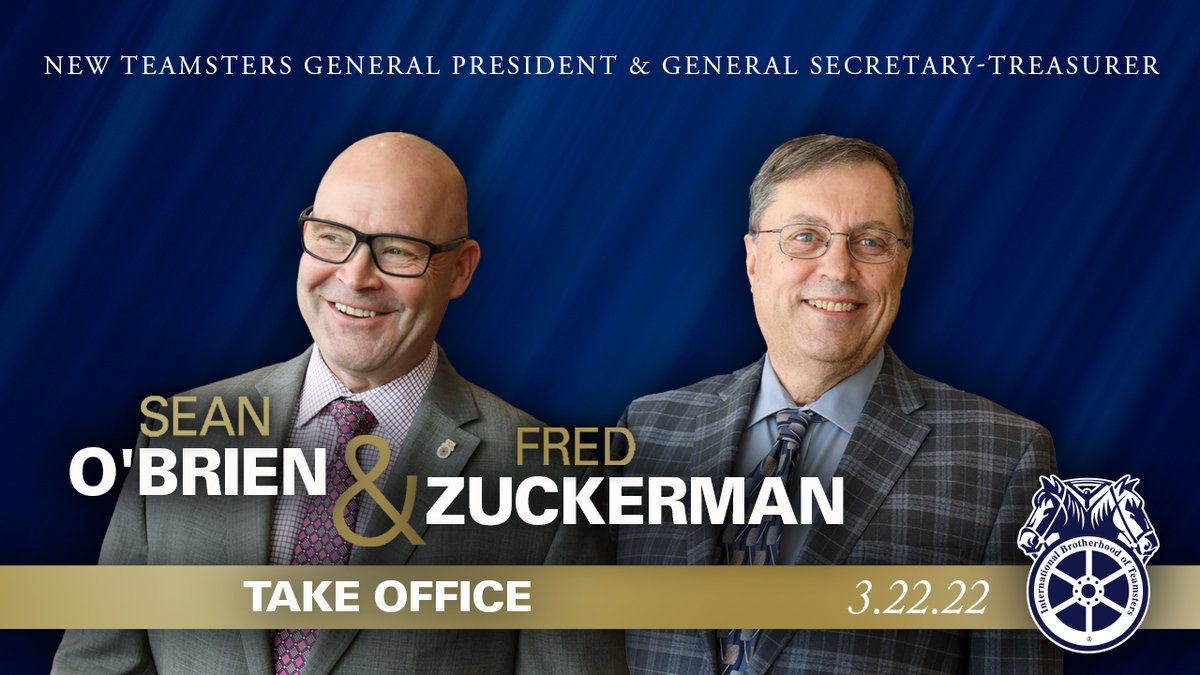
Sean O’Brien and Fred Zuckerman—respectively the newly-elected General President and General Secretary-Treasurer of the Teamsters — have raised expectations across the political spectrum. Throughout their campaign, and at the recent swearing-in-ceremony on March 22, coverage has focused on the possibility of greater labor militancy. Typical was CNN Business with their headline story, “This new union boss could start the biggest strike in decades.”
The primary target of this potential militancy is United Parcel Service (UPS), the largest Teamster employer in the United States. The O’Brien-Zuckerman Teamsters United slate won a landslide victory over the Steve Vairma’s Teamster Power slate last year largely because of their opposition to the hated 2018 national UPS contract. Vairma was the anointed successor to long time Teamster leader Jim Hoffa, whose two decades in office witnessed stagnation and across the board concessions in booming industries, especially logistics, and most notably at UPS. The O’Brien-Zuckerman leadership are expected to produce a different outcome in the upcoming 2023 contract negotiations with UPS.
O’Brien and Zuckerman’s victory, however, was tempered by the lowest turnout in rank-and-file voters since 1991, an example of how two decades of stagnation under Hoffa has impacted the membership. Cynicism is widespread in the union but there is also an eagerness for vitality to return to the union, some of which is born out of desperation. There is a widespread feeling that the Teamsters have to change or face increasing marginalization as a national union in the logistics and transportation industries.
Yet, how much change can be expected from a new leadership team that only a few years ago were some of Hoffa’s most vigorous supporters, and largely jumped ship to the opposition to preserve their leadership positions in the union?
|
|
(Editor's Note: As a member organization of the Rail Passengers Association, RWU has pushed for RPA to extend the olive branch to unions, environmental groups and social justice organizations, all of which are great potential allies in the struggle for expanded and better passenger - and freight - train service. This latest development is encouraging. Rail workers should register for the webinar.) |
|
WEBINAR: "Heavy Rail Gets Green: How Modern Passenger Train Systems Can Partner with the Environmental Movement" |
|
Wednesday, May 25th at 3 PM ET
Creating an environmentally sustainable transportation network in the U.S. will require a massive reconfiguration of the nation’s physical infrastructure. However, building this network will place its own stresses on the environment—through the construction of viaducts, electrical transmission systems, and other infrastructure elements.
These improvements will also need to navigate lengthy federal and state environmental reviews. This process has been misused by well-meaning environmental groups and abused by bad-faith opponents of passenger rail and transit. The result, however, is the same: delaying construction timelines by years and costing taxpayers hundreds of millions of dollars in unnecessary delays.
Join us on Wednesday, May 25th at 3pm Eastern for our webinar “Heavy Rail Gets Green: How Modern Passenger Train Systems Can Partner With the U.S. Environmental Movement”, where the Rail Passengers Association will explore these issues from an advocacy perspective. We’ll talk with the people who are actually building cutting-edge passenger rail corridors, learn how they’re using advances in engineering to mitigate the environmental impact of construction, and discuss strategies to educate stakeholders to ensure these critical projects can move forward.
We’ll be joined by:
- Margaret Cederoth, Director of Planning and Sustainability, California High-Speed Rail Association
- Dr. Christina Aiello, Wildlife Ecologist and Postdoctoral Fellow, Oregon State University
- Sierra Club Representative (invited)
Registration will close Monday, May 23rd at Midnight eastern. Space, as always, is limited to 475 participants, so reserve your spot now.
Plan on attending? Submit your questions! Send in your topic specific questions to Madison Butler at mbutler@narprail.org with the subject line "Environment Webinar" to be answered during the event. Questions will be due by Friday, May 20th.
|
|
(Editor's Note: This of course is the same CEO that was extremely disrespectful at the recent STB hearings, who at one point blurted out, "we could solve the staffing crisis tomorrow if you let us run trains with one person." Note that he blames the government for the problems between labor and management. This, after his company has hammered its employees mercilessly for the last 4 or 5 years. All in all, the article is barely worth reprinting, but we do because of the comments that follow it. They are mostly from railroaders, represented and non-represented. Many of them are excellent. Please read them.) |
|
CSX’s Foote Calls for Fundamental Change in Relationship With Union Workers |
|
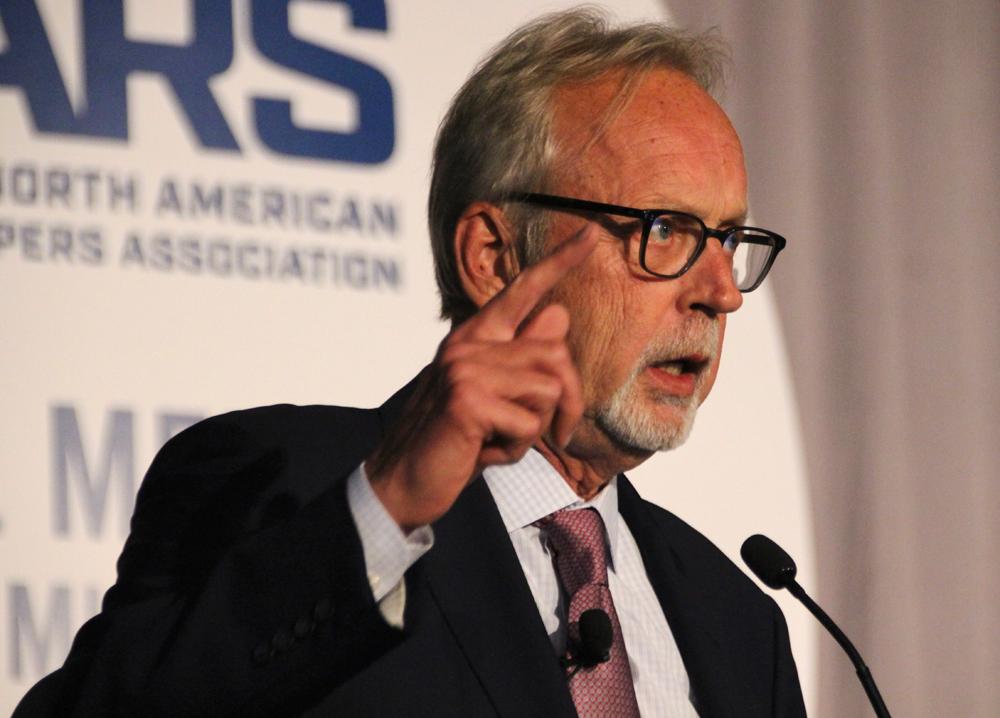
KANSAS CITY — The 40 or so union rail employees picketing outside the site of the National Rail Shippers Conference, unhappy over their lack of a new national contract, might have been surprised by the message delivered inside by CSX Transportation CEO Jim Foote.
They might have welcomed it, too, if not for the adversarial relationship that Foote himself says means employees don’t trust their managers.
Railroads, Foote said, need to rethink the nature of their jobs. They need to fix that adversarial relationship. And they need to actually negotiate.
“Lesson learned,” he said, having earlier related in detail the railroad’s long-running — and still ongoing — effort to reach the same level of 7,100 train and engine employees it had during the pandemic. (He now estimates it will happen in the third quarter of 2022.) “People don’t want to work in the railroad business any more. People don’t like to work weekends. People don’t like to work nights. People like to go to their kids’ birthdays. People like to be home for Christmas.
“We need to fundamentally review and understand the jobs that we offer to our employees. And I’ll tell you, it isn’t just about money. There’s been a mindset and a change in the world about what people want from the people they work for, and we need to change. And I’m talking about, primarily, that we need to change for the 85% of people who work for me that are in the union.”
The adversarial relationship, he said, stems from the Railway Labor Act and the Federal Employers Liability Act.
|
|
NS Train Derails Near Springfield, Ohio |
|
MAD RIVER TOWNSHIP, Ohio — No injuries were reported when a Norfolk Southern train derailed Thursday evening southwest of Springfield, Ohio.
NS reports preliminary information indicates 20 cars are involved. Crews were on hand as of Thursday night to begin rerailing equipment and clearing the scene, with additional support en route.
Firefighters responded to a report of the derailment about 5:30 p.m. Drone video footage from WHIO-TV shows a number of auto racks among those derailed, with some ending up partially in the Mad River.
The NS line involved is a former Conrail route between Columbus and Cincinnati.
|
|
|
|
|
|
|