Dear Angelenos:
As the largest planning department in the United States, we stand in solidarity with the Black community in Los Angeles and across the nation. We are devastated and hurt by the senseless deaths of George Floyd, Breonna Taylor, Ahmaud Arbery, and countless others.
We all play a role in either perpetuating or calling out systemic racism. Many land use policies and zoning practices over time have reinforced racial segregation, poverty, environmental injustice, disinvestment, and poor health outcomes that we still live with today. We cannot hope to right these wrongs without acknowledging the planning profession’s shameful role in contributing to them over the decades.
This year is the 100th anniversary of the Department’s founding. Looking back at our history forces us to reckon with the often painful legacy of planning in Los Angeles and its contributions to the disparities we struggle with today. Many of us, including the younger planners who represent the next generation of the profession, joined the Department in order to address these very inequities. As a Department, we are taking steps to reflect on our work within this diverse City and confront issues of structural racism and implicit bias.
I invite you to read our
full statement on the course we are charting for a more fair, just, and equitable Los Angeles in the years to come.
Sincerely,
|
|
Vince Bertoni,
Director of Planning
|
|
|
|
Second Court of Appeal Rules in Favor of City of Los Angeles’s Housing Practices
|
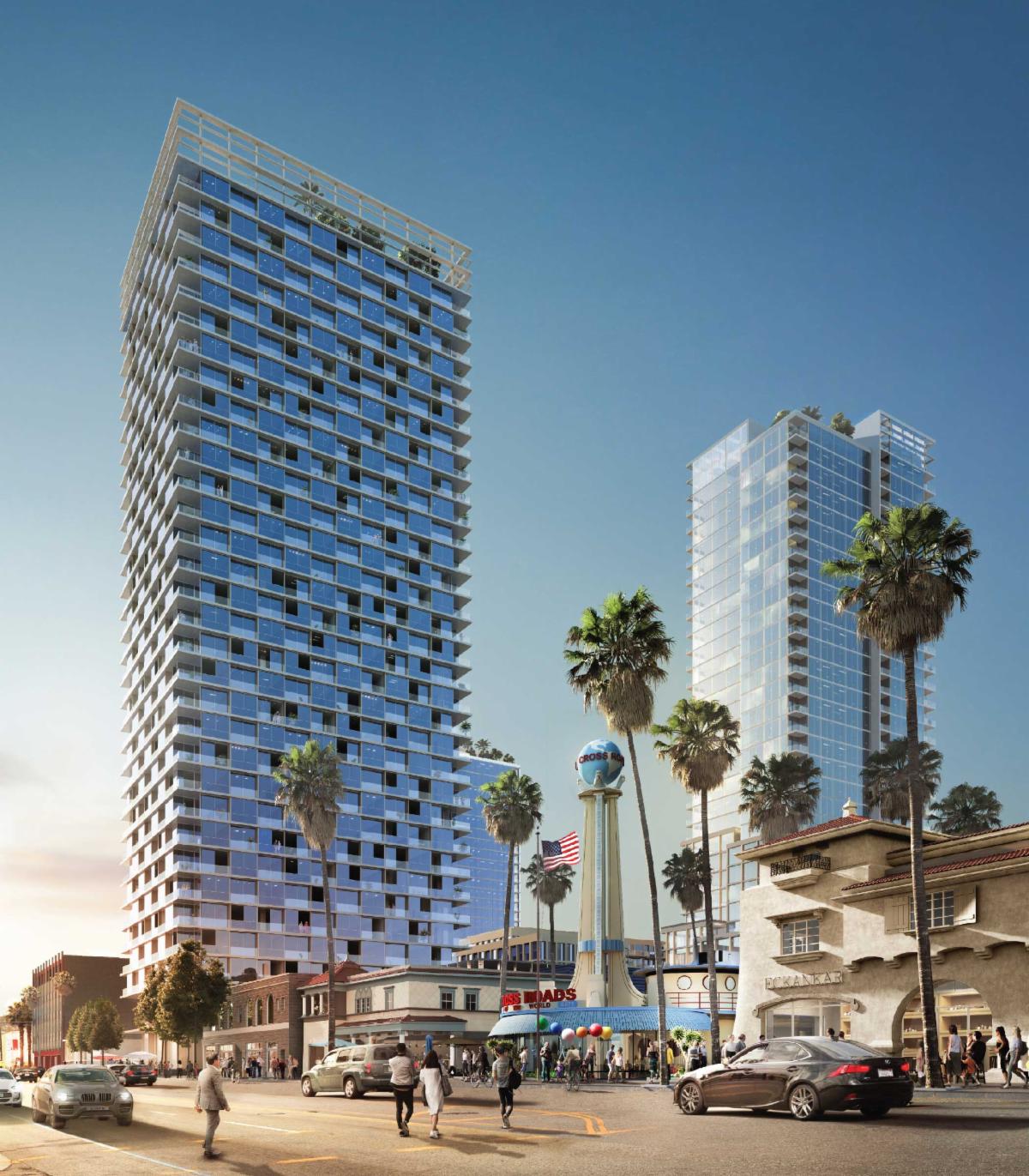
In a decision published on June 15, the Second Court of Appeal affirmed a trial court’s ruling in a high-profile case brought by the AIDS Healthcare Foundation (AHF). In a lawsuit against the City, the AHF alleged that Los Angeles had violated the federal Fair Housing Act.
Ultimately, the Court of Appeal sided with the City, having found that AHF failed to state a cause of action for violation of the Fair Housing Act. The court also found that the approval of the four projects named in the lawsuit (Crossroads Hollywood, the Palladium, Sunset and Gordon, and 6400 Sunset) add affordable housing units to the area’s existing supply, and therefore does not present an “artificial, arbitrary, and unnecessary barrier” to housing for minorities. Moreover, the Court of Appeal held, “declaring the City’s approval of the Projects void will serve only to reduce the number of existing income-restricted housing units, rather than provide greater access to affordable housing, as contemplated by the FHA.”
Collectively, these four projects will result in a net gain of more than 2,000 new housing units―nearly 10 percent of which are reserved as affordable. As Los Angeles recovers from the events of COVID-19, ensuring the availability of additional housing units will be of paramount importance to both the short- and long-term interests of its economy.
|
|
|
|
City Planning Commission Recommends Approval of Restaurant Beverage Program
|
On June 25, the City Planning Commission (CPC) recommended approval of the City’s proposed Restaurant Beverage Program Ordinance. If adopted, the ordinance would establish an administrative clearance process for sit-down restaurants seeking permission to serve alcohol.
The ordinance is intended to streamline the approval process for neighborhood-serving restaurants, saving local businesses both time and money. Rather than applying for a Conditional Use Permit, which takes an average of eight months to process and can cost as much as $13,000, eligible restaurants would be allowed to file for an administrative clearance that would cost approximately $4,000 and take as little as three to four weeks to process. To mitigate potential negative impacts associated with alcohol-serving establishments, City Planning developed eligibility criteria that limit the number of patrons, operating hours, and activities permitted at participating restaurants. The program also includes strict standards to hold participants accountable.
The City Council’s Planning and Land Use Management (PLUM) Committee will consider the proposed Restaurant Beverage Program Ordinance in the coming months.
|
|
On June 5, Director of Planning Vince Bertoni sat down with
LA Cityview 35
’s Maria Hall-Brown to discuss how City Planning has adapted in the time of COVID-19, outlining the steps the Department has taken to address the ongoing housing crisis and the ways it is pushing for equitable, socially conscious changes through its policies and programs.
In the months following the stay-at-home orders, City Planning has streamlined a number of services, such as digitizing application material to minimize in-person contact and providing immediate access to project files online. Beyond simply automating certain services, these enhancements showcase the Department’s commitment to transparency.
|
|
CCA Kitchen Cabinet Meeting
|
On June 17, City Planning's Executive Officer Kevin Keller joined Osama Younan, General Manager of the Los Angeles Department of Building and Safety, and Orin Saunders, Assistant Chief of the Los Angeles Fire Department, for a discussion of development issues as part of the Central City Association Kitchen Cabinet Meeting.
City Planning's update focused on the Department's response to
COVID-19
, including the introduction of online payment systems, pre-application services, CEQA postings, and remote public hearings. These measures put Angelenos' health and safety first while continuing to provide important City services.
Kevin Keller also shared the latest on City Planning's long-range planning efforts, including the updates to the City’s
Housing Element
and the
Downtown Community Plan
. The discussion reviewed the influence of the Regional Housing Needs Assessment (RHNA) and the Regional Transportation Plan (RTP) on the City's projected housing capacity.
|
|
Housing Element Update: Outreach Events
|
During the months of May and June, the Citywide Housing Policy Unit and the Housing + Community Investment Department facilitated five public webinars on the update to the General Plan's
Housing Element
. I
n total, the webinars drew more than 300 participants.
Each webinar followed the same sequence, including a question and answer portion with City Planning staff. To include more Angelenos in the process, two of the five webinars were held in Spanish.
Storymap versions of the workshop, posted online in
English
and
Spanish
, include a survey at the end to collect feedback from the public.
The Housing Element comprises one of the State-mandated chapters, or “elements,” of the General Plan. This policy document will play a pivotal role in future housing discussions, informing policies and goals over the course of the 2021-2029 calendar years. Housing Element outreach will continue through 2021. Send comments and questions to
housingelement@lacity.org
.
|
|
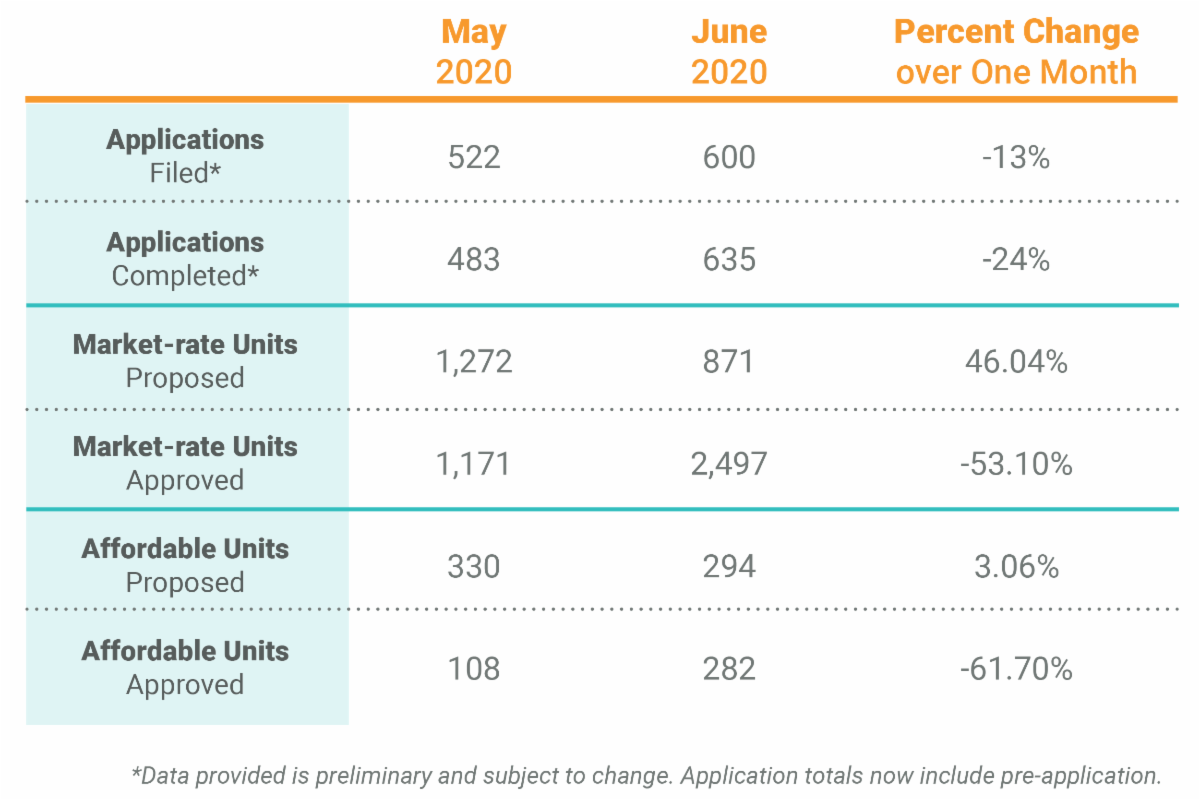
Last month, new applications filings dropped by 13 percent to their lowest volume in over two years. This decrease in filings is also reflected in the number of proposed dwelling units—despite an increase of 35 percent from April to May, units proposed are still down almost 30 percent compared to the beginning of 2020.
|
|
Westside Community Plan Updates
|
|
In response to COVID-19, City Planning has postponed all in-person public engagement events. In their place, the Department is holding a series of virtual outreach meetings to keep neighborhoods engaged in and informed about ongoing conversations on planning.
In July, City Planning will host three webinars to discuss the draft concept plans for the four
Community Plans
that are being updated on the
Westside
. The first two webinars, on
Tuesday, July 14 at 6 p.m. and
Thursday, July 16 at 1 p.m., will be presented in English, followed by a Spanish-language webinar on
Tuesday, July 21 at 6 p.m.
Los Angeles maintains 35 Community Plans, one for each of its Community Plan Areas. The Community Plans establish neighborhood specific goals and implementation strategies to achieve the broad objectives laid out in the City’s General Plan. The 35 Community Plans compose the General Plan’s Land Use Element, which plays an important role in bolstering housing and job opportunities, conserving open space and natural resources, and balancing different neighborhoods’ needs.
Each Community Plan consists of a policy document and a land use map. The policy document lays out the community’s goals, policies, and programs, while the land use map identifies where certain uses (such as residential, commercial, and industrial) are permitted. Together, the policy document and land use map inform local zoning decisions and planning considerations related to housing.
The four Community Plan Areas in the Westside are Palms-Mar Vista-Del Rey, West LA, Westchester-Playa Del Rey, and Venice. The updates seek to address issues in the region ranging from housing to climate change. City Planning strives to update the plans in a manner that centers equity in the planning process.
|
|
|
|
- Preparing the release to the updated Zoning and revised Plan text in Summer 2020
- Released the Draft Plan, along with the proposed changes to the Land Use and Zoning, in October 2017
|
|
|
|
- Preparing Draft Environmental Impact Report (EIR)
- Completed Scoping process in September 2019
- Released Draft Land Use Concepts in May 2019
|
|
|
|
- Preparing Land Use Map for public release
- Preparing Environmental Impact Report
- Released online Draft Land Use Concepts in 2018
|
|
|
|
- Concepts Workshops planned for July 14, 16 and 21
- EIR Scoping Meeting tentatively planned for Fall 2020
|
|
June is Pride Month―a time to remember and celebrate the fight for LGBT rights.
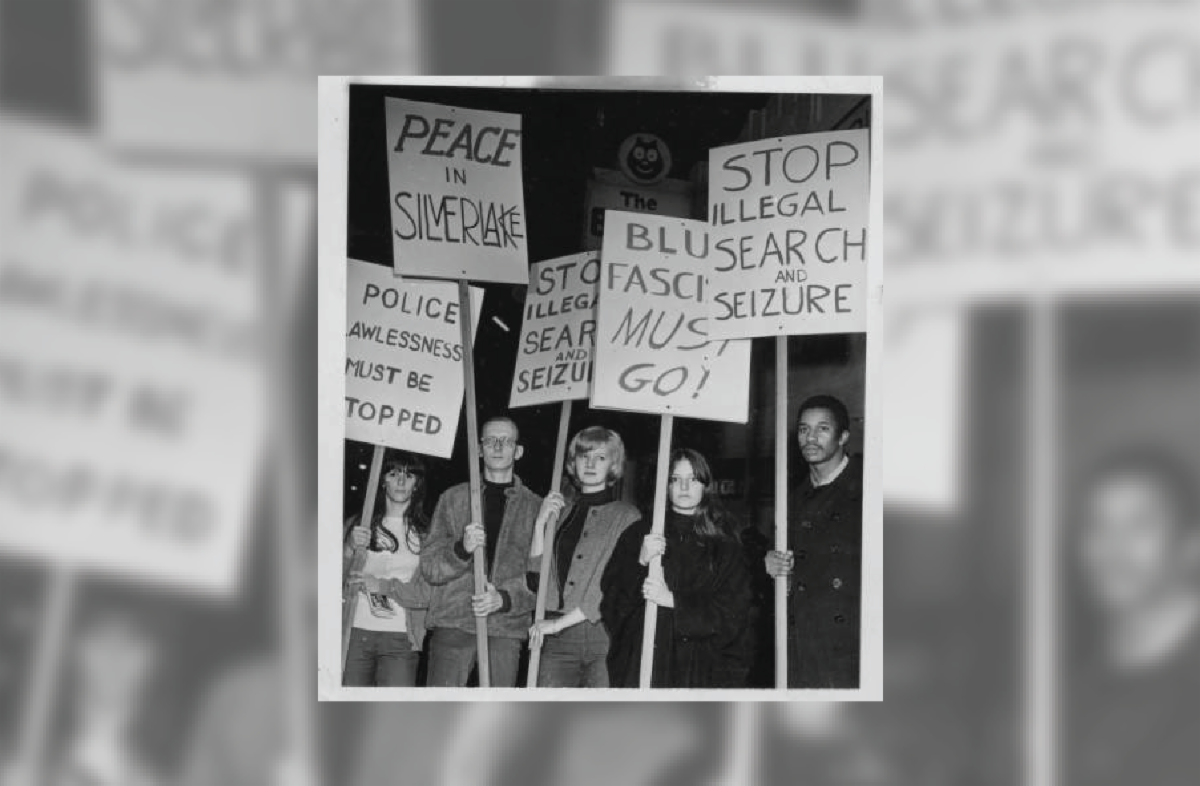
Los Angeles was home to the first protest for LGBT civil rights, nearly two years before the Stonewall protests in New York City. The Los Angeles LGBT civil rights protest took place at a bar named The Black Cat in Silver Lake. It all started on the night of December 31, 1966, when a crowd of LGBT people began to kiss and embrace one another. At that moment, undercover police officers emerged from the crowd and began to tear people apart. Two of the men celebrating in the crowd had to register as sex offenders for kissing in public.
The police’s actions angered the LGBT community of Los Angeles, and in the following weeks, members of the community began to plan a protest. This protest, held on February 11, 1967 in front of The Black Cat, would become the first documented protest for LGBT rights in American history. More than 500 people came to march.
The building still stands and is now a restaurant. The Black Cat plays an important role in Los Angeles’s history and in the history of LGBT people’s fight for acceptance and rights. In 2008, The Black Cat was designated a Los Angeles Historic-Cultural Monument because of its importance in the LGBT civil rights movement.
|
|
Courtesy of the Los Angeles Conservancy
|
|
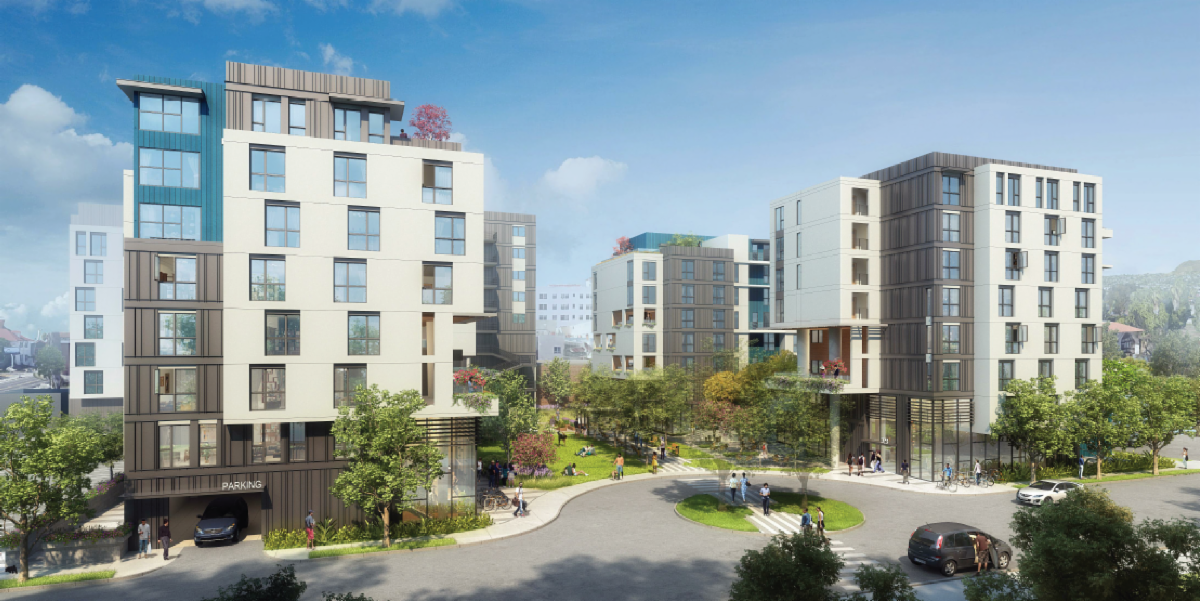
On May 14, the City Planning Commission approved plans to build a 100 percent Permanent Supportive Housing project with 454 residential units at 321 North Madison Avenue in the Rampart Village. The project, located approximately 400 feet from the Vermont/Beverly Red Line Station, will include 376 residential units for Low Income Households, 50 for Very Low Income, and 23 for Extremely Low Income. The five remaining units will be for on-site property managers.
As approved, the project will result in the construction of 11,772 square feet of resident supportive services, including case management service areas and interior open spaces. The project will provide 23 vehicular parking spaces and 251 bicycle spaces.
During this period of economic uncertainty, City Planning remains committed to advancing policies and reviewing project applications that contribute to the health of the City's economy and promote opportunities for housing—especially affordable housing.
|
|
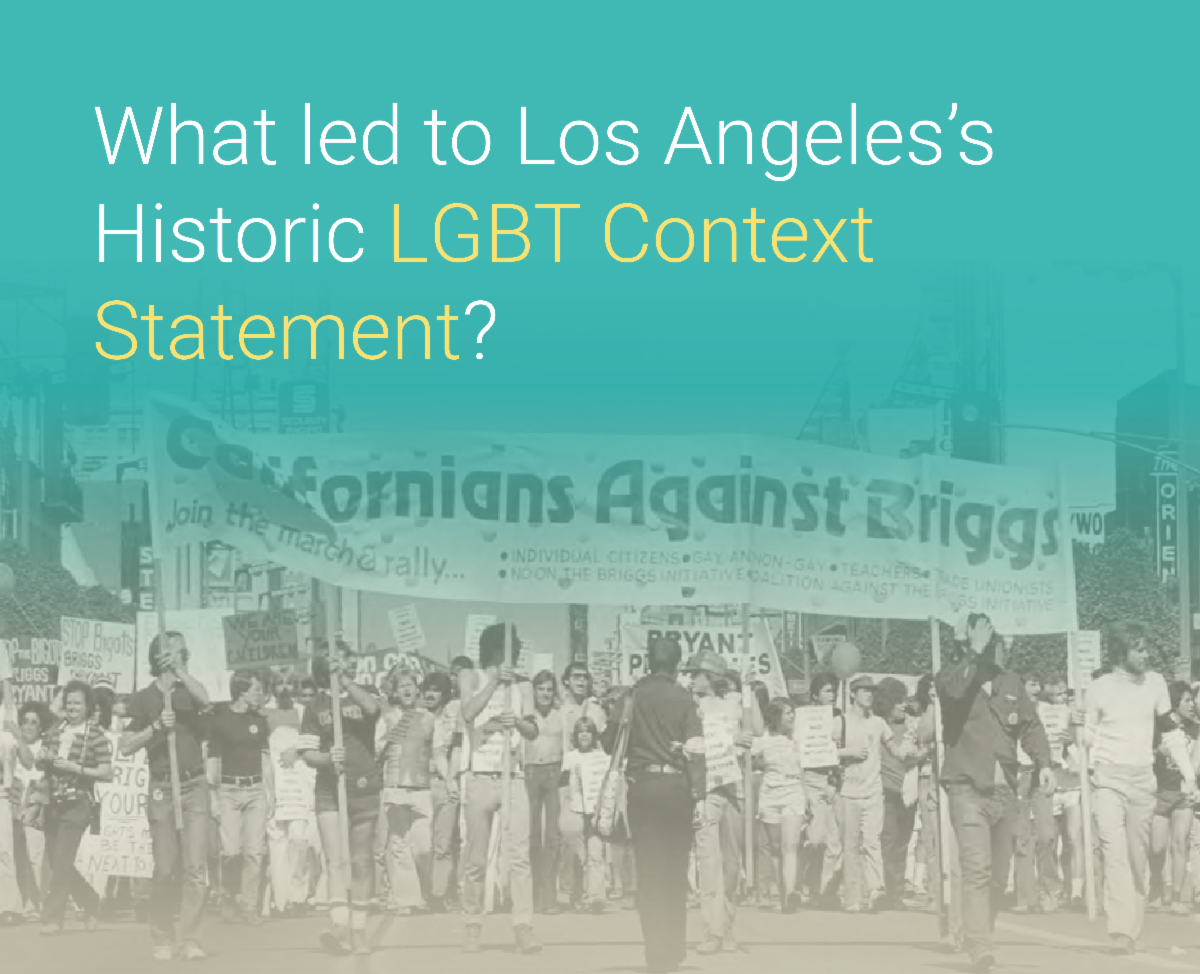
Though not credited as widely as San Francisco and New York, Los Angeles has led the nation in cultivating a politicized gay consciousness and building gay institutions. Find out more about the events leading up to City Planning’s
SurveyLA LGBT Historic Context Statement
, the first framework of its kind in the United States, in
our latest blog
.
|
|
|
|
Mello Act Ordinance Public Hearing
|
|
|
|
Home-Sharing Ordinance Amendment Public Hearing - NEW DATE
|
|
|
|
Westside Community Plan draft Concepts Virtual Open House and Webinar - English
|
|
|
|
Westside Community Plan draft Concepts Virtual Open House and Webinar - English
|
|
|
|
Westside Community Plan draft Concepts Virtual Open House and Webinar - English
|
|
Consistent with Mayor Garcetti's directive on COVID-19, City Planning is conducting meetings remotely. See the
Events Calendar
for a full list of upcoming events.
|
|
LOS ANGELES CITY PLANNING
@PL
ANNING4LA
|
|
|
|
Sign up
to receive citywide
planning updates by email
|
|
|
|
|
|
|