|
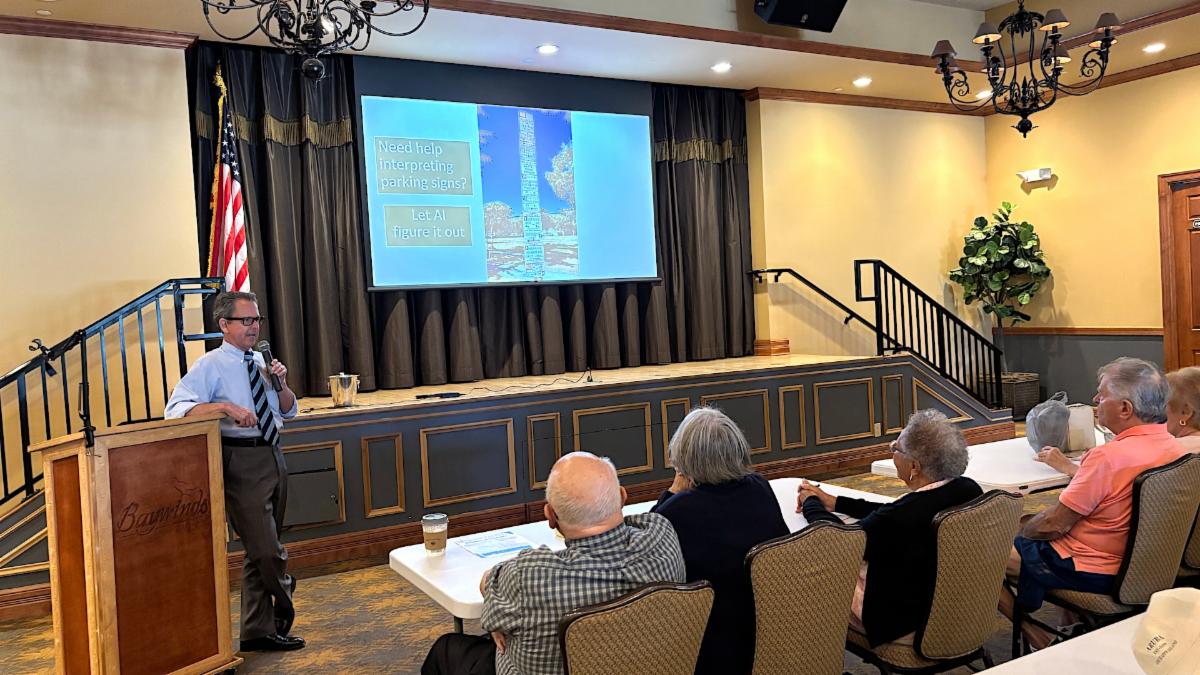
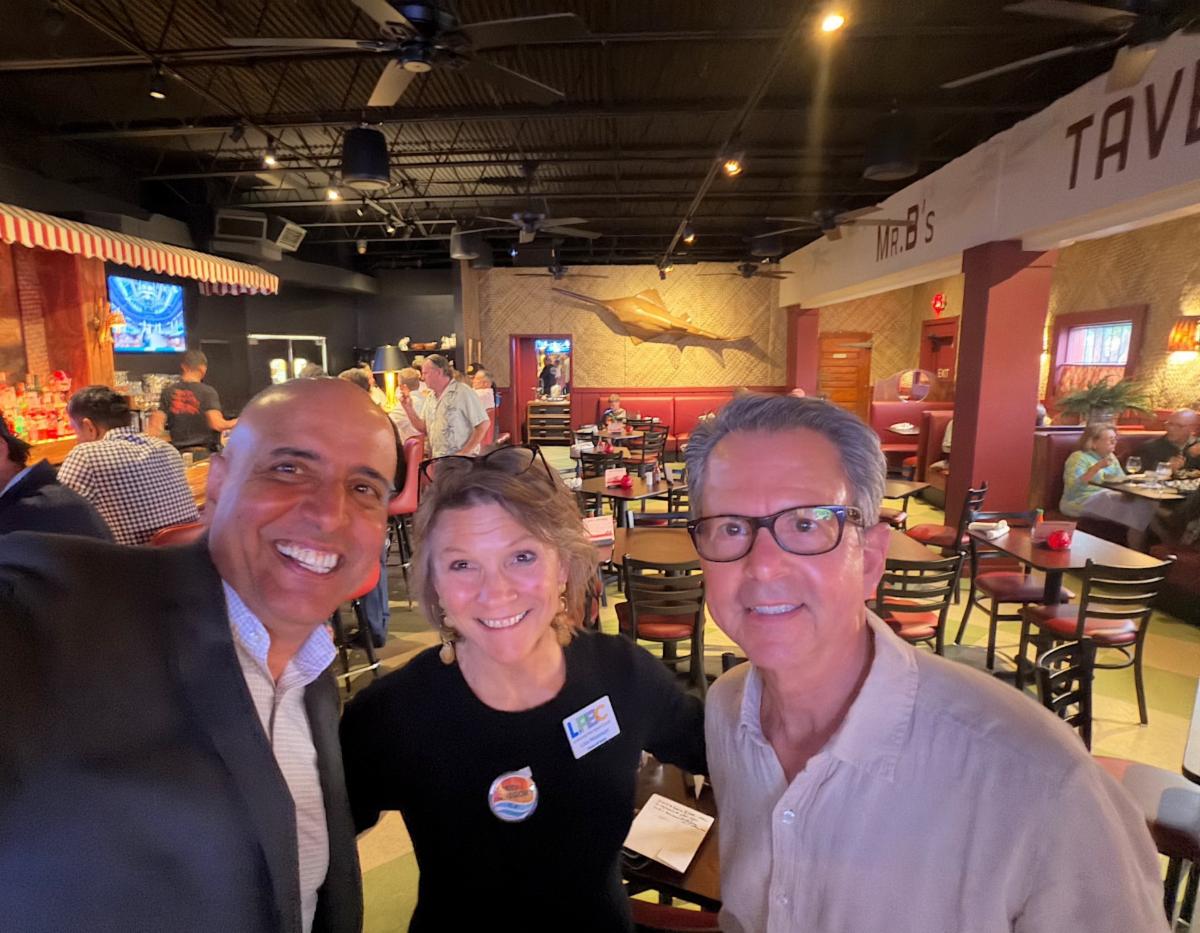
Gregg just returned from a trip to California, where he learned about traffic technologies that can help move people around more efficiently. Take a look in the Spotlight section of this newsletter for a short video where Gregg talks about what he learned.
I’ll talk more about traffic later but first let’s talk weather for a minute.
Rainfall and drought conditions
March and April, normally among the driest months of the year, ended up pretty wet, providing much-needed rain. The risk of wildfires is greatly diminished and the plants are loving it. But year-to-date we have not received the rainfall we normally do, and we’re still in a drought. The start of the wet season is just a month away, which will hopefully give us enough rain without the tropical storms.
A new way to label storms
About those storms: there’s chatter of replacing or supplementing the way we currently classify storms and hurricanes with the Saffir-Simpson Hurricane Wind Scale. Here’s the issue: the existing scale classifies hurricanes only on maximum sustained wind speeds, assigning a number from 1 to 5, with storm surge and heavy rainfall, which often cause far more damage, not factored in. Yet, according to a research paper, wind accounts for only 8% of hurricane fatalities while storm surge accounts for 49% and rainfall for 27%.
Researchers from Florida and the Netherlands created the Tropical Cyclone Severity Scale (TCSS), which combines wind, rainfall, and storm surge into a single rating. Studies show that people who received TCSS-based warnings were better at identifying the actual greatest danger, and more likely to take protective action like evacuating. Take Hurricane Florence in 2018, which started as a Category 4 but was downgraded to Category 1 at landfall, causing many evacuees to return home, a dangerous decision that risked lives because there was severe flooding. Under the TCSS, Florence would have remained a Category 5 due to its surge and rainfall threat and people would likely have taken this storm more seriously.
Let’s see what happens, but make sure you’re prepared because the start of hurricane season (June 1) is just over a month away.
School speed zone detection systems
It's been more than a year since Gregg asked staff to look into having camera enforcement in school speed zones to protect students and reduce speeding in areas where kids are most vulnerable. At its April 14 meeting, the Board of County Commissioners (BCC) heard from staff and gave approval to move forward with the ordinance while questions surrounding the legality of the law play out. The law was challenged, and is currently being reviewed in appellate court.
School speed zones allow automated speed cameras to catch dangerous drivers near schools. Under the proposed ordinance, Palm Beach County would join other Florida communities in using automated speed detection systems in school zones. This enforcement became possible through Florida legislation that took effect July 1, 2023, making school zone speed cameras legal. Read all about the bill (HB 657). To establish a school speed zone, a local government has to enact an ordinance and consider supporting evidence for chosen locations.
Supporting evidence:
In the past year, the Palm Beach County Sheriff's Office (PBSO) has been conducting speed surveys near schools to determine where the cameras should be placed. We reported on this in our July newsletter. Based on their research, PBSO recommended 40 schools in unincorporated Palm Beach County that could benefit from these safety improvements. Twelve of these schools are within the boundaries of our District. Here's the final report that identifies the schools and shows speeding data.
Once cameras are installed, they will catch speeders near schools and automatically send $100 fines in the mail. Proceeds from the fines are split between the county, state, school district, crossing guards, and the Florida Department of Law Enforcement.
How it works:
- Cameras are active only during morning drop-off and afternoon pick-up
- A Notice of Violation (Notice) is issued for driving 11 MPH or more over the limit
- A law enforcement officer reviews all video before a notice is sent
- Speeders receive a notice by mail with instructions on how to view their video
Speeders receiving a notice can:
- Pay the $100 fine
- Submit an affidavit explaining why the ticket should be dismissed
- Request a hearing to contest it in front of a magistrate
Speeders who do not respond within 30 days will have their case escalated by PBSO to a formal traffic citation. Speeders who contest the notice and lose will owe the original $100 plus $250 in hearing costs.
For Gregg, this is not about the money. It's about safety.
Florida ranks in the top 5 when it comes to pedestrian fatalities, with close to 800 pedestrians killed per year, or roughly 3.5 per 100,000. A pedestrian hit by a vehicle at 40 MPH has a 10% chance of surviving; this rises to 50% at 30 MPH, and 90% at 20 MPH.
Speed cameras appear to be effective in changing driver behavior, with data showing that speeding is reduced by 90% in enforced school zones. The data also shows a repeat offender rate of less than 10%, meaning that once people receive a Notice of Violation, they tend to stop speeding in school zones.
Legal challenge to photo-enforced traffic citations
At the BCC meeting, the County Attorney explained that a circuit court judge in Broward County dismissed a photo-enforced traffic citation, finding that Florida’s red-light camera statute unconstitutionally shifts the burden of proof from the government to the vehicle owner. This ruling was appealed and the case is currently under review at the 4th District Court of Appeals (4DCA). If the courts uphold the lower court's decision, it would mean that this program cannot move forward.
Commissioners discussed what to do in light of the uncertainty. Gregg then made a motion to move forward with the next step in the process, approving permission to advertise the ordinance. He said he was confident that the courts would find the program constitutional, or that the legislature would step in to fix it. "It is important that we recognize that we need to protect our kids. It has taken us a long time to get to this step and I don't want to see it delayed any further," said Gregg.
In the end, the BCC unanimously voted to move forward. The item will be back for discussion on May 5th. The ordinance will not be implemented and cameras will not be installed until there is clarity about the legality of the program.
That’s it for this one.
Thanks for being a reader!
|