|
HELP GROW ISRAEL WITTMAN SANCTUARY
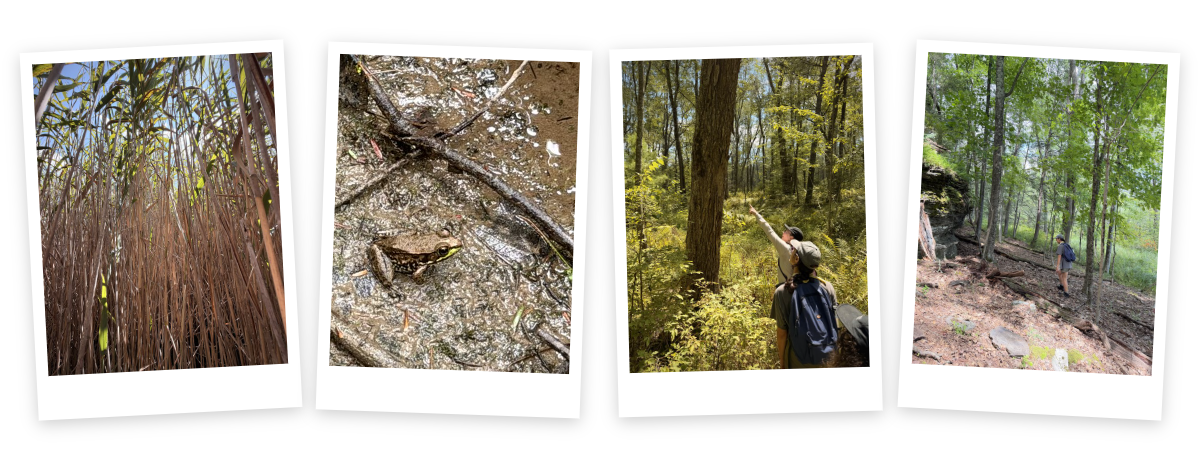
Today we're asking for your help with something we've been working toward all year. Next to Israel Wittman Sanctuary sits 25 acres of freshwater wetland: emergent marsh, where grasses and sedges stand in shallow water, and shrub swamp, thick with woody growth. It's home to salamanders that New York State lists as Species of Greatest Conservation Need, and it does some of the most useful work in any watershed, slowing water down, settling out sediment, and taking up excess nutrients before they move on.
We have the chance to buy it and add it to the sanctuary, to be protected forever. We have until October 30 to raise $100,000. Here's what a gift does:
- $500 pays for the biological inventory, the survey of what lives there
- $1,000 covers the land survey
- $5,000 goes straight to the purchase price
- $10,000 protects five acres
Help grow the sanctuary →
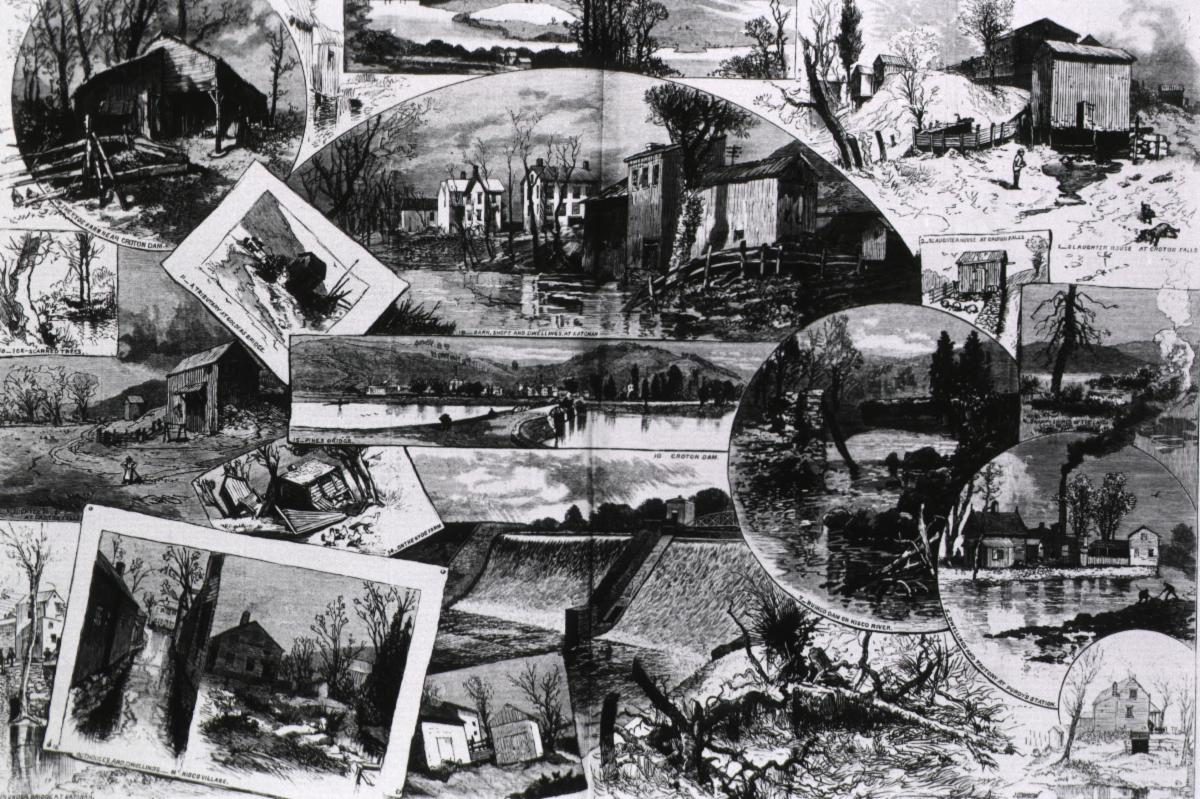
| | "The Water Supply of New York," Harper's Weekly, May 28, 1881. Wood engraving. Courtesy National Library of Medicine. | | |
KNOW YOUR WATERSHED: POLLUTION PATHWAYS
Speaking of watersheds—whatever goes down a drain or a toilet in Woodstock ends up somewhere, and for most of us it doesn't travel far. Much of the town drinks from private wells, so the water under our houses is the water in our glasses, and the Sawkill and the groundwater around it trade water back and forth all year.
A lot goes down our drains: the medications that pass through our bodies, the cleaners we pour down the sink, microplastics shed from our clothes in the wash. For most of Woodstock, here's where it goes next:
-
The tank. Wastewater flows into a septic tank buried in the yard. Solids sink to the bottom and grease floats to the top, and both get manually pumped out every few years.
-
The drain field. The liquid flows out through perforated pipes laid in gravel and seeps into the soil, where bacteria break down most of the organic matter that's left.
-
Down. Some of it is taken up by plants. The rest soaks down to the groundwater, joining rain and snowmelt on the same trip.
-
Out. Groundwater moves slowly, often less than a foot a day, until it seeps into a stream. That seepage keeps the Sawkill running in dry weather, and near the town wells the creek feeds the groundwater in turn. Our wells draw from that same groundwater.
Soil is good at catching bacteria when a system is working properly, and much worse at catching synthetic chemicals, which can make the whole trip. Add whatever a storm washes off roads and construction sites, and some of it reaches the creek, where many of these chemicals persist for a long time.
So the fixes start upstream, in our own houses:
- Don't flush medications. The Woodstock Police Department, 76 Tinker Street, has a free drop box that takes prescription and over-the-counter medications, including pet medications. No needles, inhalers, or glass.
- Use less plastic, especially single-use plastic and synthetic fabrics that shed microfibers in the wash.
- If you're on a well and septic, maintain the system and test your water regularly.
- Tell local officials you want strong protection for the town's drinking water sources.
-
Come hear how people have shaped the Sawkill for centuries. Histories of the Sawkill Through Human Impacts, with Woodstock Town Historian Richard Heppner and Ulster County Historian Eddie Moran, is Saturday, October 17, 11 a.m.–1 p.m., at the Historical Society of Woodstock, 20 Comeau Drive. Free. RSVP →
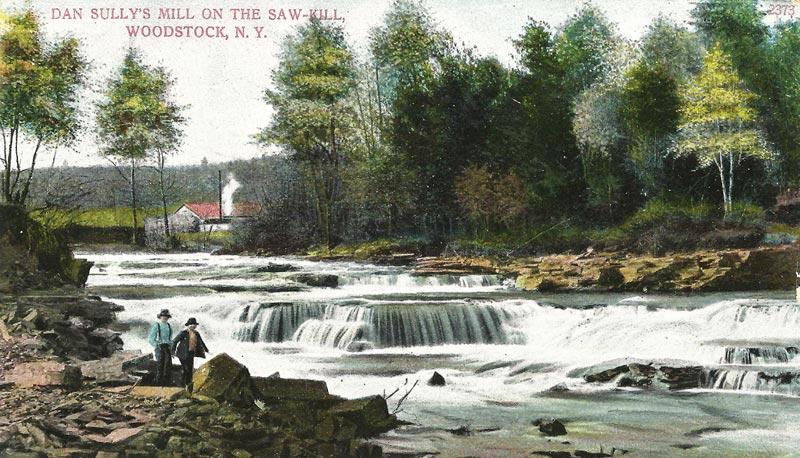
| | Dan Sully's mill on the Sawkill, around 1908. Sully was a stage actor, and the building later housed Art Students League students and the Woodstock School of Art, which opened 58 years ago this week. Artists have been drawn to this creek for more than a century. | | |
EXTRA CREDIT: HOW IS THE SAWKILL?
After all that, you may very well be wondering how the Sawkill is doing. On March 14, more than 100 scientists, artists, educators, and neighbors filled Mountain View Studio to ask exactly that. It was the kickoff of Jennifer Zackin's yearlong Mapping the Sawkill project, which ends at WAAM this fall. People marked moments of joy and concern on a new map of the watershed drawn by Ella Cattabiani, gave the Woodstock Environmental Commission feedback on the town's drinking water protection plan (which the state accepted last Friday!), and signed up for the first Stream Stewards cohort.
The whole evening is now online, filmed by Theo Cote. Judy Abbott (Munsee Lenape) gave the keynote, a good one to watch ahead of Indigenous Peoples' Day. Beth Reichheld introduced the Sawkill watershed, and Joel H. DuBois covered what an earlier assessment found about the creek's baseline condition. Jill Olesker gathered people's own memories of the creek, and Julia Blelock and Arlene Weissman of the Woodstock Environmental Commission spoke on the Sawkill as drinking water, a natural warm-up for November 7 at WAAM. Candace Balmer moderated two rounds of questions.
Watch the full symposium →
| | |
JENNIFER ZACKIN AND THE SAWKILL: FIVE WEEKS AT WAAM...
Jennifer Zackin is a local artist who has spent this year asking her neighbors to slow down long enough to get to know a creek. She's led walking tours, sensory workshops, and community mapping sessions, helped launch the Stream Steward Program, and on October 3 hosted a riparian buffer planting along Tannery Brook with Andrew Faust. What came of all that goes up at the Woodstock Artists Association & Museum starting October 23, as WAAM's 2026 Artist-in-Residence exhibition, in the YES and Stairwell Galleries.
-
October 24 – November 1, Community Mapping. Opening reception and mapping, Saturday, October 24, 4–6 p.m. Bring a memory of the creek and add it to the map.
-
November 4 – 8, Drinking Water Source Protection. The town wells from step four, and the plan to protect them. How Is the Sawkill? Part 1, Saturday, November 7, 1–3 p.m.
-
November 11 – 15, Stream Stewards. How Is the Sawkill? Part 2, Saturday, November 14, 1–3 p.m. The stewards walked five sections of the Sawkill this summer and fall with stream scientists Beth Reichheld, Mark Vian, and Telemak Olsen, and they'll share what they found.
-
November 18 – 29, Bringing It Together. Project celebration, Friday, November 20, 5–7 p.m.
All programs are free, at WAAM, 28 Tinker Street.
Full schedule →
| | |
...AND ON THE CREEK ITSELF
The exhibition is indoors. Two of its programs take place outside, by the water:
-
Little Deep to Big Deep, with Beth Reichheld. A guided walk through the Sawkill's riparian corridor, following how water moves through the land, forest and soil. It's the route from the top of this issue, seen in person. Sunday, October 25, 11 a.m.–1:30 p.m., rain date November 1. Meet at the Little Deep parking lot on Zena Road. RSVP →
-
The Many Voices of the Sawkill, with Zaneta. A listening and field recording workshop with hydrophones and portable recorders, led by the sound artist and nature recordist. Sunday, November 8, 11:30 a.m.–1 p.m. Meet at the kiosk in the parking lot at 45 Comeau Drive. RSVP →
| | |
WE'RE CLOSED MONDAY, OCTOBER 12
We're closed Monday for Indigenous Peoples' Day. Long before the Sawkill had a Dutch name, the Munsee-speaking Esopus, part of the Lenape people, farmed the flats of the Esopus Creek, until they were forced from the land. Judy Abbott's keynote, above, is a good place to start.
| If someone sent you this, you can get your own! If you got it from us, forward it to someone downstream. (That's everyone.) | | | | |