Ford Motor Co (F.N) sued Blue Cross Blue Shield Association in U.S. court on Wednesday, accusing it of a price-fixing conspiracy that caused the automaker to pay inflated costs for health insurance products for its employees.
The lawsuit Ford filed in Detroit federal court accused the insurer and its regional Michigan branch of unlawfully dividing up parts of the country in a scheme to reduce competition with each other in order to drive "astronomical profits."
The allegations from Ford, employing more than 170,000 workers worldwide, relate to a $2.7 billion settlement that Blue Cross Blue Shield Association and its three dozen member companies reached in 2020 with corporate and individual policyholders in Alabama federal court.
|
|
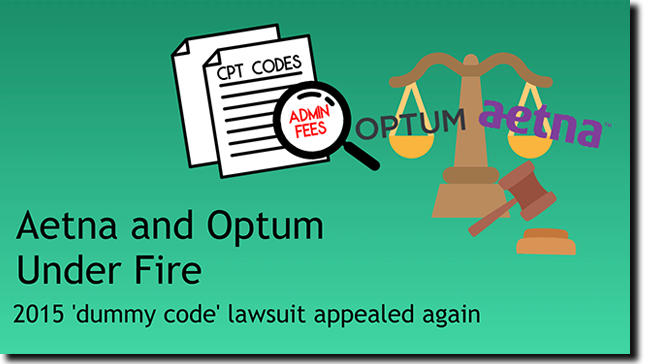
A federal judge in North Carolina certified class action status June 5 in a lawsuit alleging Aetna and OptumHealth Care Solutions conspired to use "dummy code" to make administrative fees appear to be billable medical charges.
The lawsuit, which was originally filed in 2015, alleges the two insurers tricked plaintiff Sandra Peters, other patients similarly situated and their employers into paying administrative fees by disguising them as medical expenses. The lawsuit alleges the defendants violated the Employee Retirement Income Security Act.
The two classes certified by the judge could cover more than 87,000 health plan participants, according to court records.
A judge initially ruled in Optum's and Aetna's favor in 2019, but a federal appeals court reversed the decision in 2021, finding that Aetna conducted a "breach of its fiduciary duty" in burying administrative fees and that Optum utilized unauthorized transactions.
|
|
Agenda and Registration Coming Soon! |
|
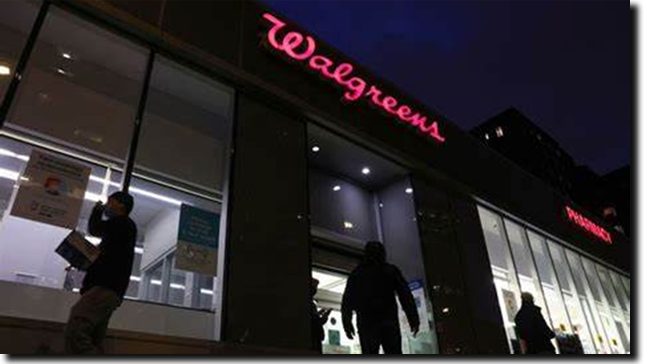
Walgreens Boots Alliance has agreed to pay $500 million to New Mexico to settle claims that its pharmacies helped fuel opioid addiction in the state by failing to stop illegal pill sales, lawyers for the state announced on Friday.
The settlement, the largest obtained by New Mexico against a single company over opioids, came after a non-jury trial last year in the state's lawsuit against the company. The judge overseeing that trial had not yet ruled on the state's claims.
"We are confident that this record settlement positions New Mexico to turn the tide on this deadly epidemic," Mark Pifko, a lawyer for the state, said in a statement.
New Mexico has now settled all of its major opioid-related lawsuits, recovering more than $1 billion including Friday's deal, Pifko said.
|
|
Virtual
ABIPP Part I; ABIPP Path - Combined DCCPM/CSM virtual exam; ABIPP Competency Exam in IPM; ABIPP Competency Exam in Regenerative Medicine
Memphis, TN
ABIPP Part II - Practical Portion; ABIPP Competency Exam - Practical Portion; ABIPP Regenerative Medicine Competency Exam - Practical Portion
|
|
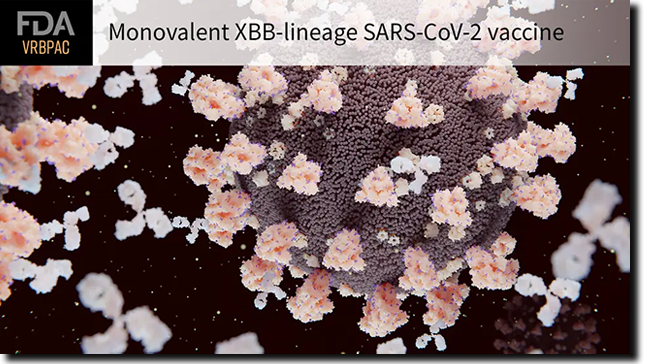
Agency reviewers recommend monovalent shot for 2023-2024 booster campaign
The next COVID vaccines should exclude the original strain of SARS-CoV-2 and exclusively target the Omicron XBB subvariants, according to FDA staff members.
XBB strains are more immune evasive than prior Omicron subvariants and currently account for about 95% of COVID-19 cases worldwide, the agency staffers noted.
In the U.S., eight XBB strains account for over 98% of the current cases, according to CDC's Nowcast tracker, including three sublineages under consideration for the fall vaccine: XBB.1.5 in 40%, and the newer XBB.1.16 in 18% and XBB.2.3 in 6% of cases.
|
|
Agenda and Registration Coming Soon! |
|
Delegates to hold leaders accountable for progress
During focused committee discussions, some delegates pushed back on the American Medical Association's (AMA) plan to improve physician pay, arguing that the association's current efforts are not enough.
Speaking to a packed room at the AMA House of Delegates meeting, Virginia Hall, MD, a delegate for the Senior Physicians Section, called on the AMA to advocate more strongly for "fair reimbursement" under Medicare.
"I'm tired of the government underfunding us, over-promising that we can deliver the care... and shifting the blame to us, when it's Congress that should be blamed," Hall said.
Physicians saw a 22% drop in reimbursement rates over the last 20 years because the government refused to link Medicare payment updates to inflation, which is driving private practices out of business, Hall said.
|
|
CMS officials are urging states to double-down on efforts to prevent people from unnecessarily losing Medicaid coverage.
"I, and everyone at CMS, are deeply concerned about eligible people losing healthcare coverage during the renewal process," CMS Administrator Chiquita Brooks-LaSure told reporters on a June 13 call.
During the COVID-19 pandemic, states were required to keep Medicaid recipients continuously enrolled in the program. States are beginning the process of redetermining if Medicaid beneficiaries are eligible for the program for the first time since 2020.
Early data from the continuous coverage unwinding shows many people disenrolled from the program were removed because they did not complete the renewal process, state agencies could not find their current address, or other procedural reasons, rather than being deemed no longer eligible for Medicaid.
At least 1 million people have lost Medicaid coverage as of June 12, according to KFF.
|
|
Agenda and Registration Coming Soon! |
|
- ASIPP Members Only Site Information - |
|
-
To log in for the first time you will need to click “forgot password” at the bottom of the login window.
- Check your email and then log in as directed.
-
If you have problems logging into your account, click here.
|
|
Pain Medicine Case Reports (PMCR) and Editor-in-Chief Alaa Abd-Elsayed, MD, PhD would like to invite you to submit case reports and case series to the PMCR journal. Your article will be published free of charge.
Open access journals are freely available online for immediate worldwide open access to the full text of published articles. There is no subscription fee for open access journals. Open access journals are no different from traditional subscription-based journals: they undergo the same peer-review and quality control as any other scholarly journal.
Interested in becoming a member of the PMCR Editorial Board?
Editorial board members are asked to review 2-6 manuscripts per year. Please submit your most up-to-date CV to sgold@asipp.org for consideration.
For more information or to submit your articles, click here.
|
|
| CASE REPORT |
Richard Uhlenhopp, MD, Cecilia Taylor, MD, Henry Tomlinson, MD, Megan McManus, PA-C, and Martin D. Burke, MD
Abstract
BACKGROUND: An estimated 23 million people in the United States are affected with Long COVID, formally called Postacute Sequelae SARS-CoV-2 infection (PASC). Disturbances of taste and smell are common symptoms. There is limited evidence for effective treatment.
CASE REPORT: A 68-year-old woman contracted COVID-19 in January 2021. She had worsening parosmia and dysgeusia, described as “rancid” smells with a variety of foods and objects. She underwent successful right stellate ganglion block in April 2022. Immediately after the procedure, she was able to comfortably eat food previously intolerable. Benefits persisted at 5- and 30-day follow-up.
CONCLUSIONS: An ever-expanding patient population and lack of treatment options emphasize the importance of continued research into the pathogenesis and treatment of PASC. A nascent body of evidence suggests stellate ganglion block may provide durable relief.
KEY WORDS: COVID-19, PASC, Long COVID, parosmia, stellate ganglion block, case report
|
|
| RETROSPECTIVE REVIEW |
Marc A. Huntoon, MD, Konstantin V. Slavin, MD, Jonathan M. Hagedorn, MD, Nathan D. Crosby, PhD, and Joseph W. Boggs, PhD
Abstract
BACKGROUND: Real-world data can provide important insights into treatment effectiveness in routine clinical practice. Studies have demonstrated that in multiple different pain indications temporary (60-day) percutaneous peripheral nerve stimulation (PNS) treatment can produce significant relief, but few real-world studies have been published. The present study is the first real-world, retrospective review of a large database depicting outcomes at the end of a 60-day PNS treatment period.
OBJECTIVES: Evaluate outcomes during a 60-day PNS treatment in routine clinical practice.
STUDY DESIGN: Secondary retrospective review.
METHODS: Anonymized records of 6,160 patients who were implanted with a SPRINT PNS System from August 2019 through August 2022 were retrospectively reviewed from a national real-world database. The percentage of patients with ? 50% pain relief and/or improvement in quality of life was evaluated and stratified by nerve target. Additional outcomes included average and worst pain score, patient-reported percentage of pain relief, and patient global impression of change.
RESULTS: Overall, 71% of patients (4,348/6,160) were responders with >= 50% pain relief and/or improvement in quality of life; pain relief among responders averaged 63%. The responder rate was largely consistent across nerve targets throughout the back and trunk, upper and lower extremities, and posterior head and neck.
LIMITATIONS: This study was limited by its retrospective nature and reliance on a device manufacturer’s database. Additionally, detailed demographic information and measures for pain medication usage and physical function were not assessed.
CONCLUSIONS: This retrospective analysis supports recent prospective studies demonstrating that 60-day percutaneous PNS can provide significant relief across a wide range of nerve targets. These data serve an important role in complementing the findings of published prospective clinical trials.
KEY WORDS: Peripheral nerve stimulation, neuromodulation, 60-day PNS, nonopiod, real-world evidence
|
|
| RETROSPECTIVE ANALYSIS |
JiHee Hong, MD, PhD, Ji Hoon Park, MD, PhD, and Hyun Ji Je, MD
Abstract
BACKGROUND: Trigeminal neuralgia (TN) is the most common excruciating cranial neuralgia in the elderly population. Radiofrequency thermocoagulation (RFT) of the trigeminal ganglion is an alternative treatment for medically intractable patients with TN. RFT cannula tip position is an important issue since it is related to treatment outcome and patient safety.
OBJECTIVES: The purpose of this study was to evaluate the fluoroscopic position of a cannula tip when a maximal stimulation-induced paresthesia was obtained and the treatment outcome using a Barrow Neurological Institute (BNI) pain scale.
STUDY DESIGN: Retrospective analysis.
SETTING: An interventional pain management practice in South Korea.
METHODS: The final cannula tip position obtained under maximal electrical stimulation of the face was analyzed using previously saved fluoroscopic images.
RESULTS: The cannula tip was located exactly in the clival line in 10 patients (29.4%) with maxillary division (V2) TN. There were 24 patients of V2 TN (70.5% ) in whom the cannula tip was located below the clival line. Over 50% of cannula tips were located at -11 mm to -15 mm below the clival line in mandibular division (V3) TN. Forty-four patients (83%) who received RFT in the trigeminal ganglion demonstrated BNI I or II.
LIMITATIONS: The number of patients with V3 TN was smaller than that of V2 TN. Only short-term efficacy was evaluated, but not long-term efficacy or recurrence rate of facial pain.
CONCLUSIONS: Nearly 70% of patients in V2 TN and all patients in V3 TN, the cannula tip was positioned below the clival line. RFT of the trigeminal ganglion showed a successful treatment outcome with BNI I or II in 83% of patients.
KEY WORDS: Cannula tip, clival line, fluoroscopic position, pain scale, stimulation-induced paresthesia, radiofrequency
|
|
ASIPP is now in collaboration with Curi Medical Liability Program
Since this malpractice insurance program officially launched in November 2018, ASIPP has signed up hundreds of providers with an average savings of 30%. This is professional liability insurance tailored to our specialty and will stand up for us and defend our practices.
Curi is a full-service advisory firm that serves physicians and their practices. Their valued advice is grounded in your priorities and elevated in your outcomes. They are driven by a deep understanding of your specific circumstances in medicine, business, and life. To read a few important points to keep in mind about the program, including discounts, administrative defense, cyber coverage, aggressive claims handling, and complimentary risk management CME activities, visit our website.
|
|
ASIPP® has formed a partnership with Henry Schein and PedsPal, a national GPO that has a successful history of negotiating better prices on medical supplies and creating value-added services for independent physicians. Working with MedAssets, PedsPal provides excellent pricing on products like contrast media that alleviate some of the financial pressures you experience today.
|
|
ASIPP® is now offering our members the benefit of a unique revenue cycle management/ billing service.
We have received a tremendous amount of interest in the ASIPP® billing and coding program.
Click here to learn more about the negotiated rate for practices and more!
|
|
|
up-to-date news related to you, your practice, and your patients!
|
|
|
|
|
|
|