|
Hello Synapse Spotlight readers,
Welcome to the latest edition of Synapse Spotlight! As we head into spring, we’re excited to share new discoveries in neuroscience and highlight the amazing work of our community. At the Society of Biological Psychiatry (SOBP), we’re committed to making neuroscience accessible to all. Feel free to share this newsletter with your students, colleagues, family, and friends!
In this issue, we showcase how human and animal research are driving discoveries in brain health. One study explores how boosting neurogenesis—the birth of new neurons—could enhance brain function, using an animal model to test a promising intervention. Another study finds that DNA markers in children’s saliva can predict brain structure, offering a window into how early experiences shape development.
We also discuss the urgent need to protect National Institutes of Health (NIH) research funding to ensure continued progress for understanding and treating brain and mental health disorders. This month’s Member Spotlight features Dr. Maura Boldrini, a neuroscientist and practicing psychiatrist at Columbia University, whose innovative work on human brain tissue is advancing our understanding of mood disorders and brain disease.
Lastly, test your knowledge with our “Around the Brain in MCQs” quiz—answer at the end!
For even more groundbreaking new research, explore the latest issues of our three journals: Biological Psychiatry, Biological Psychiatry: Cognitive Neuroscience and Neuroimaging, and Biological Psychiatry: Global Open Science.
Happy Reading!
The Synapse Spotlight Team
| | |
SOBP Response to Recent Developments in the USA
| | Surprising Science: New Neurons in Adulthood | | |
For years, scientists believed that the brain could only grow new cells during early development. However, new research shows that adults can continue to grow new brain cells! New brain cells in adults are seen in a part of the brain called the hippocampus—our memory epicenter.
Inside the hippocampus, there's a region called the dentate gyrus that keeps making new brain cells throughout life. These new cells connect with existing cells, helping us learn new hobbies, remember where we put our keys, and even manage emotions. Scientists have found that activities like exercise, social interaction, and some treatments can boost this process, no matter your age.
While we're still learning about how much this happens in humans, this discovery could lead to new ways to treat memory loss and brain diseases.
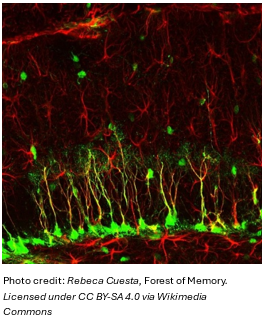
On the right, you’ll see a glowing image of the dentate gyrus in a mouse’s brain. The green dots show neural stem cells—these are the ones that create new neurons, which then become part of the brain’s networks.
| |
Why it matters: Adult neurogenesis challenges the long-held belief that the brain is fixed and unchangeable. Instead, it reveals that the brain can adapt, learn, and health throughout life. Understanding how new neurons are generated could unlock new ways to enhance memory, improve learning, and develop treatments for neurodegenerative and psychiatric disorders like Alzheimer’s, depression, and anxiety. This discovery is reshaping our understanding of brain health and recovery—offering hope for future breakthroughs in mental and cognitive well-being. | | | | Hot topics in Biological Psychiatry | | Boosting Brain Plasticity to Sharpen Memory in Aging | | |
A new study by Dr. Wei-li Chang and colleagues from Dr. René Hen’s lab at Columbia University explored how boosting the growth of new brain cells in the hippocampus could improve memory and cognitive function in both young and aging mice. The researchers tested a compound called RO6871135 to see whether it could help the brain create new neurons. They also examined whether RO6871135 could improve pattern separation—a process that distinguish similar memories, like remembering where you placed your keys last night versus this morning. This ability is vital for memory, emotional regulation, and preventing the overgeneralization of negative emotions, a hallmark of anxiety disorders. The study found that RO6871135 not only improved memory performance in both young and aged mice but also reduced anxiety levels—suggesting it’s potential as a therapeutic strategy for cognitive and emotional health.
| |
Why it matters: As we age, our ability to distinguish between similar memories fades, making it harder to recall important details. A reduced ability to distinguish between memories can increase the presence of cognitive decline and make managing emotions more difficult. This study offers hope that a new drug can improve cognitive function and emotional control (anxiety). Dr. Chang tells us that this work could be used to develop novel medications for humans in the future, which could target memory and emotions. | | | | DNA Markers in Saliva Predict Brain Structure in Children | | |
A new study from Dr. Candace Lewis’s lab at Arizona State University, led by PhD student Taena Hanson, investigated how small chemical changes to DNA, known as DNA methylation, are linked to brain size in children—specifically, the hippocampus. This part of the brain plays a key role in learning, memory, and handling stress.
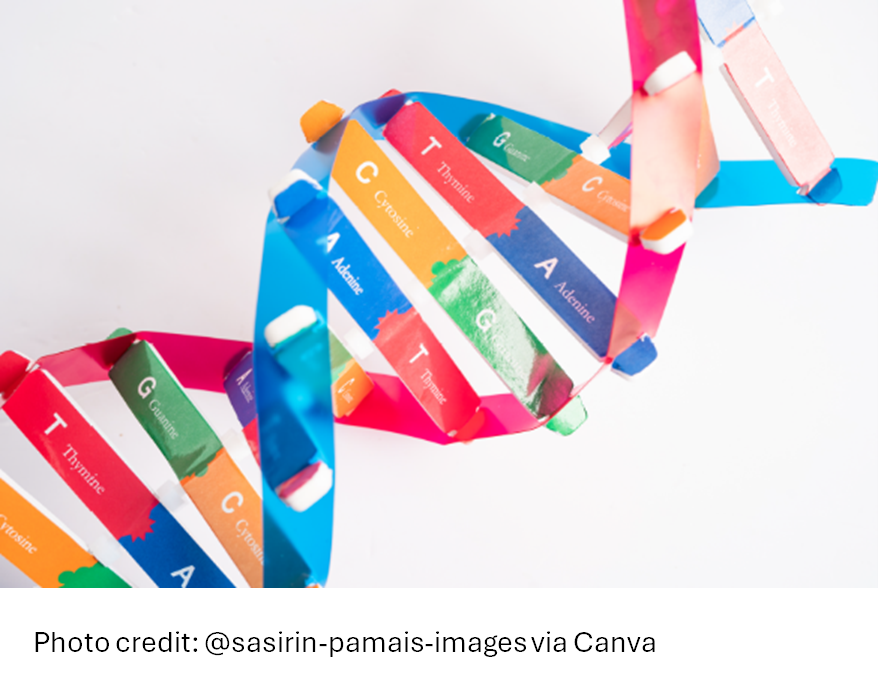
DNA methylation can be influenced by life experiences and environmental factors, changing how genes are expressed without altering the actual DNA sequence. The researchers analyzed saliva samples to study these changes at specific regions of the DNA sequence called CpG sites, where the DNA building blocks cytosine and guanine sit next to each other—common hotspots for methylation. To the left is a DNA double helix, showing how the DNA’s building blocks—cytosine, guanine, and other nucleic acids—fit together to form its iconic spiral structure.
The researchers also used MRI scans to measure hippocampal size. They found that the strongest connections between DNA methylation and hippocampus size occurred during early childhood and adolescence—key periods for brain development. “These results suggest that different biological systems may be more sensitive at different stages of development,” Dr. Lewis explained.
| |
Why it matters: This study highlights how early life experiences shape brain development and suggests that DNA markers in saliva could be a useful way to track brain health. By understanding these DNA patterns, we could spot early signs of mental health risks and find better ways to support brain health as children grow. | | | | SOBP member spotlight: Dr. Maura Boldrini | | |
Dr. Maura Boldrini, M.D., Ph.D., is the founder of the Brain QUANT initiative at Columbia University, a platform that helps researchers study human brain tissue in new and powerful ways. By using tools that show which genes are active and where in the brain they are expressed, Brain QUANT helps answer fundamental questions about brain function, guides research in animal models, and supports the development of more precise treatments for brain diseases.
Dr. Boldrini’s research has progressed from studying individual genes and proteins to using cutting-edge methods that capture the brain’s complexity in unprecedented detail. Her lab now uses techniques that pinpoint not only which genes are active, but also their precise location in the brain—down to the level of single cells. This powerful approach is uncovering new treatment targets for brain disorders. Her recent contributions include high-resolution imaging methods and techniques to visualize gene regulation across different brain regions. Notably, her research sheds light on the effects of COVID-19 on neurogenesis and the biological factors that contribute to suicide.
Beyond her research, Dr. Boldrini is deeply committed to mentorship and training, fostering a diverse and interdisciplinary lab environment and supporting the next generation of neuroscientists. She is also actively involved in the American Foundation for Suicide Prevention (AFSP).
| | | Around the brain in MCQs! | | |
Which part of the brain is primarily responsible for forming new memories?
A. Cerebellum
B. Brainstem
C. Hippocampus
D. Occipital lobe
Scroll to the bottom of the newsletter to find the answer!
| | |
To learn more about the Society of Biological Psychiatry (SOBP), or to become a professional member, visit https://sobp.org/
To subscribe to our newsletter, click here: Newsletter sign-up
To reach out to an expert, or for topic suggestions, email sobp@sobp.org
To learn more about SOBP journals, click here: https://sobp.org/publications/journals/
Press releases: https://sobp.org/publications/journal-press-releases/
To learn more about the brain and brain disorders, listen to the BrainSTEM podcast, hosted by SOBP members. Available on Spotify, Apple Podcasts, and more.
| |
How can I get involved?
SOBP is a proud Associate Member of the American Brain Coalition. Visit the website for the American Brain Coalition to learn more about their vision and how together we can advocate for increased support of research that will lead to better treatments for our patients as well as a national commitment towards finding cures for individuals with disabling neurological and psychiatric disorders.
| |
How can I get help?
We can all help prevent suicide. The 988 Lifeline provides 24/7, free and confidential support for people in distress, prevention and crisis resources for you or your loved ones, and best practices for professionals in the United States.
Call or text 988; Llama al 988 (para ayuda en español)
| | |
Find a therapist in your area with the Psychology Today’s Find a Therapist Tool: www.psychologytoday.com
Visit the National Alliance on Mental Illness (NAMI) website
Visit the National Institute of Mental Health (NIMH) website
| |
Brain teaser answer: C- Hippocampus
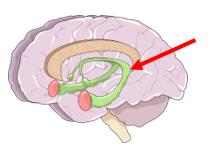
The hippocampus is a small, seahorse-shaped structure deep in the brain that plays a crucial role in forming and organizing new memories. It helps store experiences and connect them to emotions, making it essential for learning and recalling past events. Damage to the hippocampus can lead to difficulties in creating new memories, as seen in conditions like Alzheimer's disease.
Photo Credit: Servier Medical Art
Adapted from https://smart.servier.com/smart_image/hippocampus/
| | | | |