| |
|
FINDING STRENGTH IN THE CIRCLE:
How Group Therapy Helps Us Heal from Depression and Anxiety Together
| | |
When you are wrestling with depression or anxiety, the world can feel incredibly small. Depression tells you that you are completely alone in your darkness, while anxiety whispers that the outside world is a minefield you have to navigate perfectly, Together, they build a wall of isolation. But what if the most powerful tool for breaking down that wall isn't a solitary effort, but a shared one? Group therapy offers a unique bridge from isolation to connection. It is not just an alternative to one-on-one counseling; it is a dynamic, evidence-based powerhouse where education meets community. Here is a look at how stepping into a therapeutic group can transform the way we understand and treat depression and anxiety.
1 - Building a Sanctuary of Peer Support
The moment someone walks into a therapy group, the heaviest burden – the feeling of being uniquely broken – begins to lift.
-
Breaking the Mirror of Isolation: In a group, you look around and see reflections of your own internal struggles in the faces of others. Hearing someone else voice your exact late-night anxious thoughts or your deep depressive fatigue is profoundly validating.
-
The Power of Mutual Validation: There is a unique comfort that a therapist alone cannot provide. When a peer looks you in the eye and says, "/ know exactly what that feels like," it rewires the brain's threat response, replacing shame with safety.
-
A Culture of Accountability: Group members cheer each other on. When you know, your group is waiting to hear how your week went, it provides a gentle, encouraging push to try new behaviors and show up for yourself.
2 - Education: Understanding the 'Why' Behind the Feelings
Healing requires tools, and tools require an understanding of how they work. A core pillar of effective group therapy is robust mental health education.
-
Demystifying Depression: Group sessions dedicate time to unpacking what depression actually is. Members learn about its neurobiology, its cyclical nature, and how it distorts thinking patterns. Understanding the science helps people realize their symptoms are a medical condition, not a personal flaw.
-
Decoding the Anxiety Loop: Anxiety can feel like an erratic, unpredictable storm. Through structured education, participants learn to identify their specific triggers, map their physical responses (like racing hearts or shallow breathing), and intercept the panic cycle before it takes over.
3 - A Shared Toolbox of Coping Skills
Knowing why you feel a certain way is a great first step, group therapy excels at teaching you what to do about it. The group environment functions as a live laboratory to practice these skills.
-
Cognitive Reframing: Members learn to identify cognitive distortions – like "all-or-nothing" thinking or catastrophizing, and practice challenging those thoughts together.
-
Somatic and Mindfulness Grounding: Therapists guide the group through real-time nervous system regulation exercises, such as box breathing, progressive muscle relaxation, and mindfulness. Practicing these in a group setting reinforces the skills, making them easier to recall during moments of solo panic.
-
Behavioral Activation: Depression robs people of motivation. The group works together to create realistic, micro-step action plans to re-engage with joyful or productive life activities.
4 - Navigating Real-World Life Stressors Together
Mental health does not exist in a vacuum. Depression and anxiety are heavily fueled by the chaotic, messy realities of daily life. Group therapy provides a dedicated space to discuss these exact pressures.
-
A Safe Space for Daily Hurdles: Whether it is workplace burnout, relationship conflicts, grief, or financial strain, the group dedicates time to open discussion.
-
Collective Problem-Solving: When you bring a life stressor to the group, you get the benefit of different perspectives looking at the problem.
Contact Cathy DuFresne (CDuFresne@lakescenter.com) or Josephine Salem (JoSalem@lakescenter.com) to sign up for the Lakes Center fall groups or for additional information.
| | |
Clinical Social Worker
Lakes Center Mental Health Network
| | |
Clinical Social Worker
Lakes Center Mental Health Network
| | | | |
| |
Managing Anticipatory Anxiety | | |
Summer often brings events that are supposed to feel exciting, including vacations, family gatherings, weddings, social activities, and changes in routine. But looking forward to something does not always mean feeling relaxed about it.
Anticipatory anxiety happens when worry builds before an upcoming event. You may find yourself imagining everything that could go wrong, repeatedly reviewing plans, or feeling tense before anything has actually happened.
A few strategies may help:
- Separate what you know from what you are predicting
- Prepare for the parts of the situation that are within your control
- Avoid repeatedly checking, rehearsing, or seeking reassurance
- Remind yourself that feeling nervous does not mean something will go badly
- Speak with a mental health professional if anxiety begins interfering with plans or daily life
The goal is not to eliminate every anxious thought. It is to keep worry from taking over the experience before it even begins.
Read More...
| | | | |
| |
|
Lakes Center is proud to participate in NAMIWalks Michigan 2026, and we invite our patients, families, friends, and community members to join Team LCMHN as we walk together to support mental health awareness, hope, and recovery.
NAMIWalks brings together individuals, families, providers, and advocates who are committed to reducing stigma and creating a world where no one faces mental health challenges alone.
Event Details:
Date: Saturday, September 19, 2026
Location: University of Detroit Mercy, 4001 W. McNichols Rd., Detroit, MI 48221
Route Length: 5K
Schedule:
- Check-In: 8:00 a.m.
- Stage Program Begins: 9:00 a.m.
- Walk Begins: 10:00 a.m.
- Event Ends: 12:00 p.m.
How to Join our Team:
- Visit the Team LCMHN page
- Click “Join Our Team”
- Create a free NAMIWalks account or log in to your existing account.
- Register as a walker and select Team LCMHN.
- Invite friends and family to join you or support your fundraising efforts.
How to Support our Team:
Whether you walk, donate, volunteer, or help spread the word, your support helps NAMI’s (National Alliance on Mental Illness) mission, as we work together for a stronger, healthier community.
| |
Get Your Free Tickets to a Community Event!
Lakes Center is proud to be sponsoring the Food Court at this year's Rockin' Under the Stars event hosted by the Lakes Area Chamber of Commerce.
This event is a great way for families, friends, businesses, and food vendors to come together for an evening of fun, live entertainment, and community spirit. We’re thrilled to support something that helps everyone connect and enjoy what our community offers.
You can find more details about the August 1st event by clicking here.
As part of our sponsorship, we have received complimentary tickets that we would like to share with our clients and their families. We still have tickets left, and If you are interested in attending, please contact us at wellnesspartner@lakescenter.com to request tickets. Tickets will be available on a first-come, first-served basis while supplies last.
| | |
Lakes Center Proudly Sponsors the 2026 Walk4Friendship!
At Lakes Center, our core belief is that connection and community are vital to mental well-being. That is why we are absolutely thrilled to announce that we are sponsoring the 21st Annual Walk4Friendship on Sunday, August 30, 2026, in West Bloomfield!
The walk will benefit Friendship Circle which was founded 31 years ago with a mission to create friendship in the lives of children, teens, and adults with special
needs and those facing isolation while providing opportunities to become contributing
members of the community. Each year, they support roughly 4,000 individuals with special needs, along with their families, through educational, recreational, social, and vocational programs.
Because their mission aligns so closely with our own commitment to fostering supportive, inclusive communities, we couldn't be prouder to stand alongside them. The Walk4Friendship is a critical lifeline that funds a huge portion of these vital programs, and we can’t wait to join hands with our neighbors to walk, raise awareness, and show our support.
| | | | |
| |
Mental Health Tip:
Use Your Senses When You Feel Overwhelmed
When anxiety pulls your attention toward worries or worst-case scenarios, a grounding exercise can help bring your focus back to the present.
Pause and identify:
- 5 things you can see
- 4 things you can touch
- 3 things you can hear
- 2 things you can smell
- 1 thing you can taste
Take your time and notice specific details, such as colors, textures, temperatures, and sounds. This gives your mind a concrete task and can help interrupt escalating feelings of stress.
| |
Mental Health Tip:
Reduce Decision Overload
From meals and schedules to purchases and family plans, making repeated decisions can become mentally exhausting. Reducing a few unnecessary choices can preserve attention for the things that matter most.
Try simplifying one area:
- Plan several meals before the week begins
- Choose clothes or pack your bag the night before
- Create a short list of priorities instead of reacting to everything
- Set a time limit for smaller decisions
- Accept a good option rather than searching endlessly for the perfect one
| | | | |
| |
| |
We provide comprehensive psychiatric and psychotherapy services for a vast array of mental health issues, including depression, anxiety, bipolar disorder, psychotic illness, borderline personality disorder, substance abuse/addiction, trauma related issues, relationship difficulties, life transitions, and behavior problems. Call (248) 859-2457 to set up an appointment.
| | |
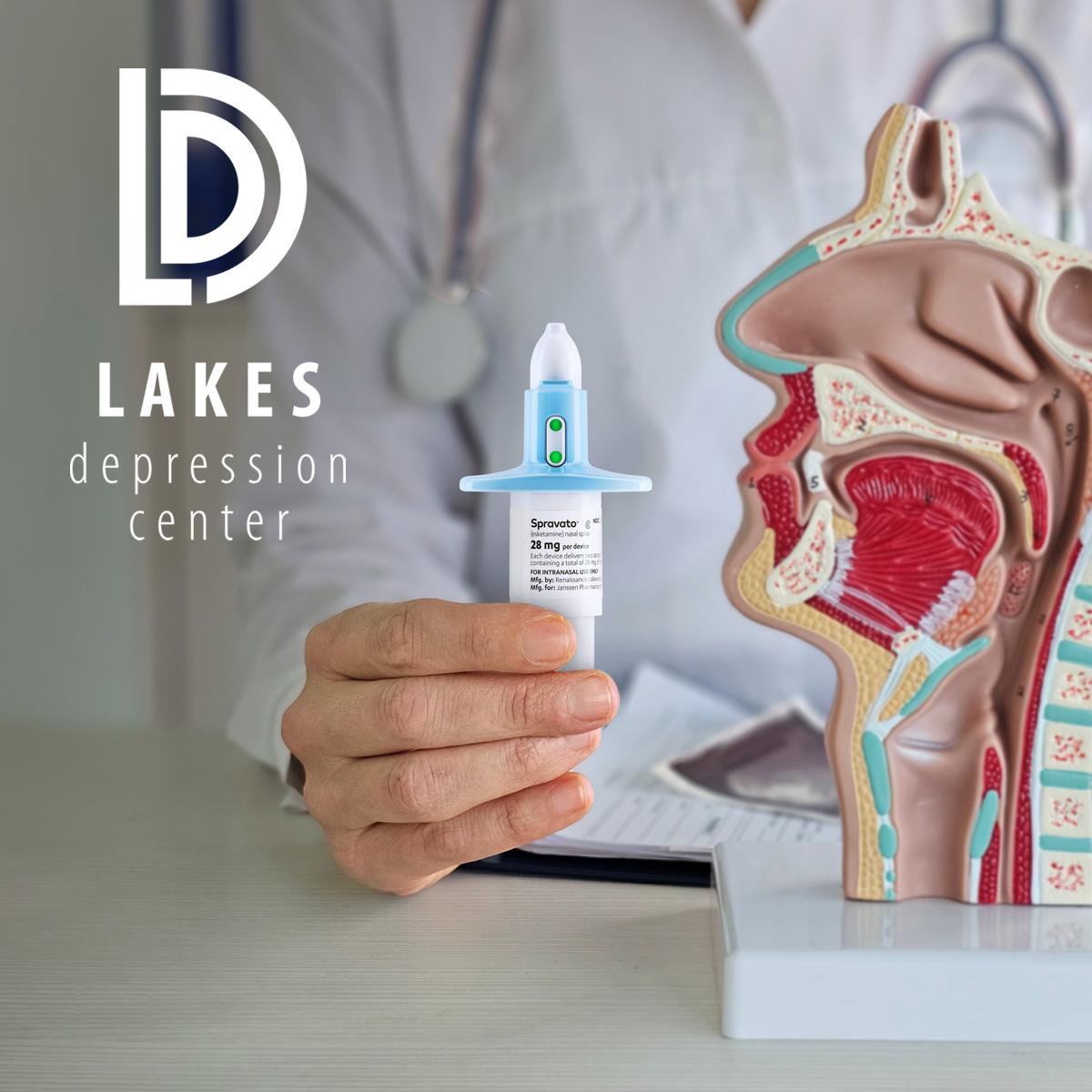
Did you know? SPRAVATO® can have a rapid antidepressant response and is added on to an antidepressant and the rest of your regimen. It is the first new mechanism of action to treat depression that has come out in over 30 years.
There is hope for treatment-resistant depression. Call (248) 859-2457 to set up an appointment.
| | | | |
|
Lakes DBT
We provide comprehensive DBT services to provide effective treatment of Borderline Personality Disorder (BPD) and other disorders involving emotion dysregulation, including co-occurring substance use disorders, major depressive disorder, and individuals with history of trauma. At Lakes DBT Center, we believe that with effective evidence-based treatment and a caring and coordinated treatment team, clients can create a life they love.
| | | | |
| |
| |
| |
|
Tuesdays, 10:30 am - 12:00 pm
Wednesdays 10:30 am - 12:00 pm
(Groups are ongoing)
Summer 2026 Schedule:
Groups meet weekly until June 17, then July 7th/8th, August 4th/5th and resume weekly in September.
Lakes Center, 2300 Haggerty Road, Suite 1170, West Bloomfield, MI 48323
Contact Josephine Salem at JoSalem@lakescenter.com or Catherine DuFresne at CDuFresne@lakescenter.com with any questions and/or to apply for membership.
This is an adult outpatient therapy group treating Depression and Anxiety related mental health disorders. Click here for more information!
| | |
Tuesdays 12:00 - 12:45 pm
Wednesdays 5:30 - 6:30 pm
Thursdays 12:30 - 1:15 pm
(All are Online only)
Contact Terrie Browning at TBrowning@lakescenter.com or (248) 342-9254.
To Sign Up: Call (248) 859-2457 or click here to fill out our Contact Form.
This group is open to people who have OCD, PTSD, Hoarding, Trichotillomania, Excoriation and Tics. We discuss how Exposure and Response Prevention (ERP) works to treat these as well as Generalized Anxiety and Panic Disorders. Since ERP can be difficult to maintain, sharing similar experiences with each other, as well as learning from the leaders will help you stay on the course.
| | | | |
| |
|
Lynne Lyons, MD
Medical Director & Psychiatrist
Dr. Lyons is our indefatiguable founder, medical director and a board certified psychiatrist. She did her psychiatric training at the University of Michigan – Ann Arbor. She has been in outpatient practice for over 25 years which has given her extensive experience in the evaluation and pharmacologic treatment of a broad spectrum of psychiatric disorders.
In addition to her personalized and carefully optimized medication recommendations, she offers state of the art options like genetic testing to assist in selecting medications, as well as SPRAVATO® for the treatment of mood disorders.
Dr. Lyons genuinely cares about each of her patients and tries to ensure that everyone is cared for in the best possible way by her amazing team. She believes that thoughtfully selected medication coupled with psychotherapy is the fastest and most effective way to provide relief and a return to function. Following up with relapse prevention and wellness maintenance is also critical.
Read more...
| |  |
Marina Pesserl,
PhD, LPC
Licensed Professional Counselor
Marina is a board certified licensed professional counselor who works with adults of all ages. Her areas of expertise include anxiety, depression, bipolar disorder, parenting, perinatal adjustments, mood disorders, couples therapy, domestic violence, and post-traumatic stress. In addition, she is an approved clinical supervisor supporting novice counselors obtain their professional licenses.
For over twelve years, Marina specialized in helping women with perinatal mood disorders at the Beaumont Health System’s Parenting Program. After obtaining her degree in educational psychology in Argentina, she lived in Germany for thirteen years. Marina obtained a Master Degree in Community Counseling from Siena Heights University in Michigan, and a Doctorate in Health Psychology from Walden University - researching implementation of mindfulness-based stress reduction to the treatment of postpartum depression and anxiety.
Read more...
| | | | | |
© Lakes Center, July 2026 | | | | |