Weekly Digest Number 23 - June 7th, 2022 |
|
Welcome to the RWU Rail & Labor News! This news bulletin is produced and emailed out each Tuesday morning. We hope you find each week's news and information useful. If so, please share with co-workers, friends, and colleagues. If you like, you can sign them up to get all the news from RWU HERE. Or forward them the link. Note: If you read over this news bulletin each week, you will be sure to never miss the important news of what is going on in the railroad world from a worker's perspective!
|
|
RWU Promulgates Resolutions on the Crisis in Rail Management and Train Crew Staffing/Fatigue |
|
At the June 1st meeting of the RWU Steering Committee, two resolutions were adopted that deal with the current crisis affecting the rail industry, specifically the Class One railroads. See the links below to read the contents of each. They are both being forwarded to the rail unions and to DOT Secretary Buttigieg.
Please view the Resolutions, then copy, post, forward, and otherwise circulate them broadly. Thanks!!
|
|
(Editor's Note: If the bill is signed by the Governor, New York would join with more than half a dozen other states with similar laws on the books. While these state laws may ultimately be stricken down or overturned by pro-corporate judges, legislators, and bureaucrats, pushing for them is just one tool in the toolbox. This is why we need Plan B, Plan C, and Plan D as well!) |
|
New York Two-Person Crew Bill Heads to Governor for Signing |
|
The two-person crew bills introduced in New York state, Assembly Bill 1287B and Senate Bill 3953B, have passed both chambers of the state Legislature as of Tuesday, May 31. Both bills have been combined into Senate Bill 3953 and are now headed to the desk of Gov. Kathy Hochul (D) for signing.
The SMART-TD New York State Legislative Board urges all SMART members in the state to contact Governor Hochul and tell her to sign the two-person crew bill – Senate Bill 3953 — into law.
“We need our members to contact the governor’s office, urging her to sign the bill so we can wrap this effort up,” TD N.Y. State Legislative Director Sam Nasca said. “This is a big accomplishment, and a lot of effort went into this by a lot of members and others, which I want to offer my deepest thanks.
|
|
(Editor's Note: This truly is a historic development. All twelve rail unions are issuing a joint statement on the state of national bargaining. RWU has been pushing for a universal coalition of ALL rail unions since our founding in 2008. See that Resolution from the Founding Convention HERE. It is up to every rank & file member to demand that the unions stand together and fight back united. It is the only way to win.)
|
|
The United Rail Unions Issue the Following Statement June 2, 2022 |
|
The Rail Unions who are bargaining as part of the Coordinated Bargaining Coalition and the Brotherhood of Maintenance of Way/SMART Mechanical Coalition concluded their second week of compulsory joint National Mediation Board-mediated negotiations with the National Carriers’ Conference Committee (NCCC) yesterday.
These joint mediated negotiations, under the direction of the NMB Board Members themselves, resulted from the Unions’ request to be released from mediation after more than two years of bargaining with the major U.S. Class I railroads.
In spite of the Unions’ best efforts to negotiate a fair agreement, the NCCC and the rail carriers that it represents still refuse to make a comprehensive settlement proposal that our members would even remotely entertain. In fact, the carriers continue to advance proposals that insult the hard-working Union members who have carried our Nation through the pandemic.
Although all of the involved Unions would prefer to reach a voluntary agreement, it has become quite clear at this point that the rail carriers will not bargain in good faith to that end. For that reason, all of the involved Rail Unions are again requesting that the NMB put forth a proffer of arbitration to move our contract dispute through the remaining steps of the Railway Labor Act.
The unions comprising the Coordinated Bargaining Coalition are: the American Train Dispatchers Association (ATDA); the Brotherhood of Locomotive Engineers and Trainmen / Teamsters Rail Conference (BLET); the Brotherhood of Railroad Signalmen (BRS); the International Association of Machinists (IAM); the International Brotherhood of Boilermakers (IBB); the National Conference of Firemen & Oilers/SEIU (NCFO); the International Brotherhood of Electrical Workers (IBEW); the Transport Workers Union of America (TWU); the Transportation Communications Union / IAM (TCU), including TCU’s Brotherhood Railway Carmen Division (BRC); and the Transportation Division of the International Association of Sheet Metal, Air, Rail, and Transportation Workers (SMART–TD).
The Brotherhood of Maintenance of Way Employees Division and SMART Mechanical Unions are also bargaining as a coalition.
Collectively, these Unions represent approximately 140,000 railroad workers covered by the various organizations’ national agreements, and comprise 100% of the workforce who will be impacted by this round of negotiations.
|
|
To Prevent Disasters Like Lac-Mégantic, Private Interests Cannot be Allowed to Affect Regulations |
|
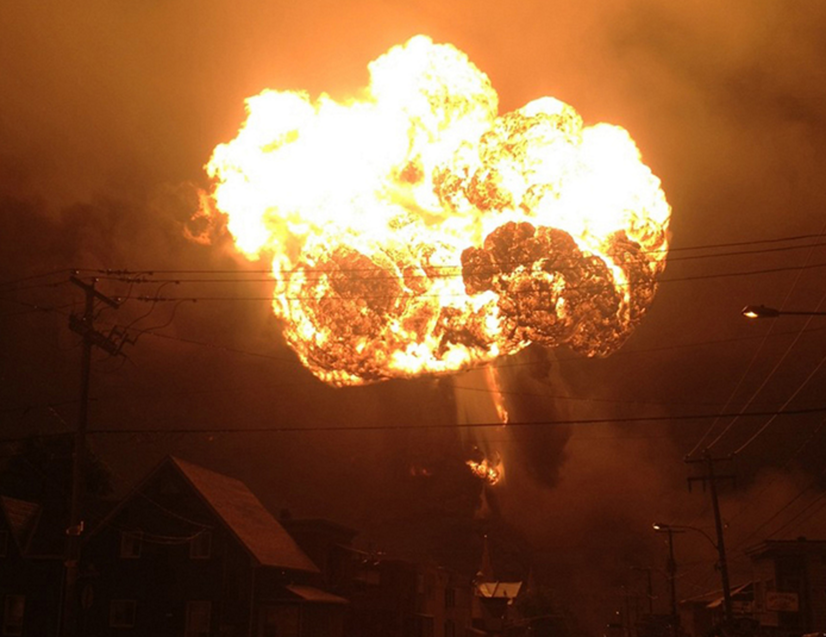
On July 6, 2013, the fourth deadliest railway disaster in Canadian history took place. A train hauling 72 tankers filled with crude oil derailed in Lac-Mégantic, Que., killing 47 people.
The roots of the Lac-Mégantic rail disaster can be traced to a combination of corporate negligence and regulatory failure. It is what spurred the publication of my recently edited volume about how Canadian corporations have co-opted government agencies for private interests.
Just prior to the disaster, the Canadian railway lobby had redrafted the Canadian Rail Operating Rules, permitting freight trains to operate with a single-person crew.
Read news coverage based on evidence, not tweets
Get newsletter
This policy change was a significant contributing factor to the disaster. It exemplifies why regulatory capture is so dangerous and why it needs to be stopped.
This primarily occurs when industries are the ones shaping policy, legislation and regulations, instead of the government. Industries often frame regulations as being detrimental to job and wealth creation. This enables them to block or delay new regulations, and exert pressure to remove or dilute existing ones.
The increase in regulatory capture can be traced back to Prime Minister Stephen Harper’s 2012 Cabinet Directive on Regulatory Management policy that framed regulations as an administrative burden and a business cost that needed to be “streamlined.”
The policy’s centrepiece was the “one-for-one” rule, which mandated regulatory agencies to offset each new or amended regulation by removing at least one existing regulation.
|
|
(Editor's Note: This appears promising. After reading this article, make sure to read the next one and watch the short video clip where the same Transport Minister is called out for the government's failure to stop the practice of rail industry private police conducting official investigations into accidents and fatalities of railroad workers rather than civil law enforcement agencies. This practice has caused a huge controversy in Canada in the wake of the Field, BC runaway train wreck in 2019 that took the lives of three crew members, and was subsequently "investigated" by Canadian Pacific's own privately employed railroad police. Notice how the Transport Minister sidesteps the question completely.) |
|
Transport Canada OKs Measures to Reduce Derailment Risk |
|
Canadian Minister of Transport Omar Alghabra this week announced new measures aimed at improving track conditions to reduce the risk of train derailments.
Transport Canada has approved a series of changes to strengthen the Rules Respecting Track Safety, which railroads must follow when inspecting and maintaining track. The changes stem from a 2020 ministerial order that focused on major risks of derailments due to the condition of Canada's railway infrastructure, Transport Canada officials said in a press release.
The changes require railroads to develop performance indicators that help Transport Canada analyze track conditions that inform its oversight activities; strengthen requirements for inspecting and maintaining ties; and provide government inspectors with access to additional information on company track standards to ensure effective and consistent oversight.
The new measures build on revisions announced in May and December 2021 that focused on the training and qualification of railroad personnel who inspect tracks, track inspection frequency and automated track inspection technology.
"These rule changes will enhance track safety by improving information sharing between railway companies and Transport Canada, as well as by strengthening the inspection and maintenance requirements for crossties," Alghabra said. "We will continue to explore measures that can further improve safety."
|
|
(Editor's Note: At the RWU 8th Biennial Convention June 16th and 17th, we will conduct a workshop and full discussion with Tavengwa Runyowa, lawyer who is involved in the case of the runaway train wreck.)
|
|
Fatal Derailment Prompts Petitions Urging Feds to End Private Railway Policing
Canadian Pacific Railway police investigated their own company after fatal derailment
|
|
The Canadian government now has a 45-day deadline to take a stand on railway safety, says an NDP MP.
Two petitions aimed at holding rail companies accountable for the safety of their employees, the public and environment were presented in the House of Commons on Monday by NDP MP Niki Ashton, who cited CBC's recent coverage of issues within Canadian Pacific and the Transportation Safety Board.
The push for government action is motivated by "the pursuit of justice" for Dylan Paradis, Andrew Dockrell and Daniel Waldenberger-Bulmer, three Calgary-based rail workers who were killed when their train derailed near Field, B.C., in 2019, said Ashton in sponsoring the petitions.
Ashton, who represents the Manitoba riding of Churchill-Keewatinook Aski, said on her YouTube page that the petitions seek "an end to the government's complicity with CP" and demand "the abolition of private policing on Canada's railways."
The Transportation Safety Board (TSB) found the train's brakes failed, causing 99 cars to roll down a mountain and derail, including the lead locomotive, which landed in the Kicking Horse River — despite the entire train having passed a visual inspection in Calgary the day before.
A lawsuit filed by two of the victims' families alleges CP had a history of using "bad ordered" cars that had malfunctioning brakes and other mechanical defects.
|
|
(Editor's Note: The contract operator for MBTA is the international renegade company Keolis. Rail workers and allies are urged to oppose this company contracting with municipalities and other bodies to contract to operate transit services.) |
|
MBTA Operators Injured in Green Line Collision in Boston
Collision was the latest in a string of safety problems at the Massachusetts Bay Transportation Authority
|
|
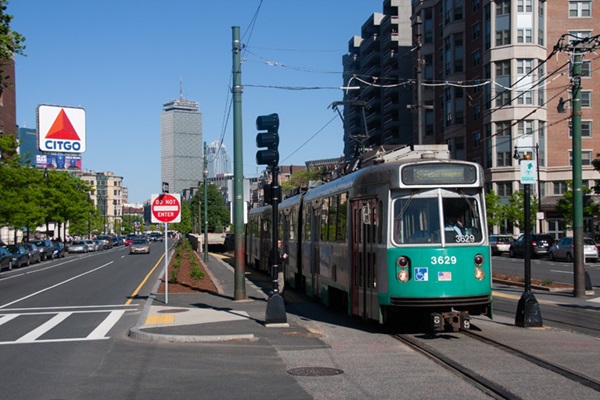
BOSTON – Two MBTA Green Line trains collided and derailed near the Government Center station on Wednesday night.
Three Green Line operators were injured in the 9:20 p.m. accident and taken to a hospital for treatment. The collision involved a westbound train with 20 to 25 passengers aboard and an empty train that was just entering service. No passengers were injured, the MBTA said.
The collision was the latest in a string of incidents that have concerned the Federal Transit Administration.
In an April 14 letter to MBTA General Manager Steve Poftak, Federal Transit Administration Associate Administrator Joe DeLorenzo said the agency would immediately increase its safety oversight of the transit system because it was “extremely concerned with the ongoing safety issues at the Massachusetts Bay Transportation Authority.”
DeLorenzo wrote that despite a recent meeting with MBTA leadership, it was unclear what actions the MBTA was “implementing to prevent and address the system’s safety violations.”
The FTA’s letter came days after a Red Line passenger was killed when his arm became caught in the train’s door. The man was dragged when the train departed the Broadway Station.
In September, a Red Line train derailed and, in a separate incident, an escalator failure caused a group of riders to fall at the Back Bay Station.
And in July, 27 people were injured in a collision between two Green Line trains.
|
|
FRA Awards $368 Million in CRISI Grant Funds to 46 Rail Projects |
|
The selected projects are designed to improve and expand passenger-rail service and fund conventional and high-speed rail lines, as well as increase supply-chain resilience and fluidity, support short lines, invest in new technology and safety advancements and benefit rail industry workforce development and training activities, FRA officials said in a press release.
The funds will also help create jobs and increase economic growth, they said. The Infrastructure Investment and Jobs Act (IIJA), which Congress passed in November 2021, nearly tripled funding for CRISI to $1 billion a year for the next five years.
CRISI aims to advance intercity passenger- and freight-rail projects that promote safety, economic growth, transportation equity and sustainable and resilient infrastructure. CRISI-funded projects will enhance multimodal connections, address slow orders and repair 100-year-old track to speed up the movement of goods from ports to rail to trucks to shelves, FRA officials said.
Examples of projects and grant amounts funded this year include:
|
|
CRISI Grants Awarded to Projects That Will Expand Passenger Rail |
|
The grant funding and passenger-rail related projects include:
• $57.9 million to perform surveys and complete preliminary engineering for Raleigh-to-Richmond (R2R) Corridor Program improvements between Raleigh, North Carolina, and Richmond, Virginia. Included in this project is the construction of a grade separation on the S-Line in Wake Forest, North Carolina. The project will advance the next phase of the R2R corridor development, which will eventually result in new intercity passenger-rail service;
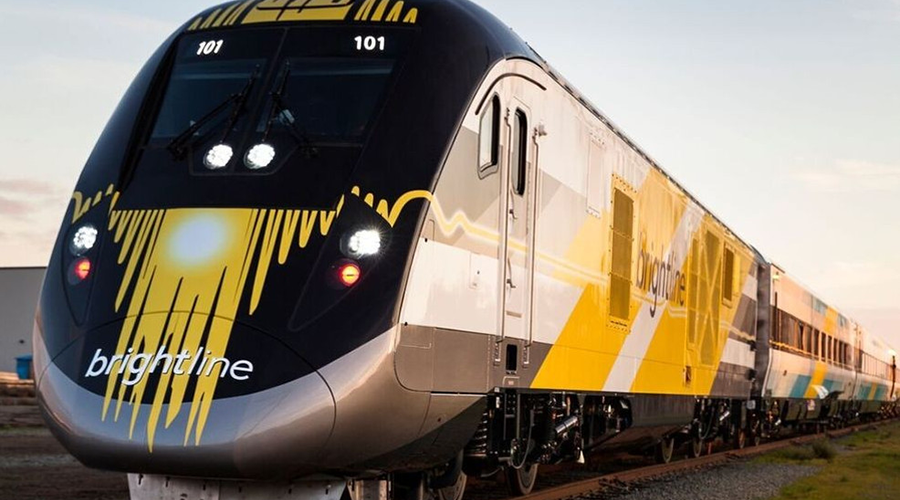
• $15.9 million awarded to Brightline Trains Florida LLC to advance preliminary engineering activities for the proposed 67-mile extension of a high-speed rail line from Orlando to Tampa, Florida;
|
|
(Editor's Note: As On Time Performance gets worse and worse under the PSR regime, Amtrak is desperate for a solution. Maybe this would be the answer.) |
|
Amtrak Seeks Right to Take Over Dispatching on Poor-Performing Routes as Part of New Contract with CN |
|
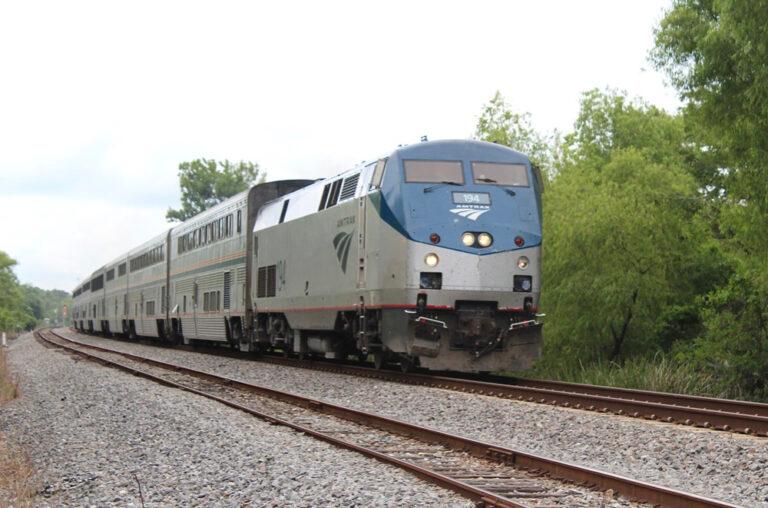
WASHINGTON — Amtrak is proposing that, in extreme examples of routes with poor on-time performance, it would be allowed to take over dispatching from host railroad Canadian National as part of a new operating agreement with CN.
In asking the Surface Transportation Board to set terms of a new agreement with CN, the passenger railroad proposes new methods to determine whether the host railroad receives incentive payments or pays penalties for the performance of passenger trains it handles. Amtrak says its proposal would increase CN’s incentives to “deliver all of Amtrak’s passengers to their destination on time, but does not inordinately penalize CN for delays that it did not cause.”
The terms proposed by Amtrak to determine whether CN has earned a payment or penalty would use a formula including “customer on-time performance,” passenger-miles traveled on CN, and host-railroad delays per 10,000 train-miles.
The dispatching proposal is part of a series of measures Amtrak advances to address prolonged timekeeping issues.
Friday’s 497-page filing with the STB — which does not include several appendices of details on the current CN-Amtrak agreement, redacted as confidential — is the latest step in a disagreement dating to 2013, when Amtrak asked the board to establish contract terms because the two parties were unable to reach agreement. Even after a 2019 STB decision in which the board offered its views on aspects of the dispute and ordered mediation [see “STB urges mediation …,” Trains News Wire, Aug. 13, 2019], there has not been a settlement. As a result, Amtrak trains on CN continue to operate under a 2011
|
|
(Editor's Note: Numerous rail advocacy organizations are expected to be represented at this conference. RWU expects to have representation there. We urge the rail unions to do likewise, at this and all rail advocacy events.) |
|
Greater Northwest Passenger Rail Summit Scheduled for August in Billings, MT |
|
Registration is now open to attend the inaugural Greater Northwest Passenger Rail Summit at the historic Northern Hotel in downtown Billings, MT, on Aug. 22-23, 2022.
The Summit will bring passenger railroad organizations, advocates and enthusiasts together with local, state and federal elected officials and policymakers, host railroads and rail infrastructure experts to educate, innovate and coordinate for the restoration, expansion and enhancement of passenger rail service across the Greater Northwest. The passage in late 2021 of the federal Infrastructure Investment and Jobs Act (IIJA) has created the best opportunity in decades to expand and improve passenger rail access, and no region of the country is in more need of that expansion and improvement than the Greater Northwest. Now is the time for rail advocates and policymakers from across the region to start coordinating to ensure the “second rail revolution” doesn’t pass us by.
Register today by visiting www.gnwprs.org. Be sure to register by July 15 to take advantage of Early Bird registration specials. Special group block rates for in-person summit attendees are available at the Northern and at the DoubleTree Inn by Hilton. Contact information for the hotels is on the registration site. Be sure to ask for the GNWPRS block rate when making your reservations. The block rate closes on July 22 for the Northern and on Aug. 8 for the DoubleTree.
|
|
(Editor's Note: In typical fashion, CEI James Foote says none of the railroad's problems are related to PSR. He and the other CEO's are blind to anyone's interest but the stockholders short-run interests.) |
|
Service Problems Related to Crew Shortage Have Cost CSX Traffic |
|
NEW YORK – CSX Transportation has lost traffic and failed to capitalize on strong freight demand due to service problems related to its ongoing train crew shortage, CEO Jim Foote says.
“How much business are we missing? Lots. This is not minimal. This is not on the fringes. We’re not doing the job we should be doing,” Foote told an investor conference on Thursday.
There’s strong freight demand, Foote says, but the railroad can’t meet it because it needs 300 more conductors to return to full staffing levels of around 7,000 active train and engine employees.
CSX’s carloadings are down 2.1% so far this year, while intermodal traffic is down 0.6%, according to its latest Association of American Railroads carload report. Overall, U.S. rail traffic is down 3.5% through the end of May.
|
|
(Editor's Note: These weekly/monthly traffic declines have become such the norm that it can hardly be considered news anymore ...) |
|
U.S. Rail Traffic Declines in May |
|
U.S. railroads also originated 1,102,558 containers and trailers in May 2022, down 4.3%, or 49,258 units, from the same month last year. Combined U.S. carload and intermodal originations in May 2022 were 2,031,300, down 4%, or 85,079 carloads and intermodal units from May 2021.
In May 2022, seven of the 20 carload commodity categories tracked by the AAR each month saw carload gains compared with May 2021. These included: crushed stone, sand and gravel, up 5.8%; motor vehicles and parts, up 9%; and food products, up 7.1%.
|
|
|
|
|
|
|