Rail Workers Weekly News Digest
Number 10 - March 10, 2020
|
|
Below is a series of articles compiled over the previous week.
They are of interest to railroad workers.
_____________________________________________
|
|
Article 1 -
DERAILMENT NEWS
Police
not
probing recent rail disasters, crude oil derailments, deaths for possible negligence
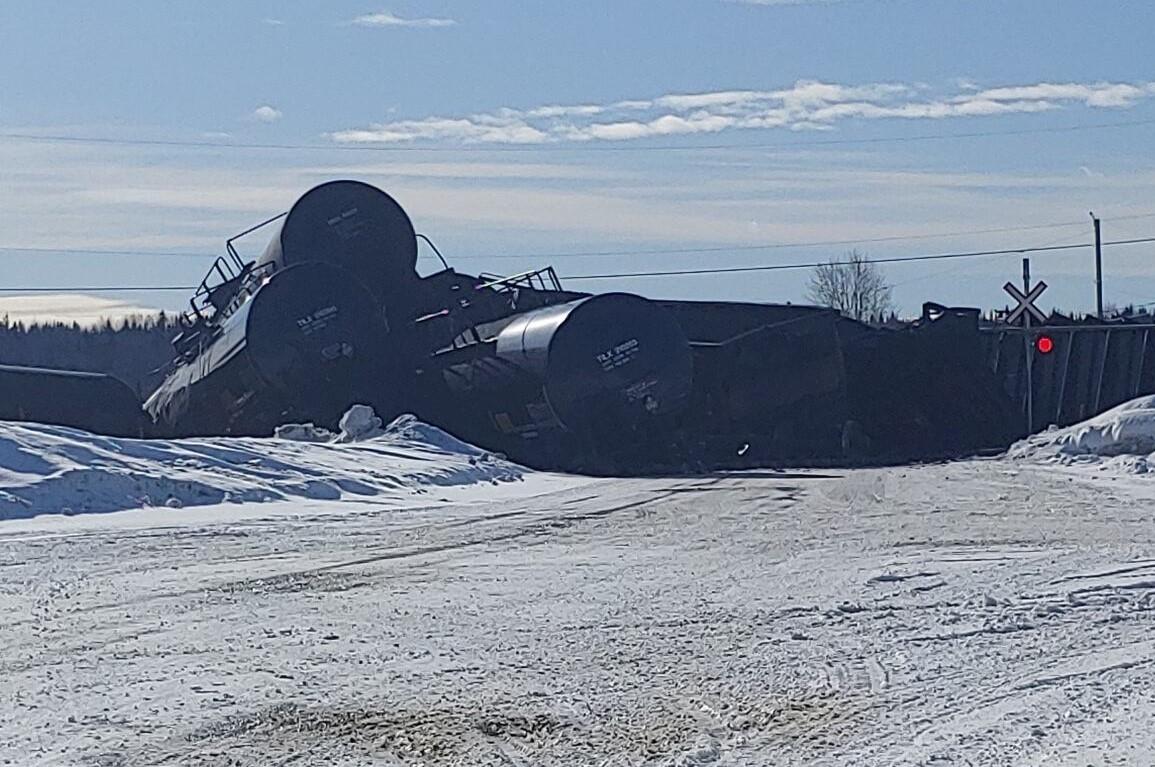
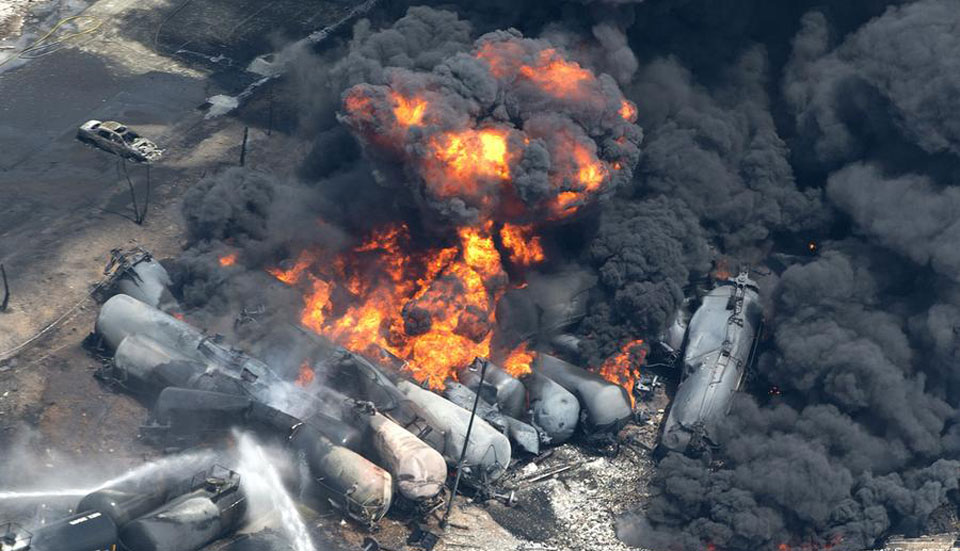
(Editor's Note: The most recent crash in Canada took place March 6th, when 27 cars went off the rails within a few hundred yards of an elementary school in British Columbia. This comes on the heels of two earlier oil train derailments and explosions in western Canada. Combined with the outrage about last year's runaway train that killed three crew members, and the 2013 oil train disaster that killed 47 in Eastern Canada, the public is demanding answers. But as this article shows, the forces of law and order and not respoinding).
Public police forces are choosing not to investigate major accidents at CN and Canadian Pacific Railway, including recent crude oil train crashes and deadly derailments, a CBC News investigation into Canada's rail system has found.
Instead, the RCMP, Ontario Provincial Police and other forces routinely defer to little-known federal railway police run by CP and CN, leaving the companies to investigate themselves with no outside police looking into potential criminal negligence.
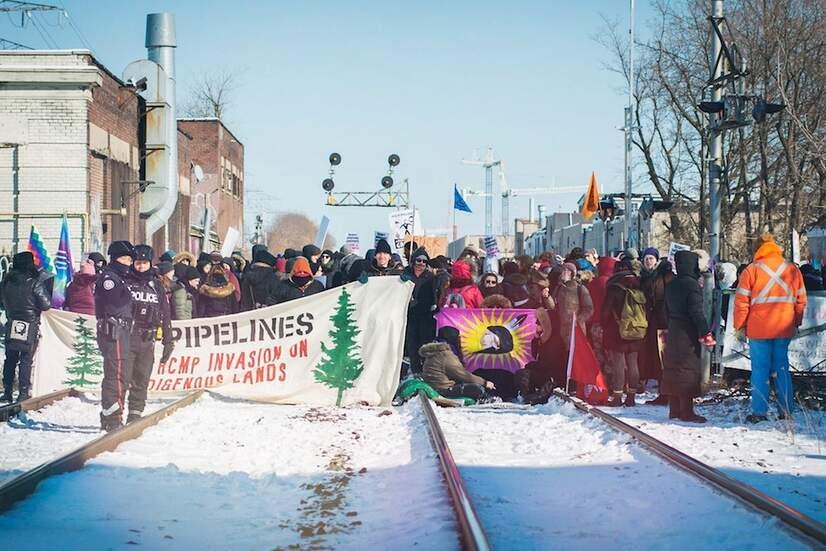
It's infuriated some families of workers killed on the railways who claim a "double standard" where outside police are willing to move in to clear blockades along Canada's rail lines but routinely don't investigate rail corporations in the event of major disasters or fatalities.
"It makes me angry," said Tara Jijian, whose husband was killed working at CP's rail yard in Regina.
"Because the blockades and protests affect the economy somewhat, everybody rushes to make sure that, you know, 'We have to clear this off, this has to be dealt with,' " said Jijian.
"But when it's a person that is killed on those same railway tracks, the police just absolutely refuse to get involved."
|
|
Article 2 -
HEALTH & SAFETY NEWS
Rail Unions Urge FRA to Act Regarding Spread of Corona Virus
CLEVELAND, Ohio (March 6) — SMART Transportation Division (SMART-TD) and the Brotherhood of Locomotive Engineers and Trainmen (BLET) jointly petitioned the Federal Railroad Administration (FRA) on March 6 to take action in responding to the rapidly spreading COVID-19 (coronavirus) in the United States.
“With at least 231 patients treated in 22 states, and at least 14 deaths at the present time … we and other rail labor Organizations take this issue very seriously, and we have been monitoring it closely,” wrote SMART-TD President Jeremy Ferguson and BLET President Dennis R. Pierce in a letter to FRA Administrator Ronald J. Batory.
The two union presidents pointedly questioned the FRA’s lack of an action plan to help address the potential spread of the coronavirus among rail workers.
“As you are likely already aware, over the last several weeks multiple departments within the Department of Transportation … have issued guidelines to employers on how to approach this issue, along with statements and guidelines focused on educating and protecting the crew members, passengers, and consumers who may be impacted by this deadly disease,” the union presidents wrote. “To our knowledge, the FRA has overlooked, or perhaps outright disregarded, its responsibility to get involved with this matter.”
The presidents urged FRA to issue guidelines directed at U.S. rail carriers, employees and passengers similar to those issued by other departments within the DOT.
|
|
Article 3 -
CREW CONSIST NEWS
Two Person Crew Bills in States Move Forward Despite the FRA ruling last spring.
In spite of the FRA ruling last May that "preempts" state laws that mandate minimum train crew sizes, a number of states are moving forward with legislation to set minimum standards for train crew sizes.
To date, state legislatures in New York, Wyoming, Missouri and Virginia will consider legislation designed to outlaw single person train crews. In 2019, three states - Nevada, Colorado and Illinois - adopted such legislation. These three states joined four others - Wisconsin, California, Minnesota and Arizona - all with similar restrictive ;laws already on the books.
Meantime, at least four states - including California, Nevada, Washington and Illinois - have filed legal actions, protesting the FRA's action as an interference in their rights as sovereign states to regulate health and safety within their borders.
|
|
Article 4 -
RAIL SAFETY NEWS
New Amtrak CEO’s record on safety called into question
On Monday,
RT&S reported
that Amtrak has hired William J. Flynn to be its next CEO and president. Flynn is presently the CEO of Atlas Air Worldwide, which operates cargo aircraft and charters. There is concern in some quarters that the management team Flynn leads at Atlas Air has not made safety a top priority in its operation.
Flight 3591, an Atlas Air Boeing 767 cargo plane, on approach to Houston’s George Bush Intercontinental Airport in February 2019, crashed, killing the two pilots and a pilot from another airline who was in the jumpseat. The plane was operating under contract with Amazon.
Business Insider
is reporting that Atlas Air pilots said there is a lack of emphasis on safety and training standards, the hiring of inexperienced and inadequately qualified pilots, and low pay at the air carrier. According to the Business Insider report, union leaders and pilots have been concerned about “shoddy training standards, fatigue and overwork, poor morale, and below-industry pay” at Atlas Air, and say that these conditions have reduced the level of safety at the air carrier.
After the Atlas Air 767 crash a little over a year ago, pilots raised safety concerns, and the National Transportation Safety Board agrees with the pilots about some of them. The investigation into this crash is continuing.
Atlas Air is one of several cargo airlines that have a contract with Amazon, and some commercial aviation experts believe that safety has been compromised to some extent as these carriers work to keep up with with the heavy traffic demand associated with Amazon’s business.
In a statement to Business Insider, made by Flynn one year ago (shortly after the 767 crash), he said “Since our founding over a quarter of a century ago, we have worked hard to earn and maintain a record of safety and compliance. We are heartbroken by the loss of Flight 3591 that claimed the lives of three of our friends and colleagues. We are working closely with the National Transportation Safety Board and the Federal Aviation Administration (FAA) to learn what happened, why it happened and what needs to be done to prevent a recurrence.”
|
|
Article 5 -
CRUDE BY RAIL NEWS
Off the Rails: Bitumen Trains Hold No Hope for Alberta Tar Sands
As Canadian First Nations protesters disrupted the flow of freight and passengers across Canada, global mining giant Teck Resources jettisoned a C$20 billion project to squeeze more low-grade crude oil from the vast tar sands of northern Alberta.
The mining giant—Canada’s biggest rail shipper—noted in its cancellation statement Feb. 23 that there is simply no prospect for mining and moving more bitumen from Alberta’s tar sands: “It is now evident that there is no constructive path forward for the project.”
Indeed, two years ago, the company had warned that Canada’s railways were unable to accommodate existing resource business, let alone any growth: “Perennial rail service challenges have impacted Teck’s competitiveness, our national supply chain’s long-term economic sustainability and Canada’s global reputation as a trading nation.”
True, the rush of global investment bankers to shun new coal and oil development would have starved all new tar sands projects no matter what. But the absence of any viable way to get additional bitumen to market blows up the spreadsheets before they even come under the climate-spooked gaze of investment bankers.
First, the federal government reluctantly crippled the country’s rail network with emergency slow orders to mute a staccato of winter-related oil-train derailments. Then, a tiny alliance of anti-pipeline First Nations people and climate activists managed to shut down CN’s transcontinental main line with a few shipping pallets and a burning tire.
Perhaps the federal government (while quietly encouraging CN and Canadian Pacific to route trains through detours on each other’s tracks) were expecting “ordinary” Canadians to rise up against the blockades. Instead, public sympathy remained stubbornly on the side of the natives and climate activists. Even rail customers were muted in their lamentations, fearing that they would become social media targets should they side with the very petroleum shippers who were wrecking the normal movement of grain and containers.
|
|
Article 6 -
PASSENGER RAIL NEWS
Chao Calls for Expedited Hudson Tunnels Repair.
When we last reported to you about Amtrak’s Hudson River Tunnels, known officially as the “North River Tunnels” between New Jersey and Penn Station New York (Gateway: The Series, Part 8: The Existing Tunnels May Fail First, posted here on Dec. 30, 2019), we had discovered that Anthony R. Coscia, Chair of the Amtrak Board and Vice Chair of the Gateway Program Development Corp. Board, expressed his concern that the tunnels could fail within five years. That was a time frame far shorter than the ten years or more that it would take to build new tunnels before starting to repair the existing ones.
Chao said, “I’m pleased to report that the Department is working closely with Amtrak to advance rehabilitation work on the existing Hudson Tunnel[s], also known as the North River Tunnel[s]. Given the time, the cost and the complexity of building entirely new tunnel[s], the Department is working with Amtrak to design and validate a faster and more cost-effective method to improve safety and functionality in [these tunnels], as the first order of business. So, beginning rehab work in the near term is the right move; and not waiting years for the construction of new tunnel[s] beforehand.”
|
|
Article 7 -
RAIL & ENVIRONMENT NEWS
European Commission proposes 2021 as European Year of Rail
(Editors Note: Perhaps railroaders and our unions in North America should reach out to other groups of environmentalists, passengers and rail advocates in an effort to get our governments to proclaim a similar endeavor that could provide tens of thousands of good paying jobs, take cars and trucks off the highways, and build a cleaner environment).
THE European Commission (EC) has proposed designating 2021 as the ‘European Year of Rail,’ to support the delivery of its European Green Deal objectives for transport.
The move will see a series of events, campaigns and initiatives launched throughout the year to promote rail as a sustainable, innovative and safe mode of transport. The year will also highlight rail’s benefits for people, the economy and the climate and focus on the remaining challenges to create a true borderless Single European Rail Area.
“There’s no doubt that railway transport means huge benefits in most areas: sustainability, safety, even speed, once it’s organised and engineered according to 21st century principles,” says the EC’s transport commissioner, Ms Adina Vălean. “Setting up a coherent and functional network across all Europe is an exercise in political cohesion. The European Year of Rail is not a random event. It comes at an appropriate time, when the EU needs this kind of collective undertaking.”
“Rail is not only environmentally friendly and energy-efficient – it is also the only mode of transport to have almost continuously reduced its CO2 emissions since 1990, at the same time as it increased transport volumes,” the EC says.
The European Year of Rail in 2021 will help to step up the pace of rail modernisation, the EC says, which is needed to make it a more popular alternative to less sustainable transport modes.
|
|
Article 8 -
RAIL MAINTENANCE NEWS
Track Workers Union Concerned About Current State of Rail Maintenance
BMWED Director of Arbitration Robert J. Shanahan Jr. went to Capitol Hill yesterday to testify on the state of the nation’s crumbling railroad infrastructure and the rail carriers’ propensity to contract out much-needed track maintenance and construction work away from Brotherhood members.
Invited as an expert witness by chairman, U.S. Rep. Daniel Lipinski (D IL-03), Brother Shanahan’s testimony at the House Subcommittee of Railroads, Pipelines, and Hazardous Materials’ “Funding a Robust Freight and Passenger Rail Network” hearing highlighted issues our Union has been battling for some time. Citing his experience both as a laborer with Metra Railroad in Chicago and as the director of the Brotherhood’s arbitration office, Brother Shanahan spoke to the urgent need to repair our country’s railroad tracks and bridges and emphasized the importance that BMWED members perform the vital work.
“There is no question that BMWED members are the most qualified and highly-trained to perform this work,” Brother Shanahan told the committee. “My experience in the field at Metra shows the urgent need for greater infrastructure funding for passenger railroads but any infrastructure package needs to have protections to ensure that the work is performed by Union members who have been properly trained on FRA safety rules.”
|
|
|
|
|
|
|