Weekly Digest Number 26 - June 29, 2021 |
|
BMWED Restructure to Provide Single Systems for Members on Each Class One Railroad |
|
(Editor's Note: The letter below is from the BMWED President to the membership. This is an interesting development (not without controversy!) that, if implemented, could possibly give the union more leverage in bargaining with each Class One carrier. So, how about merging the various unions on each carrier into one and we could really have some power!)
Dear Brothers and Sisters:
The current structure of our Union weakens the voice and strength of the rank and file membership. The current composition of our Union is a century old and no longer comports to the current rail industry, and it does not deliver the best and most efficient representation our membership deserves. Over the last thirty years, our employers have merged and reorganized operations and labor relations. Our Union has not met the challenge with new organization of our own. As a result, there are often many Federations with different dues structures and bylaws representing members on a single employer and with the same agreement. This structure hurts our ability to deliver effective representation to the membership which is the whole reason for our existence.
The job of the System Federations under our Bylaws is to enforce the collective bargaining agreements, negotiate agreements, and generally work to improve the working conditions of the members. BMWED members on one employer should pay for one General Chairperson and not several. BMWED members on one employer should speak with one voice to management and not several. Currently we have situations where a BMWED General Chairperson on one employer with a few dozen members has as much to say as the BMWED General Chairperson who has two thousand members. Management uses this structural problem in our Union to pit us against each other for Management’s benefit at the expense of the membership. The multiple General Chairpersons operating in this system may think it should continue but I do not believe that this would be in the best interest of the membership. Correcting this problem will improve the representation of the membership by our Union.
|
|
CP Threatened Lawsuit Against Safety Watchdog After Investigator Spoke out About Deadly Crash
Transportation Safety Board faces questions about its powers, independence in case of deadly B.C. derailment
|
|
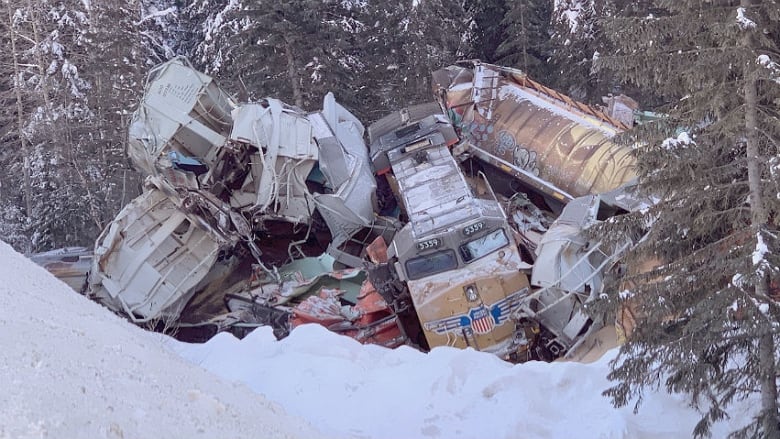
The lead safety investigator for a deadly derailment in the mountains of eastern B.C. was pulled off the case after Canadian Pacific Railway threatened to sue him and his bosses for suggesting the RCMP should look into potential criminal negligence by the railway, CBC News has learned.
Don Crawford, a senior investigator with the Transportation Safety Board (TSB), says he came to suspect major safety failures by CP had led to the runaway crash of Train 301 near Field, B.C., on Feb. 4, 2019, that killed three crew members — Dylan Paradis, Andrew Dockrell and Daniel Waldenberger-Bulmer. Based on his findings, he went to his bosses in late 2019 asking to call in the RCMP to investigate.
When supervisors refused to alert police, Crawford went public, telling CBC News in early 2020: "There is enough to suspect there's negligence here and it needs to be investigated by the proper authority."
CP lawyers immediately began phoning and emailing the TSB, and by the next morning, had sent an official warning of potential legal action, according to internal documents obtained by CBC News under access to information.
|
|
Five Lives Lost: Workers at CN Raise Safety Alarm After String of Rail Deaths |
|
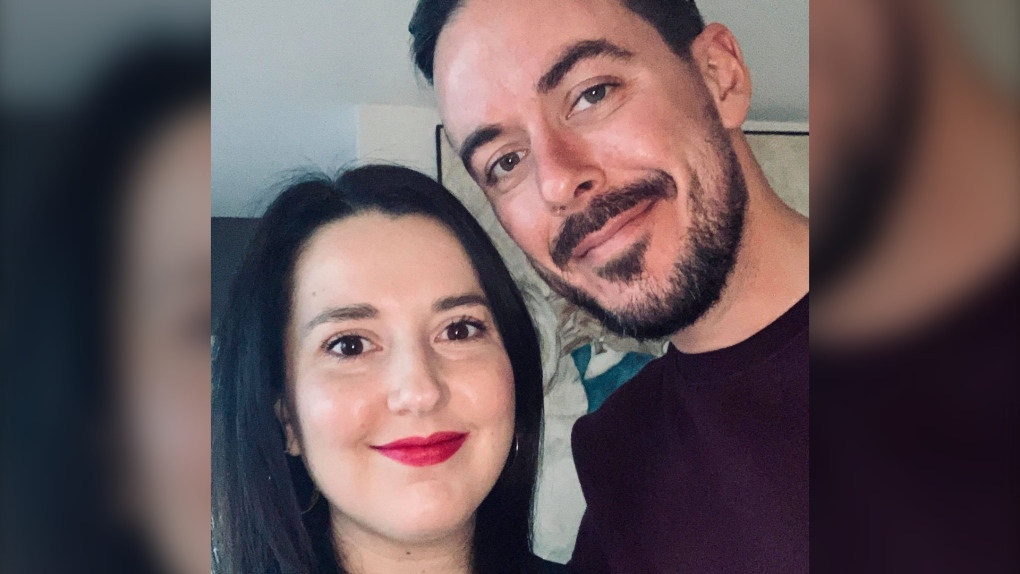
MONTREAL -- Yoan Morneau rarely talked at home about the details of his job. His girlfriend only knew two things: he liked it, but it also made him increasingly nervous. Since he was about 25, Morneau had worked at a Montreal railyard, constantly crossing train tracks and climbing up and down rail cars, sometimes driving the cars across town. Why he liked it was obvious. “He always told me he felt like he was going on a mission every day,” said a coworker. “Whether the weather is bad or not, he was always keeping his big smile.”
Everyone at work loved Morneau, said his coworker. He was straightforward and hardworking but had “a lot of humanity,” a lot of curiosity, he said. Morneau was born and raised in Montreal, but his coworkers came from all over, and he often tried to learn about their different cultures.
“He’s the kind of guy, even if he doesn’t have the free time to talk with you, he’s going to take the two minutes he doesn’t have to support you, to listen to you,” said the man, who still works at Canadian National Rail and didn’t want to be identified for risk of job repercussions.
Morneau died in a workplace accident this January. His coworkers said they wanted to talk to media to make sure he’d “never be forgotten,” and to try, after five similar deaths at their company in two-and-a-half years, to save others from fatal accidents.
Could Morneau’s life have been saved? CN employees say yes, but not with a quick new safety rule—only with a deep reckoning of what’s happened at their company in the last few years....
|
|
Biden: Bipartisan Deal Reached on Infrastructure |
|
President Joe Biden yesterday announced a group of 10 Democratic and Republican senators reached an agreement on a five-year, $973 billion package to fund the nation’s infrastructure. Of that amount, $579 billion is new spending that was not allocated though other projects. The proposal calls for $109 billion for roads and bridges; $49 billion for public transit; $66 billion for Amtrak, commuter- and freight-rail; $25 billion for airports and $55 billion for water infrastructure.
While neither side got everything it wanted, Biden praised the group’s ability to reach a consensus. "There was serious compromises on both ends," the president said in remarks delivered after the agreement was announced.
Biden indicated his support for the physical infrastructure deal depends on Congress passing companion legislation that features some of the key priorities included in his American Jobs Plan and American Families Plan — certain soft infrastructure items not included in the bipartisan agreement.
"Our nation demands forward-looking infrastructure investment that modernizes public transit and passenger rail systems and meets the growing and evolving mobility demands of communities," said APTA President and Chief Executive Officer Paul Skoutelas in a prepared statement. "We have a once-in-a-generation opportunity to help our communities meet growing mobility demands, create family-wage jobs, expand U.S. manufacturing and supply chains and grow the economy."
|
|
Divided Union Support for CN-KCS Voting Trust |
|
(Editor's Note: The war rages on over who - if anyone - will get the KCS prize. Will the STB rule in favor of money, or competition, or just call the whole thing off? Meantime, we see the spectacle of rail labor incapable of a coherent unified position on the issue, even within the ranks of the largest rail union. The IBB statement is curious and largely irrelevant, as just 1% of its membership works in rail, and it represents less than 1% of railroad workers in national handling
According to CN and KCS, the General Chairman of each SMART-TD affiliate wrote “that their local unions ‘unequivocally support approval of CN’s voting trust.’” They represent SMART-TD General Committees of Adjustment GO-377 (representing more than 200 trainmen on CN subsidiary Grand Trunk Western), GO-433 (representing 800-plus trainmen employed on CN subsidiaries Illinois Central and Chicago Central & Pacific), and GO-987 (representing about 800 conductors on the Wisconsin Central Ltd. portion of CN).
|
|
Class I Employment Level Changed Little in May |
|
(Editor's Note: Despite the Class One carriers crowing to the Surface Transportation Board about all of the new employees they have been hiring lately, the numbers appear to tell a different story.)
Class Is employed 115,508 workers in mid-May, a 0.02% increase from April’s level but down 2.84% year over year, according to Surface Transportation Board (STB) data.
Four of six employment categories logged increases from mid-April to mid-May. They were: maintenance of way and structures, up 0.55% to 28,690 workers; transportation (train and engine), up 0.2% to 47,044; executives, officials and staff assistants, up 0.17% to 7,278; and transportation (other than train and engine), up 0.13% to 4,721.
|
|
Locomotive Expert Urges Rail Industry to Accelerate Research on Diesel Replacements |
|
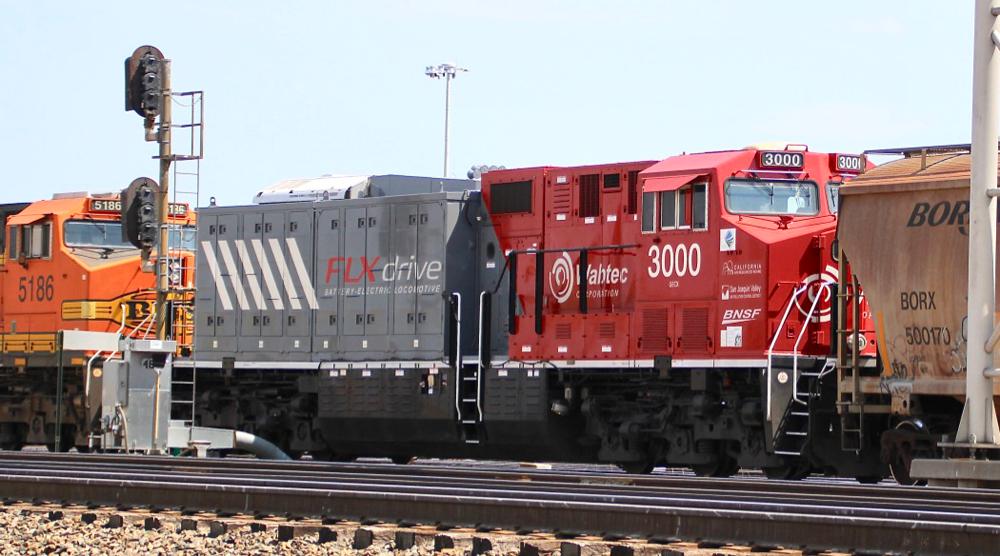
With the federal government partnering with truck manufacturers to improve the fuel efficiency of diesel rigs, and electric trucks beginning to hit the roads, the railroad industry needs to step up its efforts to reduce and ultimately eliminate locomotive emissions.
That’s the view of consultant Michael Iden, whose four-decade railroad career was devoted to locomotive developments while working at EMD, Southern Railway, Chicago & North Western, and Union Pacific.
Large trucking companies completely turn over their fleets in as little as two years, while railroad locomotives have a service life measured in decades. Combine that fact with the research, analysis, and testing required to develop replacements for the diesel electric locomotive and it’s clear that the railroad industry must move quickly, Iden says.
The transition from steam to diesel that occurred between 1940 and 1960 was preceded by 20 years of research and development, Iden noted last week during a University of Illinois at Urbana-Champaign webcast.
The railroad industry will have to pick up the pace of research, analysis, and testing over the next decade to find viable replacements for the diesel-electric locomotive if railroads are to decarbonize by 2050, Iden says.
|
|
Historic Victories Within Reach this Week in the Teamsters Union |
|
TDU members have organized for decades to completely end the Two-Thirds Rule and increase rank-and-file power in contract negotiations. This week, those changes will become a reality, thanks to united action by the O’Brien-Zuckerman Teamsters United coalition.
The Constitution Committee voted today to recommend that the IBT Convention vote to eliminate the Two-Thirds Rule, require rank-and-file members on all contract negotiating committees, and ban the International from imposing contract supplements and riders that are rejected by the members.
The ban on imposing contracts that are rejected by a majority of the members applies to local and national contracts, as well as all supplements and riders.
The O’Brien-Zuckerman Teamsters United Slate proposed these amendments. The Hoffa-backed Vairma-Herrera Slate opposed them.
But with the majority of members and Convention Delegates backing the changes, Vairma and Herrera today withdrew their opposition.
These constitutional amendments still have to be approved by Teamster Convention delegates in voting on Wednesday. But victory is within reach. It’s been years in the making.
|
|
How the UAW Went From a Militant, Trailblazing Union to a Corrupt, Dealmaking One |
|
Contract negotiations between the 400,000-strong United Auto Workers and Detroit’s Big Three automakers always kick off the same way: with ritualized handshake ceremonies in front of the press pool, the UAW president grinning with each automaker’s CEO.
But in 2015, the cozy routine at the UAW-Chrysler Training Center in Detroit devolved into an outright display of affection. UAW officials and Chrysler management flanked the stage (in matching polo shirts featuring interlinked organization logos) and merged into a sea of indistinguishable figures. Then, Fiat Chrysler CEO Sergio Marchionne pulled in UAW President Dennis Williams for a tight bear hug. That night, things really started cooking. The UAW team for bargaining with Chrysler, including lead negotiator and UAW vice president, Norwood Jewell, went out for dinner and drinks at London Chop House, an extravagant (and historic) restaurant and cigar lounge. Both Henry Ford II and former Ford (and then Chrysler) CEO Lee Iacocca have been among the dapper, A‑list regulars to enjoy whiskey highballs there amidst the soft jazz and heavy cigarette smoke. Today, the restaurant — complete with working rotary phone booths (local calls only) — caters to the nostalgia of Motor City as the epicenter of global manufacturing, back when union leaders like Walter Reuther were household names.
The UAW’s night out resulted in a hefty tab — and Chrysler footed the $8,494.37 bill. That dinner is just one of the many examples of union leaders taking payouts, according to a federal probe by the Department of Justice. Marchionne, Williams, Jewell and at least a dozen others have been named in a long-running conspiracy by Chrysler to buy off the UAW. In a December 2018 memo, federal prosecutors described “a culture of corruption” in which “lavish entertainment and personal freebies, all paid for by the car company” were “the rule rather than the exception.”
The investigation also uncovered lucrative kickback schemes among union officials who awarded contracts for UAW-branded swag ...
|
|
Webinar Series - Passenger Rail in the Pacific Northwest Wednesday, June 30th |
|
Rail Passengers staff will also be on hand for a national update.
The zoom link will be sent to you the day before the event.
Joe Aiello
Field Coordinator
|
|
Germany Reactivates 20 Decommissioned Routes |
|
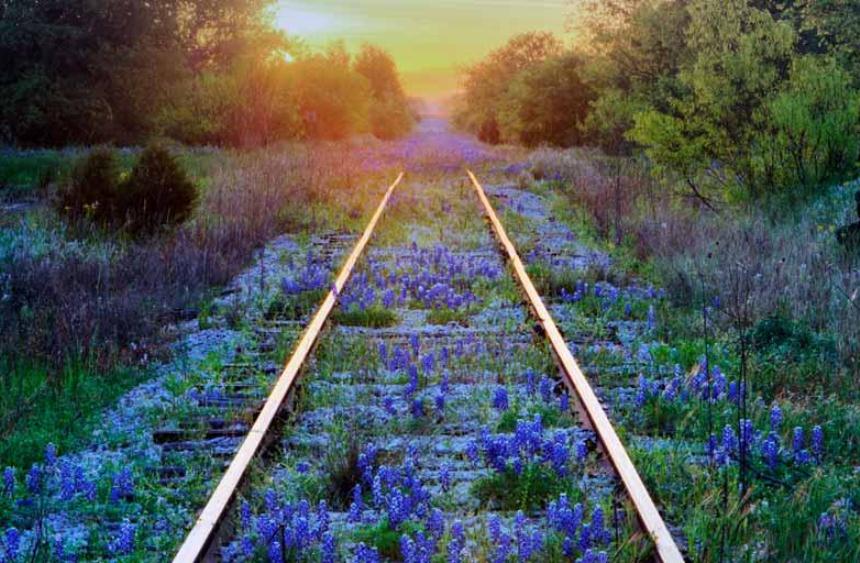
(Editor's Note: This is a great development, an example that should be imitated in the U.S. and Canada where tens of thousand so f miles of railroad track has been abandoned in recent decades. Numerous lines lay fallow across the U.S., and could be rehabilitated and running trains again if reactivated)
Deutsche Bahn will revive 20 lines with a total of 245 kilometers of track. “Every kilometer of track is active climate protection”, says DB Network Board Member Jens Bergmann. Deutsche Bahn presented its plans on Tuesday at a joint press conference with the industry associations Allianz pro Schiene and the Association of German Transport Companies (VDV) in Berlin.
The routes are the first part of previously closed routes, on which passenger or freight traffic will be back in the future. In the past few months, a DB team of experts identified a route portfolio throughout Germany with a total length of around 1,300 kilometers for which there is traffic potential. For a large part, it is worthwhile to restart the system after weighing up the costs and benefits, according to the state operator.
“Together with the federal states and the responsible authorities, we will bring disused routes back to life”, says Jens Bergmann, Board Member for Infrastructure Planning and Projects at DB Netz. “We are initially tackling 20 routes nationwide, with further connections to follow in the coming years. Our goal: We want to attract more people to the railways, to get more goods onto the rails. Every kilometer of track is active climate protection.” Recently, DB moved forward their goal to become climate neutral with 10 years, to 2040.
|
|
|
|
|
|
|