|
|
Defending wildlife and habitat through:
Advocacy
Conservation
Education
|
|
|
News & Updates: January 2023 |
|
In this issue:
- AOK vehicle graphics highlight forests
- Endangered Species Act turns 50
- Provides protection for Lesser Prairie-Chickens and countless other species
- Kansas Senators seek to delist Lesser Prairie-Chickens
- Enjoy the hawks visiting your birdfeeder
- Nature Adventurepacks are being assembled
- Charley Forsyth is featured artist for Kansas Lek Treks Prairie-Chicken Festival
-
Philanthropy Central: Make your dollar go farther with employer matching programs
-
Chapter Spotlight: Northern Flint Hills Audubon Society's Bird Blog will inform and entertain during cold winter days
- Save the date!
- Join AOK on Feb 19 for the Great Backyard Bird Count at the KU Field Station
-
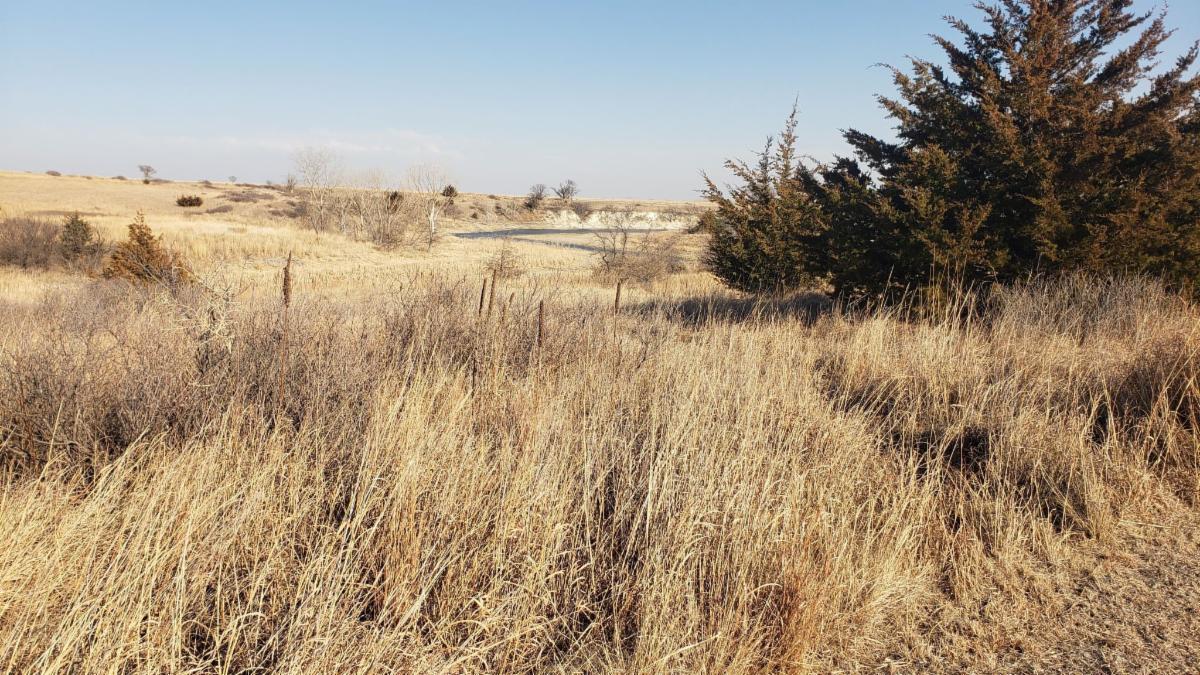
AOK Nature Walk Recommendations: Coyote Trail at Webster State Lake in northwest Kansas
|
|
|
AOK vehicle graphics highlight
forests
|
|
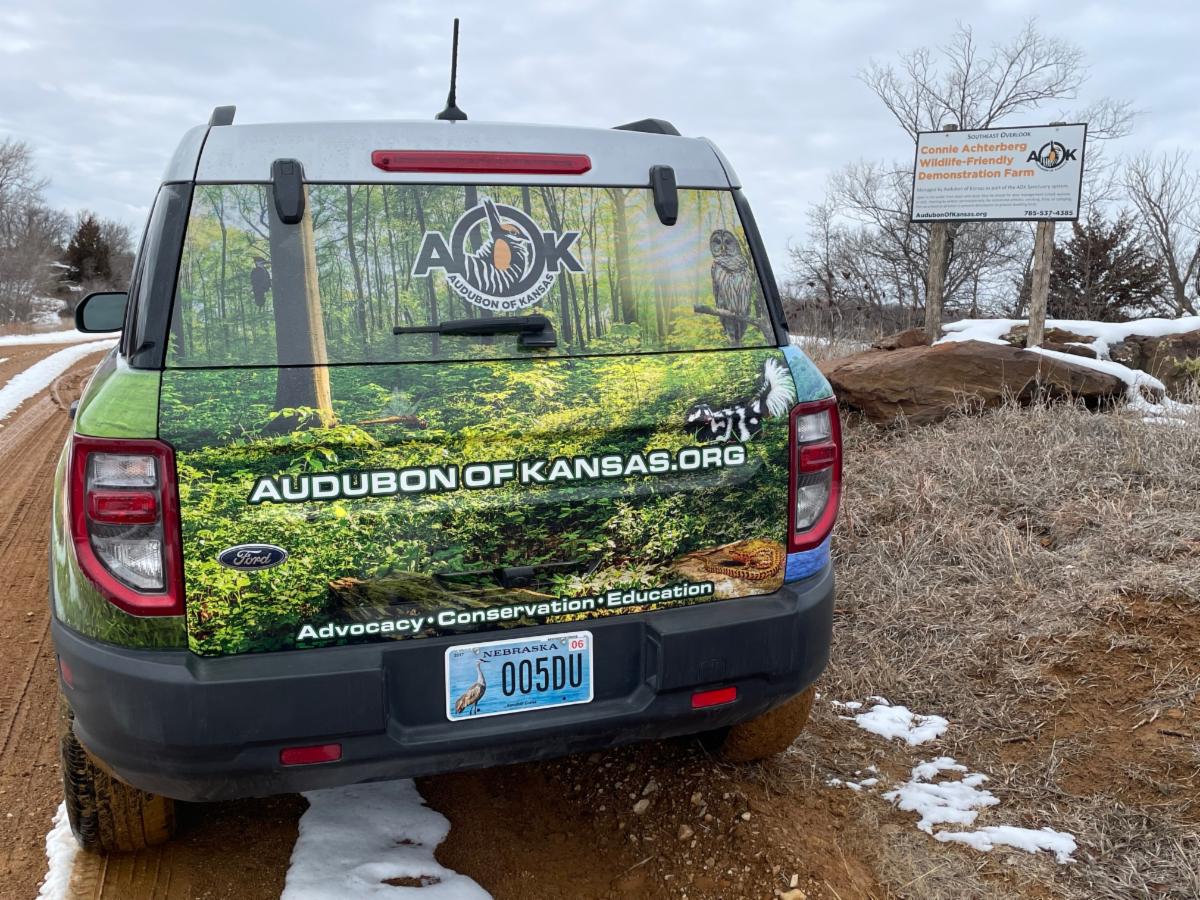
Recap: In November's newsletter, we highlighted the prairie graphics on the left side of AOK's new-to-us vehicle. In December's newsletter, we highlighted the wetlands graphics on the right side of the vehicle. The 2021 Ford Bronco Sport was a used vehicle purchased in June using donations to the Greater Manhattan Community Foundation: Grow Green Campaign in April. The vehicle allows AOK to spend less on transportation costs when compared to reimbursing staff for mileage. Thanks to the contribution of a generous donor, we were able to add graphics to AOK's new vehicle. We thank David Rintoul and Bob Gress for providing photos.
This month, I would like to highlight the forest covering the back of the vehicle. It features the Spotted Skunk, Piliated Woodpecker, Barred Owl, Cave Salamander, and a dragonfly. Why is a dragonfly in the forest and not the wetland? It represents the Ozark Emerald Dragonfly, a 'species in need of conservation' in Kansas that requires perennial streams with woodland canopy cover. The Cave Salamander is endangered in Kansas, and the Spotted Skunk is listed as a threatened species.
Forests have always been a part of the Kansas landscape in the eastern portion of the state and along major rivers. According to the Kansas Forest Service, forests make up 10% of the land area of Kansas. These forest resources can be described as rural forests (2.2 million acres), agroforests (2 million acres of windbreaks, shelterbelts, streamside forests and fence rows), and community forests (1 million acres).
The highlight of AOK's Achterberg Wildlife-Friendly Demonstration Farm in Lincoln County is the riparian woods found on the property. Lincoln County is nicknamed 'Post Rock County' because there were few trees when settlers arrived, so limestone rock was used to construct fence posts. The few large bur oaks trees on the Achterberg Sanctuary likely took root around the time of European Settlement. As with much of Kansas, riparian forests have expanded, and now hackberries, cottonwoods, cedars, and locusts line Bullfoot Creek along with the oaks. There is even at least one Kentucky Coffeetree. This tree would be near the westernmost extent of this species' range in Kansas. In writing this article, I stumbled across this website that has a wonderful description of Kentucky Coffeetrees and the current research being conducted to determine its range.
|
|
Endangered Species Act Turns 50 |
|
2023 should be a year of celebration: A landmark piece of legislation is turning 50 years old. The Endangered Species Act was ratified on December 28, 1973 and sparked a conservation movement focused on our nation's most imperiled species. This act allows for a scientific assessment of population size and threats, a declaration of listing status, the formation of a recovery plan, and funding to enact the plan. One of the first species listed was the American Bald Eagle and by 2007, populations had recovered sufficiently to warrant delisting of the species. Other species that have recovered due to the Endangered Species Act include Least Tern, Hawaiian Hawk, Kirtland's Warbler, Black-capped Vireo, Brown Pelican, and Peregrine Falcon. Unfortunately, listing was not enough to save some species; Dusky Seaside Sparrow has gone extinct.
The Lesser Prairie-Chicken was added to the Endangered Species List in November, 2022, but that was not its first appearance on the list. Following drastic population declines in the late 1980s and early 1990s, the Department of the Interior added Lesser Prairie-Chickens to the list of ‘candidate species’ in 1998 claiming that official listing was not warranted because there were species in greater need for protection. In 2008, Lesser Prairie-Chickens moved up in the list of candidate species reflecting increasing threats to their habitat from moderate to high. In 2014, the Fish and Wildlife Service announced its decision to list the Lesser Prairie-Chicken as a threatened species. A federal court vacated the listing after a lawsuit by a Texas oil trade group in 2015, and Lesser Prairie-Chickens were removed as a threatened species in 2016. The current listing divides Lesser Prairie-Chicken populations into two groups. The southern population inhabiting eastern New Mexico and western Texas is considered 'endangered'; whereas, the one in Kansas, Colorado, Oklahoma, and northern Texas is 'threatened'.
In Kansas, virtually all of the Lesser Prairie-Chicken habitat is on private lands. Ranchers in the western third of the state can be proud that Lesser Prairie-Chicken populations increased in the area in the early 2000s. Part of the increase in population size has been attributed to the Conservation Reserve Program (CRP), a federal program that provides cash payments to landowners who convert agricultural fields to native grasslands. These areas were not grazed, so they provided ideal cover for nesting prairie-chickens. Western Kansas is the only area where Lesser Prairie-Chicken populations are stable. This all sounds great, right? So why were they put on the Endangered Species List?
First, not all areas have had the same success as western Kansas. Populations have been virtually wiped out in New Mexico, Texas, Oklahoma, and Colorado. Second, the threats to Lesser Prairie-Chickens are increasing. The birds are extremely sensitive to development. They are very unlikely to nest within a mile of a road, or to cross a high-power transmission line. They avoid any tall structures including wind turbines and houses. I have personally witnessed two leks disappear following the installation of an oil well in western Kansas. Energy development from oil, wind, and solar will continue to fragment the remaining habitat if not stopped now. Third, low population sizes combined with the species' vulnerability to drought increases the risk of extinction. The average prairie-chicken life span is two years. Prairie-chicken chicks do not live to become adults if extreme drought causes heat stress and reduces insect availability. Fourth, not all ranching practices are good for the birds. Some ranchers spray entire fields with herbicide to eliminate thistle. The herbicide not only kills thistle, but also eliminates many native forbs which provide a source of insects for chicks and seeds for adults to survive the winter. Other ranchers intensively stock cattle. When the cattle are taken off the pasture, there is little residual grass cover for the birds to overwinter or to provide nesting habitat in the spring. Fifth, many CRP contracts, that are typically for 10-20 years, are expiring. High commodity prices are luring many ranchers to return the CRP land to agricultural uses. Sixth, encroachment of woody plant species, like cedar and saltcedar, is making grasslands uninhabitable for prairie-chickens. Seventh, voluntary conservation measures have not increased Lesser Prairie-Chicken populations to the point where they could withstand prolonged drought and other impacts of climate change.
Now is the time to list Lesser Prairie-Chicken under the Endangered Species Act. Listing Lesser Prairie-Chickens will encourage energy development to locate their facilities outside of the range of the Lesser Prairie-Chicken by requiring habitat restoration for every acre destroyed (often at a rate of 3x the area that was destroyed). Additional resources will be funneled to ranchers through federal programs like CRP to help them take steps to improving the health of their grasslands through changes in grazing management and the removal of woody vegetation. The history of the Endangered Species Act has shown that targeted conservation works.
However, not everyone sees the listing as an opportunity. In fact, our Kansas legislators are doing everything they can to fight the listing and are not being shy about it. Immediately after the listing, US Senators Jerry Moran and Roger Marshall and Representative Tracey Mann condemned the listing. This past week, our state senators introduced and voted on a resolution condemning the listing. The resolution passed without roll call, so we do not know who voted for or against the resolution. Senators Kerschen, Alley, Baumgardner, Billinger, and Blasi sponsored the resolution. The Kansas House received the bill and referred it to the Committee on Agriculture and Natural Resources.
What can you do to help?
- Call or email your US and state senators and representatives. Let them know that listing of Lesser Prairie-Chickens is warranted and necessary to protect the species. Also let them know why you care about prairie-chickens and the health of grassland ecosystems. Clicking on the names of the senators and representatives listed above will send you to their respective websites and contact information.
-
If you are not a member of AOK, please consider joining. Your support helps us continue to advocate for Lesser Prairie-Chickens at all levels.
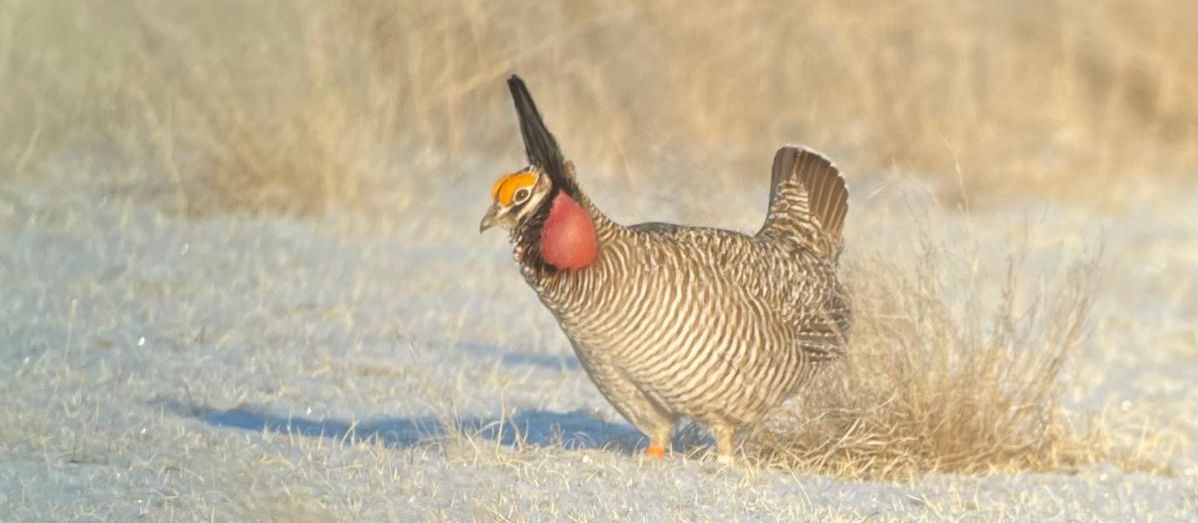
Photo: Lesser Prairie-Chicken by JK Augustine
|
|
|
Enjoy the hawks visiting your birdfeeder |
|
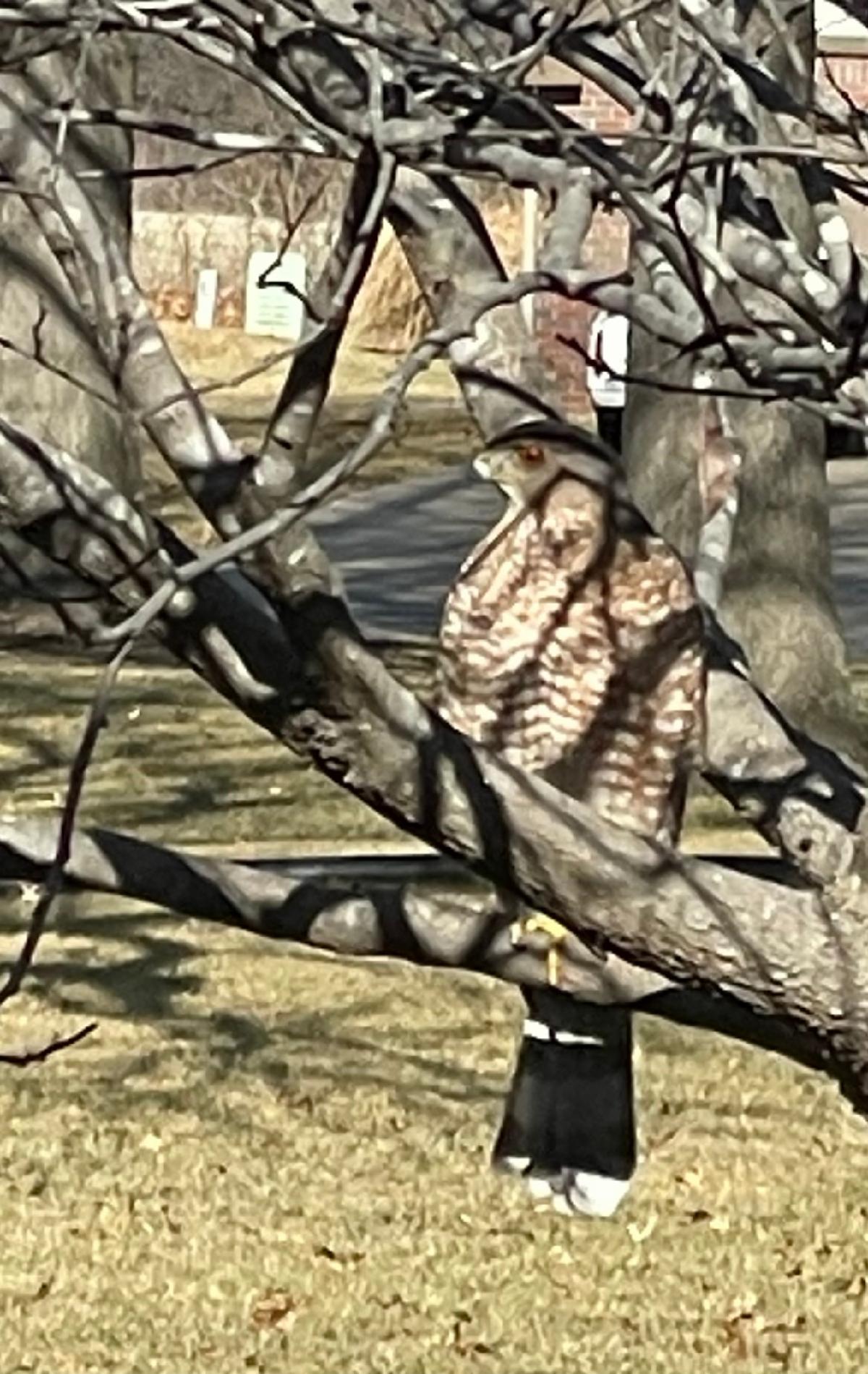
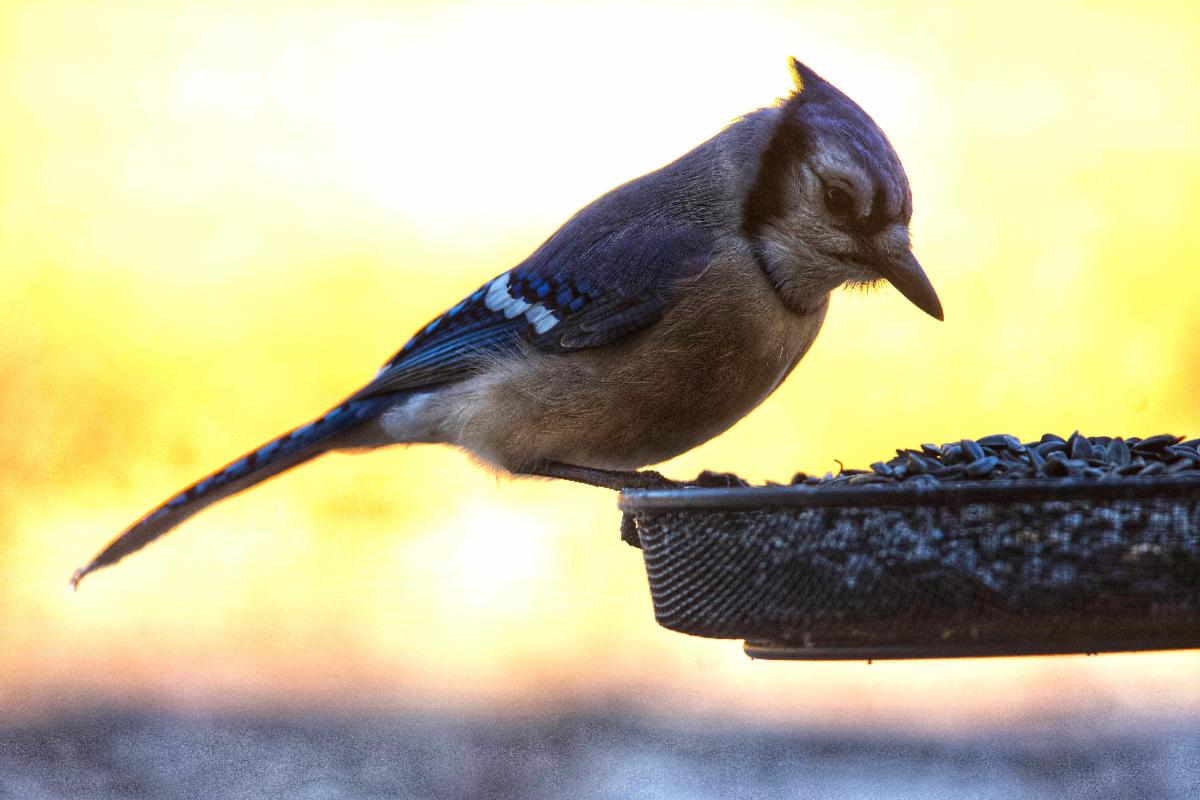
I had an unusually large visitor to my bird feeder the other day - a Cooper's Hawk, a type of accipiter. Accipiters are specialized to eat other birds. Their short wings and long tail allows them to make quick turns and maneuver through dense vegetation. Their long legs and toes help them to reach out and grab their prey. I have no doubt that this bird was hoping to make a meal of one of the House Sparrows, House Finches, Tufted Titmice, or other birds who regularly visit my feeder.
A bold Black-capped Chickadee flitted a couple feet above the Cooper's Hawk's head. It was very vocal about its disapproval of the hawk's presence. A chickadee's call can convey the size and threat posed by a predator. The call often elicits other species to join the chickadee in mobbing behavior in an attempt to scare the predator away. On this occasion, no other birds responded to the chickadee's warning, but no birds visited the feeder either.
I watched the hawk for about an hour before he went on his way with an empty stomach. Depending on the species, hawks are only successful in catching prey around 10-30% of their attempts.
Now some people despise seeing a hawk at their feeder. They fear for the lives of the smaller birds that visit the feeder (and rightly so). For me, I see the hawk as a sign of a healthy ecosystem. The hawk would not be there if there wasn't enough food available for itself or for its prey. Predators have been hunted to local extinction in many places. Wolves no longer transverse the Great Plains. Mountain lions are uncommon. Predators belong in our ecosystems, and we should cherish the opportunity to view them.
Photo: Cooper's Hawk by JK Augustine.
|
|
|
Nature Adventurepacks are being assembled |
|
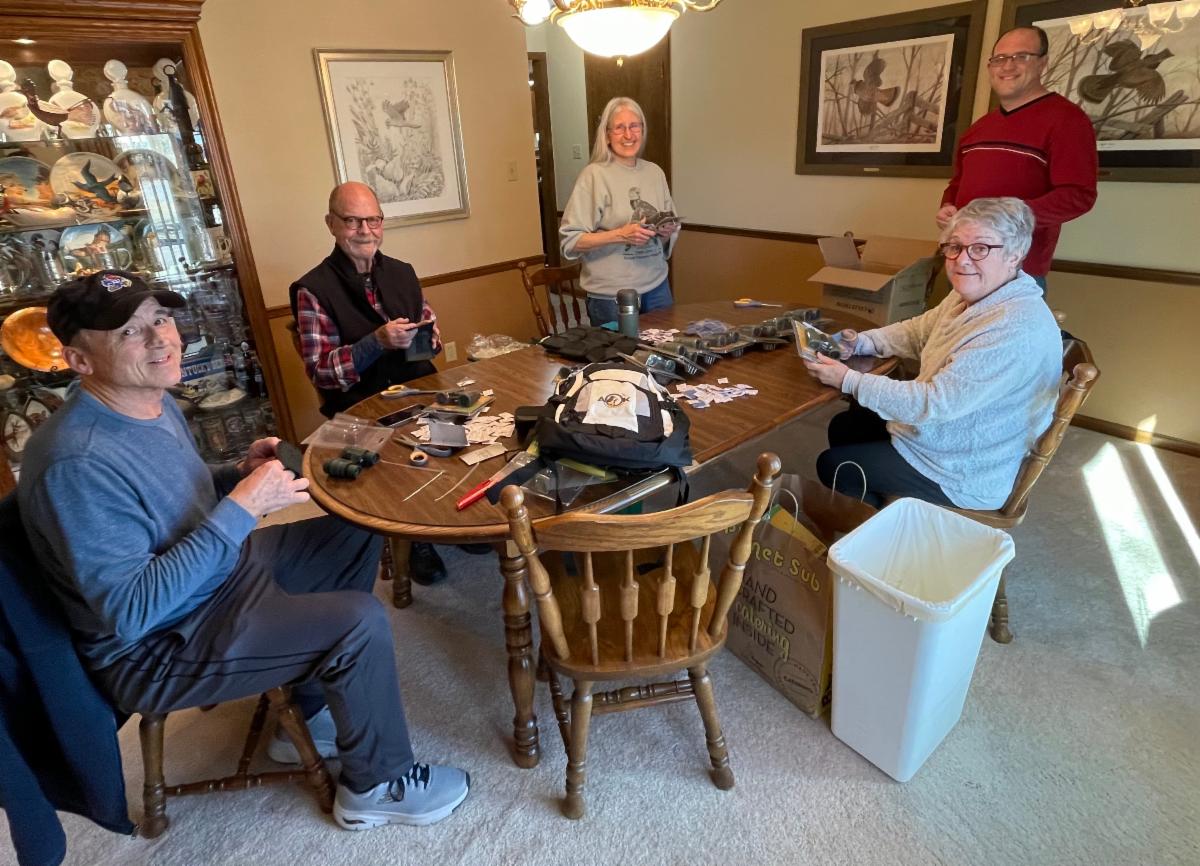
A small group of volunteers gathered on a beautiful January day. Many of them would have been out watching birds or taking a hike, but they had made a commitment to contribute to AOK's environmental education mission. They helped assemble the 'Nature Adventurepacks'. Adventurepacks will be given to libraries, who will make them available to library patrons. Fold-out guides for birds, butterflies, and the moon will help patrons take nature appreciation to the next level. Through the Chickadee Checkoff grant, a pledge from Burroughs Audubon Society, and numerous donors, we were able to purchase materials for 111 kits. Volunteers opened 222 packages with children's binoculars and attached straps to 111 adult binoculars. About 60 of these kits will go to southwest Kansas this spring. About 30 will go to the Greater Kansas City area this summer. The remaining 20 will be used to do in-person programming, eventually being used to supply additional libraries.
Photo: Volunteers opening children's binoculars by JK Augustine.
|
|
|
Charley Forsyth is featured artist for Kansas Lek Treks Prairie-Chicken Festival |
|
This year’s Kansas Lek Treks festival will be held Apr 13-16, 2023. We will offer prairie-chicken tours, field trips, and social events. Tiffany Kersten will speak at our banquet about “Birdie Big Year: Elevating Women Birders”. We will even have a trivia contest!
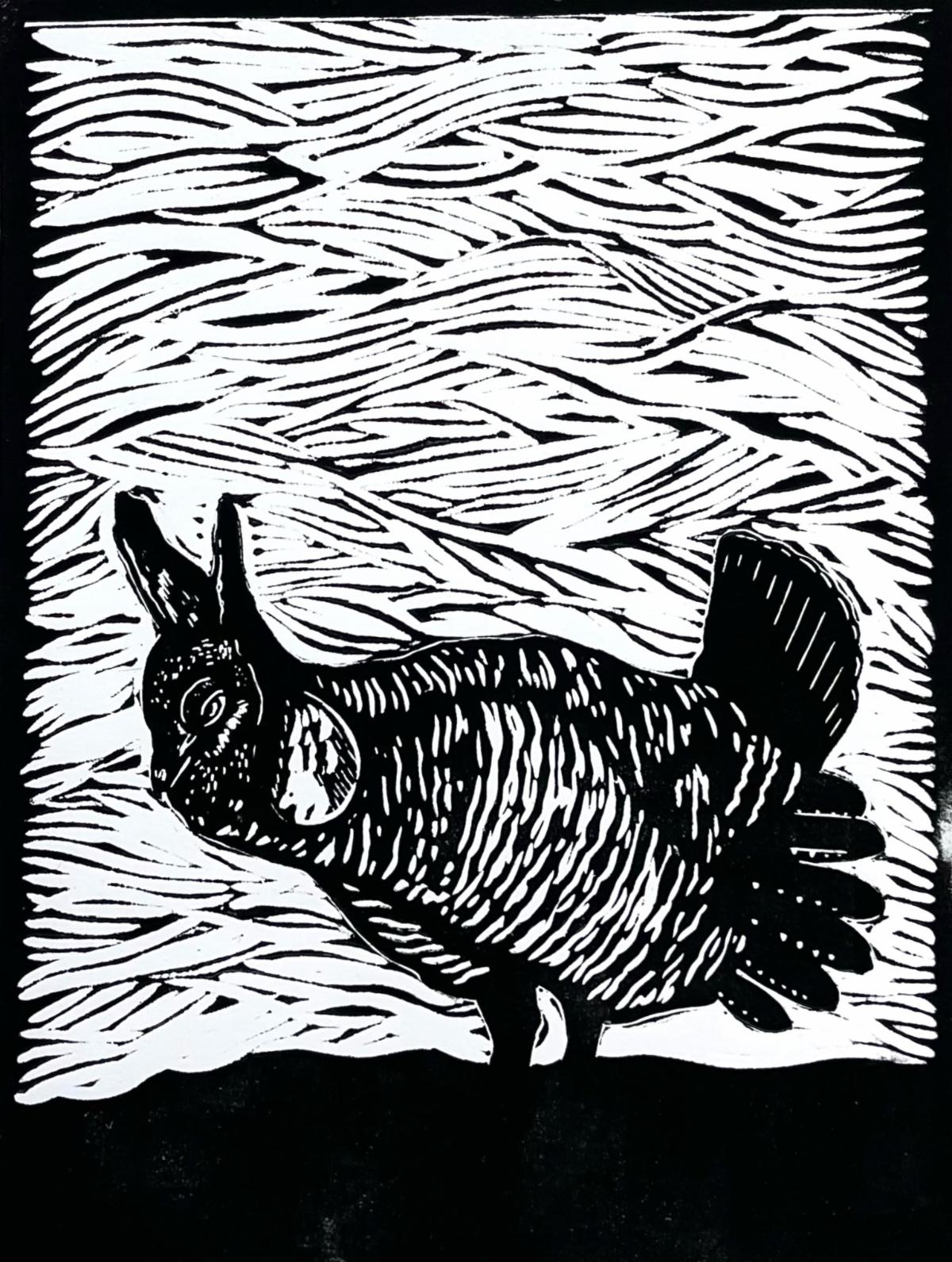
This year's featured artist is Charley Forsyth. Charley is an artist living in Lawrence, KS. He primarily works as a printmaker, creating original handmade prints from linoleum and wood. He has created a variety of work, drawing from Midwestern and pop culture themes.
We commissioned this piece of art for the festival. We will have prints and T-shirts available for purchase.
Register for the festival today! Over 90 people have already registered, but there are a few spots left to see lesser prairie-chickens from a blind!
|
|
|
Philanthropy Central: Make your dollar go farther with employer matching programs |
|
Would you like for your donation to AOK (and other charities) to go further? Find out about employer matching programs (does your employer have one?)! Many larger businesses have programs where your donation is matched!
Step one: Contact your human resources department and ask if they offer an employer matching program! It is painless to ask. If your company does have a program, ask for the guidelines. Some companies have a specific group of charities they donate to while others let employees decide. There is usually a set ratio (like $1 matched for every $1 given) and usually will have a yearly maximum.
Step two: Make your donation. Be sure to keep proof of your gift.
Step three: Follow your company’s instructions for initiating the match. Usually that involved providing the receipt of your donation and may entail filling out a short form with information about where to send the match. Go through that step promptly, which it is fresh in your mind. After confirming that the match was made, sit back and enjoy the satisfaction of knowing that you made your gift go further!
Step four: Repeat every year!
Kelley is happy to answer all your questions about giving:
Kelley Hurst
Director of Philanthropy
785.917.0400
|
|
|
Chapter Spotlight: Northern Flint Hills Audubon Society's Bird Blog will inform and entertain during cold winter days |
|
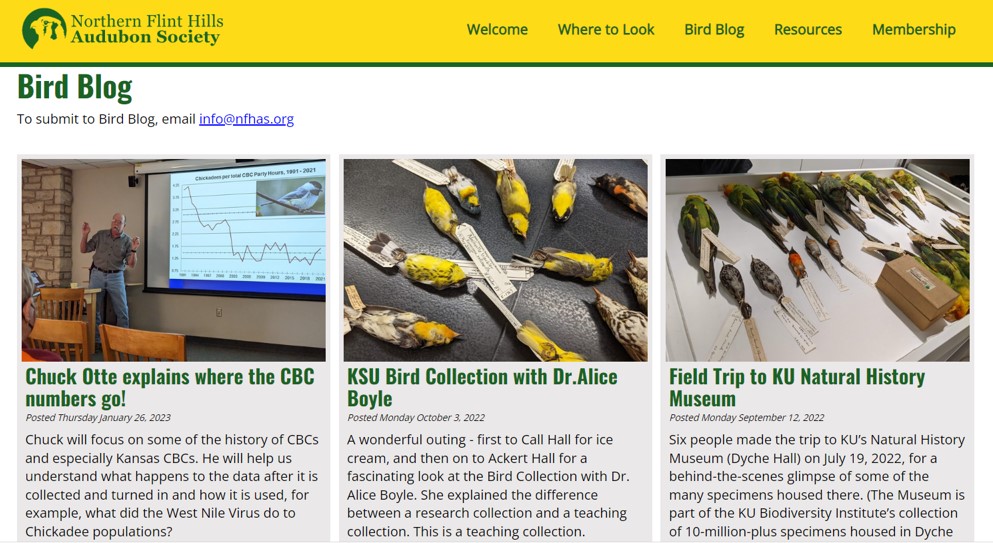
Let's face it, on a cold winter's day, it feels good to curl up under a blanket and read a book, watch TV, or surf the internet. If you are prone to surfing the internet, then you should check out Northern Flint Hills Audubon Society's bird blog. They have snippets (and sometimes entire programs!) from their latest guest speaker, photos from recent bird trips, links to interesting information about birds - and more! You are sure to learn something interesting!
Photo: A screen shot of the Northern Flint Hills Audubon Society's Bird Blog website.
|
|
|
Join AOK on Feb 19 for the Great Backyard Bird Count at the KU Field Station |
|
Winter is a great time to go bird watching. There are no leaves on the trees, so birds are easier to see. Because many species spend the winter farther south, there are fewer species so identification is easier. There are some species that only spend the winter in Kansas, so it is great to try to find them. Join Audubon of Kansas Executive Director, Jackie Augustine, on Sunday, Feb 19 from 8:30-10:30am at the KU Field Station on a bird watching adventure. Birders of all experience levels are welcome. We will make sure everyone knows how to use their binoculars before we venture out. A few pairs of binoculars will be available to those that do not have their own.
Our goal for the day will be to document as many birds as possible. We will be joining a worldwide community counting birds in their local areas as part of the Great Backyard Bird Count. This information is used by scientists to better understand and protect birds around the world.
Directions to the KU Field Station (Armitage Education Center; 350 Wild Horse Road, Lawrence, KS, 66044) from Lawrence:
*Please allow yourself extra time to get to the KU Field Station. The road is winding and uneven in places, and it often takes longer than people expect. Keep an eye out for deer, as they commonly hang out along the roadways.
*From the junction of U.S. 59/24 and U.S 24/20 in North Lawrence, proceed 1.5 miles east on U.S. 24/40 (past the Lawrence airport). *Follow green signs with directions to the KU Field Station.
*Turn left onto E. 1600 Road for approximately 1.1 miles.
*Turn right onto N. 1900 Road very briefly as it crosses Mud Creek.
*Turn left back onto E. 1600 Road. Continue on E. 1600 Road for 2.2 miles.
*At the Jefferson County line, E. 1600 Road turns into 1st Street. *Continue on 1st Street for 0.2 miles.
*Follow the road to the left, where it becomes Wild Horse Road (there is a sign on the right for Snake Farm Road on this corner, but do not take this road).
*Continue on Wild Horse Road for 0.4 miles.
*Turn right into the driveway for 350 Wild Horse Road, by the large concrete KU Field Station sign.
*Continue down the driveway and through the gate.
The Armitage Education Center is the first large building on the right.
*We are creative with parking, so please park anywhere that isn't blocking the flow of traffic such as along the side roads, on the mowed grass if it is dry, etc.
|
|
|
Audubon of Kansas is planning events for the coming year. Mark these events on your calendar!
February 19: Great Backyard Bird Count, KU Field Station (350 Wild Horse Road, Lawrence, KS, 66044) 8:30-10:30am
April 22: Earth Day, location and time TBD
May 7: Achterberg Work Day
May 22-26: Hutton Work Week
June 4: National Prairie Day, location and time TBD
July 24-28: Hutton Work Week
September 10: Achterberg Work Day
September 25-29: Hutton Work Week
Oct 1: Open House at Hutton
November 3-5: Celebration of Cranes at Quivira National Wildlife Refuge
Hutton is AOK's sanctuary near Bassett, Nebraska
Achterberg is AOK's sanctuary near Lincoln, Kansas
|
|
|
AOK shares favorite walks,
hikes and birding spots!
|
|
Trailhead is at (39.41020, -99.45733)
Take US-24W out of Stockton for 9 miles. Turn left (south) onto 9 Road. Continue 1.4 miles past the Hill Top Campground. The road dead-ends, with a picnic shelter on the left and the trailhead on the right.
|
|
Coyote Trail at Webster State Lake in northwest Kansas
This trail was recommended as a 'Lesser-known Gem' in issue 4 of the 2021 Kansas magazine. The magazine described the trail as follows:
"Coyote Trail offers diverse terrain and scenery in a small series of loops and crossover trails. The trails take hikers by a lake, limestone cliffs, and near an eagle nesting area. Most portions of the trail are well-marked, and the trail loops all the way around the lake, making it easy to keep your starting point in view."
The Kansas Trail Guide recommends picking up a map at the trailhead or park office so that you have access to the interpretive information correlating with the numbered wooden markers along the way.
|
|
|
|
Lana Arrowsmith - Hutton Niobrara Coordinator - Hutton Sanctuary Management & Reservations lanamicheel@gmail.com
Audubon of Kansas
PO Box 1106 - Manhattan, KS 66505
785-537-4385
|
|
|
|
|
|
|