|
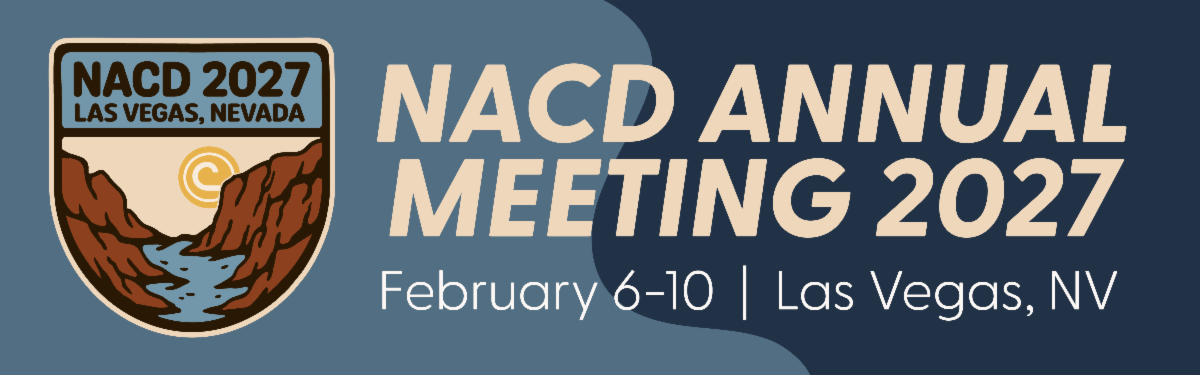
Join us in the City of Lights! We invite you to join us in Las Vegas, NV, for the 2027 NACD Annual Meeting! Hosted in partnership with the Nevada Association of Conservation Districts, the meeting will take place on February 6-10, 2027, at Caesars Palace.
The theme for this meeting is “Resiliency through Scarcity." This theme reflects leadership and resiliency managing limited resources and ties to NACD's 2027 water-focused stewardship theme. Featuring a canyon, stream, and Conservation C sun, this year's Annual Meeting logo encourages us to celebrate the value and beauty of our landscapes and the paths we can all light to turn scarcity into opportunity and resilience.
Registration is now open! Act now to get an early bird discount rate and save up to $100 per attendee. Full registration includes entry into the General and Breakout Sessions, Monday’s Luncheon, and the National Conservation Showcase.
All the details on registration and exclusive hotel discounts can be found on NACD's Annual Meeting webpage. Take a look at the schedule to plan your travel and Annual Meeting experience. Changes to this year's program aim to make effective use of time and manage the higher cost of gathering in Las Vegas.
Get ready for ample learning and networking opportunities with conservation districts and partners from across the country! Stay tuned to NACD’s weekly eResource newsletter for more exciting Annual Meeting announcements in the weeks to come.
If you have any questions or if you would like to explore sponsorship or exhibitor opportunities at the event, contact events@nacdnet.org.
Submit a Breakout Session
| |
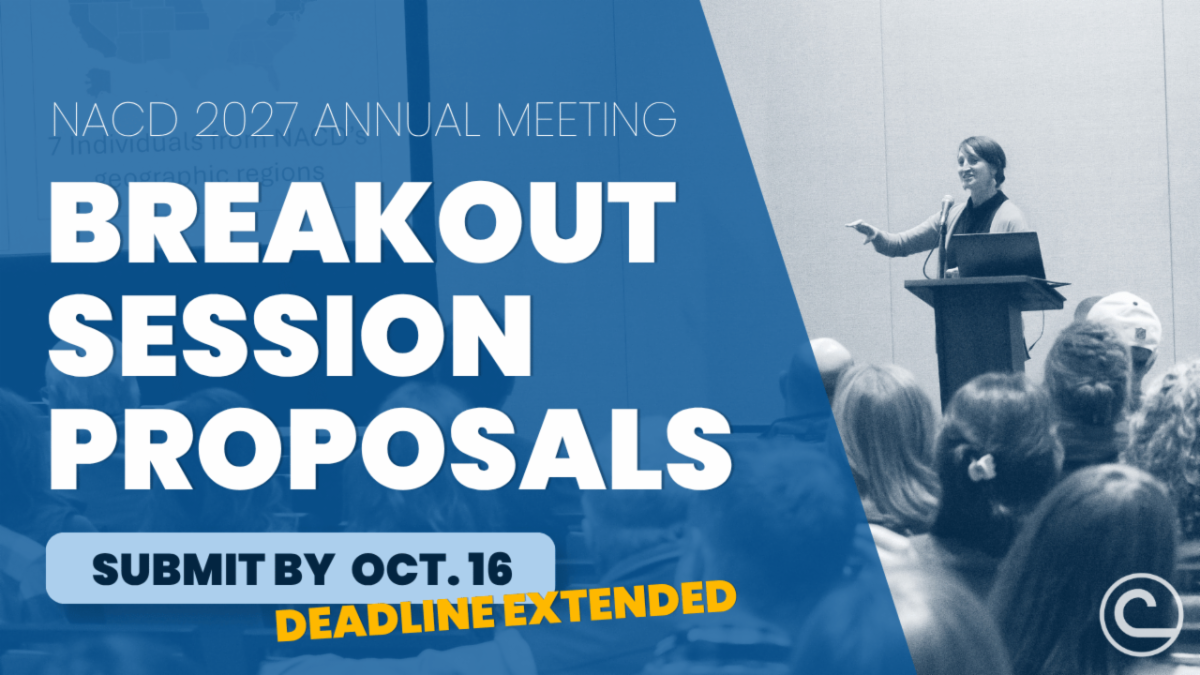
Let this be the year for you and your district to shine! NACD has extended the call for breakout and training session proposals to October 16. These popular sessions spotlight the work of conservation districts and partners across the country. They are a place to share initiatives with others and provide information to build the skillsets of district board members and employees.
| HOW DISTRICTS ADDRESS FOREST HEALTH & RESILIENCE | |
This October, NACD will highlight how conservation districts are helping communities address wildfire risk, forest health, and resilience across working lands and forested landscapes.
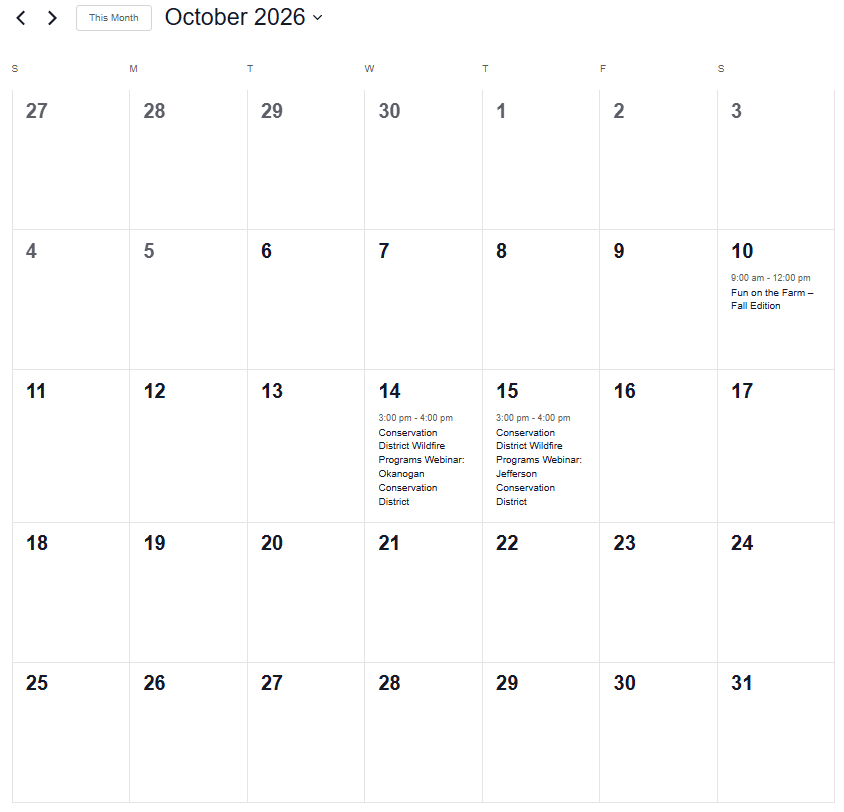
A two-part webinar series will feature conservation district staff from Washington and Colorado, sharing an overview of their wildfire and forest health programs, how their districts approach this work, and lessons they have learned through implementation and partnerships.
Join the Okanogan Conservation District on Wednesday, October 14, at 3 p.m. ET for a look at the district's forest health and wildfire programming. Staff will share how the district works with landowners and partners to address wildfire risk and forest health across its service area and highlight the district’s approach to developing and implementing wildfire-related programs and projects, along with lessons learned from working in a landscape where wildfire is an ongoing conservation concern. Register for the webinar here.
On Thursday, October 15, at 3 p.m. ET, join the Jefferson Conservation District in Colorado for a look at the district’s wildfire and forest health programming. Jefferson Conservation District staff will share how the district approaches wildfire mitigation and forest health work, including the programs, partnerships, and projects that support conservation across private lands and the broader landscape. Register for the webinar here.
Learn more about both webinars on NACD's website.
| |
WHAT'S UP IN WASHINGTON?
GOVERNMENT AFFAIRS UPDATE
| |
Farm Bill Extension Expires
The latest extension of the 2018 Farm Bill expired September 30 without a new Farm Bill or another extension enacted. Although the Senate Agriculture Committee advanced its version September 16, further congressional action is needed to complete reauthorization. The expiration affects programs differently and does not mean all conservation assistance has stopped. NACD continues to urge passage of a full, bipartisan Farm Bill that provides certainty for producers, conservation districts, and their partners. Read more about the expiration.
USDA Expands Regenerative Pilot Program for FY2027
USDA announced an increase in financial assistance for the Regenerative Pilot Program from $700 million to $1 billion for fiscal year 2027, including $650 million through the Environmental Quality Incentives Program (EQIP) and $350 million through the Conservation Stewardship Program (CSP). NRCS will allow State Technical Advisory Committees to add conservation practices that reflect local resource concerns and producer needs. Within the pilot, USDA is also lowering the CSP resource concern threshold from 100 percent to 75 percent while maintaining whole-farm planning. Producers should apply through their local NRCS Service Center by their state’s ranking dates.
USDA Revises Rural Energy for America Program Grant Requirements
USDA issued a final rule revising grant requirements for the Rural Energy for America Program, which supports renewable energy systems and energy efficiency improvements for agricultural producers and rural small businesses. The rule requires projects to be completed and operational before applying, establishes a single national competition, and makes projects involving ground-mounted solar photovoltaic systems or wind turbines installed on cropland ineligible for grants. USDA will announce application windows separately. The rule takes effect October 16, and comments are due November 2.
USDA Announces $180 Million Seed Sovereignty Initiative
USDA announced a $180 million Seed Sovereignty Initiative to strengthen agricultural security through investments in the Agricultural Research Service’s National Plant Germplasm System. Over two years, USDA will characterize and sequence crop collections to identify valuable genetic traits, address gaps in its collections, and support development of new crop varieties and responses to emerging pests and diseases. USDA is also expanding its partnership with the Department of Justice to strengthen competition and transparency in agricultural input markets, with an emphasis on seeds.
Action Item: Share Your District’s Section 319 Story
Contact your congressional offices to encourage continued funding for the Clean Water Act Section 319 Nonpoint Source Management Program. Share a local project example demonstrating how this funding helps your district reduce polluted runoff, support landowners, and improve water quality. Meetings with congressional staff, town halls, and project visits provide opportunities to show how federal investments support locally led conservation.
Important Dates
| JOIN CONSERVATION COFFEE ON NASA ARSET TRAINING | |
Join NACD's next Conservation Coffee webinar, hosted in partnership with NASA Applied Remote Sensing Training (ARSET), on November 5 at 3:00 p.m. ET.
ARSET exists to help individuals build skills to use remote sensing data for a range of applications related to air quality, public health, agriculture, disasters, ecological conservation, water resource management, climate resilience, and wildland fires. From “How do satellites work?” to “How can I use satellite data to make a flood map?” there are trainings available for all levels of experience at no cost.
Participants of this webinar will learn more about ARSET opportunities and take part in their newest training geared toward novice remote sensing users. After the webinar, you will receive a link to a self-paced learning module that will prepare you for further remote sensing training and earn you a NASA ARSET certificate upon completion.
| | NACD Closed Monday, October 12 | NACD will be closed Monday, October 12, in observance of Indingenous People's Day. | NACD Welcomes David Williams as Southeast Rep | |
NACD welcomes David Williams to the team as the Southeast Region Representative!
David comes to NACD with extensive experience in North Carolina state government. He previously served as Director of the North Carolina Division of Soil and Water Conservation within the North Carolina Department of Agriculture and Consumer Services, a role he held since 2023 before retiring this year. He previously served as the Division’s Deputy Director from 2010 to 2023. Prior to his service with the North Carolina Department of Agriculture, David also held roles as Chief of Nonpoint Source Programs, Chief of Industrial Pollution Prevention, and Environmental Engineer with the North Carolina Department of Environment and Natural Resources.
David holds Master and Bachelor of Science Degrees in Biological and Agricultural Engineering from North Carolina State University. He is based in Boone, NC.
| Apply for the 2027 NGLI Cohort | |
Applications for the National Conservation Foundation’s (NCF) Next Generation Leadership Institute (NGLI) 2027 Cohort are open!
NCF developed NGLI as a comprehensive leadership development program to meet the needs and challenges facing conservation district leaders. The NGLI program's learning objectives include advocacy and public policy, effective communication, leadership styles, conflict management, and many other skills that set NGLI Alunni apart in state and national conservation partnerships.
Eligible applicants for the program are appointed or elected conservation district officials serving in the United States or its territories. Apply by October 31 on NCF's website.
| |
CEAP Conducts
2026 Survey
| |
The Conservation Effects Assessment Project (CEAP) is a multi-agency effort led by NRCS to quantify the effects of conservation practices across the nation’s working lands. This survey is a collaboration between NRCS and USDA’s National Agricultural Statistics Service (NASS) to gather information about the use of conservation practices on cultivated cropland.
NASS, in cooperation with the National Association of State Departments of Agriculture (NASDA), will conduct screening and surveying from June 2026 to spring 2027.
Local NASDA representatives, in cooperation with NASS, screened around 23,000 farm operations between June and now to determine if they meet the criteria for the 2026 CEAP survey. NASS will contact the producers whose operations met the criteria beginning in November 2026 and ask them to participate in the survey. Districts, encourage producers to participate.
Survey Question Topics
The survey will focus on topics including: farm production practices; chemical, fertilizer, and manure applications; tillage; irrigation use; and installed conservation practices.
About CEAP Cropland Assessments
NRCS will combine the collected data with information from the National Resources Inventory and other sources to publish a report of findings for use by USDA and the public.
Application of Findings
Findings from CEAP cropland assessments are used in multiple ways by customers, USDA agencies, partners, policy makers, and others to evaluate conservation successes and identify potential improvements.
Confidentiality
Information provided to NASS and analyzed by NRCS is kept confidential, as required by Federal law. The agencies only publish data in aggregate form, ensuring that no individual respondent or operation can be identified.
| Promote your conservation district or state association's tree sale, annual meeting, webinar, field day, or other events on NACD's Calendar of Events! | |