SAND'n'SEEDS
September 2022
Serving Our Community Since 1980
|
|
Message from the President
By Marilee Crumley
Another monsoon rain has just graced the area with bountiful rain. I’m sure we’ll start seeing abundant growth from all vegetation in our gardens. Texas rangers are covered in their purple robes of blooms, my golden Tecoma flowers are multiplying, and new fragrant flowers are appearing on my kumquat and Meier lemon trees
It’s been good to meet some of our newer members at two summer luncheons we held recently. It’s great to welcome new members into GVG. We look forward to your getting involved in our many activities. As we look forward to the fall, we hope you find answers to your gardening questions at seminars and workshops all being planned for you.
Some of the board members took a visit to a hydroponics greenhouse in Tucson to check it out for a future members’ tour. We learned about how they grow greens and herbs for two grocery store chains, some Tucson schools, and for the public. Despite growing in water, their water usage is minimal compared to growing in soil. With water becoming less available to Arizona this is an interesting consideration for future gardening.
Happy Gardening!
|
|
A New Brand for the Green Valley Gardeners!
... By Barry Gillaspie
As part of the work to modernize the website for the Green Valley Gardeners we have developed a new logo brand for our club that is very exciting. It has a palette of colors based on earth tones. The palette will allow us to easily display our logo in many formats and for many uses: web design, paper and digital media as well as for clothing and other paraphernalia! Moving forward our brand, in the community we serve, will be distinct and noticeable! Examples are shown below.
|
|
Green Valley Gardeners is now listed on AmazonSmile. When you shop Amazon, log into AmazonSmile, use your existing personal account login information, select Green Valley Gardeners as your non-profit of choice. The club will receive a small donation for each qualifying purchase you make. Thank you!
To shop AmazonSmile go to
|
|
We need volunteers to lead Green Valley
Field Trip &
Hospitality offerings
Please consider helping us preserve these valued offerings that make our garden club so special!
Hospitality Chair
Do you ever forget to eat breakfast prior to seminars or just enjoy having a treat when you come to seminars? This is a fun and yummy job. Everyone is happy making and eating cookies. Once you start talking to 2 – 3 of your friends to cover the first seminar, it’s super easy to talk to the cookie eaters at seminar to volunteer to bake for future seminars.
Field Trip Chair
Do you enjoy going on tours of local gardens and other plant related sites? We need someone to coordinate garden tours or general educational tours. We can assist with ideas and venus to consider.
_________________
Please contact
|
|
You will be asked for an amount, your contact information and credit card information.
Donations go toward operating expenses. If you want your donation to go to a specific project or in honor of an individual, please indicate your intention in the comment area.
You also can mail in a donation to:
Green Valley Gardeners
PO Box 86
Green Valley, AZ 85622-0086
Donations to a 501(c)(3) are tax deductible. Please check with your tax accountant for more information on this deduction.
|
|
Would you like to help, have fun and meet new people?
Arid Garden:
Fridays at 7:30 a.m.
Contact: Mary Kidnocker
520-648-7959 or
Canoa Ranch:
Tuesdays at 7:30 a.m.
Contact: Raydine Taber
Desert Meadows Park:
Wednesdays at 7:30 a.m.
Contact: Chuck Parsons
|
|
SPRING GARDEN TOUR
The Green Valley Gardeners’ Spring Garden Tour is busy selecting gardens for the 2023 tour to be held in April. We are looking for someone who is willing to photograph the gardens that are selected. The photographs will be used for posters, tickets etc. We are interested in close up shots and some general landscape photos. Although the tour is not until April, printed materials are submitted to the printer in late February. Early fall is often a good time to catch the gardens in all of their glory. If you are interested in helping the tour by taking some photos of the gardens please contact
Cynthia Surprise
Stacie Meyer
|
|
Seminar Committee
Summer is slowly coming to a close. The hottest of summer weather and the monsoons begin to wane. Snowbirds begin to organize for their journey back to their lovely winter home in the Sonoran desert.
The first Green Valley Gardeners seminar will be held on October 6th. Last season we had Greg Hugie sharing his experience building solitary bee houses at Desert Meadows Park. The insight he gained while building his bee houses sparked much of our interest in bees. To find out more about the types of bees along with their habitats, we have invited Shakur Nair. Shakur is a Entomologist Professor and Specialist in Environmental Horticulture at the University of Arizona. She is interesting and fun to listen to.
The seminar will be held at Desert Hills Center 2980 S. Camino del Sol. The doors open at 8:30am with the presentation beginning at 9:30am. Come as early as 9:00am to socialize with fellow gardeners and to enjoy morning sweets and coffee.
We look forward to seeing you there!
- October 13th- Plant sale preview highlighting plants that can work for small spaces, Stephanie Vickers (Civano)
- November 3rd- Cactus Recovery Program/Organization, Steve Watts
- November 10th- labyrinths, Lenny Friedman
- December 1st- Living with and without Pack Rats, Eric Bell (new owner of Mr. Pack Rat)
- December 8th- Shrub and Tree pruning, Ursula Schuch
If you are interested in joining the committee, please contact Rhonda Rinn at
|
|
FALL SILENT AUCTION DONATIONS
We are now accepting donations for the Fall Silent Auction.
Donations can be dropped off at 1010 S. LaHuerta (Chuck Parsons’ screened front porch), or call Sheri Paseka at 406-672-7035 to arrange a time for pick up.
Thank you all in advance for your generous donations!
|
|
In Your Plot ... By Lorna Mitchell
|
|
Second summer will arrive this month when monsoons come to an end. Keep watering your plants by maintaining irrigations and timers, weeding that pesky grass, and controlling insect pests. This is also a good time to apply a little extra nitrogen to your actively growing plants since soluble nutrients get washed out with rains and constant irrigation. A simple way to do this is to dissolve a teaspoon (or a little less) of all-purpose Miracle Grow in a gallon of water and pour a little at the base of all your plants in addition to regular watering. |
|
Those who are willing to take a risk can still plant green beans; choose the “55 days to harvest” variety and if the frost is late you may have fresh beans for Thanksgiving.
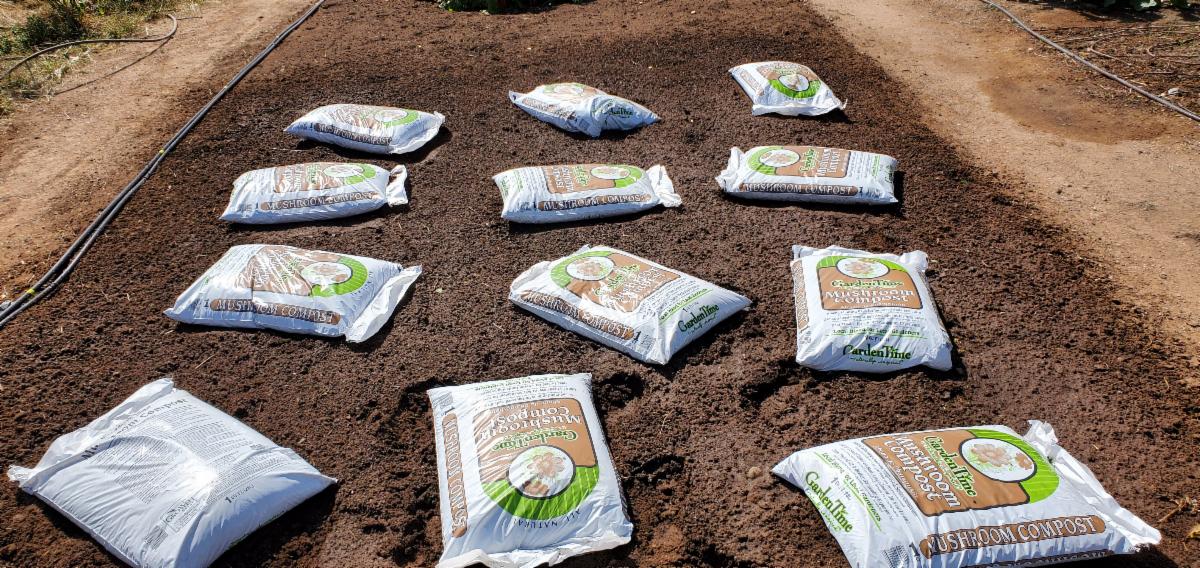
Nights will eventually get chilly so put in seeds of winter crops while the soil is still warm. Prepare soil by digging in composted mushroom or steer manure and granulated fertilizer. As you dig, remove and destroy root nibbling grubs. Nourish your friends the earthworms by adding veggie scrap smoothies that you make in your blender at home.
Seeds of these cool season vegetables can be put in anytime this month and next; radishes, carrots, beets, kohlrabi, turnips, rutabagas, collards, parsnips, Swiss chard, kale, fennel, and cilantro. Seeds of spinach and peas will prefer to wait for next month.
Transplants of cool season vegetables such as broccoli, cabbage, Brussels sprouts, cauliflower, Swiss chard, spinach, and kale can go in near the end of September or early October. Keep a sharp eye for Brassica loving cabbage looper caterpillars which can eat a small plant in a day or two; pick them off and spray the plant with Bt.
Snip off the lower browning leaves of tomato plants to reduce disease and pest hiding places. Clean out rotting veggies and ground debris from under beans, peppers, and eggplants. These crops should continue to produce a harvest if the plants are healthy.
Grasshoppers are often a serious problem in the late summer months and they will not go away until the weather turns cold; mechanical control is the best option. They eat their way through everything in short order. Consider protecting seed beds with a cover of a white cloth until the seedlings start pushing it up then fine netting (think bridal veil) supported by some posts and held down on all sides by soil will help keep predators off small plants.
Those are my plot thoughts for now,
Happy Gardening!!
|
|
Arid Garden …
By Mary Kidnocker
|
|
Garden volunteers, although still in the process of picking up remaining debris from the July 16 monsoon season storm, are currently busy pulling and gathering many rain-inspired weeds. Besides the usual grass weeds, there have been: already-blooming Fleabane, 3-feet high Nicotianas, wandering Pipevine, fuzzy-leafed Indian Mallow, Senna covesii, and other unnamed intruders.
|
|
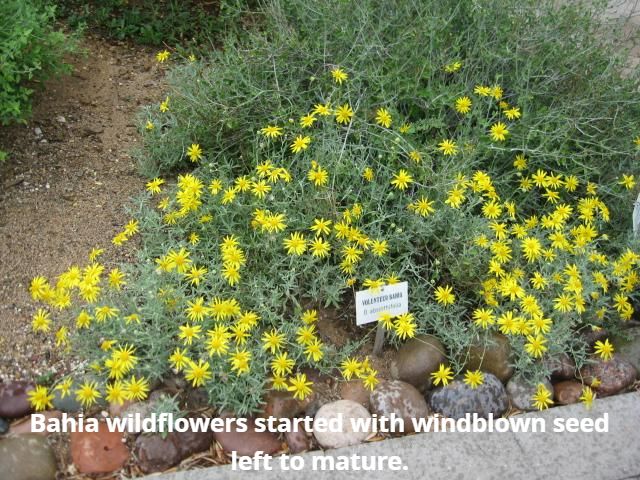
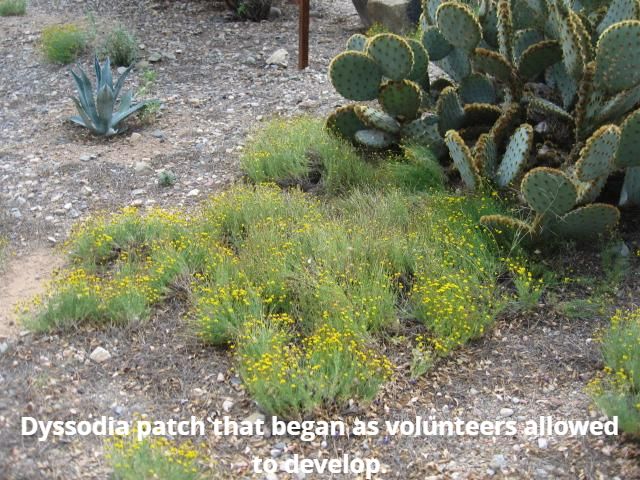
At Arid, our volunteers try to be selective of which plants should be pulled out and trashed; which will be watched for future decisions; and which will stay as part of the garden. With careful observation and a bit of research, new plant varieties are sometimes kept. For example, two types of plants now found in several spots in the garden that have “blown in” over the years are Bahia and Dyssodia… officially wildflowers. |
|
We are happy to have two new garden volunteers join our Friday group. Welcome to the team, Janice Duran and Jeff Chew!
|
|
Desert Meadows Park …
By Chuck Parsons
|
|
The July and August monsoon season has provided the park with rain. We finish August with all the vegetation looking spectacular! Most notable, benefiting from natural hydration are the native grasses. Larry Kersdergen diligently hand waters these plants for weeks and they hardly show their appreciation, but after a few nice rainy days they thrive. Had it not been for Larry’s efforts they’d have not survived to enjoy the rain.
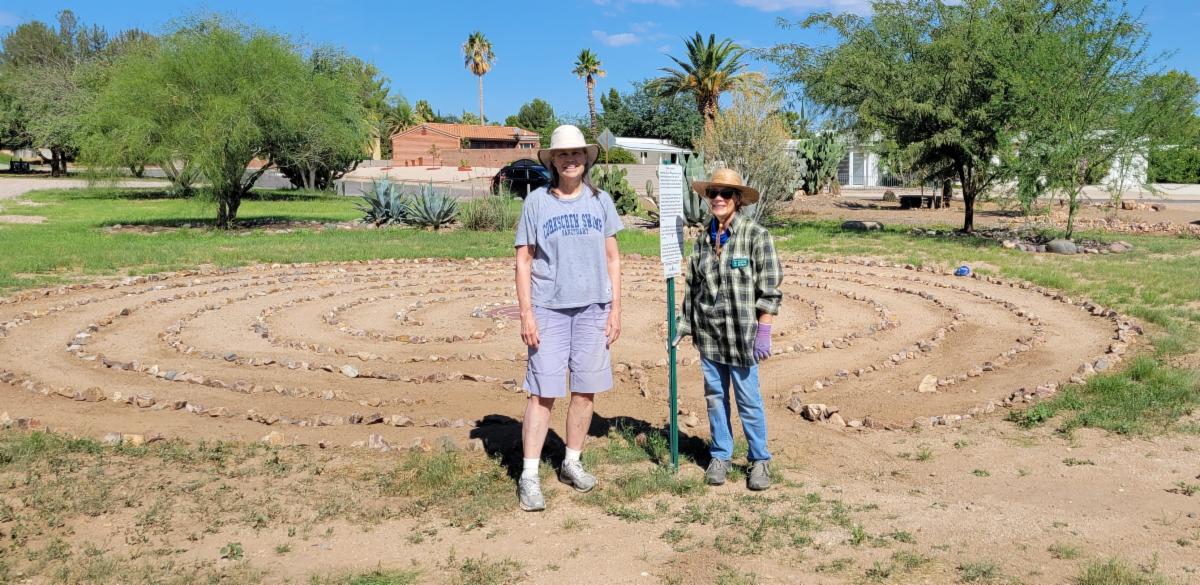
It’s not only the trees, shrubs, natives and all the other plants that thrive with monsoon rains, it’s the unwanted plants too ~ weeds! Lenny Friedman constructed the labyrinth at the park. The rocks that define the labyrinth maze provide an ideal habitat for seed germination thus requiring tedious weeding. On a recent Wednesday workday, Lenny along with volunteers Mary Smith and Janice Duran spent 3-hours each on that task.
|
|
Weeding labyrinth
Mary Smith and Janice Duran joined Lenny Friedman to clear the labyrinth of weeds. Photo by Lenny Friedman
|
|
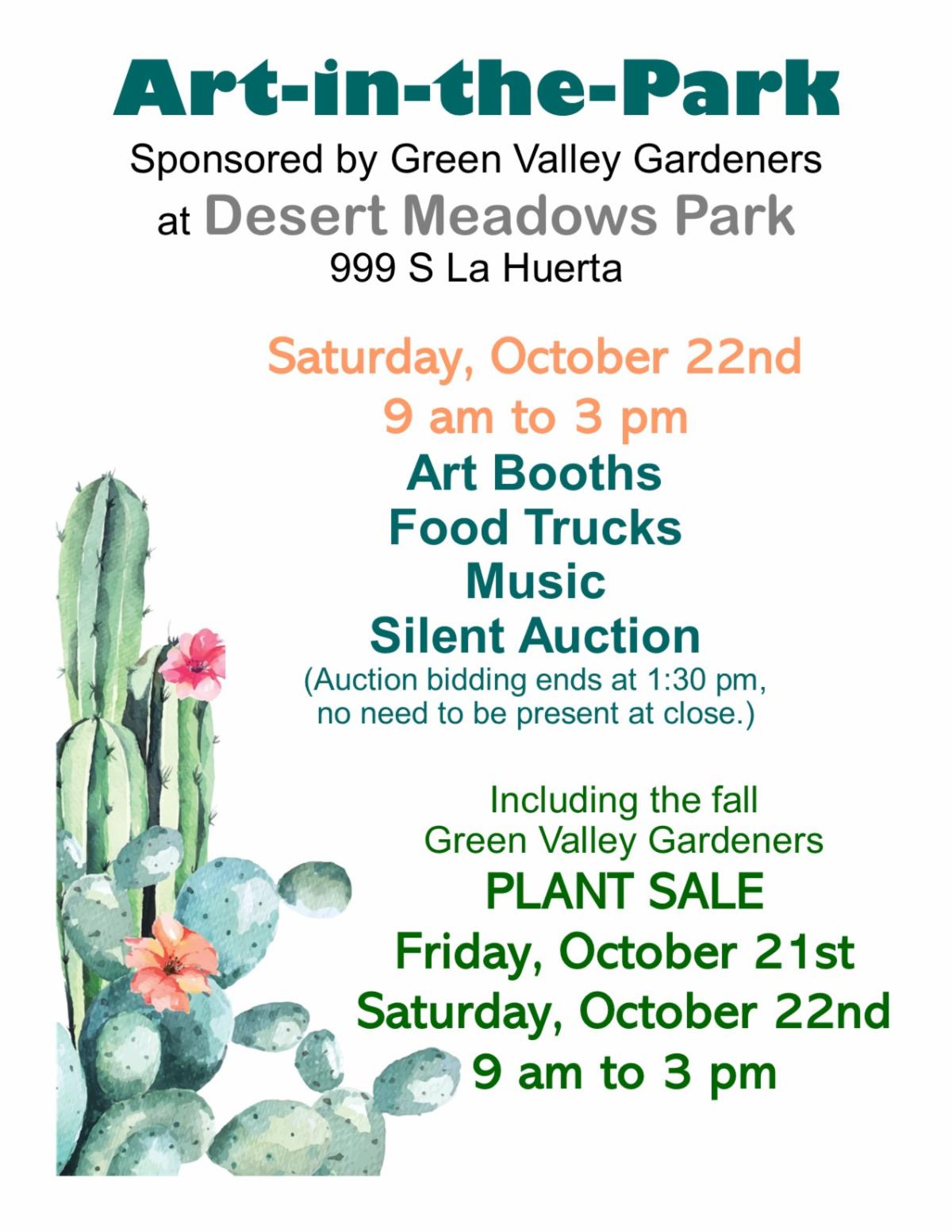
We have been mowing the Prestige field South of the park to have it available for off street parking during the October plant sale and Art-in-the-Park event. It’s primarily a field of Amaranth (Amaranthus palmeri), a weed by many names ~ careless weed, pigweed, and known as “rain spinach” or Juhukia i:wagi to the Tohono O’odham. Last year we only mowed around the labyrinth area. That was a mistake! We had to hand cut the rest of the field to have it ready for the art event. Several volunteers spent 3 days harvesting and removing Amaranth stock that stood over 5-feet high. That was a lot of work!
Amaranthus palmeri germinates in great green swaths wherever rainwater has pooled. It grows faster than one can imagine ~ between 6 and 10-inches a week this last month on the Prestige field. The plant is considered a curse by cotton farmers, it is, on the flip side, a positive boon to traditional harvesters—Native, Hispanic, African or Asian. As climate change digs its teeth into desert environments, our native Amaranth “weed” holds great potential as a rapid-responder “dry-land” crop for the future.
The nutrition of Amaranth, our rain spinach, is way up at the top of the chart. Consider that 100g of young shoots provides 42 calories packed with 3-4 grams of protein, 3 mg iron, and 4-11 mg of available calcium. If your Amaranth patch matures faster than your harvesting schedule allows, don’t fret–all is not lost. As long as there are soft, non-fibrous leaves to pick, they are fair game for steaming or stir-frying as greens or quelites.
Later, when the arching spike of spiny seed capsules matures and dries, you can harvest seeds (carefully with gloves) and winnow the tiny grains in the breeze. THEY are fabulously nutritious too. Amaranth seed is 15-18% protein—far higher than most cereals. They can be cooked as hot cereal or ground into flour– full of healthy, gluten-free carbs and fiber. Amaranth weed seed baked into bread adds a pleasing and healthy crunch. If you want quantity and lack patience to harvest wild careless weed, the NativeSeedsSEARCH store, 3061 N Campbell Ave, Tucson, has grain-amaranth for cooking or milling, also popped amaranth for adding to baked goods or confections for Dia de Los Muertos.
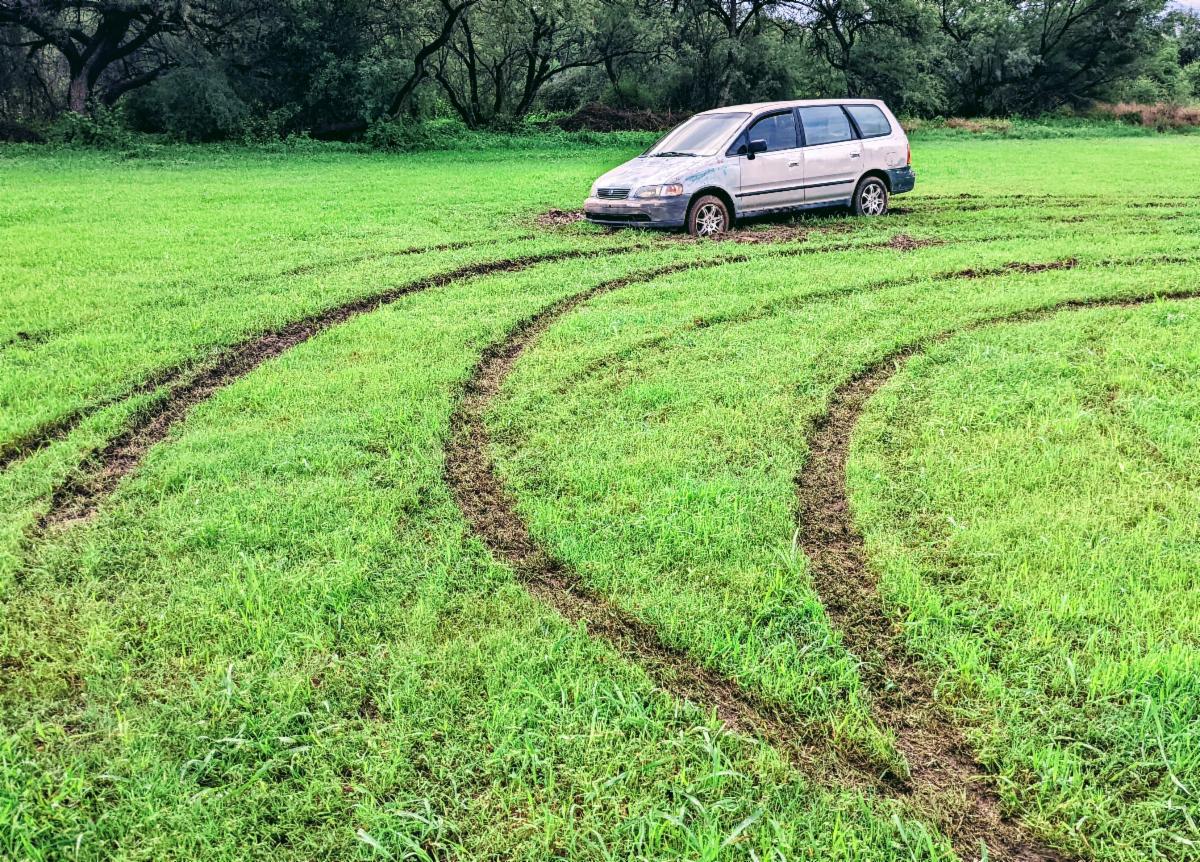
Mowing the entire field has also been popular with dog owners. Several use the field to play ball with their canine friend. After a heavy rain one afternoon, a young man came over to play with his dog and couldn’t resist doing “mud whirlies” with his car. Unfortunately, he buried his car axle-deep in our beautiful field. That’s going to require some repair work before it will be accessible with our mower again.
|
|
Fun in the mud
Mowing the Prestige field South of the park after the monsoon rains created a beautiful green space for park visitors. It proved too tempting to one young man. He had great fun doing mud whirlies until he buried his car axle-deep.
|
|
Historic Hacienda de la Canoa ...
By Raydine Taber
|
|
Monsoon is a reprieve from the Arizona hot summers. It brings us relief from the 100-degree temperatures and rain to quench the parched earth. During monsoon, our plants grow and thrive. To us gardeners, it means weeds and more weeds. The last couple of weeks we have been pulling and removing our share of weeds from the Canoa Ranch gardens.
While sitting on the ground, at the Visitors’ Center, pulling one weed after another, a thought entered my mind. What would the “ladies of Canoa” have said, had they seen me, throwing away all those beautiful, green, succulent, weeds. Several years back, the ranch put together a cookbook, with recipes, from several of the ladies who grew up, on the ranch; sometimes referred to as “children of Canoa” or “the ladies of Canoa.” A couple of the recipes called for purslane.
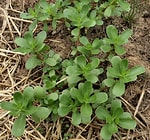
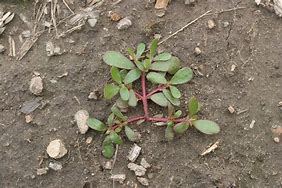
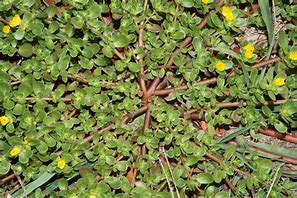
Within those weeds, being removed, was the weed called common purslane (portulaca oleracea) also known as pigweed, little hogweed, fat weed or pusley. It is that one with fat, succulent type leaves, red stems and sometimes a yellow flower. This plant creeps across the ground. Not particularly difficult to remove. This very same, little plant was used, by the “ladies of Canoa,” in salads, cooked like spinach or dried and used to thicken soups and desserts and, there I was, throwing them away.
|
|
This little plant deserved some research time. Come to find out, it is 93% water and everything except, maybe, the roots are edible. Nutrient-wise, it contains Vitamins A and C, magnesium, manganese, potassium, iron, and calcium. A 3.5-ounce amount equals only sixteen calories. Additionally, it is high in Omega-3 fatty acids and antioxidants. Further reading indicated it was and is used for medicinal purposes. Diabetes being one treated ailment. A sample taste proved it was, for my liking, a bit sour and a little salty.
If you are interested in growing this herb, it propagates mostly by seed but can also be started by cuttings. Transplants easily which means we could take that particular weed, out of my trash bag, and move it to our herb garden.
There are over one hundred distinct species of purslane (portulaca). Very few are human propagated and grown as ornamentals (Moss Rose) for our gardens.
Common purslane, a weed, or an herb? To, most of us, gardeners it is a weed (any plant that grows in an area where it is unwanted). To the “ladies of Canoa,” it was Verdolagas/Purslane and part of their summers’ evening meals. Patricia Preciado Martin, once told me while growing up on the ranch, purslane was not only used but enjoyed.
Some of the purslane information was found in Recuerdos y Recetas Memories & Recipes of the Mexicano Families of Rancho de la Canoa Collected and Edited by Amanda Salcido Castillo and Patricia Preciado Martin.
Come join us, for some of our interesting adventures, or take advantage of events offered by Pima County, Natural Resources Parks, and Recreation. The fun part about volunteering, at Historic Canoa Ranch gardens, is our variety of plant life and learning a small part of Southern Arizona’s history. We are not just all native and drought tolerant plants, but we also have herbs, vegetables, fruit trees and indoor plants. Each garden, we work, enhances one of the Ranch’s historic buildings. Take a step back into Southern Arizona’s History.
|
|
We meet on Tuesdays at 7:30 a.m. Please join us! If you want more information call me at 520-625-0961 or email rs_taber@msn.com
|
|
Allen J Ogden Community Garden ...
By Bob Laux-Bachand
|
|
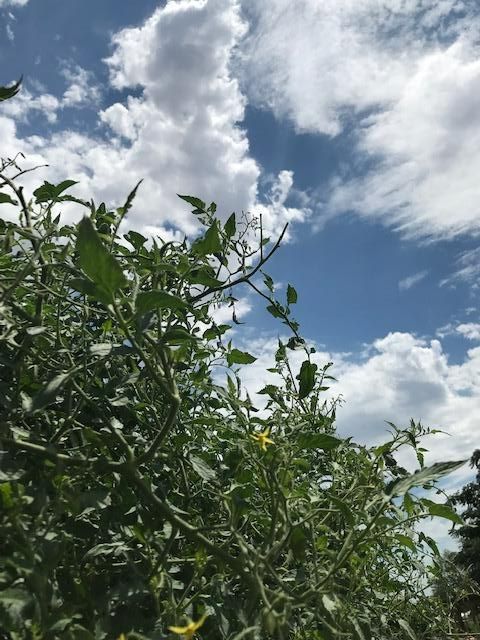
August was an inflection point in our year-round gardening scheme. Several of the plots have been cleared, and seeds are in the ground for fall and winter crops. Other plots are still yielding tomatoes, peppers, and beans. Aided by abundant rain, Haydee Hernandez’s corn and sunflowers have risen to nearly 8 feet above the soil in Ogden’s newest raised beds, while the “tallest tomato” award goes to the in-ground plot of Fred and Lorna Mitchell for vines that have topped their sturdy 6-foot cages by about 2.5 feet. |
|
|
|
Tall tomato vines reach toward the sun from an Ogden plot.
|
|
The garden’s new open-door policy with its “Please Don’t Pick” signage appears to be working. Visitors have been able to stroll through and ask questions about the Green Valley Gardeners and our operations and membership. Another initiative, the Garden Butterflies children’s program, could be extended into the fall, weather permitting. “The classes have been sustainable and I’ve received so much positive feedback from the community,” said Tara Menendez, the teacher.
|
|
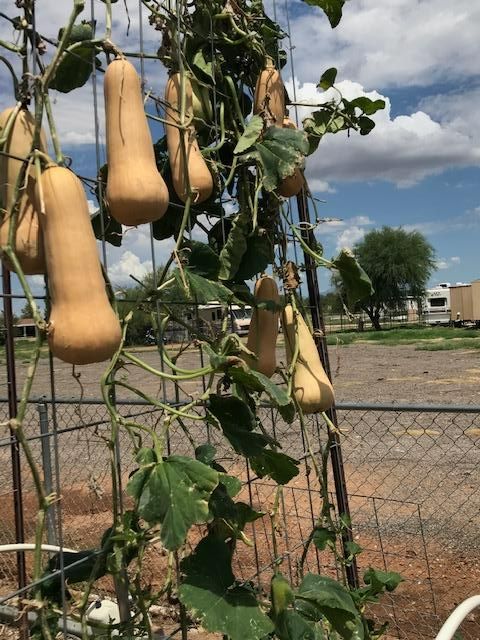
Drying butternut squash were ready for harvest by mid-August.
|
|
|
|
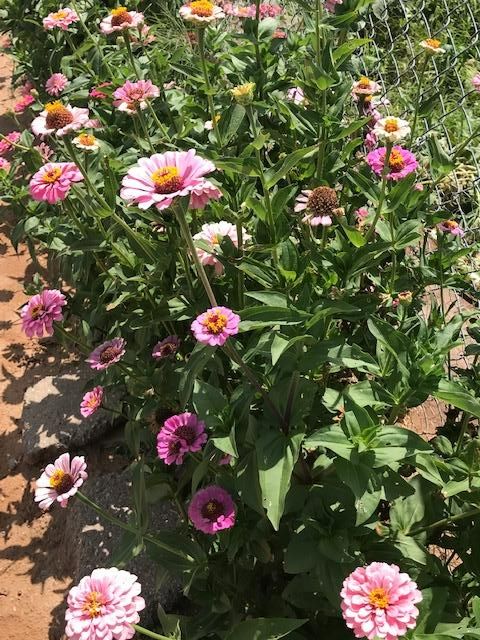
Zinnias flourished along Ogden's fence in the August heat. |
|
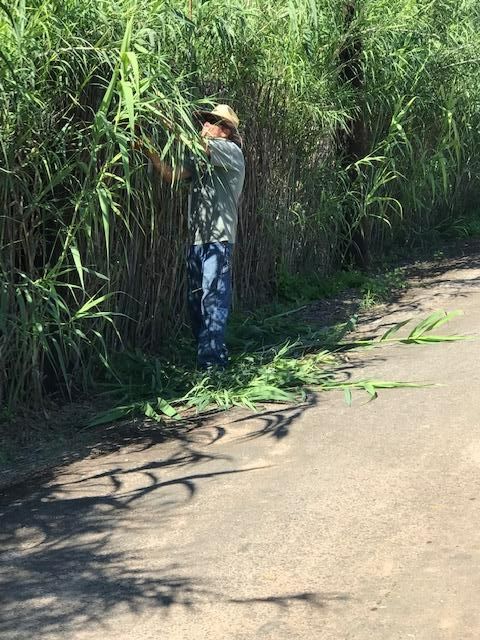
August is also the heart of the monsoon and we recorded 3.73 inches of precipitation through the 24th. The heaviest of nine Rainlog readings, on the morning of Aug. 20 for the preceding 24 hours, was 1.56 inches. All that rain has stimulated the growth of bamboo and other vegetation along our road, and we have again taken on the task of keeping the route clear for our neighbors in Sahuarita.
|
|
Membership ... By Karen Dougherty
|
|
Join us welcoming our new member:
Wally Platt
If you should see Wally, please give him a big welcome. Our members are the heart of our organization. We would like to thank all of you for your continuing support.
Please remember if you have any changes to your contact information or just have a membership question, send it to:
|
|
Mailing Address:
PO Box 86,
Green Valley, AZ 85622-0086
|
|
|
|
|
|
|