The cost of lumber has gone through the roof, and that is hitting the housing industry on all fronts. For homebuilders, renovation contractors and DIYers, the cost of projects is now far higher than it was just a year ago and about to cross into historic territory.
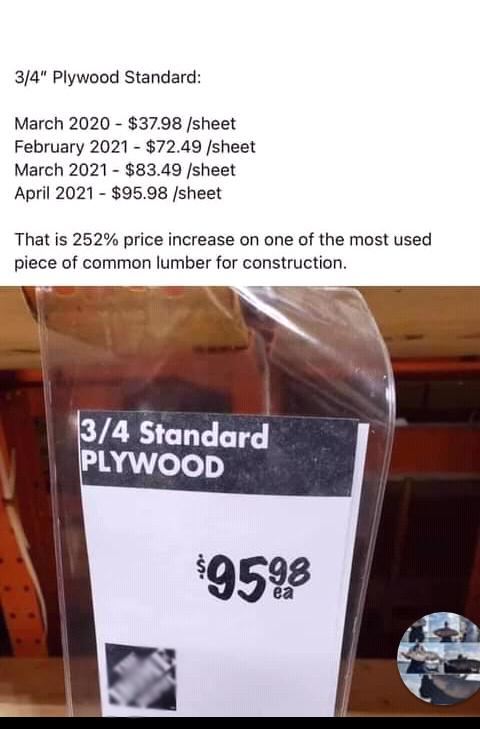
While wood production is at a 13-year high, the cost of lumber remains at record levels. As of the week of March 25, the price of lumber per thousand board feet was up 171% since the onset of the pandemic. The National Association of Home Builders (NAHB) calculates that current lumber prices are adding at least $24,000 to the price tag of a typical new single-family home. That additional price tag doesn't include the pandemic spurred surge charge on other building materials like copper, concrete, and steel.
The problem is particularly acute in the remodeling business, because the pandemic has caused so many people to want to add additional space, especially outside. Contractors and design firms are caught in the middle.
Supply is completely off the mark because both mill operators and lumber dealers misread the 2020 market. Since housing starts and remodeling were weaker in 2019, they pulled back on production. The expectation was that 2020 would be much of the same.
Then came the totally unexpected boom. Housing turned out to be one of the brightest spots in the economic recovery, with demand coming back swiftly. The trouble was that the pandemic also made it harder to produce. Some mills have had to limit shift work in order to comply with social distancing rules. And lumber dealers didn’t exactly believe demand would stay as strong as it was after last summer, so dealer inventory dropped to record low levels in the fall.
When they saw new demand in January, they went to the mills, and the mills didn’t have enough, because they’re just not operating at full capacity anymore. While lumber production has ramped back up, the demand from builders and home remodelers continues to outpace supply. That supply still hasn't caught up from the state issued shutdowns which halted production last year. Wholesalers and retailers are now really thin on supplies, wood is not close to the final end-users, lead times are longer, and thus buyers are desperately bidding up lumber prices as they try to keep up with very strong demand.
At the onset of the pandemic, quarantining Americans set-off a home renovation and DIY boom that is still keeping retailers busy today. Additionally, low interest rates and tight existing home inventory have more home buyers looking for new construction.
Robert Dietz, chief economist at the NAHB, says that home builders have absorbed some of these additional costs, however, builders will pass more of it onto buyers this year. While Dietz doesn't foresee lumber prices going much higher, he thinks they'll remain elevated throughout this year.