|
September 25, 2019 | Inside Higher Ed
The Education Department wrote to the center jointly run by Duke University and the University of North Carolina at Chapel Hill on Aug. 29. The letter, published in the Federal Register last week, singled out various programs as allegedly having
“little or no relevance to Title VI,” a federal grant program that funds international studies and foreign language programs
at U.S. universities. The Duke-UNC consortium is designated as a National Resource Center for the teaching of Middle East studies and languages of the region; it receives about $235,000 in annual Title VI funding.
Among the programs singled out for criticism by the Education Department were two humanities conferences. “Although a conference focused on ‘Love and Desire in Modern Iran’ and one focused on Middle East film criticism may be relevant in academia, we do not see how these activities support the development of foreign language and international expertise for the benefit of U.S. national security and economic stability,” the letter from Assistant Secretary for Postsecondary Education Robert King states.
--------
|
|
|
|
|
September 23, 2019 | City Limits
New York State’s Uniformed Court System (UCS) employs more than 300 staff interpreters in more than 20 languages, in addition to hundreds of additional freelance interpreters who work in the system each year.
But just a handful of the court’s staff interpreters work in American Sign Language (ASL)
—in fact, just seven were employed by the state courts in 2018, all of them assigned to courthouses and offices in New York City, according to records compiled by the website SeeThroughNY.
It’s often not enough to meet demand, and the dearth of ASL interpreters can make interacting with the courts more difficult for deaf and hard of hearing residents, according to advocates, attorneys and others who work in the industry who spoke to City Limits. They tell of postponed hearings, delayed arraignments and miscommunication caused by the limited number of interpreters, making the already high-stakes, onerous process of navigating the legal system even more challenging for those who rely on such
|
|
|
|
September 25, 2019 | MacArthur Foundation
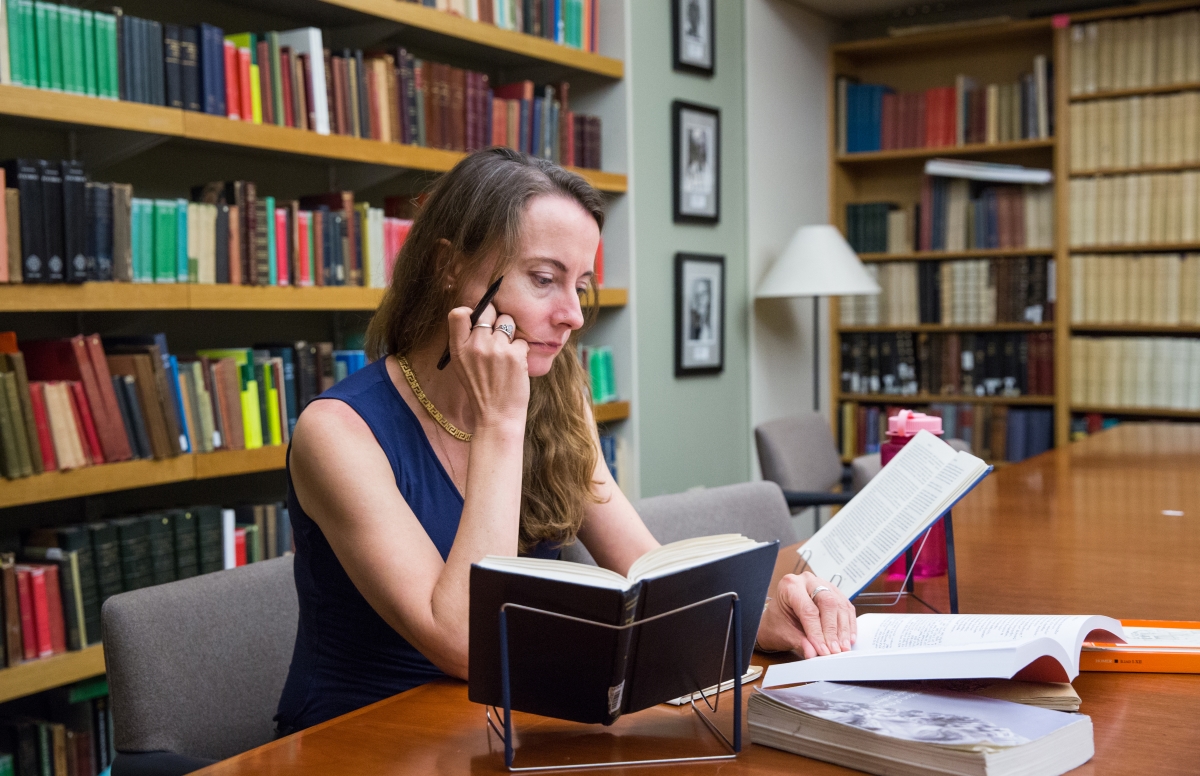
Emily Wilson is a classicist and literary scholar demonstrating
the vital role translation plays as a creative form of mediation across linguistic borders and between antiquity and the present day.
Trained in both classics and comparative literature, she combines a thorough knowledge of classical sources with philological acumen and finely honed stylistic skills. These attributes have enabled her to produce rigorously researched works of scholarship and translation that are illuminating and engaging for specialist and non-specialist readers alike.
|
|
|
|
POLICY CLIPS
EDUCATION CLIPS
INDUSTRY CLIPS
|
|
Registration for Language Advocacy Day 2020 is now open! Join the Joint National Committee for Languages and language advocates from around the country to let representatives know that
"
multilingualism is the future
."
Register now for early bird pricing and save!
To learn more about
sponsorship opportunities
, please contact Trey Calvin (tcalvin@languagepolicy.org)
|
|
PROFESSIONAL OPPORTUNITIES
|
|
Application Deadline: October 1st
Designed to expand the accessibility of overseas research while increasing U.S. knowledge and expertise on the region, the Research Scholar Program
supports fellows seeking to complete overseas, policy-relevant research
. Fellowships last three to nine consecutive months and include round-trip international travel; housing and living stipends; visa support; overseas health, accident, and evacuation insurance; archive access; and logistical support.
|
|
Saturday, November 9th
Montréal, QC
FIT-North America is proud to announce the first FIT-NA symposium, “Translation and Interpreting for Indigenous Languages,” in honor of and aligned with the FIT 2019 Theme for International Translation Day, honoring the United Nation’s International Year of Indigenous Languages. The Symposium is open to all interested parties and will be held in downtown Montréal at the headquarters of l’Ordre des Traducteurs, Terminologues, et Interprètes Agréés (OTTIAQ).
Registration will open shortly and will be limited to the first 30 in-person attendees. A webcast will also be available
.
|
|
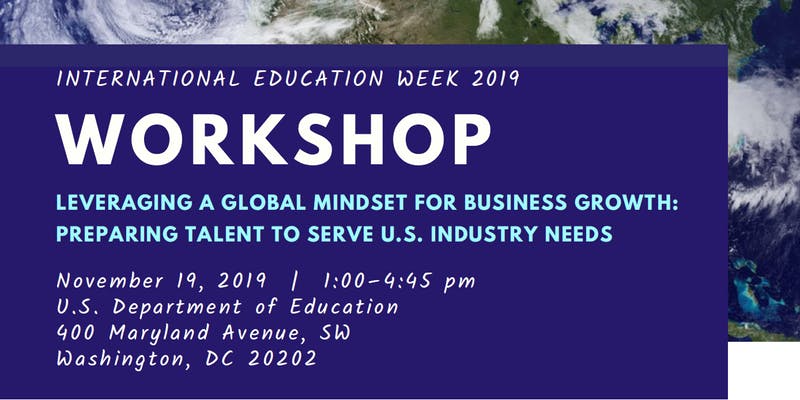
Tuesday, November 19th
1:00 PM-4:45 PM
U.S. Department of Education
Resource presentations and tabletop activities will give attendees the
opportunity to hear from and work with international business education experts and industry representatives
to develop ideas for programs that teach global and cultural skills in tandem with business principles.
|
|
Application Deadline: Tuesday, November 19th
The CLS Program is a fully-funded intensive overseas language and cultural immersion program for U.S. undergraduate and graduate students enrolled at U.S. colleges and universities.
Students spend eight to ten weeks abroad studying one of 15 critical languages
: Arabic, Azerbaijani, Bangla, Chinese, Hindi, Indonesian, Japanese, Korean, Persian, Portuguese, Punjabi, Russian, Swahili, Turkish, and Urdu
.
Most CLS languages do not require previous study of the target language.
|
|
FEDERAL BUSINESS OPPORTUNITIES
|
|
Check back next week for more federal business opportunities!
|
|
JNCL-NCLIS Significant Contributors
|
|
JNCL-NCLIS is grateful for the support from our partners.
|
|
Joint National Committee for Languages
National Council for Languages and International Studies
202.580.8684 | info@languagepolicy.org | www.languagepolicy.org
|
|
THURSDAY, September 26, 2019
ISSUE
|
|
Disclaimer: The articles and news sources included in NewsBrief are not endorsed by, directly affiliated with, maintained, authorized, or sponsored by JNCL-NCLIS. The views and opinions expressed in the articles in this NewsBrief are those of the authors and do not necessarily reflect the official policy or position of any other agency, organization, employer or company
.
|
|
|
|
|
|
|