|
M23 Rebels Seize Control of Goma
On 27 January 2025, M23 rebels seized control of Goma, the capital of North Kivu province in eastern Congo (DR), marking a significant escalation in the ongoing conflict. The group surrounded the city over the weekend, issuing an ultimatum to Congolese forces to surrender by Monday morning. By 29 January 2025, fighting in Goma had ceased, with most resistance concentrated around the local airport reportedly subdued. Both sides have suffered casualties, although exact figures remain undisclosed. The M23 is now in complete control of Goma and is assessing the extent of damages.
This development comes less than a week after the fall of Sake, highlighting the rapid momentum of the M23 offensive. The capture of Goma is not just a tactical victory but a strategic one, as it represents a significant economic hub and a lifeline for the region, delivering a devastating blow to the Congolese government.
Historical Context and Tactical Significance
The fall of Goma demonstrates the M23's capability to destabilise the region. The rebels employed tactics strikingly similar to those used in their 2012 takeover of the city. The rapid collapse of Congolese defences underscores the rebels’ strategic planning and ability to exploit vulnerabilities in the government’s security apparatus. Goma’s significance extends beyond its geographical position. It is a critical economic hub and transport nexus for North Kivu and the surrounding areas.
This seizure has alarmed international stakeholders, with Kenya’s President William Ruto calling for an emergency summit to address the crisis and U.N. Secretary-General António Guterres warning that the offensive risks escalating the conflict into a broader regional war. The city’s fall has also heightened tensions between the Democratic Republic of Congo (DRC) and Rwanda, with Congolese authorities accusing Rwanda of directly supporting the M23 rebels—an allegation that Rwanda denies.
Humanitarian and Economic Consequences
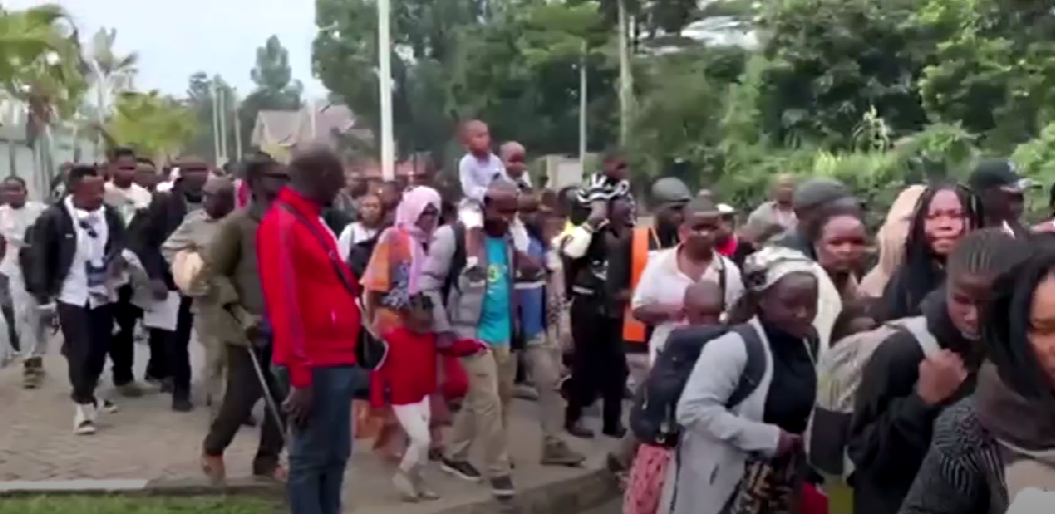
The capture of Goma has unleashed a significant humanitarian crisis, with thousands of civilians fleeing the city in search of safety. As the city is home to over 650,000 people, its collapse has triggered widespread displacement, worsening an already dire humanitarian situation in eastern Congo. Reports of looting, prison breaks, and unrest have emerged, further destabilising the region. The M23’s takeover disrupts the Congolese government’s ability to provide essential services, leaving the city’s population vulnerable to escalating hardships.
The economic implications are equally severe. Goma is a central trading hub for agriculture and raw materials, and its fall will likely disrupt regional supply chains. The M23 reportedly exploits local resources, including mining operations, and is estimated to earn at least USD 300,000 monthly from these activities. With their control of the city, the group may expand their operations, increasing their income and fueling a cycle of enhanced military capabilities. This “snowball effect” could lead to greater regional dominance as the group uses its resources to secure more mines and territory.
Broader Regional Implications
The fall of Goma has significant downstream consequences for the broader region. The DRC government’s loss of such a strategic city weakens its standing and underscores the fragility of its control over eastern Congo. Additionally, the displacement of thousands and the interruption of trade threaten to exacerbate poverty and food insecurity. The international community, particularly neighbouring countries like Kenya and Uganda, will watch closely as the conflict spreads into a broader regional confrontation.
This marks a turning point in the conflict, raising urgent questions about how to address the M23’s growing power and stabilise the region. Without decisive intervention, the group’s control of Goma may deepen the humanitarian and economic crises in North Kivu and beyond.
On 13 January 2025, Islamic State Central Africa Province (ISCA) militants detonated an improvised explosive device (IED) targeting Christians in Triangle, Buikwe District, Uganda. The IED was reportedly detonated in a shop, killing two individuals and causing significant damage to the building. This attack marks a stark escalation in ISCA's operational reach and capability within Uganda.
A Shift to Urban Targeting
This incident is particularly notable for its urban setting. Triangle, part of the larger Njeru-Jinja metropolitan area, lies just 45 miles (73 km) from Kampala’s capital. Unlike ISCA’s traditional focus on remote villages, this attack in a bustling urban centre represents a clear shift in strategy. Urban operations carry significantly higher risks of exposure and interdiction but also potently demonstrate ISCA's ability to strike at the heart of Uganda. If this urban targeting continues, ISCA may refine its methods to strike larger gatherings, such as church congregations, raising the threat level considerably for Ugandan authorities.
Unusual Target and Tactical Shift
The choice of a shop as the attack site signals a departure from ISCA's usual modus operandi. Typically, ISCA targets remote villages, often involving raids or massacres. This incident mirrors tactics more commonly associated with al-Shabaab, which frequently targets shops, restaurants, and hotels to strike both civilians and security forces. This shift to a high-profile urban environment should act as a wake-up call for the Ugandan government to adapt its counter-terrorism measures accordingly.
Militants Escape: Uganda’s Interdiction Challenges
The militants responsible for planting and detonating the IED reportedly escaped, compounding the threat. Their continued presence in the area underscores Uganda’s challenges with effective interdiction and intelligence gaps. This incident also lends credence to TRAC’s long-standing suspicion that ISCA’s bomb-making operations have a foothold in Uganda. A skilled ISCA bomb maker actively operating in the region would not only facilitate such attacks but also heighten the overall threat of recurring incidents. The ability of the attackers to evade capture highlights the urgent need for a coordinated and robust counter-terrorism response to neutralise this growing urban menace.
| | |
TRAC Incident Report: Tehreek-e-Taliban Pakistan (TTP) Claims Responsibility for Suicide Vehicle-Borne Improvised Explosive Device (SVBIED) Attack on a Paramilitary Camp in the Gulistan Area, Qilla Abdullah District, Balochistan, Pakistan | |
|
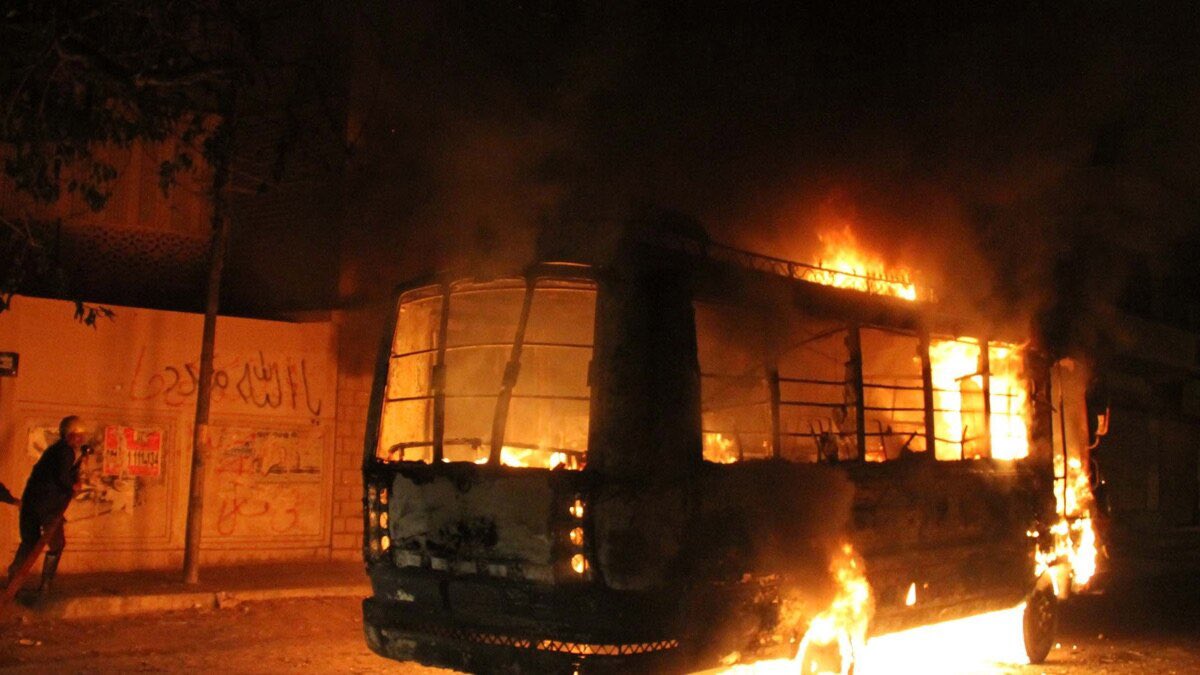
On the night of 27/28 January 2025, Tehreek-e-Taliban Pakistan (TTP) militants launched a coordinated attack on a Frontier Corps (FC) camp in Gulistan, Qilla Abdullah District, Balochistan. The assault began with a suicide vehicle-borne improvised explosive device (SVBIED), which detonated against the perimeter wall, causing a large explosion and significant damage. Following the blast, intense gunfire broke out between security forces and militants. The Pakistani military successfully repelled the attack, killing five TTP militants, including two suicide bombers. However, two soldiers, Naik Tahir Khan (39) and Lance Naik Tahir Iqbal (26), were killed, while eleven other personnel sustained injuries. Security forces launched a sanitisation operation in the aftermath to clear the area of any remaining threats.
On 29 January 2025, the TTP released propaganda footage, identifying the suicide bomber responsible for the attack as “Dr Muhammad Ghazi,” a resident of Swat district. The footage, aimed at glorifying the assault, confirmed that four additional militants participated in the ground attack. The TTP claimed responsibility for the operation, presenting it as revenge for the killing of Qari Ismail, the group's shadow governor for Khyber, who was eliminated in a Pakistani counter-terrorism operation in Tirah Valley on 25 January 2025. The group sought to leverage the attack in its propaganda efforts, portraying it as a bold retaliatory move against the Pakistani state.
The Gulistan attack underscores the TTP’s ability to carry out high-profile, multi-phase assaults despite recent operational losses. The attack was a direct response to the Pakistani military’s counter-terrorism successes, which had disrupted the group’s leadership structure. Using an SVBIED followed by an armed raid, the TTP demonstrated its capacity to stage complex, well-planned operations. The targeting of an FC camp in a remote but strategically significant location near the Afghan border highlights how the TTP exploits weak security infrastructure and relies on its deep-rooted networks in tribal regions to sustain its activities.
For Pakistani security forces, this incident serves as a reminder of the TTP’s resilience and evolving tactics. While eliminating leaders like Qari Ismail weakens the group’s operational capabilities, the TTP’s ability to escalate violence and amplify its propaganda remains a significant challenge.
| |
TRAC Incident Report: Al-Shabaab Militants Target Somali Gathering With Improvised Explosive Device (IED), Injuring 8 Including Beled Hawo’s First & Second Deputy Mayors & Financial Officer, in Beled Hawo, Gedo, Somalia | |
|
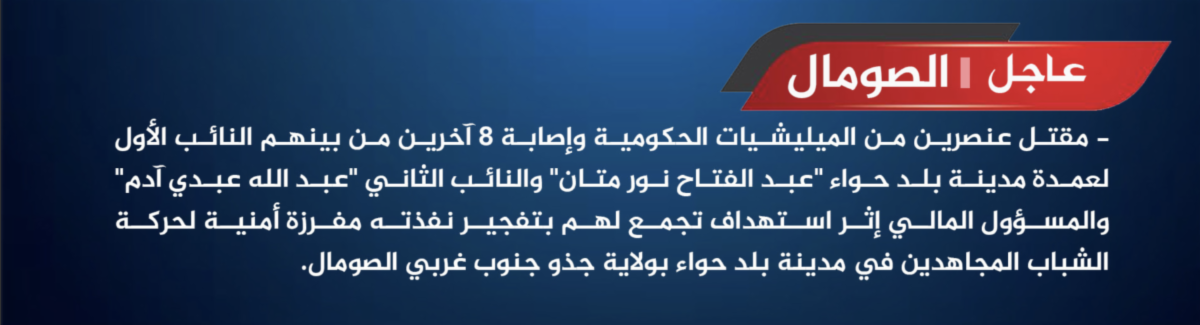
On 24 January 2025, Al-Shabaab militants carried out an improvised explosive device (IED) attack targeting a gathering of Somali forces in Beled Hawo, Gedo, Somalia. The explosion resulted in the deaths of two Somali soldiers and injured eight others, including high-ranking local officials. Among the wounded were First Deputy Mayor Abdul Fattah Nour Matan, Second Deputy Mayor Abdullah Abdi Adam, and a Somali financial officer. Later, Deputy Mayor Abdul Fattah Nour Matan succumbed to his injuries, highlighting the significant impact of the attack on local governance and security leadership.
Beled Hawo has been a focal point of Al-Shabaab’s recent militant activity, with this incident marking the second attack within 24 hours in the area. The town’s location along the Somalia-Kenya border makes it a strategic target for Al-Shabaab, which seeks to disrupt government presence, weaken military control, and assert dominance over key border towns. The attack is part of a broader campaign by the group to destabilise government institutions and eliminate officials who support Somali national security efforts.
This incident underscores a notable shift in Al-Shabaab’s tactical approach as the group intensifies its attacks on security forces and government officials rather than indiscriminate bombings. By explicitly targeting government gatherings and security checkpoints, Al-Shabaab aims to cripple local governance, instil fear among the civilian population, and further erode confidence in the Somali government's ability to maintain stability. These targeted assassinations serve strategic and psychological objectives, ensuring the group continues influencing contested regions.
Al-Shabaab’s expansionist goals in Beled Hawo reflect its broader strategy to control border regions, allowing it to conduct cross-border operations into Kenya with reduced military resistance. This sustained campaign of violence exacerbates instability in the area and fuels widespread fear among civilians, who increasingly question the Somali government’s ability to counter Al-Shabaab’s growing strength. If the militant group consolidates power over Beled Hawo’s security infrastructure, it could further facilitate its movement of fighters, weapons, financial resources, and their lucrative smuggling operations, posing a severe threat to both Somalia and neighbouring Kenya.
| |
TRAC Insight: Bandits Target Displaced Families, Exploiting Children in Illegal Mines, Bauchi State, Nigeria | |
|
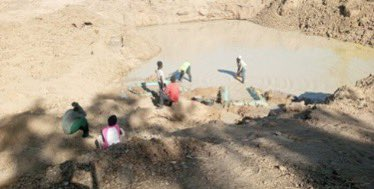
Banditry in northern Nigeria has extended its grip into Bauchi State, where armed groups have taken control of illegal mining operations, exploiting displaced families and children for economic gain. Fleeing violence and displacement from Zamfara and other conflict-ridden northern states, many families arrive in Bauchi with little to no resources, hoping to rebuild their lives. However, instead of finding refuge, they are thrust into forced labour in unsafe mining conditions, often under the control of the very bandits who drove them from their homes.
In mining hubs like Toro, Dass, and Alkaleri, the influx of displaced persons has deepened the humanitarian crisis, as families—including children—are forced to work in unregulated mining sites. These mines mirror those in Zamfara State, where bandits have long monopolised gold mining operations, using extortion and forced labour to generate wealth. School attendance in these communities has dropped by 50% in the past year as children are pulled into the mining trade to support their families. Earning a mere N5,000 ($6) a week, these children and their families remain trapped in extreme poverty. At the same time, bandits profit tenfold from their labour, using mining revenues to fund further violence and territorial expansion.
Beyond fueling banditry, unregulated mining has devastated the environment, leaving a trail of destruction in its wake. Farmlands have been destroyed, water sources contaminated, and entire landscapes scarred by erosion—worsening food insecurity and further entrenching communities in poverty. The Bauchi State Government attempted to address the crisis by banning illegal mining in 2024, yet enforcement has been weak and largely ineffective, allowing mining activities to continue unchecked. Bandits and criminal networks continue to thrive, capitalising on both government inaction and the desperation of displaced populations.
The crisis in Bauchi State is a microcosm of a more significant nationwide issue, where different criminal factions—including bandits, gangs, and militant groups—exploit people across multiple industries. As insecurity continues to rise in Nigeria, these incidents will only escalate, with oil, mining, fishing, and farming becoming key battlegrounds for criminal exploitation. Without decisive government intervention, economic reforms, and stronger security measures, the cycle of violence, displacement, and exploitation will persist, deepening Nigeria’s socioeconomic instability.
| |
TRAC Incident Report: Afghan Immigrant Enamullah O. Kills a Two-Year-Old Child and a Passerby in a Knife Attack, Aschaffenburg, Lower Franconia Region, Bavaria, Germany | |
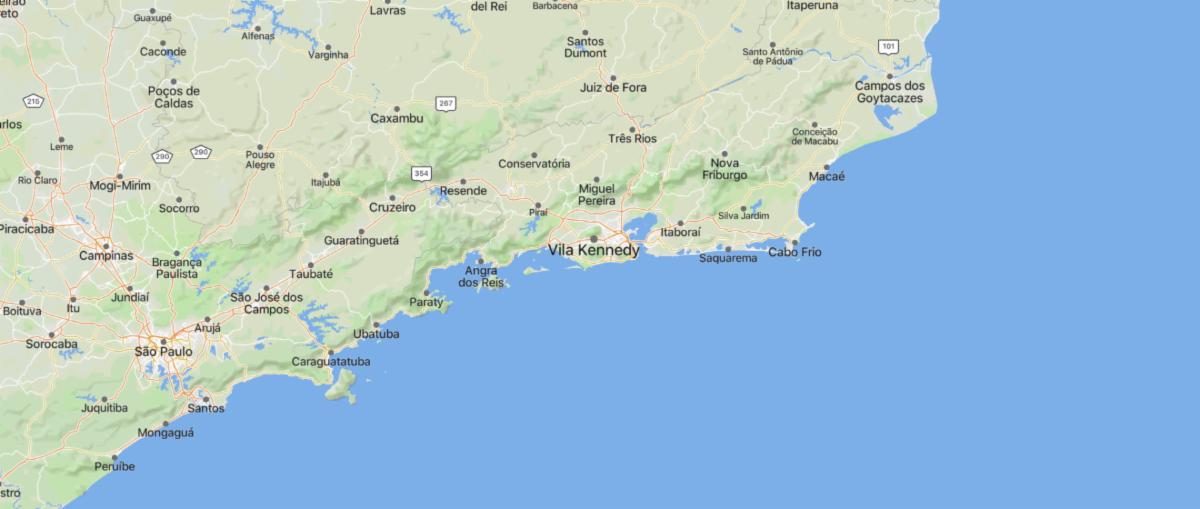
TRAC Incident Report: Terceiro Comando Puro (TCP) Assassinated Two Members of Comando Vermelho (CV) in Vila Kennedy, Rio de Janeiro, Brazil
| |
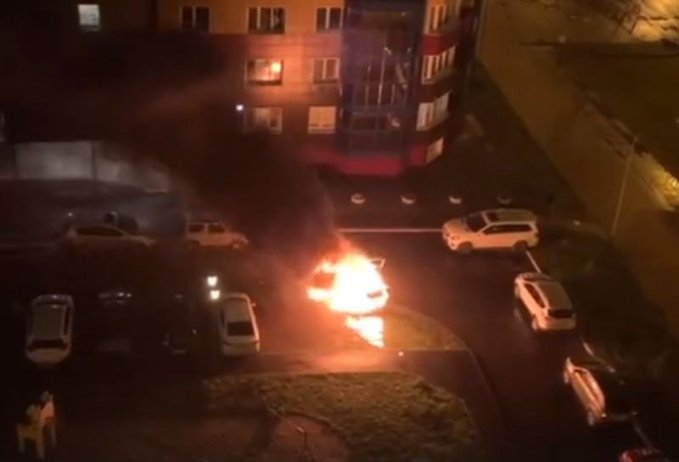
(Left Wing Anarchist) Anarchist’s Torch Colonel Alexander Shutovsky’s Car in Protest of “Special Operation”, Rostov-on-Don, Ростов-на-Дону, Rostov, Oblast, Russia | | | | |