|
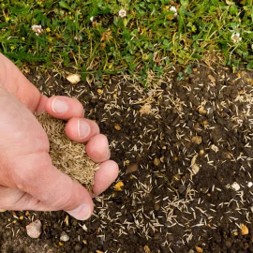
Dormant seeding is an alternative crop establishment strategy that involves planting seeds in late fall, after soil temperatures decline sufficiently to prevent germination but before the soil freezes, allowing seeds to remain dormant until favorable conditions return in spring. This practice can be used for various crops and forage species, including winter cereals, canola, and cover crops. Successful establishment depends on appropriate seeding timing, seed-to-soil contact, seed viability over winter, and adequate spring soil moisture and temperature for germination. In western North Dakota, where precipitation is limited and highly variable, prolonged fall dry periods frequently restrict timely germination and establishment of fall-seeded crops. Recent drought conditions have highlighted the potential of dormant seeding as an alternative to conventional fall and spring planting. Winter-hardy species such as cereal rye, triticale, winter camelina, and hairy vetch are potential candidates for dormant seeding to provide early spring ground cover. Previous research by Patt Carr and colleagues at the Dickinson Research Extension Center (2003) evaluated dormant-seeded polymer-coated and untreated canola compared with conventional spring seeding, providing preliminary regional experience with this practice. Despite this earlier work, research on dormant seeding under the diverse cropping systems and variable environmental conditions of western North Dakota remains limited. Further research is needed to evaluate suitable crops and species, seeding windows, planting methods, and the effects of fall and spring environmental conditions on seed survival, germination, and crop establishment.
| |
The NDSU Extension does not endorse commercial products or companies even though reference may be made to tradenames, trademarks or service names. NDSU encourages you to use and share this content, but please do so under the conditions of our Creative Commons license. You may copy, distribute, transmit and adapt this work as long as you give full attribution, don’t use the work for commercial purposes and share your resulting work similarly. For more information, visit www.ag.ndsu.edu/agcomm/creative-commons.
County commissions, North Dakota State University and U.S. Department of Agriculture cooperating. NDSU does not discriminate in its programs and activities on the basis of age, color, gender expression/identity, genetic information, marital status, national origin, participation in lawful off-campus activity, physical or mental disability, pregnancy, public assistance status, race, religion, sex, sexual orientation, spousal relationship to current employee, or veteran status, as applicable. Direct inquiries to Vice Provost for Title IX/ADA Coordinator, Old Main 201, NDSU Main Campus, 701-231-7708, ndsu.eoaa@ndsu.edu. This publication will be made available in alternative formats for people with disabilities upon request, 701-231-7881.
| | | | |