|
As I promised in Wednesday's mid-week update, this is our first abbreviated issue in our summer schedule. Rather than only sending out the newsletter every two weeks, I thought it would be nice to just send out a shorter edition every week or every other week. I hope you enjoy the new format.
1. High Line Park has become the new meetup spot for family and even long-lost friends. I can't encourage you enough to explore the new Lower East Side of Manhattan.
2. As a child I was always fascinated by the "katydids". My grandmother told me they came around every 17 years, similar to the gypsy moths who I believe come around every 30 years. So fascinating about the "katydids" is that there are two broods, and they only emerge together every 221 years.
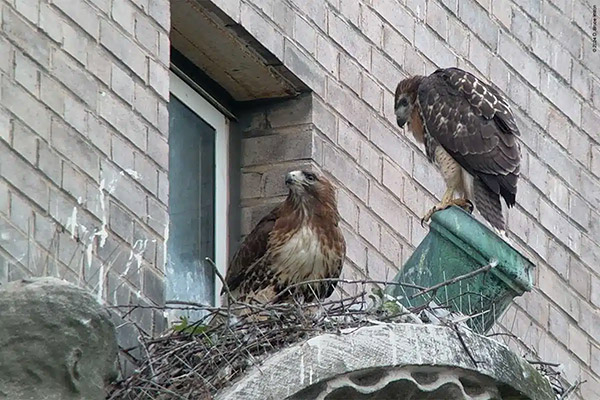
3. As you know I have been following the red-tailed hawks of Central Park. And as you know, the lovely couple who built a nest on the New York City Athletic Club's facade. I'm gonna miss them. I said goodbye yesterday morning as I pulled off in a cab.
| |
Now, to this week's Flock. | |
1. AROUND TOWN: NYC - The High Line Park
| |
During my current visit to New York, I've had several chances to explore the High Line Park in Chelsea with friends. What was once a hazard to pedestrians, and later a declining structure headed for demolition, was saved by residents and transformed into a truly unique urban park. | |
The High Line is a public park built on a historic freight rail line elevated above the streets on Manhattan’s West Side. Saved from demolition by neighborhood residents and the City of New York, the High Line opened in 2009 as a hybrid public space where visitors experience nature, art, and design. | |
Last week, I posted about Barry Diller and Diane von Furstenberg's gift to the New York, Little Island, a man-made island park over the Hudson River. That was not their first gift to the city. The Diller – von Furstenberg Family Foundation provided the funding for the Sundeck garden addition to the High Line. | |
Diller – von Furstenberg
Sundeck & Water Feature
Between 14thSt. and 15th St.
| |
|
The Diller – von Furstenberg Sundeck is one of the High Line’s most popular gathering spots. The water feature is a favorite of children and barefoot visitors. Wetland species like cattails, rose mallow, and swamp milkweed grow in the raised steel planters along the pathway.
When the High Line was still an empty railroad track, water would accumulate at this spot naturally—that’s why the designers planned the subtle water feature here. It’s a family favorite during warmer months, a place for both children and children-at-heart to dip their toes.
| |
The original train line cut through some buildings for easy access to factories. One has been renovated as the Chelsea Market and the pass through is now an open-air food court accessible from the High Line. | |
Chelsea Market Passage
Between 15th St. and 16th St.
| |
The High Line runs along the former home of National Biscuit Company, aka Nabisco (now home to Chelsea Market). This is where the Oreo cookie was invented, using flour delivered by trains in this passage. It’s now our open-air food court from April to October. | |
ULTIMATE Guide To The High Line in NYC (20 Things To See & Walking Tour) ! | |
2. CICADAPOCALYPSE: Double Cicada Brood Event
| |
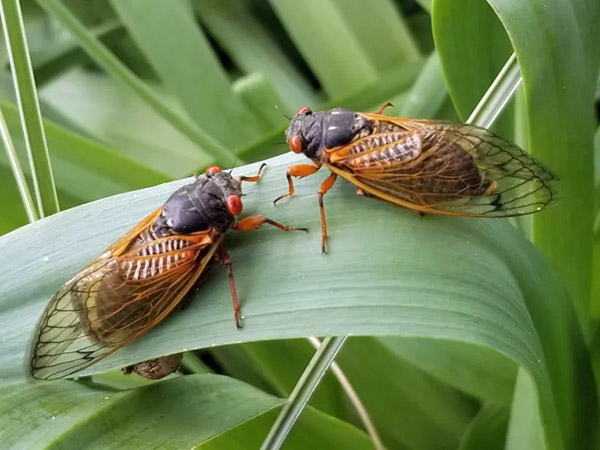
Large portions of the United States are already starting to experience the simultaneous emergence of two broods of cicadas, with as many as a trillion cicadas emerging together. Brood XIII, on a 17-year-cycle and Brood XIX, on a 13-year-cycle are emerging together for the first time in over 200 years. Many are calling this once-in-a-lifetime event the cicadapocalypse. Don't worry, other than being a bit loud and mildly annoying because of their sheer numbers, cicadas are harmless to people and pets. This year's emergence is expected to last through June. | |
Periodical Cicadas, 2024: Entomologists Prepare for the Six-Week Serenade | |
|
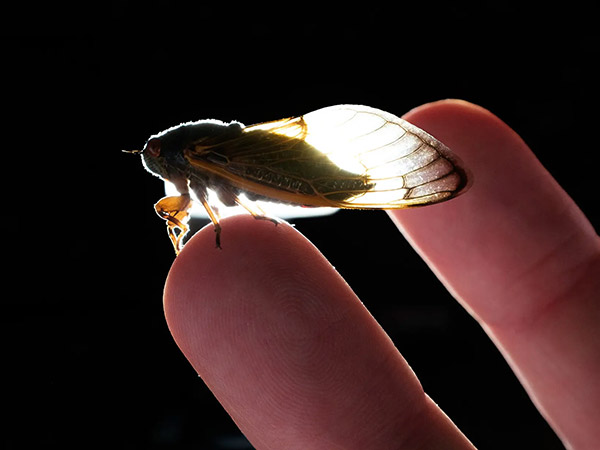
This spring and summer, periodical cicadas are coming in hot. As adjacent 13-year and 17-year broods emerge simultaneously, they mark a rare event not witnessed since the early 19th century. The phenomenon offers scientists a unique opportunity to delve deeper into the intricate world of these enigmatic vocalists. So, experts are leaping at the chance to further unravel the mysteries of cicada biogeography, evolutionary adaptations, and the ecological significance of their cyclical emergence.
“While there are probably 5,000 to 6,000 species of cicadas, fewer than 10 are known to be periodical,” says John Cooley, Ph.D., associate professor-in-residence in the Department of Ecology and Evolutionary Biology at the University of Connecticut. “These emergences are something that’s unique—a natural wonder.”
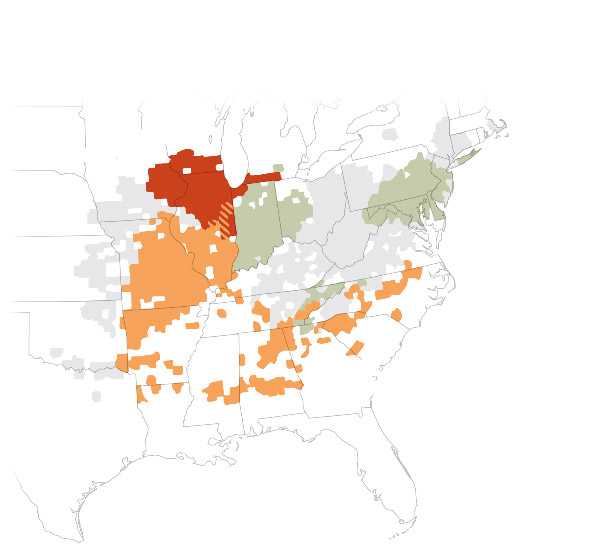
In the coming weeks, cicadas in Brood XIII, on a 17-year-cycle, and Brood XIX, on a 13-year-cycle, will emerge in the same year for the first time since 1803. Their ranges are contiguous but do not overlap; collectively they’re expected to appear in parts of up to 18 states, mostly in the Midwestern U.S.
| |
Science writer Dina Fine Maron has an interesting and positive take on the cicadapocalypse in the following opinion piece from The New York Times. I recommend reading the full piece. It requires a login to read at the Times' site, but if you don't already have a subscription, you can get access by registering for a free temporary account. | |
Kindness in the Time of Cicadapocalypse | |
|
After more than a decade sipping tree sap underground, as many as a trillion cicadas are now emerging en masse for a blockbuster bug bash, a meeting of two broods that have not surfaced at the same time in over 200 years. Some people are calling it the cicadapocalypse, but this once-in-a-lifetime event is cause for jubilation. It may even make us better people, at least for a while.
The cicadas’ loud, rhythmic songs will reverberate from trees across 16 states, the latest rare, natural wonder to capture public interest. Like the recent solar eclipse and the Northern Lights in the United States, such natural phenomena can take us outside ourselves — and literally take us outside — allowing us to feel awe-struck.
Such experiences are critical to making us happier and kinder. Psychologists have found that the wonders of nature can inspire a collective sense of awe that we are often missing in our daily lives, prompting people to share, care and assist. That suggests our focus on this extraordinary cicada event may help us feel more connected and part of something larger, and we may consequently act more generously and compassionately.
| |
|
Source: USDA Forest ServiceBy Taylor Maggiacomo
Every 221 years, these two cicada broods emerge together
There are 15 broods of periodical cicadas that inhabit the United States. This spring, for the first time since 1803, Brood XIII and Brood XIX are emerging simultaneously and overlapping in eastern Illinois.
| |
3. NATURE: Urban Hawks Update | |
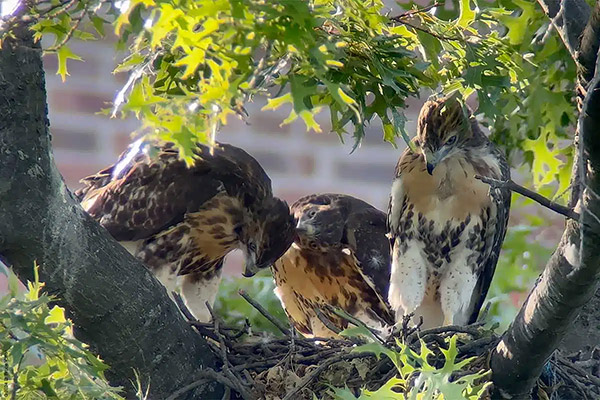
I've been keeping my eye on pair of red-tailed hawks with their baby chicks (eyasses) nested on the facade of the New York Athletic Club across the street from where I enter Central Park each day. The two eyasses have grown enough to be fledglings (developed enough to take their first flight, or fledge), on Tuesday, I heard from some of the other hawk watchers that one of the fledges had taken their first flight. I've also been following along at Urban Hawks, Bruce Yolton's excellent blog on hawks in NYC. | |
|
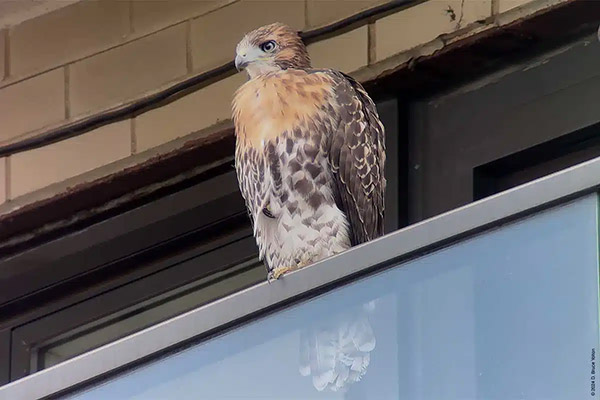
I arrived at the NYAC around 6 pm tonight. I had a busy day, and came after visiting the 93rd Street nest. As I walked from the subway, I saw a fledgling on 200 Central Park South. It was on a terrace railing. I could also see only one eyass on the nest.
I than ran into a group of hawk watchers who showed me a second fledgling in a Honey Locust. The bird was above an ice cream truck.
The observers said they hadn’t seen the fledge of the second bird, so they couldn’t say who was who. I suspect that the bird on 200 Central Park South was the first hawk to fledge.
| |
The other fledgling on 200 Central Park South | |
The bird above the ice cream truck stayed put while I was there but the one on 200 Central Park South got active, moving east along the railing and jumping down to the balcony floors and back up to railing. Eventually, it flew off the building. It tried to land on the NYAC but misjudged, then went by the nest and eventually tried to go up to a balcony on the eastern edge of the Essex House. It missed the landing and drifted down a corner of the building about 30 feet before righting itself and flying across the street to a London Plane tree. | |
2024-05-29 NYAC Red-tailed Hawk Nest | |
4. POETRY: I Have Need of the Sky
| |
I Have Need of the Sky
By Richard Hovey
| |
|
I have need of the sky,
I have business with the grass;
I will up and get me away where the hawk is wheeling
Lone and high,
And the slow clouds go by.
I will get me away to the waters that glass
The clouds as they pass.
I will get me away to the woods.
| |
|
These Flock regulars are always here for you:
-
Where in the World is Zoe
Zoe is back in Colorado helping launch the 2024 early childhood, junior high, high school, and adult tennis programs with sister and mother Petra.
In coming weeks: we'll be sharing more investigative articles from our roving reporter William George, original writing from Flock favorite Dino DeConcini, and an update on the Marolt brothers' coming expedition to Argentina.
| |
|
The hawk is aerial brother of the wave which he sails over and surveys, those his perfect air-inflated wings answering to the elemental unfledged pinions of the sea.
— Henry David Thoreau
| |
Don't Be Shy: Share Your Stories! | |
I'm looking forward to sharing more of your personal stories - oral, written, or otherwise, as we enter our third year. I'd so love to present them to The Flock, hit a mailbox below to share your story. | |
Subscriptions & Idea Submissions | |
|
Feel free to forward this email to a friend. If this was forwarded to you and you would like to receive your very own Flock Newsletter, you can sign up here. If you have any questions or suggestions for future Flock resources, don't hesitate to contact me.
Your fan and friend,
Beth
| | |
The information and materials contained or referenced in this newsletter are for informational purposes only and not intended to be a substitute for professional medical advice, diagnosis, or treatment. Always consult a physician or other qualified medical professional with any questions you may have regarding a medical condition or treatment and before beginning a new health care regimen. Do not disregard professional medical advice or delay seeking medical advice or care based on anything contained in this newsletter. | | | | |