WE REMEMBER
IDF Soldiers Killed in Combat
Sgt. First Class Nir Ben Ari, 21 years old, from Kerem Maharal was killed in a Hezbollah attack on IDF troops in southern Lebanon of the Maglan Unit. Click Here for more information
Lt. Col. Dor Gedalia Ben Simhon, 32 years old, from Beit HaShita, the commander of the 401st Armored Brigade’s 52nd Battalion. Click Here for more information
Staff Sgt. Naveh Habshoosh, 20 years old, from Geva Binyamin, of the Nahal Brigade's Reconnaissance Battalion, was among four Israeli soldiers killed in a Hezbollah attack on IDF forces operating in southern Lebanon. Click Here for more information
Staff Sgt. Liav Kababia, 20 years old, from Hod Hasharon, of the 52nd Battalion, 401st Armored Brigade, was killed in southern Lebanon when a Hezbollah strike hit his tank on June 19. Click Here for more information
Staff Sgt. Yoav Klein, 21 years old, from Herzliya, of the 52nd Battalion, 401st Armored Brigade, was killed in southern Lebanon when a Hezbollah strike hit his tank. Click Here for more information
To see the faces of the soldiers who have lost their lives while defending Israel since October 7th, Click Here
MAY THEIR MEMORIES BE FOR A BLESSING
| |
|
THE ONE
HIGH HOLIDAY SEMINAR
You Don't Want To Miss
Monday, August 17
10 am - 5 pm in NYC
Venue details will be provided upon registration
RABBI DAVID INGBER
The Progressive Case for Israel
RABBI SHAUL ROBINSON
Mining the Machzor:
Texts That Will Transform Your High Holiday Messages
RABBI MITCHELL WOHLBERG
My Favorite Jokes and Anecdotes:
Humor and Stories to Strengthen Your Sermons
SARAH GORDON
The Power of Our Story to Instill Pride and Strengthen
Jewish Identity and Connection: An Interactive Workshop
In-Person Attendance (lunch included):
Ordained Rabbis--$59; Rabbinical Students--$36
Remote Attendance: $36
The High Holiday Seminar is open exclusively to ZRC members
If you are not a ZRC member, Click Here to Join (Membership is a one-time fee)
If you are arriving on Sunday evening please join us for dinner at 7pm in NYC
(Cost of dinner will be paid individually by each of us)
| |
By Our Rabbis
Qatar’s $12 billion betrayal
Why are we still treating the country as neutral?
by, Rabbi Pini Dunner
"Qatar’s role in the newly signed U.S.-Iran memorandum of understanding goes far beyond playing host and engaging in shuttle diplomacy.
Pakistan and Qatar are listed as co-mediators for the deal.
Yet one of Tehran’s central demands before coming to the table involved access to frozen funds already held in Qatari accounts. Axios reported that the idea of a “prosperity fund” for Iran came from Qatar and was discussed with Washington and Tehran for several weeks.
Mohammad Bagher Ghalibaf, speaker of Iran’s Islamic Consultative Assembly, made no secret of the pressure points: “We told the mediator that the issue of Lebanon and the blocked/frozen funds were among the main axes of the negotiations.”
Qatar offered Iran a $12 billion financial lifeline — a bribe by any other name — arranged behind the backs of every other Gulf state. Iran demanded the immediate release of those funds as a precondition for any agreement. Qatar enabled and welcomed that demand..."
Click Here to continue reading
To submit your Op-Ed, blog post, column or sermon to be highlighted and shared with colleagues in an upcoming week, please Click Here to submit your column for publication (mail to: ssilberberg@zionistrabbis.org)
| |
David Horowitz on The Perils of Appeasing Iran
Calls for a rapid accommodation with Iran raise profound concerns about whether lasting peace can be achieved with a regime that continues to advance its regional ambitions, support terrorist proxies, and threaten Israel's existence. The hope that diplomatic concessions alone will transform Tehran's behavior ignores decades of evidence pointing in the opposite direction. History offers repeated warnings about the dangers of mistaking temporary quiet for genuine peace and of granting legitimacy to aggressive actors without addressing the underlying threat they pose. Any agreement must be judged not by its promises but by its ability to prevent Iran from rebuilding the military, nuclear, and proxy capabilities that have destabilized the Middle East for years. The challenge is not choosing between war and peace, but ensuring that the pursuit of peace does not create greater dangers in the future.
| |
Christians Charged with Being Zionists as a Tool of Persecution in Iran
Iran is increasingly portraying Muslim converts to Christianity not merely as religious
dissidents but as agents of Israel and the West, allowing the regime to transform religious persecution into a matter of national security. By branding Christianity as a form of “Zionist infiltration,” Tehran can justify arrests, prison sentences, and crackdowns on house churches while presenting itself as defending the nation from foreign enemies. This strategy serves a broader political purpose: as the regime faces growing internal dissatisfaction and external pressure, it redirects public anger toward vulnerable religious
minorities and recasts the simple act of religious conversion as an act of disloyalty. The result is a dangerous fusion of anti-Zionism, religious repression, and state propaganda that places Iran’s Christian community increasingly in the crosshairs.
| |
Will Iran's Oil Windfall Fuel Regional Threats?
President Trump's suggestion that China could continue purchasing Iranian oil has sparked concern among Middle East and national security experts who view oil sanctions as one of Washington's most powerful tools for constraining Tehran. Analysts warn that allowing Iran greater access to oil revenue could provide the regime with billions of dollars at a time when it is seeking to rebuild its military capabilities and maintain support for regional proxy groups. While some observers see the comments as part of a broader diplomatic strategy, others fear that easing economic pressure too soon could undermine years of sanctions enforcement and reduce U.S. leverage over Iran's nuclear program and regional behavior. The debate reflects growing questions about how best to balance diplomacy, deterrence, and economic pressure in confronting the Iranian regime.
| |
Ambassador Leiter Warns of a Lebanon “Train Wreck”: No Deconfliction Without Israel
As U.S.-led talks with Lebanon unfold, Israel is warning that efforts to create a “deconfliction” mechanism without Jerusalem’s full involvement could produce dangerous consequences. The concern is that any arrangement designed to limit military operations in Lebanon must not restrict Israel’s ability to act against Hezbollah or ignore the security realities facing Israel’s northern communities. While Israel supports the broader goal of preventing Iran from rebuilding its nuclear, missile, and proxy networks, sidelining Israel in decisions that directly affect Hezbollah’s freedom of action risks undermining the very security such diplomacy is meant to protect. The central issue is not whether tensions should be reduced, but whether they can be reduced in a way that preserves Israel’s right and ability to defend itself.
| |
A New Deal for Lebanon: Peace for Land NOT Land for Peace
Israel is reportedly signaling a willingness to discuss territorial concessions and a broader diplomatic settlement with Lebanon if Beirut takes meaningful steps to disarm Hezbollah and establish full state sovereignty over its territory. The proposal reflects a growing Israeli view that the central obstacle to peace is not a border dispute but the continued existence of an Iranian-backed militia operating independently of the Lebanese government. Supporters argue that disarming Hezbollah would strengthen Lebanon's economy, restore national sovereignty, and open the door to improved relations with Israel, while critics question whether Lebanon's leaders have the political will or capability to confront Hezbollah directly. The emerging debate highlights a fundamental choice facing Lebanon: continue accommodating Hezbollah's armed presence or pursue a path toward stability, reconstruction, and eventual peace.
| |
Israel’s Long-Term Security Requires Bipartisan Support
Recent tensions surrounding U.S. policy toward Iran have exposed the risks of Israel becoming too closely identified with a single political party or leader. Over the past decade, relations with Republicans have deepened while support among Democrats has eroded, leaving Israel increasingly dependent on political forces that may not always be in power. While Republican backing has produced significant achievements—including the move of the U.S. embassy to Jerusalem, recognition of Israeli sovereignty over the Golan Heights, and the Abraham Accords—the growing partisan divide has weakened the broad bipartisan consensus that long underpinned the U.S.-Israel relationship. Rebuilding trust and support among Democrats, including younger voters and many American Jews, is presented as an urgent strategic challenge if Israel hopes to preserve strong and durable American backing in the years ahead.
| |
How Anti-Zionism Has Captured the Campus
As the academic year draws to close, it is important to understand the ideology, organization, and sources of support behind a movement that has fueled hostility toward Israel and Jewish students on campuses across North America.
| |
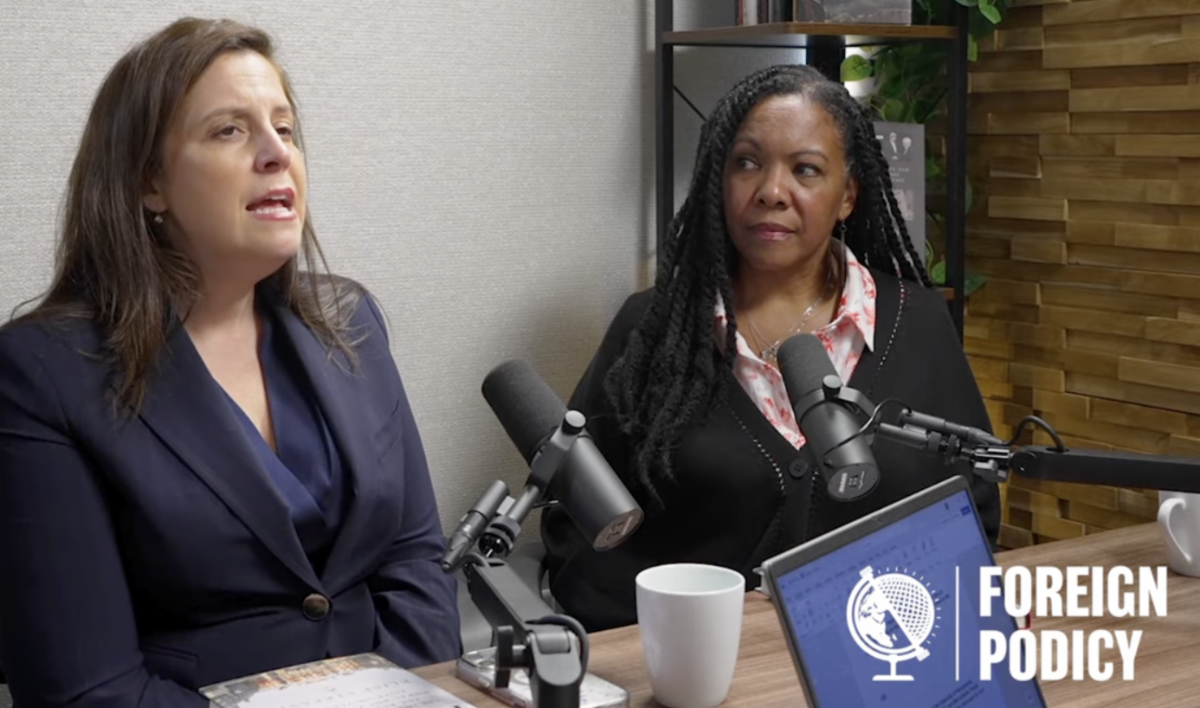
Click on the video below with Cliff May featuring Elise Stefanik & Dr. Brandy Shufutinsky addressing the topic of the "Poisoned Ivies"
| |
An Open Letter to the Next Generation: The Lessons We Learned Too Late
For generations, many American Jews believed that acceptance, integration, and success in broader society would provide lasting security for Jewish life. The events of recent years have challenged that assumption, exposing how quickly antisemitism can reemerge even in the most open and welcoming societies. This deeply personal reflection acknowledges the limitations of what many Jewish parents taught their children and calls on the next generation to embrace Jewish identity, Jewish peoplehood, and Zionism with renewed confidence and purpose. At a moment of growing uncertainty, the future of Jewish life depends not on blending in, but on proudly standing out and strengthening the bonds that connect Jews to one another and to Israel.
| | |
The Sweet Taste of Blue-and-White Pride In the Land of Milk & Honey
Do you remember the uproar in 2021 when Ben & Jerry's sought to halt sales in parts of Israel? The controversy ultimately led to the Israeli operation becoming an independent, locally owned company that continues to produce and sell ice cream throughout the country. Now, Ben & Jerry's Israel has released a new flavor that proudly embraces its Israeli identity: Milk & Honey. 🍯🥛
Inspired by the biblical description, the flavor features Star of David-shaped chocolate pieces, honey from Kibbutz Yad Mordechai, and milk and cream sourced from dairies in southern Israel, including communities in the Gaza Envelope. The product highlights partnerships with farmers, businesses, and social enterprises helping southern Israeli communities rebuild and recover in the aftermath of October 7.
| | | | |