From ATIS President and CEO Susan Miller | | | | In an environment shaped by shifting market dynamics, emerging technologies, and a swiftly changing operational landscape, ATIS solutions remain steadfast in strengthening the foundation of North America’s global connectivity. But our work extends beyond this essential foundation. It helps enable the innovations that will shape our connected economy. It drives transformation not only in the information and communications technology (ICT) industries, but across virtually all industries. | | | |
This issue of the ATIS Update highlights recent examples of that work, showcasing the many ways ATIS is advancing transformation across the ICT industry and the key sectors that power our economy. You’ll learn how our work is:
- Making scalable, open-access fiber deployments a reality through the Open Access Network Forum.
- Unleashing the power of integrated sensing and communication (ISAC) data to help shape the 6G future through our ISAC Data Initiative.
- Planning today for the spectrum needs of 6G and addressing challenges critical to maintaining North America’s leadership in robotics, automation, and advanced immersive technologies.
- Building a resilient timing architecture for 5G communications networks to support increasingly connected and critical applications.
- Advancing cross-border call authentication to help strengthen consumer protection against fraudulent and unwanted robocalls.
Together, these efforts are helping build the infrastructure, capabilities, and trusted frameworks that will enable North America to lead in the global digital future. Learn more at www.atis.org.
| | |
| |
ATIS is the global host of the 2026 3GPP Meeting in Calgary. Stay updated at https://3gppmeetings.atis.org/.
| | | Open Access Network Forum Launches with Goal of Enabling Scalable Open-Access Fiber Deployments in North America | | |
Making scalable, open-access fiber deployments a reality.
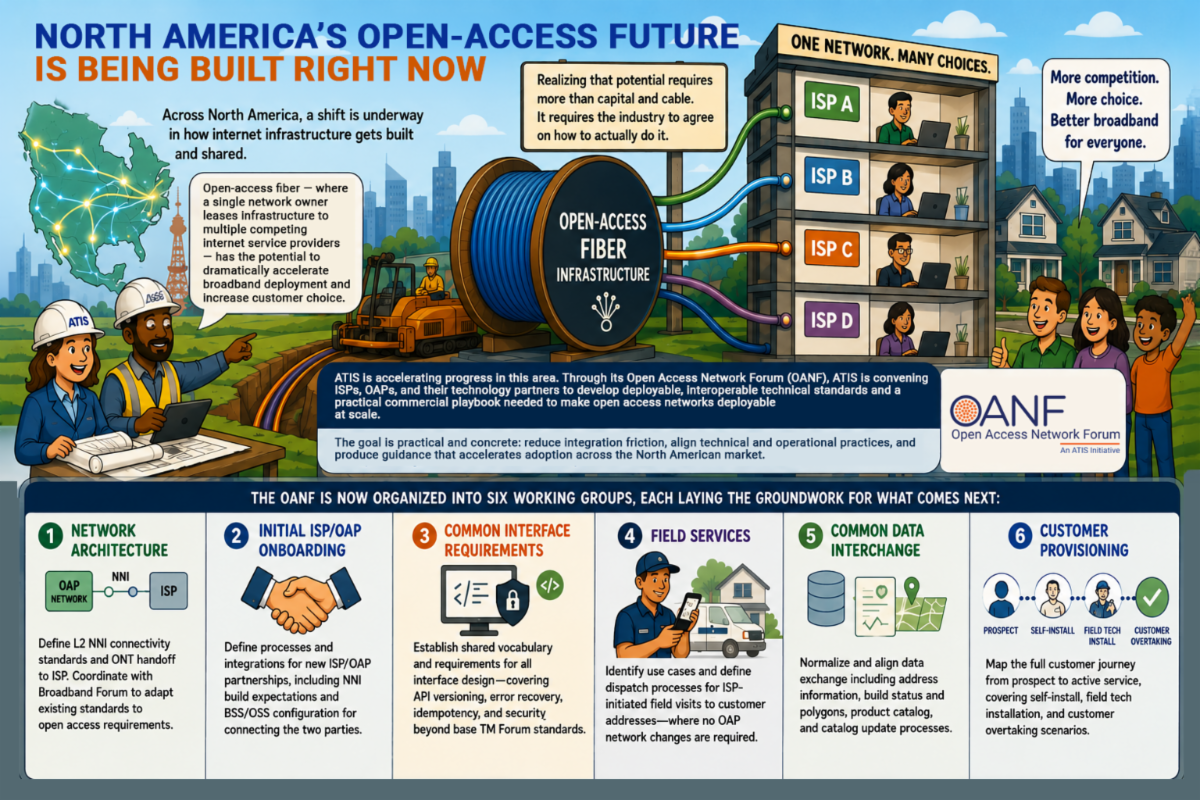
ATIS launched the Open Access Network Forum (OANF) as a collaborative venue for ISPs, open-access infrastructure providers, and technology partners to align on the principles, architectures, and operating models needed to scale open-access fiber in North America. The goal is to make it cheaper and faster for internet providers to share fiber networks across the region.
Bringing greater consistency to how open-access networks are designed, integrated, and operated makes it easier for service providers to launch and expand services for end users. By simplifying the launch of services in open-access environments, the OANF is a key way in which ATIS is advancing ICT industry transformation — and ATIS members' business priorities. oanf.atis.org/
Read the blog on the OANF's work, "The Decisions Behind America’s Open-Access Future Are Being Made Right Now."
|
| | |
Charting a Practical Course for North American 5G Standalone Deployment
Identifying the role of AI-driven automation, priority use cases, and deployment gaps to move the industry from planning to execution.
| | | |
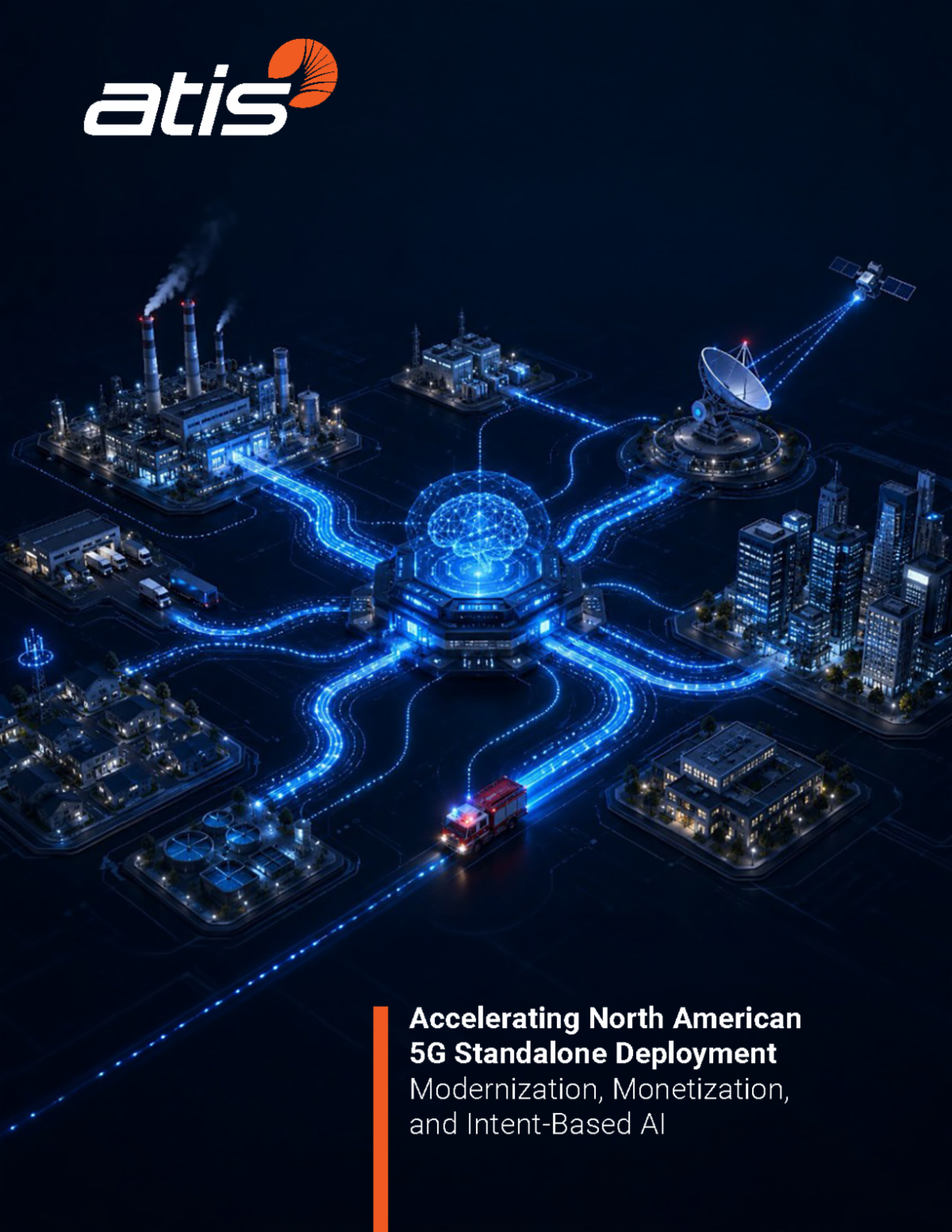
Accelerating North American 5G Standalone Deployment: Modernization, Monetization, and Intent-Based AI examines the current state of deployment in North America and offers recommendations for operators, device OEMs, application developers, and standards bodies to speed the deployment of 5G Standalone (SA). The goal is to advance 5G SA's ability to enable capabilities such as dynamic network slicing, lower latency, and dedicated 5G core functions.
By offering a coordinated set of actions across the ecosystem, from RAN performance to intent-based automation, this work advances sustainable commercial outcomes for 5G SA while laying the foundation for 6G innovation.
| | | |
ATIS Releases an Industry-Leading Neuro-Symbolic Cognitive Assistant for Next Generation Networks
Delivering bounded autonomy with explainable reasoning for the networks of the future.
| | | |
Telecommunications networks are entering an era of connected intelligence, where increasingly autonomous control loops must operate across dynamic radio environments, multi-vendor stacks, and tight operational time budgets. At the same time, regulators and operators are raising assurance expectations for AI-enabled network functions, particularly in safety-, security-, and critical-infrastructure contexts.
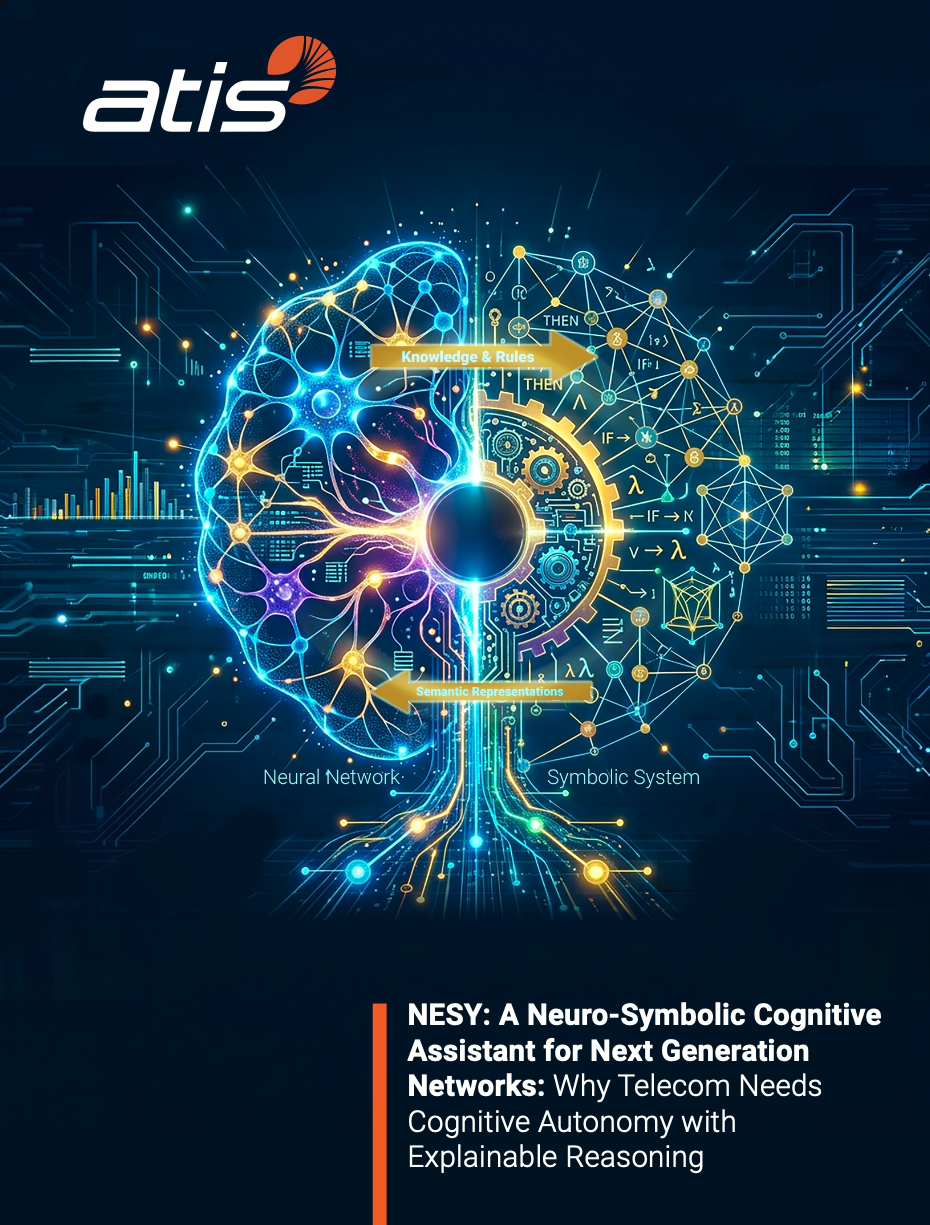
These are some of the factors driving ATIS' development of NESY: A Neuro-Symbolic Cognitive Assistant for Next Generation Networks. NESY introduces an industry-leading reference architecture that couples neural perception and prediction with symbolic reasoning and verification to deliver bounded autonomy with audit-ready decision traces. With this innovation, ATIS sets a foundation for trustworthy, transparent, and accountable AI in critical communications infrastructure.
Check out the NESY blog. "The Intuition of the Signal: How ATIS AI Network Applications See Through the Noise of 6G."
| |
Why the Wireless Physical Foundation Model Matters for Our Industry's Future
Zero-touch automation, robust performance, and 6G readiness are just some of the reasons why.
| | | |
As AI transforms the telecommunications industry, ATIS leads the way in advancing AI Network Applications. This work focuses on enabling networks to develop a semantic understanding of the physical wireless environment, allowing them to adapt intelligently to real-time conditions and user intent. These innovations lay the foundation for truly cognitive, AI-native wireless systems. One key area of progress is the development of the Wireless Physical Layer Foundation Model (WPFM).
These models are designed to bridge fundamental gaps between RF signals and human-interpretable concepts through cross-modal learning techniques and symbolic reasoning. ATIS' AI Network Applications Group is refining the requirements for the WPFM. Get involved by contacting Membership Director Rich Moran at rmoran@atis.org.
| |
Preparing Operators for the Quantum Future
Introducing the Cryptographic Bill of Materials for Telecom and the forthcoming 5G Telecommunication PQC Migration Playbook: resources for making and quantum-safe migration manageable.
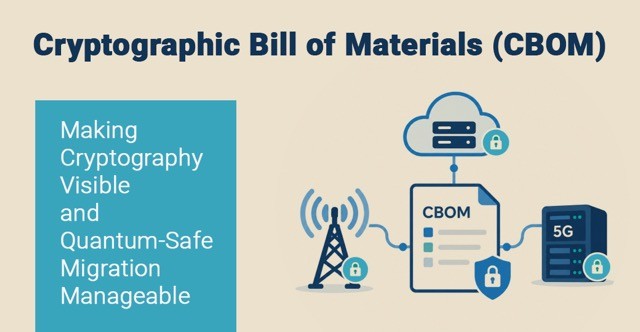
ATIS' Cryptographic Bill of Materials (CBOM) for Telecom is the first CBOM profile developed specifically for the 5G mobile telecommunications industry. Created through ATIS’ Quantum-Safe Communications and Information Initiative, this release provides a framework to help operators, vendors and technology providers identify, document and manage the cryptographic assets and dependencies that secure 5G mobile infrastructure. More on the CBOM.
Forthcoming very soon is The 5G Telecommunication PQC Migration Playbook, which provides operators with practical guidance for planning, prioritizing and executing the migration from quantum-vulnerable cryptography to post-quantum cryptography (PQC). It is designed to help operators move from high-level awareness of quantum risk to an actionable migration program that can be governed, measured, and adapted over time. The Playbook helps the industry advance comprehensive quantum readiness while also maintaining network security and operational resilience. It is one of the many resources preparing operators for the quantum future.
| | How Will Autonomous Networks Resolve Conflicts? Join the Newly Launched Working Group that Will Provide the Answers. | |
As telecommunications networks become increasingly automated, competing service requirements, policies, and automated actions will need to be reconciled across network domains. When requirements conflict, how should a network determine what is feasible? What takes priority? How should these decisions be explained and justified? A new Technology and Operations Council Working Group will address these questions.
This work will to develop a practical framework for identifying and resolving conflicts, assessing the feasibility and permissibility of proposed actions, establishing priorities and trade-offs, and documenting decisions and the rationale behind them. This effort will also deliver guidance for network operators and recommendations for relevant industry and standards organizations.
ATIS members are encouraged to participate and help shape this work. Click here to join. A kickoff meeting will be scheduled in the next few weeks, with details shared with participants.
|
| |
More ATIS resources advancing critical industry priorities are now under development:
- AI Security in Communications Networks
- Wireless Foundation Models for Advanced Communication, Sensing, and Neuro-Symbolic Decision Making
- Exclusion Zones for Satellite-Terrestrial Supplemental Coverage from Space (SCS): Definition and Protocol
- The Future of Public Safety via Next Generation Wireless Innovations
| | |
Unleashing the Power of Integrated Sensing and Communication Data
Exploring these new capabilities that will define the 6G era.
| | |
Integrated sensing and communication (ISAC) introduces sensing as a native function of the communication network. By merging radar-like sensing and wireless communications into a single system, ISAC enables capabilities that extend far beyond today’s networks. This integration empowers applications ranging from detecting the presence, movement, and characteristics of objects within network coverage to enhancing network performance through improved channel awareness.
Yet, how to use this data? The Next G Alliance (NGA) has launched the Integrated Sensing and Communication (ISAC) Data Initiative to advance understanding of how sensing data generated by mobile networks can be standardized, packaged, stored, transported, and delivered for real-world applications.
The initiative’s initial focus includes U.S. government agency applications supporting the United States Department of War, U.S. Department of Homeland Security, U.S. Department of Transportation, and NOAA: National Oceanic & Atmospheric Administration / National Weather Service.
| | |
Among other recommendations, this white paper establishes realistic transition plans that enable early 6G deployment while positioning the United States to remain competitive in the global 6G ecosystem.
| | |
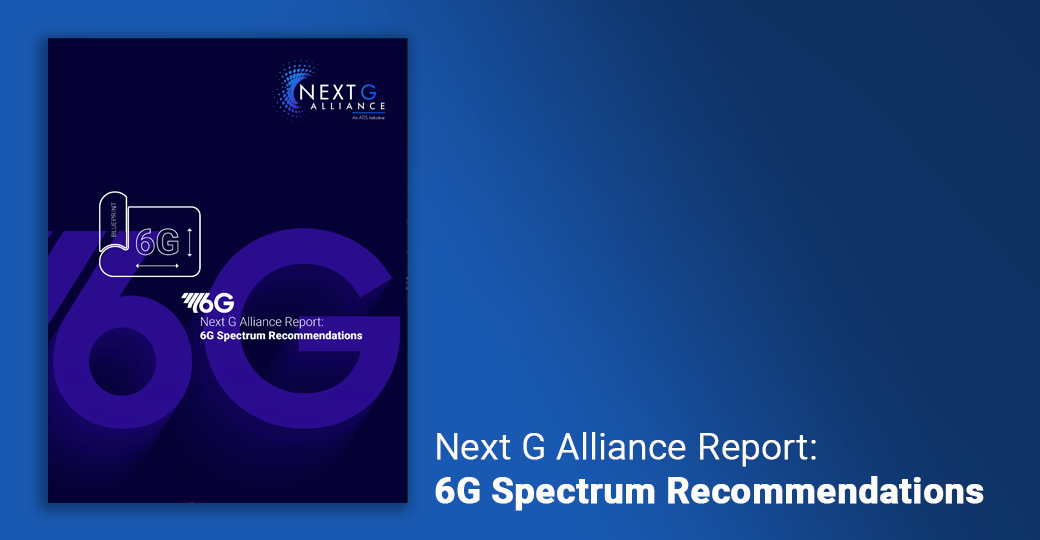
6G Spectrum Recommendations provides a strategic blueprint for securing the wireless spectrum necessary to launch commercial 6G networks by 2030. It contains an evaluation of the recently proposed U.S. spectrum pipeline, analyzing incumbent federal and non-federal bands, as well as emerging space-based coverage paradigms such as mobile satellite services (MSS) and supplementary coverage from space (SCS).
The white paper offers a practical roadmap for policymakers, regulators, and industry leaders to align spectrum decisions with the demands of next-generation applications. By identifying key spectrum opportunities and addressing emerging challenges, the NGA is helping lay the foundation for North American 6G leadership.
| | |
The topics shaping the North American 6G future.
In addition to the more than 40 technical white papers in its 6G Library, the NGA also delivers insight into the key elements critical to North American 6G success through its blog posts. Recently covered: spectrum, sustainable AI in telecom, 6G KPI Databases, and more. Access the NGA blogs.
| |
Forthcoming
The NGA will soon be delivering the following white papers:
-
Joint Communication and Sensing (Phase III) by the Technology Roadmap Working Group
- 6G for Utilities: Challenges and Opportunities by the Market & Applications Working Group
- Sustainable 6G by Design by the Sustainable Development Working Group
| | | |
Industry Policy Priorities
Advancing industry imperatives
As artificial intelligence (AI) advanced in 2026, the ICT policy community shifted focus from AI's potential to the practical enablers needed for large-scale deployment. Policymakers increasingly recognized that a reliable, secure network backbone is essential to supporting both emerging AI-driven technologies and existing communications infrastructure.
| | | |
Having initiated conversations among key stakeholders in all the diverse areas related to our communications networks, ATIS is well-positioned as a locus of public, private and academic coordination in this area. Consistently, our goal is to advance North American leadership and ATIS member priorities in wireless telecommunications standards and solutions; our policy-related work is a central part of that.
A Busy Year in Washington
ATIS closely tracked and engaged with a variety of stakeholders in the policymaking community as they settled into roles in the current administration. In 2026, legislators’ focus steadily shifted toward the topic undergirding future North American technological innovation: the research and standardization cycle of next-gen networks. ATIS monitored activities in the following areas: Read the full policy section.
| | | Upcoming North American 3GPP Meetings | | | | |
ЗGPP Working Group Meetings
Calgary, Canada
November 16-20, 2026
| | | | |
2026 TSG Meetings
Boston, Massachusetts
December 7-11, 2026
| | | | |
ЗGPP Working Group Meetings
Dallas, Texas
November 15-19, 2027
| | | | |
ЗGPP TSG Meetings
Atlanta, GA
December 6-10, 2027
| | |
ATIS’ Secure Telephone Identity Governance Authority
STIR/SHAKEN has been in the regulatory spotlight as the FCC has focused on ways it might lessen the number of illegal robocalls transiting U.S. networks. Meanwhile, the STI-GA has worked to expand STIR/SHAKEN’s success across national borders, to allow for the authentication of calls from other countries.
| | |
The industry-run Secure Telephone Identity Governance Authority (STI-GA) is a critical body helping the industry mitigate the problem of unwanted and illegal robocalling. ATIS works with the STI-GA Board to define the rules governing the call authentication infrastructure, with the goal of ensuring calls are effectively “authenticated” to help strengthen public trust in the U.S. telephone network.
In August, the STI-GA approved the implementation of new software that will allow for the automated validation of STIR/SHAKEN-signed calls from any country. This implementation is the culmination of a multi-year process that followed ATIS standards work in the area. The new software is expected to be launched at the end of October. Read the full STI-GA section.
| | |
ATIS and Industry Partners Take Major Step Toward Authenticating Cross-Border Calls
The landmark initiative this sets into action will help protect consumers from fraudulent calls that originate outside of the U.S.
| | |
In September, ATIS announced that a landmark initiative to enable foreign-originating voice service providers to authenticate calls that originate outside the United States and terminate in the U.S. The Cross Border Call Authentication Governance Authority (CBCA-GA) has received Secure Telephone Identity Governance Authority (STI-GA) interoperability approval — a major step to further trusted calling globally and provide more tools in the fight against illegal calling.
This approval expands the benefits of STIR/SHAKEN, authenticated calling, and provider accountability beyond U.S. borders. As a result, global service providers who participate in the CBCA framework can ensure the call authentication benefits of STIR/SHAKEN reach U.S. customers.
| | | |
Convening the Experts to Create Industry-Driven Standards and Solutions and Set Them Into Action
ATIS committees and forums tackle the ICT industry's challenges as they emerge — driving innovation and advancing industry transformation every step of the way.
| | | |
Highlights of our recent work:
These are just a few of the many solutions being created by ATIS committees and forums. Visit their respective websites to stay updated on their most recent success stories and contributions.
| | Recent ATIS Speakers at Industry Events | | |
ATIS advances member priorities through its presence at industry and policy events:
| | | | |
Protection Engineers Group Conference
February 23-24 | Durham, NC
| | | | |
North America's Premier Timing & Sync Event
May 10 - 13, 2027 | Ottawa, Canada
| | |
Visit www.atis.org to learn more about all of ATIS' exciting events and initiatives.
his section before sending!
| | | | |