Volume 254, June 14, 2024 | |
What are Your Top Ten Three-Minute Climate Change Stories? | |
Here are a dozen 3-minute tales about climate change. Which are your top five favorites, listed in reverse order, #5-#1? With each winner, please add one sentence as to why. Click on "Score Your Top Ten" below! | Bad for us, bad for animals, bad for the planet | Climate Crisis: An Emergency We Can’t Ignore | Medellín's Green Revolution: A Breath of Fresh Air | Preserving America’s Natural Splendor | Save the Grapes: The Wine Industry’s Battle with Climate Change | The Dawn of Renewable Energy: New England’s Transition | The Importance of Grass in Restoring the Environment | The Ocean: The Lifeline of Our Planet | The Overlooked Role of Plants, Soils, and Climate Moderation | The Thirsty West, Climate Change, and the Colorado River | The Ugly Truth: Food Waste in America | Unraveling the Mystery: Warmer Sea, Cool Land | |
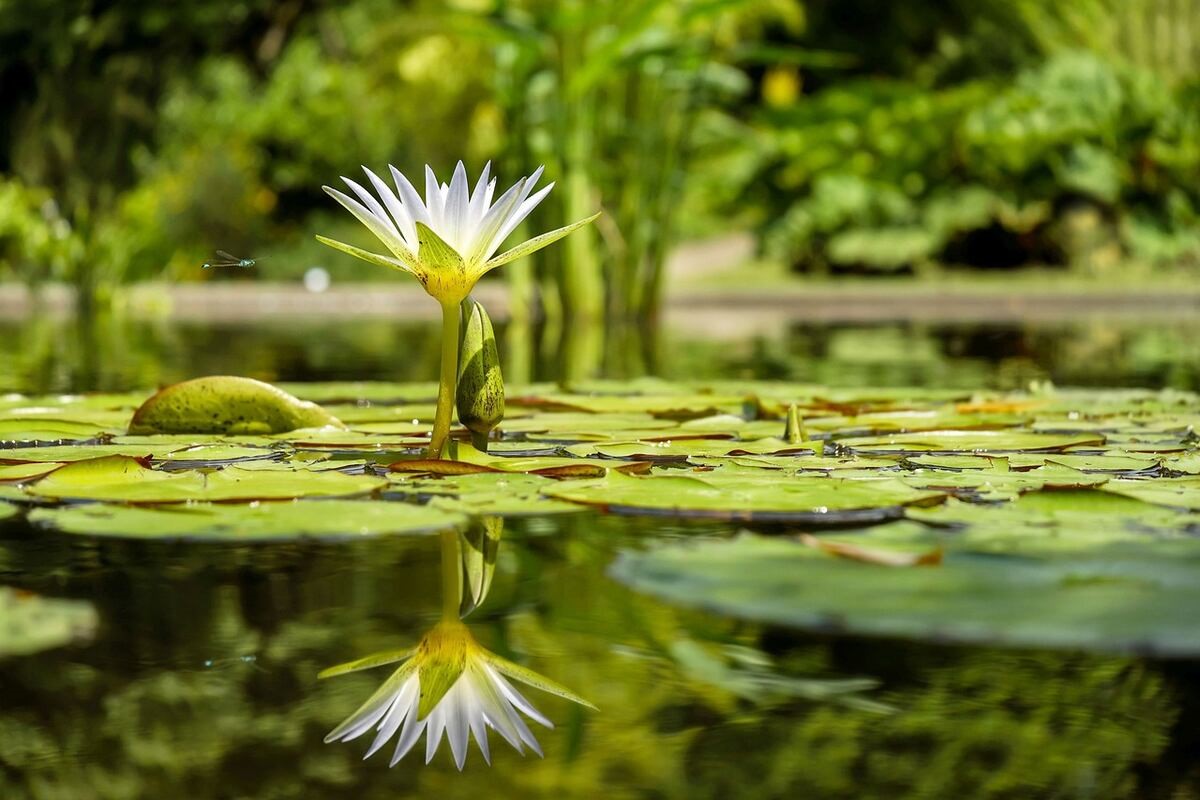 | |
How to Track and Manage Micro-Pests Beneath the Water Surface
by Judith Gallova, freelance home and yard improvement writer.
Click here for Judith's complete blog post.
As if the ocean wasn’t scary enough, some of its dangerous inhabitants lurk unseen beneath the surface. And they’re not only limited to oceans but also rivers, ponds, and other bodies of water. It's crucial that we understand these threats and take action.
Micro-pests have a significant impact on other water creatures as well as humans, sometimes causing serious illnesses.
Plankton are microscopic organisms that can’t swim but instead float with the current. They’re important for the health of the environment, but even plankton can be harmful in some cases. Plankton are divided into two categories: phytoplankton and zooplankton.
We mentioned that some zooplankton are problematic because they carry parasites. It’s only logical that the next micro-pests are parasites themselves. Parasites live inside another organism called the host. They live off the host and steal its nutrients.
Dangerous and even deadly bacteria spread through the waters.
While you may not have much to do with your local plankton population, you can still do a lot to keep local water clean. Remember these eco-friendly practices:
• Reduce pollution: Minimize your use of chemicals like fertilizers, pesticides, and fungicides.
• Dispose of waste properly: Make sure you dispose of all your waste to prevent it from contaminating water sources.
• Conserve water: Save as much water as possible. Don’t leave taps running or irrigate your lawn when unnecessary. Fix any leaks in your water system as soon as possible. Consider xeriscaping your landscape.
• Fix leaky faucets and fix gaps around pipes: These are two of the best ways to keep sewer roaches out of your drains. Sewer roaches, of course, can spread dysentery, diarrhea, and salmonella.
We can do much to be better stewards of our water resources in our homes and the oceans. If more of us consciously try to make a difference, the impact will be more than a drop in the ocean.
| |
|
Why did sea surface temperatures go up when summer air temperatures did not?
This perplexing question arose after last summer's unusual findings.
Ocean surface water temperatures off Boston, Portsmouth, and Portland were nearly two degrees Fahrenheit warmer than normal, aligning with the long-term trend of increasingly warm conditions primarily driven by climate change.
To understand this, we must dive into the unique geography and ecosystem of the Gulf of Maine. This body of water is nestled between Nova Scotia to the North and Cape Cod to the South. Its connection to the Atlantic Ocean is only through a 60-mile-wide deep channel. This distinct geographical feature greatly influences the circulation and temperature of its waters.
The Gulf of Maine is nourished by several rivers, including the Neponset, Charles, Mystic, Merrimack, Piscataqua, Saco, Kennebec, Penobscot, and Saint John. These rivers flow into this 36,000-square-mile sea, making it less salty than the Atlantic Ocean.
Freshwater from these rivers spreads across the sea’s surface during the summer because of its lower density, forming a distinct layer on top rather than mixing with the saltwater below.
River water input creates a counter-clockwise circulation due to the Coriolis Effect, bringing nutrient-rich deep waters to the surface and fostering a rich ecosystem for marine life. However, rivers discharge less water, the circulation halts, and surface waters mix with Continental Shelf Water during the winter months.
In 2023, the Gulf of Maine experienced the hottest sea surface temperatures ever recorded despite the average summer air temperature being only 70 degrees. This was a stark contrast to 2021, when the average summer air temperature was almost four degrees warmer, yet the sea surface temperatures were cooler.
So, how can we explain this paradox? The answer lies in the rainfall. More than over 20 inches of rain fell in 2023, the largest volume since 1955. This rain, falling on hot, impervious surfaces, resulted in warm water flowing into the sea, raising the surface ocean waters by two degrees and adding energy to the sea.
It's like trying to warm a cup of coffee with a hair dryer. It won't work. But place that cup on a hot plate, and you'll see a difference.
The same principle applies here. We need to slow and retain rainwater on the land to cool the ocean with more vegetation, soil, and groundwater infiltration. More water on the land will enable more photosynthesis to draw more carbon dioxide and further moderate climate change.
This paradox of rising sea surface temperatures despite stable summer air temperatures is a wake-up call. It reminds us that every action has a reaction, and every choice we make can have far-reaching impacts on our environment.
| |
|
ORI's Summer Internship Program
Four college students from Suffolk University, Tufts University, the University of Vermont, and New York University (residents of Boston, Medford, Andover, and Woburn) have been contracted to work for ORI’s 2024 Summer Internship Program.
Summer Interns will educate and enable people to do much more than treat the Earth’s fever of rising carbon dioxide levels. The blotches and rashes on our lands and the bloating of seas from our runoffs need urgent care. They will research issues and prepare presentations, create interactive webpages, host programs recorded in the studios of Cambridge Community TV, and hold community forums.
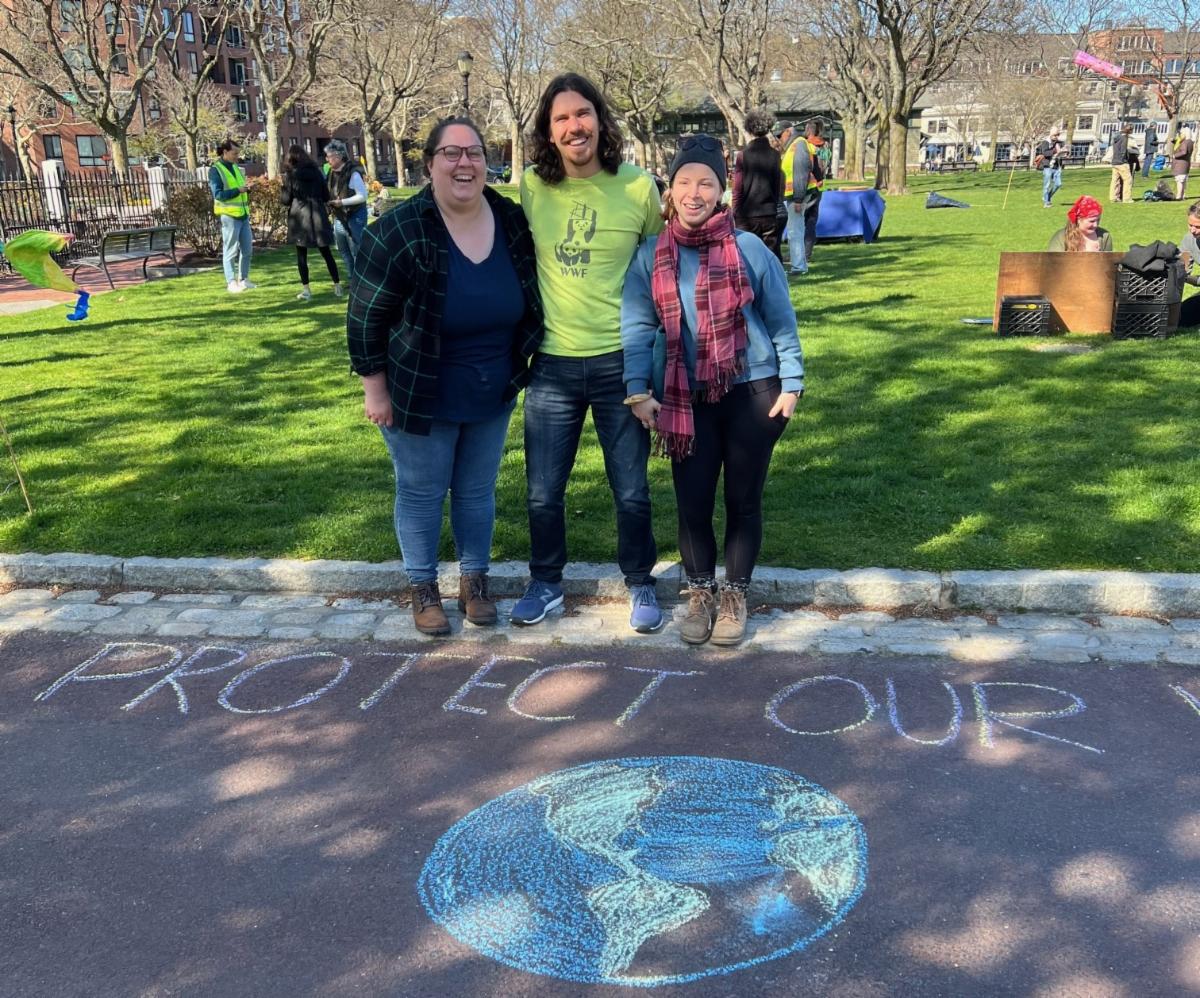
Interns reach out and develop relationships with groups and organizations. They become skilled in organizing and holding “tabling events” at parks, coffee shops, and festivals. They research, educate, advocate and develop their voices for ORI’s three primary programs that are holistic, inclusive, and empowering in problem-solving. Interns will present at four community forums and present at the National Marine Educators Association Conference in Boston.
The Slow Water Drought Relief Carbon Offset Fund is being developed to fight climate change by building more soil and reducing water runoff, which results in more carbon drawdown by photosynthesis.
The Let Forests Grow Carbon Offset Fund pays forest woodlot owners the timber value at harvest time, not to cut the trees. The fund pays the timber harvest revenues on state lands to leave trees standing.
New this summer, we are bringing together diverse interest groups, coastal communities, and individuals to call for a Right Whale National Marine Sanctuary. With government regulations addressing ship strikes and lobster gear entanglements, the sanctuary will bring users together, including fishermen, boat operators, and windmill directors, to address the degradation of the whales’ critical feeding habitats. What you do in your neighborhood affects whales because ecosystems are nested and interconnected.
ORI Summer Interns would like to work 32 hours a week for ten weeks. The Program is above the annual budget, so the number of hours they work depends on how much is donated to the program. Some foundations step up to underwrite some of the program costs, but not enough for four interns. So, without your support, they will work fewer hours. Every $20 pays salary and expenses for one hour of work.
Lend a hand by making a donation so ORI interns may go the distance addressing climate change with more people.
| |
|
Publications:
Unraveling the mystery - warmer seas, cool land, Salem News, June 7, 2024
The Earth and Three Blinkered Scientists, The Eden Magazine, April 2024
The Video: Land and Sea Change for Earth Day, Expanding the Climate Change Narrative, Mobilized, April 24, 2024.
Land and Sea Change for Earth Day, Expanding the Climate Change Narrative, Salem News, April 22, 2024.
"Land and Sea Change for Earth Day, Expanding the Climate Change Narrative," Earth911, April 18, 2024.
"The pecking order revolution: Massachusetts’ fight for animal rights," Greenfield Recorder, April 4, 2024.
"The Earth and Three Blinkered Scientists," Seven Seas Media, March 2024
Three different scientists walked into the Arctic . . .
“Natural Rights For Shaftsbury Forests, Fields And Rivers,” Caledonian Record, Feb 22, 2024
“The Kraken and the Erie Canal,” The Lowell Sun, February 15, 2024.
“We’re poking the ‘angry beast’ of climate with sticks.” MassLive, Feb 13, 2024.
“Will melting Greenland ice divert the Gulf Stream?” Daily Hampshire Gazette, Feb 7, 2024.
“As I See It: The Kraken and the Erie Canal,” Newburyport Daily News, February 5, 2024
"Fallen Forests and Rising Ocean Fury" Seven Seas Media, February 2024
“Rob Moir, PhD, Science Advocate & Executive Director,” Who’s Who Newsletter, Winter 2024.
"How We Created the Hottest Global Average Temperature Day and What To Do About It?" One Green Planet, December 5, 2023
"Commentary: What if there was a Right Whale National Marine Sanctuary?" Gloucester Times, December 1, 2023
"What if there was a Right Whale National Marine Sanctuary?" Seven Seas Media Issue 103 - December 2023
"How We Created the Hottest Global Average Temperature Day and What to do about it." The Eden Magazine, September 2023
"Saving Forests with Carbon Offset Rewards for Not Cutting, Let Forests Grow Old." E The Environmental Magazine, March 14, 2023
"Speak for the trees: President Biden should protect public forests." Illuminem, December 18, 2022
"Slowing Water for Greener Neighborhoods." Illuminem, December 9, 2022
"Top Gun at COP27. It's not the plane. It's the pilot." The Environmental Magazine, November 29, 2022
"Biden’s game-changing administrative actions for climate at COP27." illuminem Voices, November 19, 2022
"Taking action to improve plight of right whales." Boston Herald, November 9, 2022
"Revival Coffee in Somerville takes up the Natural Lawn Challenge." The Somerville Times, August 27, 2022
"For eco groups, less lawn fertilizer is key to water crisis." By Dustin Luca, Salem News August 12, 2022
“More carbon capture, better water retention and greener emerald bracelets for Dedham.” The Dedham Times, August 12, 2022.
“Emerald Bracelets to Solve Three Of The World’s Greatest Environmental Problems.” by Rob Moir, The Environmental Magazine, June 21, 2022
"Of Mousy and Elephantine Cycles, Managing the CLIMATE CRISIS after Glasgow COP26." The Eden, March 2022
“Lincoln resident promotes natural lawn care,” Concord Journal, Aug 3, 2021
“Zumi’s host Natural Lawn Care for Healthy Soils Challenge,” Ipswich Chronicle Transcript, Aug 10, 2021
“Peabody peak capacity generator need not burn fossil fuels,” The Salem News, Aug 5, 2021
“30% preserved or restored by 2030,” The Salem News, Sep 29, 2021
“Pogie deaths, a Mystic River mystery,” Boston Herald, Oct 4, 2021
“Remember the right whales with a special day,” CommonWealth, Oct 29, 2021
“Retreating Arctic Sea Ice, Sea Ice Formation, and the Stronger Flow of the Gulf Stream” Seven Seas November 2021
"Rob Moir, PhD, Science Advocate," Bloomberg Business, April 11, 2022
| |
For healthy oceans, green watersheds, and diverse abundant wildlife. | | | | |