|
|
|
All Booked Up
Windsor Library's Newsletter for Readers
February 2025
| |
|
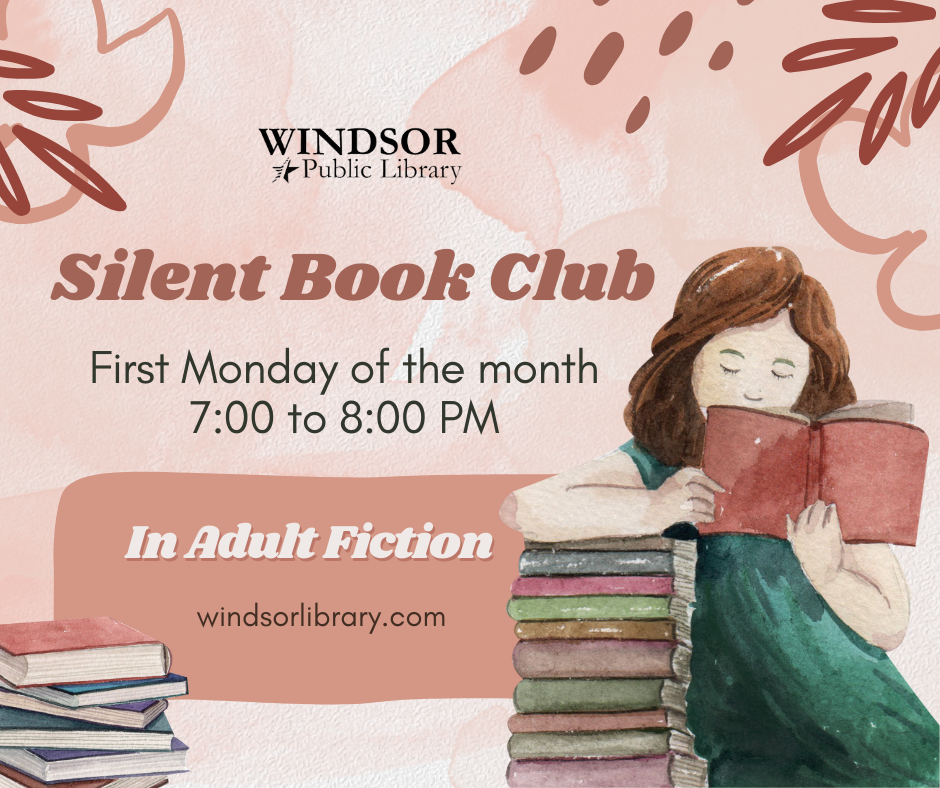
At Silent Book Club, there's no assigned reading. All teen and adult readers are welcome and it's BYO Book (or browse the Windsor Public Library shelves!). Settle in for about 45 minutes of silent, sustained reading. At the end of this time, attendees can socialize—or not! No registration needed.
| |
|
Coming to a bookshelf near you!
(click on the cover to place your hold today)
| | |
|
|
Dog Man by Dav Pilkey
Dog Man, a comedy/adventure that was released by DreamWorks on January 31 is based on the children's graphic novel series by Dav Pilkey. Get ready for Action, Suspense, Romance... and Laffs! George and Harold have created a new breed of justice. When Greg the police dog and his cop companion are injured on the job, a life-saving surgery changes the course of history, and Dog Man is born. With the head of a dog and the body of a human, this heroic hound digs into deception, claws after crooks, rolls over robbers, and scampers after squirrels. Will he be able to resist the call of the wild to answer the call of duty? Dav Pilkey's wildly popular 'Dog Man' Series appeals to readers of all ages and explores universally positive themes, including empathy, kindness, persistence, and the importance of being true to one's self.
| | |
|
|
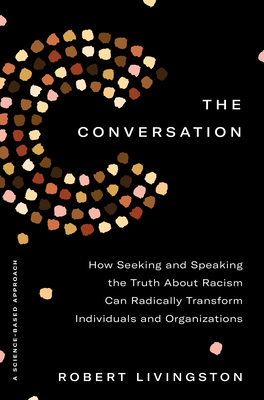
The Conversation by Robert Livingston
Livingston's lifework is showing people how to turn difficult conversations about race into productive instances of real change. In The Conversation, Livingston distills this knowledge and experience into an eye-opening immersion in the science of racism and bias. Drawing on examples from pop culture and his own life experience, Livingston, with clarity and wit, explores the root causes of racism, the factors that explain why some people care about it and others do not, and the most promising paths toward profound and sustainable progress. Founded on principles of psychology, sociology, management, and behavioral economics, The Conversation is a road map for uprooting entrenched biases and sharing candid, fact-based perspectives on race.
| | |
|
|
The Rom-Commers by Katherine Center
Narrated by Patti Murin
Length: 11 hours and 22 minutes
The Rom-Commers by Katherine Center, read by Patti Murin, is a delightfully funny romance for the ages. Emma Wheeler desperately longs to be a screenwriter. She’s spent her life studying, obsessing over, and writing romantic comedies—good ones! That win contests! But she’s also been the sole caretaker for her kind-hearted dad, who needs full-time care. Now, when she gets a chance to re-write a script for famous screenwriter Charlie Yates—The Charlie Yates! Her personal writing god!—it’s a break too big to pass up. Emma’s younger sister steps in for caretaking duties, and Emma moves to L.A. for six weeks for the writing gig of a lifetime. But what is it they say? Don’t meet your heroes? Charlie Yates doesn’t want to write with anyone—much less “a failed, nobody screenwriter.” Worse, the romantic comedy he’s written is so terrible it might actually bring on the apocalypse. Plus! He doesn’t even care about the script—it’s just a means to get a different one green-lit. Oh, and he thinks love is an emotional Ponzi scheme.But Emma’s not going down without a fight. She will stand up for herself, and for rom-coms, and for love itself. She will convince him that love stories matter—even if she has to kiss him senseless to do it. But what if that kiss is accidentally amazing? What if real life turns out to be so much more real than fiction?
| | |
|
|
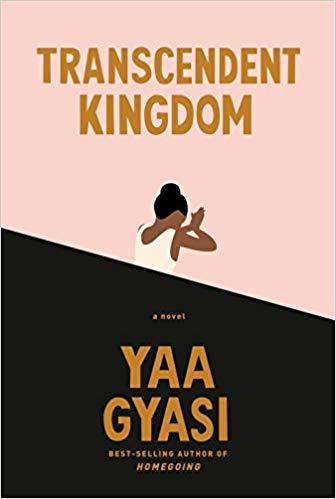
Transcendent Kingdom by Yaa Gyasi
A novel about faith, science, religion, and family that tells the deeply moving portrait of a family of Ghanaian immigrants ravaged by depression and addiction and grief, narrated by a fifth year candidate in neuroscience at Stanford school of medicine studying the neural circuits of reward seeking behavior in mice.
| |
Spotlight: Black History Month | |
|
One of our kind by Nicola Yoon
When Jasmyn and King Williams move their family to the planned Black utopia of Liberty, California, they hope to find a community of like-minded people, a place where their growing family can thrive. King settles in at once, embracing the Liberty ethos, including the luxe wellness center at the top of the hill, which proves to be the heart of the community. But Jasmyn struggles to fit in. She expected to find liberals and social justice activists striving for racial equality, but Liberty residents seem more focused on spa treatments and keeping up appearances. Jasmyn's only friends in the community are equally perplexed and frustrated by Liberty's outlook, a frustration that turns to concern when their loved ones start embracing the Liberty way of life. As Jasmyn learns more about Liberty and its founders, she discovers a terrible secret that threatens to destroy her world in ways she could never have imagined.
| |
|
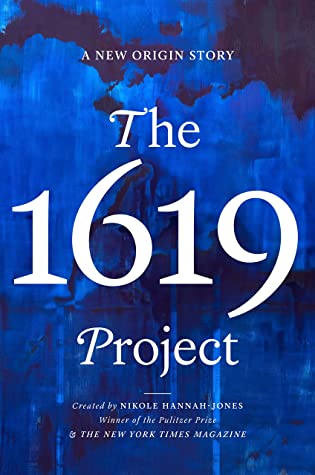
The 1619 Project edited by Nikole Hannah-Jones, etc.
The animating idea of The 1619 Project is that our national narrative is more accurately told if we begin not on July 4, 1776, but in late August of 1619, when a ship arrived in Jamestown bearing a cargo of twenty to thirty enslaved people from Africa. Their arrival inaugurated a barbaric and unprecedented system of chattel slavery that would last for the next 250 years. This is sometimes referred to as the country's original sin, but it is more than that: It is the country's very origin. The 1619 Project tells this new origin story, placing the consequences of slavery and the contributions of Black Americans at the center of the story we tell ourselves about who we are as a country. The 1619 Project ultimately sends a very strong message: We must have a clear vision of this history if we are to understand our present dilemmas. Only by reckoning with this difficult history and trying as hard as we can to understand its powerful influence on our present, can we prepare ourselves for a more just future.
| |
|
Kindred by Octavia Butler
IDana, a modern black woman, is celebrating her twenty-sixth birthday with her new husband when she is snatched abruptly from her home in California and transported to the antebellum South. Rufus, the white son of a plantation owner, is drowning, and Dana has been summoned across the years to save him. After this first summons, Dana is drawn back, again and again, to the plantation to protect Rufus and ensure that he will grow to manhood and father the daughter who will become Dana's ancestor. Yet each time Dana's sojourns become longer and more dangerous, until it is uncertain whether or not her life will end, long before it has even begun.
| | | | |