|
Palm Beach County State Legislative Update
Week of March 2nd
| | UPDATES FROM THE EXECUTIVE BRANCH | | |
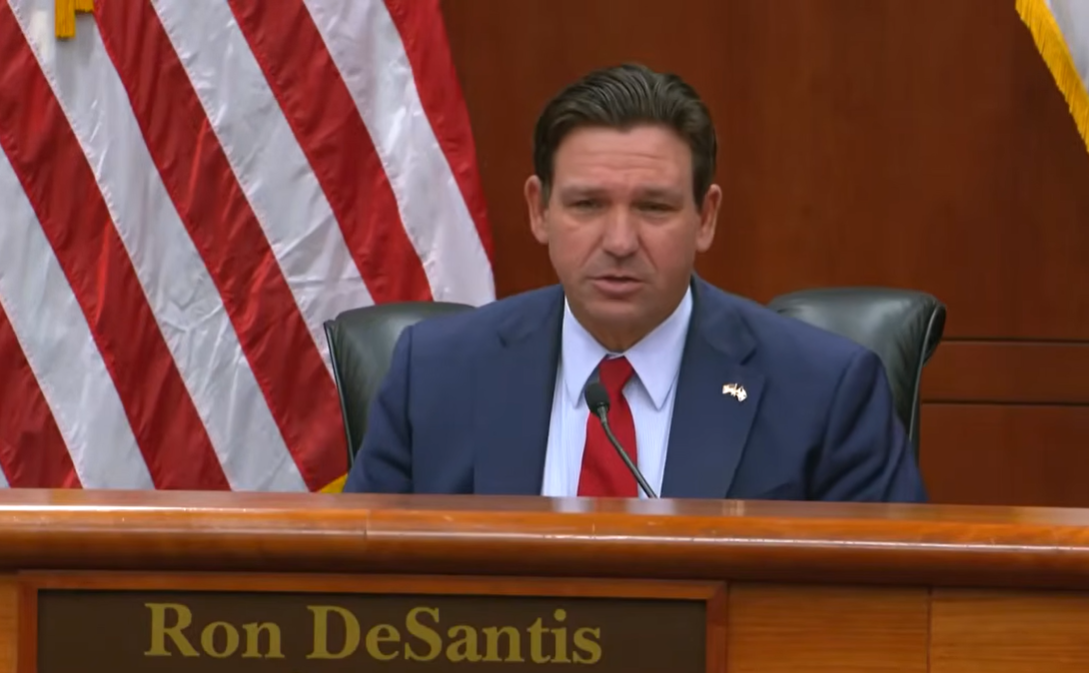
Governor Ron DeSantis Roundtable on Artificial Intelligence
Early on Friday morning, Governor DeSantis held a roundtable discussion encouraging the Legislature to pass the “AI Bill of Rights” designed to protect consumers as artificial intelligence becomes more widespread. The bill (SB 482), which has already passed the Florida Senate, would require companies to tell users when they are interacting with AI, add safety guardrails on chatbot platforms, and require parental approval for children to create chatbot accounts. The goal is to prevent harmful AI content and increase transparency around AI use.
However, the bill was not heard in the Florida House, where leaderships is hesitant to move forward with broad state-level AI regulations. Some legislators argued that the state should wait for a federal framework before creating its own rules, while others worry that heavy regulation could slow innovation. The disagreement highlights a growing debate over whether states should regulate AI independently or wait for national standards.
| | UPDATES FROM THE LEGISLATURE | | |
The 2026 Legislative Session is supposed to conclude next week, but Speaker Daniel Perez says it’s “looking tough” to complete the state budget by then. The main issue is a disagreement between the House and Senate over how much to spend. The House and Senate are $1.4 billion apart on spending plans, with the House proposing a $113.6 billion budget and the Senate proposing a $115 billion budget.
Although leaders say offers are being exchanged, the chambers have not yet agreed on a top-line spending figure or allocations for major areas. Speaker Perez says the House is not willing to increase spending and that talks are still stuck on the overall budget total, not yet on specific programs or allocations. With that said, Senator Ed Hooper said that it isn’t likely that session will end on time. In preparation for an extended session and special sessions, the House has already amended its rules to allow fundraising during extended and special sessions this summer. Regarding the Tax Package, the Senate amended HB 7031 with the bill language from SB 7048 and returned it to the house for consideration.
If both chambers cannot agree on the overall budget in time, leaders could extend the session or call a special session, something that happened last year when negotiations took an extra six weeks. Meanwhile, Governor Ron DeSantis has already scheduled a late-April special session for possible redistricting.
| | MONDAY COMMITTEE MEETINGS | |
|
Senate Appropriations
SB 576: Local Government Cybersecurity - This amended bill by Senator Harrell has passed its final committee. It creates the Local Government Cybersecurity Protection Program within the Florida Digital Service to help local governments prevent and respond to cybersecurity threats. It requires the Florida Digital Service and local governments to enter into data-sharing agreements to improve detection and prevention of cyber incidents. The bill also establishes a grant program that provides local governments with information technology commodities and cybersecurity services, giving priority to fiscally constrained counties that have fewer financial resources. Additionally, it authorizes the Florida Digital Service to seek and accept federal funding to support and expand the grant program.
SB 1362: Vertiports - This amended bill by Senator Harrell has passed its final committee. It expands transportation infrastructure laws to include vertiports, which support emerging electric vertical takeoff and landing aircraft. It adds vertiports and their charging systems to the list of projects eligible for public-private partnership agreements and broadens the definition of airport infrastructure to include vertiport pads, safety zones, charging systems, electric grid upgrades, and resilient energy systems. The bill also allows the Florida Department of Transportation to provide significant financial support for these projects, funding up to 100% of the cost of a public vertiport when no federal funding is available, or up to 80% of the required nonfederal share when federal funds are used.
SB 1614: Local Government Funding - This amended bill by Senator Leek has passed its final committee. It revises how local governments may use excess building code fee revenues and clarifies enforcement rights for permit holders. It removes the authority for local governments to use excess funds to construct or house building code enforcement agencies and eliminates the ability to carry forward such funds for those purposes beyond four years. The bill also allows property owners, builders, or associations with valid building permits to bring civil actions to enforce the limits on how excess building code funds are used. Additionally, it makes minor terminology updates, including references to the state. Members asked no substantive questions, except for Senator Pizzo who expressed disappointment that the bill no longer strengthened JLAC enforcement but indicated support for the revised proposal.
SB 1758: Public Assistance - This amended bill by Senator Gaetz has passed its final committee. It expands oversight and administrative authority within Florida’s Medicaid program while introducing new requirements for certain recipients. It authorizes the Agency for Health Care Administration (AHCA) to conduct retrospective audits and reviews of Medicaid claims, including services that were previously authorized, and removes restrictions on reviewing hospital inpatient claims to ensure cost-effective coverage practices. The bill also establishes work and community engagement requirements for able-bodied adult Medicaid recipients, with exemptions and compliance procedures. Additionally, it creates a program to expand home- and community-based behavioral health services for adults with serious mental illness.
The legislation also makes several changes to prescription drug coverage and program integrity. It establishes new preferred drug lists and a high-cost drug list under the Medicaid Pharmaceutical and Therapeutics Committee, requiring prior authorization for drugs not included.
SB 1760: Health Care Coverage - This amended bill by Senator Brodeur has passed its final committee. It creates the Joint Legislative Committee on Medicaid Oversight to strengthen legislative monitoring and accountability within Florida’s Medicaid program. The committee will oversee Medicaid operations, require data sharing, and produce reports to help lawmakers evaluate program performance and spending. The legislation also expands reporting requirements for Medicaid managed care plans, including more detailed encounter data submissions to help identify potential overspending or underutilization of services. The bill also revises the “achieved savings rebate” formula, lowering the first savings threshold from 5% to 3% and adjusting the share of savings that managed care plans may retain.
In addition, the bill increases oversight of financial relationships within the Medicaid system by requiring annual disclosures of affiliated entities and controlling interests connected to Medicaid managed care plans, along with public reporting and agency review of those transactions. Members asked how the bill ensures local pharmacies are fairly reimbursed and discussed new oversight measures to increase transparency in Medicaid spending. During debate, senators broadly supported the reforms as necessary for accountability and cost control, with no opposition voiced.
SB 7046: Taxation - The Senate Tax Package has been voted on and passed in its final committee. Members questioned the net-zero policy prohibitions, the inclusion of university-sponsored and private-partner charter schools in voter-approved tax levies, and expansions to the rural tax credit program. Debate focused on limiting local authority to address climate goals and whether it was fair to direct more property tax dollars to charter schools outside of traditional district oversight.
HB 5501: Documentary Stamp Tax Distributions - This amended bill by the Transportation & Economic Development Budget Subcommittee has passed its final committee. It amends current statute to modify the distribution of documentary stamp taxes by redirecting a portion of the collections that are currently deposited in General Revenue Fund and deposits those revenues in the State Transportation Trust Fund. The revised distribution of $60 million provided by the bill directs funding for the Florida Rail Enterprise, reinstating a revenue distribution that was eliminated during the 2025 Legislative Session. Members asked if there were any questions but none were posed, and Senator DiCeglie introduced a delete-all amendment to align the bill for conference, which was adopted without opposition. No further debate occurred and there was no opposition voiced.
HB 5503: Trust Funds/Re-creation/Emergency Preparedness and Response - This amended bill by the Transportation & Economic Development Budget Subcommittee has passed its final committee. It creates the Emergency Preparedness and Response Fund (EPRF) within the Executive Office of the Governor. The bill extends the termination of the EPRF to July 1, 2030. The bill provides that the act operates retroactively to February 17, 2026. Senator Pizzo asked about using the fund to evacuate Floridians overseas during emergencies, and supporters emphasized prioritizing relief for Floridians first. The bill was reported favorably after the adoption of a delete-all amendment, setting up the proper posture for budget conferences.
| |
Senate Fiscal Policy
SB 214: Special District Funding - This amended bill by Senator McClain has passed its final committee. It expands financial assistance and payment eligibility for certain rural special districts by allowing those located in qualifying rural counties or municipalities, or those providing water and wastewater services in a rural area of opportunity, to receive direct invoice payments and financial support from state agencies. It requires expedited processing of payment requests for these counties, municipalities, and special districts to help reduce financial hardship. The bill also revises the definition of “rural community” in state law to include certain special districts, allowing them to participate in and access programs intended to support rural areas. No questions were posed, while the sponsor emphasized that the measure would allow agencies to directly pay invoices for rural communities and special districts, improving cash flow.
SB 682: Domestic Violence and Protective Injunctions - This amended bill by Senator Calatayud has passed its final committee. It strengthens protections for victims of domestic violence by expanding definitions, increasing penalties for repeat offenses, and enhancing monitoring and enforcement tools. It defines “electronic monitoring” and “military protective order” in the context of domestic violence and allows or requires courts to impose electronic monitoring for certain offenders in domestic violence and related injunction cases. The bill also increases penalties for individuals convicted of a second or subsequent domestic violence offense while maintaining existing sentencing score calculations. Additionally, it updates injunction provisions to require courts to consider threats or harm to family pets, including service and emotional support animals, and recognizes military protective orders within state law.
The legislation also improves victim protection systems and financial assistance. It requires the Florida Department of Law Enforcement to enter dating violence and sexual violence injunctions into the statewide verification system to ensure they are properly tracked and enforced. The bill increases relocation assistance available to victims from $1,500 to $2,500 per claim and from $3,000 to $5,000 over a lifetime. It also includes conforming updates to related statutes to align definitions and cross-references with the new provisions.
SB 1296: Public Employees Relations Commission - This amended bill by Senator Martin has passed its final committee. The bill makes extensive changes to Florida’s public sector labor laws by revising procedures for union certification, membership, and collective bargaining for public employees. It updates requirements for union membership authorization forms, requires immediate revocation of membership when requested by an employee, and restricts when public employers may deduct union dues from employee paychecks. The bill also imposes stricter financial reporting and disclosure requirements on employee organizations, increases conditions that trigger recertification petitions, and clarifies the grounds under which a union’s certification may be revoked. Additionally, it establishes a process to clarify the composition of bargaining units and modifies decertification procedures by setting specific timelines and higher voting thresholds, with certain exceptions for public safety units.
The legislation also revises timelines and procedures for resolving labor disputes, including mediation and impasse processes, and aligns deadlines for recommended and final orders in certain employment appeals with broader administrative law requirements. The bill further updates and clarifies several key labor-related definitions, increases penalties for unlawful public employee strikes, and tightens restrictions on public employers providing support or subsidies for union activities, while outlining limited exceptions and consequences for violations.
SB 1510: Department of Environmental Protection - This amended bill by Senator Massullo has passed its final committee. The bill streamlines Florida’s environmental oversight by eliminating the Environmental Regulation Commission and transferring its rulemaking and regulatory responsibilities to the Department of Environmental Protection and other relevant entities. It also expands the Acquisition and Restoration Council’s membership and assigns it administration of the Florida Communities Trust, duties previously managed by the Department of Environmental Protection. The legislation introduces new stormwater best management practices for solar facility construction permits, requires higher stormwater design standards in the Northwest Florida Water Management District, and strengthens nutrient-reducing requirements for onsite sewage systems in certain watersheds. It standardizes environmental permitting requirements, removes multiple references to commission oversight, and revises deadlines and penalties for major sources of air pollution regarding annual operation license fees, while eliminating some fee provisions for air pollution construction permits.
SB 1548: Affordable Housing - This bill by Senator Calatayud has passed its final committee. It requires Florida counties and municipalities to allow multifamily or mixed-use residential developments on publicly owned property, including land owned by counties, municipalities, or school districts, provided that at least 40% of the units are designated as affordable for a minimum of 30 years. It limits local government restrictions on these projects, prohibiting additional height limits, setbacks, or stepbacks beyond what is already permitted, and clarifies that farms and farm operations are not considered commercial or industrial uses. The bill also allows certain developments near airports if approved by the governing body, despite existing restrictions.
In addition, the legislation strengthens anti-discrimination protections in housing. It expands the definition of “person” under housing discrimination laws to include governmental entities and agencies and prohibits discrimination based on the source of housing finance, specifically covering affordable housing projects. The bill also waives sovereign immunity for state entities in legal actions related to discriminatory housing practices, ensuring that state agencies can be held accountable for violations.
| | TUESDAY COMMITTEE MEETINGS | | |
Senate Rules
SB 354: Blue Ribbon Projects - This amended bill by Senator McClain has passed its final committee. It creates a new development category called “blue ribbon projects” aimed at encouraging large-scale projects that combine land conservation with planned community development. The framework applies to contiguous properties of at least 15,000 acres and requires that at least 60% of the land be preserved for conservation, agriculture, or other public-benefit uses. The remaining up to 40% of the land can be developed into compact, mixed-use, walkable communities, with limits on density (up to 12 residential units per gross acre) and standards for commercial development.
The bill also includes housing affordability requirements, mandating that at least 20% of residential units be designated as affordable housing, “missing middle” housing, or homes for participants in Florida’s Hometown Hero Program. Developers would receive long-term vested development rights lasting 50 years, with a possible 25-year extension if at least half of the development area is completed during that period. Projects must submit a “blue ribbon plan” outlining land use, development phases, and conservation measures; once approved by a local government, the plan largely replaces existing zoning and comprehensive plan requirements while still requiring compliance with state environmental regulations. Members raised concerns about how local governments could protect existing communities, ensure concurrency, and enforce a true 60% reserve, with some arguing it saved land while others felt it preempted too much local authority. Debate centered on balancing developer freedom against public interests, and the bill ultimately passed despite clear opposition over its broad impacts.
SB 1080 – Transportation – This amended bill by Senator DiCeglie has passed its final committee. It updates Florida laws on transportation, particularly the camera enforcement of traffic violations. The bill clarifies rules for automated enforcement, including defining what it means to make a right turn on red in a “careful and prudent manner” when monitored by traffic cameras. It also requires that school zone speed cameras only be used where flashing beacons are installed and active, giving local governments until January 1, 2028 to install the necessary beacons. After that date, any photographic evidence of a school zone speeding violation must also show whether the beacon was activated.
The bill further allows speed detection cameras to be placed outside school zones as long as they only capture violations that occur within the zone. It also strengthens enforcement by allowing the state to withhold vehicle registration renewals if camera-issued traffic fines are not paid. Finally, if a vehicle owner submits an affidavit stating that another person was driving at the time of the violation, the statute of limitations for issuing the citation can restart. Members questioned penalties for prime contractors withholding payments from subcontractors and raised concerns about camera-based traffic enforcement and license plate frames. Supporters cited the need to improve safety, especially in school zones.
SB 1260: Services During a State of Emergency - This amended bill by Senator DiCeglie has passed its final committee. The bill requires the Florida Department of Management Services to create and maintain state term contracts for building code inspection services, allowing state and local governments to more quickly obtain inspection support when needed. It also establishes a temporary program for qualified individuals to serve as building inspectors or plans examiners during a declared state of emergency. Eligible individuals could fill these roles for up to one year after the emergency declaration, helping communities address inspection backlogs and speed up rebuilding and recovery efforts.
SB 1366: Claims Against the Government - This amended bill by Senator Brodeur has passed its final committee. It updates Florida’s limited waiver of sovereign immunity law, which governs when the state and its agencies or local governments can be sued for negligence or other tort claims. While the law allows lawsuits against government entities, it limits how much money can be paid in damages unless the Legislature approves additional compensation through a claim bill. The bill raises the statutory caps on payments from $200,000 per person and $300,000 per incident to $350,000 per person and $500,000 per incident, increasing the maximum amount claimants can recover without legislative approval.
The bill also revises statutes of limitation and presuit requirements for several types of claims against government entities, including negligence, contribution, medical malpractice, wrongful death, and cases involving sexual battery against victims under 16. These changes are intended to clarify filing deadlines and procedures for bringing claims against public entities. The new provisions would apply to causes of action that occur on or after October 1, 2026.
SB 1452: Department of Financial Services - This amended bill by Senator Truenow has passed its final committee. This bill updates and streamlines several administrative and regulatory functions overseen by the Florida Department of Financial Services. It revises procedures related to state financial management, including updated terminology and processes for state payment warrants issued by the Chief Financial Officer and the replacement of lost or destroyed warrants. The bill also changes certain payroll practices by eliminating semimonthly salary payments by the department and modifying payroll processes for state employees. In addition, it consolidates and clarifies financial management requirements tied to the Florida Financial Management Information System and adjusts responsibility for certain system components.
The legislation also updates multiple programs and regulatory areas. It revises eligibility rules, application procedures, and inspection requirements for the My Safe Florida Home Program and makes similar updates to the My Safe Florida Condominium Pilot Program, including income verification and eligibility standards for condominium associations. The bill strengthens licensing, education, and disciplinary requirements for insurance agents, bail bond agents, and public adjusters. It also updates Florida’s unclaimed property laws by replacing the term “unclaimed property” with “abandoned property,” improving due-diligence requirements for holders, clarifying that the state acts only as a custodian of the assets, and adding safeguards and documentation standards to reduce improper claims.
SB 1548: Affordable Housing - This bill by Senator Calatayud has passed its final committee. It requires counties and municipalities to allow certain affordable housing developments on publicly owned land, including property owned by local governments or school districts. To qualify, projects must include multifamily or mixed-use residential development with at least 40% of units designated as affordable housing for at least 30 years. Local governments would be prohibited from restricting building heights or imposing stricter setback or step back requirements than those already permitted in the area, making it easier to construct these developments. The bill also allows some residential projects near airports if approved by the local governing body and clarifies that farms and farm operations should not be classified as commercial or industrial uses for regulatory purposes.
The legislation also strengthens housing anti-discrimination protections. It expands the legal definition of “person” in housing discrimination laws to include government agencies and entities, meaning they can be held accountable for discriminatory practices. The bill specifically prohibits discrimination based on the source of housing financing, including funding used for affordable housing developments. Additionally, it waives sovereign immunity for state entities in lawsuits involving discriminatory housing practices, allowing legal claims to proceed against government bodies in such cases.
SB 1566: Local Government Spending - This amended bill by Senator DiCeglie has passed its final committee. It provides that the act may be cited as the “Local Government Financial Transparency and Accountability Act.” The bill requires county and municipal tentative, adopted tentative, and final budgets, be posted on their official websites in PDF or similar downloadable form. The bill revises timeframes for posting budget information and noticing public budget hearings. Counties and municipalities are also required to conduct a budget reduction strategy workshop and post quarterly employee compensation summaries and a budget development calendar.
The bill implements new requirements for local governments seeking to increase impact fee rates beyond the ordinary phase-in limitations due to extraordinary circumstances. Under the bill, the demonstrated-need study required to show extraordinary circumstances justifying an impact fee rate increase must specify the standards used to support the existence of such extraordinary circumstances and be accompanied by a declaration of the method and timeframe by which the impact fee increase will increase capacity. The bill also prohibits a local government, including a school or special district, from increasing an impact fee rate utilizing the extraordinary circumstances provisions by more than 100 percent in a 4-year period.
| |
House Session
HB 433/SB 290: Department of Agriculture and Consumer Services – This comprehensive bill by Representative Alvarez and Senator Truenow has passed in the House. The bill addresses numerous matters related to agriculture and the Florida Department of Agriculture and Consumer Services. Among other provisions, the bill revises provisions related to fairs, preempts local governments from restricting gas-powered farm and landscape equipment, revises provisions that relate to biosolids, amends provisions relating to signal jamming devices, revises provisions related to state owned lands, repeals the Babcock Ranch Advisory Group, creates a Food Animal and Equine Veterinary Medicine Loan Program, and makes permanent the Farmers Feeding Florida Program. It also amends provisions relating to health studios and commercial solicitation.
HB 1197: Information Technology Procurement and Contracting - This amended bill by Representative Miller expands the authority of the Florida Digital Service (FDS) to oversee and manage technology procurement, project governance, and vendor performance across state agencies. It places the Bureau of Enterprise Project Management and Oversight within FDS and directs it to develop standardized frameworks for managing major IT projects. The bill also updates definitions and thresholds for large technology systems and requires agencies to follow new planning and reporting processes for IT projects costing $10 million or more, including obtaining a pre solicitation compliance certification before procurement begins.
Additionally, the bill requires FDS to procure and oversee independent verification and validation services, evaluate vendor performance, and publish annual reports on high-risk or underperforming IT projects. It establishes a centralized system for tracking vendor performance and adds new contract requirements such as ensuring data portability, detailed documentation, and transition support if services change vendors. The bill also adjusts procurement rules by encouraging large IT contracts to be broken into incremental phases and clarifying when competitive bidding is required for major technology purchases.
HB 1103: Local Administration of Vessel Restrictions - This amended bill by Representative Andrade has passed in the House. It allows counties and municipalities to authorize code enforcement officers to enforce certain vessel and anchoring regulations, including rules related to derelict vessels, if the authority is approved by the Florida Fish and Wildlife Conservation Commission. It requires the commission to adopt rules to implement these local enforcement powers and updates state penalty provisions so that authorized code enforcement officers can issue violations. The bill also reduces the number of public moorings required for an exemption from anchoring limitation areas in Monroe County from 100 to 60 and allows local governments to extend or modify boating-restricted areas for safety reasons as long as the boundaries are clearly marked
HB 399: Land Use and Development Regulations - This amended bill by Representative Borrero has passed in the House. The bill updates land use and development regulations by requiring development permit fees to reflect actual review costs, rather than being based on a percentage of project costs. It also clarifies that amendments to the future land use element of a local comprehensive plan must be approved by a majority vote of the governing body present at the hearing, regardless of county charter provisions, and requires local governments to include clear compatibility standards for residential development in their plans and regulations.
The bill also directs the Office of Program Policy Analysis and Government Accountability to study the potential impacts of removing the Urban Development Boundary in Miami-Dade County and other counties, with findings due by December 1, 2026.
HB 1451: Utility Services - This amended bill by Representative Busatta has passed in the House. bill requires municipalities to hold public meetings before approving or extending utility services—including electric, natural gas, water, or sewer—to areas outside their boundaries and mandates annual customer meetings on rates and services. It limits rate surcharges for outside customers to no more than 25% above in-city rates and requires municipalities to submit annual reports to the Florida Public Service Commission detailing outside customers, revenues, and rate differentials. The commission must compile these data for the Governor and Legislature with improvement recommendations and the bill also preempts the creation of regional utility authorities by charter amendment after January 1, 2023.
HB 1093: Vertiports - This amended bill by Representative Spencer has passed in the House. The bill amends Florida law to specifically include vertiports and charging systems as qualifying projects for funding under public-private partnerships between state and private entities. The bill authorizes the Florida Department of Transportation (FDOT) to fund all of the project costs of a public vertiport if federal funds are not available. If federal funds are available, FDOT may fund up to 80 percent of the nonfederal share of the project costs.
HB 1009: Governmental Agency Publication of Advertisements and Public Notices -This amended bill by Representative Griffitts has passed in the House. It updates legal notice requirements by expanding the definition of “governmental agency” to include clerks of the circuit court, tax collectors, and water management districts (WMDs), and clarifies that “publicly accessible websites” can include official or designated private websites for these entities or their counties. The bill sets timeframes for how long notices must remain online, clarifies publication rules for agencies in counties with fewer than 160,000 residents, and exempts WMDs from certain notice requirements for special districts spanning multiple counties. It also requires that public bid advertisements posted online be freely accessible to the general public.
HB 693: Health and Human Services - This amended bill by Representative Redondo has passed in the House. It implements federal requirements from the “One Big Beautiful Bill Act” for Medicaid, CHIP, and SNAP and advances a range of healthcare policies. The bill joins interstate licensure compacts for physician assistants, social workers, and EMS providers, allows autonomous practice for all advanced practice registered nurses, and removes limits on the number of physician assistants a physician can supervise. It also permits dentists to delegate more tasks to dental hygienists and strengthens patient protections by requiring out-of-network referrals to be disclosed and certain out-of-network payments to count toward deductibles.
| | |
Senate Session
SB 332: Public Records and Public Meetings / Private Property Rights - This amended bill by Senator Bradley has passed in the Senate. The bill allows agencies to hold closed attorney-client sessions to discuss claims under the Bert J. Harris, Jr. Private Property Rights Protection Act, limiting discussions to settlement negotiations or legal strategy. All nonpublic sessions must be recorded by a court reporter, with transcripts and related records remaining confidential until the claim is resolved or the statute of limitations expires. The exemption from public records laws is also subject to future legislative review under the Open Government Sunset Review Act.
SB 1072: Antisemitism Task Force - This amended bill by Senator Calatayud has passed in the Senate. It creates the Antisemitism Task Force (Task Force) for the express purpose of combating antisemitism in Florida. To this end, the Task Force has a range of responsibilities, including providing assistance, conducting studies and assessments, and engaging with local Jewish communities. The Task Force must annually “submit a report and policy recommendations” to the Governor and legislative leaders. The Task Force is composed of 18 members serving two-year terms and is adjunct to the Office of Civil Rights in the Department of Legal Affairs. The Department of Legal Affairs will provide administrative and staff support to the Task Force. The Task Force is automatically repealed on October 2, 2029, unless reviewed and saved by the Legislature.
SB 1134: Official Actions of Local Governments - This amended bill by Senator Yarborough has passed 25-11 in the Senate. The bill prohibits counties and municipalities from adopting, funding, or promoting diversity, equity, and inclusion (DEI) initiatives, voids existing DEI-related policies, and bars public funds from supporting DEI offices or staff. Violations by local officials are classified as misfeasance or malfeasance, allowing residents to pursue civil remedies such as injunctions, damages, and costs. The bill also requires contract and grant recipients to certify they do not use local funds for DEI purposes, while allowing exceptions for compliance with state or federal law, recognition of official holidays, and neutral event permitting.
SB 1138/HB 927: Qualified Contractors - This amended bill by Senator Massullo has passed in the Senate. The bill requires counties with 75,000+ residents and municipalities with 10,000+ residents to offer optional preapplication consultation programs for development projects, including set timeframes for certifying and processing applications. It creates a registry of qualified contractors to assist with expedited reviews, ensures applicants receive notification of application completeness or deficiencies within five business days, and mandates final decisions within 45 days for those using the program. The bill also limits requests for additional information, prohibits withholding building permits when basic access and fire code standards are met, and standardizes plat and replat approval processes, including acceptable financial assurances and consistent local procedures.
SB 1220: Transportation - This amended bill by Senator Massullo has passed in the Senate. The bill strengthens Florida’s transportation system by updating institute membership, expanding delivery device use, and enhancing airport and seaport planning. It revises the Florida Transportation Research Institute membership, directs ports to include critical resource strategies in their plans, and establishes a maritime industrial base coordination initiative. The bill expands personal delivery device operations on sidewalks, bike paths, and road shoulders while restricting them in theme parks, clarifies emergency vehicle light rules, and removes certain digital license and insurance verification requirements.
It also limits local regulation of drone deliveries and communications facilities, establishes advanced air mobility corridors, authorizes the Department of Transportation to manage LiDAR procurement, operate airports, and coordinate federal funding, and adjusts toll revenue allocation, trail surfaces, and paratransit service requirements. Additionally, it creates penalties for damaging autonomous vehicles and requires a study on the impact of alternative fuel vehicles on transportation revenues, with funds appropriated for that purpose.
SB 1230/HB 1019: Perfluoroalkyl and Polyfluoroalkyl Substances - This amended bill by Senator Harrell has passed in the Senate. he bill, named the “Joe Casello Act,” bans the sale, possession, and use of firefighting foam containing PFAS. Nonemergency use is prohibited starting July 1, 2026, with sales, distribution, and possession phased out through 2027 and 2029. Entities must report inventories and submit disposal plans to the Department of Environmental Protection (DEP), which will also adopt rules for handling and disposal, maintain a registry of PFAS-free alternatives, and administer transition grants. Exemptions are provided for federal aviation, certain military uses, emergencies, and specific retrofits, and violations carry penalties and injunctive relief.
The bill also amends wastewater rules to require quarterly sampling of biosolids and treated effluent for PFAS, initially for informational purposes until federal standards are established.
SB 1706: My Safe Florida Condominium Pilot Program - This amended bill by Senator Pizzo has passed in the Senate. The bill revises the My Safe Florida Condominium Pilot Program by adding income-based eligibility requirements and removing geographic restrictions, making the program available to more associations. At least 80% of occupied units must have households earning 80% or less of the area median income, with rules for verification and periodic recertification. Mixed-income condominiums can qualify if they meet the threshold, and grant funds can be used for hurricane mitigation and water intrusion prevention. To receive a final grant award, associations must complete 100% of recommended opening protections in common areas.
| |
House Session
HB 1389: Affordable Housing - This amended bill by Represenatative Redondo has passed 76-29 in the House. The bill expands opportunities for affordable multifamily and mixed-use residential developments by requiring counties and municipalities to allow such projects in commercial, industrial, government-owned, and certain religious properties without extra zoning approvals. It prevents local restrictions on building height or setbacks, mandates adoption of accessory dwelling unit (ADU) ordinances by December 1, 2026, and ensures homeowners can retain homestead exemptions while renting ADUs.
The bill also updates land use definitions, excludes farms from commercial/industrial categories, and prohibits discrimination in development decisions based on financing sources, extending fair housing protections to include government entities and commercial interests, with sovereign immunity waived for certain claims.
Additionally, the bill directs the Office of Program Policy Analysis and Government Accountability to study mezzanine financing for affordable housing and evaluate the potential use of tiny homes in development projects.
HB 979: Infill Redevelopment - This amended bill by Representative Borrero was temporarily postponed on second reading.
HB 1085: Local Government Cyber Security - This amended bill by Representative Miller has passed in the House. The bill establishes the Local Government Cybersecurity Protection Program at the University of South Florida, administered by the Florida Center for Cybersecurity, to provide grants, IT commodities, and services to help local governments mitigate cybersecurity threats. It requires data-sharing agreements with local governments and the Florida Digital Service, prioritizes fiscally constrained counties, and limits grants to two consecutive fiscal years per local government, with awards made by October 1 annually. Local governments can also purchase program IT resources without a grant. The program mandates annual reporting on outcomes and finances, caps administrative expenses at 4% of appropriated funds, and is set to repeal on July 1, 2031, unless reenacted.
HB 273: Special Districts - This amended bill by Representative Johnson has passed 83-28 in the House. The bill encourages downtown revitalization and expands support for rural community special districts by clarifying definitions, boundaries, and financial procedures. It establishes “downtown development districts” for municipalities with populations over 400,000, requires boundary changes to be approved by ordinance and voter referendum, and allows districts to levy up to 0.475 mill in property taxes with administrative costs capped at 10% and annual budgets detailing projects. It also permits state agencies to pay invoices directly to certain rural special districts facing financial hardship and broadens the definition of rural communities to include districts providing water and wastewater services in opportunity areas.
HB 1329: Local Government Spending - This amended bill by Representative Benarroch has passed 82-28 in the House. The bill increases local government budget transparency by extending posting periods, requiring user-friendly online formats, and mandating public access to detailed budget data. Tentative budgets must now be posted 14 days before hearings and final budgets remain online for 5 years, with revenues, expenses, salaries, and travel costs available in searchable formats. It also requires a 10% budget reduction exercise before final adoption, allows exemptions for smaller governments with data submitted to the Department of Financial Services, and provides a hardship waiver process for those unable to meet the new requirements.
HB 1417: Department of Environmental Protection - This amended bill by Representative LaMarca has passed in the House. The bill eliminates the Environmental Regulation Commission, updates solar facility construction requirements to include site-specific erosion, sediment, and stormwater controls meeting the 100-year, 24-hour rainfall standard, and broadens public-private partnerships to include coastal resiliency projects with expedited permitting and an online dashboard. It extends the deadline to 2035 for certain properties to connect to central sewer or upgrade onsite sewage systems, requires owner notifications, and revises air pollution license fee deadlines from April 1 to June 30 with associated penalties.
HB 1245: Biosolids Management - This amended bill by Representative Shoaf has passed in the House. The bill restricts the agricultural application of Class AA biosolids to prevent exceeding agronomic rates and prohibits their use as disposal. It requires 5-year recordkeeping for land application sites, documenting biosolids characteristics, quantities, and application dates, with limited exemptions for high-solids products subject to separate documentation. The Department of Environmental Protection must adopt rules for bulk distribution and marketing by November 1, 2026, and the University of Florida IFAS will publish biennial agronomic rate recommendations starting November 1, 2027. Only biosolids and compost products meeting fertilizer or compost standards may be marketed or applied to agricultural land.
HB 1285: Biosolids Management - This amended bill by Representative Boyles has passed in the House. The bill prohibits the Department of Environmental Protection from issuing or renewing Class B biosolids land application permits for septage if a qualifying wastewater treatment facility is located within 30 miles. To qualify, the facility must be government-owned or operated and operational, not defunct, repurposed, or at capacity.
HB 543: Transportation - This amended bill by Representative McFarland has passed in the House. The bill enhances transportation safety and infrastructure by updating traffic signal timing, school zone enforcement, seaport protections, and digital driver license rules. It increases yellow-light perception-reaction time, strengthens school zone speed enforcement with flashing beacon and notice requirements, and expands local authority to lower speed limits in business or residential areas. It protects seaport cargo space, requires legislative approval for non-cargo conversions, and allows direct DOT payments to certain subcontractors.
The bill also clarifies hearing officer authority, standardizes school bus infraction detection systems, and regulates automated license plate recognition with strict privacy rules. It updates rules for vehicles, including disabled parking, golf cart operations, low-speed vehicle registration, and exhaust noise limits, and establishes digital driver license standards governing data, privacy, and consent.
HB 277: Domestic Violence and Protective Injunctions - This amened bill by Representative Tendrich has passed in the House. The bill strengthens protections for domestic violence survivors by enhancing penalties, expanding injunctions, and increasing support services. It reclassifies repeat domestic violence offenses to higher-level misdemeanors or felonies, establishes electronic monitoring pilot programs for misdemeanor and felony offenders, and requires courts to consider threats to family pets when issuing injunctions. It adds military protective orders to verifiable protection orders, expands verification for dating and sexual violence injunctions, lowers the threshold for elevating injunction violations to a third-degree felony, and mandates law enforcement notifications for military protective order violations. Additionally, it increases one-time relocation assistance for victims from $1,500 to $2,500 and raises the lifetime cap from $3,000 to $5,000.
HB 437: Public Records - This amened bill by Representative Andrade has passed in the House. The bill makes significant revisions to the Public Records Act (Act). The bill establishes a mandatory three-day response timeline for agencies to respond to public record requests and requires written explanations for delays or denials. The bill restricts agencies’ ability to charge fees in specified circumstances, authorizes fees waivers for public purposes, and requires written cost estimates upon request. The bill restructures enforcement provisions of the Act by modifying to whom penalties apply and which sanctions are available. The bill broadens the availability of attorney fee awards and requires fees be assessed against the responsible agency rather than individual employees
HB 1139: Impact Fees - This amended bill by Representative Gentry has passed in the House. The bill establishes a plan-based methodology for calculating local impact fees, requiring studies to use current local data, a 10-year growth projection, and specific capital projects. It mandates intergovernmental coordination for mitigation funding of extrajurisdictional impacts, ensures transportation capacity fees in interlocal agreements follow the new methodology, and limits such agreements to October 1, 2031. The bill defines extraordinary circumstances that justify fee increases beyond phase-in limits, prohibits raising fees using outdated data or prior deductions without meeting requirements, and provides refunds with interest plus attorney fees for improperly assessed impact fees.
HB 1323: Railroad Crossing Safety - This amended bill by Representative Tuck has passed in the House. The bill requires the Department of Transportation to study advanced detection and monitoring systems for railroad crossing safety, assessing their effectiveness, feasibility, costs, and interoperability with existing measures. The study must involve consultation with railroads, local governments, safety experts, and federal agencies, and a report of findings and potential policy options must be submitted to the Governor and Legislature by December 1, 2026, without mandating installation.
HB 503: Drowning Prevention Education - This amended bill by Representative Eskamani has passed in the House. The bill requires the Department of Health to develop and distribute drowning prevention and safe bathing educational materials to new parents and caregivers. Hospitals, birth centers, home birth providers, and childbirth educators must provide these materials as part of postpartum care and childbirth education, updating existing statutes to include this requirement.
| | |
Senate Session
SB 218: Land Use Regulations - This amended bill by Senator Gaetz has passed in the Senate. The bill defines “impacted local government” as counties included in certain federal disaster declarations and the municipalities within those counties. It limits the application of specific land use regulations in section 28 of chapter 2025-190, Laws of Florida, so that beginning July 1, 2026, those provisions apply only to the defined impacted local governments rather than statewide.
SB 354: Blue Ribbon Projects - This amended bill by Senator McClain was temporarily postponed on third reading. The bill establishes a “Blue Ribbon Project” framework for very large developments (15,000+ contiguous acres) that requires at least 60% of the land to be preserved for conservation, agriculture, or other public-benefit uses while allowing up to 40% for compact, mixed-use development.
It requires 20% of housing units to be affordable, missing-middle, or for Florida Hometown Heroes, and grants developers 50-year vested development rights, with a possible 25-year extension. Approved blue ribbon plans outlining land use, phasing, and conservation would be presumed consistent with local comprehensive plans and could replace existing zoning rules, though projects must still comply with state environmental laws.
SB 830: Public Records / County Administrators and City Managers - This bill by Senator Leek has passed 31-5 in the Senate. The bill expands public records exemptions to protect personal identifying and location information of certain local government executives and their families. It adds county administrators, deputy and assistant county administrators, and city managers, deputy and assistant city managers to the list of officials whose information—such as home addresses, phone numbers, dates of birth, and children’s school information—is confidential and exempt from public records disclosure.
The exemption applies retroactively and includes a future legislative review date to determine whether the exemption should be continued or repealed.
SB 1234/HB 803: Building Permits and Inspections - This amended bill by Senator DiCeglie has passed in the Senate. The bill revises laws governing building permits, inspections, and building code enforcement. It updates the roles and responsibilities of local building officials and private providers that perform building code inspection services, including provisions related to permit and administrative fees.
The bill also requires the adoption of a uniform permitting system statewide and establishes specific requirements for permitting and installing residential distributed energy generation systems and backup power systems.
SB 1288: Waterbody Designations / Andrew “Red” Harris Spoil Island - This amended bill by Senator Harrell has passed in the Senate. The bill designates Spoil Island SI3 in Jupiter Sound as the “Andrew ‘Red’ Harris Spoil Island.” It directs the Department of Environmental Protection to install markers identifying the island with its new official name.
SB 1434: Infill Redevelopment - This amended bill by Senator Calatayud has passed in the Senate. The bill creates the Infill Redevelopment Act to accelerate residential development on environmentally impacted land in certain large counties. It allows qualifying parcels to be developed for housing at densities based on adjacent zoning or up to 25 units per acre, whichever is lower, and requires administrative approval of subdivisions without reducing allowed density or intensity.
The bill requires 20-foot buffers next to existing single-family homes or townhouses, allows local governments to impose architectural design standards, and preempts local restrictions that would block development of qualifying parcels. If a project redevelops land with recreational facilities unused for at least 12 months, impact fees are doubled and adjacent property owners must be given the opportunity to purchase and preserve the space as open area.
SB 1614: Local Government Funding - This amended bill by Senator Leek has passed in the Senate. The bill revises how local governments may use excess building code enforcement fees. It removes their authority to use those surplus funds to construct or house building code enforcement agencies and eliminates the ability to carry forward such funds for those purposes beyond four years. The bill also allows property owners, builders, and their associations with valid building permits to bring civil actions to enforce the limits on how excess funds are used, and it makes minor terminology updates to statutory language.
SB 1682/HB 1103: Local Administration of Vessel Restrictions - This amended bill by Senator Trumbull has passed in the Senate. The bill authorizes counties and municipalities to allow code enforcement officers to enforce certain vessel regulations, including rules on derelict vessels and anchoring, with approval from the Florida Fish and Wildlife Conservation Commission (FWC). It directs the commission to adopt rules implementing these local enforcement provisions.
The bill also reduces the number of public moorings required for certain anchoring exemptions in Monroe County from 100 to 60, allows local governments to adjust or extend boating-restricted areas for safety if properly marked, and updates penalty provisions to include enforcement by authorized code enforcement officers.
| | |
House Session
HB 7031: Taxation - The Senate amended HB 7031 with the bill language from SB 7048 and returned it to the house for consideration. It is currently in returning messages in the House.
HB 1217: Prohibited Governmental Policies Regulating Greenhouse Gas Emissions - This amended bill by Representative Snyder has passed 80-29 in the House. The bill provides a legislative finding that net zero policies, carbon taxes and assessments, and emission trading programs are detrimental to the energy security and economic interest of the state and inconsistent with the energy and environmental policies of the state; establishes certain prohibitions on a governmental entity adopting, implementing, using public funds to support, or imposing any charge to advance net zero policies; and defines terms related to such prohibitions.
HB 657: Community Associations - This amended bill by Representative Porras has passed 108-2 in the House. The bill establishes new procedures for dissolving homeowners’ associations (HOAs), including member voting thresholds, court oversight, and asset distribution, and deems the governing documents and easements of dissolved HOAs unenforceable with required updates to public records. It also revises condominium and HOA requirements, such as mandating acknowledgment of governing acts in documents, stricter obligations for providing records to law enforcement, turnover inspections before developer handover, and limits on enforcing certain roofing materials.
Additionally, the bill creates an optional community association court program with specialized judges to handle association-related disputes and dissolutions, encourages nonbinding arbitration or court proceedings instead of presuit mediation, updates definitions and cross-references, and clarifies financial statement obligations for associations.
HB 465: Community Association Management - This amended bill by Representative Nix was temporarily postponed. The bill strengthens regulation of community association managers and management firms. It requires licensed management firms for condominium, cooperative, and homeowners’ associations with annual revenues of $750,000 or more, mandates that managers and firms carry at least $1 million in errors and omissions insurance, and holds boards responsible for hiring properly licensed managers.
It also revokes licenses permanently for managers convicted of serious financial or capital felonies and clarifies that timeshare management firms must comply with timeshare statutes while also following certain chapter 468 licensing rules when managing non-timeshare properties.
HB 927: Local Land Planning and Development - This amended bill by Representative Sapp has passed in the House. The bill streamlines development permitting by requiring counties (75,000+ residents) and municipalities (10,000+ residents) to offer preapplication consultations and setting strict timelines for application approvals, including automatic approvals if deadlines are missed. It allows qualified contractors to assist with reviews, establishes a registry of qualified contractors, and prevents local governments from imposing unnecessary conditions or delays.
The bill also expedites building permit issuance for subdivisions and phased communities, allows permits before final plat recording under certain conditions, standardizes refunds for missed review deadlines, ensures vested rights for approved preliminary plats, and clarifies that permits cannot be delayed based on incomplete infrastructure except for essential emergency access requirements.
HB 1001: Official Actions of Local Governments - This amended bill by Representative Black was temporarily postponed. The bill prohibits counties and municipalities from funding, promoting, or implementing diversity, equity, and inclusion (DEI) initiatives, voids existing DEI ordinances or programs, and bans the use of public funds to create DEI offices or employ DEI officers.
It classifies violations by local officials as misfeasance or malfeasance, allows residents to bring civil actions for injunctive relief, declaratory relief, or damages, and requires prospective recipients of local government contracts or grants to certify that funds will not be used for DEI-related activities.
HB 741: Department of Commerce - This amended bill by Representative Owen has passed in the House. The bill exempts federal agencies from certain land reversion requirements when property continues to serve as a military buffer, revises the definition of “rural community” by adjusting population and economic distress criteria, and restructures the Community Development Block Grant Program, placing administration under the Department of Commerce and expanding eligibility for federal disaster recovery funding.
It also strengthens employment verification, requiring employers with 25+ employees to use E-Verify, maintain records, and comply with investigations and determinations by the Department of Commerce, with fines and license suspensions for repeated noncompliance, and clarifies that employers are responsible if they knowingly or negligently employ unauthorized workers.
| | |
Senate Session
SB 1612/HB 0967: Electronic Payments Made to Units of Local Governments - This amended bill by Senator DiCeglie has passed in the Senate. The bill requires local governments to accept electronic payments, including credit cards, debit cards, and other electronic fund transfers, and removes any cost-benefit limitations. It also mandates that all local governments provide an online payment option, with an exception only when another payment method is required by law.
SB 96/HB 253: Veterans Dental Care Grant Program - This amended bill by Senator Sharief has passed in the Senate. The bill expands eligibility for the Veterans Dental Care Grant Program to include veterans with incomes up to 400 percent of the federal poverty level, broadening access to dental care assistance.
SB 1760: Health Care Coverage - This amended bill by Senator Brodeur was temporarily postponed. The bill creates a Joint Legislative Committee on Medicaid Oversight to strengthen monitoring, reporting, and accountability for Medicaid managed care plans and pharmacy benefit managers (PBMs). It expands data reporting requirements, mandates analysis of encounter data to prevent overspending or underutilization, and revises rebate and medical loss ratio calculations. The bill also clarifies definitions of affiliates and controlling interests, requires annual public disclosure of affiliated entities, and tightens PBM regulations, including prohibitions on below-cost pharmacy reimbursements, favoritism toward affiliated pharmacies, and PBM ownership of affiliated manufacturers.
SB 1758: Public Assistance - This amended bill by Senator Gaetz was read for a second time and placed on third reading for next week. The bill expands oversight and accountability for Medicaid and food assistance programs, allowing retrospective reviews of Medicaid claims and overpayments, including previously authorized services. It imposes mandatory work and community engagement requirements for certain Medicaid recipients, modifies drug coverage with preferred drug lists and new reimbursement methods, and establishes expanded home- and community-based behavioral health services. For food assistance, the bill tightens eligibility by requiring proof of shelter or utility expenses, limits benefits to lawful residents, updates work requirement age ranges, mandates photographic ID on new EBT cards, and directs enhanced error reduction, training, and quality checks.
SB 1566/HB 1329: Local Government Spending - This amended bill by Senator DiCeglie has passed in the Senate. The bill enhances local government budget transparency by requiring tentative budgets to be posted 14 days before hearings and final budgets to remain online for 5 years. It mandates user-friendly, searchable online formats for revenue, expense, salary, and travel data, and requires a 10% budget reduction exercise before final adoption without cutting essential services. Smaller governments may submit data to the Department of Financial Services instead of posting online, and a hardship waiver process is available for those unable to meet these requirements.
SB 1548: Affordable Housing - This bill by Senator Calatayud has passed in the Senate. The bill strengthens affordable housing by requiring local governments to allow residential developments on public property with at least 40% of units designated affordable for 30 years, while prohibiting restrictive height or approval rules and excluding farmland from commercial or industrial classification. It broadens anti-discrimination protections to include government entities and financing sources, mandates adoption of accessory dwelling unit ordinances without special hearings or permits by 2026, and directs OPPAGA to study mezzanine financing and tiny homes as additional affordable housing solutions.
SB 1452: Department of Financial Services - This amended bill by Senator Truenow was temporarily postponed.
SB 1260: Services During a State of Emergency - This amended bill by Senator DiCeglie was temporarily postponed.
SB 1080/HB 543: Transportation - This amended bill by Senator DiCeglie has passed in the Senate. The bill strengthens transportation safety and infrastructure by increasing yellow-light reaction times, enhancing school zone speed enforcement, and clarifying local hearing officer authority. It protects seaport cargo space, allows golf carts to cross signalized intersections, updates school bus infraction systems, and permits certain automated license plate recognition systems under strict privacy rules. The bill lets local governments set lower speed limits in specified areas, repeals exhaust noise statutes while maintaining functional systems, allows certain disabled-access vehicles to occupy multiple spaces, and establishes rules for digital driver licenses. It also authorizes DOT payments to subcontractors and sets procedures for surety takeover agreements.
SB 260: Removal, Storage, and Cleanup of Electric Vehicles - This amended bill by Senator Burgess was temporarily postponed.
SB 214/HB 273: Special District Funding - This amended bill by Senator McClain has passed in the Senate. The bill promotes downtown revitalization and expands rural community eligibility for special districts by clarifying boundaries, budgeting, and funding procedures. It defines “downtown development district” for large municipalities, requires boundary changes to be approved by ordinance and voter referendum, and allows a levy of up to 0.475 mills with budgets specifying project details and capped administrative costs. The bill permits agencies to pay invoices directly to certain rural special districts facing financial hardship and broadens the definition of “rural community” to include special districts providing services like water and wastewater in qualifying rural areas.
| | | | |