Jesuit Journal to Publish Article by President Grudzen and Marita Grudzen | |
The recent studies of the Pew Center for Religious Research indicate that Americans' engagement with religious organizations is tending toward further secularization of society and a decline in participation in these institutions. The decline of social connections for families can lead to further marginalization and isolation of the elderly population... | |
|
Where does a poem come from? Inspiration. From the heart. From the still, small space from which, in prayer, we “hear” God’s voice, the voice of the cosmos, the voice of the center of our soul. Thus, poetry is a form of prayer. Perhaps poetry IS prayer! In our hour together, we will explore that sacred source from which poems emerge and look at examples of poems from throughout history that express a connection with the sacred, the divine, the infinite. Enjoy this free presentation with GMU Librarian and published poet, Judy Clarence.
| |
|
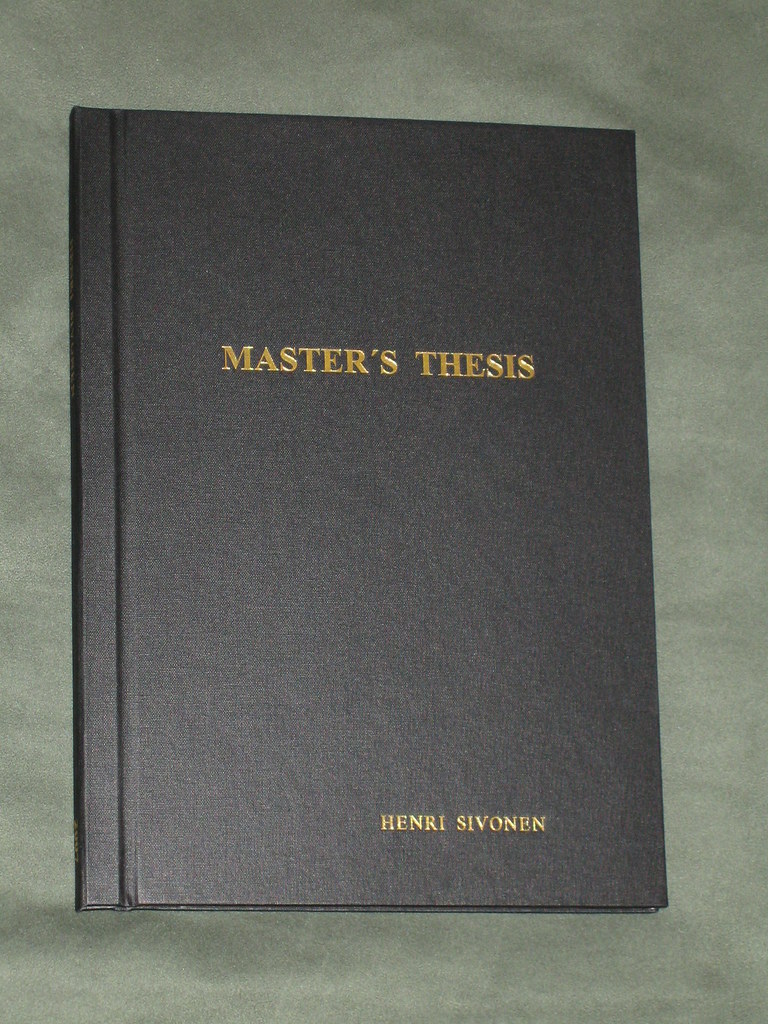
Need to Write a Thesis or Research Paper? Wondering Where/How to Begin?
First, explore the subject of the course you’re taking--read the required and recommended texts, with an eye to finding a topic of interest to you. Consult your instructor for ideas. The more fascinated you are by the topic, the better your paper will be as you do the research.
A helpful first step: formulate a Research Question, That is, a question you hope will be answered, at least in part, by the paper you write. This question, which identifies the exact aspect of the topic you want to explore, will give your professor an idea of what you plan to research and write about, and to approve it or make further suggestions. And it will help you focus your research.
For many students, the subject of a new course is at least partially unfamiliar, so they innocently select a research paper topic that is way too broad. They haven’t yet done enough reading and research to understand the subject’s complexities.
Suppose you’re taking a course on Interreligious Dialogue. You’ve always been intrigued by Vatican II and its effects, so you want to incorporate that idea into your paper somehow.
Here are some possible formulations of research questions on that general course topic, interreligious dialogue, incorporating your interest in Vatican II:
“How did Vatican II affect the Catholic Church?” Too broad.
“How did Vatican II’s Decree on the Apostolate of the Laity affect interreligious dialog between Muslims and Catholics in Birmingham, AL in the 1970s?” Probably way too narrow.
“How did Vatican II facilitate interreligious dialog?” Maybe just right, but could be a little too broad:
To narrow it a bit: “How has Vatican II facilitated interreligious dialog between Muslims and Christians?”
You could experience a number of problems if your topic is too broad, including:
- You find too many information sources; you’re overwhelmed.
- You find information that is too general.
- Your research question lacks focus; you lose interest.
- The information you find covers a wide variety of concepts or ideas that can't be integrated into one paper. In desperation, you trail off into unnecessary tangents.
If your topic is too narrow, you won’t be able to find enough information on the subject to analyze, discuss, explore and write about.
Once you think you’ve decided on a research question, feel free to change, alter, reformulate, modify, or expand it. Or toss it out altogether, if the topic doesn’t work for you--and, if it’s OK with your instructor, start afresh.
Next month: What’s the difference between a Research Question and a Thesis Statement?
Questions? Comments? Contact me:
~Judy Clarence, M.L.I.S., GMU Librarian
librarian@globalministriesuniversity.org
| |
Fresno State Honors Nelson Mandela with Statue Unveiling | |
Dr. Sudarshan Kapoor, a GMU faculty member and Professor Emeritus in Social Work Education & Peace Studies at CSU Fresno, California, founded the Peace Garden and is responsible for the first four statues, honoring Mahatma Gandhi, Martin Luther King, Caesar Chavez, and Jane Adams. He addresses the assembly at 2:24 minutes in the video. | |
The second GMU podcast can be viewed as well as heard. Bishop William Manseau, the founding president of FCM, and Thomas Cusack, the current president of FCM, joined GMU students and FCM members, Esther Nditi and Michal Lewon to discuss the evolution of FCM from its founding era, present status, and future directions. President Grudzen moderated the discussion and showed how GMU emerged out of FCM. Click on the video above to view. | |
|
"Interfaith Spiritual Advocates"
President Grudzen is working with the New York State Office of Faith and Non-Profit Development to pursue funding for GMU's Community Chaplaincy program, now designated as "Interfaith Spiritual Advocates," for outreach to the immigrant and refugee communities in the State of New York in collaboration with Mustafa Gokek, President of Buffalo United for Peace The program is scheduled to be launched in January 2025.
| |
GMU partners with the Institute of Science and Religion program in Cochin, India. You can view lectures on their YouTube channel. | |
|
Theology for the 21st Century
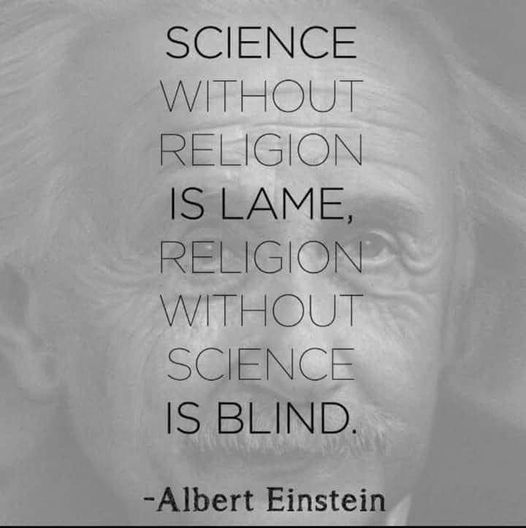
A new cohort in the GMU's Religion and Science Program will begin in January 2025. Discover the compatibility of science, spirituality, and faith.
President Grudzen, Marita Grudzen, and Robert Graf will lecture on the ethical dimensions of the United Nations Sustainable Development Goals in Education in the Religion and Science curricula. Look for the lectures soon on the GMU YouTube Channel.
| | |
Emotions, Beliefs, and Mental Health
President Grudzen, Robert Graf, and Thomas James will present papers at the international Religion and Science symposium in Kerala, India, from February 1 to February 3, 2025. Father Augustine Pamplany is the director of this conference in collaboration with GMU.
| Collaboration with People's Catholic Seminary | |
GMU seeks to meet the needs and aspirations of those who wish to start Intentional Eucharistic Communities. Together with PCS, GMU is now offering:
Creating Inclusive Eucharistic Communities in an Emerging Synodal Church
5 sessions $475 + $25 App Fee
Women in the Bible and Christian Tradition
5 sessions $475 + $25 App Fee
Credit for these courses can be applied towards a GMU graduate degree or certificate.
| |
|
At the rustling of the leaves and the beauty of autumn, we remember the brilliance of every human life from birth to death. If you are one who feels empathy and gratitude, consider training to become a celebrant of life’s changes. Many students find purpose and meaningfulness by becoming a celebrant, even part-time.
~Michael Conley, D.Min.
|
|
Lisa Ling of CBS Mornings interviewed Bridget Mary Meehan and Mary Theresa Streck about Roman Catholic Women Priests. | You are most welcome to gather with other Celtic Spirits on a journey around the Celtic Wheel of the Year. The Celtic Wheel offers a framework to explore Celtic Spirituality, the cyclical nature of the seasons and the eight festivals of the year, observed throughout the Celtic lands. | | |
|
PCA 721-Gathering of Celtic Spirit
Instructor: Mary Coffey
I’m a creative soul, laughing.
I'm also a mixed-media artist, teacher, a certified spiritual director, and a priest ordained in the independent Catholic movement. I’m curious to see how the Divine shows up in and through creative expression both on the canvas and in real life.
| | |
|
|
Retreat/Independent Course: Celebrating the Sacred Feminine in Your Life with Dr. Bridget Mary Meehan
| |
|
"Celebrating the Sacred Feminine in Your Life" invites you to explore the beautiful mosaic of names and images that depict God's all-embracing, inclusive love for us. Each section provides imagery of the sacred feminine in Scripture, in Christian mystics, and in contemporary life. Open yourself to your belovedness as an image of the Divine Feminine in prayer and action, and explore new paths to spiritual healing, nourishment, and transformation in our world.
Celebrating the Sacred Feminine in Your Life is available as a private retreat, an independent study, or as a course for sharing in a cohort model.
Cohorts meet in a Zoom video conference to share insights on their meditations.
For those taking this course as an independent study or retreat, Bridget Mary will be available upon request to share with you in phone or Zoom conversations.
| |
|
"Belonging Together:
Migrants, Refugees, Displaced People and Global Solidarity"
| Mark your calendar for World Interfaith Harmony Week, February 6 - 8, 2025. GMU is once again collaborating with Tangaza University, IRDIS, and the Harmony Institute of Kenya on a third international online conference dedicated to fostering the precepts of Pope Francis' encyclical, Fratelli Tutti. Titled, "Belonging Together: Migrants, Refugees, Displaced People, and Global Solidarity," the conference will focus on "the inseparability of the human family—people belong together regardless of their origin and residence status. At the same time, the title alludes to the irrevocable responsibility of humankind for mutual care—being human and being in solidarity with others, especially the most vulnerable, belong together." | | |
|
|
A "Call for Papers" for the February conference has been issued. Interested parties can submit proposals for inclusion in the conference proceedings and publications to the three "hubs" in Africa, the Americas, and Europe.
| | |
|
|
President Grudzen has pledged GMU's support of the Proposal for Nature and Climate to the Bezos' Earth Fund as a "Contributing Interfaith Organization."
GMU will partner with Omeriey Foundation as the focal point in Kenya, and participate as the USA mentor for Makerere University Kampala and Nairobi University in the EARTH FUNDS AI for Climate and Environmental Challenges in September 2025
| |
GMU Scholarships and Donations | | |
|
|
One thousand dollars in donations have been received from Pacifica Institute Global Cultural Connections and the Bay Area Cultural Connections for scholarships for African and Indian students in the M.Th. in Religion and Science.
| |
GMU operates under the corporate umbrella of the Federation of Community Ministries of California (FCM of CA), originally formed on October 30, 1997, when we gained the status of a 501c3 nonprofit corporation. GMU is registered in Santa Clara County, CA, as a DBA of FCM of CA. The two entities have the same Board of Directors. | |
In the letter of Paul the apostle to the Romans, the biblical image pictures the Earth as a Mother, groaning as in childbirth (Rom 8:22). Francis of Assisi understood this when he referred to the Earth as our sister and our mother in his Canticle of Creatures. The times we live in show that we are not relating to the Earth as a gift from our Creator, but rather as a resource to be used... | | | | |