Research in Georgia and Beyond | | |
In this newsletter:
- A Message from BSHES Chair Dr. Don Operario
- Emory’s BSHES PhD program
- PhD students who collaborate with the EPRC
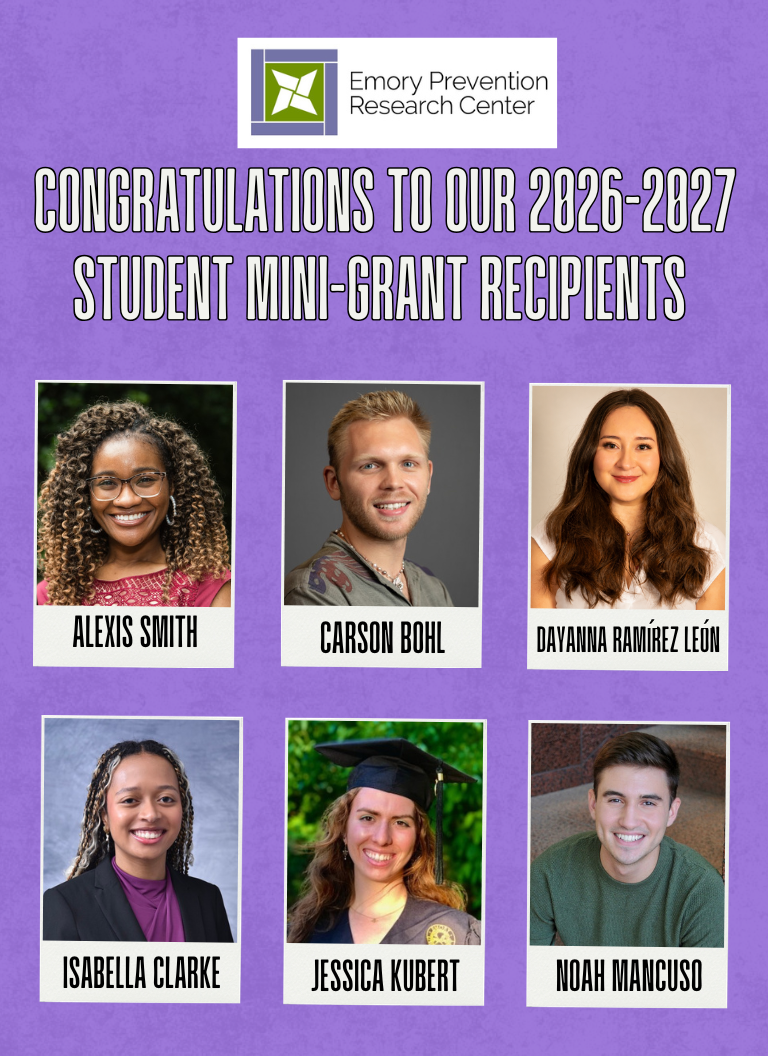
- 2026-2027 EPRC Student Mini-Grant Recipients
Enjoy this newsletter and catch a glimpse into the community-focused side of
public health’s future!
| |
A Message from the Chair
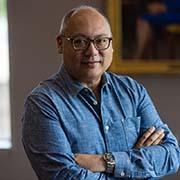
Don Operario
Emory University
Professor and Chair, Department of Behavioral, Social, and Health Education Sciences
BSHES PhD Program
| | |
One of my favorite parts of serving as chair of the department of Behavioral, Social, and Health Education Sciences (BSHES) at Emory’s Rollins School of Public Health is watching our students grow into thoughtful scholars, skilled practitioners, and future public health leaders. Whether they are pursuing a master's or doctoral degree, our students come to Emory with a desire to improve the health of individuals and communities. We believe that exceptional public health education is about much more than coursework or publications. It is about joining a community that values curiosity, service, mentorship, and partnership. Our faculty are deeply invested in helping students develop the skills, confidence, and professional relationships they need to make lasting contributions to science, practice, and the communities they hope to serve.
That is one of the many reasons the Emory Prevention Research Center is such a special part of our department. The EPRC embodies values that are central to BSHES: listening first, learning alongside communities, building trusted partnerships, and translating research into action. As one of the CDC's Prevention Research Centers, the EPRC has built an outstanding record of collaborating with community organizations, public health agencies, schools, health systems, and other partners to develop, evaluate, and implement programs that improve health where people live, learn, work, and play. Equally important, the EPRC is an extraordinary place for students to learn. Master's and doctoral students become valued members of interdisciplinary teams, work alongside experienced investigators and community leaders, and gain firsthand experience conducting research that is scientifically rigorous, community-engaged, and grounded in real-world public health priorities. These opportunities do more than strengthen students as researchers and practitioners. They also help shape them as collaborative professionals, engaged community partners, and future mentors.
Much of what makes the EPRC so distinctive reflects the leadership of the Emory Prevention Research Center. Director Dr. Michelle Kegler, and Associate Directors Dr. Cam Escoffery, Dr. Chandra Ford, and Dr. Robin McGee have cultivated a culture that combines scientific excellence with genuine partnership, generosity, and a deep commitment to student success. They lead by example, demonstrating that the most meaningful public health research is conducted with communities, not simply about them. The three doctoral students featured in this newsletter (Shacoria Anderson, Lauren Bigger, and Alexis Smith) reflect what is possible when talented students are surrounded by mentors, faculty, staff, and community partners who believe in them and invest in their growth. Their accomplishments are a testament not only to their own dedication, but also to the vibrant learning community that these leaders and so many others have helped build.
If you are considering graduate training in public health, I hope their stories offer a glimpse of the kind of community we strive to create at Emory: one where students are challenged intellectually, supported personally, connected to meaningful community partnerships, and inspired to pursue work that improves people's lives.
| | | | |
Offered through Emory's Laney Graduate School, the PhD in Behavioral, Social, and Health Education Sciences (BSHES) trains students to identify, analyze, and intervene on today's most pressing public health issues. Drawing on the expertise from various interdisciplinary fields (i.e. psychology, sociology, communication, nursing, and public health), PhD candidates study how individual behaviors, communities, and social factors influence a variety of health outcomes. Combining coursework and hands-on research opportunities, the program brings real-world experience in the classroom, where students collaboratively learn from and work alongside renowned faculty and public health professionals.
The full-time four-year program program involves a robust curriculum consisting of required courses in the Behavioral, Social, and Health Education Sciences, Epidemiology, Biostatistics, and additional elective courses in the social sciences, humanities, public health, and other interdisciplinary fields. The final two years of the program are dedicated to original dissertation research that focuses on
| | | |
advancing knowledge and improving public health practice. Competencies include methodological and theoretical skills, teaching, and ethics.
PhD candidates learn to:
- Conduct original research on identifying individual and societal determinants of health behaviors, illness, and disease.
- Design, implement, and evaluate behavioral and structural interventions to prevent disease, reduce health risks, and improve quality of life.
- Translate knowledge derived from research to promote public health.
Learn more about Emory's BSHES PhD program HERE.
The BSHES Department, Department Faculty, and the Emory Prevention Research Center actively support PhD students. The EPRC's Director, Dr. Michelle Kegler, is working with Shacoria Anderson
and Lauren Bigger. EPRC Associate Director Dr. Chandra Ford is mentoring Alexis Smith.
Read what they have to say about their research and experience below!
| | |
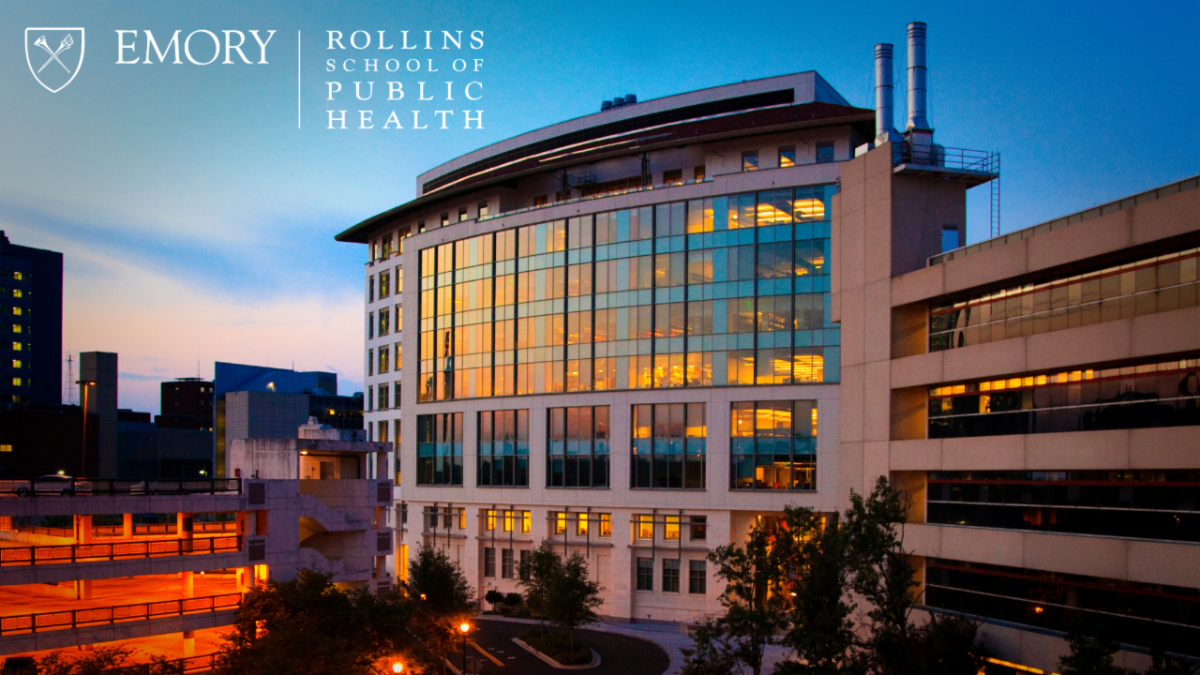
Emory University
Rollins School of Public Health Campus
| |
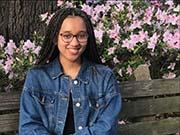
Shacoria Anderson
BSHES PhD Candidate
| | |
I began my education at Georgetown University, where I studied human science and was pre-med before becoming passionate about population health and disease prevention. After graduating with my Bachelor’s, I moved to Atlanta to pursue my MPH at Emory and immediately began the PhD program after graduating.
Michelle Kegler is my doctoral advisor and dissertation committee chair. My main research interests are in cancer prevention and control, health equity, and implementation science. During my time at Rollins, I have worked on projects with faculty including Michelle Kegler, Cam Escoffery, and Yue Guan that have focused on tobacco cessation, lung cancer screening, and family cancer history screening. Specifically, I am interested in researching evidence-based strategies to promote lung cancer screening among Black populations using community-based settings, such as churches. For my dissertation, I hope to inform future lung cancer screening interventions by exploring barriers and facilitators to screening, reviewing previous faith-based cancer screening interventions, and assessing church readiness to engage in lung cancer screening promotion among predominantly Black churches. After graduation, I plan to continue advancing my training as an early career investigator and to develop, implement, and evaluate interventions that seek to increase lung cancer screening uptake.
Throughout my research experiences, I've worked with several communities to assist them with accessing health resources. For example, I conducted interviews and focus groups with patients, healthcare providers, and community leaders in Southwest Georgia to understand challenges to implementing family cancer history screening for hereditary breast and ovarian cancer. I have also worked with African American churches nationwide through the Alter program to support the implementation of dementia-friendly initiatives and increase dementia awareness within faith communities. Additionally, I distributed surveys to predominantly African American churches to assess their readiness to promote lung cancer screening, which can inform future screening programs.
Shacoria was awarded a 2025-2026 EPRC mini-grant where she studied barriers and facilitators to
lung cancer screening among African American smokers in faith-based communities.
| | Stay up to date with all things EPRC by following us on social media: | | |
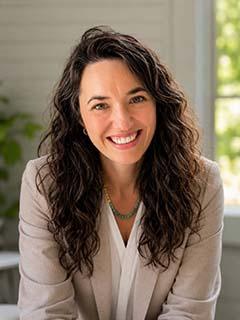
Lauren Bigger
BSHES PhD Candidate & EPRC Graduate Research Assistant
| | |
Before coming to Emory, I earned my Master of Public Health from Northeastern University. Outside of research, I'm a wife and mom of three and we all love spending time outdoors, exploring Georgia's parks and small towns, gardening, and tackling home renovation projects in our 100-year-old Craftsman home in SW Atlanta.
I've always been drawn to understanding why some communities are healthier than others. Early in my public health journey, I realized that improving health isn't just about helping individuals make better choices—it's about creating communities where healthy choices are easier, more accessible, and supported by the places where people live, work, learn, and play. That realization continues to shape my research today. My dissertation focuses on how communities implement policy, systems, and environmental (PSE) changes to improve health. I study the real-world factors that influence whether community health initiatives succeed, with a particular interest in how local context, partnerships, and community coalitions shape implementation. My goal is to generate practical knowledge that helps communities, practitioners, and funders better support lasting, equitable improvements in health. Communities across the country are working hard to improve health by making healthy choices easier—whether that's increasing access to nutritious foods, creating safer places to be physically active, or strengthening systems that support chronic disease prevention. These types of PSE changes have tremendous potential to improve health for entire communities, but they aren't always easy to put into practice.
My research explores what helps these community-led efforts succeed. As part of my dissertation, I have conducted a case study of several of the rural community coalitions in the Two Georgias Initiative, seeking to understand how communities were able to move those ideas into action. One of the key findings from my research is that community context is constantly changing and factors like funding shifts, leadership transitions, new partnerships, and community priorities and values all influence implementation. The most successful coalitions weren't necessarily those with the fewest challenges, but rather they were the ones that pivoted and adapted to changing conditions, built strong relationships across sectors, and found creative ways to move forward despite obstacles.
I hope this work helps communities, public health practitioners, and researchers better understand how to support local coalitions as they create lasting improvements in health. By learning from communities that are doing this work every day, we can build stronger partnerships, design more effective implementation strategies, and create healthier places for everyone.
| | Share this email with colleagues and friends: | |
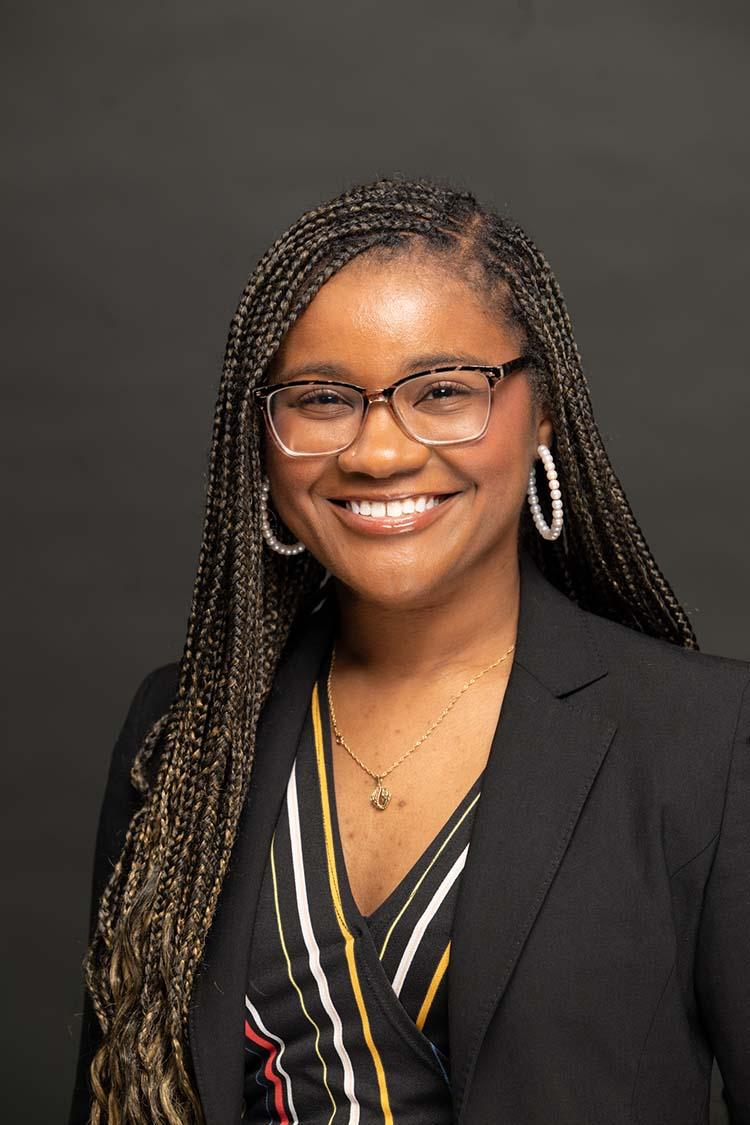
Alexis Smith
BSHES PhD candidate
| | |
I am originally from Dothan, Alabama. Before coming to Emory, I worked at the Equal Justice Initiative (EJI) where I provided project and research support for EJI's education and racial justice initiatives. I have been recognized as a Karen Askew Leaders Fellow, a BLKHLTH Community Advocacy for Racial Equity School (CARES) Fellow, and a George W. Woodruff Fellow. In addition, I received a Bachelor of Arts in Social Anthropology from Harvard University and Master of Public Health from Columbia University. I am passionate about community engagement and bridging the gap between the academy and the community. During my time at Emory, I have been an active member of the BRIDGE Community program that aims to amplify the voices of Black women affected by breast cancer.
My current research interests include: 1) understanding how historical and structural determinants of health inequities shape the health outcomes of Black women and 2) uplifting the ways in which communities respond to racism and structural violence through their networks and ethics of care.
My dissertation research focuses on the impact of structural racism on breast cancer outcomes for Black women. The project proposes to provide a clearer understanding of both the mechanisms that disrupt cancer care for Black women as well as to identify specific points along the continuum at which interventions can be implemented. The overall objective of this study is to leverage participatory research methods and a novel measure of structural racism to understand the mechanisms through which structural racism negatively impacts breast cancer care outcomes for Black women and explore how local communities respond to structural racism and poor breast cancer outcomes through care and collective action. This study builds upon formative work carried out by the BRIDGE Research and Community Teams, which are two groups based at the Emory Rollins School of Public Health that are united in their mission to eliminate racial disparities in cancer outcomes, with a particular focus on addressing the disproportionate burden of breast cancer among Black women. Through this work, we have collaborated with local breast cancer organizations and leaders who are working to reduce care inequities and provide quality care to women across Metro Atlanta.
Alexis was awarded a 2026-2027 EPRC mini-grant for her dissertation
"Identifying Multilevel Determinants of Racial Inequities in Breast Cancer Outcomes in
Georgia to Inform Interventions and Policies."
| | | | |