| | |
October 2026
NEWSLETTER
| | NEW PROJECTS JOINING HIRN | | |
We are pleased to welcome the following NIH-funded projects to the Human Islet Research Newtwork (HIRN). These projects will expand opportunities for collaboration, knowledge sharing, and scientific discovery across the consortia.
Consortium on Modeling AutoImmune Diabetes (CMAD)
Beta Cell Impairment in T1D: Insights from Glucose Metabolism in Human Pancreas Slices
IIIIIIEdward Phelps*, PhD, University of Florida (R01 DK147991)
IIIIIIClayton Mathews PhD, Co-Investigator, University of Florida
IIIIIICraig Vander Kooi, PhD, Co-Investigator, University of Florida
Interrogating the Role of Environmental and Cellular Factors in Human T1D Pathophysiology using a Physiological, Isogenic 3D Platform
IIIIIICherie Stabler*, PhD, University of Florida (R56 DK144181)
IIIIIIHolger Russ, PhD, Co-Investigator, University of Florida
Isogenic Modeling of Immune-Beta Cell Interactions, Alterations in Beta Cell Phenotype, and Vulnerability to Cytotoxic Killing
IIIIIIEddie James*, PhD, Benaroya Research Institute (R56 DK147805)
IIIIIIAdam Lacy-Hulbert, PhD, Co-Investigator, Benaroya Research Institute
IIIIIIJia Zhu, PhD, Co-Investigator, University of Washington
Human Pancreas Analysis Consortium (HPAC)
Novel Technologies to Detect Disrupted RNA Processing Events in Diabetic Islets
IIIIIILori Sussel*, PhD, University of Colorado, Denver (DP1 DK147830)
* Denotes Contact PI
| | |
INVESTING IN YOUR SCIENTISTS PAYS OFF -
A HIRN CASE STUDY
| | |
Dr. Rafael Arrojo e Drigo has been awarded a prestigious Early Career Investigator Award
I first joined HIRN as a postdoc in 2017 through a U01 grant led by Patrick MacDonald at the University of Alberta. Since then this community has provided me with the space, mentorship, friendships, and encouragement to pursue new ideas and scientific directions.
One of the watershed moments in my career was receiving the HIRN Gateway Award in 2020. Beyond financial support, this award provided the foundation and leverage I needed to secure my first faculty position and begin establishing my independent research program. Equally important, it gave me the scientific freedom and access to mentors who encouraged me to explore ideas that were initially unconventional, including how the biological age and spatial organization of cells and organelles influence metabolism, aging, and islet function.
My laboratory exists today in large part because of the opportunity I was given in 2017 and the early investment HIRN made in me in 2020. More importantly, my experience underscores the importance of investing in young investigators and giving them opportunities to become active members of our scientific community. When I learned last month that I would receive the Richard E. Weitzman Award from the Endocrine Society, I reflected not only on my scientific and personal journey but also on the community that helped make it possible. Throughout this journey, HIRN has been a constant source of scientific inspiration, collaboration, support, and friendship. I am deeply grateful to the investigators and colleagues who have supported me along the way, and I hope to provide that same encouragement, support, and opportunity to the next generation of scientists.
| | RESEARCH HIGHLIGHT OF THE MONTH | |
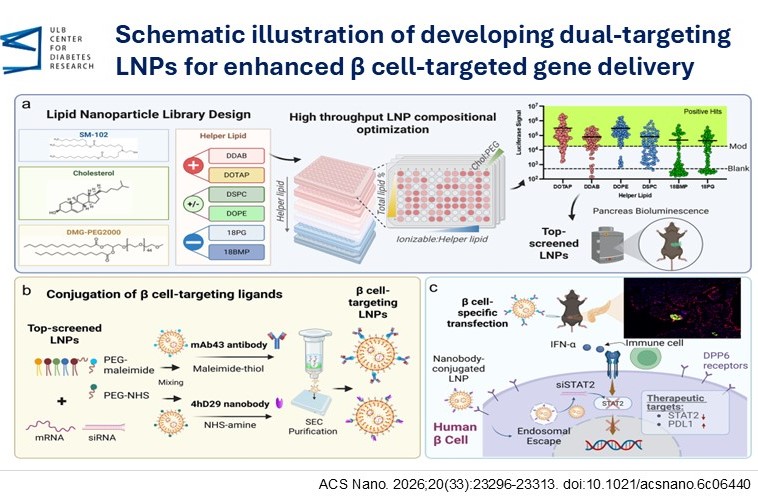
 | | This paper reports a study performed as a collaboration between the Universite Libre de Bruxelles (ULB) and John Hopkins University (JHU) on an integrated lipid nanoparticle (LNP) design framework that combines high-throughput LNP formulation screening with beta-cell-specific ligand conjugation to enhance beta-cell-selective gene delivery. This is the first study showing a stepwise improvement in beta-cell transfection efficiency in vivo through the sequential integration of compositional optimization and targeting ligand conjugation. This study also demonstrated the strong potential of beta-cell engineering and RNA-based therapeutic delivery for the treatment of type 1 diabetes. We showed that ligand conjugation of a nanobody targeting DPP6 (anti-DPP6 4hD29 nanobody) conjugation to the top-screened LNP formulation achieved more efficient STAT2 knockdown and increased expression of the protective PDL1 protein under inflammatory conditions in both human insulin-producing EndoC-βH1 cells and primary human islets.
The ability of dual-targeting LNPs to co-deliver distinct nucleic acid modalities provides a promising platform for diverse therapeutic strategies in T1D. We anticipate that this modular LNP framework can be broadly adapted to enable extrahepatic RNA delivery for a wide range of biological and clinical applications. The strategy described in this paper to engineer dual-targeting LNPs to effectively deliver therapeutic nucleic acid to β cells, extends extrahepatic RNA therapeutic approaches and expands the therapeutic potential for the treatment of type 1 diabetes.
Manuscript Information: Engineering Lipid Nanoparticles through Integrated Compositional and Ligand Targeting Enhances β Cell-Directed RNA Delivery. Yu D, Zhu Y, Roca-Rivada A, Guo Z, Cheng L, Weng G, Toh WH, Martin-Vazquez E, Buemi A, Mourad NI, Kasinathan D, Ma J, Lin J, Kong J, Quiroz VM, Tzeng SY, Lu X, Su Y, Liu X, Shen Z, Goodier KD, Wei C, Greco AH, Doloff JC, Eizirik DL*, Mao HQ*. ACS Nano. 2026 Aug 25;20(33):23296-23313. doi: 10.1021/acsnano.6c06440. PMID: 42674453; *Shared last and corresponding authors.
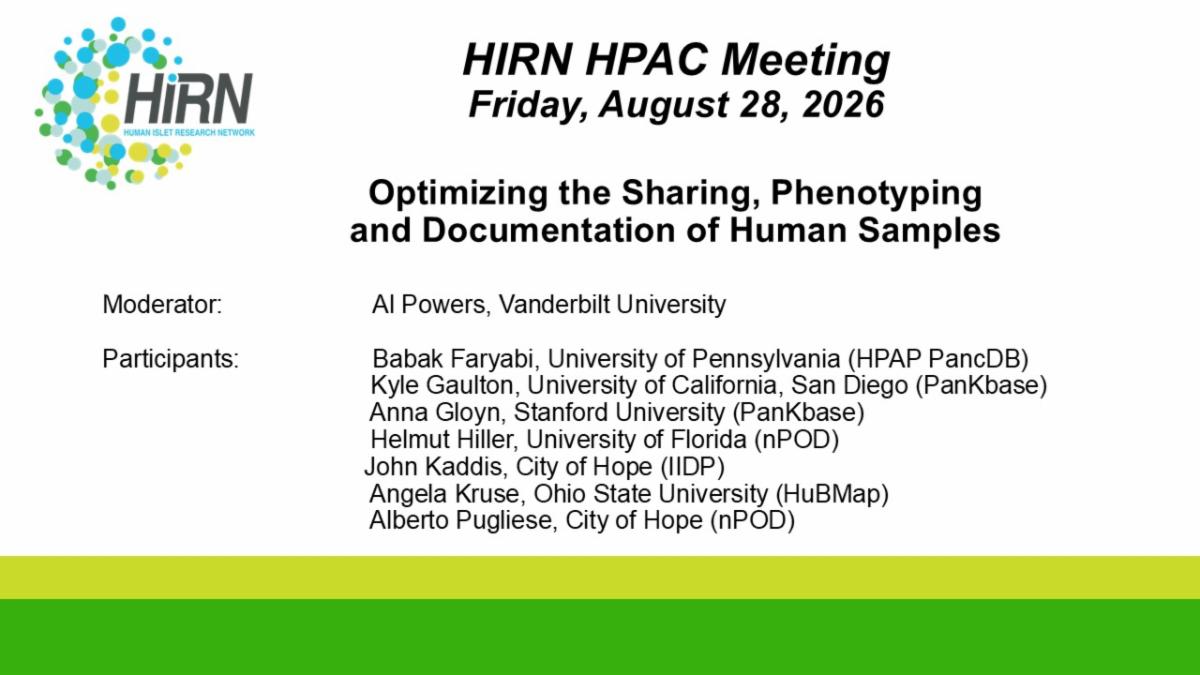
| | OPTIMIZING THE SHARING, PHENOTYPING AND DOCUMENTATION OF HUMAN SAMPLES | | |
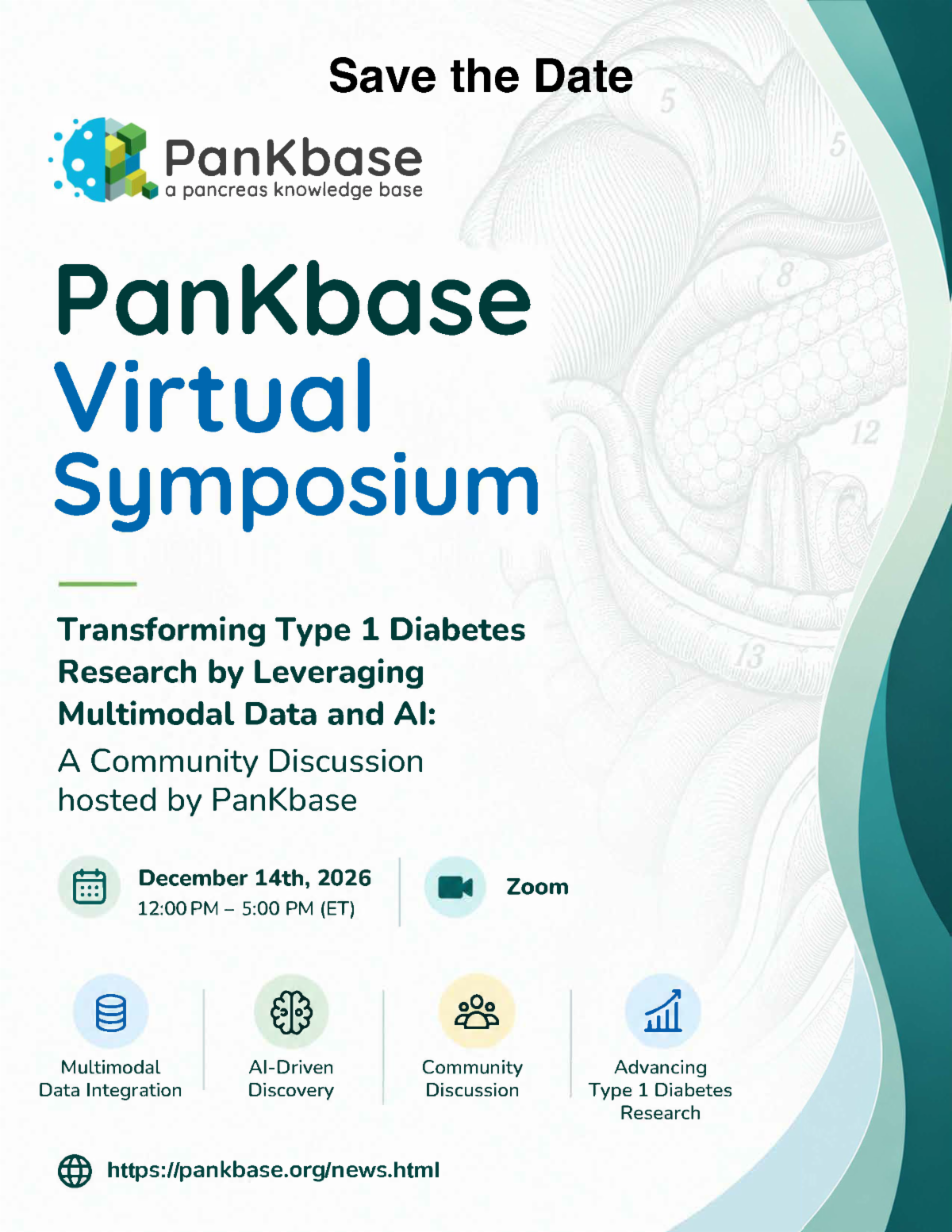
Background & Purpose: During the HIRN 2026 Annual Investigator Meeting, the Human Pancreas Analysis Consortium (HPAC) convened a panel discussion, "Optimizing the Sharing, Phenotyping and Documentation of Human Samples," aimed at improving the collection, documentation, standardization, integration, and sharing of data derived from human samples. The panel showcased several complementary system initiatives, including PancDB, PanKbase, nPOD, IIDP, and HuBMAP. These initiatives provide free access to phenotyping, genotyping, tissue, and cellular-resolution data. Additional discussion covered the Alberta Diabetes Institute Islet Core in Edmonton, which operates a research-specific pancreas processing and islet isolation program modeled on initiatives such as IIDP and nPOD. An NIDDK official emphasized a commitment to building a data science ecosystem, adding that community engagement via workshops and events continue to be an important aspect of engagement.
Key Discussion Topics: The panel emphasized the potential of AI and data science while addressing critical challenges around data standards, interoperability, and ethics. Participants explored strategies for community engagement, data harmonization, and optimizing organ donor recovery, along the need for federated and enclave-based data analysis models and the practical hurdles of funding and IRB approval. Collectively, the discussions reinforced a shared commitment to expanding data sharing and strengthening collaborative research, with NIDDK seeking to unite its programs around shared opportunities.
Watch recording HERE.
| | |
The DiabDocs mentored career development program is now soliciting letters of intent for applications from early career physician scientists engaged in research relevant to diabetes and within the scope of NIDDK including basic, translational, clinical, epidemiology/biostatistical, informatics, health services or health policy projects. Most funded scholars will focus on type 1 diabetes (T1D) research, and limited slots are available for persons working in other areas of diabetes. Awards provide promising investigators the opportunity to be mentored in research-intensive settings at their home institutions to create the research foundation to compete successfully for NIH K08/23 or similar Career Development Awards.
DiabDocs supports training towards careers in clinically relevant research. DiabDocs may fund projects that provide research experience in clinical trials led by a mentor or co-mentor. However, as per PA-27-030, DiabDocs cannot fund projects that involve scholars leading independent clinical trials (research studies which individuals are prospectively assigned to one or more interventions to evaluate the effects of those interventions on health‑related biomedical or behavioral outcomes).
- Letter of Intent due date: Tuesday, November 17, 2026, at 5:00pm (ET)
-
Submission link: REDCap form
Following review of LOIs, selected individuals will be invited to submit full applications by January 20, 2027, at 5:00pm (ET). Persons invited to submit full applications will also be invited to a full-day in-person program retreat in Washington, D.C. between March 31-April 1, 2027, that will include interviews. Full applications will then be reviewed by the DiabDocs Scientific Review Committee in a study section for funding anticipated July 1, 2027.
Attached you will also find the eligibility criteria for program scholars, taken directly from the NIH funding opportunity announcement (FOA).
Note: Proof of U.S. citizenship or lawful permanent resident status (e.g., a copy of a passport or green card) is required at the time of Letter of Intent submission.
| | |
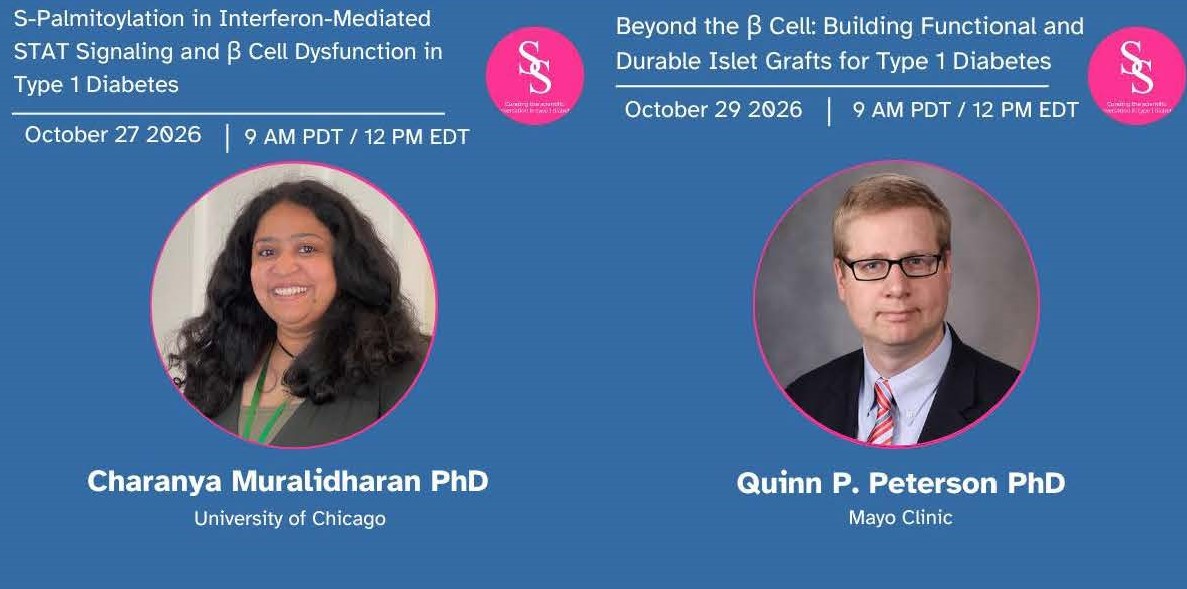
Curating the scientific conversation in
Type 1 Diabetes
Upcoming Th1nk Tank Talks - Tuesday and Thursdays 9 AM PDT / 12PM EDT
| | |
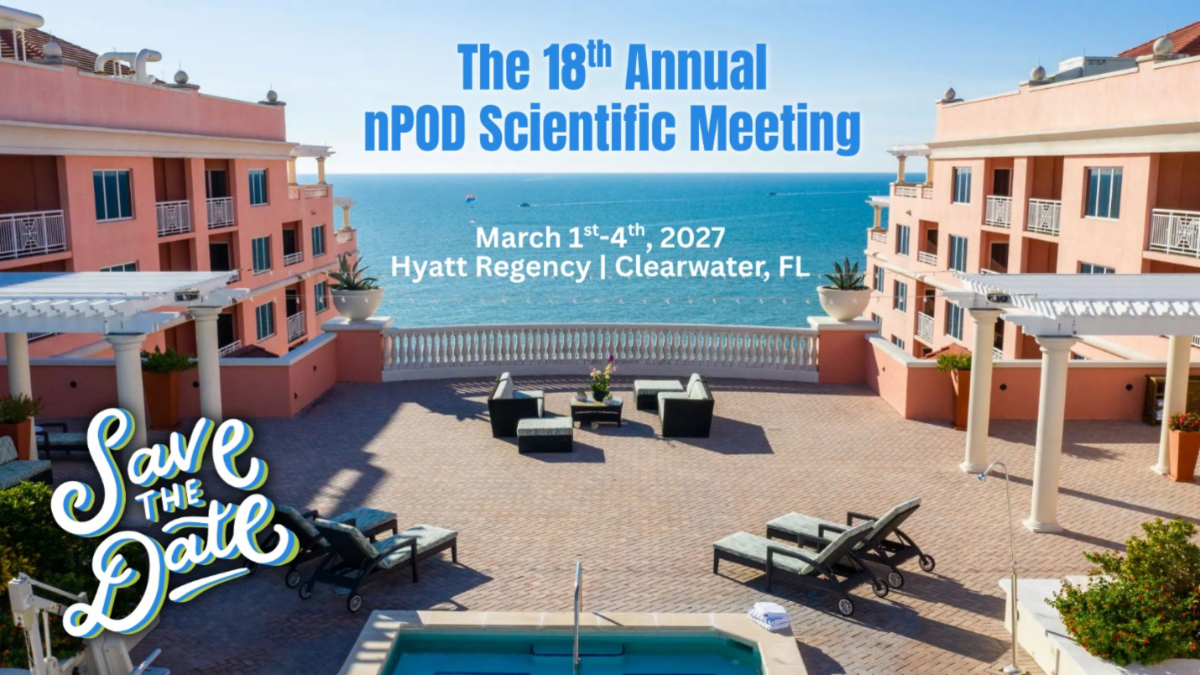
Mark your calendars! We are excited to announce that the nPOD Annual Meeting will return to beautiful Clearwater Beach, Florida, March 1st through March 4th, 2027.
Additional details, including registration information and hotel booking information, will be announced in the coming months. We look forward to seeing you at Clearwater Beach next spring!
| | Below is a summary of the most recent job postings by category (Faculty, Research Staff/Admin, Postdoc). Visit the HIRN Website for a full listing of job opportunities. | | |
Faculty Position
The University of Arizona College of Medicine - Tucson is seeking physician-scientists (MD, DO, or MD/PhD) with an active clinical, translational and/or basic science research program. Research programs in any area of endocrinology, diabetes and metabolism will be considered. We are especially interested in applicants with expertise in islet biology, glucose metabolism and obesity. Priority will be given to those whose research interests align programmatically with existing faculty within the division, department or broader University of Arizona research community. Applicants are expected to provide clinical care for adult endocrinology, diabetes and metabolism patients with research and clinical effort determined by rank and funding. For more information and to apply, please visit us HERE.
| | |
Research Technician
We are recruiting a research technician to join an interdisciplinary research program focused on diabetes, stem cell biology, organoids, immunology, and AI-driven precision medicine. The technician will support stem cell, organoid, and molecular biology projects. Technician requirements: B.S. or M.S. in biology, biomedical sciences, or related field; research experience preferred. Interested applicants please send a CV and brief cover letter to Dr. Shuibing Chen.
| | |
Research Assistant
The lab of Dr. Jie Liu is seeking a motivated full-time Research Assistant with a strong background in Computer Science, Artificial Intelligence, Data Science, or related fields to join our research team at the University of Michigan Medical School. This project focuses on developing multimodal AI systems for Type 1 Diabetes (T1D) by integrating large-scale biomedical datasets, including genomics, single-cell omics, spatial biology, and clinical data. The successful candidate will work in an interdisciplinary environment alongside computational scientists, clinicians, and AI researchers. This work is part of an ongoing NIH R01-funded project focused on applying AI approaches to understand and predict the progression of Type 1 Diabetes using multimodal biological data. Interested applicants please send your CV, research statement and publications HERE.
| | |
Postdoctoral Position
We are recruiting two postdoctoral fellows to join an interdisciplinary research program focused on diabetes, stem cell biology, organoids, immunology, and AI-driven precision medicine. Postdoctoral projects will integrate human pluripotent stem cell–derived organoids, multi-omics, immune-cell interactions, and machine learning to investigate the mechanisms underlying diabetes and identify new therapeutic opportunities. Postdocs requirements: Ph.D. or M.D. required; experience in stem cells, organoids, immunology, diabetes, or computational biology preferred. Interested applicants please send a CV, brief cover letter and three letters of recommendation to Dr. Shuibing Chen.
| | |
Postdoctoral Position
The Evans Laboratory is seeking a junior postdoctoral fellow to join a program supported by a newly awarded five-year NIH R01. The project centers on differentiating human induced pluripotent stem cells into pancreatic beta cells and islet-like organoids, then evaluating their function, immune compatibility and therapeutic potential in vitro and through transplantation in preclinical diabetes models. The fellow will develop and optimize protocols for pancreatic progenitor and beta-cell differentiation, characterize stem cell-derived islet cells using molecular and functional assays, and perform islet transplantation studies. The work may also involve genome editing and the development of immune-evasive human islet-like organoids for cell replacement therapy. Interested candidates should submit a curriculum vitae, a brief statement of research interests, and the names of three references to Dr. Ronald Evans.
| | |
Postdoctoral Position
The Dhawan Lab at the Arthur Riggs Diabetes and Metabolism Institute, City of Hope is recruiting a postdoctoral researcher to study how developmental epigenetic programs shape pancreatic beta-cell resilience, stress adaptation, and immune visibility. The lab studies how disruption of DNA methylation and chromatin regulation drives beta-cell dysfunction, senescence, and immunogenicity, with a particular focus on type 1 diabetes. Successful candidate will combine genetic mouse models, primary human islets and slices, advanced imaging, and single-cell, spatial, and epigenomic approaches to uncover mechanisms of beta-cell vulnerability. Trainees benefit from a highly collaborative and translational training environment, extensive diabetes focused resources, and dedicated mentorship in scientific writing, fellowship applications, and career development. Interested candidates should submit a cover letter describing their research experience and fit for the lab, a curriculum vitae, and contact information for three professional references to Dr. Sangeeta Dhawan.
| | |
Postdoctoral Position
A postdoctoral position is available in the laboratory of Raghu G. Mirmira, MD, PhD, at the University of Chicago to investigate mechanisms of pancreatic β-cell dysfunction and immune interactions in type 1 diabetes as part of NIH-funded research. The project integrates studies in human islets, single-cell and spatial omics, ribosome profiling, and advanced mouse models to define pathways regulating β-cell stress responses and immune signaling during diabetes pathogenesis. The successful candidate will work within a highly collaborative, multidisciplinary network of investigators across HIRN and will have access to outstanding institutional resources, including the University of Chicago Diabetes Research and Training Center. Interested candidates should submit a curriculum vitae, a brief statement of research interests, and the names of three references to Dr. Raghu Mirmira.
| | |
Postdoctoral Position
The Engin Lab is recruiting a highly motivated Postdoctoral Researcher to study beta cell stress and its impact on immune cells. The Engin Lab investigates how cellular stress responses—particularly ER stress, cellular senescence, integrated stress response and metabolic stress—affect pancreatic β-cell survival and function. Using integrated in vitro and in vivo models, the lab combines molecular biology, imaging, and functional assays to better understand diabetes progression and treatment strategies. Interested candidates should send a single pdf file containing cover letter (highlighting research experience and fit for the lab), Curriculum vitae (CV), Contact information for three professional references to Dr. Feyza Engin.
| | |
Postdoctoral Position
A Postdoctoral Research position is available in the lab of Dr. Jie Liu. We are seeking a highly motivated Postdoctoral Researcher to join our interdisciplinary lab in the Medical School at the University of Michigan, working at the intersection of AI and biomedicine. Research focus on AI / machine learning for biomedical data, foundation models for multi-omics and clinical data, multimodal data integration (genomics, imaging, clinical) and data-driven disease research (e.g., Type 1 Diabetes). Interested applicants please send your CV, research statement and publications HERE.
| | |
Subscribe to the newsletter | |  |
Email us your newsletter suggestions | | | | |