|
North, South, East, And West: Window Treatments For Every Side Of Your House
Living in your home, you quickly notice how you get different amounts of light on each side. The tilt of the Earth makes some sides of your house sunnier and hotter than others. The sun moving throughout the day also changes light levels. When excessive sunlight makes a room too hot or bright, you need the right window treatment to stay comfortable. Conversely, in a room with little direct sunlight, you might want a treatment that lets some light through.
West Side: Most intense, hot, and harsh light, leading to higher cooling costs.
South Side: Highest amount of consistent, direct sunlight throughout the day.
East Side: Bright morning light.
North Side: Coolest, with the least amount of direct, intense sun.
Our friends at Sunburst Shutters give us options for each side of your home to maximize energy efficiency, light management, privacy, and your preferred style.
West and South-Facing Windows
In Texas the heat can be uncomfortable, you’ll need a solution for shading your west and south-facing windows. Energy-efficient window treatments, such as plantation shutters, cellular window shades, and thick drapery, can help prevent heat transfer from sunny windows. From there, you’ll need to decide how much flexibility you want in controlling light and what you want your window treatments to look like.
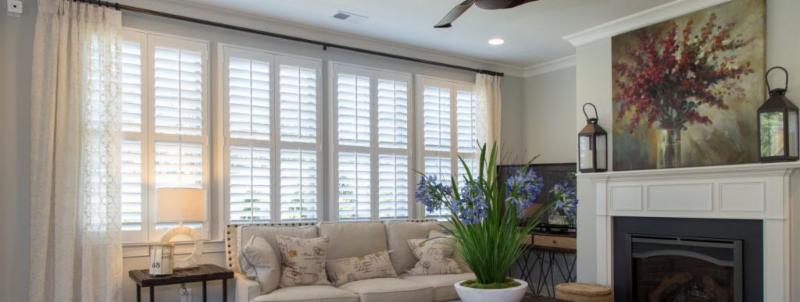
Plantation shutters are interior shutters made from sturdy, solid materials such as wood or a wood composite. Heat and light can’t penetrate these materials. You can let sunlight in when you want by tilting open adjustable louvers or simply pulling open the hinged shutter panels.
Luxurious drapes block the light and heat with a soft, elegant look. Their dense material traps heat against the window, where you won’t feel it. Drapes don’t offer much flexibility in how you open them for light, but they are an elegant option if that’s what your home decor calls for.
Cellular shades offer an impressive amount of energy efficiency. Their accordion-like structure creates “cells” that help trap hot air before it enters your home. Cellular shades come in varying opacities to block light, but thick ones are best for sunny windows. You can choose top-down/bottom-up styles or motorization to help you achieve the perfect balance of light and shade.
Motorized shades give you the most control. They are perfect for rooms where you watch TV in the evening or work on a computer because you can use them to block glare from the sunset without getting up from your seat. If the hot afternoon sun is affecting your energy costs, get smart motorized shades and program them to close at noon each day, before it gets too hot.
East-Facing Windows
Like west windows, east-facing windows also receive different amounts of light throughout the day. However, they get the most sun in the morning and tend not to get as hot. Still, if you have an east-facing bedroom or kitchen, you don’t want the sunrise blinding you every morning. For a bedroom, you may want something that provides near-total darkness, like interior shutters, blackout shades, or drapes. However, in your shared living spaces, you can choose something that lets in filtered light to help brighten up your house and mood in the morning. Sheer shades or transitional shades work well. Each style lets you choose between filtered light, total privacy, or an unfettered view.
North-Facing Windows
You can use most window treatments for north-facing windows, depending on how much privacy you want. This side of the house often gets the least amount of light. In fact, some people find their north-facing rooms feel dark and could use more natural illumination. If that’s your case, consider window treatments that let in a soft glow while hiding your home’s interior. Natural woven fiber shades are a stylish solution. Their different weave patterns let light through while their organic fibers still obscure the view through your window. Top-down/bottom-up shades of any style let you lower the top of the shade to bring in light while blocking the lower part of the window.
|