Greetings!

Monthly News & Updates

May 2026 Issue

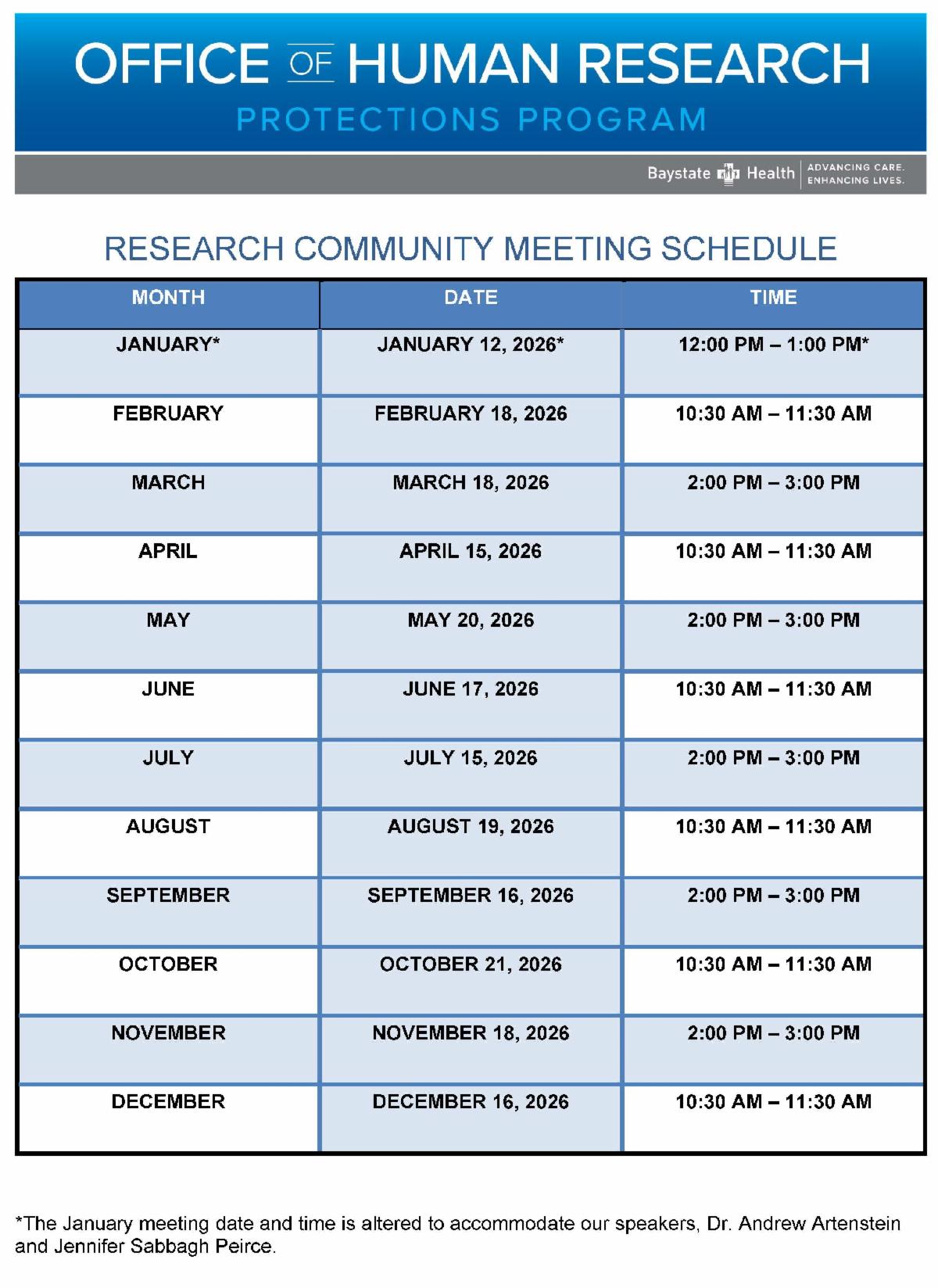
2026 Research Community Meeting Schedule

Please visit the HRPP Website to watch past Research Community Meetings.


The next Research Community Meeting will be held on Wednesday, June 17, 2026, from 10:30 AM - 11:30 AM ET.


Did you know? Using Florence eBinders


Article by:

Sola Odesina, MA

Education and Quality Assurance (EQA) Specialist

Human Research Protection Program (HRPP)


Standardized electronic workflows can help reduce duplicate work across research teams while improving efficiency, compliance, and study oversight.


With Florence eBinders, which includes eLogs, research teams can electronically manage staff delegations, training documentation, signatures, and regulatory workflows in one centralized system. By utilizing electronic logs and signatures, sites can streamline processes, reduce manual tracking, and save valuable study coordination time.


Electronic workflows support key regulatory and quality standards by helping teams:

  • Prevent lost or misplaced documents.
  • Maintain secure electronic signatures and audit trails.
  • Support ALCOA-C principles for data integrity.
  • Access study documentation securely from virtually any location.
  • Improve visibility and version control across teams.
  • Enhance inspection and audit readiness.


Moving from paper-based processes to standardized electronic systems can help research teams work more collaboratively, stay organized, and focus more time on patient-centered research activities.


Nursing Research: Clinical Academic Partnerships


At our last Research Community Meeting, Cidalia Vital, PhD, RN, CNL, AHN-BC presented on Nursing Research: Clinical Academic Partnerships.


The learning objectives accomplished in this presentation were as follows: 

  • Discussed the mission and vision of the Nursing Research Program at Baystate Health.
  • Described the importance of clinical academic partnerships in advancing nursing science. 
  • Described the importance of clinical academic partnerships in advancing nursing science. 
 

June 2026 Research Community Meeting


The June Research Community Meeting will occur on:


Wednesday, June 17, 2026

10:30 AM - 11:30 AM ET


The presentation will be: Bringing FDA Products to Market


A Novartis representative will walk participants through the drug development process providing a clear, high-level look at how therapies move from early pre-clinical concepts through to approval. It highlights key decision points, interdisciplinary collaboration, and real-world challenges throughout the development process. These insights help the audience build a shared understanding and provide a strong foundation for discussions about clinical trials, innovation, and collaboration.


About the Presenter:

Christine McCluskey is a pharmacist by background and holds an MBA. She is a Regional Medical Lead for Novartis in the Northeast, where she supports scientific exchange across the Novartis portfolio. Based in New Hampshire, she lives with her husband and their dog and brings a broad, strategic perspective to her medical affairs role.


The meeting will take place via Zoom.


Recent IRS 1099 Changes


Article by:

Jennifer Pacheco, MPH, CHRC, CIM, CIP

Director of Healthcare Research Compliance & HRPP/IRB

Chief Research Compliance and Integrity Officer


Research Participant Payments - New IRS Threshold

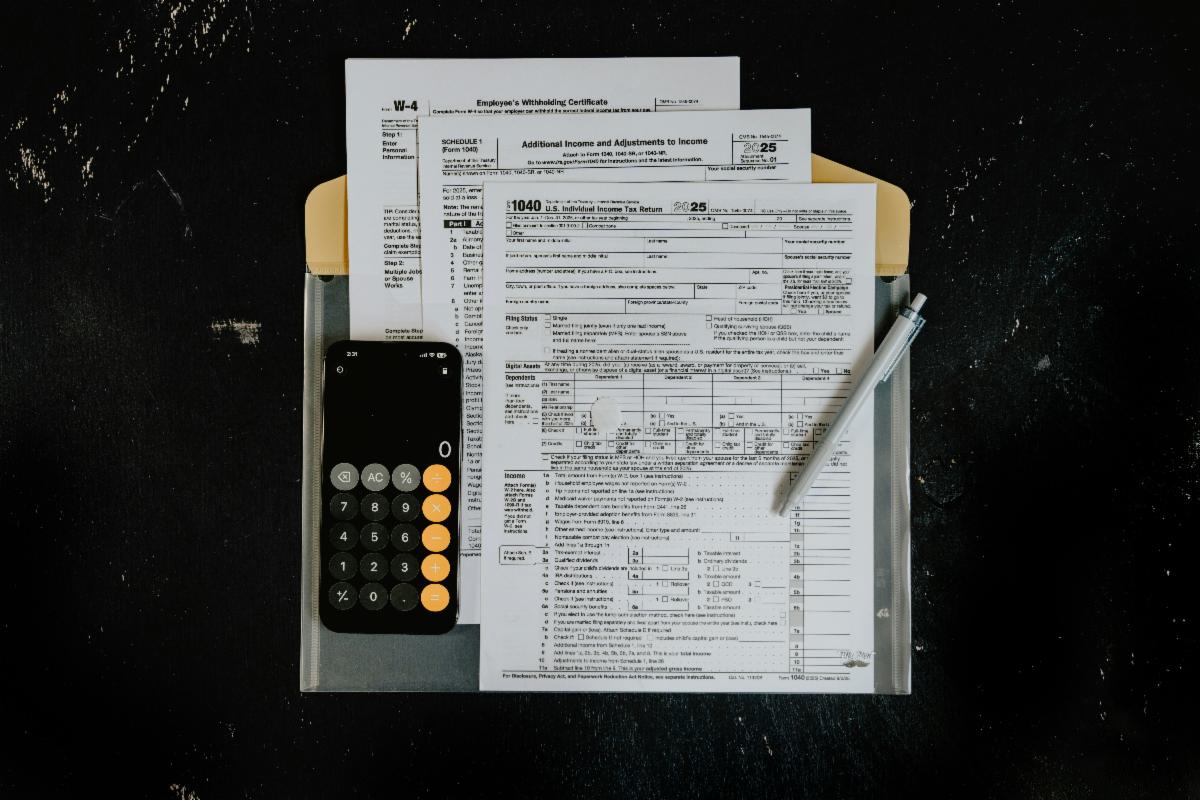
Effective January 1, 2026, the “One Big Beautiful Bill” allowed the IRS to raise the participant compensation reporting threshold from $600 to $2,000 per calendar year. The shift is expected to reduce administrative burdens while creating new ethical considerations regarding "undue influence." Although the 1099-MISC requirement threshold is higher, researchers must still ensure compensation is reasonable and ethically justified, especially for longitudinal or high-risk studies.


Navigating Participant Compensation: The New $2,000 Threshold

In research, participant compensation is a delicate balance: we must respect a participant’s time without creating "undue influence." For years, the $600 IRS reporting threshold was the standard. However, as of January 1, 2026, the IRS raised this threshold to $2,000 per calendar year.


The Administrative Shift

Previously, paying a participant $600+ required a 1099-MISC form and a Social Security number. This often created a barrier to participation, especially in studies where anonymity is vital. The new $2,000 limit provides significant administrative relief and reduces the paperwork burden for researchers and participants alike. Unfortunately, this money is not tax-free. While the reporting threshold has risen, the IRS still considers all research compensation taxable income. Participants remain responsible for reporting these earnings, and researchers must clarify this in the informed consent process. In response, the Baystate IRB has updated it consent form templates to reflect the change. They can be found in the IRBNet library.


Navigating Equitable Compensation in an Ethical Framework

From an ethics perspective, higher compensation increases the risk of undue influence. This occurs when an incentive is so large that it clouds a participant’s judgment, causing them to overlook risks they would normally avoid. For example, $2,000 may mean something very different to a college student than to a successful corporate executive. At Baystate, the IRB reviews the proposed compensation and the intended recipient for balance —showing respect for participants time and effort without compromising the voluntary nature of the research.


Best Practices for Researchers

  • Pro-Rate Payments: Pay participants per visit rather than a single lump sum at the end. This allows them to withdraw at any time without losing pay for the time already spent.
  • Consent Clarity: Ensure your forms clearly outline the payment schedule and the $2,000 tax reporting threshold.
  • Track Centrally: If a participant joins multiple studies at your institution, their total pay may exceed $2,000. Ensure you have a system to track these totals.


What if my consent form still lists $600? 

No need to halt enrollment. Submit an updated ICF or information sheet/letter for IRB review. Depending on sponsor requirements, teams have the option to submit updated consent documents and reconsent participants or to submit a participant information letter. This provides teams with the options to either provide participants with an IRB-approved letter mailed to their residence, information sheet with verbal notification at their next visit, and the ability for full reconsent at their next available visit.

Updated consent forms can be combined with the next IRB-submitted modification request should teams have a package already in progress within IRBNet. Once approved, teams would notify participants through the approved method and document it in the research record. If participants have been informed of the information via letter or information sheet with verbal notice, a written reconsent process may not be required. Teams are encouraged to consider the best interest of their participants and sponsor requirements.


Key Takeaway

The $2,000 threshold is a win for the research community, acknowledging the rising costs of living and the value of participant time. If you have questions about your compensation structure approved by the IRB, the Baystate HRPP team is here to help.


Meanwhile, Elsewhere in the Office of Research


From: Jennifer Sabbagh Peirce, MBA, Sr. Director Research Operations

Subject: New Pre-Award Grant Submission Policy (BC 10.210) – Effective Immediately


Baystate Health has approved a new Pre-Award Grant Submission Policy (BC 10.210) that sets clear internal timelines and requirements for submitting external grant proposals through Sponsored Programs Administration (SPA). The policy emphasizes early engagement, defined deadlines, and compliance to ensure timely, high-quality submissions and reduce last‑minute risk. The policy (link below) and accompanying attachments can be found on Scribble.


Case Study: Recordkeeping, Reproducibility, and Authorship (Adapted from the Office of Intermural Research at NIH [2025])


Case Study:

Recordkeeping, Reproducibility, and Authorship (Adapted from the Office of Intermural Research at NIH [2025]) 


After five years in an NIH research group, a postdoctoral fellow drafted a manuscript detailing the discovery of a novel human cancer protein. Intended as first author, the postdoc departed for a new job in a rush, leaving the draft with the Principal Investigator (PI) for submission.

Challenges arose when the PI tasked a new postbaccalaureate fellow with replicating the work. The postdoc’s electronic lab notebooks, mandated in June 2024, were found to be incomplete and lacked sufficient detail. While the postdoc claimed all necessary data was logged, they admitted to leaving informal paper notes in a desk drawer. Using these scraps, the postbac attempted to reproduce the results but found significant discrepancies.

Upon closer inspection, the PI discovered suspicious image duplications in the postdoc’s original figures, raising serious concerns about data integrity and research misconduct. Consequently, the PI ordered the postbac to redo all the experiments. Over several months, the postbac successfully recreated the study; while the scientific conclusions remained the same, the manuscript was overhauled to include only the postbac’s verified data, figures, and rewritten text.

When the former postdoc inquired about the submission status, the PI faced a complex ethical dilemma regarding authorship. Because the revised manuscript no longer contains the postdoc’s original data and was only made possible through the postbac’s verification work, the PI now questions if the postdoc deserves first authorship—or any credit at all. To avoid conflict, the PI has avoided a direct confrontation, simply informing the postdoc that the group is still finalizing edits.


Questions:

  1. Why is it important to keep highly detailed records of laboratory and clinical research data and analyses – which should have been electronic at the NIH since June 2024?  
  2. Should the postdoc be the first author or a co-author on the new version of the paper?
  3. Could the postdoc’s low quality of recordkeeping lead to suspicions of research misconduct? How should the PI respond in this case? 
  4. What could each person have done differently to prevent the problems that occurred in this case?  


The case study responses will be provided in the June Newsletter.


Community Members Needed


We are seeking community members to join our Institutional Review Board (IRB). We welcome individuals from all backgrounds — both scientific and non-scientific — to bring their unique perspectives to the table. Members attend one meeting per month. Preparation time can depend upon how many studies a member is assigned to review. However, meetings typically run about 2 hours and preparation time could be around three to four hours per month.


Recipe of the Month

Turkey Stuffed Zucchini


These healthy stuffed zucchini boats are stuffed with a mixture of ground turkey, parmesan, and onions and topped with breadcrumbs.

Try to buy zucchini that are about the same size so you can have equal-sized zucchini boats. And don’t worry about wasting any vegetables—the zucchini flesh goes in the turkey stuffing.

Zucchini’s skin is thin, so there’s no need to peel it before cooking it. It gets more tender when cooked. Plus, it provides additional antioxidants.

You can store the stuffed zucchini in the refrigerator for 4 days or in the freezer for 3 months. 


May Humor


Q. Why are oak trees so forgiving?

A. Every May they "turn over a new leaf".

Q. Which state loves Spring the most?

A. May-ne.

Q. What goes up when May rain comes down?

A. An umbrella.

Q. What do you call a snowman in May?

A. A puddle.

Don't forget to use ServiceNow for all requests going to the HRPP Education and Quality Assurance Program (EQA). Link to ServiceNow.

Email Michael Boland at michael.boland@baystatehealth.org if you have something that you would like included in a future newsletter.