July 30, 2025--Volume 6 Number 6

JUST WHO DO WE THINK WE ARE?

Shari-Harris.com


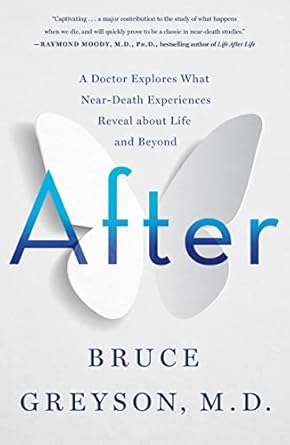
AFTER: What Near-Death Experiences Reveal about Life and Beyond

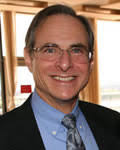
by Bruce Greyson, M.D.

Just Who Do We Think We Are?

Dr. Bruce Greyson Says...

"A lot has been said and written about dying and what may come after--much of it pitting scientific and religious viewpoints against each other.


"I hope to show that science and spirituality are compatible, that being spiritual doesn't require you to abandon science. And, approaching the world scientifically doesn't need to stop us from evaluating our experiences spiritually.


"My goal is not to make you believe any one point of view, but rather reevaluate how you think about life and death."


"I'm not a Moses handing down the Ten Commandments. I'm a scientist sharing what I think the data suggest."

Bruce Greyson, M.D., After, pp. 12, 13

www.brucegreyson.com

Greetings!

Dr. Bruce Greyson spent almost half a century studying near-death experiences (NDEs). A troubling event with a patient shortly after he began his medical career as a hospital psychiatrist caused him to eventually pursue a life-long scientific study of NDEs.


His newest book published in 2021 tells the fascinating story of his research and the conclusions he has drawn from working with many near-death "experiencers" over the years. Each chapter describes in generous detail amazing conversations Dr. Greyson had with numerous patients who had NDEs. It actually reads like a page-turner novel in many places.


I'm so pleased to share this book and Dr. Greyson's continuous scientific research throughout his long career. He describes how he was originally a sceptic, raised in a household without religious training by parents who valued a scientific approach to life.


I'm briefly sharing his story and research here. The book includes numerous notes at the end in which Greyson provides references to his research articles and papers over the years, as well as work from other investigators and authors for those who may be interested in the details of his scientific research.


But to me, the fascinating part is the word-for-word discussions with patients who reported what happened while they were "dead."


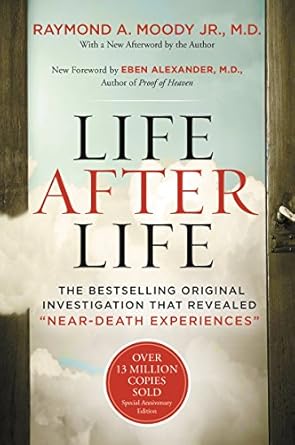
My belief is that near-death experiences do provide clues to what happens when we die. When I first read Raymond Moody's book, Life After Life, in the 1970s, I was hooked. I felt it supported what I had been taught in Sunday School about the afterlife.


Greyson writes that learning about other people's NDEs can affect those of us who haven't had an NDE, and I agree with that. At least, I know that reading about others' experiences helps me to envision what I can expect when it's my turn to transition.

Be well and enjoy your amazing life!

Sending with love,

Shari

As a young doctor just a few months out of medical school, Bruce Greyson was on duty one night when a student from a nearby university was brought into the hospital having attempted suicide with an overdose of medication. The patient (Holly) was comatose in the intensive care unit, but Greyson was able to speak with a roommate (Susan) who had brought her to the ER.


They met in a family waiting room in a separate area of the hospital. Greyson filed his report that night and came back early the next morning to see Holly. She was awake but still drowsy and Greyson was able to ask her a few questions.


He was stunned when she said she remembered him from the night before. She described the conversation he had with her roommate in the waiting area and even mentioned a red stain he had on his tie that night (after he dropped spaghetti on it just before he was called to the ER.)


Greyson could not fathom how his patient could have known about the conversation with Susan or the stain on his tie, which he had covered with his lab coat except for when he unbuttoned it in the family area which was very warm without air conditioning. He had no answers for the incident and, as a new doctor, he decided to keep it to himself until he could perhaps find some reasonable explanation.


On p. 8, Greyson wrote, "I'd have to find that explanation for myself. And if there wasn't [one]...well, the only alternative was that the part of Holly that thinks and sees and hears and remembers somehow left her body and followed me down the hall to the family lounge and, without the benefit of eyes or ears, took in my conversation with Susan."

Later, Greyson became director of the psychiatric emergency service at the University of Virginia, and when Raymond Moody began his training there in 1976, Greyson was his supervisor. Moody had been collecting near-death experience cases and soon published his book, Life After Life. Moody was the first author to use the term "near-death experience."


Greyson was amazed to learn at that time that Holly's experience, which had "knocked him for a loop," was not at all unique. Greyson wrote that that revelation "launched me on a journey to follow an evidence-based approach to NDEs. If I hadn't met Raymond and read his groundbreaking book, I might never have followed the trail of that spaghetti stain." (p. 9)


With colleagues from other universities who had a similar interest in NDEs, Greyson co-founded the International Association for Near-Death Studies (IANDS). He served as the director and was editor for the Journal of Near-Death Studies, the only scholarly journal dedicated to NDE research.


Greyson was influential in teaching medical personnel how to respond to patients who report the unusual experiences they had during an NDE. Early on, experiencers were often told they had a hallucination due to medication and that they should not talk about their experience or they would be referred to the psychiatric department.


Over the decades, Greyson worked with over 1,000 experiencers whom he interviewed, followed, and from whom he collected numerous questionnaires. His book, After, is the culmination of his research. His summaries of the lessons he learned are below.

A Two-Minute Trailer with Dr. Bruce Greyson

Watch this two-minute video with Dr. Bruce Greyson.

Lessons Learned from NDEs Over 50 Years


  • NDEs are common experiences that can happen to anyone.

Numerous studies have failed to find any variable that can predict who will have an NDE. They happen to men and women, to people of all ages, all religions, and all ethnic groups.


  • NDEs are normal experiences that happen to people in exceptional circumstances.

Studies have failed to find any link between NDEs and any type of mental illness. This means experiencers do not need to be referred to a mental health professional. What they need is

  • reassurance that they are "normal"
  • validation that their experiences were real
  • the opportunity to share their experiences
  • be able to reach their own understanding of them.


  • NDEs usually lead to a number of profound and long-lasting aftereffects.

Whether positive or negative effects are noticed, like enhanced enjoyment of life or difficulty fitting back into one's job or lifestyle, it is usually helpful to acknowledge and address changes and what they mean for the experiencer's life and relationships. Family, friends, and healthcare workers can be aware of aftereffects in case some help may be needed.


  • NDEs reduce fear of death.

Rather than being a terrifying event, most experiencers report that having an NDE greatly diminished their fear of death and dying--and many say their fear was erased. Knowing that the process of dying is usually peaceful--if not blissful--may mean you don't need to be afraid of dying.


  • NDEs lead experiencers to live more fully in the present moment, rather than dwell in the past or dream of the future.

The example of how experiencers, having almost died, try to live more in the present may encourage the rest of us to enjoy living life more fully and to live in the moment. And making the most of life, living life more fully in the present, allows us to appreciate not only the joy but also the pain of each experience.


  • NDEs raise questions about the relationship between minds and brains.

In normal, everyday life, it often seems as if our brains and our minds are the same thing. But experiencers almost universally report that their thoughts and perceptions are clearer than ever in NDEs while their brains are severely impaired. They also sometimes report accurate perceptions of things going on around their bodies, but from a point of view outside their physical bodies. This suggests that we need a different model of how minds and brains interact. Greyson suggests that the physical brain may act like a cell phone, receiving thoughts and feeling from the nonphysical mind and that in extreme circumstances at least--minds can function quite well without brains to filter them.


  • NDEs raise questions about the continuation of consciousness after death.

If it is true that minds can function in extreme circumstances without physical brains, then it may be possible that minds can continue to exist after the death of the brain. I don't know whether some kind of continued consciousness after death is the best explanation for NDEs in which experiencers see deceased loved ones no one knew had died. But I don't have any alternative explanation for the evidence. Unless we come up with another explanation, some form of continued consciousness after death seems to be the most plausible working model.

Bruce Greyson, After, pp. 216-221

"Most experiencers are convinced that some aspect of us does continue after death.


"But they also consider of equal importance the lessons they bring back from their NDEs for life before death.


"The experience often gives them a new outlook on what makes this life purposeful and meaningful.


"As I understand near-death experiences, they are ultimately not about death, but about transformation, about renewal, and about infusing our lives with purpose right now."

Bruce Greyson, After, p.216

Just Who Do We Think We Are?

Shari Says...


I believe we are eternal spiritual beings who are currently living one of our many lives on Earth and who are the co-creators of our experiences through our thoughts, beliefs, and pre-birth planning. We chose to incarnate at this time of transformation on the Earth to assist in raising the consciousness of the planet. 

Shari Harris


Handbook for Elevating Consciousness

(and why it's important at this time of transformation)

Click the picture to download the PDF.

Shari

Previous Issues of

"Just Who Do We Think We Are?"


1-1-2025: Things to Consider...Powerful Affirmations for 2025


1-24-2025: Vol. 6 #1/Can Past Lives Affect Our Current Life?/Lee Mitchell


2-26-2025: Things to Consider...You Are Worthy/Christian Sundberg


3-28-2025: Vol. 6 #2/16 Clues to Your Past Lives/Barbara Lane, PhD.


4-1-2025: Vol 6 #3/A Mother's Search for Her Past-Life children


5-20-2025: Things to Consider...It's True! Laughter is the Best Medicine


5-30-2025: Vol. 6 #4/A Walk in the Physical/Christian Sundberg


6-16-2025: Things to Consider...No one dies. Not ever. Not anyone.

Including you./Dooley, Grimes, Olson


6-28-2025: Vol. 6 #5/The Law of Attraction is Always Working; It's the Law


7-14-2025: Things to Consider...Emotional Freedom Technique (Also called Tapping): A Revolutionary System for Stress-Free Living


Please forward this free "good-news-letter" to friends who may be interested! Others are welcome to sign up.


Shari Harris, Certified Infinite Possibilities Trainer

Metaphysical Junkie and Commentator

www.shari-haris.com