October 22 ------ Mr. Constitution/Douglas V. Gibbs ------ 2026

Unfiltered

The Truth without Apology

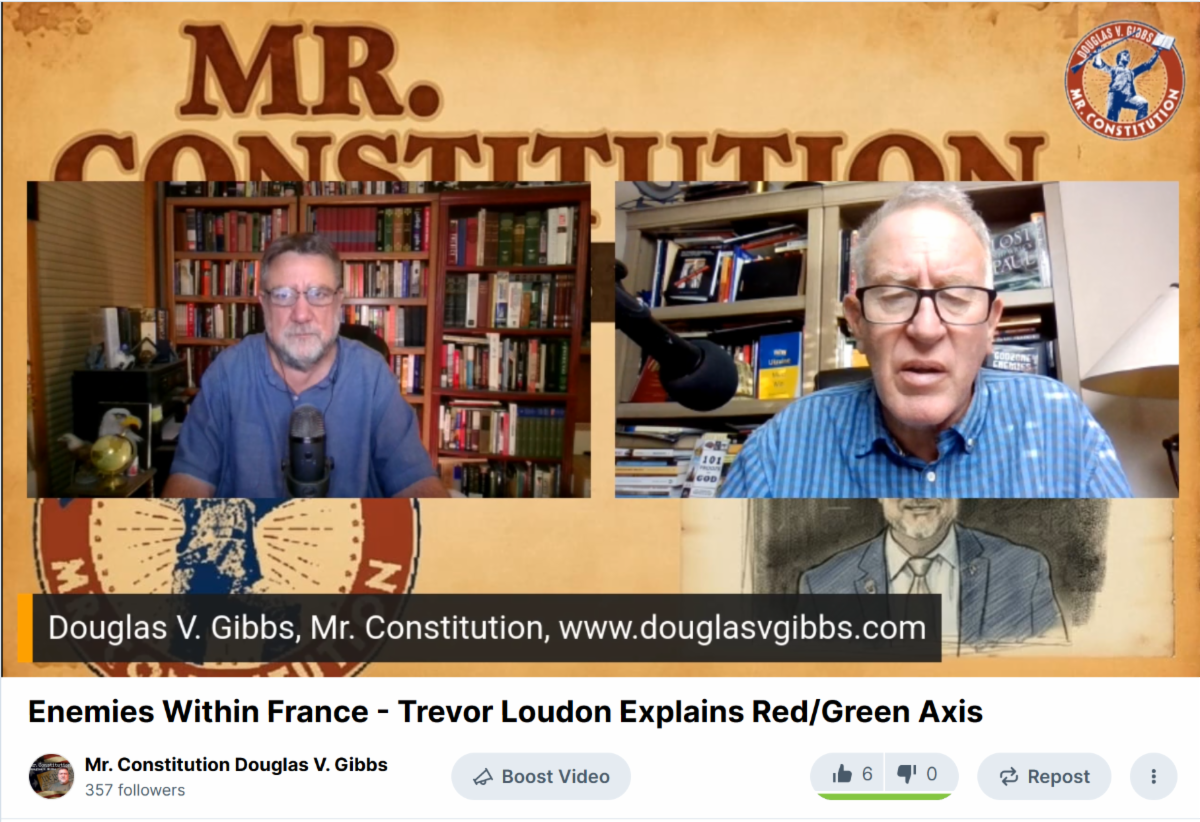
Explosive Interview with Trevor Loudon

Red/Green Axis: Worldwide Revolution


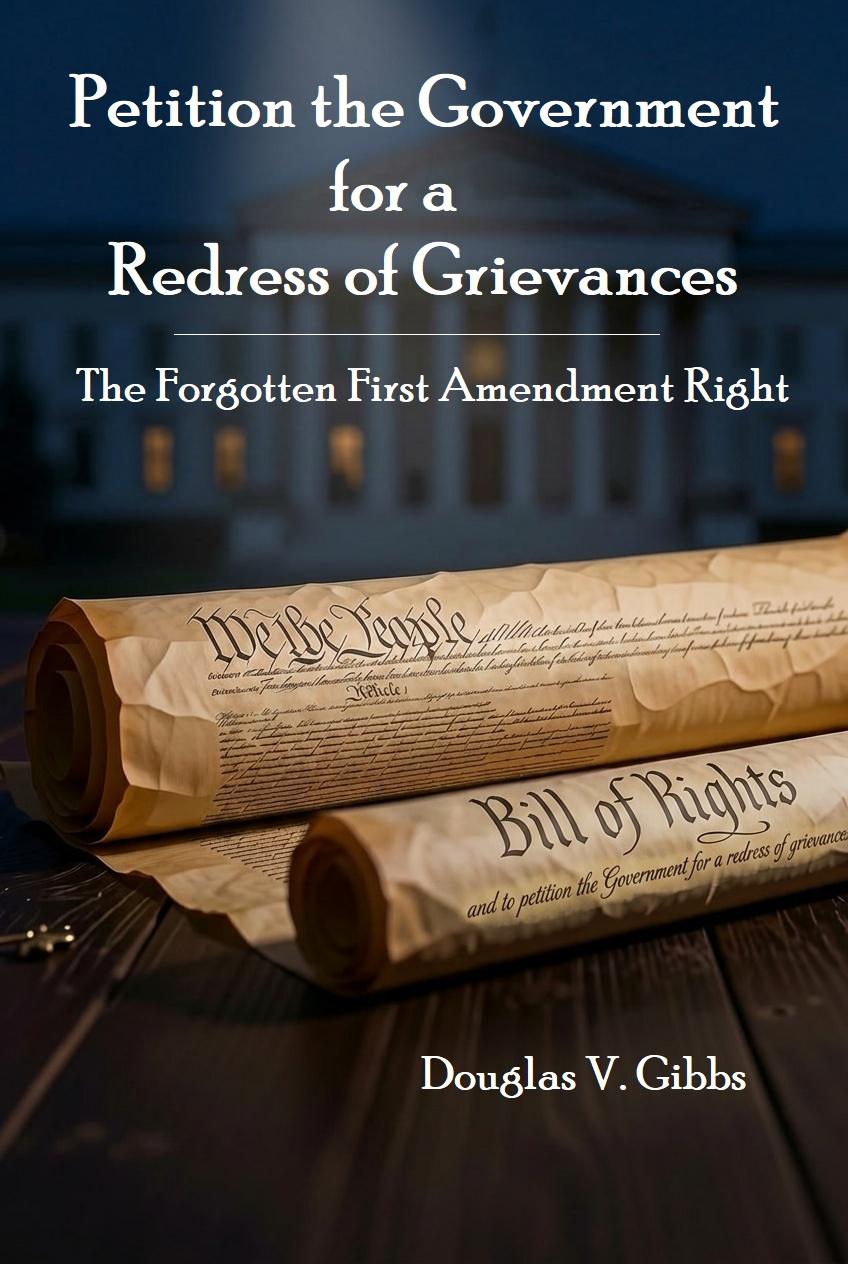
HAVE YOU PURCHASED DOUG’S LATEST BOOK, YET? PETITITON THE GOVERNMENT FOR A REDRESS OF GRIEVANCES IS AVAILABLE NOW!


Anti-Data Center Deception


By Douglas V. Gibbs


One month ago I wrote that the panic sweeping the country over data centers was not organic, that it was a manufactured hysteria with a foreign hand on the spoon, and that the American people were being played for suckers.


How America Took Hawaii


By Douglas V. Gibbs


The following is an excerpt from my upcoming book: 25 Honest American Tales.


There are two...


The Mid‑Term Elections Are A Constitutional Reckoning


By Douglas V. Gibbs


Rahm Emanuel said, “Never let a crisis go to waste.” The plan is to create “crisis,”...


Red/Green Axis Riots in France Worsen


By Douglas V. Gibbs


The “student uprisings” across France have evolved into full-on violent riots with buildings in flames, including...


This Week's Programming

Thursday: Mr. Constitution Hour


Friday: LIVE with Mr. & Mrs. Constitution


Saturday: Constitution Radio with

Douglas V. Gibbs, Alan Myers, & Dennis Jackson


Sunday: For the Republic with Alan Myers & Douglas V. Gibbs


Visit Doug's Radio Page

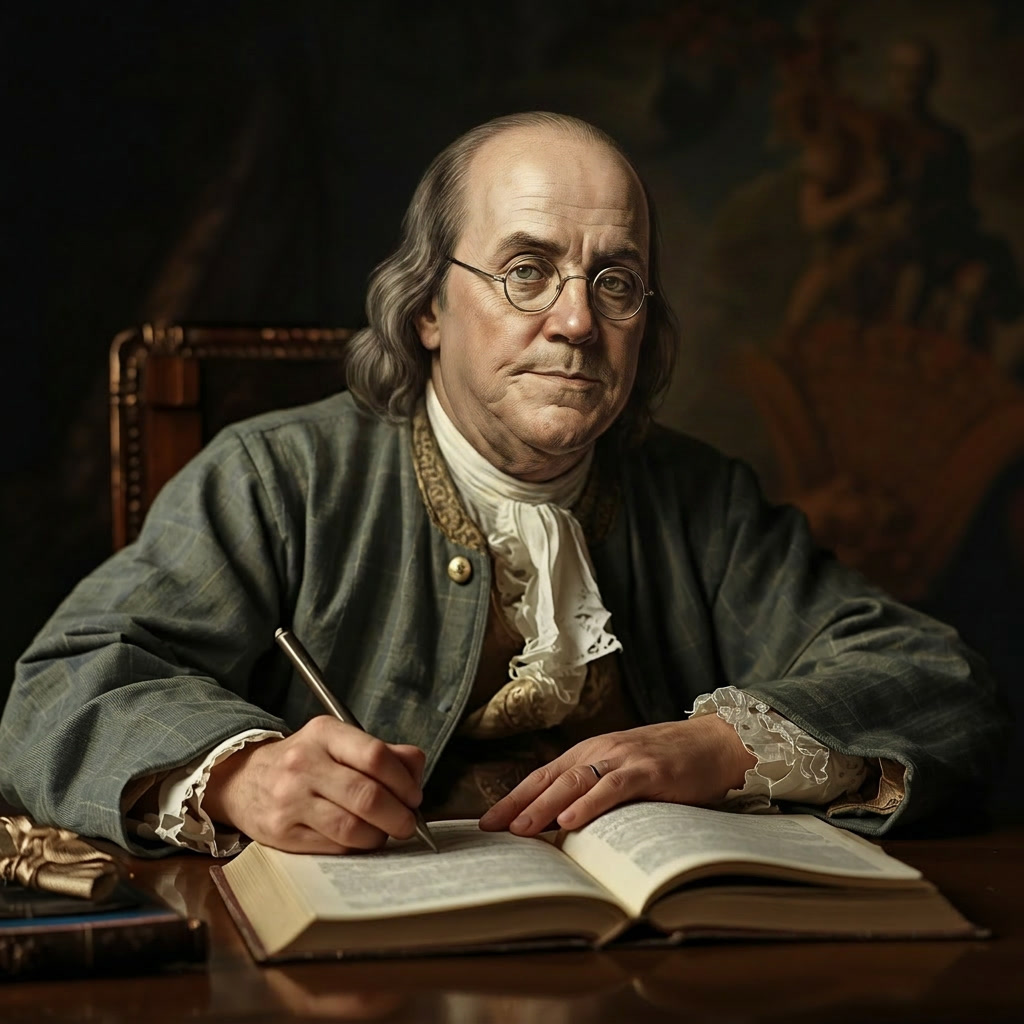
Franklin’s Virtuous Society and the Bible’s “Guidance by the Eye of God”


By Douglas V. Gibbs


Today, while at church, the pastor (though we are in Psalms 119) made reference to Psalm 32:8-9, and as he recited the verses it came to mind that the wisdom of the verses seemed to carry a parallel to a quote by Benjamin Franklin that I recite often. 


“Only a virtuous people are capable of freedom. As nations become corrupt and vicious, they have more need of masters.”


The parallel to me seemed to be quite compelling. Two separate individual texts that essentially provide the same equation, but from opposite ends. Understanding produces liberty; the absence of it produces a bit in the mouth.


Finish Reading at Political Pistachio

The Burning of Kingston


By Douglas V. Gibbs


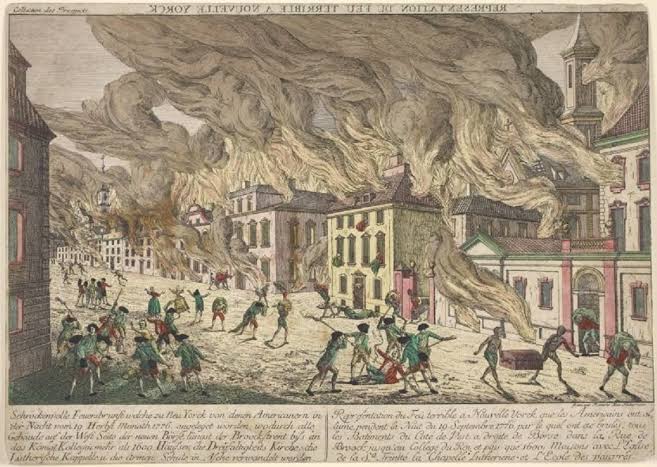
On October 16, 1777, a British raiding force marched into Kingston, New York and put most of it to the torch. It was the day the young state of New York lost its first capital, and it happened almost as an afterthought.


Kingston was an old Dutch-founded village in a region formerly known as New Amsterdam on the west bank of the Hudson, about 90 miles north of British-occupied New York City. When the war drove the provincial government out of Manhattan, the legislature settled there. The New York State Constitution was drafted and read aloud in Kingston in 1777, and the first State Senate convened in the home of Abraham Van Gaasbeek (now the Senate House). By default rather than design, it became the capital of New York.


The raid was a footnote to the Saratoga Campaign. General John Burgoyne was bogged down and losing near Saratoga, and General Henry Clinton, commanding in New York City, finally moved north up the Hudson in early October to try to relieve him. Clinton stormed and captured Forts Montgomery and Clinton in the Hudson Highlands on October 6. Rather than push on to Albany himself, he sent a flying column under Major General John Vaughan further upriver to burn and plunder.


Vaughan’s force of roughly 1,200 regulars and Hessians landed at the mouth of the Rondout on the morning of the 16th. Kingston’s defenders were about 150 Ulster County militia, who were brushed aside quickly. The British set fire to the village, and with it some 300-plus buildings (homes, barns, stores, and public buildings). Vaughan reported destroying a quantity of American war materiel as well. He also torched farms in the surrounding countryside before re-embarking and rejoining the fleet.

Kingston was largely empty of civilians by then. Gouverneur Morris, who would become the father of the Preamble of the United States Constitution, had written a week earlier that the legislature was “hellishly frightened,” and the government had already scattered. The state government fled to Hurley, and Ulster County’s records were hauled to a stone house in Kerhonkson. Casualties on both sides were minimal.


Militarily it accomplished little. The British never occupied Kingston, so they gained no lasting control of the strategically vital river corridor between Albany and New York. Clinton’s diversion also came too late to save Burgoyne. General Burgoyne surrendered at Saratoga on October 17, the very next day.


What the burning did do was gut a capital. The state government never returned; the seat of power shifted north and eventually to Albany. Kingston rebuilt on the same street pattern, and parts of the Stockade District still stand, including the Senate House, which is now a state historic site. The burning is reenacted in Kingston to this day, and a 1778 British cartoon depicting the raid is one of the era’s better-known satirical images.


So, exactly 249 years ago, a “victory” for Britain on paper, a genuine trauma for New York, and a strategic dead end for the men who lit the torches.


On Sale Now: Petition the Government for a Redress of Grievances


For centuries, the right to petition the government for a redress of grievances was one of the most powerful tools of free people. It shaped English liberty, fueled colonial resistance, and helped launch the American Revolution. It once obligated Congress to receive, consider, and respond to the voice of the people.

Then it was silenced — and forgotten.


In Petition the Government for a Redress of Grievances, Douglas V. Gibbs uncovers the lost history of the Petition Clause, exposes the constitutional betrayal that hollowed it out, and reveals how modern Americans can revive this natural, God‑given right. Blending historical depth with practical instruction, Gibbs shows how petitioning can once again become the engine of accountability, civic engagement, and the consent of the governed.


This book is not just history. It is a roadmap for restoring the people’s voice in American government — and reclaiming the power we were never meant to lose.


https://amzn.to/4ciocIO

Bend, Oregon Shooting Reveals The Good Man Was Already There


By Douglas V. Gibbs


With the news of a recent shooting at an elementary school in Bend, Oregon, those who seek to violate our right to keep and bear arms are shouting their foul ideas of gun confiscation once again. This recent shooting reminds me of another recent event in Idaho, where a good guy with a gun stopped the damage being inflicted by the bad-guy gunman from being worse. Be it Bend, Oregon, or the In-N-Out Burger in Twin Falls, Idaho, what we have in those cases are two shootings, two good-guy civilians, and an acknowledgement of the importance of the right to keep and bear arms that predates the government that pretends to grant it

In December 2012, days after a madman murdered twenty children and six adults at Sandy Hook, Wayne LaPierre said something that got sneered at for a decade: the only thing that stops a bad guy with a gun is a good guy with a gun. It was treated as a bumper sticker. In 2026, twice in one summer and one autumn, it was proved again as a fact of physics. Both times the “good guy” was not a badge, not a department, and not a policy. He was a private man with a pistol he chose to carry.


Finish Reading at Political Pistachio


Facebook  X