Action Alert: Term Limits on County Commissioners Scheduled to be Heard Monday
| |
|
On Monday, March 10th at 1:30 PM, the Senate Ethics and Elections committee is scheduled to hear SB 802 which would place on the statewide ballot in 2026 the imposition of eight year term limits on county commissioners, regardless of those already voted on by residents of certain charter counties.
SB 802 would strip voters of their ability to self-govern by forcing them to vote on terms limits statewide, imposing their choices on other counties.
Currently, 12 counties have term limits in place and every county has the ability through a citizen initiative process or an established charter to enact limits. SB 802 will force these 12 counties back to the ballot, including those whose voters have already established longer term limits for their county commissioners.
Florida’s counties vary, and the decision to adopt term limits should be determined locally by voters in their own county. There is no one-size-fits-all approach.
The House companion HB 679 has not yet been heard.
Please come to Tallahassee and testify or call committee members and ask them to vote no on SB 802.
| |
|
Welcome to the 2025 Legislative Session!
On Tuesday, March 4th, the legislature officially gaveled in to begin the 60-day regular session. The countdown until Sine Die begins with bills moving and evolving every day—stay on top of county priorities with this weekly legislative bulletin, and with our comprehensive Bill Tracker.
| |
FAC Check: Season 5, Episode 1 | |
REMINDER: FAC Legislative Day is March 19th
| |
|
Be sure to join us on March 19th for FAC’s annual Legislative Day! FAC Legislative Day provides the perfect opportunity to meet with your local delegations and show legislators the importance of preserving shared governance.
For details on registration and the agenda, please see here.
| |
Palm Beach Comes to Town for their 2025 County Days
| |
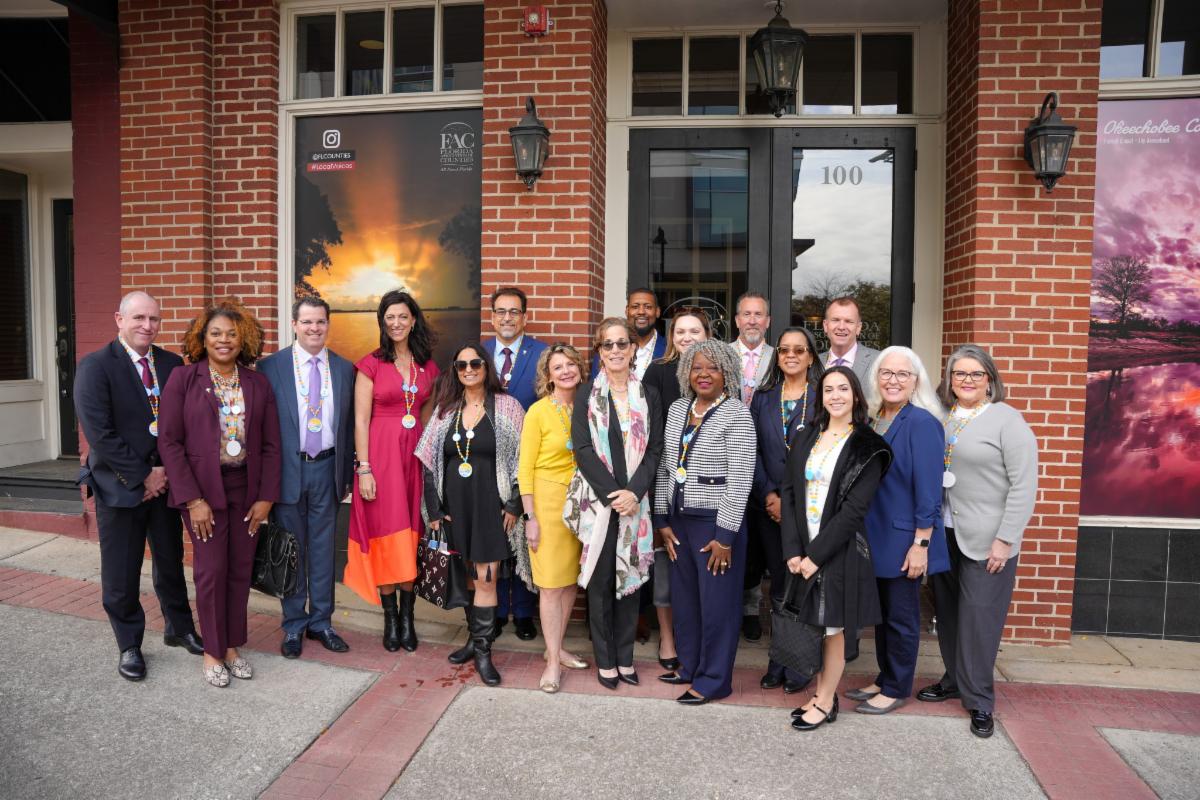
Palm Beach County kicked off session by hosting their County Days in Tallahassee. Commissioners and staff mobilized to the Capitol to speak with delegation members and other legislators regarding the county’s priorities this session. | |
Ad Valorem Under Attack: 2025 Bill Breakdown
| |
One of the overarching themes this session is the continued erosion of local ad valorem authority. This appears to have top-down support, as Governor DeSantis, himself, has been vocal about reducing or even eliminating property taxes altogether. It is important to remember that property taxes serve as the foundation for local governments and school districts to operate effectively. Policies that chip away at local capacity to raise revenue shift cost burdens and threaten essential service delivery within our communities. For a full breakdown of the ad valorem bills that FAC is tracking, please click here. | |
Governor and Presiding Officers Outline Session Priorities
| |
Governor DeSantis, Senate President Albritton, and House Speaker Perez opened Florida’s 2025 Legislative Session by outlining their agendas focused on economic relief, government accountability, and community investment. Governor DeSantis notably proposed eliminating property taxes, and prioritized continued Everglades restoration while pledging no state tax increases. Albritton emphasized his commitment to Florida’s agriculture industry, particularly citrus, and championed rural revitalization through investments in education, healthcare, infrastructure, and disaster recovery. Perez called for responsible budgeting, eliminating government waste, and addressing key issues like property insurance, housing, healthcare, and public safety. All three leaders stressed the importance of working together to deliver meaningful reforms. | |
Senate President’s Rural Package Clears First Committee
| |
|
On Monday, SB 110 by Sen. Simon was heard in Senate Community Affairs. This bill represents a major priority for Senate President Ben Albritton, who has been outspoken in his desire for a “Rural Renaissance.” The bill passed unanimously, and garnered support from a number of rural county commissioners in attendance.
The bill creates a state Office of Rural Prosperity (ORP) and makes major investments in a number of programs focused on rural communities. Highlights include:
- Authorizes roughly $200 million in total appropriations
-
Shifts the fiscally constrained county distribution to a more reliable underlying revenue source. Additionally, the bill establishes a new distribution formula and $50 million floor on annual funding under this section. For reference, the FY 2023-24 distributions for this program totaled $12.2 million. Note: this increased funding also comes with narrower prescribed uses: 50% of the funding must be used on public safety expenditures, 30% on infrastructure, and the remaining 20% on general purposes.
- Removes the $200 million cap on distributions into the State Transportation Trust Fund to allow for greater funding of associated programs
- Establishes the Florida Arterial Road Modernization (FARM) program, an adaptation of the existing Farm-to-Market road program within the SCOP statute. The bill also establishes a $50 million annual floor for funding this program.
- Establishes a $25 million annual floor for the SCRAP program, and requires that
- additional revenues from motor vehicle title fees be used to supplement SCRAP funding
- Appropriates $45 million to the Rural Infrastructure Fund (RIF)
- Raises the individual floor for local housing distributions under SHIP from $350,000 to $1 million, and appropriates $19 million to this end.
- Authorizes a $1 million allocation for counties within the Renaissance Grant program. Eligible counties are those which are “growth-impeded” and spending should prioritize strategies to stimulate population growth in rural communities.
The House companion HB 1427 by Rep. Griffitts has not been heard yet.
| |
Farming Preemption Passes First Committee Stop
| |
|
On Monday, SB 374 by Sen. Truenow was heard in the Senate Agriculture Committee and passed unanimously.
The bill expands the definition of “farm product” to include all plant products, and any animals useful to humans, as well as any derivative products. Current statute preempts local governments from regulating the collection, storage, processing, and distribution of farm products on agricultural land. FAC staff understands the intent of this new language, at least in part, to allow the use of biosolids and organic waste in agricultural activities. However, as written, it may inadvertently capture unintended products, e.g. clothing or fabric, paper products, and exempt them from regulation.
The House companion HB 211 by Rep. Cobb has not been heard yet.
| |
Property Tax Exemption for Disabled Ex-Servicemembers Clears first Senate Committee
| |
|
On Monday, SB 218 by Sen. Arrington was heard in Senate Community Affairs and passed unanimously. The bill increases the property tax exemption for disabled ex-servicemembers and their unremarried surviving spouses from $5,000 to $10,000.
The House companion HB 39 by Rep. Daley was withdrawn prior to introduction.
| |
Expanding Mental Health Diversion Programs
| |
|
On Tuesday, SB 168 by Sen Bradley was heard and passed favorably in the Senate Criminal Justice committee. The bill establishes misdemeanor and felony mental health diversion programs, enabling eligible defendants to receive treatment instead of incarceration. It also creates a behavioral health data repository and mandates mental health evaluations for inmates eligible for work assignments. This bill also includes a piece that exempts certain fiscally constrained counties from local match requirements for the 1-year planning grant and 3-year implementation or expansion grants.
The House companion HB 1207 by Rep. Cobb has not been heard yet.
| |
House Committee Greenlights State Recycling Goal; FAC Supports
| |
|
On Tuesday, HB 295 by Rep. Casello was heard in the House Natural Resources & Disasters Subcommittee and passed unanimously. The bill directs DEP to establish a statewide recycling and waste reduction plan and goal by July 1, 2026. The plan is expected to consider recommendations from the prior comprehensive statewide recycling plan, and the corresponding final report issued in 2020. At a minimum, the plan must identify a goal based on sustainable materials management and waste diversion, and incentivize recycling practices among private businesses. FAC supported the bill as part of its Guiding Principles.
The Senate companion SB 200 by Sen. Berman passed its first committee unanimously and is waiting to be heard in its second stop.
| |
Coastal Resilience Guidelines Cruise Through Second Committee Stop
| |
|
On Wednesday, SB 50 by Sen. Garcia was heard in Senate Appropriations Committee on Agriculture, Environment, and General Government and passed unanimously. Directs DEP to initiate rulemaking regarding nature-based methods for improving coastal resilience. At a minimum, the rule must consider:
- Improved Coastal Resilience through green infrastructure, beach renourishment, dune restoration, living seawalls and shorelines, permeable pavement, and ecologically sound building materials
- Permitting incentives and Resilient Florida grant priority for green infrastructure projects
- Inventory of vulnerable coastal properties
- Restoration of mangroves, reefs, and salt marshes Workforce training and flood and sea level rise research
The bill also directs the Florida Flood Hub to develop guidelines for green and gray infrastructure to address sea level rise and storm surge impacts. Lastly, the bill requires a statewide feasibility study to determine the value of nature-based methods for coastal flood risk reduction.
The House companion, HB 371, by Rep. Mooney has not yet been heard.
| |
House Economic Infrastructure Committee Holds Utility ROW Panel
| |
|
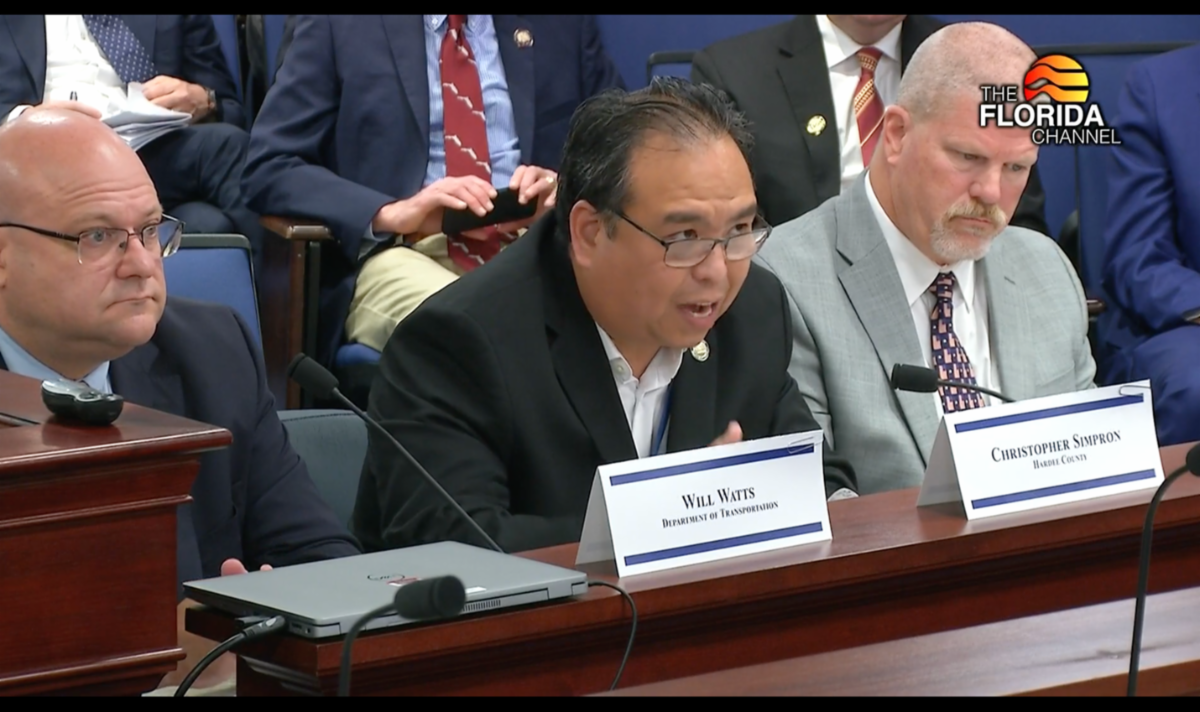
On Wednesday, the House Economic Infrastructure Subcommittee hosted a panel discussion on utility use of the public right-of-way. Hardee County Assistant County Manager Christopher Simpron represented county governments on the panel along with:
- Sunshine Water Services’ Sean Twomey
- TECO People Gas’ Regional Manager Sergio Abreu
- Florida Department of Transportation Assistant Secretary for Engineering and Operations Will Watts
- Florida Electric Power Coordinating Group’s Robb Brown
- Florida Internet & Television General Counsel Charlie Dudley
The panel provided an overview of the permitting processes utility providers must follow to install and maintain infrastructure within the public right-of-way, as well as how they coordinate with local governments and FDOT when utility relocations are required. Representatives from utility providers, as well as county and state government officials, emphasized the importance of coordination and proactive communication when addressing utility relocation issues. Notably, Rep. Tramont questioned the financial obligation of utility providers when required to relocate their infrastructure at the request of a local or state authority, and whether such costs would ultimately impact customers through increased utility rates. TECO’s representative clarified that regardless of whether the utility provider or the government entity bears the initial cost, the financial burden will ultimately be passed on to consumers — either through higher utility rates or higher taxes. Panelists agreed that the state need not dictate coordination elements through additional legislation.
Click here to watch the presentation
| |
Municipal Water and Sewer Utility Rates Passes First Committee Stop
| |
|
On Wednesday, HB 11 by Rep. Robinson passed the House Economic Infrastructure Committee. This bill requires that municipalities charge consumers in another municipality the same rates, fees, and charges as those within their own boundaries under specific circumstances.
Currently, municipalities operating water or sewer utilities outside their boundaries can charge additional surcharges not exceeding 25% of in-municipality rates. However, the total charges for consumers outside municipal limits cannot exceed 50% more than what they charge customers within the municipality.
A new provision mandates equal rates for consumers within the boundaries of another municipality when the utility infrastructure (such as treatment plants) is located within that separate municipality.
Jess McCarty, Miami Dade County Attorney, waived in support of the bill.
The Senate Companion SB 202 by Sen. Jones has not been heard yet.
| |
FAC Supports Public Records Protection for County Administrators and Managers | |
|
On Thursday, HB 623 by Reps. Gerwig and Cassel was heard in the House Intergovernmental Affairs Subcommittee and passed unanimously. The bill exempts personal identifying and location information of county administrators, deputy county administrators, assistant county administrators, city managers, deputy city managers, and assistant city managers from public records laws.
The Senate Companion SB 842 by Sen. Arrington has not yet been heard.
| |
Senate Finance & Tax Holds Presentation on Property Taxes
| |
|
On Wednesday, the Senate Finance and Tax Committee hosted an Overview of Property Taxes presentation by committee staff director Azhar Khan. Staff described the current state of the property tax system including homestead tax exemptions, the “Save Our Homes” assessment limitation, non-homestead assessment limitation, classified use properties, tangible personal property, and centrally assessed properties. The presentation included trends of millage rates over time for non-school and school levies over time. Senators questioned staff regarding the impacts on local governments if property taxes are eliminated and the alternative sources of tax revenue. Committee members noted the amount of ad valorem and sales tax exemption legislation filed along with bills hoping to increase government services.
Click here to watch the presentation
| |
Property Rights Passes Second Committee
| |
|
On Wednesday, SB 322 by Rep. Rodriguez passed in Senate Appropriations Committee on Criminal and Civil Justice. This bill creates a nonjudicial procedure for a property owner to request that the county sheriff remove an unauthorized person from commercial real property. Property owners or their agents may request sheriff assistance for immediate removal if specific conditions are met, including the lack of a valid lease or ownership claim by the occupants. The bill is a continuation on the work from last year's public sleeping and camping legislation.
The house companion HB 213 by Rep. Gossett-Seidman has not yet been heard.
| |
Clerk of Court and SoE Budget Appeals Introduced as House Committe Bill
| |
|
On Thursday, the Intergovernmental Affairs Subcommittee proposed IAS1 - County Constitutional Officer Budget Processes. The bill passed unanimously. The bill allows supervisors of elections and clerks of the circuit court to appeal budget modifications made by county commissions to the Administration Commission. Upon an appeal, the Executive Office of the Governor must conduct a budget hearing and submit findings and recommendations to the Administration Commission. Within 30 days, the commission must approve, amend, or modify the budget. The bill ensures final authority over budget disputes lies with the Administration Commission. Clerks of Court have hope to have parity with other Constitutional Officers through this budget appeal process.
The companion legislation, SB 1260 by Sen. Yarborough has not been heard this session.
| | | | |