Click below for a special video invitation
from ASIPP Chairman of the Board, Laxmaiah Manchikanti, MD:
|
|
Friends:
I would like to invite you to attend and enjoy the 25th anniversary of the American Society of Interventional Pain Physicians, which will take place on March 16-18 in Washington, DC, at the famous Gaylord Convention Center. This is the most important event in the history of interventional pain management.
We are going back to where it all began - Washington, DC.
This meeting will take us back to our roots and will bring back memories of the first Annual Meeting in Washington, DC, in 1999. Many things have happened over the years; however, the 25th anniversary comes only once.
Do you feel you can miss this opportunity? I hope not!
|
|
Reserve your hotel room by
February 22 for the best rate!
|
|
Novitas and First Coast Services have not issued their policies nor have they participated in multijurisdictional committees and have not issued a policy.
You can use this algorithmic approach whenever you see your patients by utilizing these checklists for each patient prior to performing epidural steroid injections and facet joint interventions.
|
|
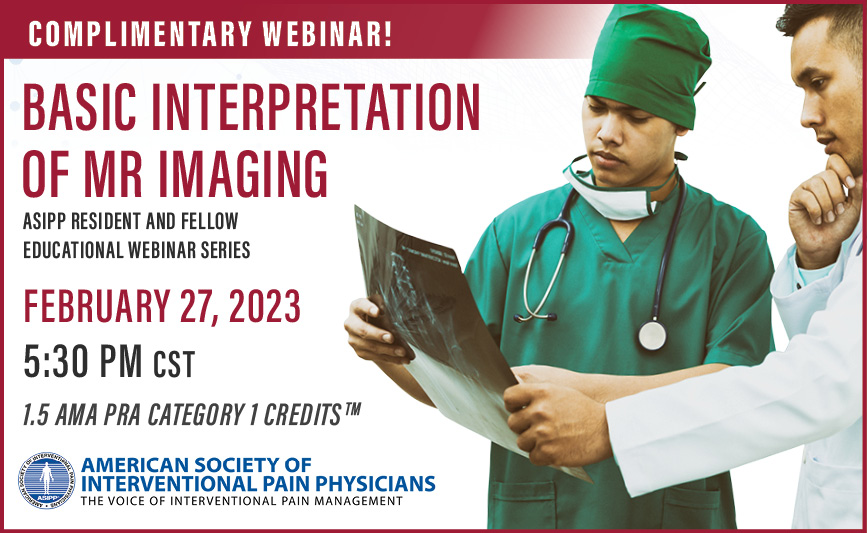
Attention All Residents and Fellows
ASIPP is Offering this virtual, COMPLIMENTARY
Educational Webinar Series on February 27
|
|
|
|
Authors: Laxmaiah Manchikanti, MD; Vidyasagar Pampati, MSc; Nebojsa Nick Knezevic, MD, PhD; Alan D. Kaye, MD, PhD; Salahadin Abdi, MD, PhD; Mahendra R. Sanapati, MD; Alaa Abd-Elsayed, MD; Radomir Kosanovic, MD; Amol Soin, MD; Douglas P. Beall, MD; Shalini Shah, MD; Joshua A. Hirsch, MD |
|
The influence of COVID-19 on utilization of epidural procedures, Manchikanti et al, published in Spine. (SPINE text: https://lnkd.in/eWidTxd3)
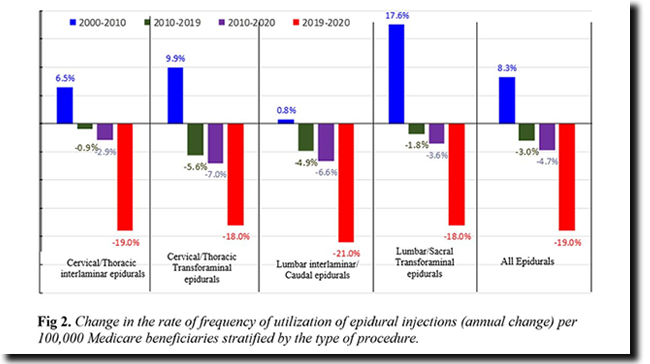
The Influence of COVID-19 on Utilization of Epidural Procedures and also updated the data from 2000 to 2020. This analysis showed overall decline of utilization of epidural injections in all categories from 2019 to 2020 of 19%. Prior to the pandemic, from 2010 to 2019, there was a 3% annual decline.
The study also showed an overall decrease of 4.9% annually for lumbar interlaminar and caudal epidural injections compared to 1.8% decline for lumbosacral transforaminal epidurals, and 0.9% for cervical and thoracic interlaminar epidurals, showing a steeper decline for lumbar interlaminar epidural injections. In another publication, Manchikanti et al also showed 19.3% decrease in rate of facet joint episodes (meaning patients per 100,000 Medicare beneficiaries) during the pandemic compared to 2.9% annual increase from 2010 to 2019. (Pain Physician text: https://lnkd.in/e7JFQv6R). Manchikanti et al published an article in Pain Physician of sacroiliac joint injections utilization showed 19.2% decrease during the pandemic; however, with a 0.9% increase per 100,000 Medicare population for intraarticular injections.
|
|
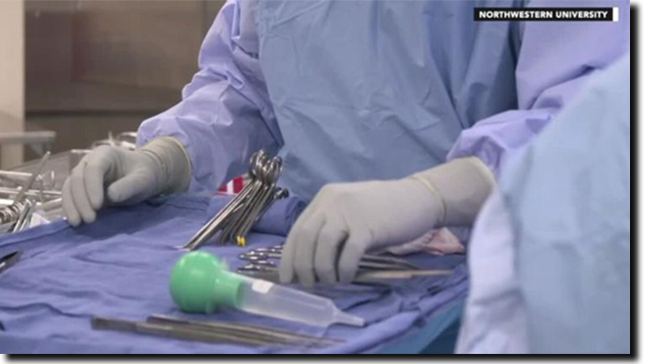
Research conducted by Michigan State University and Rutgers University revealed that an average of $1,800 is wasted at every operating room surgery.
"Our objective was to understand how do hospitals manage the supplies that are needed for their surgeries," said Anand Nair, faculty in the Broad College of Business.
Nair and his fellow researchers spent more than 250 hours oberserving a hospital's operating room. They witnessed the planning, preparation, and execution of 92 surgeries.
"Typically, when you have a surgery, you would have something like a card, which we call physician preference card, in which all the items that are needed will be listed. Whatever that surgeon needs, that will be listed, and they should be brought into the surgery," he said.
They discovered that those physician preference cards sometimes are not updated.
|
|
ABIPP Part I; ABIPP Path - Combined DCCPM/CSM virtual exam; ABIPP Competency Exam in IPM; ABIPP Competency Exam in Regenerative Medicine
ABIPP Part II; ABIPP Competency Exam - Practical Portion; ABIPP Regenerative Medicine Competency Exam - Practical Portion
|
|
In May 2021, a nurse at UnitedHealthcare called a colleague to share some welcome news about a problem the two had been grappling with for weeks.
United provided the health insurance plan for students at Penn State University. It was a large and potentially lucrative account: lots of young, healthy students paying premiums in, not too many huge medical reimbursements going out.
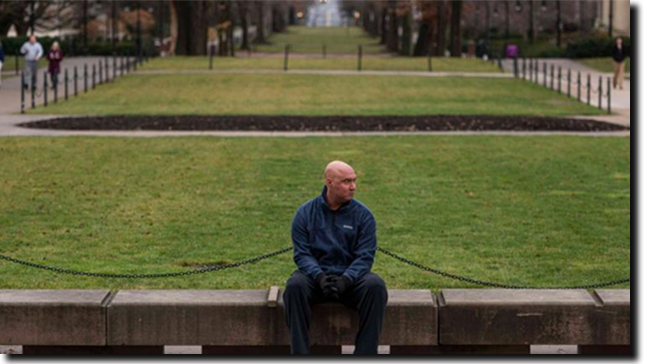
But one student was costing United a lot of money. Christopher McNaughton suffered from a crippling case of ulcerative colitis — an ailment that caused him to develop severe arthritis, debilitating diarrhea, numbing fatigue and life-threatening blood clots. His medical bills were running nearly $2 million a year.
|
|
Tens of thousands of nurses and nearly 12,000 ambulance workers went on strike Monday over pay and working conditions in the biggest walkout in the 75-year history of Britain's National Health Service (NHS).
Escalating industrial action comes after years of falling wages, stretched budgets and staff shortages that have left the NHS in a state of crisis, with waiting times for treatment at a record high. At the same time, an aging population needs its services more than ever.
That unhappy mix is fueling a boom in demand for private health care from a much broader swathe of the UK population than ever before — a fundamental shift for a nation with one of the world's best-known universal health systems.
|
|
Resident/Fellow News and Updates |
|
Deadline to apply is February 20!
A limited number of qualifying residents/fellows will receive a travel scholarship to attend the ASIPP 25th Annual Meeting, March 16-18, 2023 at the Gaylord National Harbor, MD.
Recipients of this scholarship will receive reimbursement for up to three nights' stay at the host hotel at the official ASIPP single-occupancy room block rate. This includes room, tax, and resort fees.
Qualification Requirements:
• Residents and Fellows must register for the meeting to be eligible for reimbursement (The meeting fee is only $25 for Residents and Fellows) Click here to register for the meeting.
• Residents and Fellows must be active participants in their fellowship or residency programs during the meeting dates.
• Residents and Fellows must be active ASIPP members.
• A letter of recommendation from the (non-industry) residency or fellowship program director must include:
- Proof that the resident or fellow is an active participant in the program during the meeting dates.
- A statement verifying that no other travel scholarships for the ASIPP 2023 Annual
- Meeting have been or will be awarded.
• Must be willing to share your email with sponsoring company of the scholarship program.
|
|
|
|
Limited number of scholarships available.
|
|
|
It required close editing, human co-author said
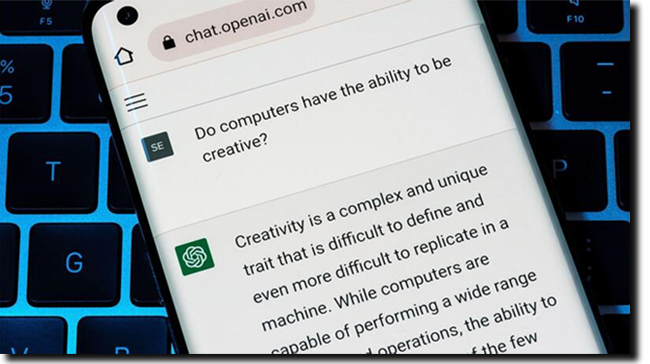
Text-generating artificial intelligence (AI) models, such as ChatGPT, have the potential to "revolutionize the field of medical writing" by automating tasks and increasing efficiency throughout the writing process -- at least according to a paper generated by ChatGPT.
While the AI model successfully generated almost all of the text in the peer-reviewed paper published in Radiology, it required close editing and careful consideration of several factors, such as ethics, copyright, and accuracy, noted Som Biswas, MD, of the University of Tennessee Health Science Center College of Medicine in Memphis.
Biswas said that he used ChatGPT, a large language model developed by OpenAI, to write the first several sections of the paper using a series of prompts.
|
|
- ASIPP Members Only Site Information - |
|
-
To log in for the first time you will need to click “forgot password” at the bottom of the login window.
- Check your email and then log in as directed.
-
If you have problems logging into your account, click here.
|
|
As a medical student and researcher, I staunchly supported the efforts of the public health authorities when it came to COVID-19. I believed that the authorities responded to the largest public health crisis of our lives with compassion, diligence, and scientific expertise. I was with them when they called for lockdowns, vaccines, and boosters.
I was wrong. We in the scientific community were wrong. And it cost lives.
|
|
In the mosaic floor of the opulent atrium of a house excavated at Pompeii is a slogan ironic for being buried under 16 feet of volcanic ash: Salve Lucrum, it reads, “Hail, Profit.” That mosaic would be a fitting decoration today in many of health care’s atria.
The grip of financial self-interest in US health care is becoming a stranglehold, with dangerous and pervasive consequences. No sector of US health care is immune from the immoderate pursuit of profit, neither drug companies, nor insurers, nor hospitals, nor investors, nor physician practices.
Rapidly increasing pharmaceutical costs are now familiar to the public. Pharmaceutical companies have used monopoly ownership of medications to raise prices to stratospheric levels, and not just for new drugs. Flaws in US patent laws leave loopholes allowing profiteering drug companies to gain control of some simple and long-known medications and to raise prices without constraint. Eye-popping prices for new, essential biological and biosimilar drugs, enabled by the failure of any serious drug price regulation, have yielded enormous profits for drug companies even though much of the basic biological research funding has come from governmental sources.
|
|
Pain Medicine Case Reports (PMCR) and Editor-in-Chief Alaa Abd-Elsayed, MD, PhD would like to invite you to submit case reports and case series to the PMCR journal. Your article will be published free of charge.
Open access journals are freely available online for immediate worldwide open access to the full text of published articles. There is no subscription fee for open access journals. Open access journals are no different from traditional subscription-based journals: they undergo the same peer-review and quality control as any other scholarly journal.
Interested in becoming a member of the PMCR Editorial Board?
Editorial board members are asked to review 2-6 manuscripts per year. Please submit your most up-to-date CV to sgold@asipp.org for consideration.
For more information or to submit your articles, click here.
|
|
| CASE REPORT |
Tolga Suvar, MD, Stephen Music, DO, and Nathan Wick, DO
Abstract
BACKGROUND: Failed back surgery syndrome (FBSS) is defined as lumbar spinal pain of unknown origin that persists following surgical intervention or newly presents after spine surgery (1). This pain may originate from surgery, or the surgery may worsen or insufficiently reduce prior pain (1). From 2004 to 2015, the volume of lumbar fusion surgery increased by 62.3% (2). With the frequency of lumbar fusion surgery comes an increased propensity to develop FBSS. The risk of developing FBSS in patients who have undergone lumbar spine surgery is as high as 50% (3). Spinal cord stimulation (SCS) is a well-established, safe, and effective treatment modality for refractory neuropathic pain conditions such as FBSS (4).
CASE REPORT: A 47-year-old patient presented to the clinic with a history of cervical radiculopathy status post C4-C7 posterior spinal fusion, lumbar radiculopathy, lumbar spinal stenosis, congenital spondylolisthesis status post L5-S1 anterior lumbar interbody fusion complicated by a malpositioned screw at the L4-L5 level, L4-L5 retrolisthesis, L5-S1 pseudoarthrosis with subsequent T10 to pelvis fusion, which was later extended to T8 after a fall. The patient developed FBSS resulting in debilitating neck and low back pain. Permanent SCS with leads at C7-T3 were placed without complication. The SCS implant resulted in successful treatment of FBSS with an 80% reduction in pain scores, 86% reduction in MME consumption, and an improvement in performance of activities of daily living.
CONCLUSION: This case highlights the use of SCS leads placed over the low cervical and high thoracic levels for the treatment of cervical and lumbar back pain. Due to the complex surgical history of the patient, a unique lead implantation location spanning C7-T3 was required. This lead location is significantly cephalad to the typical lead implantation location of T8-L1 for the treatment of chronic lumbar back pain, as the T8-L1 levels are where neurons responsible for back pain are most heavily concentrated (5). This case highlights the effectiveness of SCS therapy implanted at an atypical location for the treatment of FBSS.
KEY WORDS: Atypical cervical and thoracic spinal cord stimulation, case report, chronic refractory neck and low back pain, failed back surgery syndrome, neuromodulation
|
|
| BIBLIOMETRIC ANALYSIS |
Wei-Ting Wu, MD, Jui-An Lin, MD, PhD, Lan-Rong Chen, MS, Wei-Zen Sun, MD, Chih-Peng Lin, MD, PhD, Levent Özçakar, MD, and Ke-Vin Chang, MD
Abstract
BACKGROUND: Ultrasound imaging is shown to be superior to other imaging tools for the evaluation of shoulder disorders in a primary care settings. In addition to its diagnostic utility, ultrasound diathermy is useful as a deep heat modality for the management of shoulder pain.
OBJECTIVE and STUDY DESIGN: In this study, we analyzed the bibliometric data of publications that have focused on ultrasound imaging/therapy for shoulder-related pain syndrome.
METHODS: We searched the Web of Science (WoS) database for articles published between January 1, 1976, and June 24, 2022. The CiteSpace Version 6.1R2 software was used to analyze publication output, authoritative journals/countries/institutions/authors, keywords, references, and citations.
RESULTS: We analyzed 1185 articles in this study and observed a significant trend of an increase in publications per year (beta coefficient 1.8165, R2 = 0.7519, P < 0.001). The maximum number of relevant citations was identified in 2009, and these declined in subsequent years. The Journal of Ultrasound in Medicine, the United States of America, and the League of European Research Universities were identified as the journal, country, and institution with the highest number of publications, respectively. Keyword analysis revealed that “ultrasonography” showed the strongest citation bursts, followed by “arthroscopic findings” and “painful shoulders.”
LIMITATIONS: We only analyzed publications indexed in the WoS because most indicators required for bibliometric analysis can be efficiently extracted from its website.
CONCLUSION: This study highlights a significant trend of an increase in the number of publications focused on ultrasound imaging for shoulder-related pain syndrome. Ultrasound was shown to be a highly popular imaging modality among health care practitioners for the evaluation of shoulder disorders. Randomized controlled trials and state-of-the-art reviews are warranted to boost the citation count and conclusively establish the role of ultrasound applications in patients with shoulder pain syndrome.
KEY WORDS: Bibliometric, imaging, pain, shoulder, ultrasonography
|
|
| PILOT SURVEY |
Sarang S. Koushik, MD, Kelly Leap, MSN, Kenneth Seier, MS, Kay See Tan, PhD, Naum Shaparin, MD, Alan D. Kaye, MD, PhD, Omar Viswanath, MD, and Grant H. Chen, MD
Abstract
BACKGROUND: We aim to explore the factors related to job satisfaction among pain physicians and identify the reasons why individuals minimize or stop practicing outpatient pain medicine.
OBJECTIVES/STUDY DESIGN: This is a survey-based study with the primary goal to identify factors determining job satisfaction and dissatisfaction among pain medicine fellowship graduates who continue to practice and those who are no longer practicing interventional pain. A secondary goal is to elucidate reasons for anesthesiologists trained in pain medicine to leave pain medicine, despite an additional year of training, and to work as general anesthesiologists.
METHODS: In this study, all 114 pain program directors listed on the Accreditation Council for Graduate Medical Education (ACGME) website, or their administrative assistants were directly contacted via email. All email addresses were obtained from the ACGME website. The survey opened in September 2021, with reminder emails sent before the closing of the survey in December 2021. A final reminder email was sent 4 weeks prior to the closing of the survey.
RESULTS: Of all the respondents, 79 (89.77%) were currently practicing pain medicine, and 9 (10.23%) were no longer practicing pain medicine.
LIMITATIONS: Our study has a major limitation as we are unable to determine the response rate and are limited in the data points gathered.
CONCLUSION: We hope this study will allow for pain medicine fellowship program directors to improve recruitment and retention of pain fellows in the field while addressing the pros and cons of future career aspirations with anesthesiology residents prior to fellowship selection. A larger, more thorough study with an exact response rate can compare the various outcomes based upon different types of settings, such as private practice, partnership, and academia, as well as geographical locations.
KEY WORDS: Burnout, pain medicine, fellowship selection, job satisfaction, retention
|
|
ASIPP is now in collaboration with Curi Medical Liability Program
Since this malpractice insurance program officially launched in November 2018, ASIPP has signed up hundreds of providers with an average savings of 30%. This is professional liability insurance tailored to our specialty and will stand up for us and defend our practices.
Curi is a full-service advisory firm that serves physicians and their practices. Their valued advice is grounded in your priorities and elevated in your outcomes. They are driven by a deep understanding of your specific circumstances in medicine, business, and life. To read a few important points to keep in mind about the program, including discounts, administrative defense, cyber coverage, aggressive claims handling, and complimentary risk management CME activities, visit our website.
|
|
ASIPP® has formed a partnership with Henry Schein and PedsPal, a national GPO that has a successful history of negotiating better prices on medical supplies and creating value-added services for independent physicians. Working with MedAssets, PedsPal provides excellent pricing on products like contrast media that alleviate some of the financial pressures you experience today.
|
|
ASIPP® is now offering our members the benefit of a unique revenue cycle management/ billing service.
We have received a tremendous amount of interest in the ASIPP® billing and coding program.
Click here to learn more about the negotiated rate for practices and more!
|
|
|
up-to-date news related to you, your practice, and your patients!
|
|
|
|
|
|
|