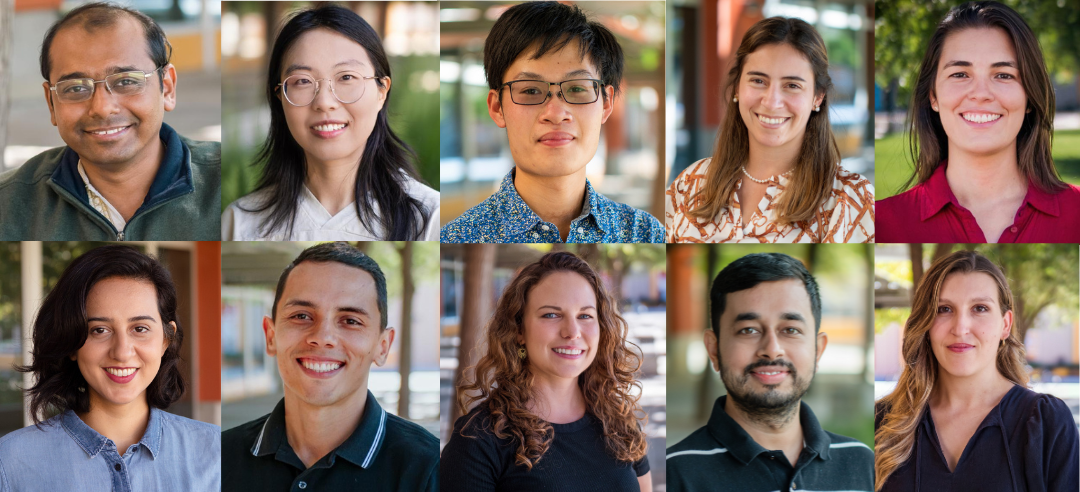
Congratulations to our Recent Dissertation Grant Awardees! | | Congratulations to our Fall 2025 and Spring 2026 dissertation grant awardees! The ten UC Davis PhD Candidates are conducting research in the following key areas: travel behavior, mobility and transit services, freight and supply chains, and vehicle policy and fleet transitions. | | (From left to right: Musfiqur Sifat Bhuiya, Yunwan Zhang, Marcus Chan, Maria Carolina Lecompte, Maria Catalina Valencia Cardenas, Maha Ahmad, Juan Camilo López Restrepo, Claire McGinnis, Anuj Dhole, and Anya Robinson) | |
Student Spotlight:
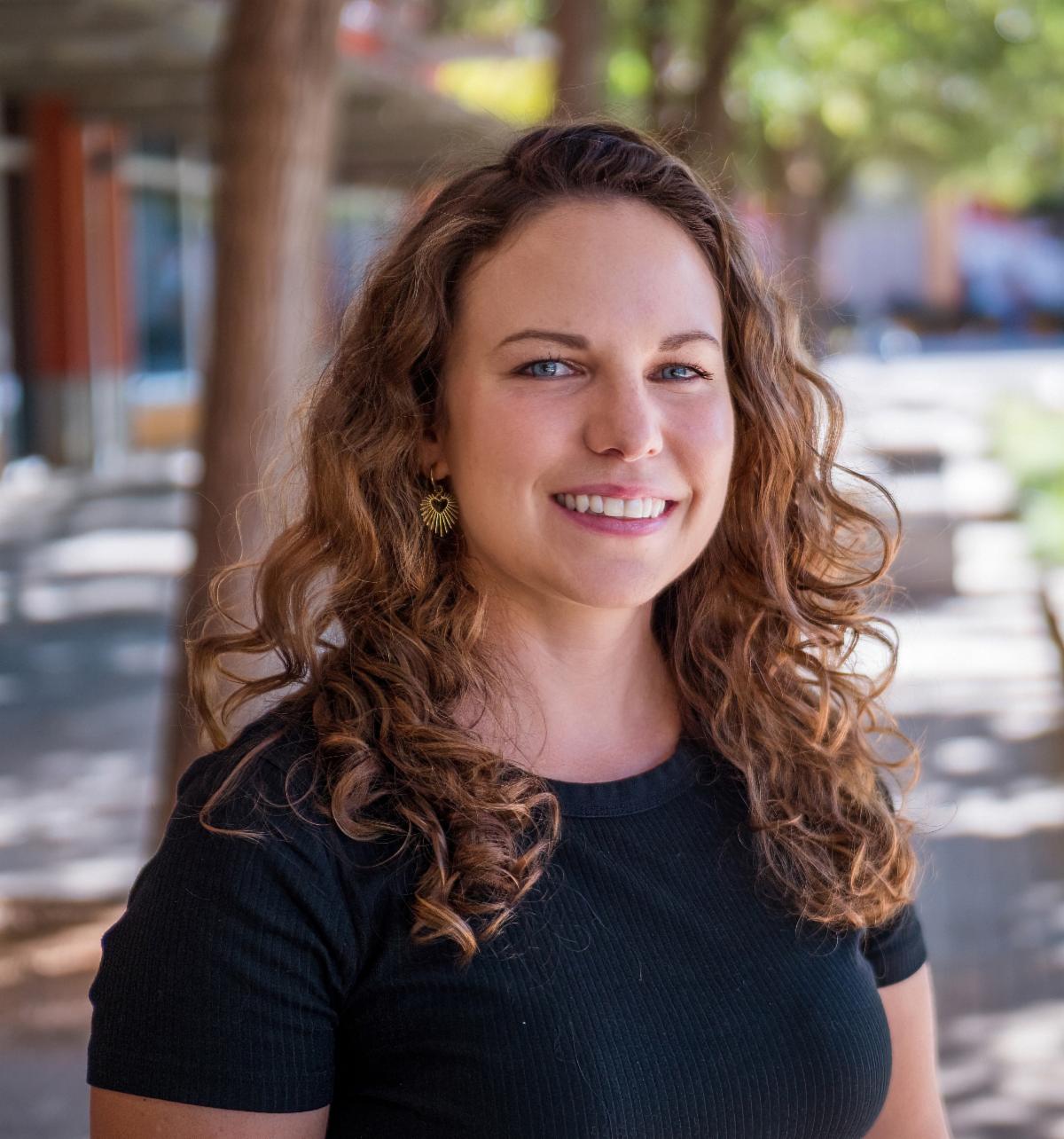
Claire McGinnis
| | |
Meet Claire McGinnis, a Transportation Technology and Policy Ph.D. candidate at the University of California, Davis!
Claire’s research examines how individual characteristics influence how people perceive and interact with the transportation system and what this means for measuring access to destinations. Her interest in transportation grew from her professional experience as a structural and transportation engineer, as well as her involvement with WTS and the City of Pittsburgh Complete Streets Advisory Committee.
During her time at UC Davis, Claire has gained valuable experience working alongside faculty and peers focused on creating a more accessible and efficient transportation system. She has received the California Transportation Foundation Lipman Family Sustainable Transportation Graduate Fellowship, the Dwight David Eisenhower Transportation Fellowship in 2023 and 2024, and multiple WTS scholarships.
Claire hopes to pursue a career in transportation research with a government agency or consulting firm, or as a transportation planner in the public sector.
Congratulations on your achievements, Claire!
| | |
NCST kicked off 21 new research projects this past Spring, some of which will:
These projects were made possible through funding received from the U.S. Department of Transportation through the University Transportation Centers program.
| | |
2026 National Mobility Summit: Advancing the Movement of People and Goods
September 14, 2026 @ 9:00 AM - 4:00 PM EST | USC Capital Campus, Washington, D.C.
| | |
The summit will convene leaders from the U.S. Department of Transportation, state and local government agencies, congressional offices, industry partners, and University Transportation Centers (UTCs) to advance a shared national objective: strengthening the mobility of people and goods as a foundation for economic competitiveness, supply chain resilience, and quality of life.
Research and solutions will be presented on the topic areas of Travel Demand Forecasting, Rural and Regional Connectivity, Freight and Supply Chain, Data and AI Integration, and Multimodal Performance. The event is organized by the National Center for Understanding Future Travel Behavior and Demand in collaboration with NCST and other UTCs.
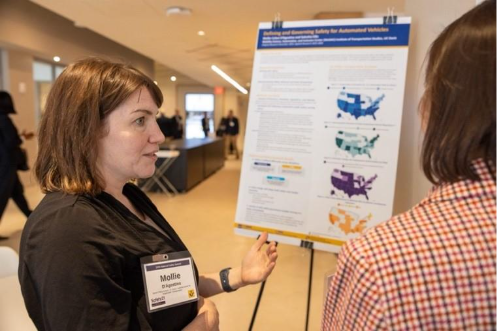
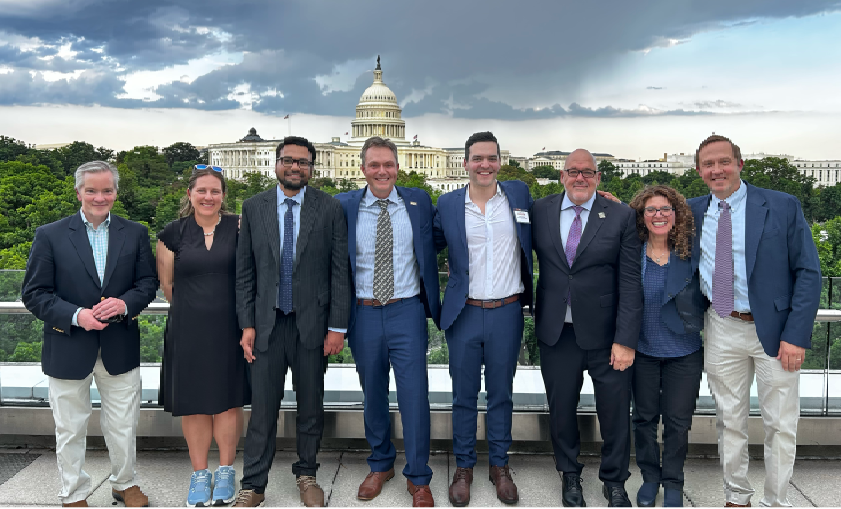
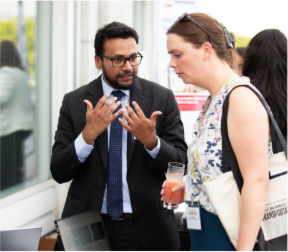
| | NCST Researchers Share Their Work at National Events | | 2026 National Safety Summit | Washington, D.C., March 2026 | | NCST Researcher Mollie D’Agostino (UC Davis) presents safety research at the National Safety Summit | | NCST researchers recently participated in the 2026 National Safety Summit, which brought together transportation leaders, researchers, government officials, and industry experts to advance roadway and railway safety. Hosted by Safety21 and six safety-focused University Transportation Centers, the Summit explored innovations in autonomous vehicles, connected infrastructure, technology corridors, and strategies to improve safety for all road users. | | The Science of Transportation | Washington, D.C., May 2026 | | The Science of Transportation convened more than 130 leaders from academia, industry, and government to demonstrate how federally funded university research strengthens transportation systems, improves safety, and advances the materials used to build roads, highways, and bridges. The event featured speakers from the U.S. Department of Transportation, Congress, industry, and the media, and researchers from University Transportation Centers including the NCST. | | Photo includes NCST researcher Dr. Mohammad Ashiqur Rahman of the UC Pavement Research Center and Brandon Minto, Director of Federal Government Relations at UC Davis | | |
Modeling Traffic Noise and Light on Natural Landscapes at the State Scale
Benjamin Hodgson; David Waetjen; Shannon Lemieux; Lorna Haworth; Laura Morris; Fraser Shilling | University of California, Davis
| | |
Multiple U.S. states are currently building roadway wildlife crossings, which are meant to provide wildlife with a safe passage across roadways, and if effectively designed can result in improved wildlife movement and connectivity. Noise and light from traffic have been shown to impact wildlife behavior in areas adjacent to roads, but these impacts are not currently being taken into account in the location and design of the crossings.
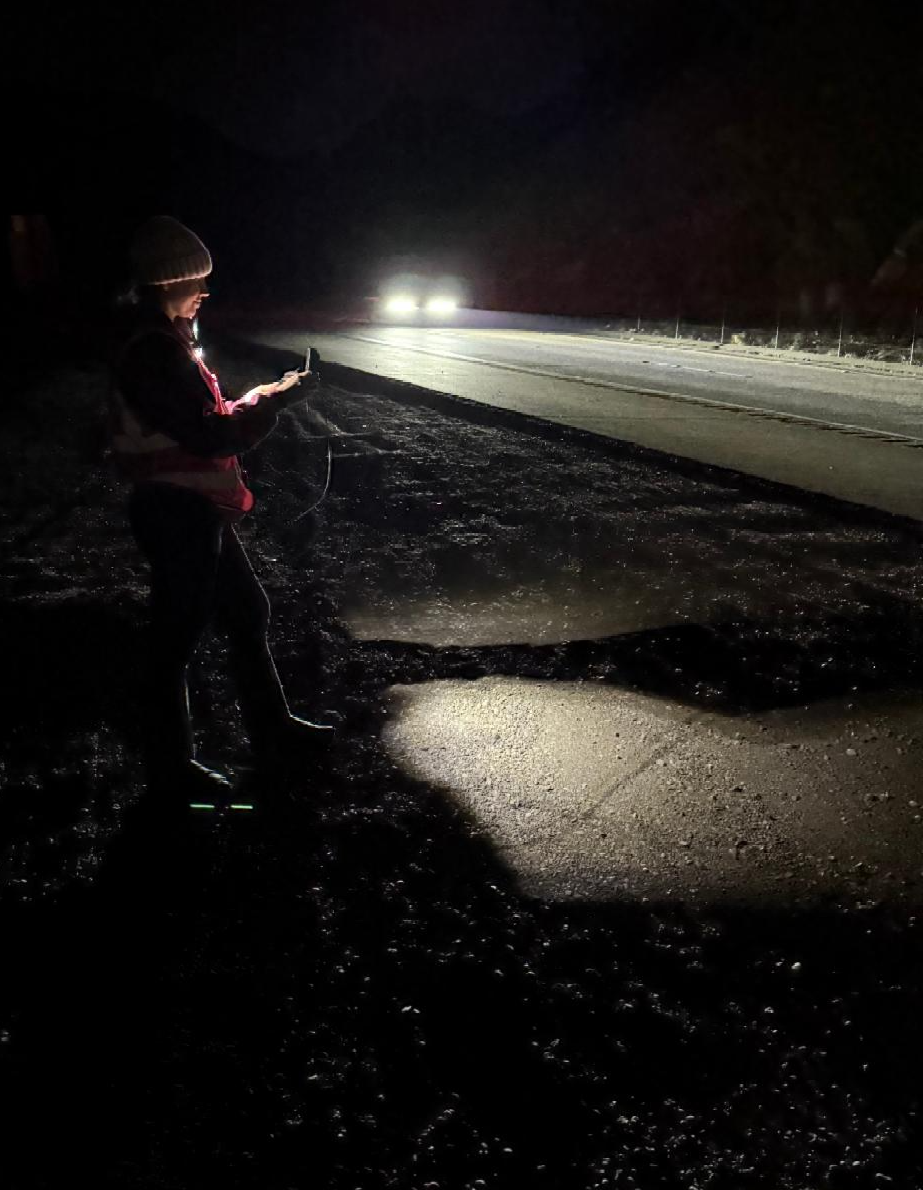
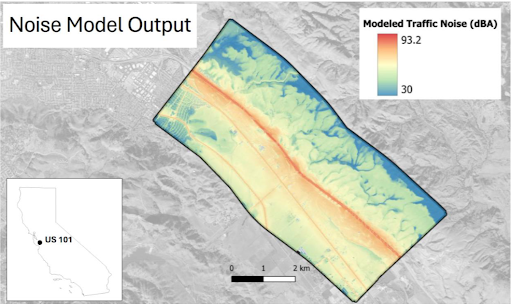
In this project, UC Davis researchers used QGIS software and novel ArcGIS tools to model the “noise-scape” and “light-scape” at high-resolution around California state highways and developed digital maps showing the identified noise and light impacts. These models and maps can be used both to better understand wildlife responses to noise and light and to support better placement and design of crossings to
| | UC Davis researcher Shannon Lemieux taking light measurements along a roadway | | maximize their use by wildlife. Multiple state agencies, including Caltrans, the California Department of Fish and Wildlife, the Oregon Department of Transportation, and the Washington State Department of Transportation, have expressed interest in the models, and this project’s approach is currently being used in planning wildlife crossings across several major roadways in California. | | Example of the traffic noise model output, shown here for around U.S. 101 and local roads in Santa Clara County, CA | |
|
Advancing Active Transportation Project Evaluation
Dillon Fitch-Polse; Hossain Mohiuddin; Dan Willet; Trisalyn Nelson; Matthew Favetti; Kari Watkins | University of California, Davis
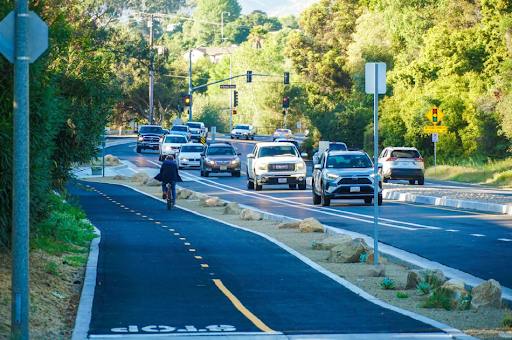
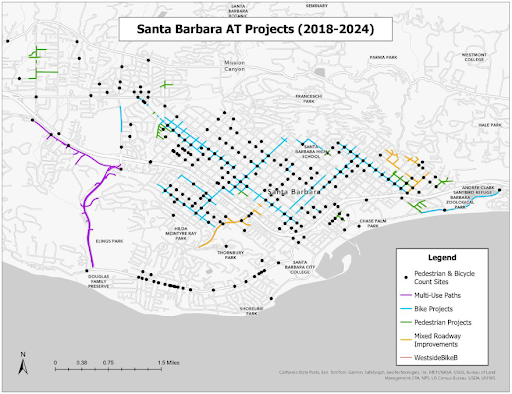
| | California has been making substantial investments in active transportation (AT) infrastructure throughout the state, and evaluating the completed projects is critical for understanding the return on these investments. State agencies currently use the California AT Benefit-Cost Tool (BC Tool), which was developed with UC Davis researchers, to estimate the benefits of state-funded AT projects. In this project, UC Davis and UC Santa Barbara researchers incorporated local | | Bike path project in Santa Barbara, CA that was evaluated as part of the research | | data on walking and bicycling levels into the BC Tool framework and underlying model to understand the validity of AT project evaluation by the BC Tool. The researchers have been using their findings to update the BC Tool and generate insights into how the tool may be further enhanced. | | Study area map for Santa Barbara, CA, with labeled pedestrian and bicycle count sites and AT projects | | In part as a result of this research, California state transportation agencies have adjusted the requirements for mandatory data collection for projects funded via the Active Transportation Program (ATP), which is the state’s only dedicated grant funding source for AT projects. The BC tool updates and adjusted ATP project requirements will improve AT project benefit estimates in California, including evaluating cost-effectiveness, safety impacts, and more. | | The researchers recently held a webinar with Caltrans to discuss the project’s methods, findings, and impacts. | | |
Personalized Coordinated Routing with Utility Learning
To develop a coordinated routing system that accurately projects traffic and incentivizes drivers to follow optimal routes, USC researchers developed a utility learning mechanism that learns drivers’ preferences to inform targeted incentives.
| | Dr. Mohammad Ashiqur Rahman, a postdoctoral scholar in Civil and Environmental Engineering at UC Davis, was recently featured in a blog by the Science Coalition following his presentation at The Science of Transportation event in Washington, DC in the spring. At the UC Pavement Research Center, Dr. Rahman studies asphalt aging and the performance of pavement systems that incorporate high volumes of recycled materials. Supported by funding from federal and state agencies, his research is helping transportation agencies adopt more cost-effective construction practices without compromising safety or durability. | | Photo features Dr. Mohammad Ashiqur Rahman at the Science of Transportation event in Washington, DC. | | NCST Welcomes Two New Leadership Council Members | | We are pleased to welcome Patrick Ó. Murphy and Annalisa Schilla as the newest members of the NCST’s Leadership Council. | | |
Patrick is State Policy Director at the Vermont Agency of Transportation, where he leads policy development and legislative engagement and oversees programs that support transportation system performance and funding strategies. A certified urban planner, he previously worked for many years as a stonemason and bricklayer and served in policy and planning roles in housing and transportation.
| | |
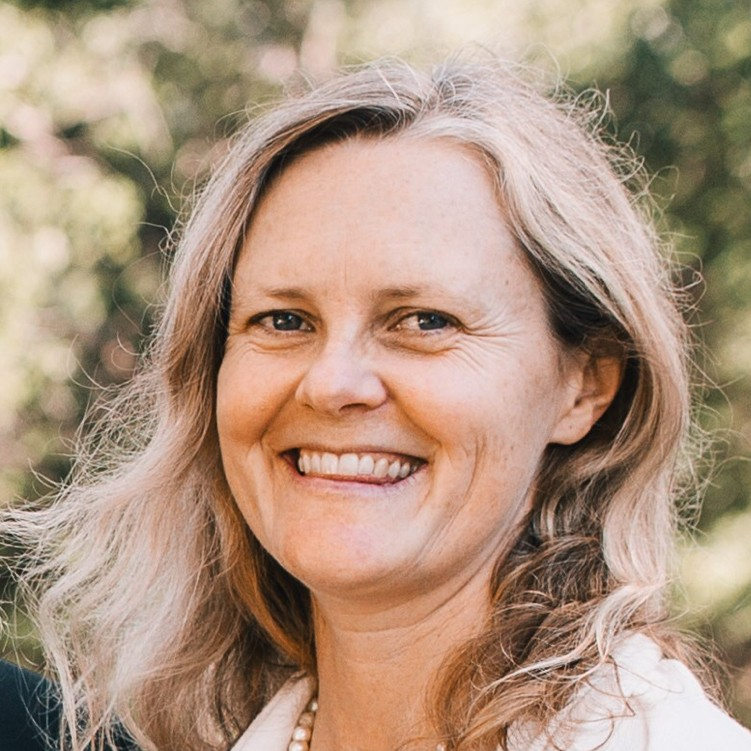
Annalisa currently serves as Chief of the Sustainable Transportation & Communities Division at the California Air Resources Board. In this role, she oversees a multidisciplinary team focused on land use, building performance, and policy work that supports coordinated transportation and community planning.
| | The National Center for Sustainable Transportation is a consortium of leading universities committed to advancing a sustainable transportation system through cutting-edge research, direct policy engagement, and education of our future leaders. Consortium members: University of California, Davis; California State University, Long Beach; Georgia Institute of Technology; Texas Southern University; University of California, Riverside; University of Southern California; and University of Vermont. | | | | |