|
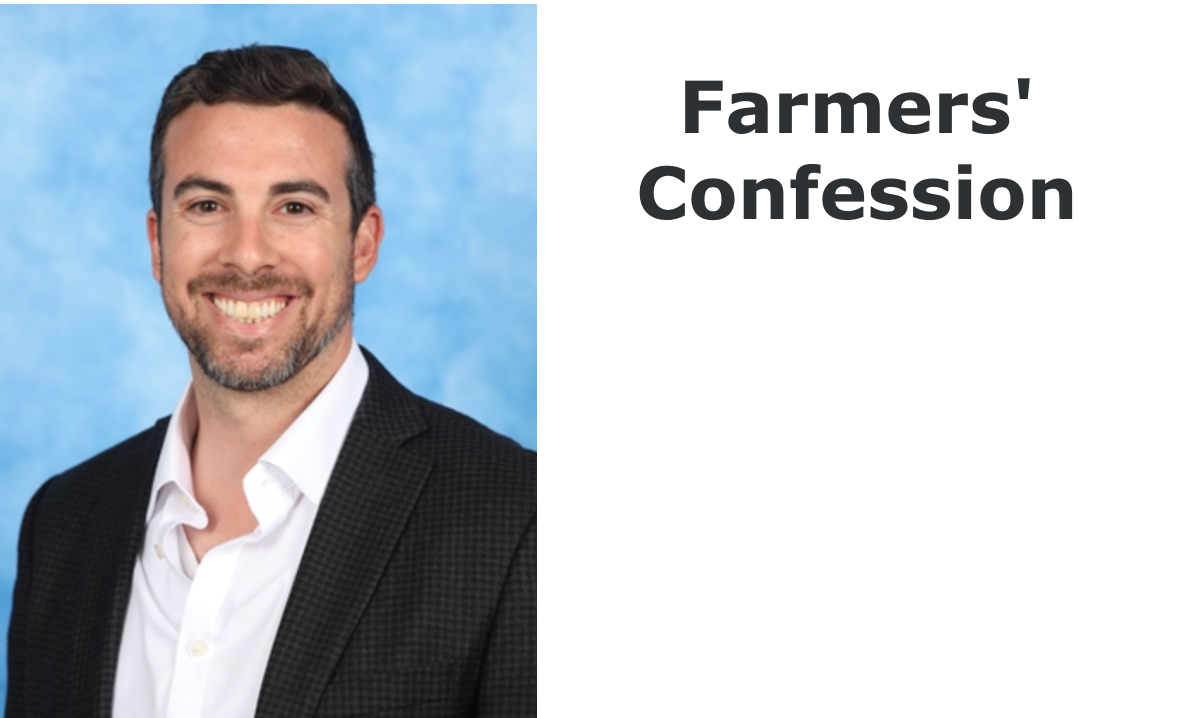
The words vidui/confession usually conjure up memories of Yom Kippur and the process of teshuva. However, in this week's Parshat Ki Tavo, we are told of the concept of vidui, but not in the context that we would expect. Farmers are told to bring their bikkurim/first fruits to kohahim in Yerushalayim and to recite vidui upon these fruits. The text they recite might sound familiar:
“A wandering Aramean was my ancestor; he went down into Egypt and lived there as an alien, few in number, and there he became a great nation, mighty and populous. When the Egyptians treated us harshly and afflicted us, by imposing hard labor on us, we cried to Hashem, the God of our ancestors; Hashem heard our voice and saw our affliction, our toil, and our oppression. Hashem brought us out of Egypt with a mighty hand and an outstretched arm, with a terrifying display of power, and with signs and wonders; and He brought us into this place and gave us this land, *Eretz Zavat Chalav uD’vash* (a land flowing with milk and honey). So now I bring the first of the fruit of the ground that You, Hashem, have given me.”
These words are the centerpiece of the mitzvah of sippur yetziyat Mitzrayim at the Pesach seder as they recount our history from the very beginning.
Why is the recitation of our basic history called vidui, as it doesn't seem much like a confession? Moreover, what is the connection between vidui bikkurim and saying vidui relating to teshuva? Why are they both called vidui?
The vidui the farmers say on the fruit is clearly not a confession, but an acknowledgment of Hashem. It comes from the same word as modim, as we acknowledge, confess, our thanks during chazarat hashatz. We are verbally acknowledging and articulating God’s hand in history and recognizing what He has given us. This imbues within us a sense of gratefulness for the first fruits. The same case can be made for vidui regarding teshuva. Understanding and knowing our relationship with Hashem will generate a sense of connection that will help us want to do teshuva and become closer to Hashem. As our last week in Elul is winding down, let’s utilize this time to develop an appreciation for what Hashem has granted us, which will, in effect, change our whole teshuva mindset.
Shabbat Shalom,
Rabbi Shulkes
|