November 3 - November 16, 2026 | | CISSR Affiliates Win Faculty Awards | | Adom Getachew Wins Award for Excellence in MA Advising and Mentoring | | |
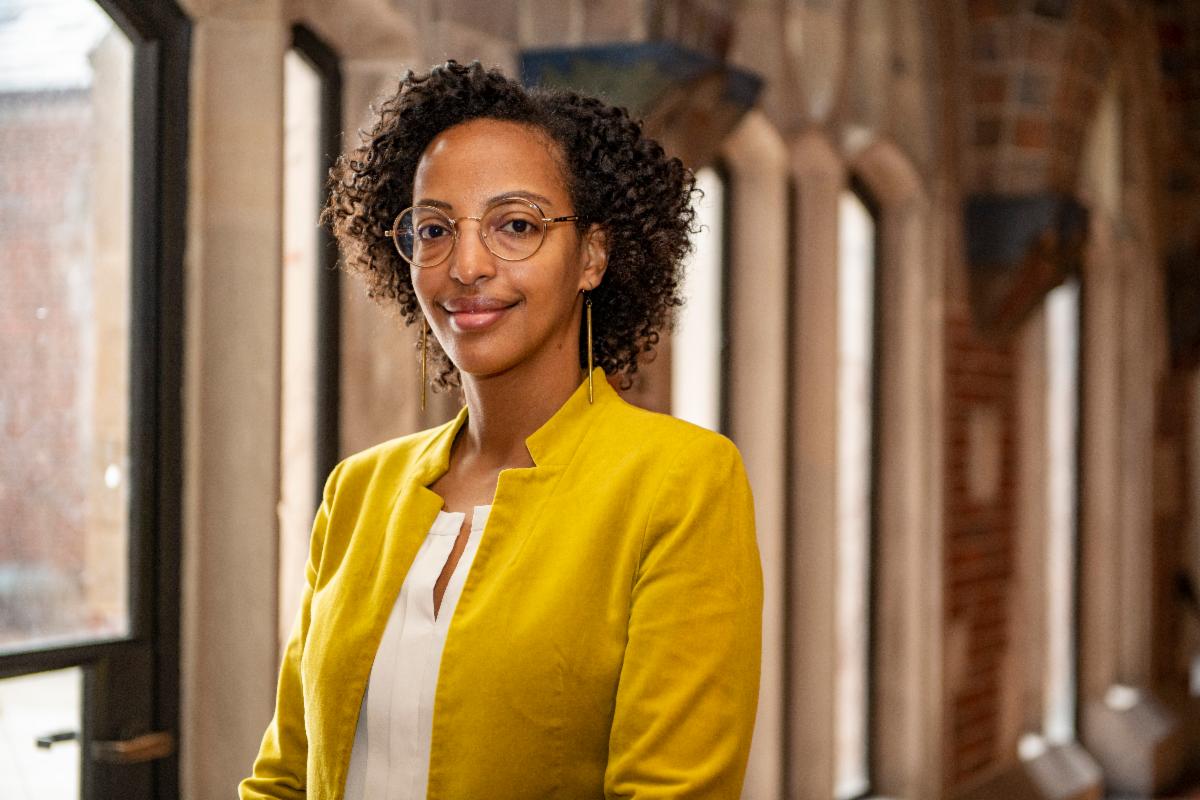
Adom Getachew, CISSR Board Member and Professor of Race, Diaspora & Indigeneity and Political Science, was the recipient of the Award for Excellence in MA Advising and Mentoring, recognizing her for her outstanding mentorship of students. Getachew has been an MA advisor for 10 years. She was noted for the connections that she makes for mentees, from her knowledge of books and articles to her understanding of which faculty members would make excellent contacts. Getachew recalls the patience and constructive feedback she received from her own mentors and provides that same care and kindness to her own students. She goes above and beyond for her mentees, and recognizes the importance for young scholars of a community of mentors providing different perspectives and orientations.
Read about the award here.
| |
Paul Poast Wins Academic Communicators Network Excellence Award for Op-ed Writing
| | |
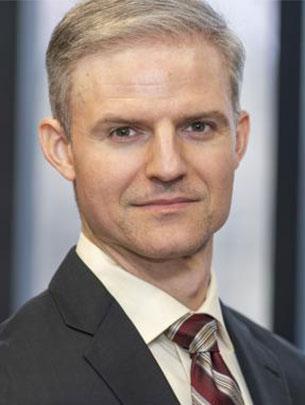
Paul Poast, former CISSR Board Member and Associate Professor of Political Science, was the recipient of a 2026 Academic Communicators Network Excellence Award. Poast received the Op-ed writing award, recognizing him for his insightful opinion pieces which have received recognition in noteworthy publications. Poast is an exceptional academic communicator helping us understand what the research really tells us about international relations. His commentary on current events draws on his research on alliance politics and the political economy of international security, utilizing quantitative analysis and diplomatic history to provide an informed perspective that is not weighed down by academic jargon. He has written over 50 pieces for the World Politics Review, and co-authored op-eds in the New York Times, Time, and The Atlantic.
Read about the award here.
| | Have you received an award or published an article you'd like us to highlight? | | |
November 4th
Committee on Environment, Geography, and Urbanization (CEGU)
The Great Offshore: Launching Limn 15
4:30pm
Social Science Research, Tea Room
| |
November 5th
RDI Workshop Series
RDI Workshop Series - Adrian De Leon
4:00pm
Kelly Hall, Room 108
| |
November 5th
Chicago Forum for Free Expression
Beyond Belarusian Borders: Art, Expression, and Exile
6:00-7:30pm
5737 S. University
| |
November 10th
Histories of Modern Europe (HOME) Workshop
Histories of Modern Europe (HOME) Workshop: Dr. Sheila Fitzpatrick
4:00-5:30pm
Social Science Research Building, John Hope Franklin Room (Room 224)
| |
November 12th
The Forum on Law and Legalities
“The King Can Do No Wrong”: Daniel Lee, Berkeley
4:30pm
Social Sciences Research Building, Tea Room (201)
| | |
November 5th
Committee on Environment, Geography and Urbanization (CEGU)
Petroleum Proxies: Interwar Ocean Floor Research and the Political Economy of Planetary Knowledge
4:30pm
Social Science Research, Tea Room
| |
November 5th
Chicago Center for Contemporary Theory (3CT)
Jason W. Moore: “The Climate-Class Conjuncture, or, the Worldwide Class Struggle in the Web of Life”
6:00-7:30pm
Social Science Research, Room 122
| |
November 6th
Workshop on Quantitative Methods in Education, Health and Social Sciences (QMEHSS)
The Infrastructure of Memory: How Communities Learn What Their Economy Is, and What They Ask Government to Do About It presented by Robert Gulotty
12:00-1:30pm
1155 E. 60th street, 1st Floor, Room 140C
| |
November 7th
Chicago Center for Contemporary Theory (3CT)
Gökçe Günel: “Floating Power: Energy, Infrastructure, and South-South Relations”
3:00-4:30pm
Social Science Research, Room 122
| |
November 12th
Center for Latin American and Caribbean Studies (CLACS)
“I Don’t Care If They Call Me a Dictator”: Atrocities in the Bukele Model
12:30-1:50pm
Social Science Research, Tea Room
| |
November 13th
Seminary Co-op Bookstores & Center for East Asian Studies
East Asia by the Book! CEAS Author Talks ft. Leland Lazarus (Lazarus Consulting LLC)
12:00pm
1100 East 57th Street, Chicago, IL 60637 (Franke Institute for the Humanities)
| |
November 16th
Committee on Environment, Geography and Urbanization (CEGU)
Samantha Iyer—Agrarian Superpower: Food, Development, and the Global Ascendancy of the United States
5:30pm
Social Science Research Building, John Hope Franklin Room (Room 224)
| | Around Town and Down the Road | | |
African Studies Workshop
Alternate Tuesdays, 5:30pm - 7:00pm, Foster Hall 107
November 10: Abimbola Adelakun, University of Chicago
| |
Comparative Politics Workshop
Wednesdays, 3:00pm - 4:20pm, Pick Hall, Room 105
November 4: Shiyan Cao (University of Chicago)
November 11: Lilly Massoud-Judge (University of Chicago)
| |
France/Francophone Workshop
Alternate Fridays, 12:30pm - 1:50pm, Social Sciences Tea Room, Room 201
November 6: Emily Cox, UChicago Harper-Schmidt Fellow
November 13: Carole Gayet-Viaud, CNRS, CESDIP
| |
History and Theory of Global Capitalism
Select Wednesdays, 4:30pm - 6:00pm, Pick Hall 105
November 4: Brian Judge
November 11: Amir Abahel
| |
Immigration Workshop
Alternate Mondays, 12:30pm - 1:45pm, Pick 105
November 9: Shima Sadaghiyan, PhD Student, Crown School of Social Work
| |
Mexican Studies Seminar
Tuesdays, 1 PM, via Zoom
November 3: Sandra Rozental, Centro de Estudios Históricos, El Colegio de México
| |
Political Economy Workshop
Thursdays, 12:30pm -1:50pm, Harris Public Policy, Keller Center, Room 2112
November 5: Frances Lee (Princeton University)
November 12: Clayton Nall (University of California-Santa Barbara)
| | |
American Politics Workshop
Tuesdays, 12:30pm - 1:50pm, Pick 506
November 3: Neomi Rao, University of Chicago
November 10: Devin Caughey, Massachusetts Institute of Technology
| |
Current Ethnography and Social Theory Workshop
Select Tuesdays, 4:30-6:00pm, Haskell Hall 101
November 3: Marcus McGee
November 16 (Monday, Haskell Hall 315): Xenia Cherkaev
| |
Gender and Sexuality Studies Workshop
Alternate Tuesdays, 5:00pm - 6:30pm, Center for the Study of Gender and Sexuality, Room 103
November 3: So Yoon Lee, CSGS Residential Fellow, PhD Candidate in Sociology
| |
Institutions Workshop
Alternate Tuesdays, 5:00 – 6:30 pm, SSRB Tea Room
November 3: Marco Garrido, Associate Professor of Sociology, University of Chicago
| |
Latin American History Workshop
Alternate Thursdays, 4:30pm - 6:00pm, Pick Hall, Room 118
November 19: Sofía Ortiz Torres
| |
Political Theory Workshop
Select Mondays, 3:30pm - 5:20pm, Foster Hall 107
November 16: Salma Shamel (University of Chicago)
| |
Workshop on International Politics
Thursdays, 3:30 - 5:00 PM, Pick Hall 506
November 5: Sebastian Rosato (University of Notre Dame) & Moritz S. Graefrath (University of Oklahoma)
November 12: Randall Conway (University of Chicago)
| | Review of Yanqiu Zheng, In Search of Admiration and Respect: Chinese Cultural Diplomacy in the United States, 1875-1974 | |
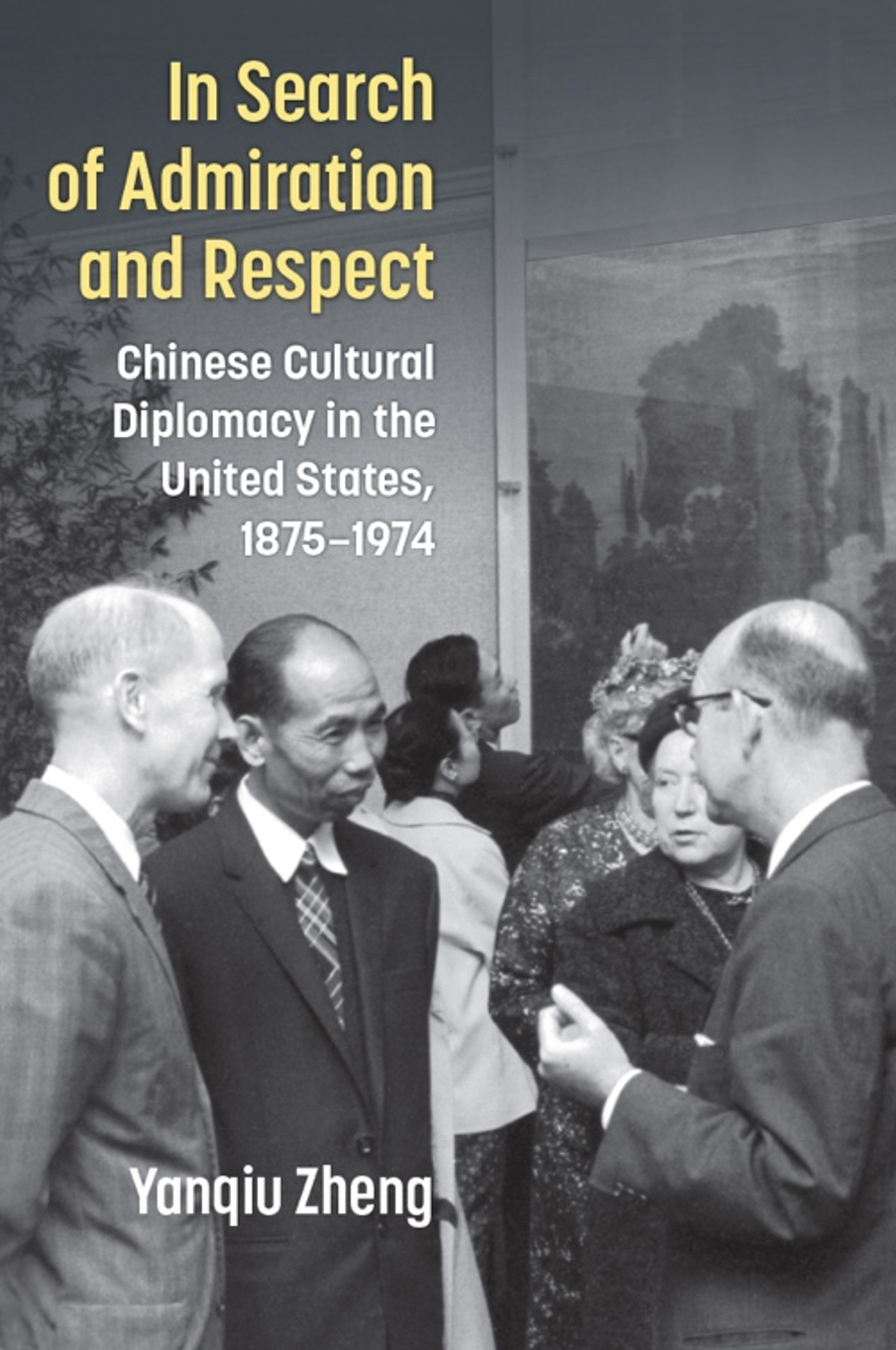
In this review, CISSR 2021-22 Dissertation Fellow Carl Kubler discusses the contributions and limitations of Yanqiu Zheng’s book In Search of Admiration and Respect: Chinese Cultural Diplomacy in the United States, 1875-1974. The book studies how Chinese intellectuals and governments tried to win American goodwill by promoting China’s cultural achievements through art exhibitions, World’s Fairs, and philanthropic foundations. Zheng focuses on the alliance between the New York-based China Institute and the Nationalist government, and argues that these efforts, though of limited success, helped restore China’s international standing and provided a model for the PRC’s later efforts. Kubler praises the book’s high-quality research and timely topic, and credits Zheng with showing that Chinese actors were active agents in shaping their own representation abroad. However, he finds the narrative cluttered with minor figures and written mainly for specialists. Above all, he points out that the book says little about how American audiences actually received these efforts, which he argues is the most important aspect of cultural diplomacy. He also asks why Japan’s cultural diplomacy succeeded where China’s struggled. Despite these limitations, he closes by calling the book a valuable contribution to the diplomatic history of China.
Read the full book review here.
| Disaggregating citizenship: Tibetan refugees and exclusionary state policies in India | |
Ishani Dasgupta is an Assistant Instructional Professor of Human Rights and CISSR Book Workshop fellow. In her article for the Political and Legal Anthropology Review, she explores the struggles of second-generation Tibetan refugees in India. The article focuses on the 2017 Indian government decision to allow Tibetans born in India before 1987 to get citizenship. The law requires Tibetans to stop receiving benefits from the Central Tibetan Administration in order to qualify. Dasgupta argues that this offer promised refugees enfranchisement in India only under the condition that they gave up the rights, identity, and community that they have as Tibetan refugees. Her paper is a result of six years of fieldwork in India with Tibetan refugees. Dasgupta examines the particular position of Tibetan refugees in India, dividing them into two categories, those that are documented, and those who are undocumented. She brings in stories from people she met during her fieldwork to illustrate the challenges faced by Tibetan refugees in India and their varying opinions, reactions, and responses to citizenship offers.
Read the article here.
| How radiant is the past? Workers’ struggles for democracy and transitions from socialism to capitalism in the late 20th century | |
Assistant Professor and CISSR Faculty Fellow, Yueran Zhang, examines Chinese labor politics under Michael Burawoy’s theory of “actually existing socialism.” Burawoy’s theory suggests that the structure of socialist production politics leads workers towards dissent and to demand democratization. Examining the literature of labor politics under Chinese socialism, Zhang demonstrates the need to include Burawoy’s theory of actually existing socialism to increase analytic potential of the subject. Zhang reconstructs Burawoy’s theory to examine the kinds of labor activism that occur during socialism, but also elite responses to such activism. In this article, Zhang highlights how socialist party-states partially absorbed worker’s demands but ultimately maintained the political status quo. One strategy employed by socialist party-states was market reform, which in time structurally weakened socialist states, leading to capitalist transition. Zhang explores how market reform pacified workers’ demands for democratization yet ultimately led to the weakening and collapse of socialist states. His analysis and expansion of Burawoy’s theory brings forth a new dimension from which to explore Chinese labor politics. Zhang emphasizes the relevance of Burawoy’s theory in today’s China, where there has been an increase in nostalgic longing for the socialist past. He suggests that the reformed theory can allow studies to “develop a genuinely liberatory vision of a potential socialist future that is detached from a valorized Party-state.”
Read the full article here.
| | | |
In this forum article, CISSR Monograph Enhancement Fellow Fredrik Albritton Jonsson builds on his 2023 book Scarcity: A History from the Origins of Capitalism to the Climate Crisis to call for an “age of repair.” Jonsson and co-author argue that modern economics rests on two assumptions: human desires are endless and resources are limited. Instead of treating this as a reason for restraint, economists treat scarcity as a problem that markets and technology can always overcome through more growth. The authors call this view a “Cornucopian” ideology and trace it back to the seventeenth century. They contrast it with “Finitarian” ideologies that stress the limits of nature and the need to moderate human desires. One example is the late nineteenth-century Arts and Crafts movement led by John Ruskin, who imagined a community without steam engines or railroads and encouraged workers to plant trees and heal the land. Drawing on Ruskin, the authors argue that ecological repair requires “the education of desire” that moves away from conspicuous consumption. It also requires a reorientation of the economic imagination, replacing the GDP with a multidimensional metric of human welfare that respects the limits of the Earth System. They close by urging economists to shift their focus “from quantitative expansion to qualitative improvement,” with human flourishing within planetary limits as the goal.
Read the full article here.
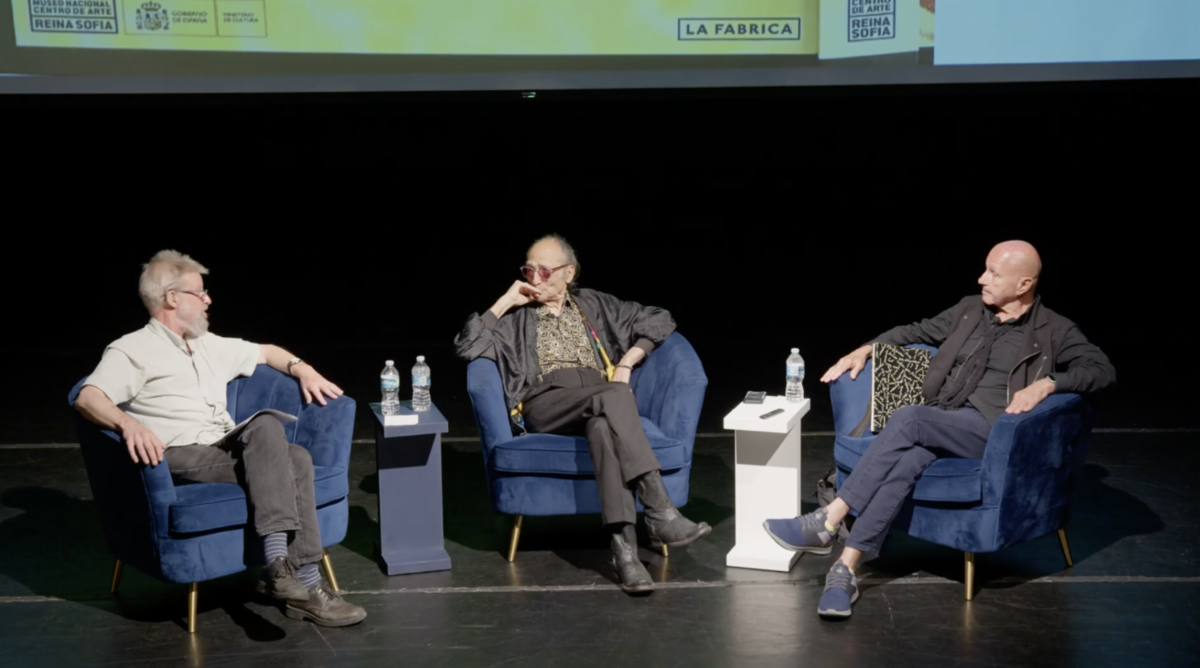
| | Antoni Miralda in conversation with César E. Trasobares and Stephan Palmié | |
CISSR 2023-24 Monograph Enhancement Fellow Stephan Palmié was recently featured in a conversation with the Catalan artist Antoni Miralda and the Miami artist and curator César E. Trasobares, the first event of the new Oolite Arts Conversations series in Miami. The three discussed Miralda’s decades of food-based art and his influence on the city. The conversation first described Miralda’s career from his early street actions in New York to his projects in Miami in the 1980s. Palmié reflects on his collaboration with Miralda at UChicago, where the two co-taught “The Art and Anthropology of Food and Cuisine” in 2019. Drawing on anthropological theories of ritual, Palmié argues that Miralda’s public banquets and parades are more than meals. They create new rituals of shared eating that bring people together and can push them to think and act differently. He closes by crediting Miralda with an underrated role in shaping Miami’s art scene and arguing that “breaking bread together” can be a form of resistance against the forces that pull communities apart, such as rising rents and global capitalism.
Watch the full conversation here.
| | | | |