|
"To plant a garden is to believe in tomorrow.”
– Audrey Hepburn
| | The Garden Gate section gives you a peek inside one of the many beautiful gardens that you can visit in Dutchess County along with other gardens throughout the lush Hudson Valley. Come with us as we explore a featured garden and all its beauty. | | Serena Starzyk, Master Gardener, Class of 2024 | | Wethersfield Estate & Garden: Long Views, and Classical Beauty in Amenia | | |
A Hilltop Estate Built Around Order and Outlook
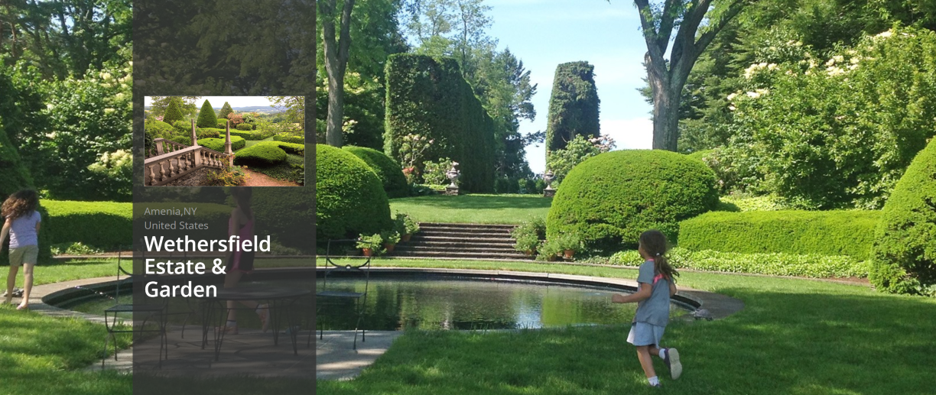
Wethersfield was created by Chauncey Devereux Stillman, who purchased former farmland in Amenia in 1937 and shaped the property into a country estate devoted to classical design, conservation, equestrian life, and the arts. Today the estate is known for its formal garden, woodland garden, carriage roads, trails, and broad rural setting. The garden and estate are listed on the National Register of Historic Places and remain open seasonally for public visits, programs, and tours.
| | |
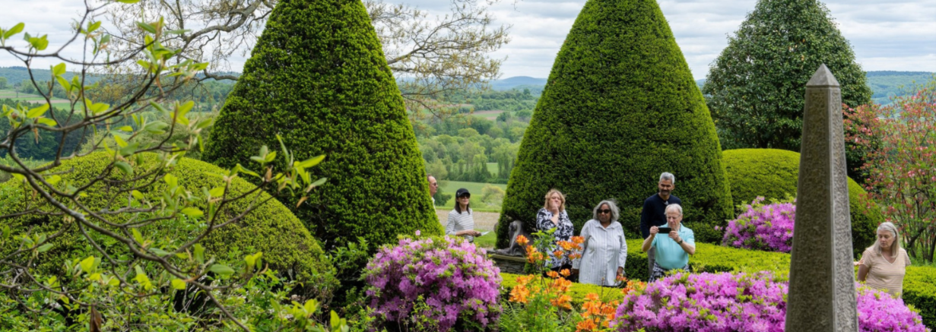
Image: Wethersfield Estate
Photo: Wethersfield Estate & Garden, Dutchess Tourism
| |
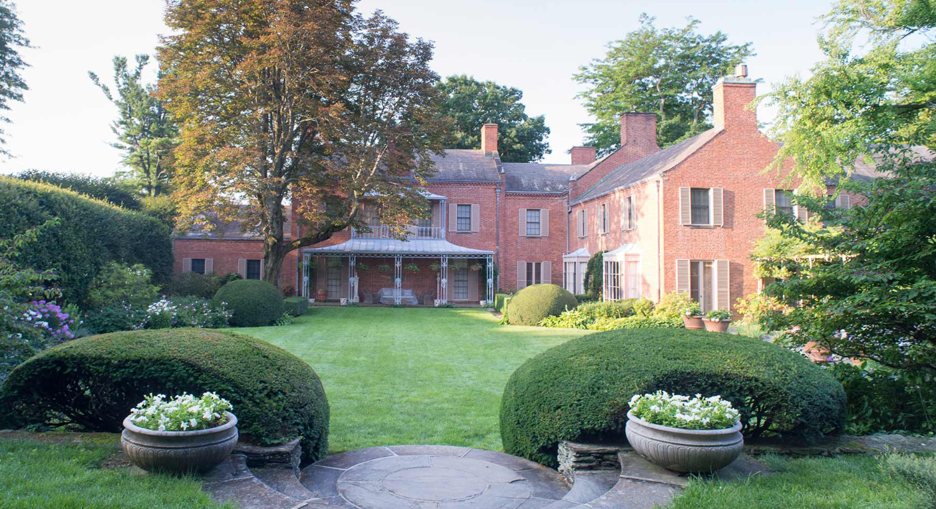
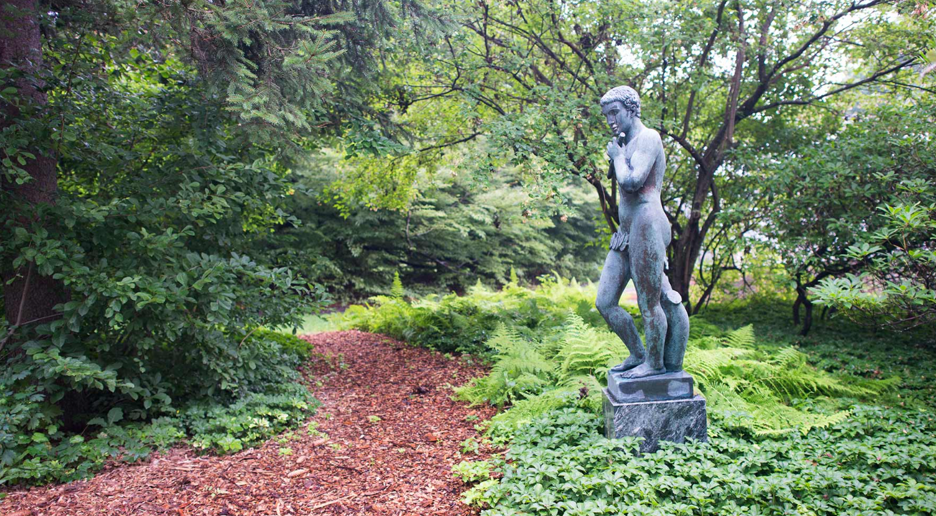
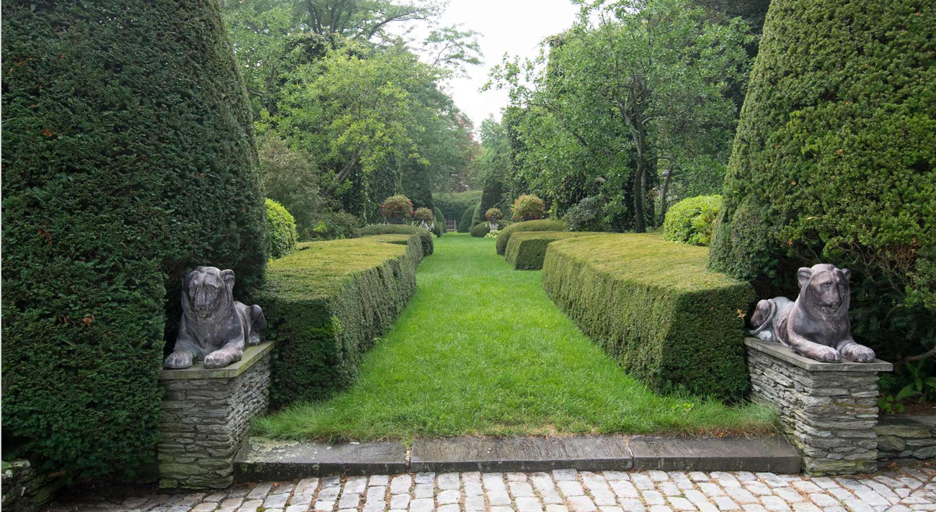
The core garden was developed over several decades, with Stillman collaborating with landscape architects Bryan J. Lynch and Evelyn N. Poehler. The result is a rare twentieth-century classical garden in the United States: axial, terraced, carefully proportioned, and richly detailed, yet never cut off from the land around it. Paths, hedges, walls, steps, statuary, and water features guide visitors through a sequence of outdoor rooms before the eye moves outward to fields, woods, and distant hills.
That balance is why Wethersfield works so well for a fall visit. Autumn does not overwhelm the garden’s design; it reveals it. As flowers fade and foliage begins to turn, the permanent framework becomes easier to see: clipped hedges, evergreen massing, brick and stone, terraces, paths, urns, sculptures, and the long lines that connect house, garden, meadow, and woodland.
| | |
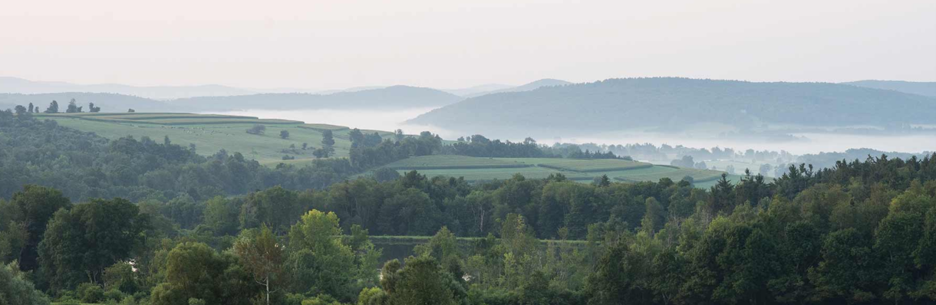
Image below: Early Fall view showing Wethersfield’s hedges, terraces, path structure, or countryside sightline.
Photo Credits: Wethersfield Estate & Garden (above), The Garden Conservancy (below)
| |
What to Look For in Fall
In summer, visitors may notice color first. In fall, Wethersfield rewards a slower eye: clipped hedges frame paths, steps change the pace of a walk, urns and statues end long views, and evergreen forms hold the garden together as deciduous leaves turn gold, russet, and bronze. This is the season to look beyond individual blooms and see the garden as a carefully composed landscape.
The garden’s classical bones are especially legible late in the season. Look for clipped yews and hedges that continue to define space after flower borders have softened. Notice the contrast between evergreen darkness and autumn light. Watch how stone, brick, gravel, and water provide color and texture of their own. The best fall photographs here may not be close-ups of flowers; they may be views down a path, across a terrace, or outward to the countryside where the garden’s formal lines open into rolling Dutchess County scenery.
Programs and Seasonal Engagement
Wethersfield’s public season is intentionally measured, which suits the character of the place. Garden visits are generally offered from June to mid-October on Fridays, Saturdays, and Sundays, while trail visits extend more broadly through the year. Reservations are strongly encouraged so the garden can remain quiet, intimate, and reflective rather than crowded.
| | Fall visitors should check Wethersfield’s event calendar before going. Seasonal programming may include garden visits, house and carriage house tours, hunter pace events, lectures, author conversations, music partnerships, and other arts or preservation programs. Because the formal garden season typically closes in mid-October, early fall is the best window for readers who want both autumn atmosphere and access to the garden’s designed spaces. | |
Image: Visitors or group tour in the Wethersfield garden.
Photo: Wethersfield Estate & Garden
| The Sargent Connection: Designing with Views | |
A Garden Conversation with the Larger Landscape
Although Wethersfield is inland from the Hudson River, it shares a design instinct with the Hudson Valley estate tradition highlighted later in this issue’s Gardener Spotlight on Henry Winthrop Sargent. The formal garden is not isolated from the countryside; it frames the surrounding hills, fields, woods, and sky. This is not a claim of direct authorship. Wethersfield was created much later under Chauncey Stillman’s vision, and its classical structure differs from Sargent’s picturesque woodland estate. For readers who enjoy the Sargent article, Wethersfield becomes a field lesson in borrowed scenery: instead of looking for the Hudson River, look for how the garden directs attention outward toward distant ridges, open land, tree lines, changing light, and the feeling of elevation. In fall, when foliage color sharpens the edges of woods and hills, that outward pull becomes especially visible.
| |
Image: Long view of Wethersfield showing the estate’s connection to the surrounding landscape.
Photo: Wethersfield Estate & Garden
| |
Stewardship and Preservation
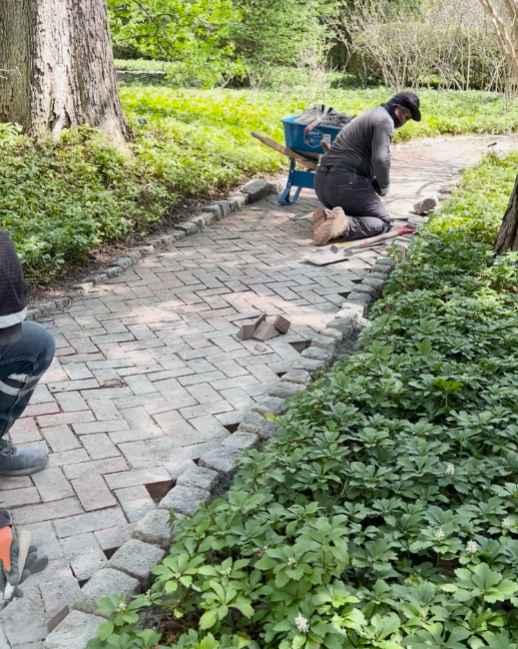
Historic gardens require constant care because they are both living places and designed works of art. Wethersfield’s preservation involves maintaining clipped forms, paths, terraces, water features, woodland areas, trails, and views while also supporting conservation and responsible land stewardship across the estate’s broader acreage.
| |
Wethersfield’s preservation story is active, not finished. Current stewardship work includes historic preservation planning for the house, carriage house, aging infrastructure, and broader designed landscape. A Cultural Landscape Master Plan is helping guide repairs, vegetation renewal, materials conservation, responses to climate pressures, and management of invasive pests such as beech leaf disease.
At the same time, Wethersfield’s horticulture team is advancing nature-based practices: extending bloom for pollinators, planting more native and keystone species, removing invasives, conserving water, and retaining plant biomass on site. Together, these efforts show how a historic garden can be preserved not as a frozen artifact, but as a living landscape adapting to the ecological realities of the twenty-first century.
| |
Image: Path restoration at Wethersfield
Photo: Wethersfield Estate & Gardens
| |
Learn more about current stewardship and preservation work
Visit Wethersfield’s Historic Preservation page for information on preservation now underway; the Wethersfield Garden Cultural Landscape Master Plan overview for recommended garden conservation work; Wethersfield’s Conservation & Horticulture page for land stewardship context, and the Pathways to PRFCT spotlight for nature-based practices such as pollinator support, native plantings, invasive removal, water conservation, and retaining biomass on site.
| | |
Tips for Visiting Wehersfield in the Fall
-
Go early in the fall season. The formal garden is generally open June to mid-October, so September and early October are the safest times to pair garden access with autumn color.
-
Reserve ahead. Wethersfield encourages advance reservations for garden visits, and guided tours of the house or carriage house require reservations and may have limited availability.
-
Look beyond flowers. Fall is the season to study structure: hedges, evergreens, terraces, paths, stonework, fountains, statuary, framed views, and the way the countryside completes the garden.
-
Bring walking shoes. If time allows, pair the formal garden with a trail visit to experience the estate’s woodland setting and broader conservation landscape.
Wethersfield is one of Dutchess County’s best fall garden visits because it asks visitors to notice what lasts after peak bloom: form, proportion, evergreen structure, stone, water, paths, and view. Like Sargent’s Hudson River landscapes, it reminds us that the most memorable gardens do not end at their borders. They teach us how to see the land beyond them.
| | In Roots of Sustainability, we explore how gardeners and communities can embrace practices that nurture the planet, inspired by Cornell Cooperative Extension's dedication to ecological balance and resilience. | | Serena Starzyk, Master Gardener, Class of 2024 | | Growing Resilience, Strengthening Communities: How the 2026 CCE Resilient Gardens Conference equipped Master Gardener Volunteers to help community gardens flourish | |
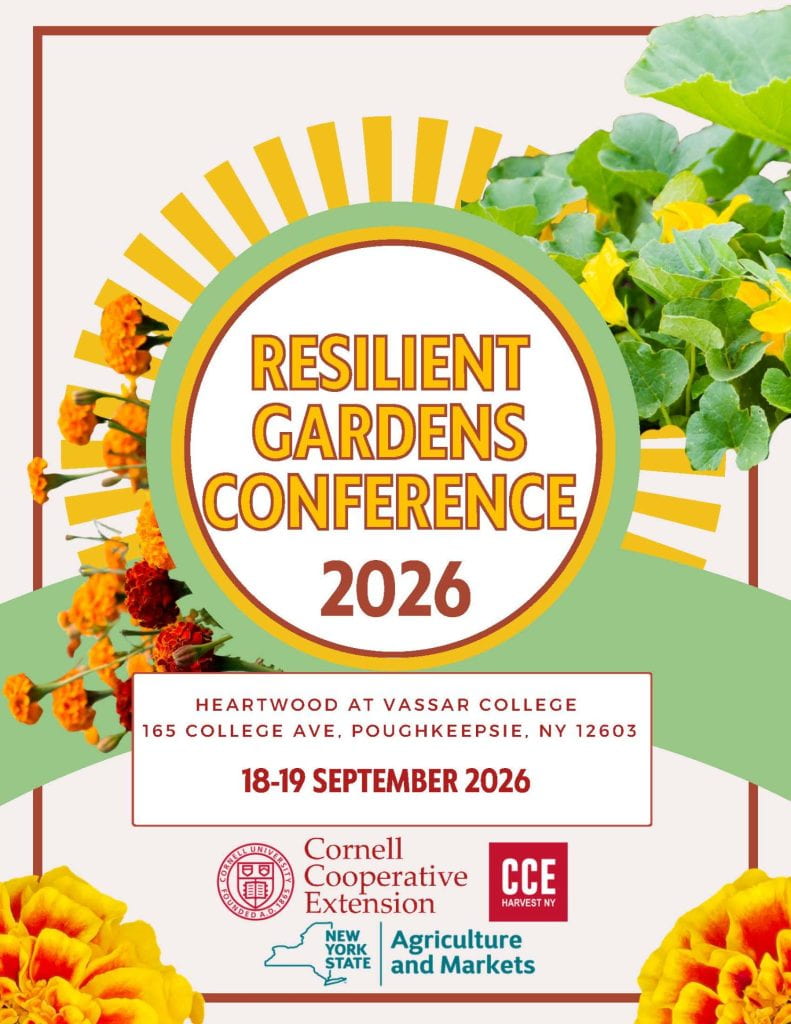
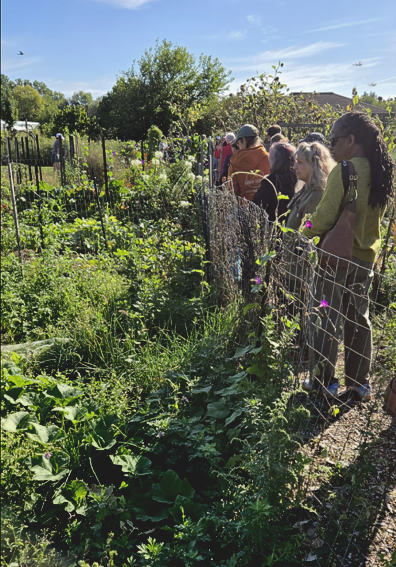
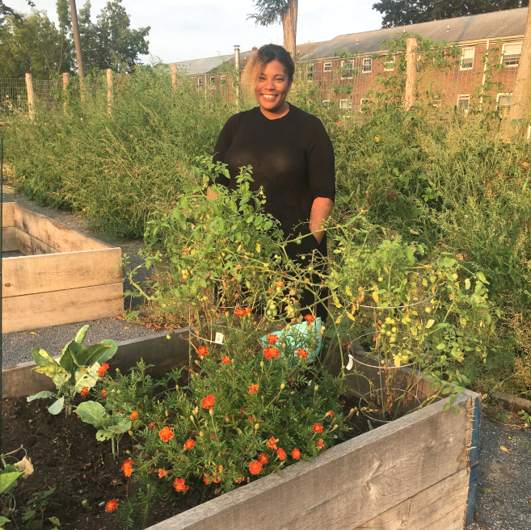
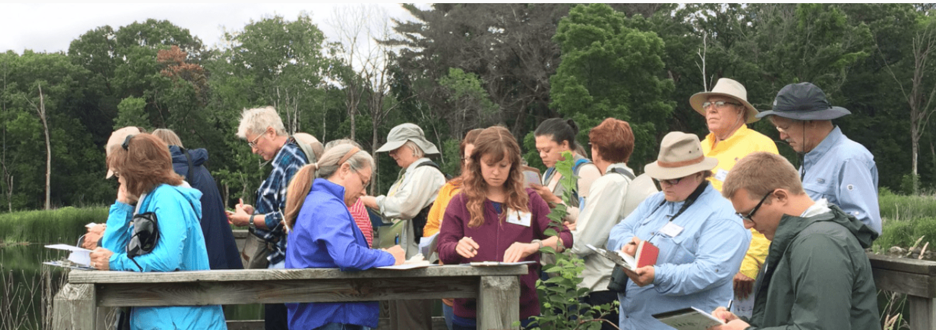
On September 18 and 19, 2026, Cornell Cooperative Extension partners hosted the third Resilient Gardens Conference at The Heartwood at Vassar in Poughkeepsie. Presented by Harvest New York and New York State Seed to Supper with support from the New York State Department of Agriculture and Markets, the conference focused on culturally relevant practices and community garden management for urban gardeners. It was especially timely as gardens faced changing growing conditions, food insecurity, limited resources, and the need for welcoming spaces where neighbors could learn together. The seminar concluded with tours of local community gardens, including Pershing Street Farm, where Dutchess County Master Gardener Volunteers have supported community gardening efforts, and Vassar Farm, home of the Poughkeepsie Farm Project and Kingston YMCA.
| |
Images: Poughkeepsie Farm Project at Vasser Farm
Photo: S. Starzyk
|
Practical Knowledge for Resilient Gardens
Designed to move from discussion to action, the conference addressed soil health, pest management, climate adaptation, volunteer engagement, conflict navigation, and the health benefits of growing food. Participants learned from urban and rural leaders and explored Cornell Cooperative Extension resources. Optional second-day visits to community garden projects in Poughkeepsie and Kingston showed those practices in action.
More Than a Place to Grow Food
The conference reinforced that a well-supported community garden was far more than a place to grow food. It was a classroom, gathering place, and point of connection where new gardeners practiced skills, experienced growers shared knowledge, and families learned together. Community gardens also supported
pollinators, biodiversity, and stewardship of shared land. These benefits were greatest when gardeners had
|
continuing education and trusted guidance that respected community ownership.
Growing Capacity for the Future
The Resilient Gardens Conference showed that successful gardens depended on more than seeds, tools, and favorable weather. They flourished through skilled leaders, trusted partnerships, relevant education, and enduring networks. By bringing together community garden leaders, Seed to Supper participants and educators, CCE educators, Master Gardener Volunteers, and partner organizations, the conference strengthened New York’s ability to sustain community gardens as sources of food, learning, connection, and resilience.
| |
Photo above: Heather Lee-Pitcher, community member at Pershing Street Farm
Credit: S. Starzyk
| | Photo: climatestewards.cornell.edu | | Climate Stewards in Dutchess County: Turning Concern into Local Action | | |
Climate change becomes local when longer heat spells, sudden downpours, stressed trees, shifting pests, and damaged soil appear in our yards. Cornell’s Climate Stewards program trains volunteers to turn those concerns into practical community action. Like CCE Dutchess Master Gardener Volunteers, Climate Stewards complete in-depth training, certification, and a yearly service project.
With Dutchess County’s first class underway, volunteers are preparing to help municipalities, schools, libraries, neighbors, and community groups understand climate challenges and take realistic next steps.CCE Dutchess Climate and Environment Educator Scott Kleinberg reports strong interest and hopes to expand future classes. Many local Climate Smart Communities task forces have worthwhile projects but limited volunteer capacity; Climate Stewards can strengthen existing efforts and help launch new ones.
From Training to Community Service
Climate Stewards make action understandable, local, and achievable. By listening to community needs and sharing research-based information, they can support projects that reduce emissions, prepare for climate impacts, and connect residents with useful resources.
-
Support local education. Climate Stewards can help translate climate science into practical information for workshops, community events, school programs, library talks, and garden-based outreach.
-
Assist community projects. Volunteers may help with pollinator plantings, rain gardens, tree-canopy efforts, compost education, stormwater awareness, and other resilience projects.
-
Connect residents with resources. Stewards can point neighbors toward Extension guidance, municipal programs, and local opportunities to participate.
-
Strengthen civic action. Their work can support towns, villages, and community groups pursuing sustainability, adaptation, and Climate Smart Communities goals.
| Photo: climatestewards.cornell.edu | |
How Climate Stewards Can Help
The value of Climate Stewards is practical and local. They can help communities move from “What can we do?” to “Here is one useful step we can take.” That may mean supporting an educational table at a farmers’ market, helping a town explain stormwater choices, working with a school garden, encouraging composting, documenting heat or flooding concerns, or helping residents understand why shade trees, native plants, soil health, and water management all matter in a changing climate.
-
In gardens: Demonstration plantings, rain gardens, native plant borders, compost education, and soil-health projects can show climate resilience in action.
-
In neighborhoods: Outreach can help residents prepare for heavy rain, heat, drought stress, and changing pest pressure.
-
In public spaces: Climate Stewards can support libraries, schools, parks, and community gardens with programs that make sustainability visible and welcoming.
-
In local planning: Volunteers can help gather information, share resources, and support community conversations that inform future resilience work.
What Climate Stewards Have Done Across New York
Across New York, trained volunteers have helped create composting systems, native pollinator habitats, resilience task forces, municipal initiatives, school programs, and public events. The lesson for Dutchess County is encouraging: effective climate action can start with one visible, welcoming project.
A school garden, compost workshop, stormwater display, pollinator planting, tree walk, or neighborhood conversation can connect climate science to everyday choices—and its influence grows when communities repeat and share what works.
-
Composting and food-waste reduction: Stewards have supported community composting and public education that keeps organic material out of landfills and returns nutrients to soil.
-
Pollinator habitat: Native plantings and pollinator gardens provide habitat while giving residents a visible example of climate-smart landscaping.
-
Municipal resilience work: Service on local boards, task forces, and Climate Smart Communities projects helps towns organize practical responses to flooding, heat, emissions, and land-use challenges.
-
Youth and school programs: School gardens, gardening clubs, and compost lessons help students see sustainability as something they can practice, not just study.
-
Public outreach: Workshops, tabling events, and community talks help translate climate information into approachable steps for households and neighborhoods.
Projects in Dutchess County: Past Climate Steward projects show how volunteer training can grow into practical local action.
-
Climate education in Red Hook: Local outreach helped residents connect climate science to practical choices close to home.
-
Riparian buffer planting in LaGrange: Trees were planted along a stream to help reduce erosion, protect water quality, and strengthen the streambank.
-
Pollinator pathway gardens in Beacon: Pollinator gardens were planted at three elementary schools, creating habitat while giving students a hands-on example of climate-smart landscaping.
-
Community sustainability fair in Clinton: A local event focused on renewable energy, composting, plastic reduction, and other sustainability topics.
Together, these projects show that Climate Steward work can begin with visible, hands-on efforts that help residents connect climate action to the places they live, learn, and gather.
Why Gardeners Belong in the Conversation
Gardeners are natural climate observers. We notice first bloom dates, late frosts, new weeds, stressed street trees, heavy rain, dry wells, invasive pests, and the plants that thrive despite difficult conditions. That practical attention makes gardeners valuable community partners. A gardener who understands soil, shade, water, native plants, compost, stormwater, and habitat is already thinking in systems. Climate Stewards can bring that systems thinking into public education and community action.
A Climate Steward project might support a municipal Climate Smart Communities effort, help neighbors prepare for flooding, expand public education about stormwater, assist with local resilience planning, plant pollinator habitat, support youth education, or organize community conversations about practical climate solutions. The program emphasizes that local action does not have to look the same in every town. The best projects respond to real community needs and invite residents to participate.
Climate Smart Communities and Local Resilience
-
Reduce emissions. Communities can identify energy, transportation, waste, and land-use strategies that lower greenhouse gas pollution.
-
Prepare for impacts. Local planning can address flooding, heat, stormwater, tree canopy loss, and emergency resilience.
-
Use existing tools. Climate Stewards can help communities understand resources such as New York’s Climate Smart Communities action lists.
-
Connect people. Volunteers can help translate broad climate goals into projects residents can see, join, and maintain.
What This Means for Dutchess County Gardens
For home gardeners, the Climate Stewards program reinforces an important truth: sustainable gardening is both personal and public. A rain garden in one yard can reduce runoff. A shade tree can cool a sidewalk. A composting habit can cut waste. A native planting can become habitat. A conversation at a library, school, town board meeting, or community garden can help neighbors take the next step.
-
Observe local change. Keep notes on bloom times, rainfall, pest pressure, drought stress, and storm damage.
-
Share what works. Demonstration gardens, compost systems, rain gardens, and pollinator plantings help turn ideas into visible examples.
-
Connect with neighbors. Climate resilience grows faster when gardeners, municipalities, schools, libraries, and community groups work together.
-
Think beyond the property line. Soil, water, shade, habitat, and stormwater all cross boundaries.
A Hopeful Place to Begin
The hopeful power of the Climate Stewards model is its network: residents learn together, support one another, and help communities act with better information. Gardeners already understand patience, timing, experimentation, and long-term care—skills that translate naturally into local climate service.
-
Share the science. Make climate information understandable and locally relevant.
-
Build practical projects. Support community efforts that improve resilience, reduce waste, manage water, expand habitat, or lower emissions.
-
Serve close to home. Choose projects that fit local needs and personal strengths.
-
Keep hope active. Turn concern into useful, visible work that neighbors can join.
Climate work can begin with large policies, but it can also begin with a neighbor, a garden bed, a town committee, a schoolyard planting, or a local volunteer project. In Dutchess County, Climate Stewards offer a hopeful example of residents moving from noticing change to helping shape the response.
Learn more: Visit the CCE Dutchess Climate Stewards page or contact Scott Kleinberg, Climate & Environment Educator, at sk3433@cornell.edu.
| | The Green Thumb Guide is a column that offers basic seasonal gardening practices. | | Serena Starzyk, Master Gardener, Class of 2024 | | Fall Gardening Activities: Putting the Garden to Bed Without Putting Nature Away | | |
Fall in the Hudson Valley is preparation season.
Before frost, gardeners can protect soil, reduce next year’s pest and disease pressure, support wildlife, and simplify spring. Aim for a garden that is tidy where sanitation matters, generous where habitat matters, and practical everywhere else.
Be firm in vegetable beds: remove diseased debris, harvest produce, protect bare soil, and plan crop rotation. Go lighter in ornamental and native plantings: healthy seed heads, stems, grasses, and leaf litter can feed birds, shelter beneficial insects, and insulate crowns.
| | |
Image: Plants left standing provide homes for pollinators and add winter interest to your garden. Leave seed heads and grasses for winter
Photo: AI-generated illustration. Guidance: USDA NRCS Pollinator Habitat Guidance — nrcs.usda.gov
| | |
Start with a Fall Garden Walk
Before cutting anything down, walk the garden slowly with a notebook, pruners, gloves, and a bucket. Notice what was healthy, what struggled, where water pooled, which plants flopped, and which flowers still have seed heads for birds. Mark perennials that disappear completely in winter, photograph successful plant combinations, and make notes while the season is still fresh in your mind. Fall observations are often more useful than spring guesses.
Clean Vegetable Beds with Sanitation in Mind
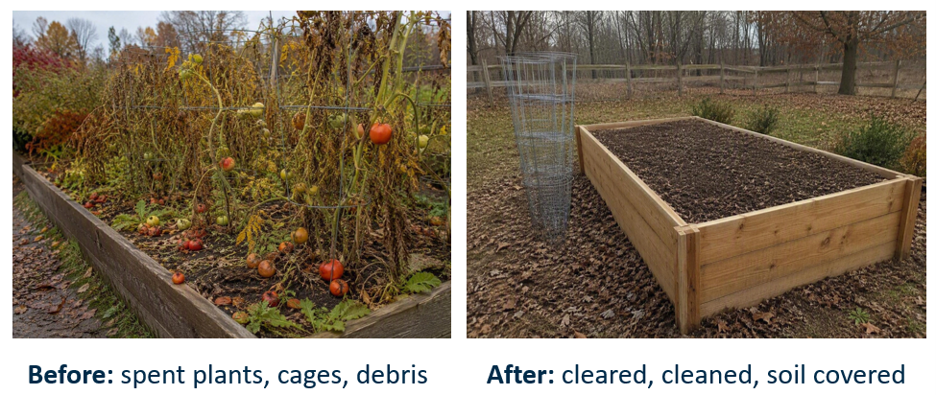
Vegetable gardens are the place to be most decisive. Remove spent annual crops, dropped fruit, diseased leaves, tomato vines with leaf spot, squash and cucumber debris, and weeds before they set seed. Healthy residue can be composted if your system heats well and is managed properly; diseased material should be discarded through municipal yard-waste options when available rather than returned to a home compost pile. Leaving disease-prone crop debris in place can give pathogens and pests a head start next spring.
| | |
Image credit: AI-generated illustrations.
Practice guidance: Univ. of Minnesota Extension, Preparing the Vegetable Garden for Winter — extension.umn.edu
| | |
Fall Vegetable Bed Checklist
-
Harvest before hard frost. Pick remaining tomatoes, peppers, beans, herbs, winter squash, and root crops according to their frost tolerance.
-
Remove diseased debris. Pay special attention to tomato foliage with early blight, Septoria leaf spot, anthracnose, or bacterial disease symptoms.
-
Weed one last time. Pull annual weeds before seed drops and dig perennial weeds while soil is still workable.
-
Protect bare soil. Cover empty beds with shredded leaves, straw, compost, or a cover crop to reduce erosion and winter weed germination.
-
Plant for next year. Plant garlic after the soil cools but before the ground freezes, and label fall-planted crops clearly.
Fall Cleanup Decision Guide
| | |
REMOVE
Clean up where disease, weeds, pests, or lawn health are concerns.
-
Disease-prone vegetable debris: diseased vines, blighted tomato foliage, squash leaves with heavy mildew, dropped fruit, and pest-infested plant material.
-
Weeds and seed sources: annual weeds that have gone to seed, weeds within beds, and weeds along paths, borders, and bed edges.
-
Lawn-smothering leaves: leaves that mat heavily on lawns; shred or move them into beds, shrub borders, woodland edges, or compost.
-
Problem materials: spent annual containers, diseased plant labels or stakes, and irrigation parts that could freeze if left full of water.
| | |
LEAVE
Keep healthy material that protects soil, feeds wildlife, or adds winter structure.
-
Healthy standing stems: perennial stems, seed heads, ornamental grasses, hollow stems, and sturdy plant material with winter value.
-
Useful leaf litter: leaves under shrubs, woodland edges, and perennial borders where they insulate crowns and support overwintering organisms.
-
Soil-protecting cover: protected beds covered with mulch, shredded leaves, straw, compost, or cover crops rather than left bare.
-
Helpful roots and structure: healthy pea and bean roots left to decompose, plus evergreen lower branches unless pruning is needed for safety or plant health.
| | |
Diagram: Remove vs. Leave for Fall Cleanup
Use this diagram as a quick decision guide: clean up where disease, weeds, or lawn health are concerns; leave habitat where plant material is healthy and useful through winter.
| | |
Fall Cleanup Should Be Selective
A good fall cleanup protects next year’s garden without removing every sign of life from this year’s. Think of the season as triage: diseased crops and pest-infested debris come out; healthy leaves, stems, grasses, and seed heads stay where they can cover soil, shelter beneficial insects, and feed birds. The best gardens go into winter managed, not stripped.
Trusted Resource for Fall Gardening
| | Did you know that soil contains more microorganisms in just one teaspoon than there are people on Earth? This tiny world beneath our feet is the unsung hero of any garden, brimming with life and possibility. | | Serena Starzyk, Master Gardener, Class of 2024 | | Soil Never Sleeps: Fall Garden Care from the Ground Down | | Image credit: AI-generated illustration. Guidance: Rutgers Cooperative Extension Soil Testing Lab — extension.rutgers.edu/soil-testing-lab | | |
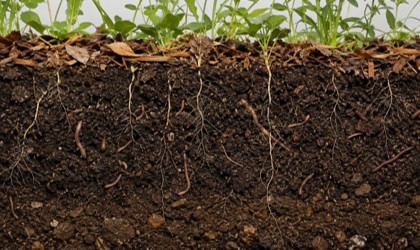
Some of fall’s most important work happens below the surface. Roots decompose, earthworms move organic matter, microbes cycle nutrients, and autumn moisture helps amendments settle before spring. Rather than shutting the garden down, feed, cover, and protect the living soil that supports next year’s growth.
Dutchess County soils may include clay pockets, glacial till, rocky slopes, compacted paths, and long-amended beds. Testing, leaving useful roots, covering bare ground, adding compost lightly, and minimizing disturbance can reduce erosion, protect structure, and ease spring planting.
Test First: Fall Is the Season for Soil Information
A soil test is the best way to avoid guessing. Fall testing gives gardeners time to understand pH, nutrient levels, and organic matter before buying lime, sulfur, fertilizer, or compost for the next season. Sample each distinct area separately—vegetable beds, lawns, perennial borders, blueberry beds, and raised beds may all need different recommendations. Collect soil when it is workable, not muddy or frozen, and follow local Extension instructions for sampling depth and submission.
Note: Soil Testing Kits are available through CCE Dutchess for $25 per sample. Cornell Cooperative Extension | Soil Testing
-
Do not amend by habit. Add lime, sulfur, phosphorus, or fertilizer only when a soil test indicates a need.
-
Sample separate garden areas separately. A vegetable bed, lawn, and acid-loving shrub border can have very different soil needs.
-
Use fall timing wisely. pH amendments often need time to react, so fall applications can be more useful than last-minute spring corrections.
-
Keep records. Save soil test results with garden notes so you can track changes over time.
Cover the Soil: Leaves Are Fall’s Free Mulch
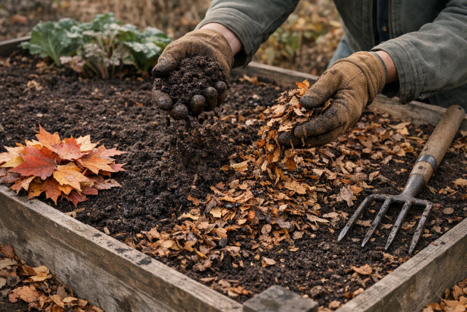
Bare soil is vulnerable soil. Rain, snowmelt, wind, and freeze-thaw cycles can crust, compact, and erode exposed beds. In nature, soil is almost always covered by plants, leaves, or organic debris. Gardeners can copy that pattern by using shredded leaves, finished compost, straw, clean plant residue, or cover crops as winter soil armor. Leaves are especially useful under shrubs, in perennial beds, and across empty vegetable beds when shredded or applied in a loose layer that does not mat heavily.
-
Use shredded leaves as mulch. They buffer soil temperature, conserve moisture, and slowly add organic matter.
-
Keep mulch off crowns and trunks. Pull material back from stems, shrub crowns, and tree trunks to reduce rot and vole damage.
-
Protect vegetable beds. Cover empty beds with leaves, straw, compost, or a cover crop rather than leaving soil exposed.
-
Let soil organisms do the mixing. A topdressing of organic matter can be incorporated gradually by worms, roots, rain, and freeze-thaw action.
| |
Image: Top-dress your raised beds with shredded leaves or compost after vegetable plants have been removed.
Photo: AI generated.
| |
Leave Living and Useful Roots Where They Help
Not every spent plant needs to be pulled out by the roots. When vegetable plants are healthy and not diseased, leaving roots in place can help maintain soil structure and feed soil life as they decompose. This is especially helpful with peas, beans, and other legumes. Their roots form partnerships with nitrogen-fixing bacteria during the growing season, and the remaining root material contributes organic matter as it breaks down. Cut healthy plants at the soil line when appropriate, leaving the root system to decay underground.
-
Leave healthy pea and bean roots. Cut the tops and let the roots decompose in place.
-
Remove diseased roots and debris. Pull and discard plants affected by serious soilborne disease or pest problems.
-
Keep soil covered afterward. Add mulch or a cover crop so open beds do not sit bare all winter.
-
Avoid deep disturbance. Preserve soil structure whenever possible by loosening only compacted areas that truly need it.
Plant Cover Crops Where Beds Will Be Empty
Cover crops keep roots in the soil when vegetables are finished. They reduce erosion, suppress winter weeds, capture leftover nutrients, and add organic matter. In a home garden, simple choices are often best. Oats and field peas may winter-kill and leave a manageable spring residue, while cereal rye is hardy and excellent for holding soil but must be terminated on time before spring planting. Choose cover crops based on planting date, bed use, and how much spring management you are willing to do.
Trusted Soil and Water Resources: For science-backed guidance and regional advice, explore these university and government resources.
| | The Gardener Spotlight column shines a light on inspiring stories, practical wisdom, and local expertise from the gardening world. This month we step back into Dutchess County’s nineteenth-century landscape history to meet Henry Winthrop Sargent, a horticulturist whose Beacon estate helped make the Hudson Valley a proving ground for ornamental gardening, conifers, scenic views, and the art of designing with place. | | Serena Starzyk, Master Gardener, Class of 2024 | | |
Henry Winthrop Sargent: The Hudson Valley Gardener Who Turned a View into a Living Art
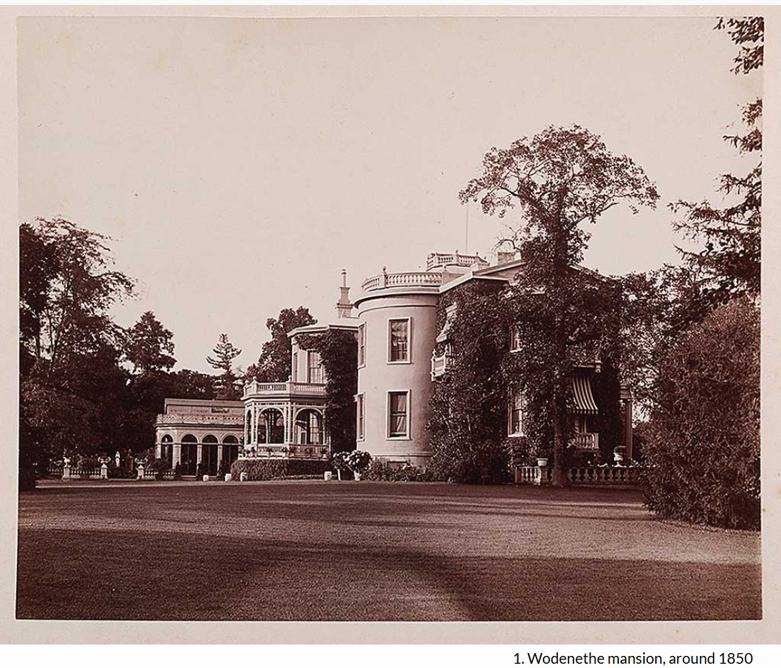
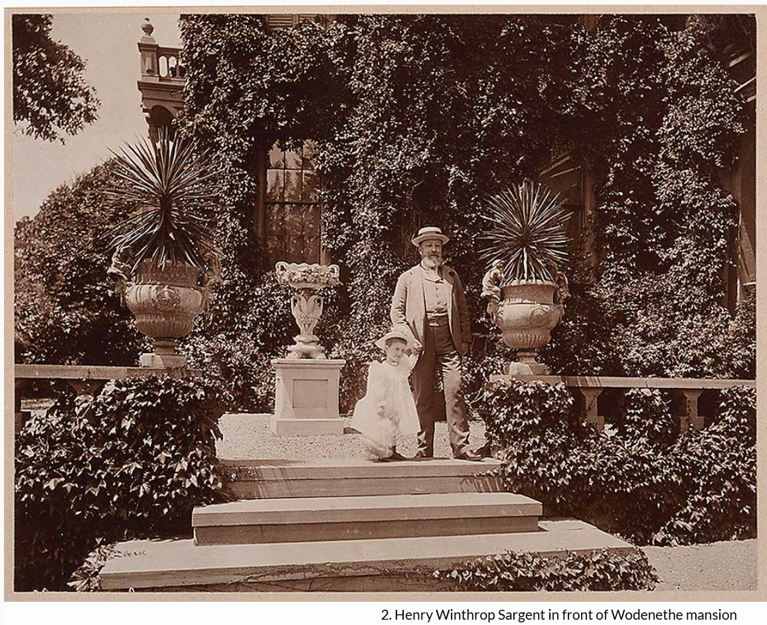
Long before garden centers and glossy catalogs, Henry Winthrop Sargent was experimenting on a wooded bluff above the Hudson River in present-day Beacon. His estate, Wodenethe, blended woodland, rare plants, scenic composition, and horticultural trial. His enduring lesson for Dutchess County gardeners is simple: great gardens begin by noticing land, light, trees, water, and borrowed views.
Born in Boston in 1810 and educated at Harvard, Sargent left business in 1841 for Fishkill Landing, where he created the roughly twenty-acre Wodenethe estate overlooking the Hudson Highlands. He made the region’s scenery the garden’s organizing force rather than a distant backdrop.
Sargent opened views through native woods, framed river and mountain scenery, planted unusual trees, and balanced cultivation with wildness. His friendship with Newburgh landscape theorist Andrew Jackson Downing placed him at the center of early American picturesque gardening; Sargent later edited Downing’s work and promoted design responsive to climate, terrain, beauty, and daily life.
Wodenethe: Sargent’s Garden Laboratory in Beacon
Wodenethe sat above Fishkill Landing, now Beacon, with commanding Hudson River and mountain views. Sargent used the site’s natural drama—woodland vistas, evergreen structure, paths, plantings, and viewpoints—to create one continuous experience rather than a flattened formal showpiece.
Sargent’s passion was ornamental horticulture, especially conifers. His collection showcased year-round color, texture, and silhouette, including the graceful Sargent’s weeping hemlock, Tsuga canadensis ‘Sargentii.’ The lesson still feels fresh: structure is not merely a winter necessity; it is the backbone of a garden.
| | |
Images: Wodenethe House and Gardens
Photo: Project Gutenberg's Beautiful Gardens in America, by Louise Shelton
| |
Where Readers Can Still Follow Sargent’s Trail
Wodenethe no longer survives as a public garden, but readers can still follow Sargent’s trail through Beacon, Fishkill, and nearby historic landscapes. Though the property was divided and partly developed, parts of the area still reveal his central idea: connect the viewer to the mountains and Hudson River beyond the garden.
Beacon and Fishkill Landing
Begin with the landscape itself: the Hudson Highlands, the river corridor, and the steep, wooded terrain that shaped Sargent’s eye. A walk in Beacon with attention to views, ridgelines, and old trees gives readers a sense of the scenery that made Wodenethe possible. Sargent is buried at Saint Luke’s Church Cemetery in Beacon, connecting the gardener to the community where his most influential landscape stood.
| | |
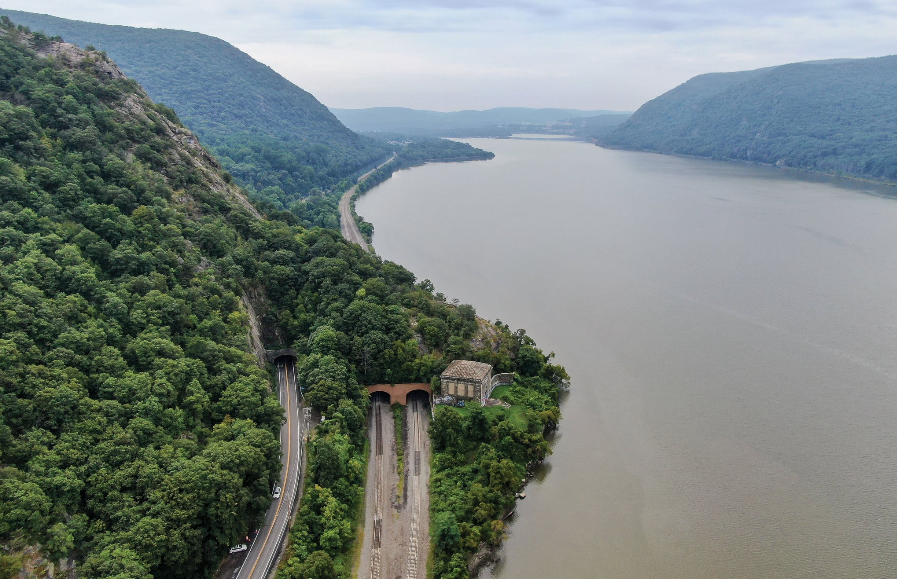
Image: Hudson Highlands, including Fishkill and Beacon Landing, site of the future Fjord Trail
Photo: Scenic Hudson
| | |
Sargent’s Impact on Dutchess County Gardening
Sargent’s impact was not measured only in the number of gardens he designed. It was measured in the taste he helped shape. In the mid-nineteenth century, Dutchess County was becoming part of a larger Hudson River landscape culture, where estates were designed to heighten natural beauty rather than overpower it. Sargent showed that a private garden could be intellectual, experimental, deeply personal, and responsive to place.
He helped popularize ornamental evergreens at a time when many American gardens still leaned heavily on seasonal flowers and deciduous shade trees. His conifer collection demonstrated the value of color, texture, silhouette, and winter presence. For today’s Hudson Valley gardener, that is a practical lesson: a garden designed only for June can feel empty by November, but a garden with evergreens, bark, seed heads, stone, paths, and borrowed views has something to say all year.
Sargent also helped make Dutchess County part of a national horticultural conversation. The Dutchess County Historical Society later recognized his importance through Joel Elias Spingarn’s study, Henry Winthrop Sargent and the Early History of Landscape Gardening and Ornamental Horticulture in Dutchess County, New York. That title says a great deal: Sargent was not just a man with a handsome property. He was one of the figures who helped establish ornamental horticulture as a serious cultural pursuit in this county.
How Sargent’s Style Echoed Through Other Hudson River Estates
Sargent’s influence was not simply that other landowners copied Wodenethe plant for plant. His larger impact was in showing what a Hudson River estate landscape could become when the owner treated scenery as part of the garden itself. Wodenethe demonstrated a way of gardening that used native woodland, dramatic topography, curving movement, specimen trees, ornamental evergreens, and carefully opened views to make a property feel composed rather than merely planted.
That idea traveled well along the Hudson. On many nineteenth- and early twentieth-century estates, visitors still see the same design language: a mansion placed to command a view, lawns and drives arranged to reveal the land gradually, wooded edges used for mystery and shelter, and trees chosen for silhouette, texture, and permanence. Even where Sargent was not the designer, his work belongs to the same influential Hudson Valley conversation about picturesque landscape gardening that included Andrew Jackson Downing, Alexander Jackson Davis, Calvert Vaux, Frederic Church, and later estate designers.
Hudson River estates where readers can see Sargent-like ideas:
-
Locust Grove Estate, Poughkeepsie. A strong Dutchess County companion to Sargent’s story, Locust Grove shows the picturesque relationship among house, wooded grounds, carriage routes, flower gardens, and Hudson River views. Its association with Andrew Jackson Downing makes it especially useful for understanding the design ideals Sargent admired.
-
Montgomery Place, Annandale-on-Hudson/Red Hook. This Bard College historic estate offers rolling lawns, woodlands, historic gardens, river views, trails, and orchard land. It helps readers see how an estate could combine productive land, pleasure grounds, and dramatic scenery.
-
Wilderstein Historic Site, Rhinebeck. Wilderstein’s wooded bluff, specimen trees, ornamental shrubs, carriage drives, trails, rustic viewpoints, and Hudson River outlooks make it one of the clearest places in Dutchess County to experience the romantic landscape tradition.
-
Blithewood Garden at Bard College, Annandale-on-Hudson. More formal and later than Sargent, Blithewood still teaches one of his central lessons: a garden becomes more powerful when it frames and honors the larger Hudson Valley landscape beyond its walls.
-
Vanderbilt Mansion National Historic Site, Hyde Park. Vanderbilt’s formal gardens are Gilded Age rather than Sargent’s own style, but the surrounding estate preserves the grand Hudson River relationship among mansion, mature specimen trees, lawn, garden, approach, and view.
-
Olana State Historic Site, Hudson. Across the river in Columbia County, Olana is one of the most dramatic public examples of landscape as living composition. Frederic Church shaped roads, meadows, woods, lake, farm, and views much as a painter would compose a canvas.
-
Wethersfield Estate & Garden, Amenia. Wethersfield is not Sargent’s work, but its formal structure, clipped greenery, long views, and relationship to rolling Dutchess County terrain make it an inspiring stop for readers who want to compare historic estate gardening traditions across the county.
For readers, these estates are not just places to admire. They are field lessons. Notice where a path bends, where trees frame a view, where evergreen massing gives winter structure, where a bench or gazebo marks a prospect point, and where cultivated garden space gives way to woodland or meadow. Those same principles can be scaled down beautifully in a home Hudson Valley garden.
How to Garden in the Spirit of Henry Winthrop Sargent
You do not need an estate to borrow Sargent’s best ideas. Start with observation: protect a worthwhile view, notice where light falls, keep trees that give the property character, anchor winter scenes with evergreens, and shape paths that invite visitors to slow down.
Copy Sargent’s method, not a Victorian plant list: frame a view, create a sequence, use trees and shrubs as architecture, respect woodland edges, choose conifers for form and texture, place seating with purpose, and edit plantings so the land remains visible.
For a modern Hudson Valley version, try pairing native or well-adapted evergreens with deciduous shrubs, ferns, spring ephemerals, woodland perennials, stone edges, and open lawn or meadow-like spaces that lead the eye toward a view. Eastern hemlock, white pine, red cedar, American holly in protected sites, inkberry, mountain laurel, rhododendron, viburnum, serviceberry, oakleaf hydrangea, ferns, sedges, asters, goldenrods, and woodland phlox can all help create layered, place-based gardens. Always match plants to site conditions and avoid invasive ornamentals that nineteenth-century gardeners may not have understood as ecological problems.
| | This month’s Plant Showcase features a living toolkit: cover crops and green manures. These purposeful plantings protect bare soil, feed soil life, suppress weeds, capture nutrients, and prepare gardens and larger landscapes for healthier growth. | Serena Starzyk, Master Gardener, Class of 2024 |
| Cover Crops and Green Manure: Fall’s Living Soil Builders | | |
Image: Cover Crops
Photos: CCE Eastern NY Commercial Horticulture
| | |
As beds empty after harvest, cover crops keep soil protected through winter. In home gardens, community gardens, farms, and larger properties, they can reduce erosion, capture nutrients, add organic matter, support beneficial organisms, ease compaction, and suppress weeds.
Think of cover crops as a living toolkit for home gardens, community plots, farms, and larger properties: they protect soil, build organic matter, support beneficial organisms, manage nutrients, ease compaction, and suppress weeds.
Why Fall Timing Matters
Seed cover crops as soon as a bed or field opens in late summer or early fall. Earlier planting usually means better germination, stronger roots, more biomass, better weed competition, and greater winter soil protection; waiting until after hard frost sharply narrows the options.
-
Late summer to early fall: Seed fast-growing mixes after early vegetables, garlic harvest, potatoes, onions, or cleared annual beds.
-
After fall crop harvest: Use winter-hardy grains such as cereal rye when the season is getting late and soil still needs cover.
-
Before bare soil sits exposed: Plant as soon as a bed is empty rather than waiting for the whole garden to be finished.
-
Plan termination before planting. Know whether the crop will winter-kill, be mowed, cut, crimped, tarped, or incorporated before spring planting.
Plan 1: A Fall Cover Crop Plan for a Vegetable Garden Bed
Match the cover crop to when each vegetable bed opens and how much spring work you want. Seed beds as they become available: choose an easy winter-killed mix for early openings and hardy cereal rye for reliable later cover.
-
Late August to mid-September: After onions, garlic, potatoes, early beans, or tired summer annuals are cleared, rake the bed smooth and seed oats with field peas. Oats provide fast cover and usually winter-kill; peas add legume biomass and feed soil organisms as they break down.
-
Mid-September to early October: If the bed opens later, use cereal rye, winter wheat, or triticale for stronger cold tolerance and soil protection. These crops establish quickly enough to hold soil and suppress winter annual weeds.
-
After seeding: Water if the soil is dry, protect seed from birds with a light rake-in or thin straw covering, and label the bed with the cover crop and planting date.
-
Spring management: Winter-killed oats and peas can be planted through or lightly incorporated when soil is workable. Hardy rye or wheat must be cut, mowed, crimped, tarped, or incorporated before spring planting so it does not compete with vegetables.
Plan 2: Larger Acreage with Invasive Pressure, Including Mugwort
On larger sites, cover crops help reclaim open ground but cannot cure aggressive perennial invasives alone. Mugwort spreads mainly by rhizomes, and disturbance can move fragments. Use an integrated, multi-year plan to prevent seed, weaken stands, keep soil covered, and establish dense competition.
-
Late spring through summer: Scout and map mugwort patches. Mow before seedheads mature, especially by early September, and avoid moving viable seed or rhizome fragments to clean areas.
-
Late summer: Where appropriate and permitted, use repeated mowing, smothering, targeted removal, or other integrated weed-management tools to weaken the stand before seeding a competitive cover crop.
-
Early fall: Seed a dense cool-season cover such as cereal rye, triticale, or a rye/clover mix where soil conditions allow. Earlier planting gives the cover crop more biomass, and more biomass generally improves weed suppression.
-
Winter into spring: Keep the soil covered. In spring, terminate the cover crop on time and follow with another competitive crop, meadow establishment step, or repeated cover crop cycle instead of allowing bare ground to reopen.
-
Multi-year approach: Plan for persistence. Mugwort management usually requires repeated monitoring and several seasons of suppression, not a single fall planting.
Five Cover Crops Worth Knowing
Choose a cover crop by the job it must do and the time before the next planting. These five options span grasses for protection and nutrient capture, legumes for nitrogen, flowering broadleaf crops for fast weed suppression, and deep-rooted brassicas for compacted soil.
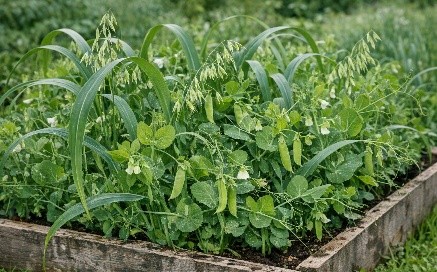
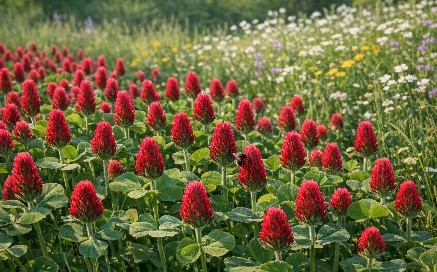
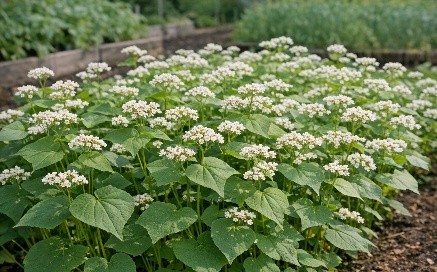
| | Photos above were AI generated | | |
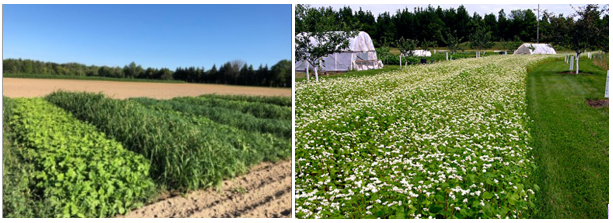
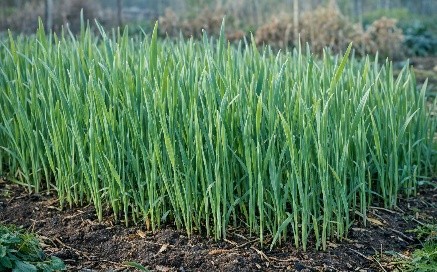
Top Left- Cereal rye (Secale cereale)
Best for: Late fall planting, winter soil protection, nutrient scavenging, and strong weed suppression.
Why it helps: Cereal rye germinates in cool soil, survives Hudson Valley winters, and produces a dense root system and substantial spring biomass. It is often the most dependable choice when a bed opens too late for tender species.
Watch for: It keeps growing in spring. Cut, mow, crimp, tarp, or incorporate it before it becomes tall and tough, and allow time before seeding small vegetables. Cereal rye is not the same plant as annual ryegrass.
Top Middle- Oats and field peas
Best for: Beds cleared in late summer or early fall when easy spring management is the priority.
Why they help: Oats establish quickly, shield soil, suppress weeds, and add carbon-rich residue. Field peas are legumes that add nitrogen-rich biomass when well established. In much of the Hudson Valley, both usually winter-kill and form a mulch-like mat.
Watch for: Seed early enough for meaningful growth before frost. The mixture is less reliable for late-season planting than
Top Right- Crimson clover (Trifolium incarnatum)
Best for: Nitrogen contribution, spring flowers, and beneficial-insect habitat where early fall establishment is possible.
Why it helps: As a legume, crimson clover partners with soil bacteria to fix atmospheric nitrogen. Its dense growth covers soil, and its red flower spikes can provide spring forage for pollinators if allowed to bloom.
Watch for: Winter survival varies with establishment and site conditions. Use the correct clover inoculant, and terminate before mature seed forms if volunteers are unwanted. A grass-and-clover mix balances nitrogen production with stronger soil cover.
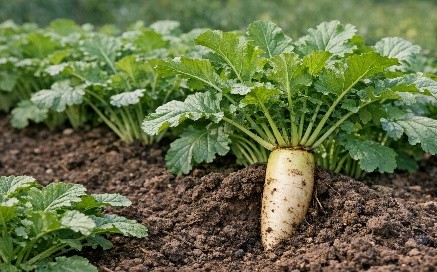
Bottom Left- Tillage radish (Raphanus sativus)
Best for: Capturing leftover nitrogen, opening compacted surface layers, and adding quickly decomposing organic matter.
Why it helps: The large taproot penetrates dense soil and creates channels that can improve water movement and root access for following crops. The canopy also covers soil and competes with weeds.
Watch for: Plant early enough for roots to size up. It usually winter-kills, but decomposing roots can produce a strong odor during warm winter thaws. Avoid relying on one brassica repeatedly where clubroot or other brassica diseases are a concern.
Bottom Right- Buckwheat (Fagopyrum esculentum)
Best for: Fast summer cover between crops, weed suppression, and flowers for beneficial insects.
Why it helps: Buckwheat grows rapidly in warm soil, shades out many weeds, produces tender residue, and helps make soil phosphorus more available to following crops. Its white flowers attract bees and other beneficial insects.
Watch for: Buckwheat is frost-sensitive and is not a winter cover. Cut it shortly after flowering and before seed matures; otherwise it can reseed. It is useful for a short open window, not for a bed that must remain covered all winter.
Quick matching guide: Choose oats and field peas for an easy winter-killed garden mix. Choose cereal rye for dependable late planting and maximum winter cover. Choose crimson clover for legume nitrogen and spring flowers. Choose buckwheat for a short warm-season gap. Choose tillage radish where nutrient capture and root channels are priorities. Mixtures can combine strengths, but their planting and termination requirements should still fit the next crop.
Learn more: Cornell’s Cover Crop Guide for New York Growers provides a decision tool and crop profiles tailored to New York conditions, while Cornell Cooperative Extension’s home-garden cover crop guidance offers practical notes on oats and buckwheat. New York Soil Health is New York State’s hub for soil health-related networking, research, education, and outreach. Providing great resources, news, and events to communities.
| | This month’s From Garden to Gourmet celebrates recipes from Master Gardener Volunteers using produce inspired by Cornell’s Vegetable Variety Trial Gardens. The 2026 trial theme, “Cultural Roots of the Mediterranean,” highlights vegetables and herbs that connect garden performance, cultural foodways, and healthy seasonal cooking. | | Serena Starzyk, Master Gardener, Class of 2024 | | Mediterranean Harvest: Master Gardener Volunteer Recipes from the Vegetable Variety Trials | | |
Cornell’s Vegetable Variety Trial Gardens ask a practical question: “Which varieties grow well here?” Extension programs and community partners grow selected vegetables, record taste, yield, ease, and overall success, and share regionally useful results with home gardeners.
The 2026 theme, Cultural Roots of the Mediterranean, includes eggplant, peppers, tomatoes, zucchini, fennel, broccoli rabe, dandelion greens, carrots, onions, basil, parsley, and a tillage radish cover crop—linking garden performance, cultural foodways, and seasonal cooking.
These crops bring color, fiber, flavor, and plant diversity to meals while connecting the trial garden to a Mediterranean eating pattern rich in vegetables, fruits, legumes, whole grains, herbs, nuts, seeds, and olive oil.
-
Tomatoes: Pick when fully colored or at the breaker stage if storms, cracking, or wildlife pressure are likely. Store at room temperature for best flavor.
-
Cucumbers: Harvest every two to three days before skins yellow and seeds toughen. Frequent picking keeps vines productive.
-
Zucchini and summer squash: Pick small and tender, usually 6 to 8 inches long. Oversized squash slows production and becomes watery.
-
Snap beans: Pick while pods are crisp and before seeds bulge. Harvesting often encourages more flowers and pods.
-
Peppers and eggplant: Cut fruits with pruners rather than pulling. Harvest peppers green or fully colored; pick eggplant while the skin is glossy.
| | |
Herbs that define Mediterranean cooking
Mediterranean herbs make simple vegetables, beans, grains, fish, and sauces taste bright and layered. Basil, parsley, oregano, rosemary, thyme, mint, sage, and fennel each contribute a distinctive finish, often reducing the need for heavier sauces or extra salt.
-
Basil: Best used fresh and added near the end of cooking; classic with tomatoes, peppers, eggplant, zucchini, olive oil, and garlic.
-
Parsley: A bright finishing herb for salads, beans, roasted vegetables, herb sauces, and grain dishes.
-
Oregano: Strong, earthy, and excellent dried; works well in tomato sauces, roasted vegetables, marinades, and grilled dishes.
-
Rosemary: Piney and assertive; use sparingly with roasted potatoes, carrots, onions, beans, breads, and grilled vegetables.
-
Thyme: Subtle and sturdy enough for soups, stews, braises, roasted vegetables, and slow-cooked tomato dishes.
-
Mint: Cooling and fresh; pairs beautifully with cucumbers, zucchini, peas, beans, yogurt sauces, lemon, and salads.
-
Sage: Savory and warming; use with beans, squash, onions, browned butter, and fall vegetable dishes.
-
Fennel fronds and seed: Adds a gentle anise note that complements fennel bulbs, carrots, tomatoes, fish, sausage-style seasonings, and roasted vegetables.
Fun Culinary Facts about Mediterranean Vegetables
-
Eggplant is a culinary sponge. Its mild flesh absorbs olive oil, garlic, tomatoes, herbs, and smoke beautifully, which is why it appears in roasted dishes, dips, stews, and layered vegetable bakes across Mediterranean kitchens.
-
Tomatoes became Mediterranean icons after traveling far from their original home. Although they are now essential to many Mediterranean dishes, tomatoes originated in the Americas and were later adopted into cuisines throughout southern Europe and the Mediterranean basin.
-
Peppers add color, sweetness, and heat. Sweet peppers bring crunch and sugar, while chiles add warmth; both are useful fresh, roasted, grilled, stuffed, or cooked into sauces.
-
Zucchini is harvested young for tenderness. Small zucchini have thin skins, fewer seeds, and a delicate texture, while oversized squash are better grated into fritters, quick breads, or soups. Gardeners often grate larger zucchini for use in baked goods.
-
Fennel is both vegetable and herb. The bulb can be sliced raw, roasted, or braised, while feathery fronds and seeds bring a sweet anise flavor to salads, sauces, and vegetable dishes.
-
Broccoli rabe is bold by design. Its pleasant bitterness balances garlic, olive oil, beans, pasta, lemon, and mild cheeses, making it a classic example of Mediterranean cooking’s love of assertive greens.
-
Dandelion greens are more than weeds. In many food traditions, young dandelion leaves are cooked or dressed as bitter greens; their flavor pairs well with garlic, lemon, olive oil, beans, and potatoes.
-
Herbs can reduce the need for extra salt. Fresh basil, parsley, oregano, mint, rosemary, thyme, sage, and fennel deepen flavor so simple vegetable dishes taste finished with fewer heavy additions.
| | |
Plant‑Based Recipe Card Set: Mediterranean Edition
This month’s recipes have been submitted by Master Gardener Volunteers and use vegetables harvested from the CCE Dutchess Vegetable Variety Trial Garden. Recipe cards are designed for quick scanning: each one includes yield, dietary notes, prep and cook time, a short story, garden add-ins, ingredients, method, and garden-to-gourmet notes.
| | |
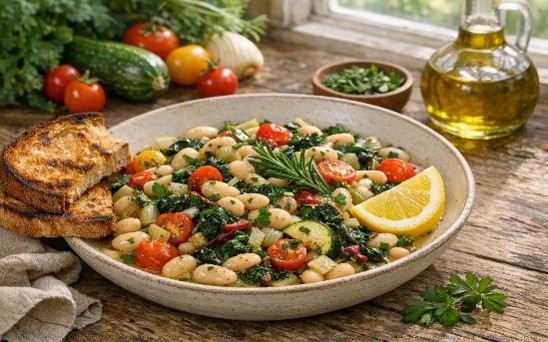
Late-Summer White Bean Garden Skillet
Yield: 4 servings | Dietary: Vegan with cashew cheese or nutritional yeast | Prep: 15 min | Cook: 20 min
Ingredients:
¼ cup olive oil
1 small fennel bulb, cored and diced
1 small red or yellow onion, diced
2 tsp minced rosemary or thyme
5 garlic cloves, minced
¼ tsp red-pepper flakes, optional
10–12 oz escarole, kale, or chard, chopped
2 cans cannellini beans, rinsed
2 cups low-sodium vegetable broth
Kosher salt and black pepper
1 Tbsp lemon juice
Cashew cheese, nutritional yeast, or Parmesan/Pecorino
Toasted country bread
Instructions:
1. Warm oil in a Dutch oven or wide skillet. Cook fennel, onion, and herbs 4–6 minutes. Add garlic and red-pepper flakes; cook 1 minute. Add quick-cooking vegetables.
2. Add greens by the handful, sturdy stems first, and toss until wilted.
3. Add beans, broth, and pepper. Simmer 6–8 minutes, mashing a few beans to thicken.
4. Stir in lemon juice; season.
5. Serve with cheese or nutritional yeast and toasted bread.
Garden-to-Gourmet notes: Add sturdy stems before leaves and tender herbs at the end. Adjust broth for a stew or thicker toast topping. Reheat with a splash of broth or water.
Recipe story: A flexible plant-based skillet for late-summer harvests: creamy cannellini beans, fennel, onion, garlic, herbs, greens, and quick-cooking vegetables brightened with lemon.
Best garden add-ins: Chard, kale, escarole, zucchini, fennel fronds, tomatoes, basil, parsley, or tender herbs.
| | |
Roasted Garden Zucchini Salad with Crispy Tofu
Yield: 4 servings | Dietary: Vegan | Prep: 20 min, including tofu pressing | Cook: 15 min
Ingredients:
2 Tbsp olive oil, plus more as needed
3–4 cups cut garden vegetables
½ bunch asparagus, cut in 2-inch pieces
1 cup sliced shiitake mushrooms
1 block firm or extra-firm tofu, pressed
¼–⅓ cup garlic vinaigrette or marinade
Kosher salt and black pepper
2–3 Tbsp nutritional yeast, plus more to finish
4 cups lettuce or tender greens
1 cup bean sprouts
1–2 Tbsp cornstarch
Instructions:
1. Press tofu 15–20 minutes; cut and season.
2. Toss zucchini, mushrooms, and sturdy vegetables with oil, vinaigrette, salt, pepper, and nutritional yeast. Reserve asparagus.
3. Roast at 425°F about 10 minutes; add asparagus for the last 4–5 minutes.
4. Dust tofu with cornstarch. Pan-cook in oil until crisp, 6–8 minutes.
5. Arrange greens on plates; top with vegetables, tofu, sprouts, nutritional yeast, and vinaigrette.
Garden-to-Gourmet notes: Cut vegetables evenly. Add asparagus late, herbs after roasting, and lettuce only at plating. Pressing tofu helps it brown; cornstarch adds crispness.
Recipe story: A colorful answer to abundant zucchini: roasted vegetables add sweetness and char, crisp tofu adds substance, and garlic vinaigrette ties everything together over tender greens.
Best garden add-ins: Zucchini, summer squash, asparagus, tomatoes, peppers, scallions, basil, parsley, lettuce, and bean sprouts.
| | |
Garden Fennel, Chard & Tomato Lavash Compote
Yield: 4 wraps or light servings | Dietary: Vegan | Prep: 15 min | Cook: 18–22 min
Ingredients:
2 Tbsp olive oil
1 medium or 2 small fennel bulbs, thinly sliced; reserve fronds
3 garlic cloves, sliced or minced
1 bunch Swiss chard, stems chopped and leaves ribboned
1½–2 cups halved cherry tomatoes
1 tsp fresh oregano, or ½ tsp dried
Kosher salt and black pepper
Red-pepper flakes, optional
1 Tbsp lemon juice or red wine vinegar, optional
4 pieces lavash, pita, toast, or cooked grains
Optional: herbs, pine nuts, beans, hummus, or plant yogurt
Instructions:
1. Slice fennel; separate chard stems and leaves; halve tomatoes.
2. Warm oil in a wide skillet. Cook fennel and chard stems with salt 6–8 minutes.
3. Add garlic, oregano, pepper, and optional flakes; cook 1 minute. Add tomatoes and cook 5–7 minutes.
4. Add chard leaves and cook 3–5 minutes until wilted and saucy. Season and add lemon juice or vinegar.
5. Spoon into lavash or over toast, grains, beans, or hummus; finish with herbs and toppings.
Garden-to-Gourmet notes: Add sturdy stems early and leaves late. Larger tomatoes may need longer simmering. Keep the compote moist but not wet.
Make it a meal: Add beans, lentils, or crispy tofu, or serve over farro, couscous, rice, or sourdough.
Recipe story: A light Mediterranean-style compote for lavash, toast, or grain bowls. Fennel adds brightness, chard brings earthy greens, and tomatoes create a quick sauce with olive oil, garlic, and oregano.
Best garden add-ins: Florence fennel, chard, tomatoes, oregano, basil, parsley, onions, peppers, or tender greens.
| | |
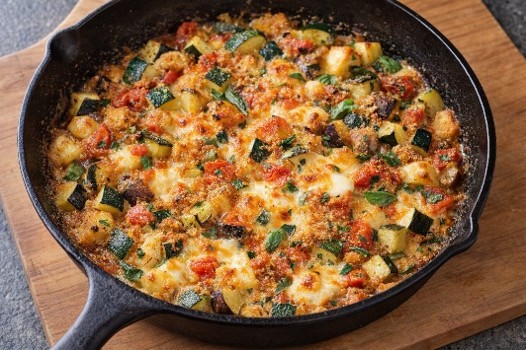
Garden Surprise
Yield: 4–6 servings | Dietary: Vegetarian | Prep: 15 min | Cook: 46 min
Ingredients:
3 cups diced zucchini
½ cup diced Asian eggplant
1 medium onion, diced
1½ cups chopped tomatoes
Fresh basil, chopped
½ cup breadcrumbs
1 cup shredded mozzarella
2 Tbsp olive oil
Instructions:
1. Preheat oven to 350°F. Dice all vegetables.
2. Heat olive oil in a cast iron skillet over medium heat.
3. Add onion, zucchini, and eggplant. Stir lightly, then let sauté 3 minutes without stirring.
4. Add tomatoes and gently stir. Sauté another 3 minutes.
5. Add breadcrumbs, mozzarella, and basil. Stir lightly, then transfer the skillet to the oven.
6. Bake 40 minutes. Cool on the counter 5 minutes before serving.
Garden-to-Gourmet notes: Use similar proportions with whatever the garden offers that day. Eggplant, tomatoes, zucchini, and one green bell pepper make a delicious harvest version.
Recipe story: Ann created this simple one-pot dish to celebrate whatever is ripe in the garden. With tomatoes, peppers, zucchini, eggplant, and fresh herbs, Garden Surprise is flexible, comforting, and designed for real-life cooking.
Best garden add-ins: Zucchini, Asian eggplant, tomatoes, bell peppers, onion, basil, parsley, oregano, or other tender garden herbs.
| | |
Chocolate Zucchini Cake
Yield: One Bundt cake; 12–16 servings | Dietary: Vegetarian; dairy, eggs, wheat, chocolate | Prep: 20 min | Cook: 50–60 min
Ingredients:
½ cup butter
½ cup vegetable oil
1¾ cups sugar
2 eggs
1 tsp vanilla
½ cup sour milk
½ tsp baking powder
1 tsp baking soda
2½ cups flour
4 Tbsp cocoa
½ tsp cinnamon
¼ tsp ground cloves
2 cups shredded zucchini
1½ cups semisweet chocolate chips
Powdered sugar
Instructions:
1. Preheat oven to 325°F. Grease a Bundt pan.
2. Cream butter, oil, and sugar.
3. Beat in eggs, vanilla, and sour milk.
4. Stir in baking powder, baking soda, flour, cocoa, cinnamon, and cloves until just combined.
5. Fold in zucchini and chocolate chips.
6. Bake 50–60 minutes, until a tester comes out clean. Cool, unmold, and dust with powdered sugar.
Garden-to-Gourmet notes: Shred zucchini finely and retain moisture unless very watery. Large zucchini work well; add walnuts, pecans, or extra cinnamon if desired.
Family recipe value: This cake preserves a useful seasonal habit: turning abundant garden zucchini into a dessert people remember and share.
Recipe story: Grated zucchini disappears into the batter, keeping the cake moist while cocoa, spices, and chocolate chips make it special.
| | Every garden has its fair share of unwelcome visitors. This quarter’s culprit is getting a special spotlight, highlighting research updates exploring this invasive insect and management options. Let us investigate. | | Dr. Isabella Magna Yannuzzi, CCEDC Agriculture/Horticulture Program Leader | | |
Pest of the Quarter Biology and Identification
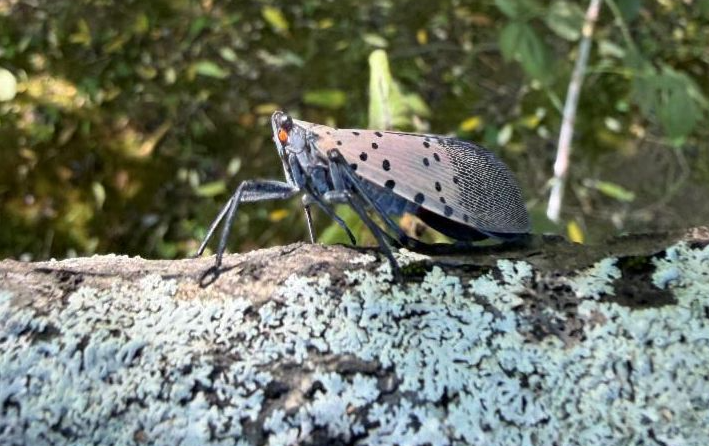
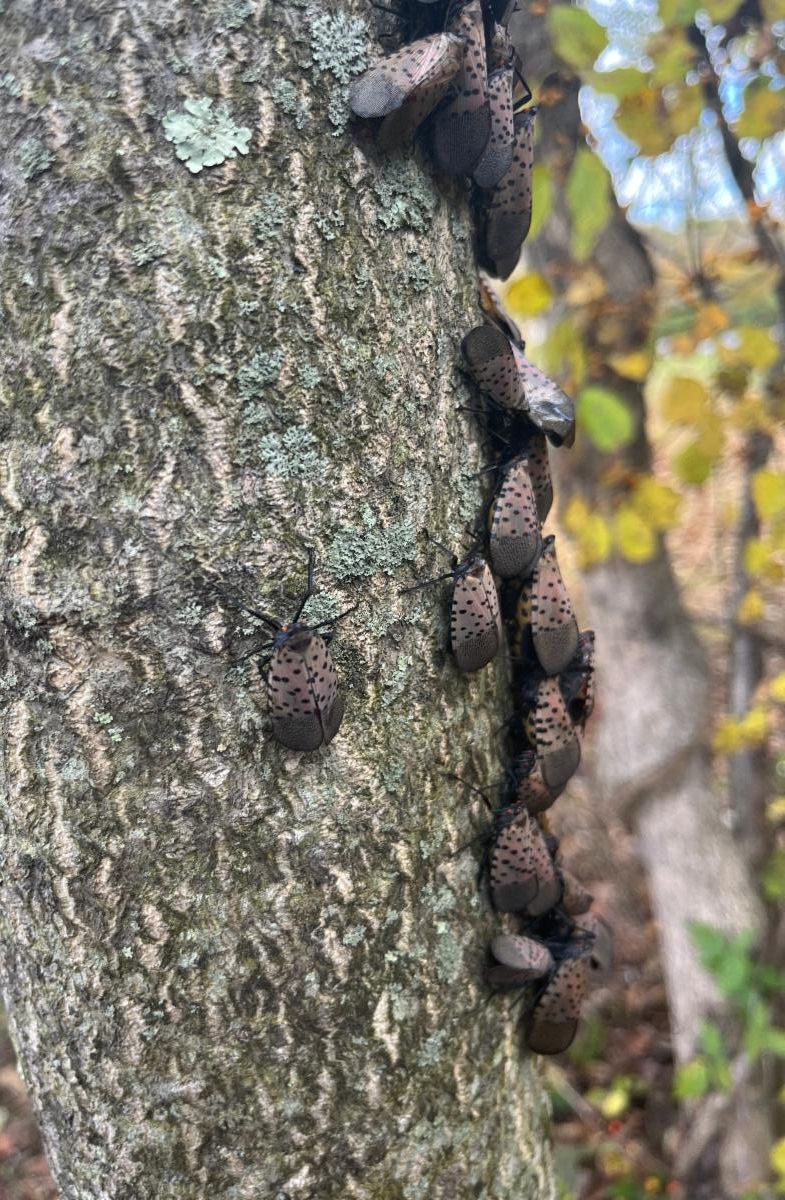
This spring’s pest of the quarter is the spotted lanternfly (SLF), Lycorma delicatula, an invasive insect from Asia that feeds on a wide variety of plants including grapevines, hops, maple trees, walnut trees, and fruit trees. The spotted lanternfly’s preferred host plant, tree of heaven, Alianthus altissima, is also an invasive species. The spotted lanternfly life cycle begins with small white-spotted black nymphs, late stage nymphs are red with black and white spots, and beginning in late summer and early fall adult spotted lanternflies emerge and lay eggs through the end of the year. Adults are about an inch long and have light gray/brown wings with black spots and red/white/black underwings.
Spotted lanternfly nymphs can often be found on the undersides of leaves feeding from veins with their long proboscis-like mouthparts while adults feed on twigs, branches, and trunks. Each time a spotted lanternfly begins feeding, they create a new wound on the plant, and large aggregations can cause significant damage.
You may have heard the phrase “Stomp it! Squish it! Swat it!”. If you see spotted lanternflies, it is recommended you squish them. Unfortunately, these insects are faster than they look and have strong hindlegs that propel them into powerful jumps. Fortunately, the more they jump, the more tired they become. Cooler overnight temperatures in the fall also make spotted lanternflies easier to catch as they will be slow until they warm up in late morning.
Traps
Both methods capture SLFs as they move and are therefore most effective on first and second instar nymphs which are the most motile. Traps should be set up in the spring and early summer (May-July) to target these life stages, and can be left up throughout the season to capture subsequent instars and adult insects.
Chemical Management
- Insecticides Cornell University maintains a spreadsheet with “Insecticides Labeled for Spotted Lanternfly Registered in New York State for Commercial and Home Garden Use” (https://cornell.app.box.com/s/sb71we49oogb8l2da5zyk4dy4lgbp4j9). This can be a great resource if you are looking for chemical options for spotted lanternfly management. The most important thing when selecting a product is reading and understanding the product label. All label restrictions and guidelines must be followed.
| Photo credit for photos included in this article: Dr. Isabella Magna Yannuzzi | |
New Research and Updates
One of the reasons invasive species multiply and spread so quickly is because they are in a new environment devoid of predators. Spotted lanternflies were introduced to the United States in 2014, and since then some native predators are learning to eat them and exciting research is being done to help us combat the infestation.
Bats
A study published by Rutgers in 2025 reported that research conducted between 2018 and 2022 found that two bat species, big brown bats (Eptesicus fuscus) and eastern red bats (Lasiurus borealis) were eating spotted lanternfly (https://www.mdpi.com/1999-4907/16/3/443). Installing bat boxes on your property will not only help with bat conservation efforts in your area, but can also help reduce spotted lanternfly populations. To learn more about bat boxes, how to install them, and if they are for you, check out this resources from the U.S. Fish and Wildlife Service (https://www.fws.gov/question-answer/how-and-whether-install-bat-boxes).
Milkweed
There is active research going on at Penn State University in Dr. Flor Acevedo’s program investigating the impacts of milkweed on SLF mortality and its potential for SLF management (https://projects.sare.org/sare_project/lne25-494r/). Preliminary data indicated that 60-80% of SLF nymphs and adults that feed on milkweed die within 24 hours. This project received funding in 2025 and will continue through February of 2028. This research will expand our understand of management options for SLF.
Seasonal Watchlist
-
Striped Cucumber Beetles: Striped cucumber beetles are voracious pests of plants in the Cucurbitaceae family which includes cucumbers, cantaloupes, squash, gourds, watermelon, and pumpkins. These small yellow and black striped beetles feed on fruits, stems, and leaves, and can aggregate in large numbers.
-
Squash Bugs: Though they resemble brown marmorated stink bugs, squash bugs are larger and narrower in appearance and have dull grey/brown coloring. Like striped cucumber beetles, they feed on plants in the Cucurbitaceae family though they prefer squash and pumpkin plants. Adults will overwinter in plant debris so keep an eye out for them both on your plants and as you clean out your gardens at the end of the season.
-
Brown Marmorated Stink Bug: These insects are not only garden pests that feed on a wide range of fruits, vegetables, and field crops, but also move indoors once the weather starts to chill. Check door and window screens for tears, and remove garden debris and any excess vegetation to discourage stink bug aggregation.
Article Resources:
https://dec.ny.gov/nature/animals-fish-plants/spotted-lanternfly
https://extension.psu.edu/spotted-lanternfly-what-to-look-for
https://www.aphis.usda.gov/plant-pests-diseases/slf
https://extension.psu.edu/how-to-build-a-spotted-lanternfly-circle-trap
https://extension.rutgers.edu/spotted-lanternfly/management-trapping
https://projects.sare.org/sare_project/lne25-494r/
| | |
CCEDC Horticulture Hotline & Diagnostic Lab
April - September
Monday & Wednesday Mornings from 9 AM to Noon
Phone: 845-677-5067
Have a garden pest that you need identified or a plant that doesn't look so good?
The Horticulture Hotline is now Closed for the season!
You can email your gardening questions anytime or leave a voicemail message, and a volunteer will get back to you soon.
From vegetable gardens and lawns to trees, shrubs, and houseplants—no question is too big or too small.
Our goal is to empower our community with reliable, science-based horticulture information.
We look forward to helping your garden thrive this season!
We accept diagnostic samples by appointment only; call 845-677-8223 to schedule.
This will help ensure your sample will be as fresh as possible for the lab.
When submitting samples for diagnostic tests to our lab, all samples must be:
-
In a sealed bag (Ziplock or equivalent)
-
Paid in full (CASH OR CHECK ONLY), prior to diagnosis.
-
Accompanied by our diagnostic form. Include as many details of the issue as you can on the form. See CCEDC Form for all the details needed.
-
Photos should also be (included) emailed when at all possible. Please ensure it is well-focused and shows the whole or a larger section of the plant and a close-up view of the issue. Also, reference your last name and the date the sample was dropped off in the subject line.
- Please call and make an appointment for sample drop off. For easy reference, samples may be dropped off (with an appointment) on Mondays from 9 AM to 3 PM, Tuesdays from 9 AM to 3 PM, and Wednesday mornings by 10 AM.
- We do not accept samples by mail.
- Our Diagnostic Lab does not accept Bed Bugs, Lice, or Fleas for identification.
For more information, including required forms and a listing of our current service fees:
CCEDC Horticulture Diagnostic Clinic
Have a question and missed the Hotline... You can still contact the CCEDC Master Gardener Volunteers at
(845) 677-8223 ext. 142 and leave a voicemail message or email us at dutchessmg@cornell.edu
Additional Resources:
Cornell University Diagnostic Services:
Gardening Information:
-
Visit the Cornell Garden Based Learning Website to learn more about vegetables, fruits, lawns, trees, shrubs, houseplants, soil, composting, and pests.
-
New York State Integrated Pest Management for Communities for structural and garden pests.
-
Websites for Gardeners - this link has many topics, including bees, nuisance wildlife, invasive plants, certified arborists, and weed ID.
| | |
This month, Garden Reads pairs two guides to smarter fall cleanup. Douglas W. Tallamy explains why leaves, stems, native plants, soil life, and connected habitat matter; Tracy DiSabato-Aust shows how to prune, divide, clean, and observe perennial beds with confidence. Together, they help gardeners balance sanitation, soil protection, winter structure, and wildlife support.
| | Serena Starzyk, Master Gardener, Class of 2024 | | |
Two Essential Books for Four-Season Ecological Gardening: One Book for Inspiration, One Book for Action
Fall cleanup is a series of choices: remove material that may harbor disease, pests, or weed seed, and leave what protects soil, feeds birds, shelters overwintering insects, or adds winter structure. Tallamy supplies the ecological “why”; DiSabato-Aust supplies the practical “how.”
| |
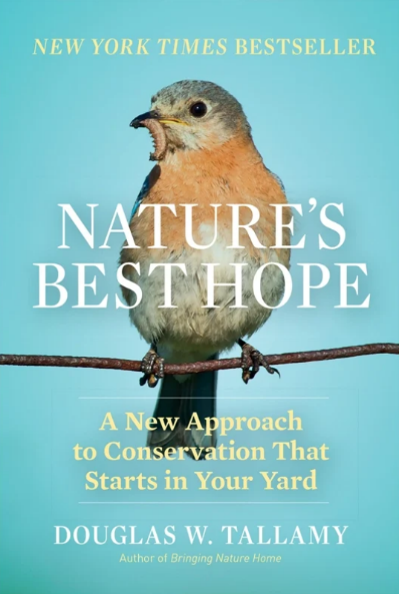
Nature’s Best Hope by Douglas W. Tallamy
Nature’s Best Hope: A New Approach to Conservation That Starts in Your Yard asks gardeners to see each yard as part of a larger living system. Tallamy argues that planting more natives, reducing unnecessary lawn, and protecting leaves, stems, insects, birds, and soil life can help repair fragmented habitat. In fall, that means treating cleanup as an ecological decision rather than an automatic sweep.
Fallen leaves can become mulch, soil cover, and winter habitat; hollow stems and seed heads can shelter insects, feed birds, and hold the garden’s form after frost. Move leaves from lawns and paths when needed, but reuse them in shrub borders, woodland edges, perennial beds, or compost.
Best fall cleanup lesson
Tallamy helps gardeners ask, “What does this garden support?” That question matters in every part of the landscape. In perennial beds, it may mean leaving healthy stems, grasses, seed heads, and leaf litter. Around trees and shrubs, it may mean keeping leaves where they can protect roots and feed soil organisms. In lawns, it may mean reducing leaf mats where turf health matters while expanding planted areas that can receive autumn leaves naturally.
-
Leave leaves where they can do good. Move them from lawns and paths into beds, shrub borders, woodland edges, or compost.
-
Protect winter habitat. Healthy stems, seed heads, grasses, and leaf litter can shelter insects and support birds.
-
Think in food webs. Native plants, caterpillars, birds, beneficial insects, soil organisms, and decomposing plant material are connected.
-
Reduce unnecessary lawn. More planted area gives leaves somewhere useful to land and creates layered habitat.
Who should read it
Gardeners who want motivation, ecological context, and a hopeful reason to make fall cleanup less severe. This is the inspiration book—the one to read before picking up the rake, so the gardener remembers that a quiet winter bed may still be full of life.
| | |
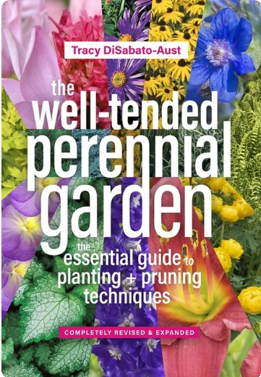
The Well-Tended Perennial Garden by Tracy DiSabato-Aust
The Well-Tended Perennial Garden: The Essential Guide to Planting and Pruning Techniques is a hands-on companion. Its plant-specific advice on pruning, deadheading, cutting back, thinning, division, renovation, and pest and disease awareness helps gardeners decide what truly needs tending instead of treating every perennial alike.
For fall cleanup, precision is the book’s strength. Remove collapsed, diseased, or pest-infested growth; leave sturdy plants that offer seed, texture, structure, or habitat. Observe crowded clumps, weak performers, and future divisions before frost hides the evidence.
Best fall cleanup lesson
DiSabato-Aust helps gardeners ask, “What does this plant or bed need?” That question is especially useful during a fall garden walk. Her approach encourages gardeners to observe flopping plants, crowded clumps, weak performers, needed divisions, plant labels, disease issues, and combinations worth repeating before frost and snow hide the evidence.
-
Use sanitation where it matters. Remove diseased foliage, pest-infested debris, dropped fruit, and annual weeds that have gone to seed.
-
Cut back selectively. Remove plants that collapse or harbor disease, but leave sturdy stems, seed heads, and grasses where they add winter value.
-
Observe before pruning. Note crowded clumps, weak performers, plants that need division, and combinations that worked well.
-
Make maintenance part of design. A well-tended garden is not stripped bare; it is managed for plant health, soil protection, structure, and long-term beauty.
Who should read it
Gardeners who want a practical reference beside them when they walk the beds with pruners, gloves, labels, and a notebook. This is the action book—the one to consult when deciding which perennials to cut, which to leave, which to divide, and which maintenance notes will make spring easier.
How the Two Reviews Work Together
Tallamy supplies the “why”: gardens can become habitat when we protect leaves, stems, native plants, soil life, and wildlife connections. DiSabato-Aust supplies the “how”: gardeners still need to remove diseased vegetable vines, blighted tomato foliage, squash debris with heavy mildew, weeds, pest-prone material, and other problems that should not overwinter. Together, the books encourage a fall cleanup that is neither careless nor overly tidy. Remove what threatens next year’s garden; leave what feeds the soil, shelters beneficial life, and gives the winter landscape structure.
| | Have a favorite gardening book or publication? Share it with us, and it might be featured in a future column! | | |
|
Would you like information on an upcoming gardening event to be shared in this newsletter? Email us
Please include the date, time, location, a short description, cost, and contact information for more details.
| | Sign up for our free newsletter to keep up-to-date on our programs! | | |
You are the reason that our organization has been able to play a pivotal role in community and economic development in Dutchess County for over 100 years. Your continued participation and support of CCEDC has made direct impact this year.
Together, we can lay the foundation for a successful year ahead, ensuring the lasting impact of our programs and our ability to navigate challenges while seizing new opportunities.
Will you join us now in making this happen?
| | |
Websites mentioned in Dutchess Dirt are provided as a courtesy to our readers. Mention of these websites does not imply endorsement by Cornell University, Cornell Cooperative Extension or by the author.
Cornell Cooperative Extension is an employer and educator recognized for providing equal program and employment opportunities.
The programs provided by this agency are partially funded by monies received from the County of Dutchess.
| | | | |