Rail Workers Weekly News Digest
Number 2 - January 14, 2020
|
|
Below is a series of articles compiled over the previous week.
They are of interest to railroad workers.
_____________________________________________
|
|
Article 1 - RAIL
FATALITIES
RWU Counts 22 Fatalities in the U.S. and Canada for 2019
The rail industry is very fond of citing its statistics that “prove” a decline in rail workers injuries. The carriers like to promote the idea that it is their enlightened policies, procedures and operations that are solely responsible for this supposed decline. But other factors are often at play that may be responsible for any decline in injuries. For example, with 20,000 fewer railroad workers on the property in the U.S. alone this year, one might naturally expect at minimum a proportionate decline in rail accidents and injuries. In addition, as the rail industry, technology, industrial materials, communications and other aspects of industrial society develop and improve, one would expect these changes to translate into a safer rail workplace environment.
When it comes to fatalities however, the rail industry does not crow so loud. They are of course a little harder to cover up, and workers fearing discipline cannot hide or cover them up. As such, the number of fatalities on the railroad stubbornly refuses to decline in the past decade in both the U.S. and Canada. While the numbers are still being crunched, RWU has documented 22 rail worker fatalities in 2019. See the RWU website. (NOTE: our numbers may not match the rail industry’s nor those of government oversight agencies since RWU considers contract workers who do railroad work to be
railroad workers period,
regardless of what boss they may be collecting a paycheck from).
A “safe” rail system could not experience what occurred in five brutal weeks in late 2019. Coming on the heels of Amtrak CEO Richard Anderson crowing about the great safety record achieved by the new safety program at that carrier, Amtrak would lose three workers in the space of three weeks in three separate incidents. All told, six union brothers would be killed in those five weeks. It goes without saying that neither Anderson nor other rail CEO’s claimed that their amazing “safety” programs were responsible for these (or the other) losses in 2019.
Click on the button below for a detailed account of all 22 fatalities for 2019.
|
|
Article 2 -
RAIL WORKERS MEMORIAL DAY
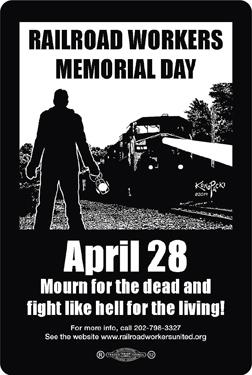
Each spring since 2009, Railroad Workers United has recognized Railroad Workers Memorial Day as a time to "Mourn for the Dead and Fight like Hell for the Living!" Originally designated for the Friday prior to Father's Day, the date was switch in 2017 to coincide with the National Workers Memorial Day, sponsored by the AFL-CIO and its affiliated unions.
Each year has held a focus, sometimes focusing upon a specific incident, or the abysmal safety record of a specific rail carrier, or a certain operating plan. For example in 2014, we focused upon the abysmal safety record at Metro-North, while in 2015, we focused upon the high number of killed contract workers.
The RWU Fallen Rails Committee proposes the theme and carries out the planning of each Railroad Workers Memorial Day. If you are interested in taking part in the planning and/or activities on April 28th, please contact the Committee by clicking below.
|
|
Article 3 -
PSR NEWS
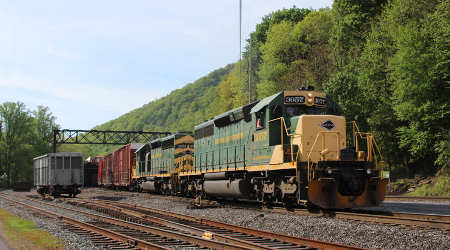
Reading & Northern posts 2019 traffic, revenue growth
(Editor's Note: It interesting that a small regional railroad in the heart of the dying Pennsylvania coal country - despite a sharp decline in coal loads - was able to increase traffic by 6% this year. Meantime, the Class One railroads' traffic levels declined by roughly the same degree. Could this have anything to do with the latter's implementation of PSR??)
Reading & Northern Railroad
(R&N) logged a 6 percent increase in carloads in 2019 compared with 2018, the Pennsylvania-based regional announced yesterday.
Last year, the railroad broke previous records for carloads, freight revenue and excursion ticket sales, company officials said in a press release.
The R&N hauled more than 34,000 carloads in 2019, a 2,000 carload increase from 2018 levels. Revenue rose "by double digits" as a result of changes in traffic mix and the implementation of strategies to increase R&N's length of hauls in order to reduce transit time, they said.
R&N posted a decrease of 1,000 carloads of export anthracite coal, but that reduction "was more than offset" by 20 existing on-line customers increasing their rail business by more than 10 percent.
R&N officials attributed the increase in on-line customer business to the railroad's new guaranteed service program, which offers customers a guaranteed two-hour service window and five-day-a-week minimum service. R&N met that schedule 99 percent of the time, they said.
"Traffic numbers will only increase in 2020 as a number of industrial development projects begin a full year of service," R&N officials said. "R&N had two significant new customers come on-line in the fourth quarter at the Humboldt Industrial Park in Hazleton that will grow the carloads substantially in 2020."
|
|
Article 4 -
CREW FATIGUE
Work Rest Rules Update
(Editor's Note: Just like in the U.S., the carriers state that safety is their highest priority ... and then refuse to do anything about crew fatigue and overwork. In the face of the carnage on CP and CN in the last few years in Canada, perhaps some changes might actually be in store this coming year).
Reprinted from the TCRC Newsletter
In May 2019, the Railway Association of Canada on behalf of their affiliated railways submitted proposed new work/rest rules to the Minister of Transport for both freight and passenger operations. These submissions were in response to a Ministerial Order issued in December 2018 to revise the existing work/rest rules.
In July 2019, the Minister responded to these proposals rejecting them and instructing the railways to rework their proposals and resubmit by November 1, 2019. The railways requested an extension to the November 1st deadline and were granted an extension until December 15th.
Because of the nature of the response to industry from the Minister this was not an enforceable deadline and the railways have not complied with this date.
It is our understanding industry will be seeking a further extension to submit their revised proposal by mid-March 2020. These delay tactics by industry have been going on for over a decade when it comes to dealing with the work/rest rules and managing fatigue in the rail industry. In response, we have delivered a message to both officials at Transport Canada and the Minister’s office that an enforceable deadline for these submissions must be set in the very near future or the Minister should proceed in developing and implementing revised work/rest rules without the consultation and cooperation of industry.
|
|
Article 5 -
FREIGHT STATISTICS
U.S. rail traffic starts out slow in 2020
U.S. freight railroads started out the new year the same way they ended the old one — with a dip in weekly traffic volume.
U.S. rail traffic declined 5.1 percent to 414,014 carloads and intermodal units for the week ending Jan. 4, compared with the same period last year, according to
Association of American Railroads
(AAR) data.
Total carloads for the week fell 2.8 percent to 215,564 units, while intermodal volume dropped 7.4 percent to 198,450 containers and trailers.
Three of the 10 carload commodity groups posted increases compared with the same week in 2019. They were chemicals, up 1,093 carloads to 31,006; petroleum and petroleum products, up 997 carloads to 13,063; and miscellaneous carloads, up 282 carloads to 7,543.
Commodity groups that posted decreases compared with the same week in 2019 included nonmetallic minerals, down 2,836 carloads to 22,803; motor vehicles and parts, down 2,210 carloads to 7,004; and coal, down 1,103 carloads, to 69,757.
|
|
Article 6 -
RAIL SAFETY
U.S. Rep. Garamendi introduces crude-by-rail safety bill
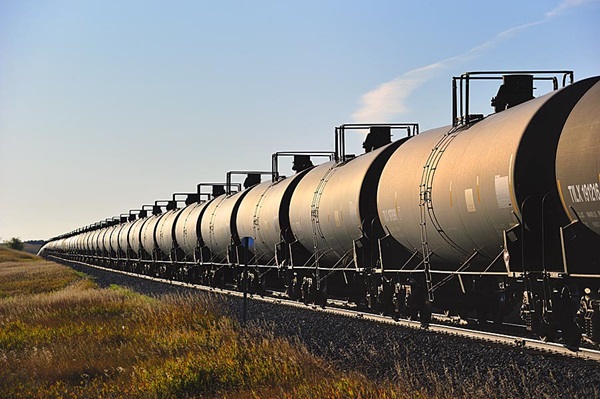
U.S. Rep. John Garamendi (D-Calif.) last week introduced a bill that would establish safety standards for the maximum volatility for crude oil before it could be transported by rail.
The "
Crude By Rail Volatility Standards Act
" (H.R. 5553) would prohibit rail transportation of crude oil and other similar materials. It also requires that all crude by rail in the United States adhere to the New York Mercantile Exchange's maximum Reid vapor pressure for crude-oil futures contracts of 9.5 pounds per square inch, the
Times-Herald
reported.
The current standard would remain in place until the Pipeline and Hazardous Materials Safety Administration (PHMSA) completes the rule setting a maximum volatility standard that was first announced in 2017 after the attorneys general of six states, including California, petitioned the U.S. Department of Transportation and PHMSA to finalize the regulation nationwide, the newspaper reported.
"My bill simply requires oil companies to decrease the volatility to market levels, rather than carrying unstable products through communities," Garamendi said in a prepared statement. "I am committed to enacting this legislation into law this year as part of the surface transportation reauthorization."
Garamendi, a senior member of the House Transportation and Infrastructure Committee, introduced the bill on Jan. 8. He has tried to get legislation passed since 2015 to prohibit crude-by-rail unless it met certain safety standards.
|
|
Article 7 -
SOLIDARITY
Teamsters Stand in Solidarity with Workers in France on Strike for Pension Security
The Teamsters Union stands in solidarity with French workers and their unions, on strike to protest proposed reforms to the nation’s pension system. The changes would negatively impact the majority of French workers.
The proposed reforms would merge funds for various groups of workers, raise the retirement age and alter how pensions are funded.
U.S. workers are facing similar challenges and the Teamsters have been a leading voice in seeking solutions to shore up retirement security for American workers.
“The 1.4 million members of the Teamsters Union stand in solidarity with workers in France who are seeking a just, fully-funded system for protecting retirees,” said Jim Hoffa, Teamsters General President. “Whether in France, the U.S., or anywhere else in the world, workers deserve to be able to retire with dignity after years of hard work.”
Founded in 1903, the International Brotherhood of Teamsters represents 1.4 million hardworking men and women throughout the United States, Canada and Puerto Rico. Visit
www.teamster.org
for more information. Follow us on Twitter @Teamsters and “like” us on Facebook at
www.facebook.com/teamsters
.
|
|
Article 8 -
GLOBAL RAIL NEWS
China plans 2,000 km of high-speed rail lines as part of $390bn transport budget
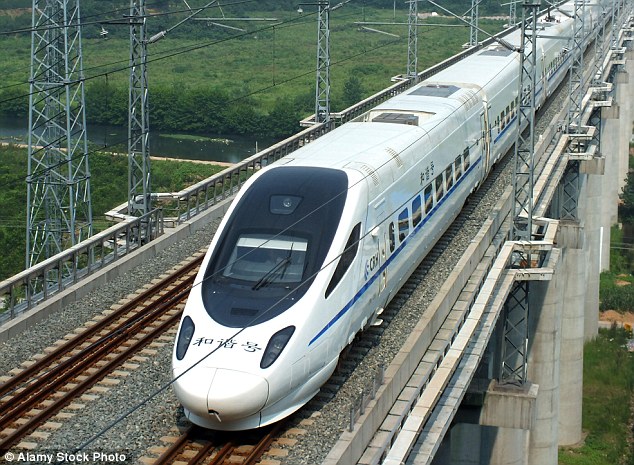
China plans to build at least 4,000 km of rail lines this year, half of which will be high-speed.
The new lines will be part of a $386bn spend on transport infrastructure projects, of which 31% will go to the rail sector. The 2020 programme maintains the country’s spending on rail in 2019, during which almost 8,500km of track became operational. This brought the total length of China’s rail network to 139,000km by the end of last year, of which 35,000km was high-speed.
Among the 51 lines opened last year, was the 174km high-speed route linking Beijing with Zhangjiakou, one of the cities hosting the 2022 Winter Olympics. Trains on this line run autonomously at a maximum speed of 350km/h.
Meanwhile, Canadian engineer Bombardier’s Chinese joint venture has been awarded a
$430m contract
to supply 160 CR400AF high-speed train cars to China State Railway Group.
Jianwei Zhang, president of Bombardier Transportation China, said: “China’s high-speed rail industry has become one of the nation’s economic pillar industries and the high-speed network has brought greater mobility and prosperity to the public.
|
|
|
|
|
|
|