Twitter  Facebook  Instagram
 

Hello!

Welcome to the Newsletter of the Friedrich Ebert Stiftung's Latin American Network for Inclusive Security


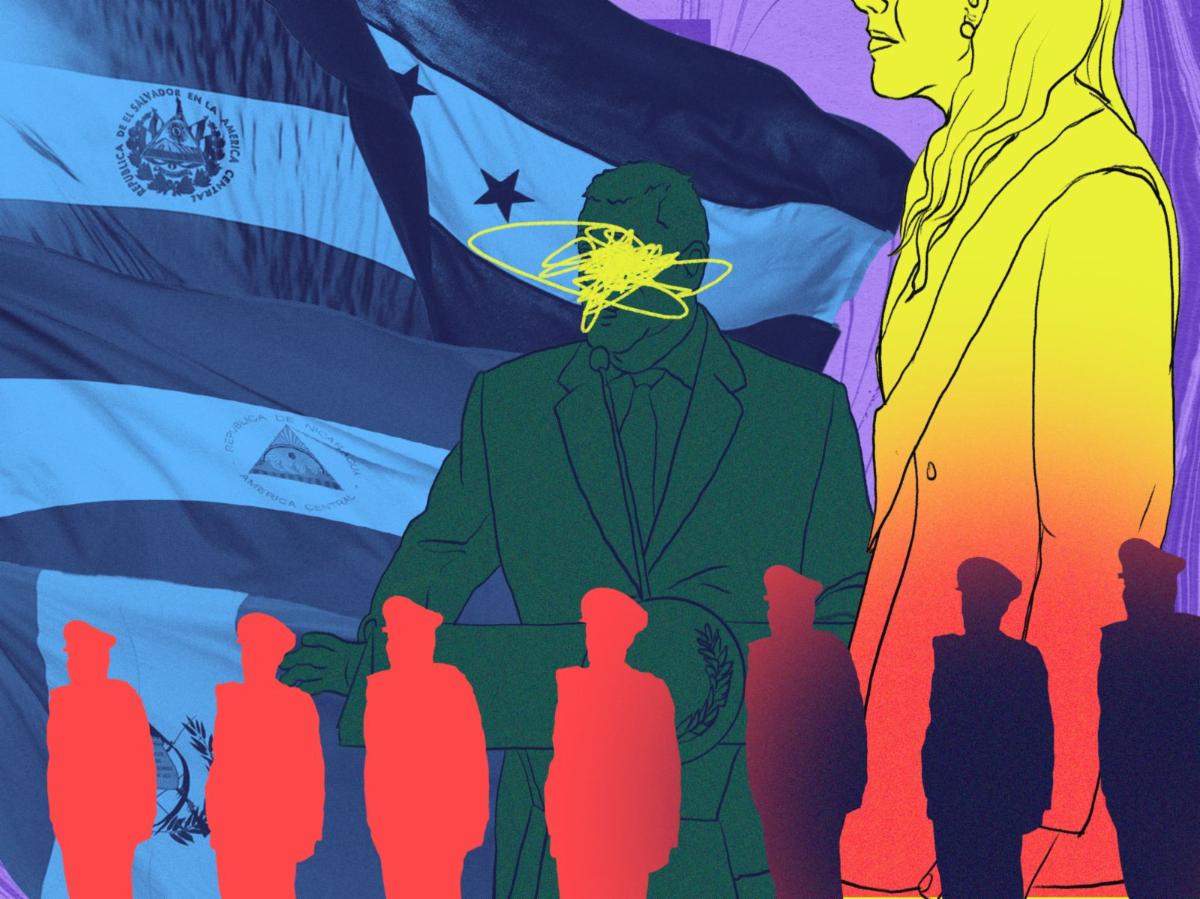
New authoritarianism, militarism, and militarization in Central America


The militarization of Latin American security, then and now


Explaining and predicting: shifting dynamics in NATO and Latin American scurity


The generals’ labyrinth: crime and the military in Mexico


Pivotal states: the Venezuela problem


How peacekeeping has reshaped Latin America

Latin America in a new Cold War?


While there is growing concern and debates in Latin America and the Caribbean about the type of security needed to deal with national and international organized crime (a topic covered by the guest author and various resources in this Newsletter), the United States is interested in the continent taking a position in its confrontation with China. Thus, the declarations of General Laura J. Richardson, Commander of the U.S. Southern Command, indicate.


In the last few months, General Richardson has visited several countries in the region, and in statements before the U.S. Congress she stresses that there must be an alliance between Washington and its continental neighbors to restrain China's presence. Her speech describes a multi-sector Chinese intrusion, including technology, security, illegal exploitation of natural resources, and access to minerals that are strategic for the new Industrial Revolution. At the same time, she denounces potential complicity with organized crime through China's financial system.


Over the past two decades, China's investments and presence in various fields have increased in Latin America, even in countries traditionally allied with the United States, such as Colombia. A briefing by the European Parliament states that over the last 20 years, China has become the second largest trading partner of Latin America and the Caribbean (LAC). Between 2000 and 2020, trade between China and LAC increased 26-fold, from US$12 billion to US$310 billion. China is also among the region's primary sources of foreign direct investment and financing.


The diversification of trade relations and investors is a fact in today's world, which has multiple centers of power and where ideological loyalties have disappeared, and it is by no means exclusive to Latin America. China’s growth and global reach have been mostly due to the massive investments made by U.S. and European companies in that country for decades.


General Richardson's statements have no economic or commercial context, nor do they seem to take into account that the Cold War ended in 1991. Reviving policies and procedures from that era raises complicated dangers. Several U.S. experts argue that Washington and Beijing should seek coexistence in the security field with "competitive cooperation" in the economic and commercial fields. But Richardson proposes, and urges, that Latin America becomes part of an opposing bloc to China under the leadership of her country. Given her status as head of the Southern Command, the implication that such a bloc should combine security with economics is implicit.


Undoubtedly, it would be important to discuss regionally the present and future of relations with China. Each state and the region should reflect on their alliances and the political, security, environmental, democratic, human rights, and labor implications, as well as many other issues, that trade and economic commitments entail. However, these discussions should not be based on prejudices or pressure exerted by the United States, a partner with which the region has often had conflictive relations. Moreover, Washington has neglected its relations with its neighbors for several decades, and if Donald Trump wins the elections next November, the outlook is one of uncertainty.

Mariano Aguirre

Advisor

Latin American Network for Inclusive Security


New authoritarianism, militarism, and militarization in Central America

Elvira Cuadra, director of the Center for Transdisciplinary Studies of Central America (CETCAM, by its Spanish acronym), examines the patterns of militarism and militarization in the context of the new authoritarianisms in Central America, characterized by the concentration of power, the rupture of balance between state powers, corruption and penetration of organized crime, and the restrictions on human and citizens' rights. The challenges are urgent for the region's future and require rethinking approaches to peace, democracy, and security.

Read more


The wave of militarism and militarization of the state is sweeping Latin America with militarized responses to social, political, and economic problems and with consequences on everyday life. Giving prominence to the military was already done after the independences in the 19th century, but political and structural changes augur less promising results nowadays. This collective volume, in which Rut Diamint reflects on military power and autonomy (for subscribers), shows that civil-military relations raise crucial issues of control and effectiveness.


The Informe Iberoamérica 2024 [Iberoamerica Report 2024] by Alternativas Foundation (Spain) analyzes security as a central issue in government agendas. Lucía Dammert explores the transformation of the concept of police reform, linked to the strengthening of civilian power, control of the use of force, and greater accountability.


The U.S. Army Southern Command (SOUTHCOM) has taken a leading role in the relationships with Latin America within a framework of geopolitical transformations, trying to limit China's military projection. Its current chief, General Laura Richardson, has visited several countries and, in statements before the US Congress, has outlined SOUTHCOM's vision of security in the continent, and new approaches to containing China. Disaster response is a growing area of collaboration.


Meanwhile, in Argentina, Javier Milei puts the brakes on the cooperation with China and turns his gaze to the US, in a foreign policy perspective focused on the fight between democracies and autocracies.


The uncertain future of transatlantic cooperation in the event of a Donald Trump victory in November may impact the region's security strategies and force the search for new alliances. There is growing interest in Latin America's possible insertion into a changing international order.


The European Parliament looks to the region in 2024 with concerns about security in the Andean region, especially Ecuador and Colombia; the social impact of Milei's policies; and the Community of Latin American and Caribbean States (CELAC) role in Euro-Latin American relations. Several themes overlap in the April 2024 report of the Armed Conflict Location & Event Data Project (ACLED), which also addresses violence in Haiti and Mexico.


The challenges posed to the area with the most homicides in the world are presented in the Lethal Force Monitor, which compares nine countries in Latin America and the Caribbean. Argentina's En Foco Institute proposes comprehensive approaches to violence reduction instead of spectacular policies and criminal inflation.


Ecuador began the year plagued by a wave of violence that has among its causes the weakening of institutions and the internationalization of criminal networks. Following the state of emergency in force from January to April, which reduced the number of violent deaths, and the approval of the Private Security and Surveillance Law, Daniel Noboa has authorized an extended military deployment in the streets and prisons. His popularity remains steady at 80%.


The perception of insecurity, the demand for citizen security, and the fight against corruption and drug trafficking were already the country's number one problems in previous years. Along with homicides at unprecedented levels, long-standing structural issues have not been resolved, including limited access to economic and social rights.


US-Mexico relations are critical in the aftermath of the June 2 elections. This article in Foreign Affairs discusses the different dimensions of security and democracy between the two countries in a broad sense: trade, organized crime, energy and ecological transition, and migration. Smuggling and weapons sales from the U.S. to Mexico are a significant contributing factor to the violence in this country.


Andrés Manuel López Obrador has managed to reduce some violence rates with strong military participation and deploying more troops than ever before. For the International Crisis Group, such protagonism is problematic; it has failed to affect the level of penetration of organized crime into the institutional framework and should be reversed.


Meanwhile, aggressions against environmental defenders and the militarization of disputes over access to natural resources and goods continue. The Mexico Peace Index 2024 measures the evolution of violence and peace.


This Carnegie Endowment for International Peace event analyzes Venezuela as part of the so-called "pivotal states" due to its ties with China, Cuba, Iran, and Russia. Participants explore Washington's strategic alternatives towards this country.


In their annual report, Human Rights Watch explores the situation. In Venezuela: De la Pax Malandra a la Paz Ciudadana, the authors combine the factors of the Venezuelan conflict and its institutions with cross-cutting case studies such as Orinoco, the border with Colombia or experiences from urban areas to explain how internal peace coexists with the use of armed, state, and criminal violence.


According to the Ombudsman's Office, the presence and actions of armed groups in Colombian territory have continued to grow in the past four years in 427 municipalities in 22 departments. The figures question the results of "total peace." Sabine Kurtenbach, from the German Institute for Global and Area Studies (GIGA), analyzes the impact of the 2016 peace agreement on the three pillars of peacebuilding: security, citizen participation, and conflict transformation.


As several authors in International Affairs argue, the future of international peacekeeping missions is under debate. Researcher Nicole Jenne reviews Latin American participation in these missions and the current doubts of Latin American countries about this commitment after their long cooperation in Haiti (article available for subscribers).


Haiti is receiving a new mission that has been authorized but is not led by the U.N. Kenyan and other foreign troops will face logistical, linguistic, and some difficulties stemming from the mandate. This article attributes the lack of results from previous missions to a focus on stability over democracy (a problem also faced by the new mission).


As the latest issue of the Relaciones Internacionales journal argues, international peace-building instruments and mechanisms have led to a critical current of studies on so-called liberal peace. Several authors wonder whether the rise of authoritarian leaders such as Nayib Bukele can be explained by the unfulfilled promises of liberal peace contained in El Salvador's peace accords.

Just this year marks the 30th anniversary of one of the great international failures to maintain peace and security in Rwanda and the DRC.


As the ecological crisis worsens and the scramble for natural resources erupts into a multitude of conflicts around the world, reflections on the meaning of environmental peace are emerging.


In Cuatro territorios, cuatro historias: Diálogos de mujeres entrelazadas por la presencia de actores armados, women from Guatemala and Colombia share their experiences on how they and their communities are affected by the presence of armed actors.


Nonviolence is a tool for political action and social transformation, as shown by the pedagogy of the families of the disappeared people in Mexico for the construction of peace. From the Regional Institute on the Study and Practice of Strategic Nonviolent Action in the Americas, the series of podcasts on nonviolence continues with chapters on Venezuela, indigenous protests in Ecuador, and environmental protests in Panama and Bolivia, among others.


  • The newsletter of the Latin American Network of United States Research (RELEU, by its Spanish acronym) is available for free and has numerous resources. To obtain it, please write to Tatiana Carlotti (tcarlotti@gmail.com)
 
 
Did someone send you this newsletter? Click here to subscribe
Learn more about our Network
 
X Share
LinkedIn Share
 

Newsletter of the Latin American Network for Inclusive Security

Edited by Mariano Aguirre and Mabel González Bustelo

Translated by Yenni Castro (Valestra Editorial)

More information: MariaAlejandra.Rico@fes.de

Calle 71 # 11 - 90, Bogota, Colombia

© 2024 FES