|
Water Quality Update for Friday, September 18th, 2026
by the Canandaigua Lake Watershed Association
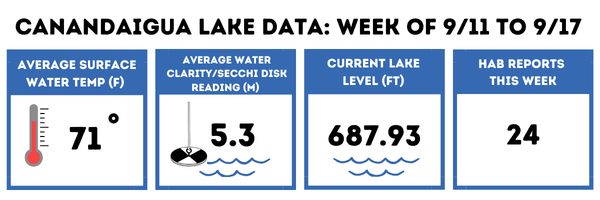
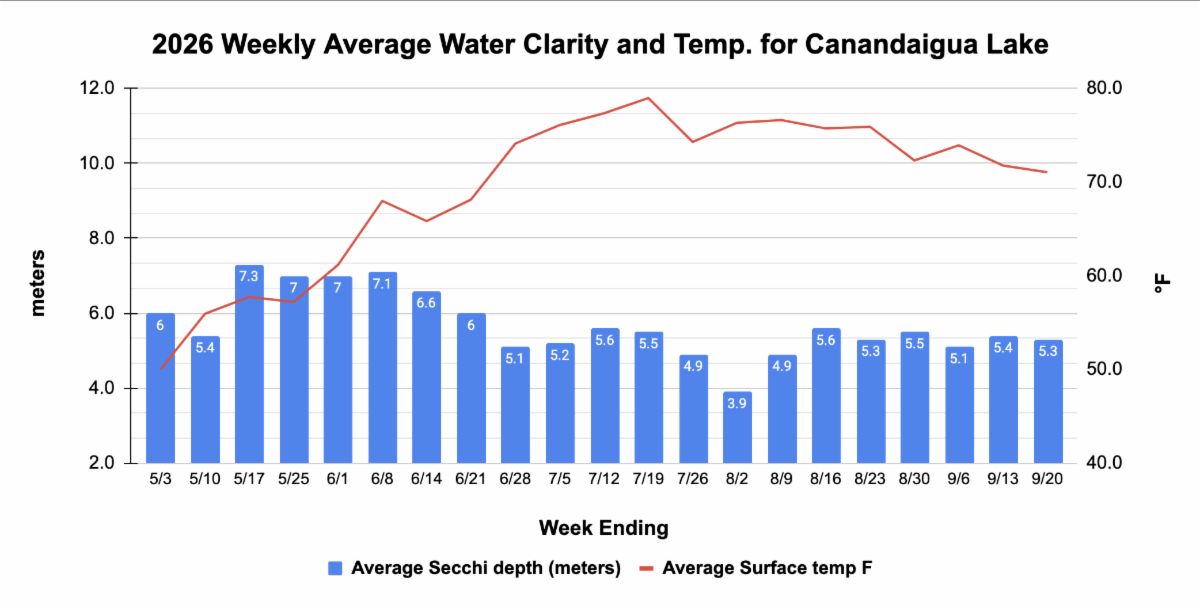
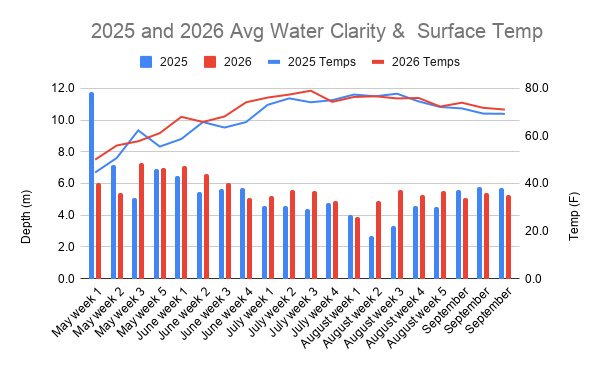
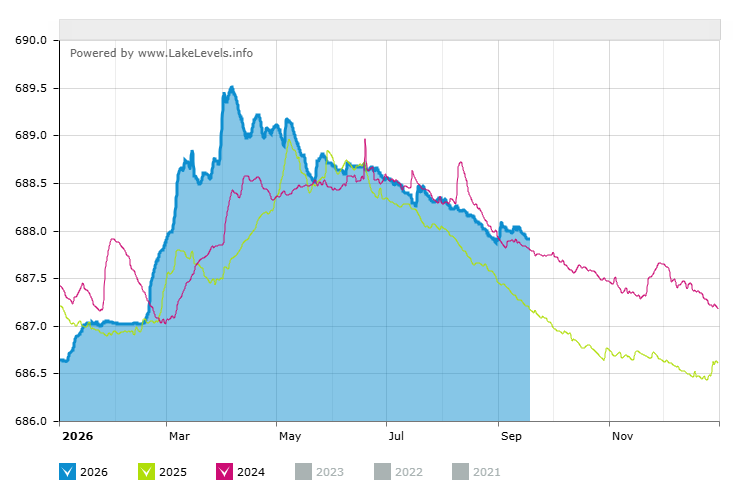
| | Did someone forward you this email? Click HERE to subscribe directly. | | The CLWA Weather Station is located at Canandaigua BoatWorks on the east side of the lake. | | This week was our worst week to date this season for harmful algae bloom reports coming in around the lake. | | Average water clarity and lake surface temperature are about the same this week as last - with a slight decrease in temps and lake level as expected this time of year. However our number of reported harmful algae blooms was the highest this week to date for this season - with 24 reports coming in from trained CLWA volunteer monitors. We also recevied numerous phone calls at our office and emails to our HABs@canandaigualakeassoc.org email address. | | Weekly water clarity and temp data collected by our dedicated CLWA Citizen Science volunteers. You can see that average water clarity and surface temperature are very similar this week compared to last. | | How is 2026 comparing to 2025 so far? Average surface temps are just a smidge warmer right now than they were last year at this time. Water clarity (measured by secchi disk depth) has seemed a bit better overall actually until September - and then the trend reversed and it is slightly worse than it was in 2025 this month so far. | Lake level has decreased slightly this week down to 687.91 today. Currently both outlet gates are closed and the feeder canal gate is open at the required minimum - 0.25 ft open. There are a few different places you can find the lake level online. NOAA is one. Lake Levels online also has nice charts - where you can easily see the whole year and compare to the last few years. | | |
In this weeks update:
- HABs Update
- Heron Hill Event Recap
- What's in the Foam and Survey
- Cormorant Survey
- Septic Smart Week
- Upcoming events
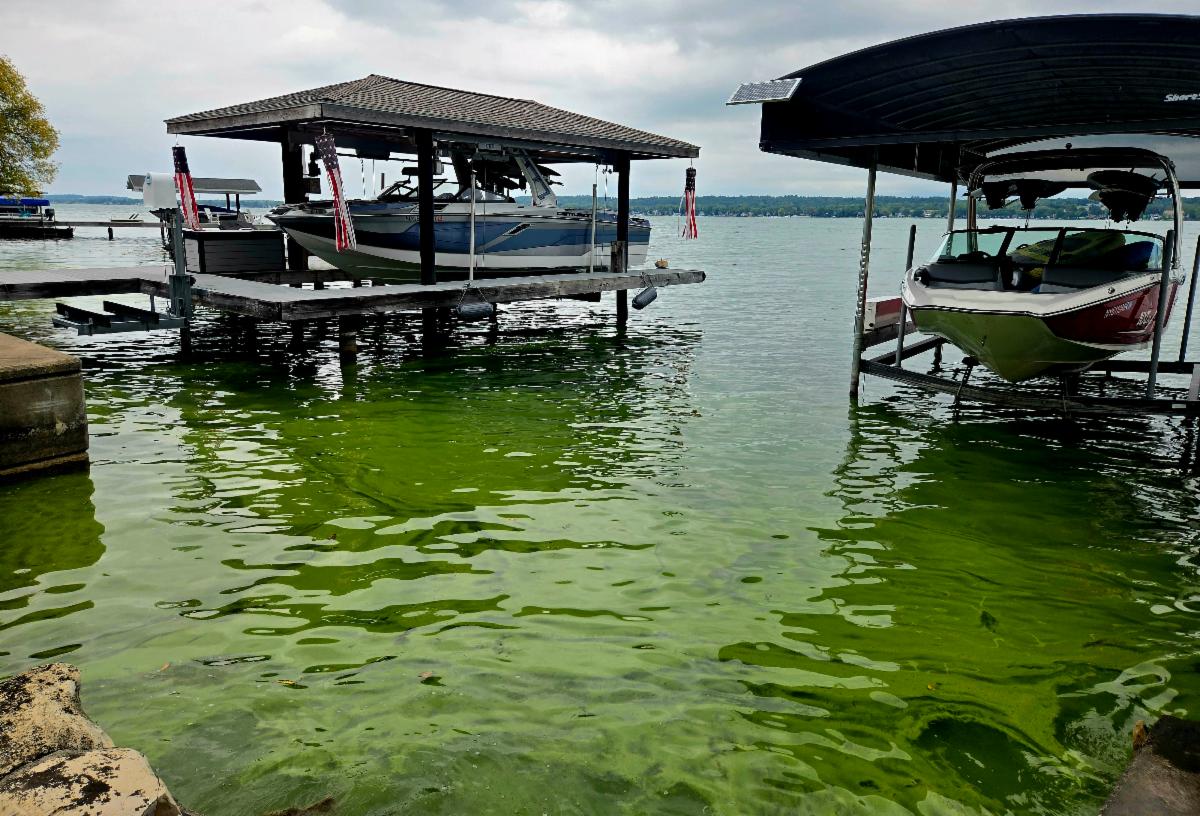
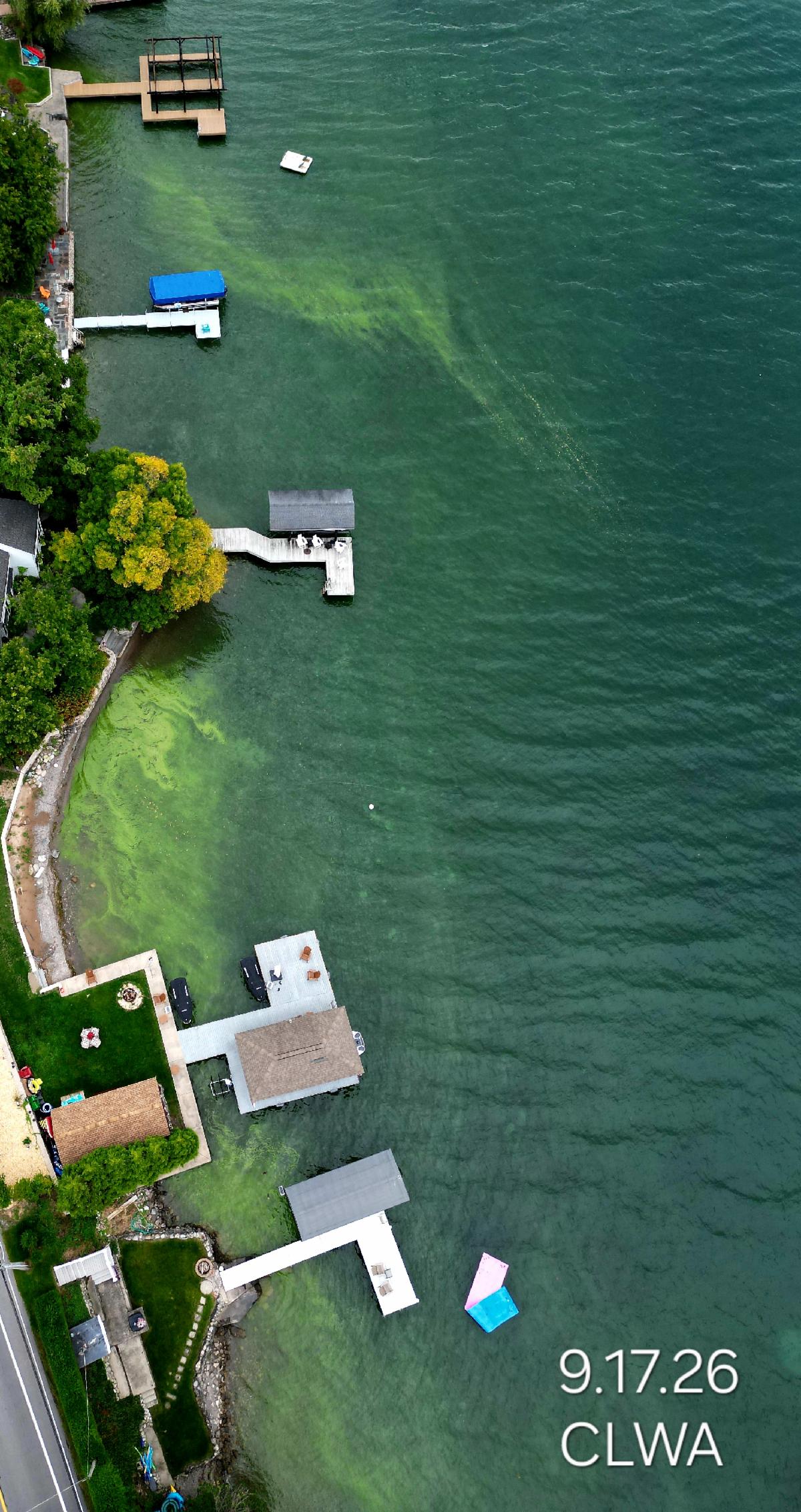
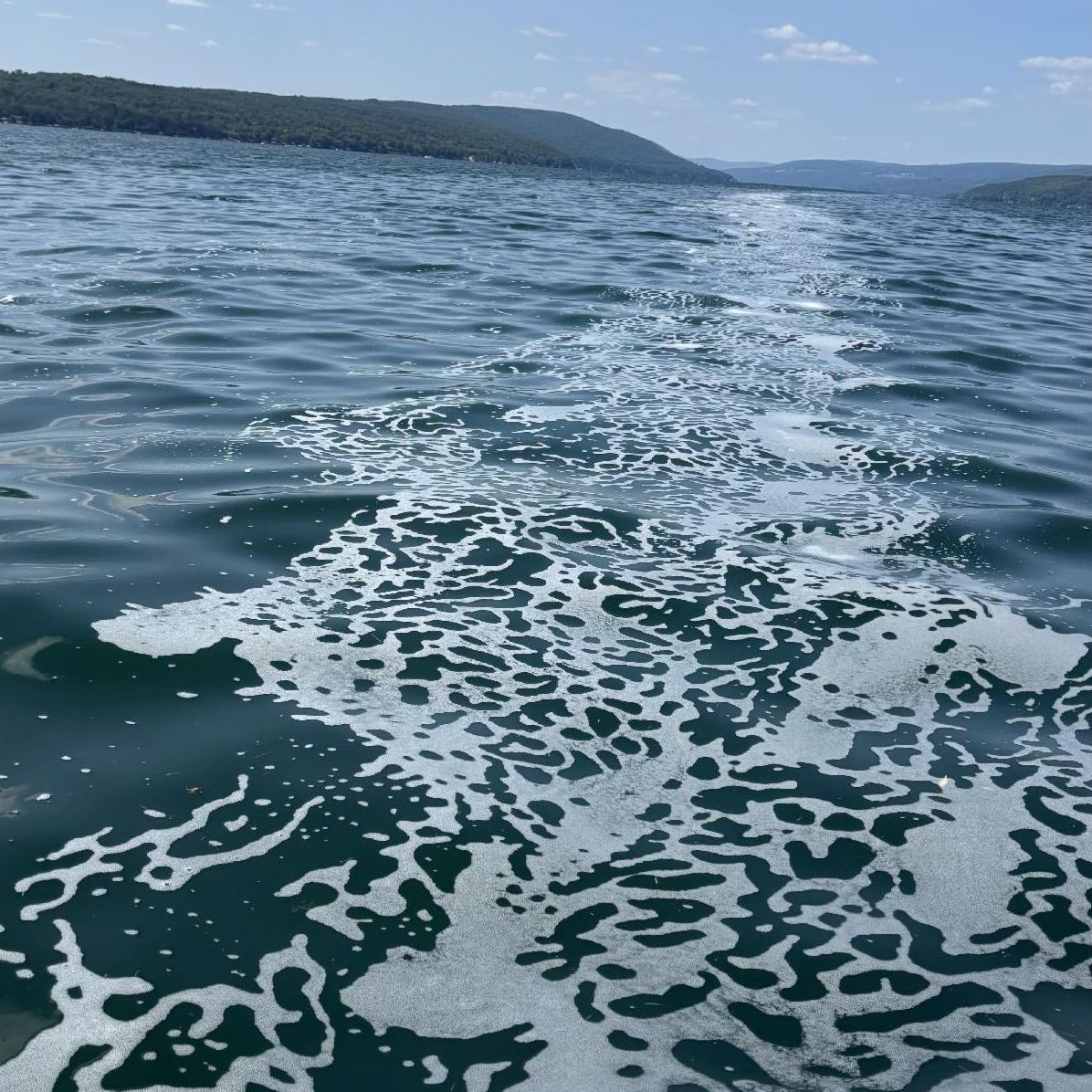
| | We had 24 harmful algae bloom reports come in this week from our trained CLWA citizen scientists. We also had additional reports from the public calling the office or emailing us at our HABs@canandaigualakeassoc.org email. We had a few reports start on Sunday and Monday, but then the reports became more widespread on Wednesday, and by Thursday we were even receiving reports of HABs from the south end of the lake - which is less commonly impacted compared to the north end. Reports came in as far down south as Whiskey Point on the east side and Walton Point on the west. | Photo from west side of the lake near Wyffels Rd Thursday afternoon about 5 pm. | |
Our weekly volunteer shoreline monitoring season where monitors are asked to report weekly for both bloom and non-blooms officially ends on October 1. We still recieve reports of blooms after that - but we no longer ask people to report non-blooms as well. Typically September has been the worst month for HABs on the lake - and sure enough - this has been our worst week so far.
There might be fewer swimmers out there right now - but there are still some we know. Please always use caution and do not enter the water if it looks discolored. Please also keep a careful eye on pets this time of year and keep them out of the water as well if it looks like spilled paint, pea soup, or otherwise discolored.
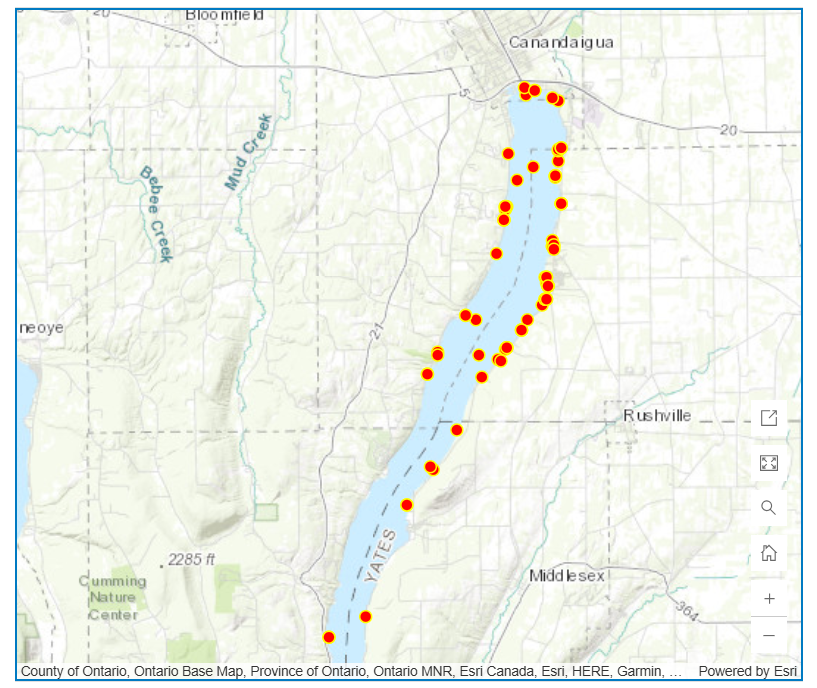
| | Confirmed bloom reports from volunteers have come in mainly from the north end of the lake so far this summer on both sides and also mid lake. The map is interactive on our website and you can click to view reported blooms to see their date and location details. | |
Remember: HABs are constantly changing.
They can appear, move, and disappear quickly. A bloom reported in one location does not mean that the entire lake is affected or that conditions are the same everywhere.
Our HAB map is a helpful tool for seeing where blooms have been reported, but it is not an exact, real-time picture of conditions across the lake. Before swimming, boating, or letting pets near the water, take a moment to look at the water where you are. If you see water that looks like spilled paint, pea soup, or has unusual discoloration or surface scum, stay out.
When in Doubt - Stay Out!
Knowledge is power! Knowing what HABs look like and staying informed can help you safely enjoy Canandaigua Lake all summer long. Stay observant, stay informed, and help us spread the word!
Scoll all the way to the bottom of this email for our general HABs reminders, resources, and ID info.
| | |
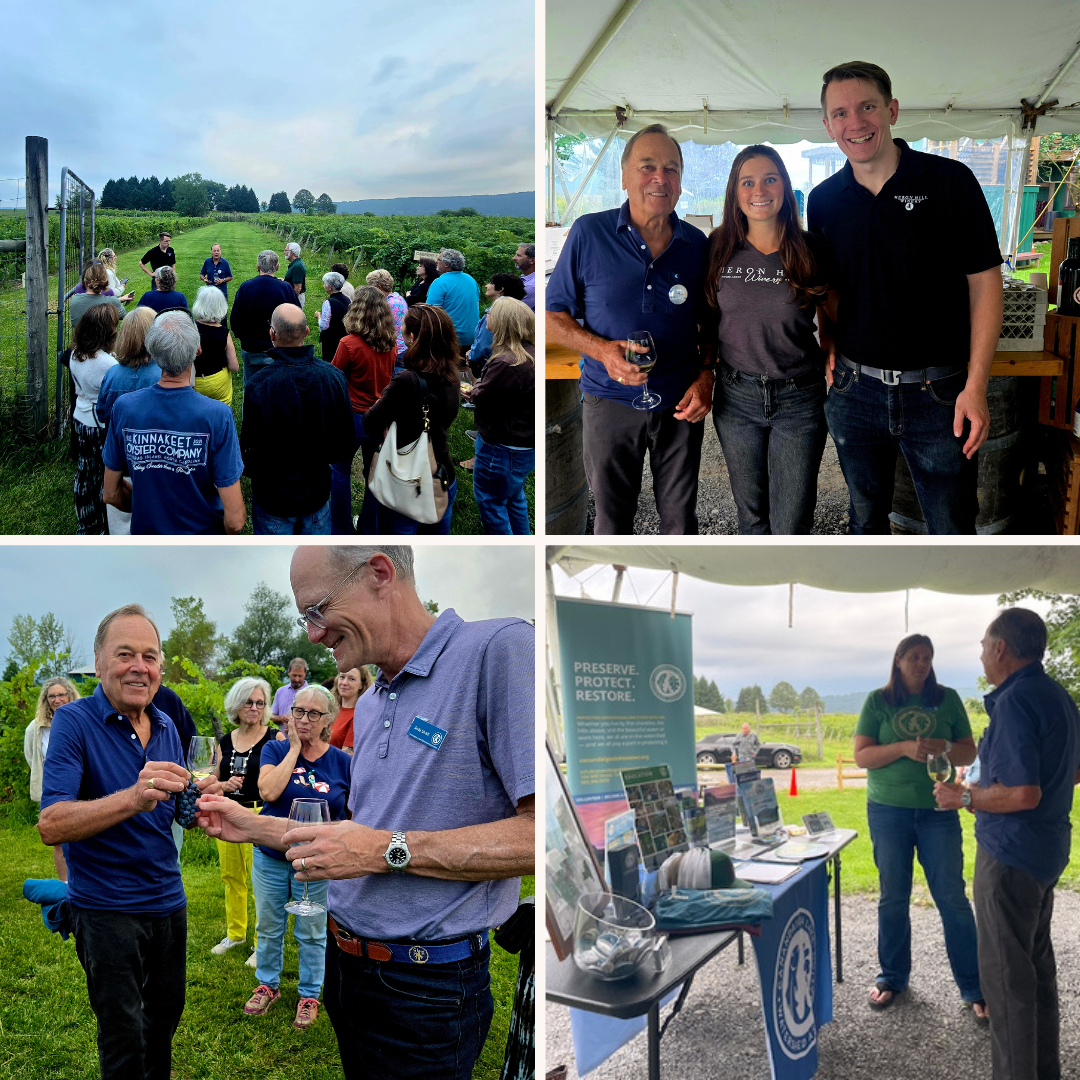
We all had a fabulous evening on Wednesday at the Heron Hill Tasting Room on Canandaigua Lake for a vineyard tour, delicious wine and appetizers, great live music, and lovely company all around! Thank you to everyone that came out to enjoy and support the event.
John Ingle, Heron Hill owner, and Rick Porter, Associate Wine Maker at Heron Hill, gave the wonderful vineyard tour. It was so great to learn more about the history of the vineyards, its day to day operations, and all of their sustainability efforts that have been implemented to help protect Canandaigua Lake. This year, Heron Hill Vineyards received the CLWA Lake Friendly Living Award to acknowledge and honor all their efforts in protecting water quality! Thank you John and Rick for the amazing tour.
Also, another huge thank you to Stephanie Chrysler-Molina, Heron Hill's Tasting Room Manager, and Jessie Gorcica, Director of Sales and Marketing at Heron Hill, for all your time and efforts to make this event possible and for the ongoing wine collaboration we have had with you these past two years. You both have been so wonderful to work with!
Heron Hill has been donating $2 per bottle sold with the wine collaboration, including some tasting room donations as well. Last year they donated nearly $4,300 from the wine and tasting sales alone and we are expecting another generous donation soon for 2026 sales. We are so incredibly grateful for your generosity and partnership. We can't thank you enough!
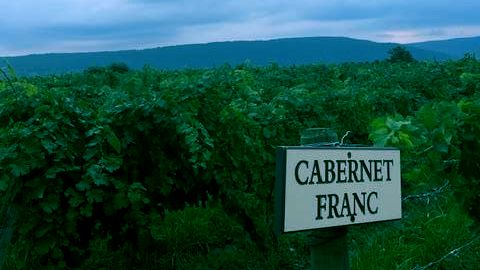
There is not much Cabernet Franc left as part of this wine collaboration, so purchase your's soon at the Canandaigua Tasting Room! There is also the Chardonnay available for purchase. These are two delicious wines you can continue to enjoy throughout the seasons!
Thank you again to John and Josephine Ingle, Stephanie, Jessie, Rick, and all the Heron Hill staff for putting on this amazing event, for your ongoing support and generosity, and endless committment to Canandaigua Lake protection efforts. You are quite the team! We appreciate you so much. THANK YOU!!!
| AquaDiary Podcast: What's Really in the Foam? | |
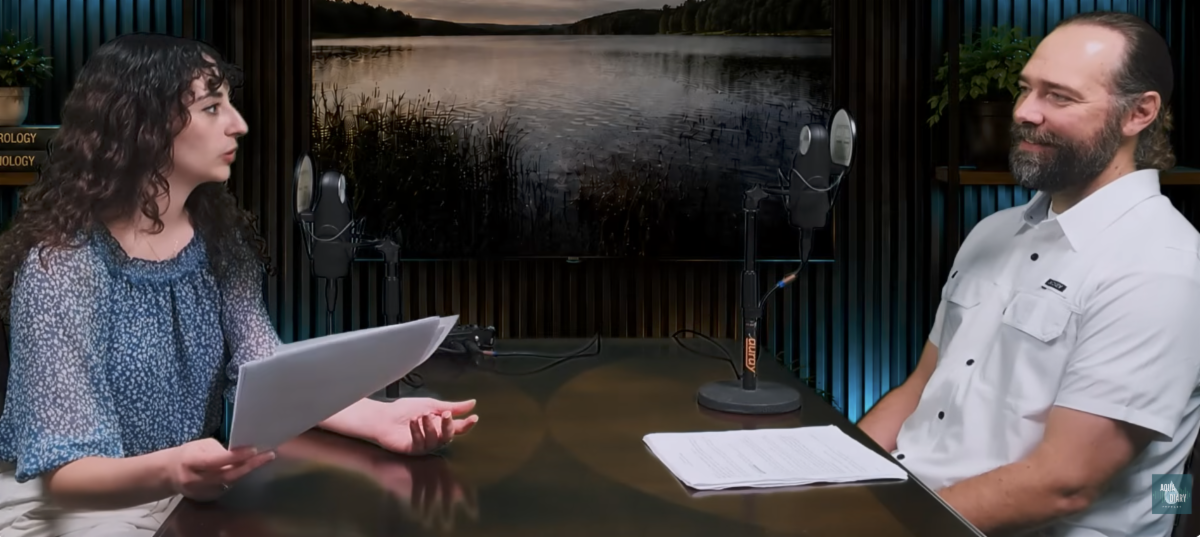
The AquaDiary Podcast with Ally Berry recently featured a topic discussing what can be found in lake foam. In this specific podcast she is discussing the existence of higher PFAS levels found in lake foam in response to research done by Global Aquatic Research (GAR), including Canandaigua Lake. In the linked podcast, she is interviewing Rick Smith, co-founder of GAR with Stella Woodward, on their research and paper, PFAS, Algae, and Lake Foam: What Issues Are We Seeing in the Finger Lakes?
Please be sure to check-out this informative podcast on PFAS. To learn more about the history of lake foam studies with GAR on Canandaigua Lake, see below and visit the lake foam page on our website.
About Ally Berry's AquaDiary Podcast
Ally Berry' is an environmental scientist who works professionally in water quality and HABs in our country and around the world. AquaDiary Podcast's purpose is to inform people on the underlying science of water news to help them understand why they should want to help protect it. She covers water topics that affect communities, health and daily life including on drinking water saftey, sewage overflows, lake mysteries, etc. With water as our most important resource, she empasizes how important it is that we all understand why it's increasingly at risk.
| |
CLWA's History with Foam Studies
CLWA began working with Rick Smith and Stella Woodward - co-founders of Global Aquatic Research (GAR) - in 2019 to better understand the lake foam. This initial foam study with GAR examined the chemical composition and potential sources of foam on Canandaigua Lake. Results indicated that the foam is most closely associated with polysaccharides produced by Microcystis cyanobacteria, the same organisms responsible for harmful algal blooms (HABs).
In 2023 CLWA teamed up again with GAR to investigate the potential of lake foam to accumulate the emerging contaminant, PFAS (per- and polyfluoroalkyl substances). The full data report is available on our website.
Future research topics include continuing to assess the foam’s potential to accumulate heavy metals and industrial toxins (including PFAS) in addition to further investigation of microcystin toxins in the foam.
We Need Your Foam Reports!
As part of this ongoing research initiative, we are documenting observations of lake foam from citizens using the Survey 123 app. Volunteer reports help us document the extent and timing of these foaming events, and may help make research decisions on sampling efforts. Learn more about foam and find the foam survey you can use to report foam at the link below. Scroll down to near the bottom of the page to find the foam survey.
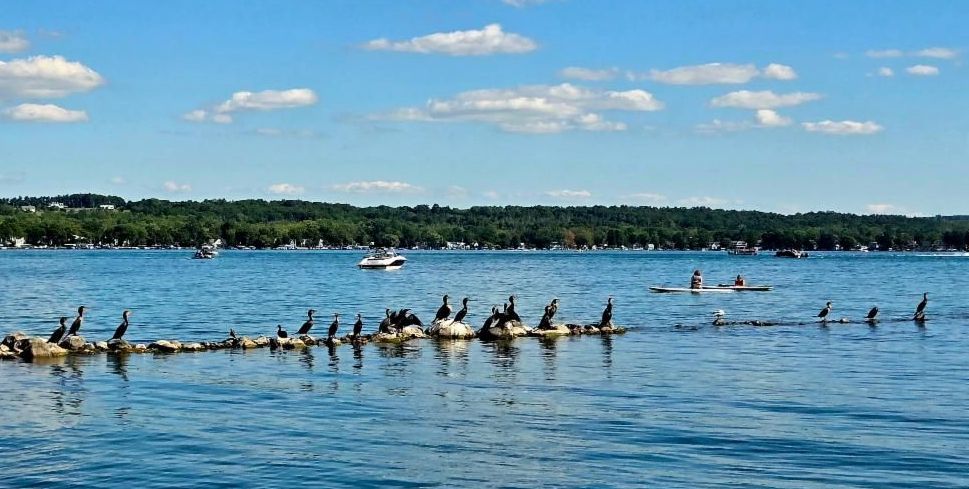
| Have you noticed more cormorants than usual this year? | Cormorants along the stone wall next to the pier. photo by Emily DeBolt. | |
There has been a noticeable impact on shoreline trees from cormorants on Lake Ontario, particularly in places such as Sodus Bay, this year. The impacts have been significant enough that a new cormorant survey has been developed. While the survey focuses on Lake Ontario, it was designed for the broader region, so we can also use it to report cormorant observations here on Canandaigua Lake.
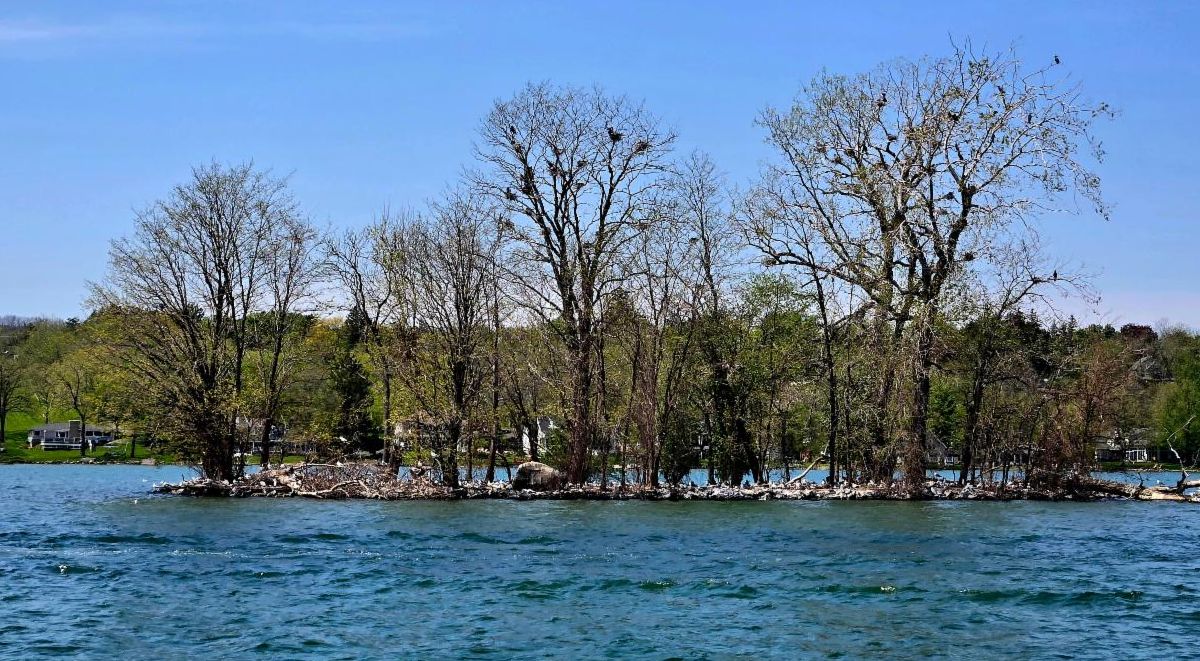
Here on Canandaigua - the cormorants roost in the trees on Skenoh Island. They also love to hang out on the stone wall along the pier as well. Find out more below about how you can document your cormorant observations on Canandaigua Lake.
Share Your Double-Crested Cormorant Observations!
New York Sea Grant is inviting the public to document the presence, activities, and impacts of double-crested cormorants. Double-crested cormorants are a native, fish-eating, federally protected migratory bird species. The survey includes options for logging the birds' impact to natural habitat, water quality, infrastructure, and recreational usage. The survey developers strongly encourage users to submit photos to show the birds' activity and impact.
The survey is designed for use by the public across New York's Great Lakes region and statewide.
Double-crested cormorants utilize the Great Lakes region for breeding, with nesting colonies of a few dozen birds to more than a thousand pairs. Their droppings can destroy the trees and vegetation below their nests. The birds' wide-ranging diet of fish is a cause of concern for the recreational fishing industry. Double-crested cormorants were identified as a serious issue by New York's charter fishing industry during industry meetings held by New York Sea Grant along New York's Great Lakes-St. Lawrence River shoreline.
| Cormorants roosting on Skenoh Island 5/16/26. photo by Emily DeBolt. | |
Identification of Cormorants
Double-crested cormorants are large waterbirds with a long neck, hooked bill, and yellow-orange skin at the base of the bill. Adults are mostly black, while juveniles have lighter brownish heads and bodies. They are often seen perched with their wings spread open to dry.
Protected Species
Double-crested cormorants are migratory birds protected under federal and New York State law. It is illegal to kill, capture, harass, or otherwise harm cormorants, or to disturb their active nests or eggs, unless specifically authorized by permit.
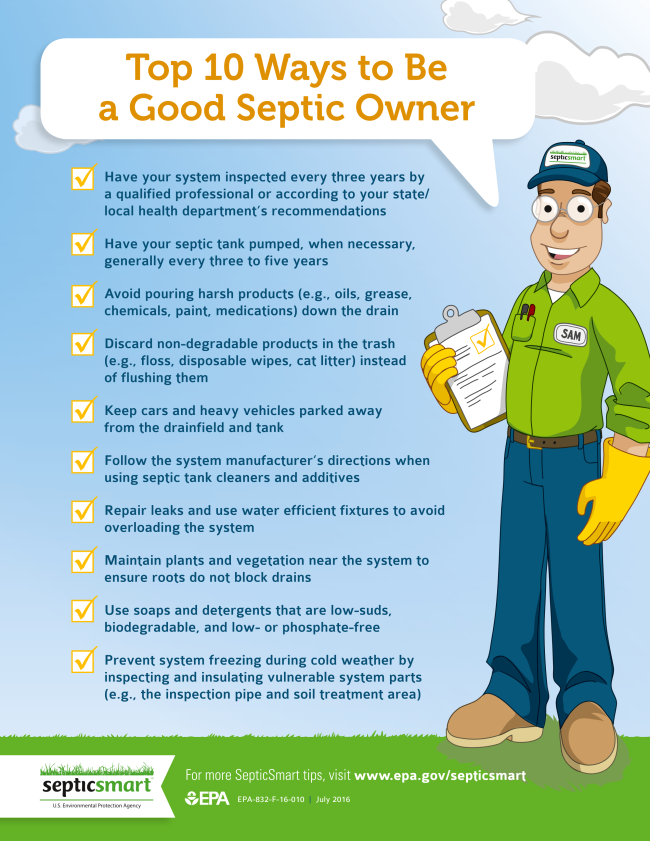
| SepticSmart Week: September 14th - 18th, 2026 | | |
Septic Sytems Around Canandaigua Lake
Only about 5% of the Canandaigua Lake Watershed is served by centralized wastewater treatment facilities. The other 95% of the watershed has over 4,000 individual onsite systems, including approximately 650 systems near the lake shoreline and 1,200 near streams (from Canandaigua Lake 9E plan).
Properly designed and maintained onsite wastewater treatment systems are very effective at removing solids, bacteria and nutrients from wastewater. However, improperly designed, located (too close to the lake or running stream), or maintained systems often show no signs of malfunction to the owner but are not fully cleaning wastewater.
More details about septic systems and their impact on Canandaigua Lake are covered in the Canandaigua Lake Watershed 9 Element Plan for Enhanced Phosphorus Management - starting on page 45. You can access the plan here.
| | Woodville Boat Launch Maintenance | | |
The NYS Department of Environmental Conservation (DEC) will be conducting scheduled maintenance at the Canandaigua Lake Woodville Boating Access Site from September 14–25.
The boat launch will remain open, but parking will be limited while DEC replaces a drainage pipe. Please watch for clearly marked restricted parking areas and use caution around the work zone.
Questions? Contact DEC Region 8 at (585) 226-5343 or fwfish8@dec.ny.gov.
| |
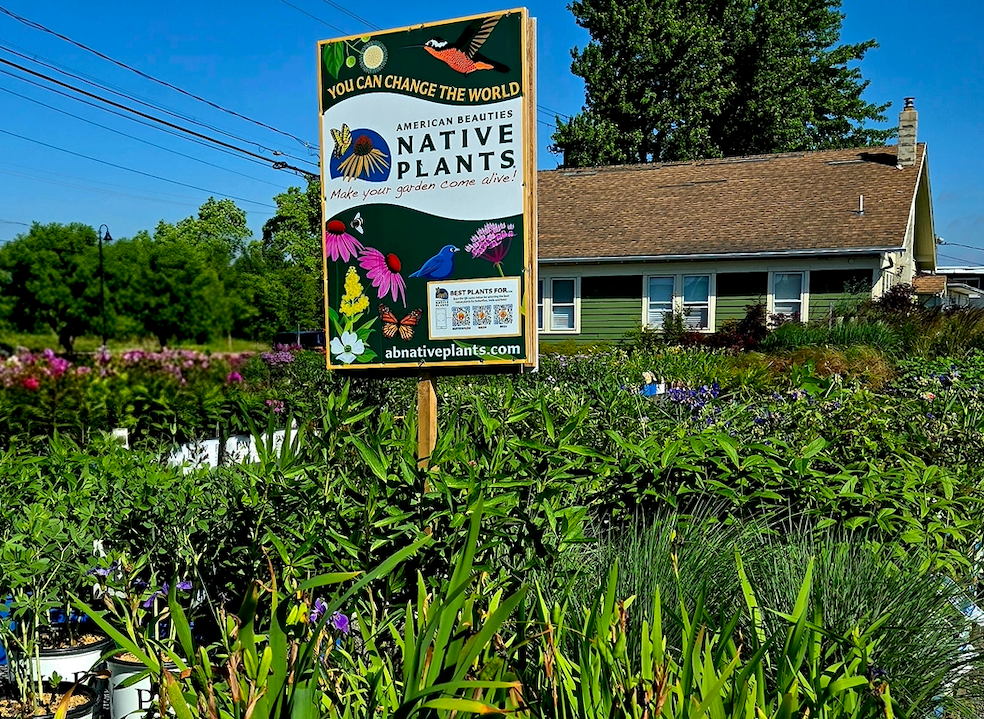
Mayflowers Native Plant Open House | |
When: Tuesday, September 22nd, 6:00- 7:30 PM
Where: Mayflowers Nursery and Garden Center, 2505 NY-332, Canandaigua, NY 14424
Join the CLWA and Mayflowers Nursery and Garden Center for a tour of their facility and to learn more about the benefits of native plants, Mayflowers' native plant offerings, and other things you to can do to live lake-friendly. The fall is an excellent time to plant so we hope you can join us to learn more and find some native plants you and your garden will love!
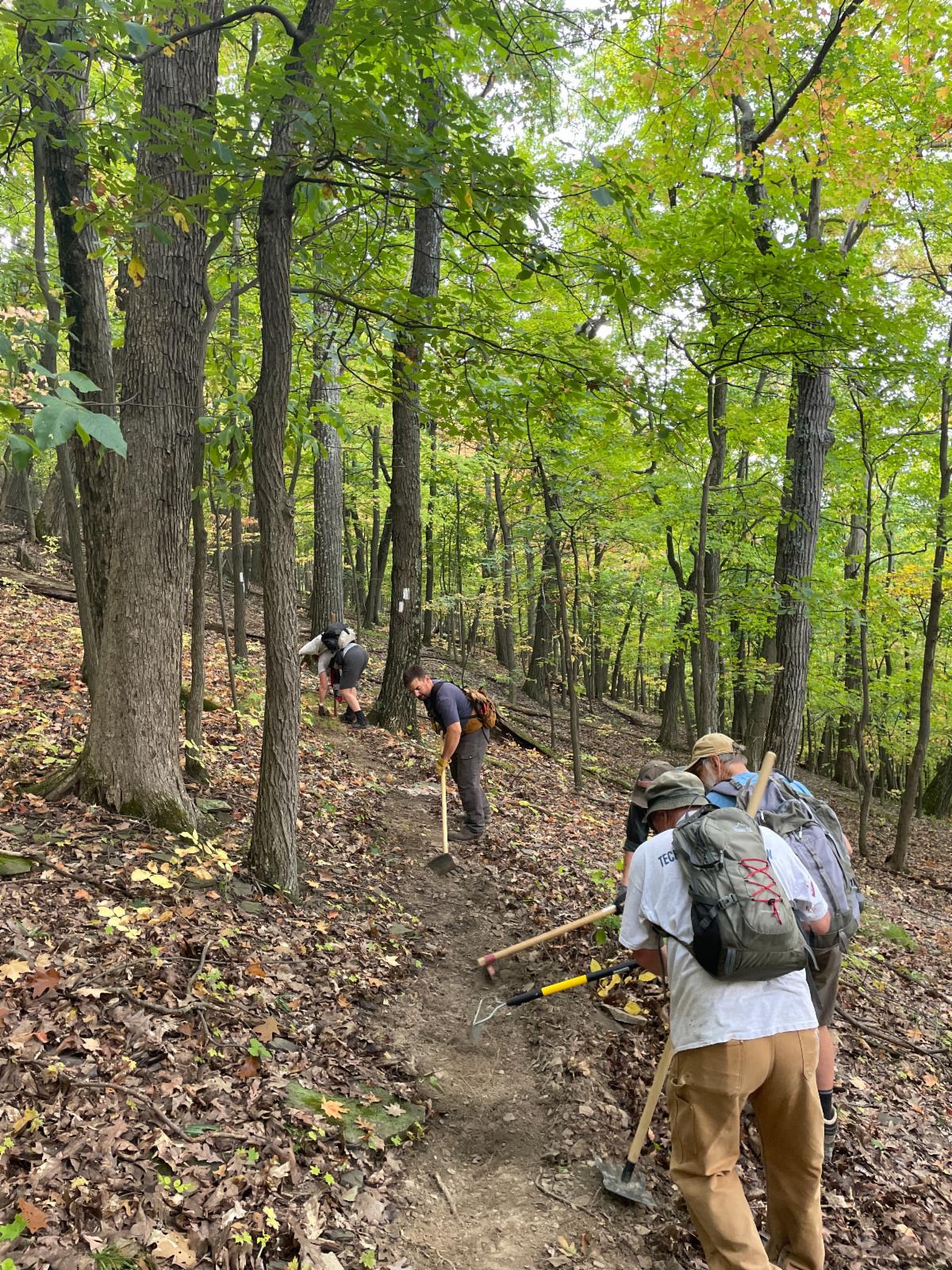
| Trail Work Day with Finger Lakes Land Trust (FLLT) | |
When: Friday, October 16th, 10:00AM-12:30PM and 1:30-4:00PM.
Where: Great Hill Preserve, 4756 S Hill Rd, Middlesex, NY 14507
Join the Canandaigua Lake Watershed Association and the Finger Lakes Land Trust (FLLT) for a second year of trail work at the Great Hill Nature Preserve in Middlesex NY. The main focus of the day will be side- hilling and working on switchbacks. All gear, including gloves and clippers, will be provided by FLLT.
*Meet location will be Clark's Gully parking area because parking is a bit tricky at the preserve. We will then carpool to the preserve.*
Please wear appropriate attire for trail clean-up and bring plenty of water and a snack if you'd like.
*Registration is required so we know how many volunteers to expect! Thank you!*
*Rain date is October 23rd, 10:00 AM-12:30 PM and 1:30-4:00 PM*
| CLWA Annual Chipotle Fundraiser -- Mark your Calendars! | |
You will need to show this flyer before ordering at the restaurant!!!
If you will be ordering online, please use the code in the flyer below, 34FGCQ8.
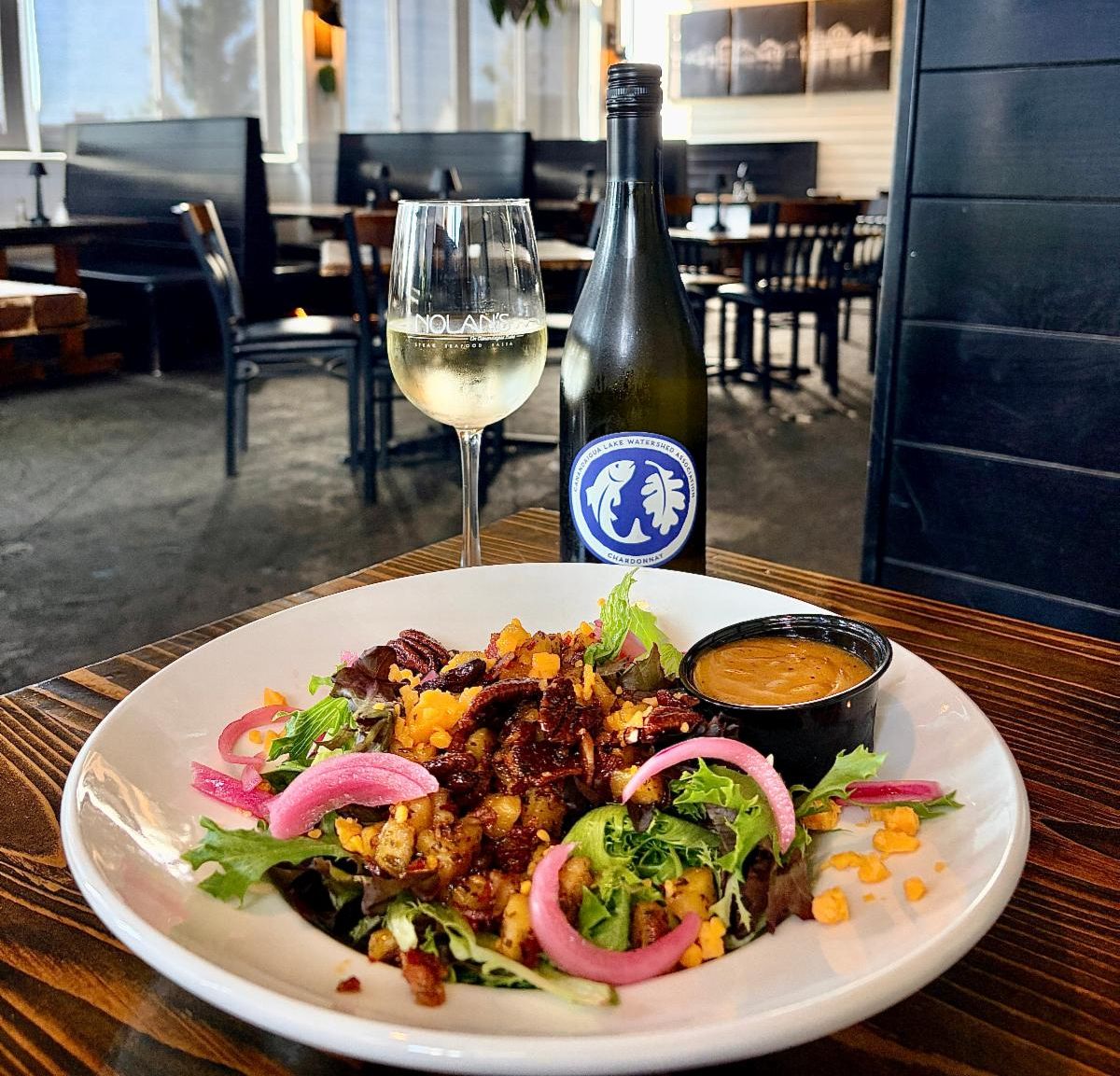
| 'Savor the Flavor. Support the Lake' Partnership's Final Month! | September's special is Hot Honey Apple Bacon Salad - Apple-bacon chutney, sharp cheddar crumble, candied pecans, pickled red onions, served over mixed greens with Nolan’s hot honey vinaigrette. Pairing: Heron Hill Chardonnay to benefit CLWA | |
Now in its second year, the collaboration between Nolan's on Canandaigua Lake, Heron Hill Winery, and CLWA brings together local food, Finger Lakes wine, and lake stewardship to inspire residents and visitors alike to help protect the lake that make Canandaigua such a special place to live, work, and visit.
From July 1st through September 30, Nolan's will once again feature a limited-edition Heron Hill Winery Chardonnay in support of CLWA. A portion of every bottle sold will be donated to CLWA to advance our mission of protecting, preserving, and restoring Canandaigua Lake through science, education, and advocacy. Read all about the partnership here in the Democrat and Chronicle.
| | |
Stay informed so you can enjoy Canandaigua - or other New York Lakes - safely and confidently this summer.
We have a map on our website homepage for Canandaigua Lake reported blooms from our volunteers.
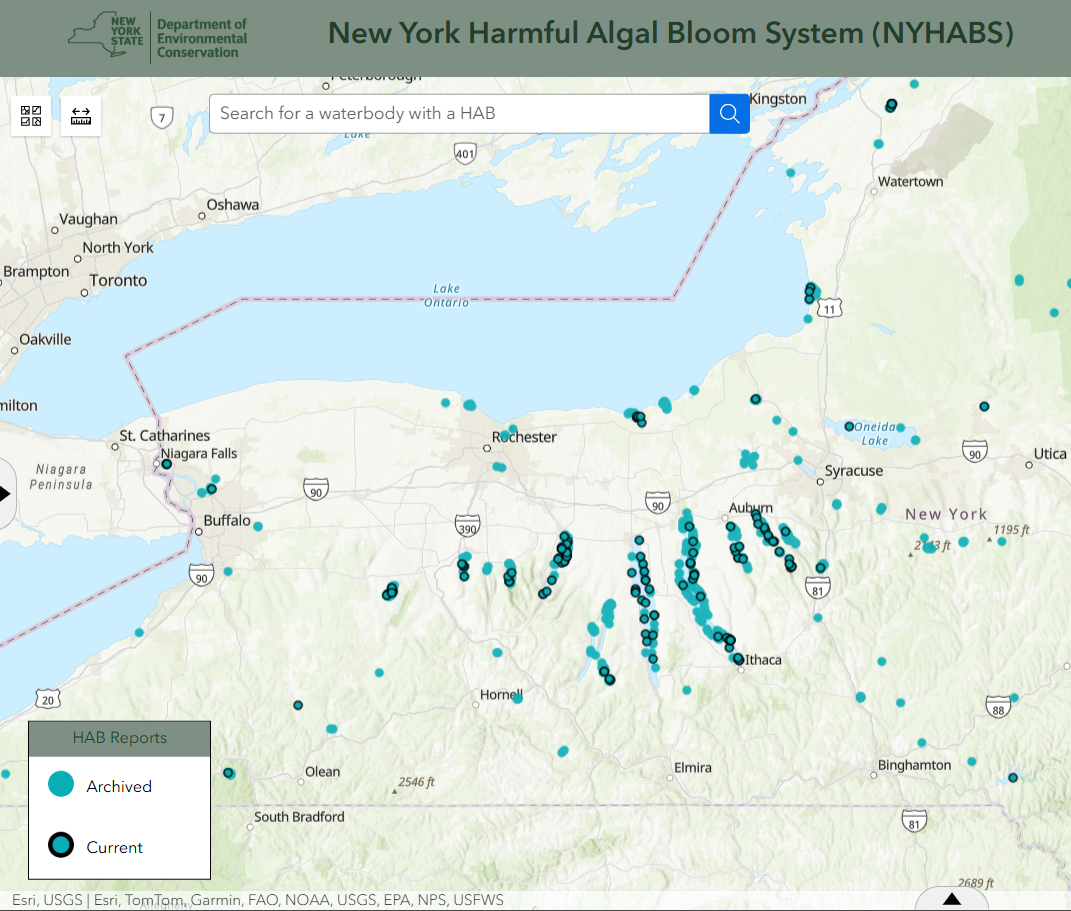
NYHABS Map
The link below leads to the NYHABS interactive map and displays the location of HABs in New York State. Each blue dot outlined in black represents a HAB reported in the past 2 weeks. There may be other waterbodies with HABs that have not been reported to DEC. All reports through our monitoring program are shown on our own map on our website. CLWA staff uploads all HABs report to the NYHABs database that we receive through our trained volunteers. You can also upload a HABS report directly to DEC here.
Visit NYHABS map here NYHABs map on Sept 18 shown below.
| |
About HABs
Cyanobacteria, sometimes referred to as blue-green algae because of their color, are among the oldest organisms on Earth. They are naturally occurring in our lakes, generally in low numbers.
When triggered by the perfect storm of conditions - such as heavy rains followed by a few days of warm weather with calm winds - cyanobacteria may begin to increase, forming “blooms”. HABs can appear quickly and persist for hours or days, or they can disappear almost as quickly as they formed.
Since previous research informs us that high levels of toxins (microcystin) may accompany the blooms, humans and our pets should avoid coming into contact with the water when an active bloom is observed.
How to identify blooms
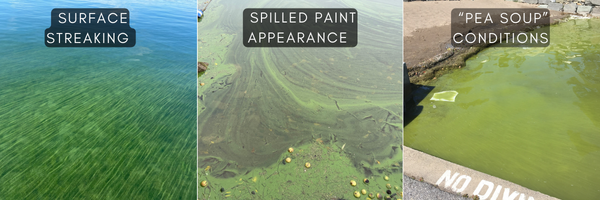
Use visual cues to identify potential blooms. They can appear like pea soup, spilled paint, surface streaks or scum. The color is typically green, blue-green, or yellow, but can also be brown, red, or purple. When blooms are discovered, they are usually found along shorelines or in cove areas. They are most often seen along the stretch of shoreline that is impacted by the prevailing winds. However, during significant bloom events, sometimes they can be found in open water areas.
Visit the NYS DEC website to learn more about identifying blooms.
| |
Remember - conditions can change rapidly. Please use caution when out on the lake and look for characteristics of HABs including water that looks like:
- Pea soup, spilled paint, surface streaks or scum
- Color's that are typically green, blue-green or yellow but can also be brown, red or purple
- Typically found along shorelines or coves
Please, to keep yourselves and pets safe, avoid any water conditions that appear to be bloom-like. Don't hesitate to reach out to us at 585-394-5030 with any questions or email us at HABS@canandaigualakeassoc.org if you are concerned about water quality. Sending us photos of the water is strongly encouraged. Have a wonderful weekend and stay tuned.
| |
What should you do if you suspect a bloom
When in doubt, stay out!
- Don't swim, wade, jetski, waterski or tube in a bloom.
- Shower if exposed to bloom conditions. Wash pets off if they have gone into bloom-infested waters.
- Don't consume fish from the lake during blooms.
- Do not use PRIVATE water drawn from the lake during a bloom. Public water supplies have safeguards in place and can be utilized unless you are otherwise notified.
-
Report the bloom to the NYSDEC NYHABs portal: on.ny.gov/habform
| | | | |