|
How to Use ChatGPT’s New Dedicated Translation Tool
ChatGPT now includes a standalone translation workspace that behaves like a professional language tool rather than a chat prompt. Here’s how to use it effectively across devices and why it may replace your default translator.
By Rodger Mansfield, Technology Editor
January 17, 2026
What if translating text didn’t require crafting prompts or pasting content into a chat window every single time?
For years, ChatGPT could translate anything when asked.
But that process always felt indirect.
Here's a Cool Tip: Use the new ChatGPT Translate Tool.
OpenAI has quietly introduced a focused translation interface built specifically for fast, clean language conversion with optional tone control.
This changes how professionals, educators, travelers, and everyday users can handle multilingual content.
Feature Explanation
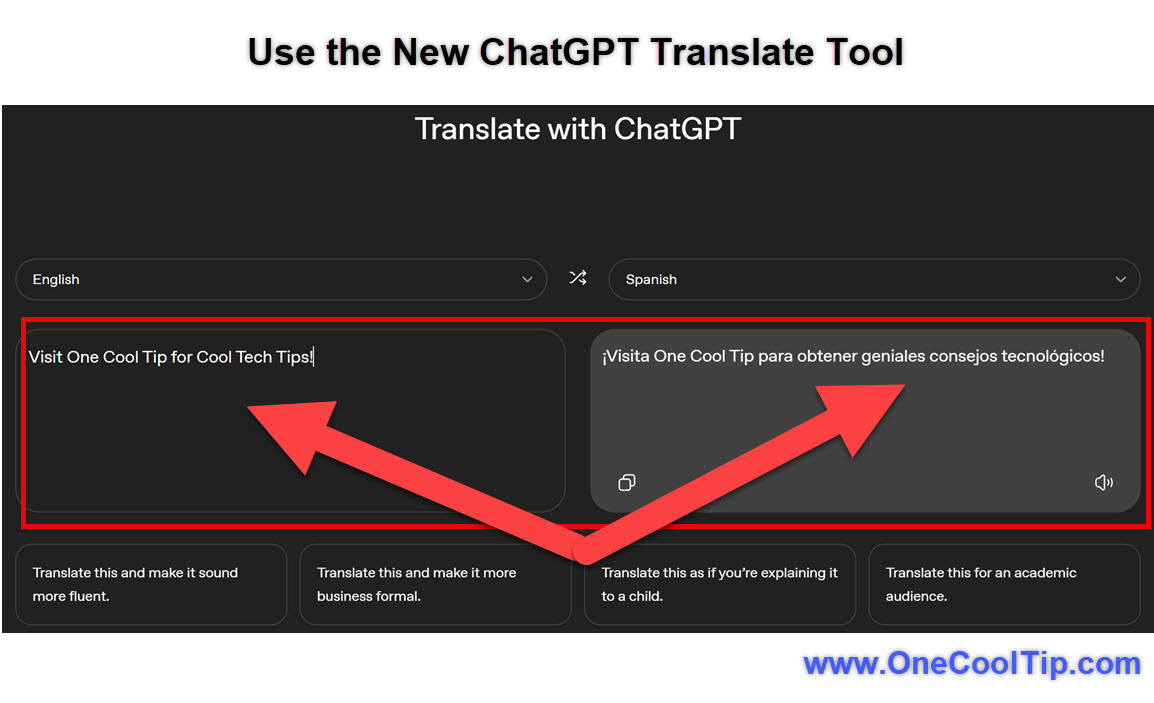
ChatGPT Translate is a dedicated translation environment hosted at ChatGPT.com that removes the conversational layer and replaces it with a structured translator-style layout.
Instead of typing “translate this,” you get:
- A left panel for source text.
- A right panel for translated output.
- Language selectors at the top.
- Instant conversion as you type or paste.
- Tone and style refinement options.
The tool uses the same core intelligence as ChatGPT, but optimized for translation speed and consistency.
It functions more like Google Translate, while preserving ChatGPT’s contextual strengths.
This matters because it eliminates friction.
No prompts.
No extra wording.
Just paste and translate.
What You’ll Gain
- Faster translations without writing prompts.
- Cleaner side-by-side language comparison.
- Optional tone control (formal, casual, simplified).
- Better handling of longer structured text.
Step by Step Instructions
Here's how to do it.
Web (Desktop or Laptop)
-
Open chatgpt.com/translate/.
- Choose the source language (or leave Auto Detect).
- Select your target language.
- Paste or type your text in the left panel.
- Watch the translation appear instantly on the right.
- Use the tone/style options if you want a refined version, for example, more fluent or business formal.
|