Sunday News
July 14, 2024
| |
|
CEO: Gayle Nash, MPH, RN
COO/CFO: Sam Sheth, PharmD, MBA
Contracts Manager: Kristin Miller, JD
| |
CEO Corner
Hi all, this week’s news is focused on the hidden dangers of sticky tape on surgical instruments, and their potential to compromise sterility. We've also included updated links to documents packed with actionable tools, checklists, and education needed to stay current in your healthcare compliance efforts.
| | |
The Hidden Danger of Sticky Tape on Surgical Instruments
Contributors: David Jagrosse CRCST, CHL, President and CEO, a leading authority in surgical instrument sterilization, and Mark Duro, CRCST-FCS; President and CEO, Sterile Processing Direct, a trusted name in healthcare equipment sterilization.
| | | |
|
Hospital operating rooms are strictly controlled environments where compliance protocols are in place for the purpose and intention of controlling sterility on a microscopic scale to ensure patient safety. Unfortunately, the seemingly innocuous (and seemingly convenient) sticky tape on surgical instrument trays presents substantial risks. The danger stems and further develops from poorly applied or degraded instrument tape and glue residue on instrument tray identification.
David Taylor MSN, RN, CNOR was recently featured in Healthcare Purchasing News discussing this same contaminant issue where he contributes the following insights: “sticky residue from labels and tape can interfere with effective cleaning and sterilization. All residues must be removed completely with an approved solution.” The sticky tape may appear helpful in keeping things identified; however, the danger of compromising sterility outweighs benefits from other functional uses (such as labeling).
Sterility Compromise
Compromised sterility is a top risk when sticky tape is used on surgical trays. “All residues and adhesives must be removed completely prior to initiating the cleaning process. If an instrument, instrument set, or device arrives in the assembly area with remnants of tape, stickers, or other residue sources, those residues must be removed completely—with an approved product and in strict accordance with the instructions for use (IFU)—and the item should then be returned to the decontamination area for processing. Only when the items are cleaned and inspected fully and appropriately should they be deemed ready for sterilization or high-level disinfection,” as further explained by David Taylor MSN, RN, CNOR.
Operating rooms must adhere to strict protocols to prevent infections. The protocols are intended to prevent minor breaches in sterility; however, and unfortunately the strict, mandated protocols cannot compete against persistent human error and neglect that ultimately causes substantial patient harm. Alas, it is crucial to be aware of these most commonly ignored areas where protocols must still be strictly followed. Any deviation can and does lead to serious consequences including life threatening infections and other patient harm. If not properly managed, the tape can peel off or leave a residue that harbors bacteria and other contaminants. The microbes are directly and inadvertently transferred to surgical instruments, or worse yet, to the patient during surgery (and increasing the risk of serious postoperative complications).
| | | |
|
Residue and Contamination
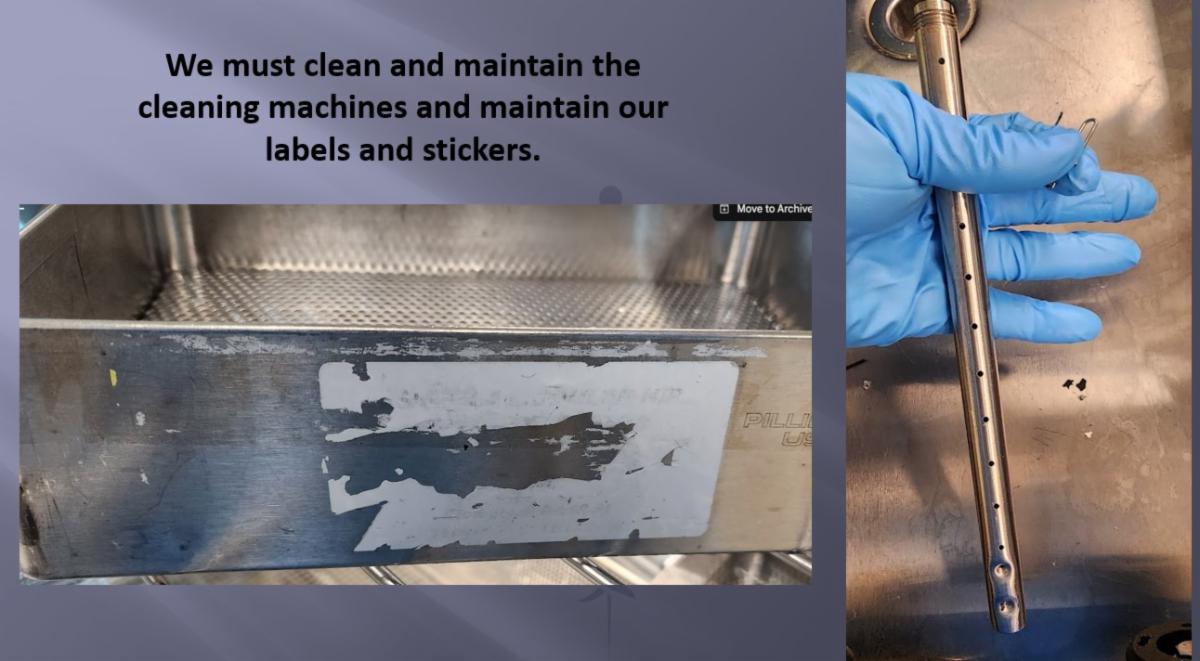
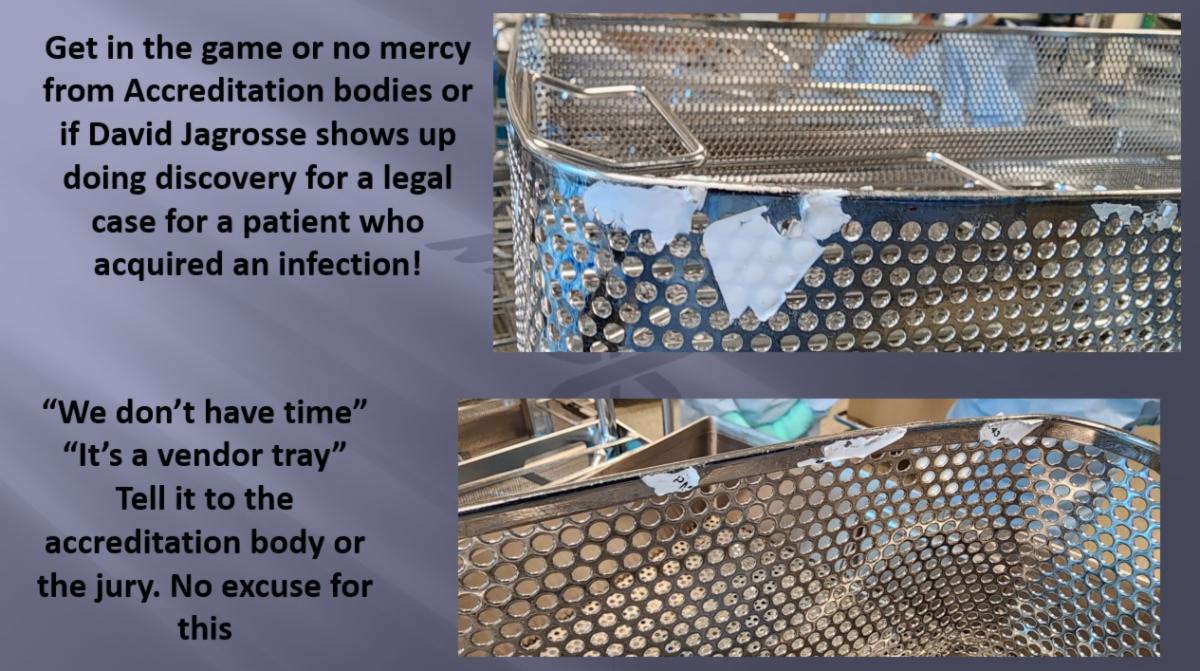
Adhesive residue left by tape and labels can be challenging to remove altogether. Surgical instruments, baskets, dental cassettes, and containers must be thoroughly cleaned to remove all sticky residue and labels to be cleared from debris or contaminants before reuse. Vendor trays are particularly problematic and often have numerous labels outside the container.
Due to the need to process trays and instruments quickly as well as meet routines and the push for efficient procedure room turnover, containers with sticky residue and labels are frequently overlooked and processed. Sterilizing instruments in trays with residue, labels, and tape are inconsistent with infection prevention guidelines. Technicians at the point of use should be trained to return the trays or cassettes for reprocessing.
Tape residue can also render instruments or trays unusable if the residue cannot be adequately removed. As discussed in the Joint Commission Quick Safety Alert Issue 64, Ensuring Critical Instruments and Devices are Appropriate for Reuse, “Careful inspection of critical instruments and devices for soil or damage, including but not limited to bioburden, oxidation, corrosion, pitting, discoloration, cracking, peeling, chipping, lifting or improperly applied identification tape, or etching that leaves rough or frayed edges, is a critical step in protecting patients from potential cross-contamination. Damaged or soiled instruments should not be released for use as a sterile item. Soiled instruments cannot be considered sterile because the efficacy of the sterilant or its ability to reach all surfaces may be compromised by soil. All items undergoing reprocessing should also be checked for functionality during inspection.” Quick Safety 64 Reuse of critical instruments 2 14 22 FINAL4.pdf (jointcommission.org).
Impact on Instrument and Processing Functionality
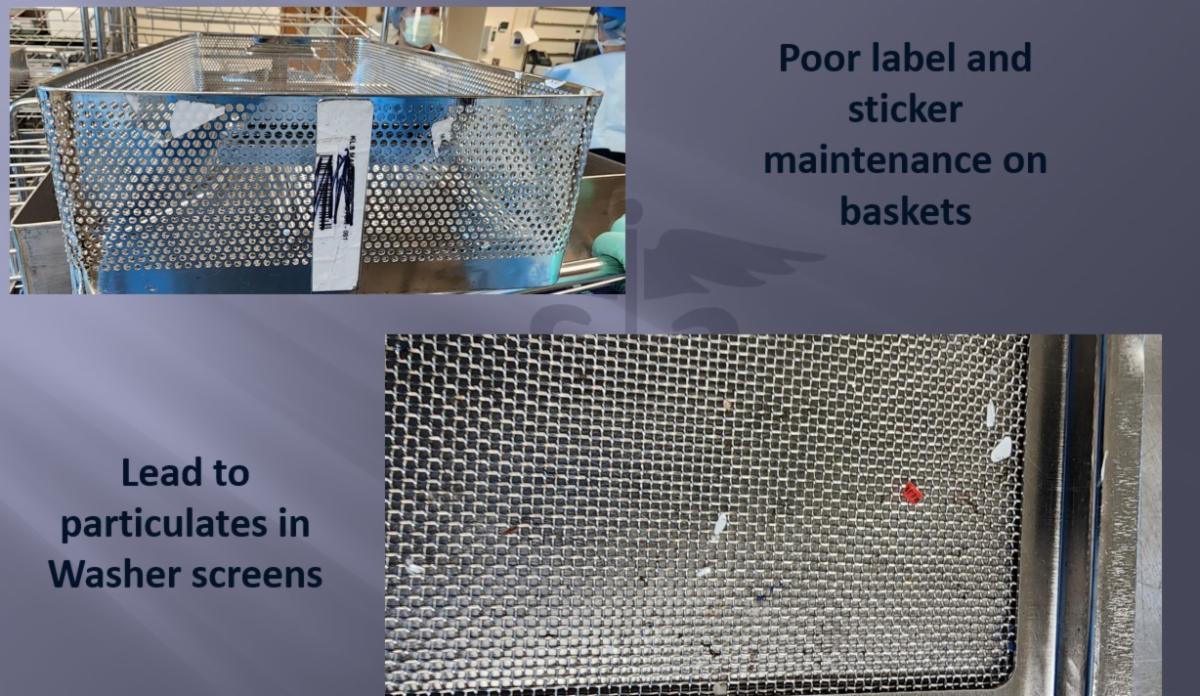
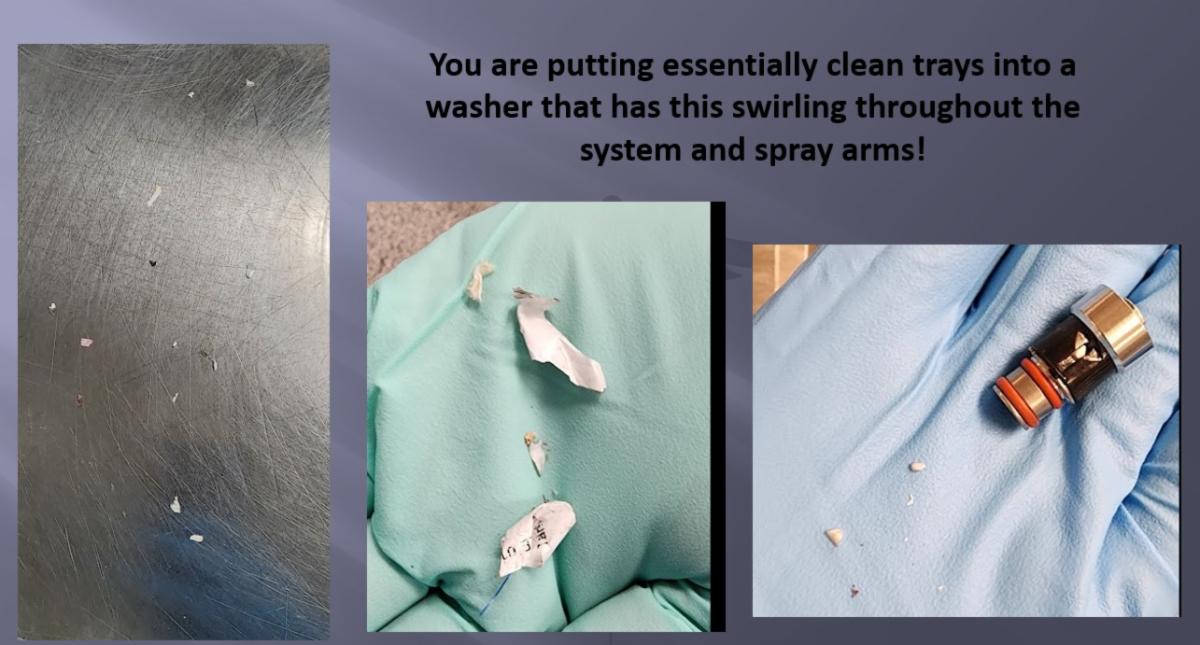
In addition to sterility concerns, the sticky residue from tape can also affect the functionality of surgical instruments. Many surgical tools are finely tuned for precise use during procedures. Tape residue or adhesive can interfere with their delicate mechanisms or compromise their structural integrity over time. Tape and labels also break down over time, causing clogging in the washer spray arms, and are redeposited on instruments and rigid containers. Mark Duro, CRCST-FCS, a sterile processing expert, explains that “stickers and P-Touch labels that are used on screw caddies and implant trays to identify sizes are not validated for steam sterilization. In addition, if these labels are not managed properly, they begin to break down, causing particulates on the field in the operating room.” Avoiding stickers and labels will alleviate ongoing concerns about particulate matter occurring at the point of use.
| | | |
|
Alternatives and Best Practices
Fortunately, there are viable alternatives to using tape and adhesive labels on surgical trays. Hospitals and healthcare facilities can adopt trays with secure locking mechanisms or sterile adhesive-free solutions for surgical instruments. Implementing these alternatives reduces the risks and danger of contamination, and they support efficient workflow and compliance with rigorous sterilization protocols.
Conclusion
Tape and adhesive labels may seem like convenient tools for organizing surgical instrument trays as well as identifying the individual tray by the provider; however, their application and presence introduces substantial risks to patient safety, instrument functionality, and overall surgical outcomes. Healthcare providers and hospitals must prioritize eliminating such hazards by carefully considering alternative methods that uphold the highest standards of sterility and operational efficiency in the operating room. By doing so, they reaffirm their compliance and commitment to delivering safe, effective, and compassionate care to every patient.
| | | |
-
Healthcare Purchasing - Sticky Residue Learn More
-
Update to the Evidence of Standards Compliance Learn More
-
R3 Report Medications for Opioid Use Disorder Learn More
-
R3 Report Behavioral Health Restraints Learn More
-
Heads Up Report HAP CAH Resuscitation Equipment Q4 Final Learn More
-
JC - FAQ Discharge Information Behavioral Health Learn More
-
JC - FAQ Discharge Information Learn More
-
JC - FAQ - Bronchoscopy Learn More
-
JC - FAQ - Bronchoscopy Ventilation Learn More
-
JC - FAQ - Antibiotic Stewardship Learn More
-
JC - BHC - Medication Management Q4 2023 Learn More
-
JC - BHC IC Requirements Field Review July 2025 Learn More
-
JC - AHC IC Requirements Field Review July 2025 Learn More
| |
|
We would love to hear from you!
We can help support your organization.
For consultations, education, and training, please contact us.
| | | | |