Virginia - North Carolina: Friday, October 14, 2022 | |
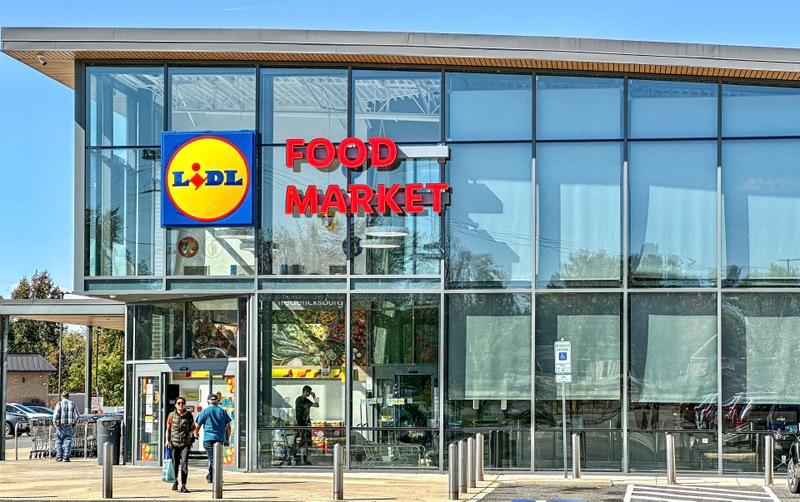
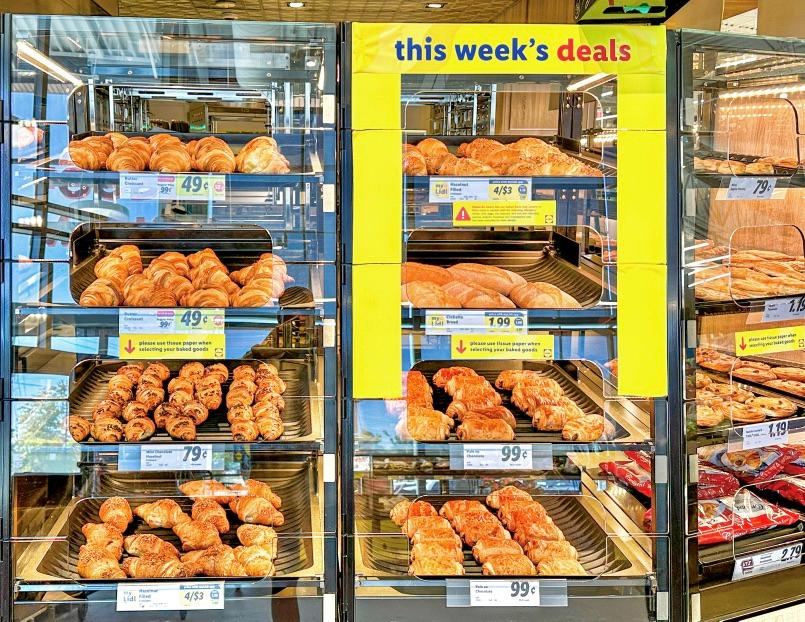
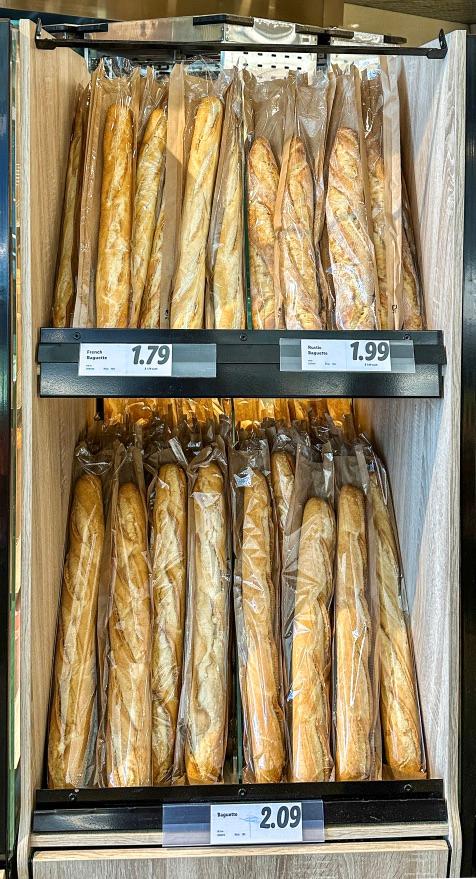
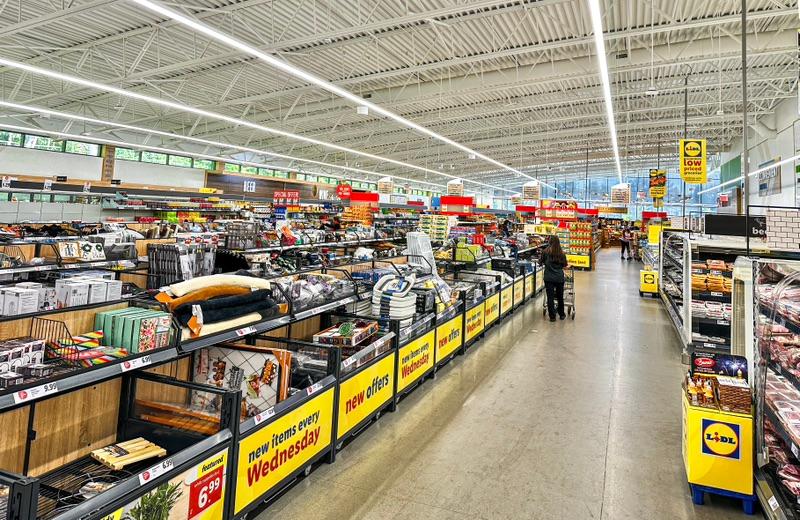
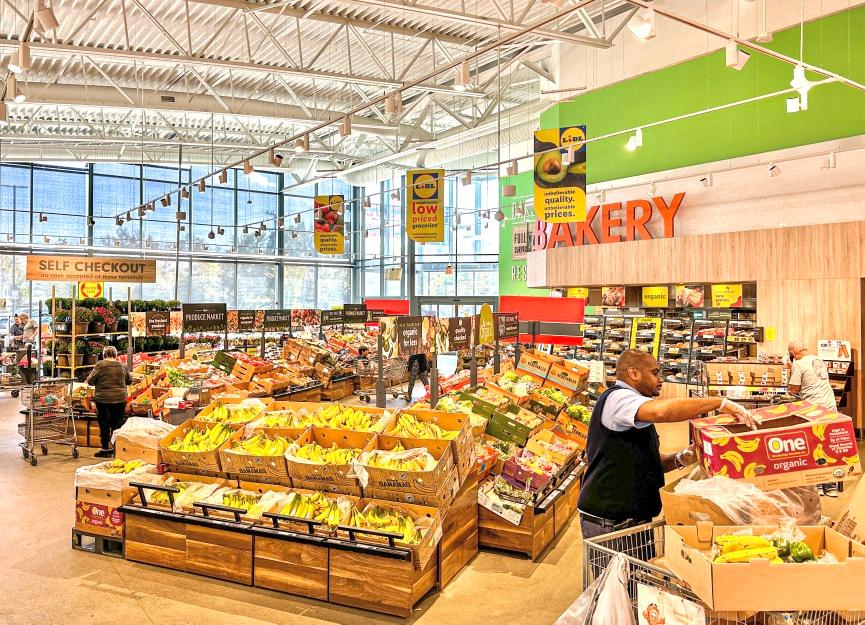
In Europe there are two competing discount grocery stores - Aldi and Lidl. Throughout our travels in the US we have usually run across Aldi stores. Aldi has a huge presence in Wisconsin. However, in Europe, our favorite store was Lidl. I had heard that Lidl had a presence along the eastern seaboard of the US. In Fredericksburg, we finally found one. | Breads are where Lidl shines, including real French baguettes and robust German loaves. We bought a pizza bread - sort of a bagel’ish thing with cheese, sauce, and black olives. It was delicious. | Both Aldi and Lidl have large stores in Europe. In America, Aldi stores are small. This Lidl store in Fredericksburg was nearly the European size. | |
|
The area just north of Lake Anna State Park is the site of the greatest concentration of Civil War battles in the nation. Located midway between Washington DC and Richmond, northcentral Virginia took the brunt of the war. The small triangle of land from the Wilderness to Fredericksburg to Spotsylvania featured four major battles resulting in 105,000 casualties. These four battles were divided into two very different campaigns. Fredericksburg and Chancelorsville marked the high point of Lee’s 1863 generalship. The Wilderness and Spotsylvania are two horrible battles marking the very beginning of Grant and Lee’s epic duel in 1864.
FREDERICKSBURG - December 11 - 13, 1862:
1861 and 62 were years of frustration for the Union’s Army of the Potomac. General McDowell started off the series of disasters at the First Battle of Bull Run. General McClellan took over and was defeated in the Seven Days Battle in his Peninsula Campaign. He actually won the battles, but retreated anyway - snatching defeat from the jaws of victory. General Pope came along and the Army of the Potomac was again routed at Bull Run. McClellan returned, and in spite of intercepting Lee’s battle plans, could only eek out a draw against Lee.
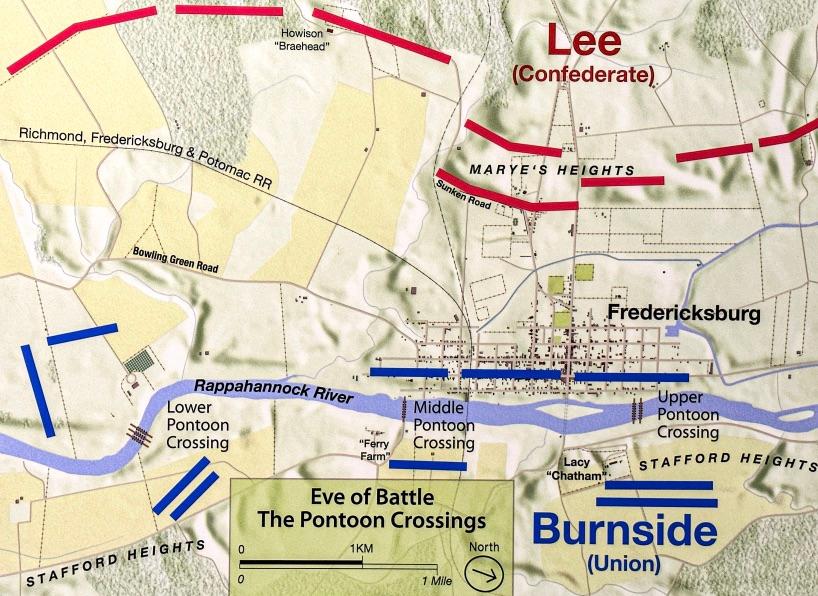
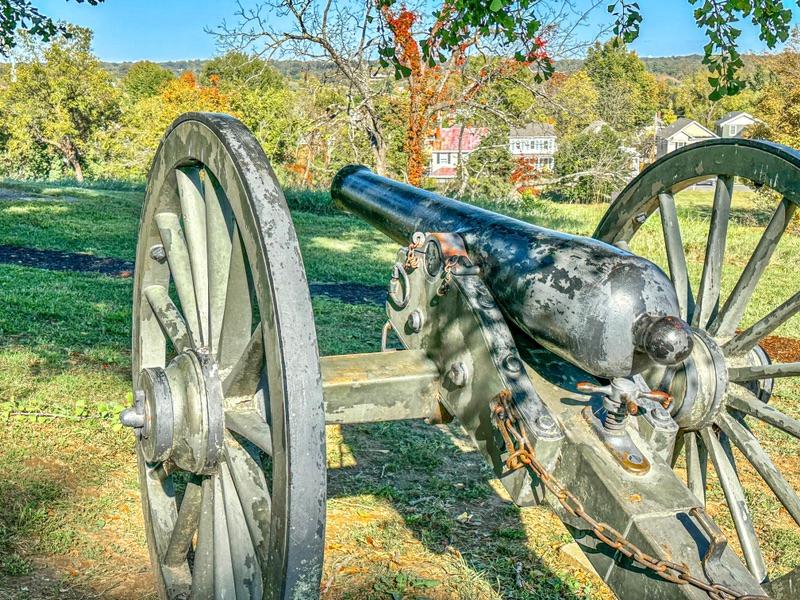
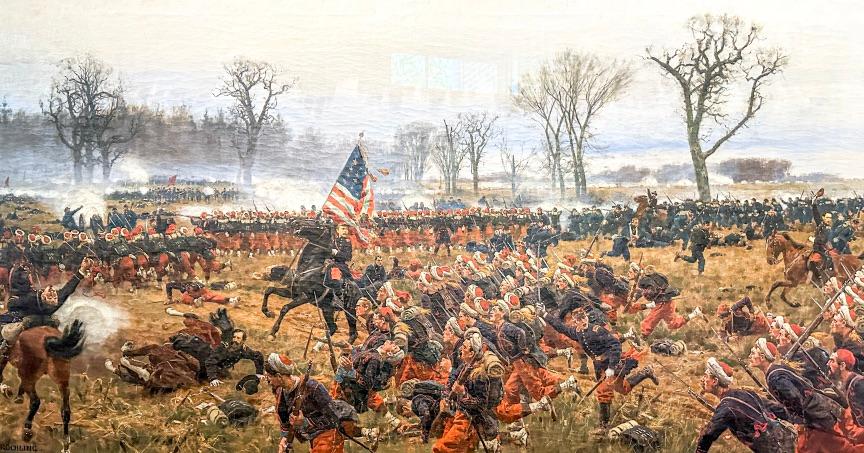
Next came the hapless General Burnside. He brought the Army of the Potomac to Fredericksburg in December 1863, on a rare winter campaign. His plan, a solid one on paper, was to use pontoon bridges to quickly cross the Rappahannock River at Fredericksburg, and occupy the heights behind the town before Lee could reach the town. The plan completely fell apart when the pontoon bridges didn’t show up until 10 days later. By then Lee was well entrenched on the high-ground that Burnside had expected to occupy. The coveted high-ground consisted of two broad hills, Prospect Hill and Marye’s Heights. Marye’s Heights was the most formidable hill, in part because along the bottom of the ridge was a sunken road with a stone wall in front that acted like a protective fort for the infantry, while canons had a clear line of fire from the top.
Although Prospect Hill was a bit more vulnerable, and Burnside understood that, somehow the Army of the Potomac relentlessly assaulted the impregnable Marye’s Heights, sending seven waves of attackers and leaving thousands of dead and dying bodies piled in front of the Sunken Road. The results were a complete disaster for the Union forces. Burnside retreated.
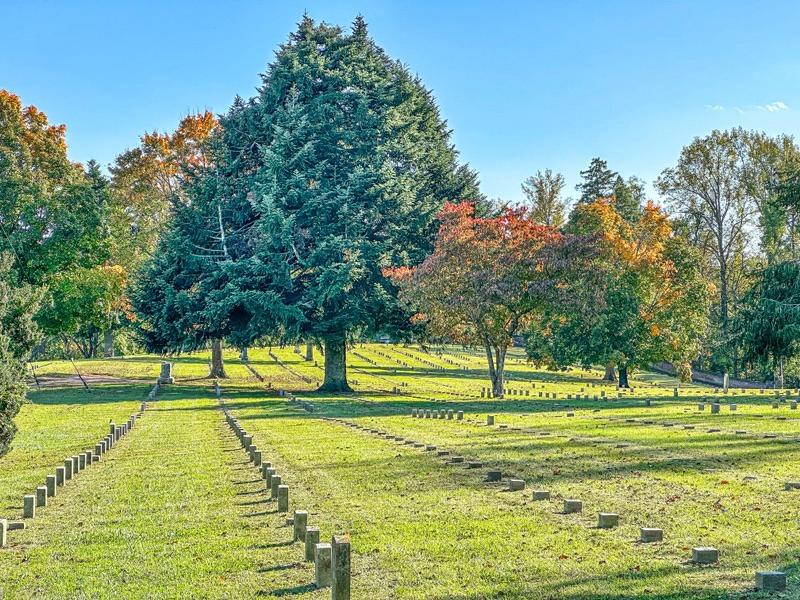
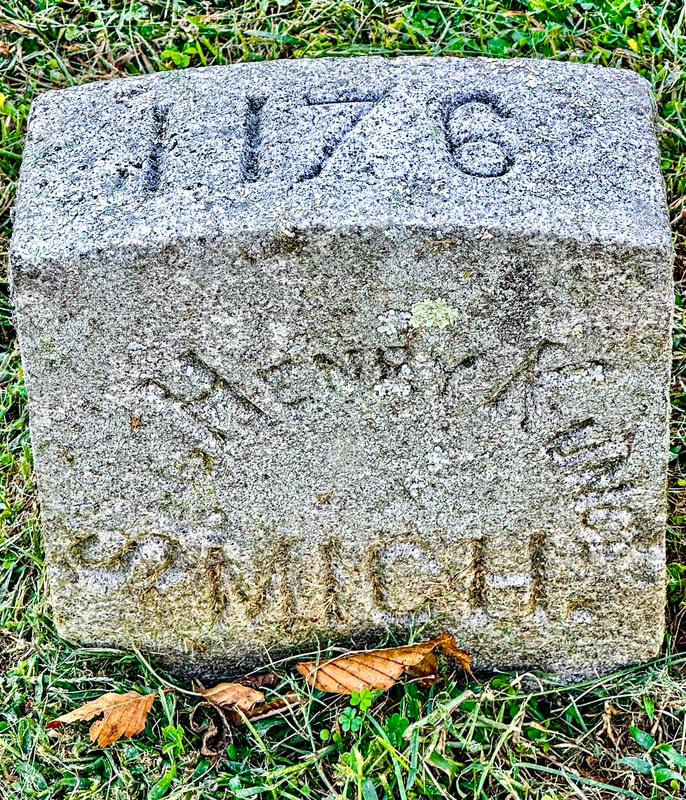
We walked down the sunken road and up along the ridge of Marye’s Heights. It was difficult to see how Burnside thought he could take this solid defensive position. The Union carnage was dramatically displayed by a Union cemetery of fallen soldiers next to Marye’s Heights. Thousands of grave sites, most marked by only two numbers, lined acres of field. The two numbers represented the grave site, and the number of unknown bodies in the site. A handful of the “lucky ones”, those whose names were known, had their names inscribed on a stone marker.
| |
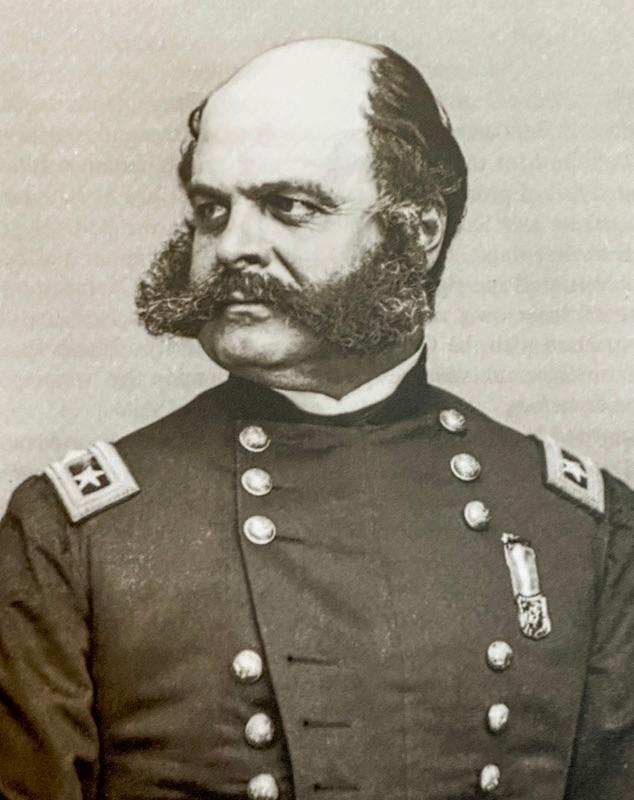
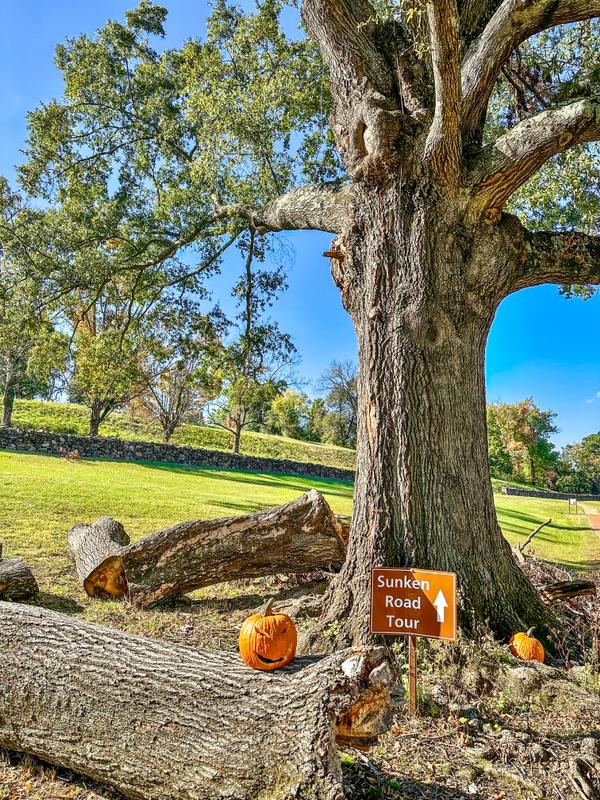
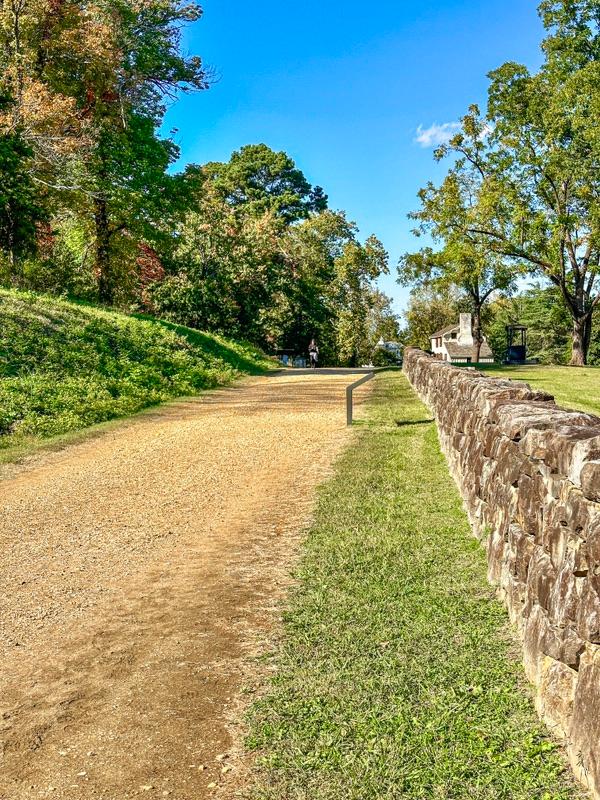
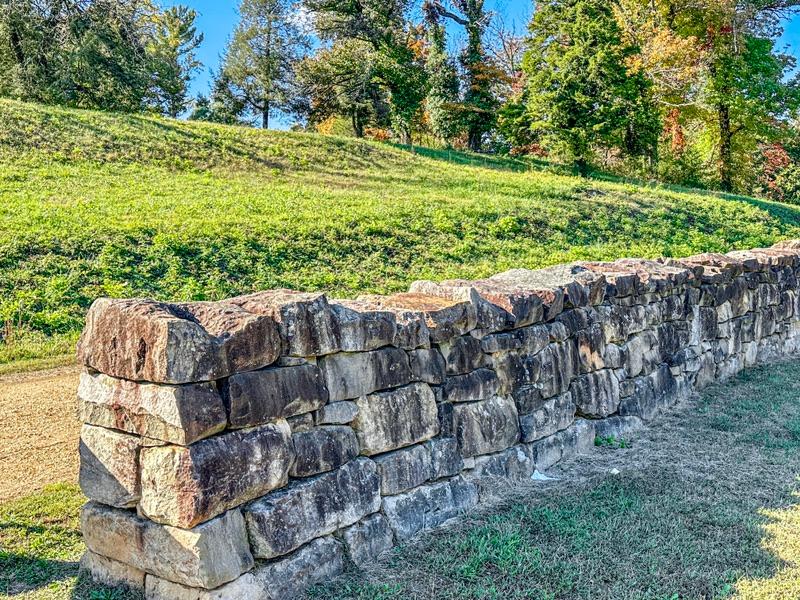
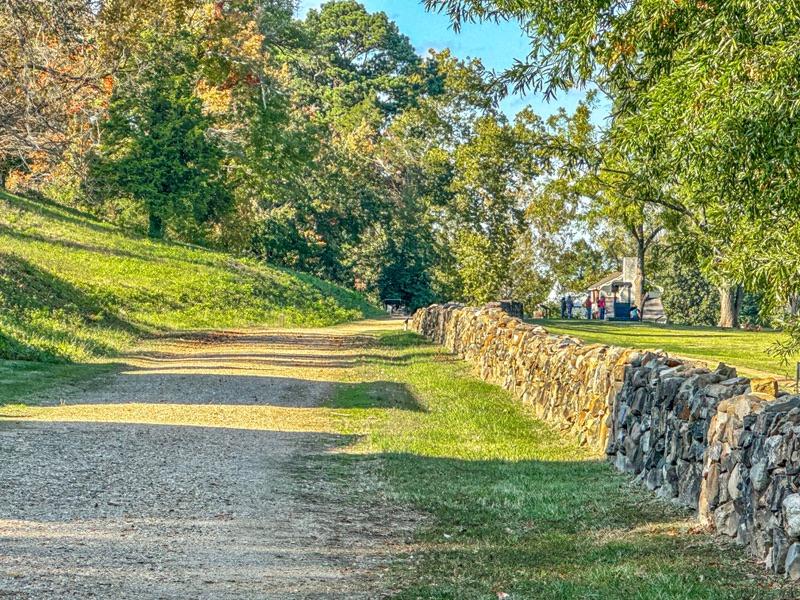
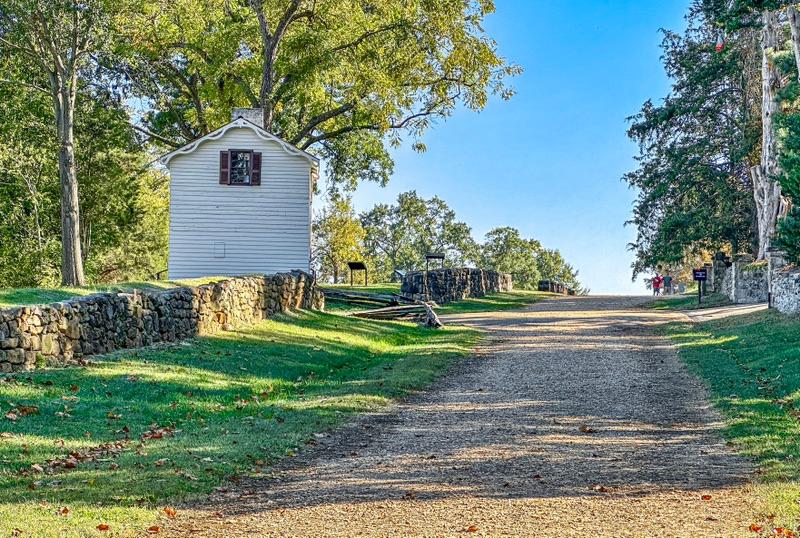
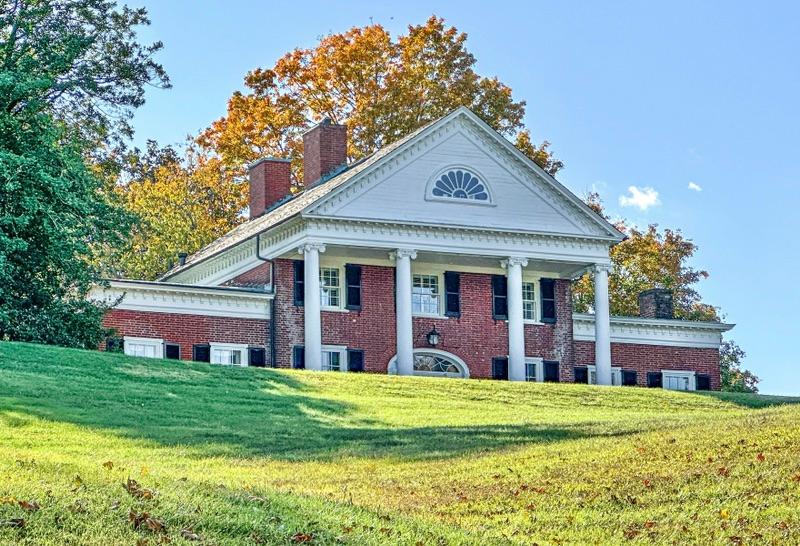
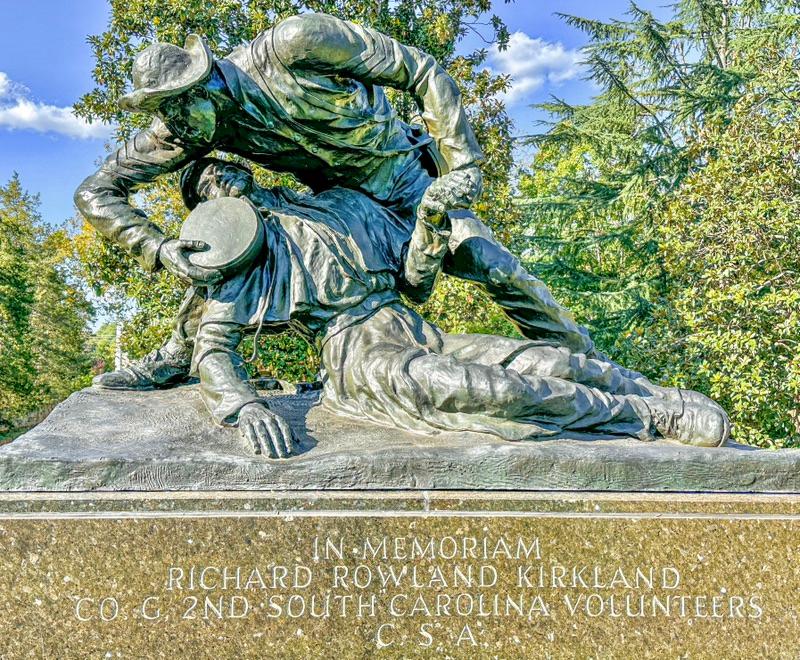
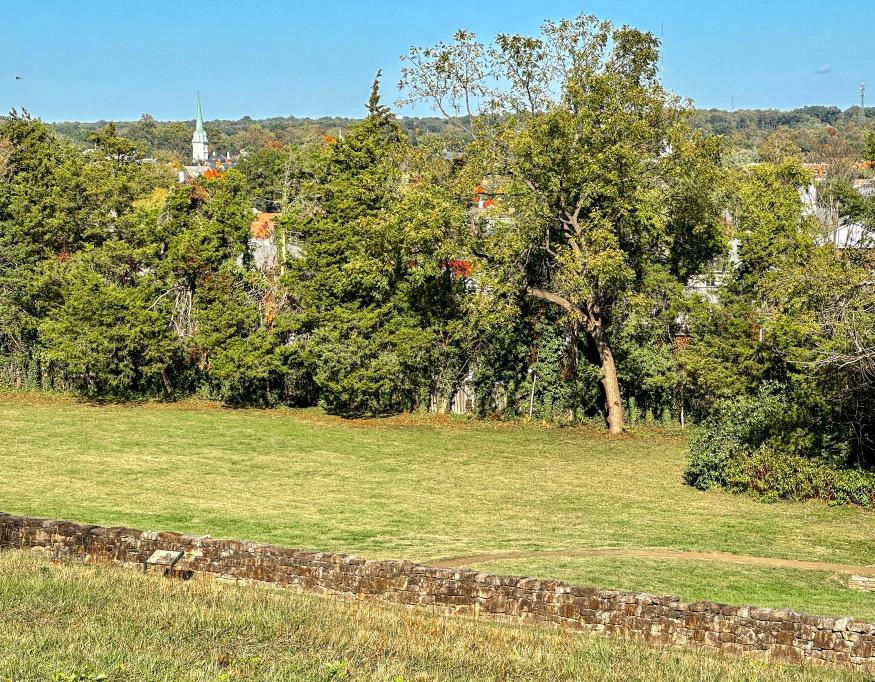
General Burnside’s lasting reputation was twofold - his horrific loss at the Battle of Fredericksburg and inventing side burns. | By the time Burnside got his troops across the Rappahannock River, at a terrible cost in casualties, Lee was well entrenched on the high ground overlooking the town. | The Sunken Road that runs along the bottom of Marye’s Heights. It is just a little sunken but the wall provides added protection. | Here you can see Marye’s Heights rising up behind the Sunken Road. | The Sunken Road from the other end. | Looking up Marye’s Heights. This mansion was used as a hospital during the battle. | In a lull during the battle, Confederate soldier Richard Kirkland couldn’t stand the moaning and wailing cries for water from the dying Union soldiers that piled up in front of Marye’s Heights. He went out to give them water. Neither side fired upon him. | |
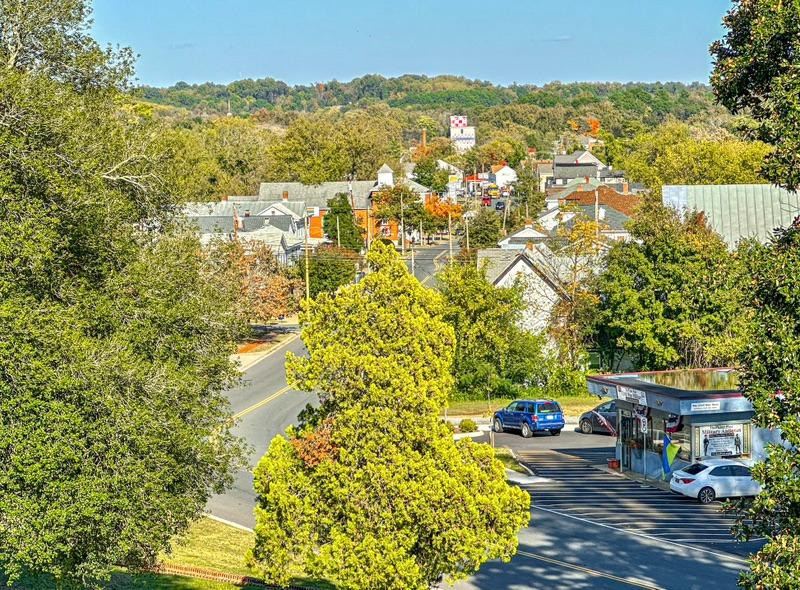
The commanding view of Fredericksburg from Marye’s Heights. | |
The Union cemetery next to Marye’s Heights. | |
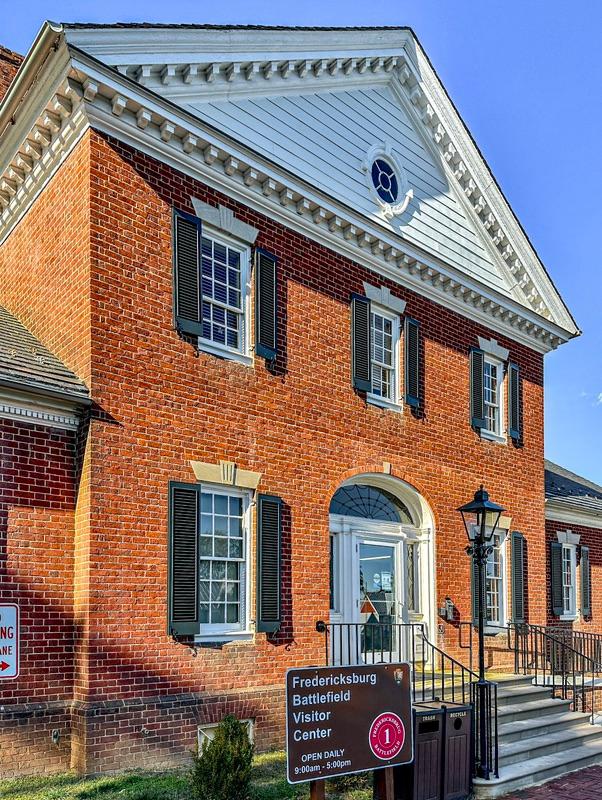
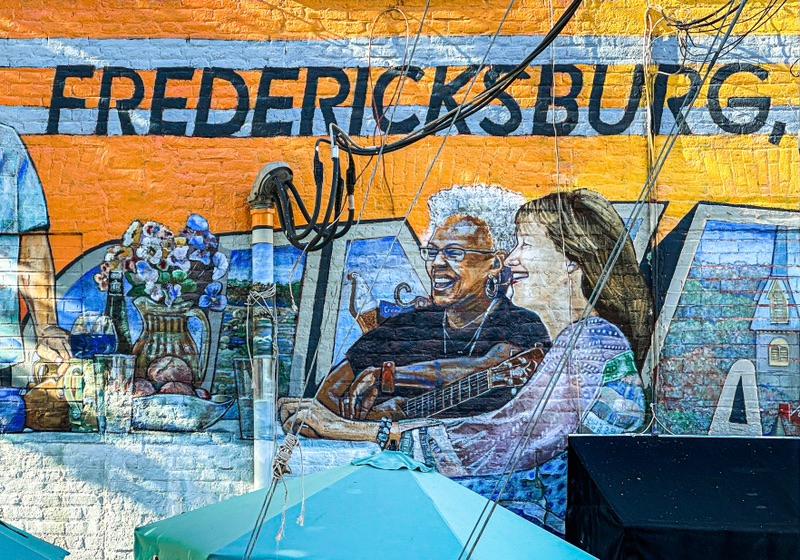
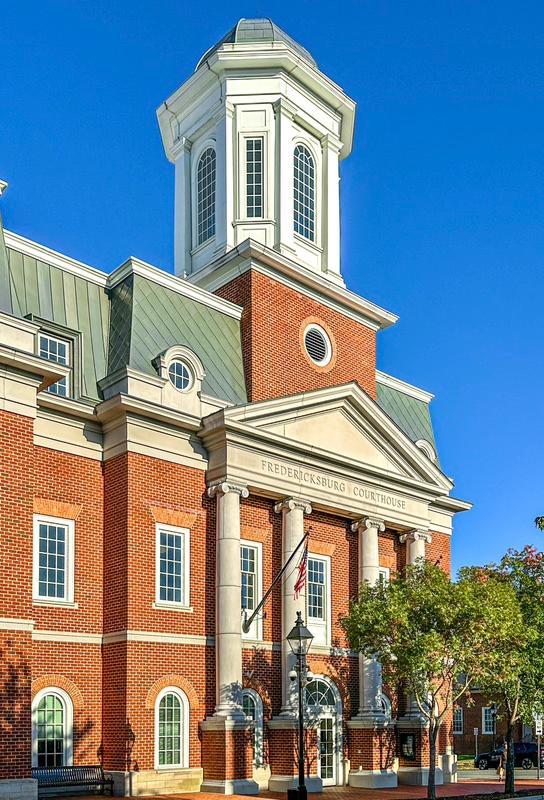
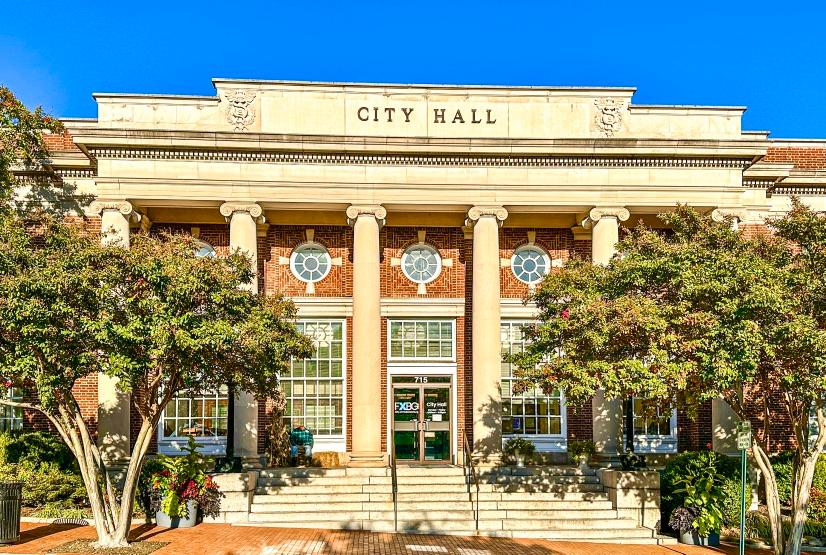
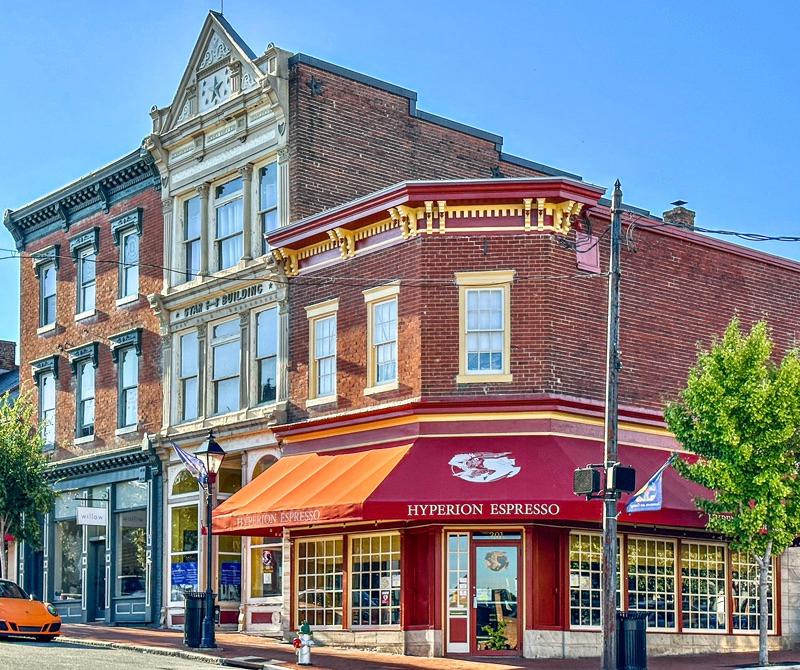
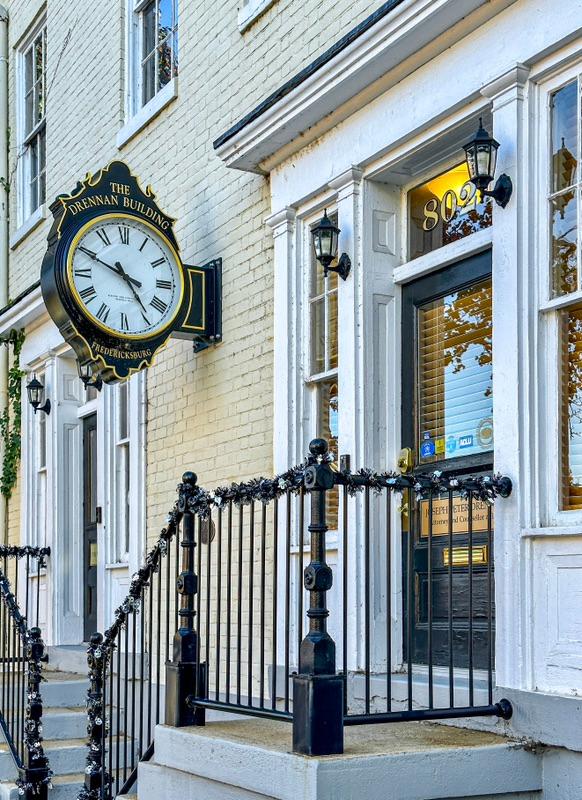
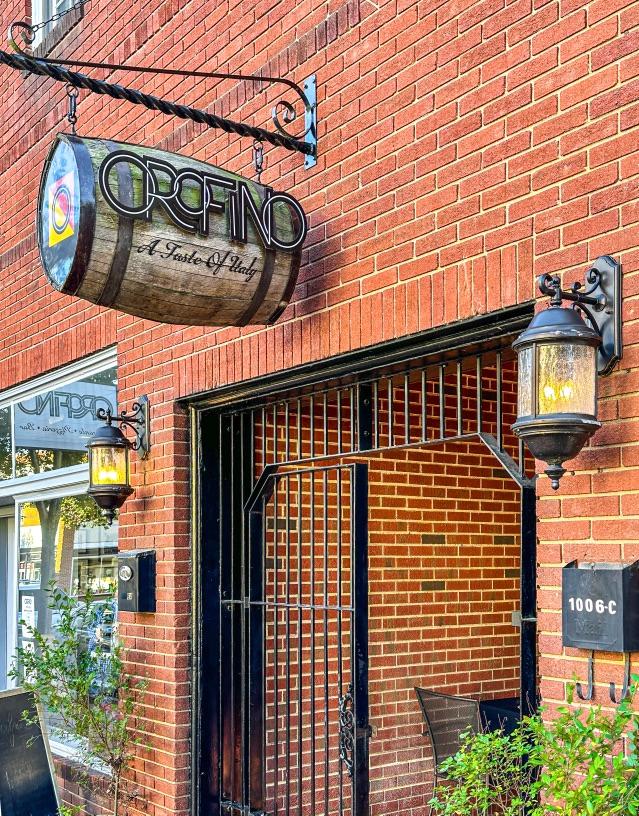
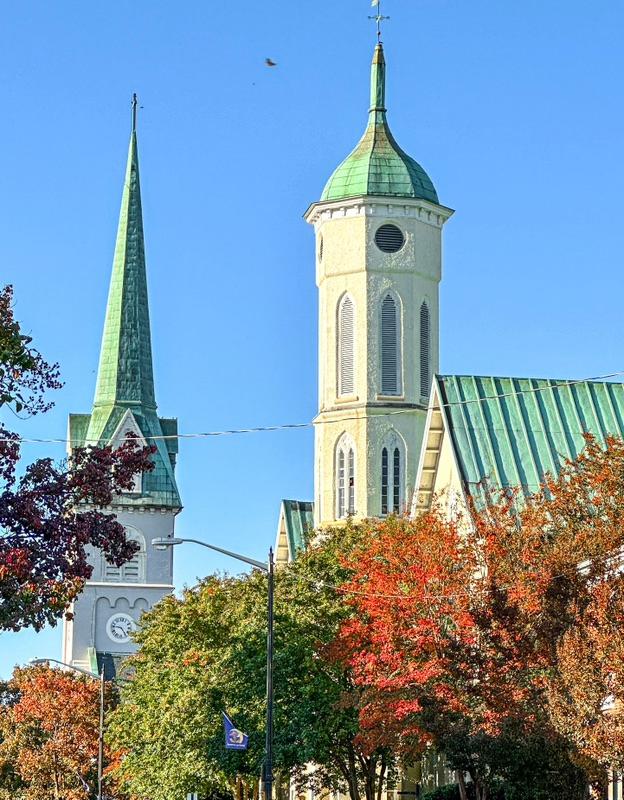
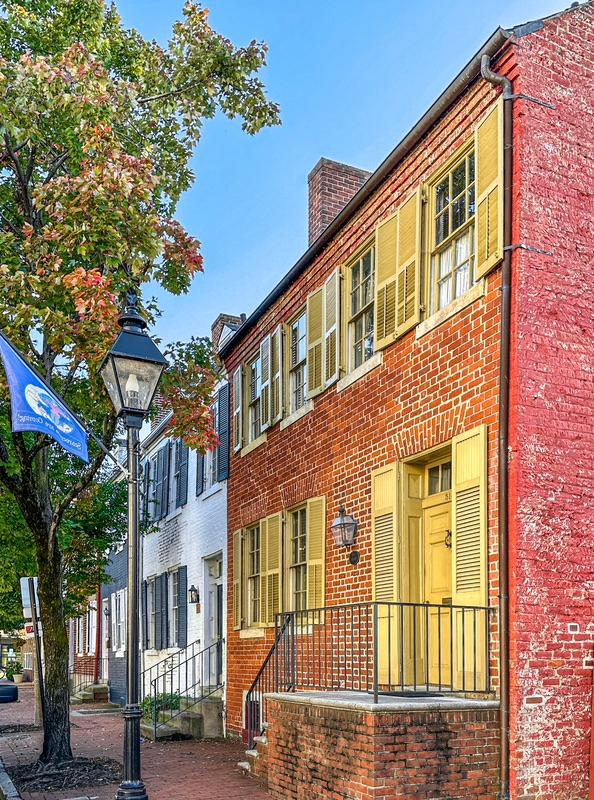
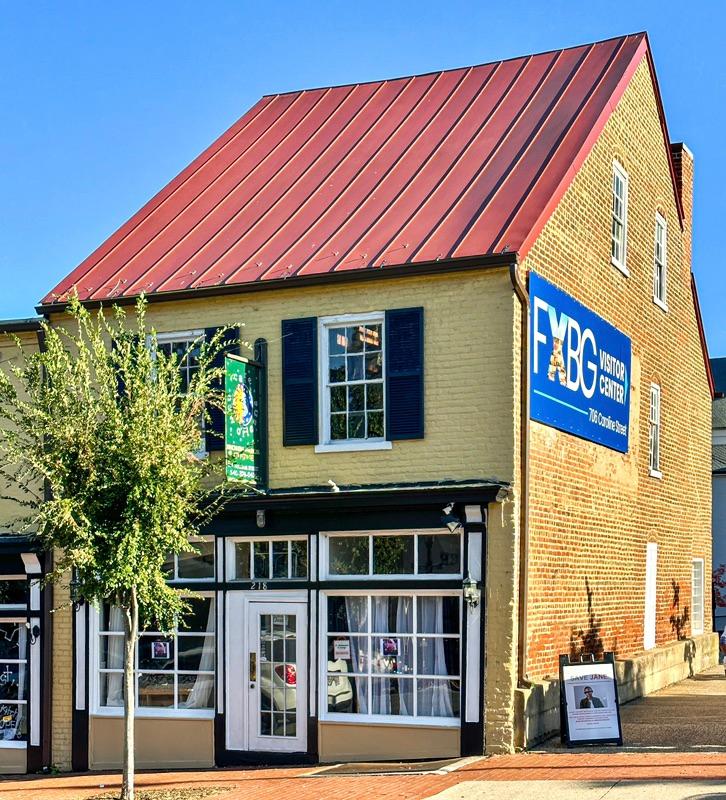
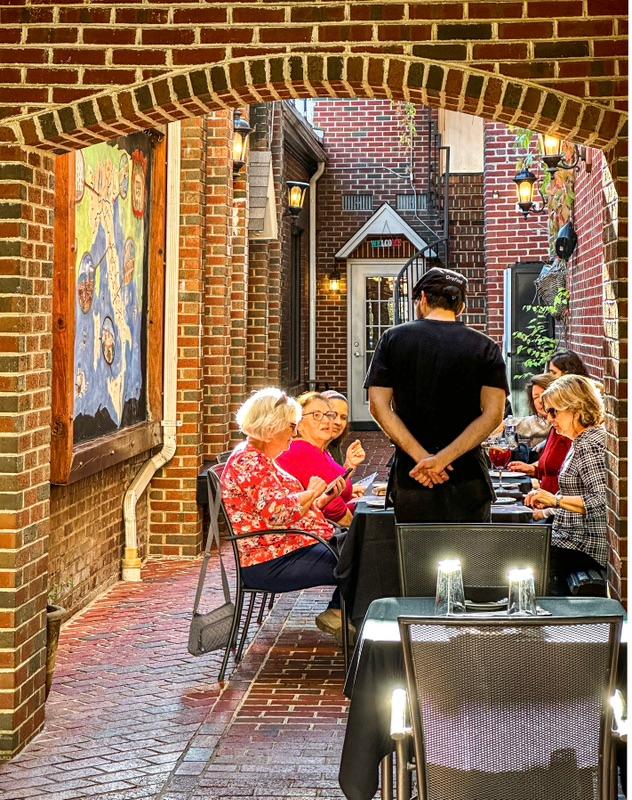
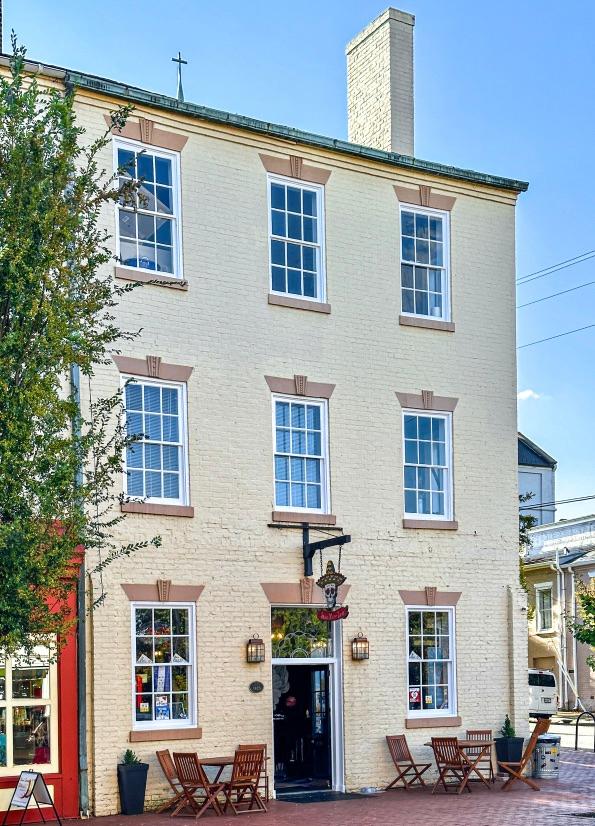
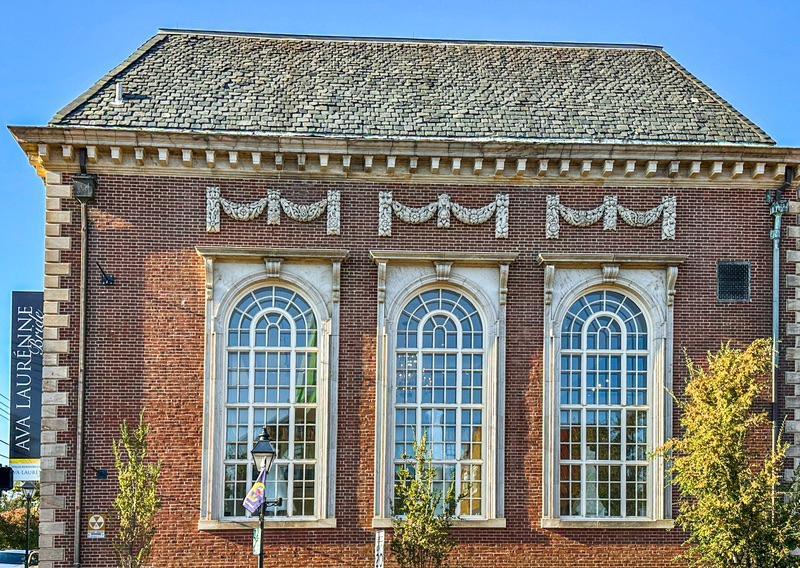
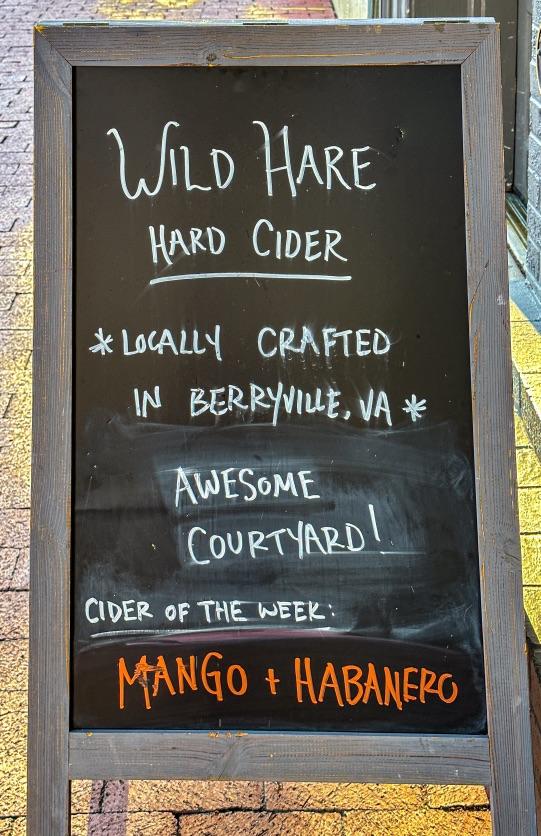
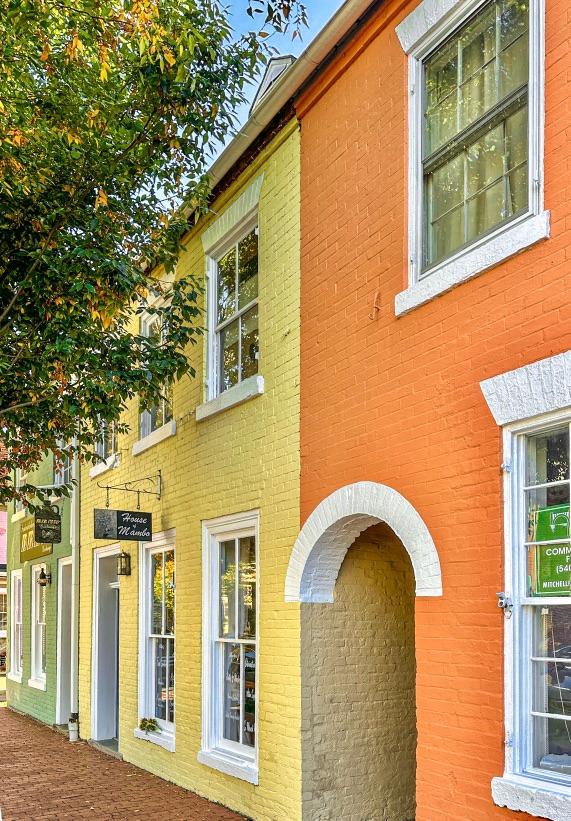
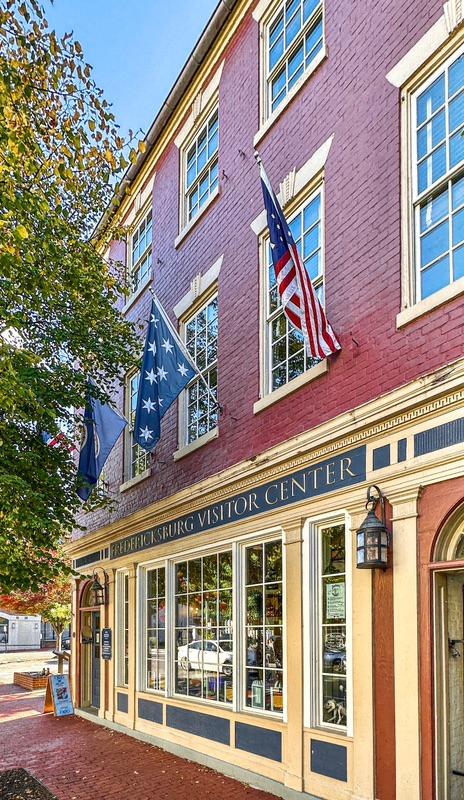
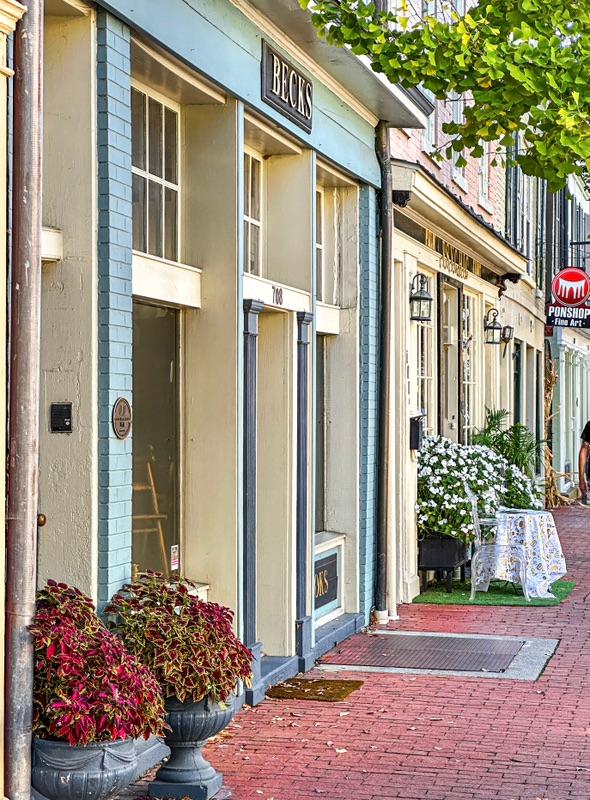
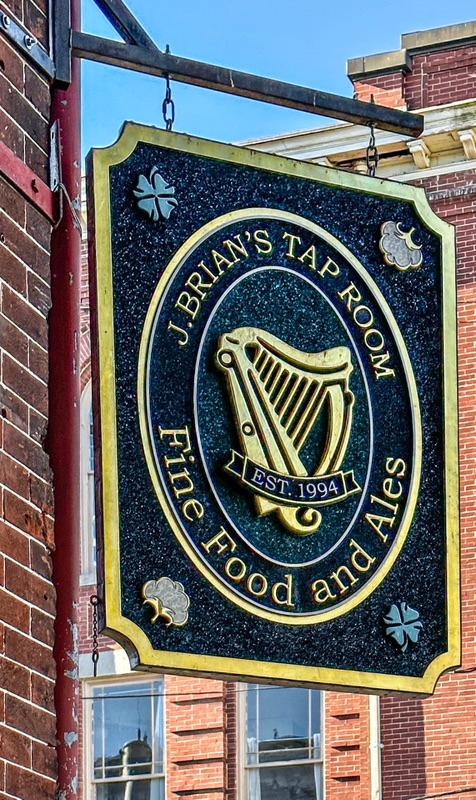
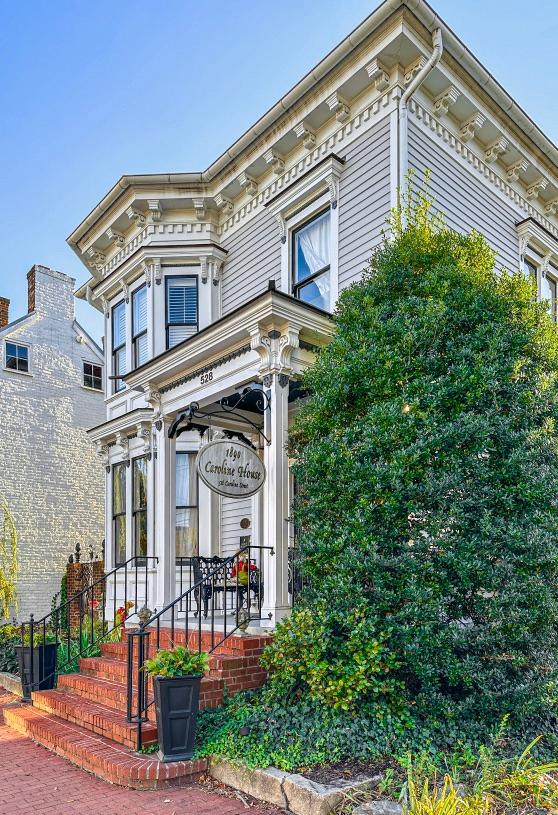
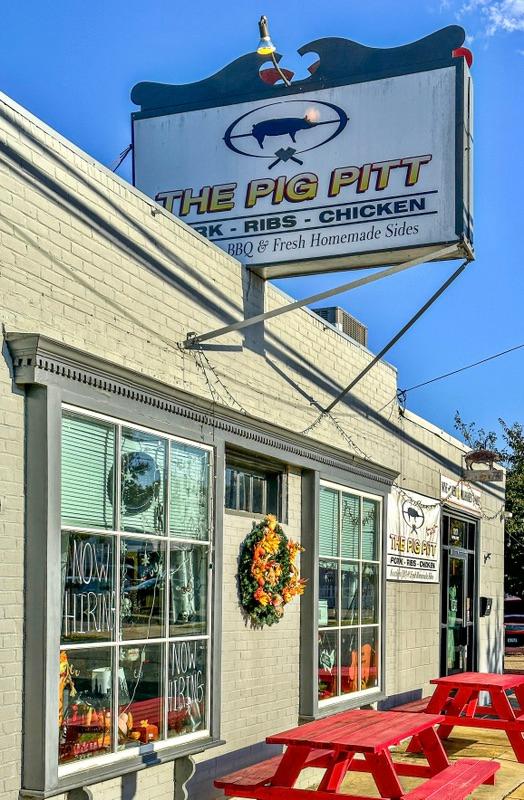
One of the lucky ones, his name was known. | The visitors center housed a great museum. The documentary film was excellent, the charts and battle maps were informative, and the paintings were full of emotion. | After touring the battlefield, we did a quick walk-through downtown Fredericksburg. It remains a small quaint town overlooking the Rappahannock River. | Mango habanero cider - are you kidding me? | This BBQ joint was spewing out the most delicious smelling smoked BBQ meat scents. It was almost criminal. | |
CHANCELLORSVILLE - April 27 - May 6, 1862:
General “Fighting Joe” Hooker, a bragadocio, loudly proclaimed that he could whip Bobby Lee if given the chance. After Burnside’s debacle, Lincoln gave Hooker his chance. Lincoln, not impressed with Hooker’s big talk, wrote to Hooker, “I have heard, in such way as to believe it, of your recently saying that both the Army and the Government needed a dictator. Of course it was not for this, but in spite of it, that I have given you the command. Only those generals who gain successes, can set up dictators. What I now ask of you is military success, and I will risk the dictatorship.”
To be fair, Hooker was a good Corps commander. He earned the nickname, Fighting Joe, which he hated, due to his tenacity on the battlefield. Later, he redeemed himself by playing a valuable role in the Western Theater under Grant and then Sherman. It is a very different animal to lead as part of an Army than to lead the entire Army.
When he took over Burnside’s shattered Army of the Potomac, he quickly and masterfully rebuilt the Army and its morale. By Spring, the Army, at 134,000 strong, was spoiling for a fight.
For Lee, Chancellorsville was his greatest and boldest victory to date. Ironically, the twin victories of Fredericksburg and Chancellorsville led to his greatest defeats: Gettysburg and Appomattox. More on that latter.
Lee’s 60,000 man Army of Northern Virginia was badly outnumbered when they met near the home of the Chancellor family. Hooker’s strong defensive line was spread out several miles along the Plank Road, just a few miles east of Fredericksburg. Lee got word that Hooker’s far right flank was not anchored to any natural geographic feature as usually is the case. If he could sneak around to that unanchored flank, he could attack that flank and get behind Hooker’s lines causing Hooker great damage.
Using local guides that knew the area well, he sent General Stonewall Jackson’s Corps on a 12-mile march over hidden back roads to Hooker’s right flank. Lee kept a smaller portion of his Army to demonstrate in front of Hooker’s left flank. Splitting up an Army in such a way is a huge gamble that usually backfires. In this case, it worked flawlessly.
While Lee pretended to attack Hooker on the Union left, Jackson stormed the Union right. The surprise was complete and devastating. By nightfall on May 2, Jackson had wrecked a large portion of Hooker’s right flank. That evening, Jackson rode out past his picket line to assess his position. He expected to renew his assault in the morning. On the way back, his picket line mistook him for a Union intruder. Jackson was gravely wounded and died on May 10.
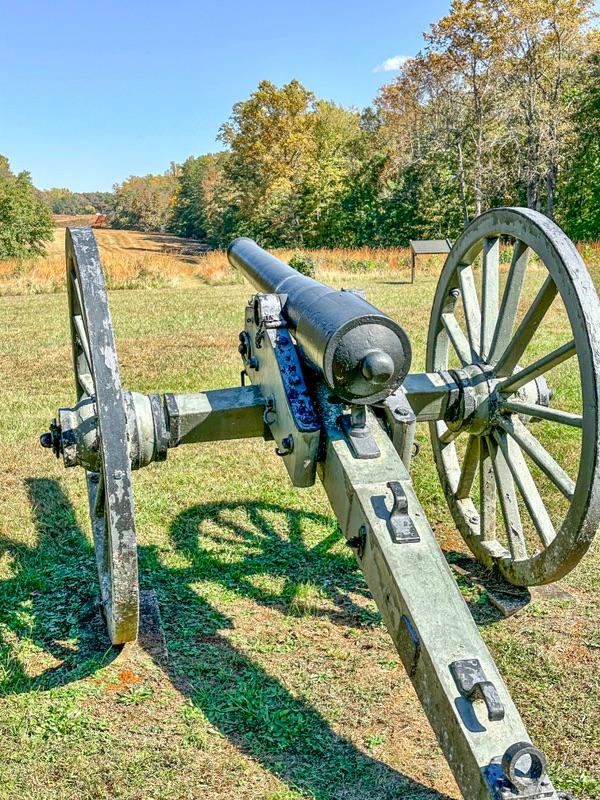
As bad as all this was, Hooker still set up a strong new defensive line and could have carried the day. Calvary General J.E.B Stuart temporarily took over Jackson’s Corps and renewed the attack on May 3rd. Just when the Union needed strong leadership, a canon shell hit Hooker’s headquarters, knocking Hooker senseless. He suffered a bad concussion that interfered with his judgement and his nerve. Instead of holding onto his excellent defensive position, he pulled out and retreated. Upon hearing about the defeat, Lincoln cried out, “My God, my God, what will the Nation say?”
One month later, buoyed by his fantastic successes at Fredericksburg and Chancellorsville, Lee invaded Pennsylvania. His decisive defeat at Gettysburg on July 4, 1863 marked the beginning of the end for the Army of Northern Virginia and the Confederacy, however, that fateful end at Appomattox was still nearly two bloody years away. It could be argued that the loss of Stonewall Jackson portended that ultimate defeat.
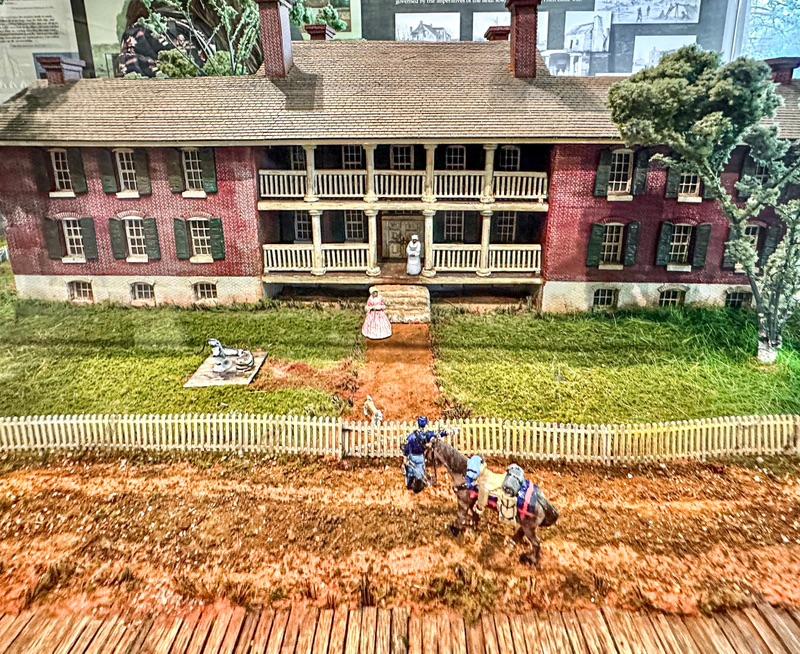
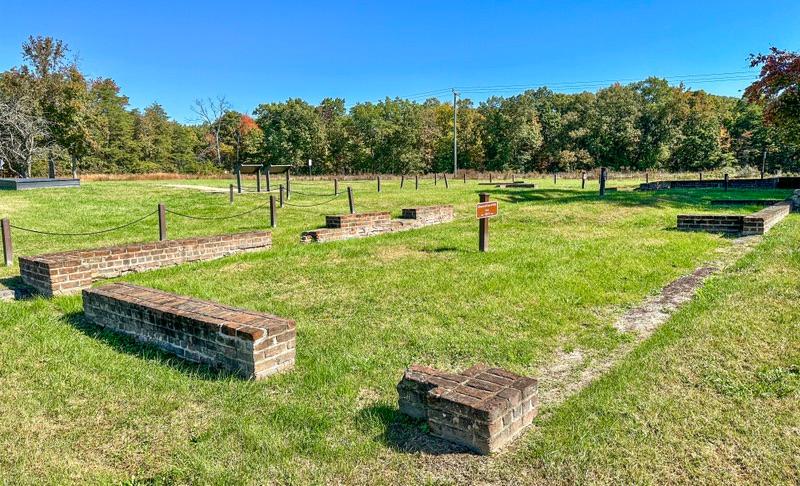
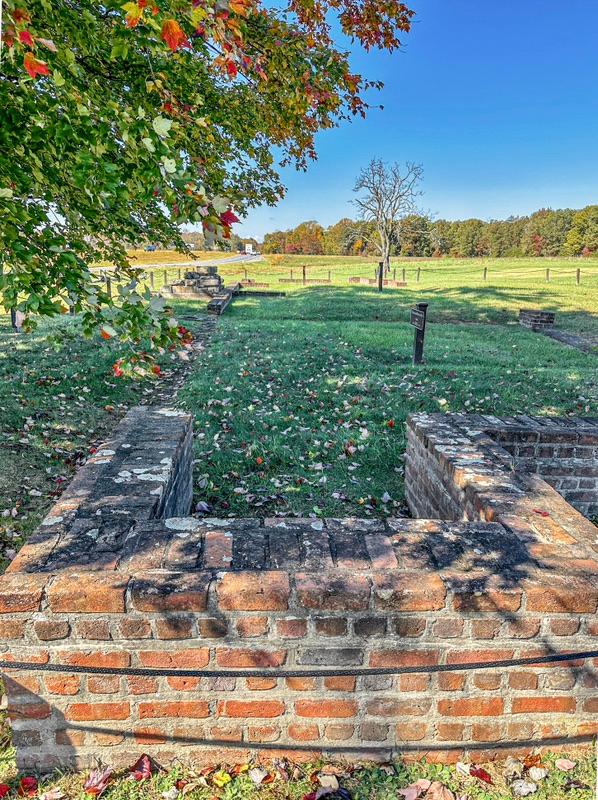
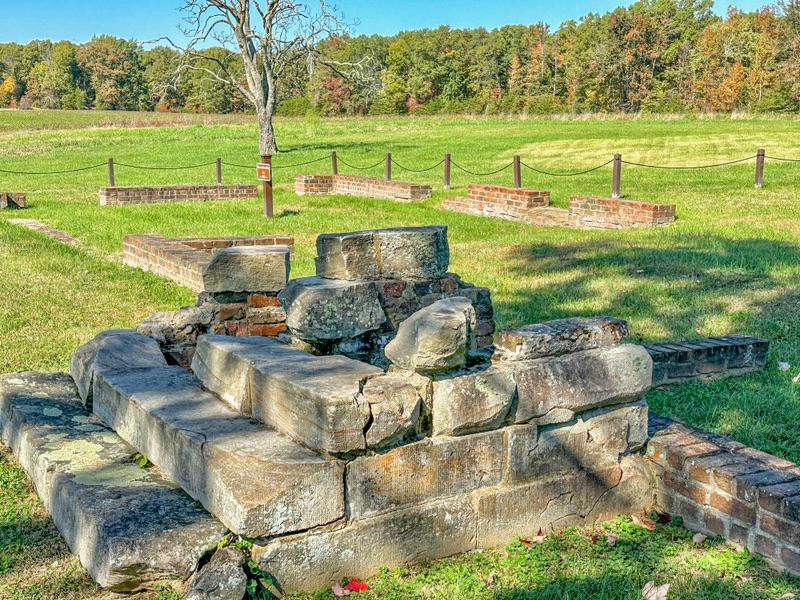
| 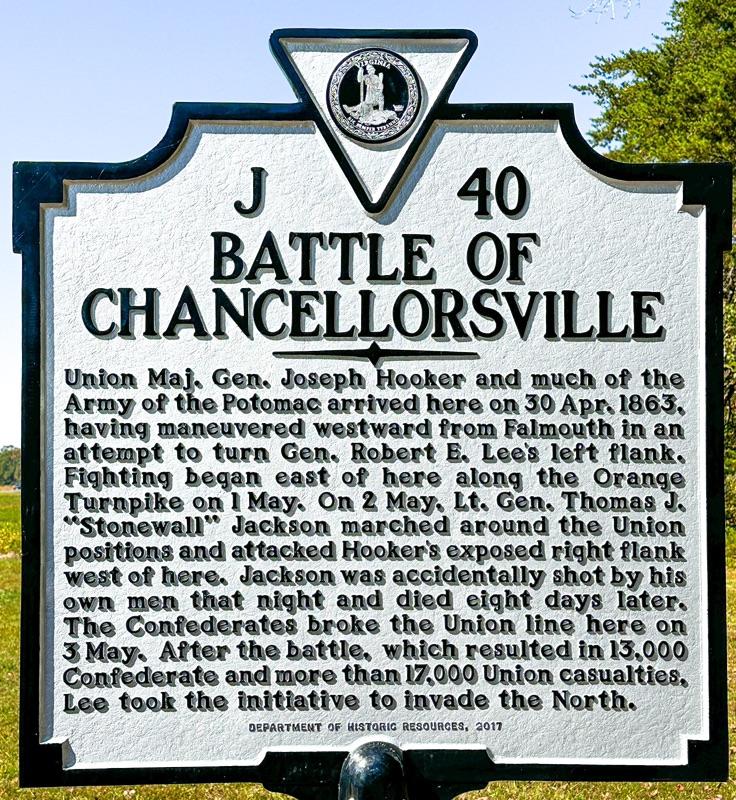 | 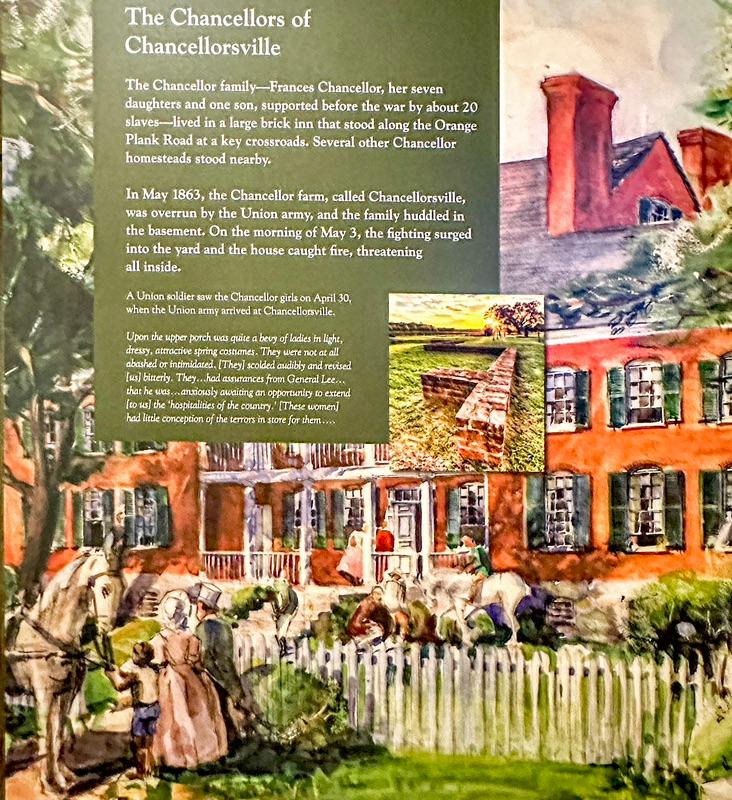 | Chancellorsville was not a town nor a village. It was simply the name given to the Chancellor family’s farm. I think I finally found a name for our “estate” - zoojville. | (A model of the Chancellor house.) The Chancellor family had no father at the time of the war. It consisted of a mother, seven daughters and a son. The father died at the beginning of the war, but I never learned as to how or why. Perhaps it was disease or maybe he was involved in the war somehow. Apparently, the farm was prosperous as the Chancellors had 20 slaves. The battle wrecked the house and farm. Life was never the same for the family. | The ruins of the Chancellor family home. | What is left of the front step. | 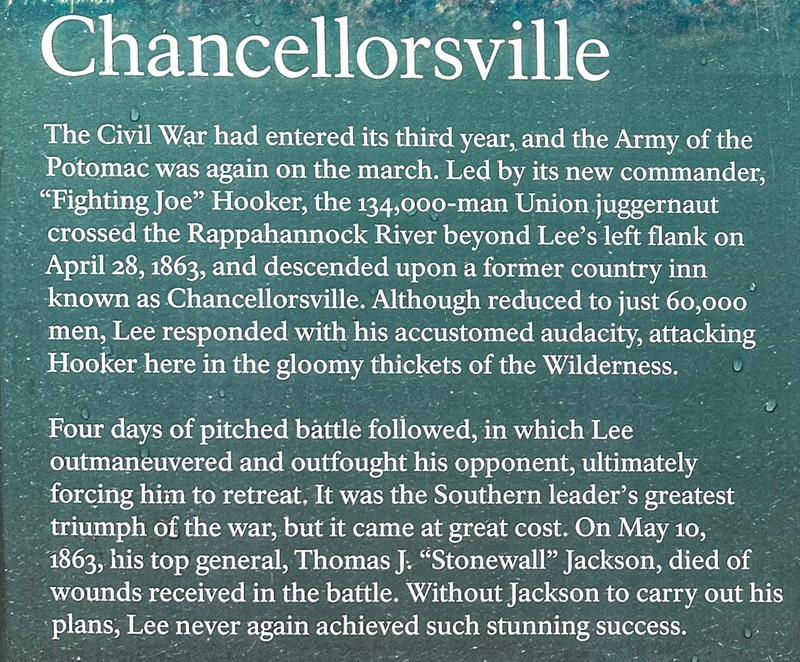 | 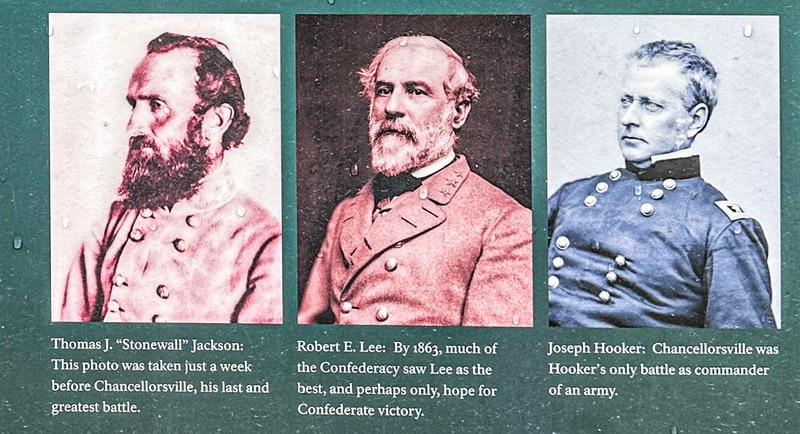 | 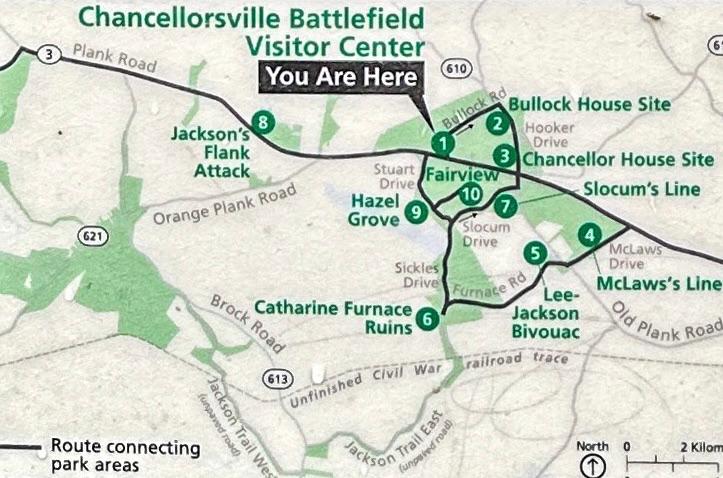 | |
DAY I: The bulk of Hooker’s army approached the Chancellor house (#3), from the north, although Sedgwick’s division was still farther east in Fredericksburg (too far to the right to show on this map). Hooker spread out his line from Plank Road (#8) on left to Old Plank Road (#4) on the right. Lee’s army came up from the south and set up opposite Hooker. Lee sent a small force to deter Sedgwick from joining Hooker at Chancellorsville. Hooker made a few half-hearted attacks, but he did not follow up giving Lee the initiative. That evening, Lee and Jackson conferred (#5) and devised their famous plan to sneak the bulk of Lee’s army to the left (Hooker’s right) to attack Hooker’s flank.
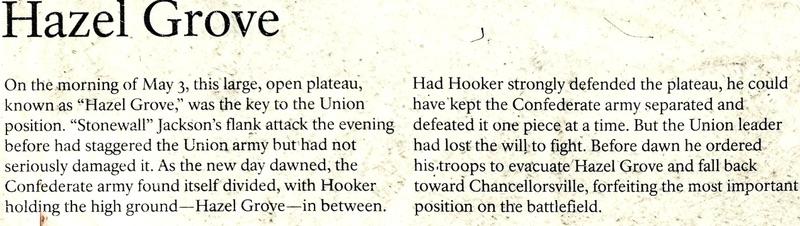
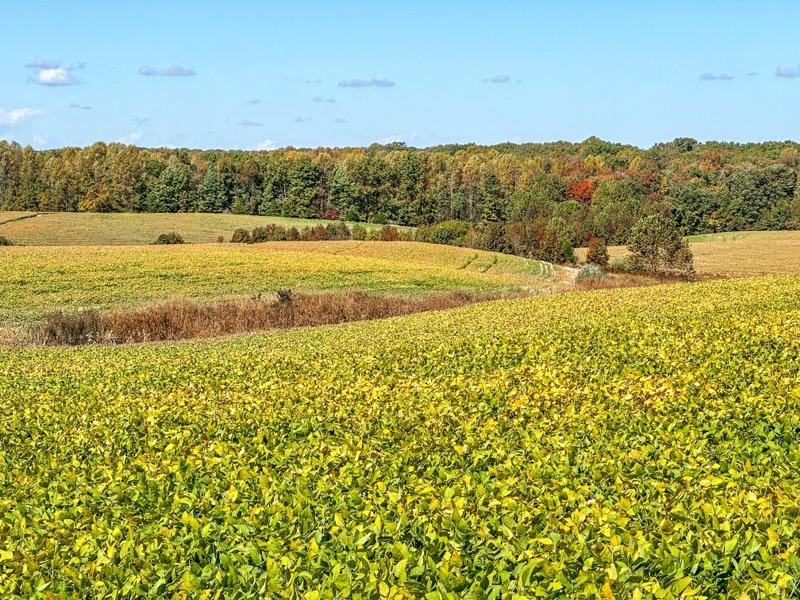
DAY 2: Jackson took 28,000 troops on back roads (Jackson Trail East). Lee used the remaining 13,000 to skirmish Hooker’s 70,000 at the Chancellor house. This diversion worked allowing Jackson time to sneak around to Hooker’s right flank (#8). It took most of the day for Jackson to get to Hooker’s right flank, but at 5:30 pm Jackson struck. It was a complete surprise. Jackson wrecked Hooker’s right flank and made it to Hazel Grove (#9) when night stopped the attack. That evening, Jackson rode past his picket line to reconnoiter the Union position. On his way back he was mistakenly shot by his picket line (#1). He died a few days later.
DAY 3: The famous Confederate Calvary leader, General J.E.B. Stuart took over for Jackson. That evening, Hooker regrouped. He built a strong defensive line at Hazel Grove. Lee attacked Hooker’s new line (#9). Both sides suffered heavy casualties. Although Lee couldn’t crack the line, Hooker lost his nerve and pulled back even farther. During the day, Hooker was knocked unconscious by a canon shell. He suffered a severe concussion. It is speculated that this contributed to his timid responses to Lee’s attacks.
DAY 4: Sedgwick made good gains against the small force Lee had sent to oppose him. Gambling that Hooker wouldn’t renew the fighting, Lee moved the bulk of his forces east to drive off Sedgwick. Sedgwick, withdrew.
DAY 5: After Sedgwick withdrew, and against the wishes of his officers, Hooker ordered his retreat.
| 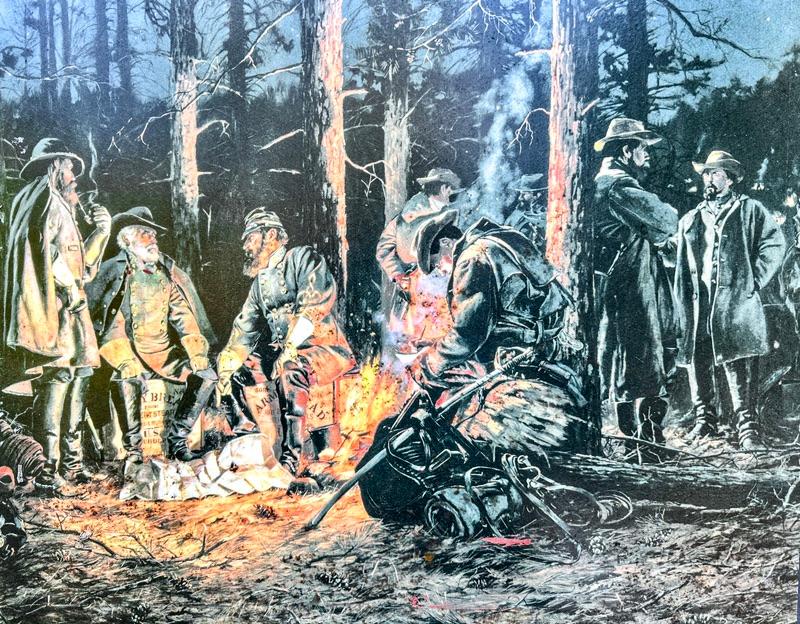 | A depiction of Lee’s planning session with Stonewall Jackson where they planned to secretly send the bulk of Lee’s army to attack the unanchored Union right flank. This was a bold and risky move, but it proved to be Lee and Jackson’s greatest collaboration of the war. It was also their last. | 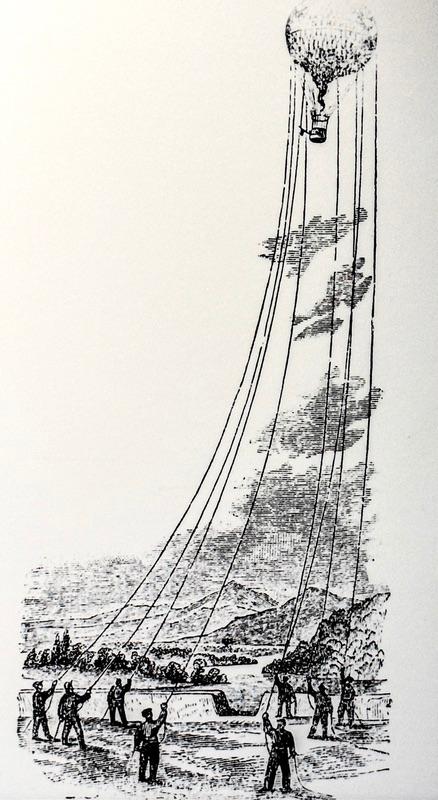 | Two new Union technological advances were employed in the Civil War - the telegraph and observation balloons. Before and during a battle, telegraph lines were hastily laid out to feed information to and from field commanders and the headquarters. This had some limited success. Observation balloons should have been far more successful than they were. The problem was that the balloonists weren’t military personnel, and the military didn’t trust the observations that were made. I wonder why a trained military spotter wasn’t sent up in the balloons? At Chancellorsville, when Jackson was sneaking around to Hooker’s right flank, Jackson’s troops spotted Union balloons and thought that they had been spotted. Apparently, they weren’t spotted, or maybe the spotters weren’t believed. Later in the war, balloons were abandoned. | The path where Stonewall Jackson was critically wounded by friendly fire. Today, the Chancellorsville visitors center is located at the spot. | Day 3 of the battle. Although Hooker had a good defensive line and the higher ground, he lost his nerve and withdrew. Was it because of his concussion the day before? | Hooker’s defensive line on Day 3 had good lines of fire. | 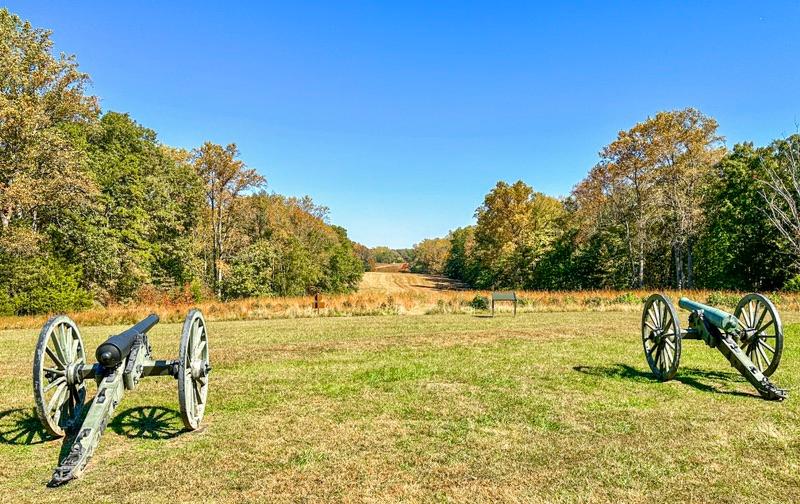 | |
THE WILDERNESS - May 5-6, 1864:
After Chancellorsville, General Meade was hastily put in charge of the Army of the Potomac, just in time to meet Lee at Gettysburg. However, after Lee’s army was badly damaged at Gettysburg, Meade did not follow up his victory and let Lee slip back into Virginia to rebuild his forces. That drove Lincoln crazy. No major battles occurred in the Eastern Theater for the rest of the year.
Meanwhile, in the West, General Grant was racking up a long string of impressive victories. During the Winter of 1864, Lincoln put Grant in charge of the entire Northern war effort. Congress gave Grant the title of Lieutenant General, only the third general to achieve that rank (George Washington and Winfield Scott), to give Grant rank over all other generals.
Grant devised a coordinated strategic plan. Sherman would take over the Western campaign and push towards Atlanta. The Army of the Potomac would pursue Lee in Virginia. General Butler’s Army of the James would put pressure on Richmond from the South and eventually hook up with the Army of the Potomac. The agriculturally rich Shenandoah Valley had to be destroyed. And finally, Grant wanted General Banks, in Louisiana to strike Mobile, Alabama, an important port city still open to the Confederacy.
General Bulter, a general only because of his political connections, was quickly and skillfully trapped by P.G.T Beauregard’s forces in a bend in the James River called the Bermuda Hundred. General Bank’s got bogged down in a series of inconsequential skirmishes in the back swamps of Louisiana. Initially, incompetence also left the Shenandoah Valley unscathed. Only Sherman and Grant’s efforts produced progress.
Although Meade was still technically the head of the Army of the Potomac, Grant attached himself to the Army. That made Grant the de facto head of the Army. While Meade took care of the daily minutia, Grant determined the overall strategy. Grant immediately took the Army south towards Fredericksburg.
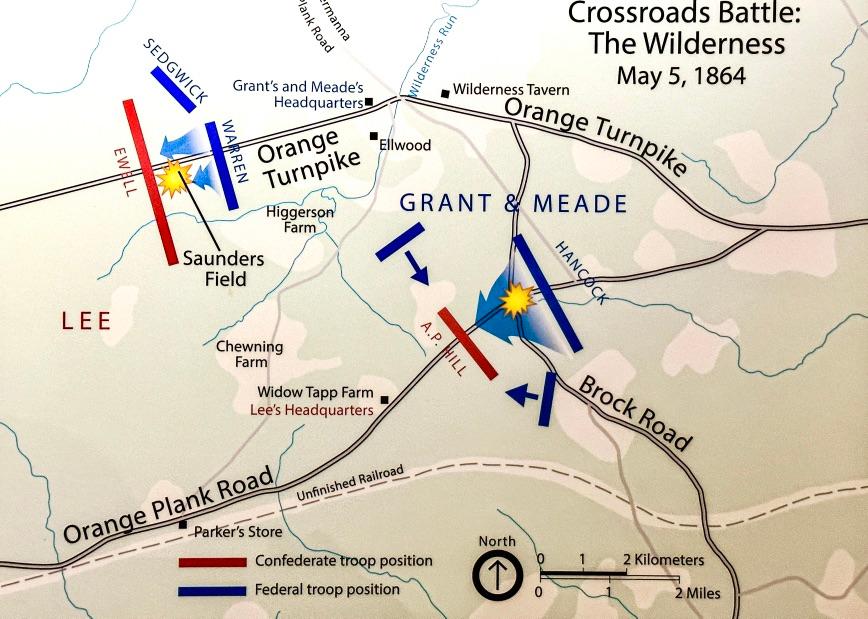
Lee, badly outnumbered and outgunned, deliberately engaged Grant in a tangled thicket called the Wilderness. This large area, just west of Fredericksburg, had been logged over twice. The new growth was a nearly impenetrable thicket of tangled undergrowth making the federal canons useless and negating the North’s numerical advantage.
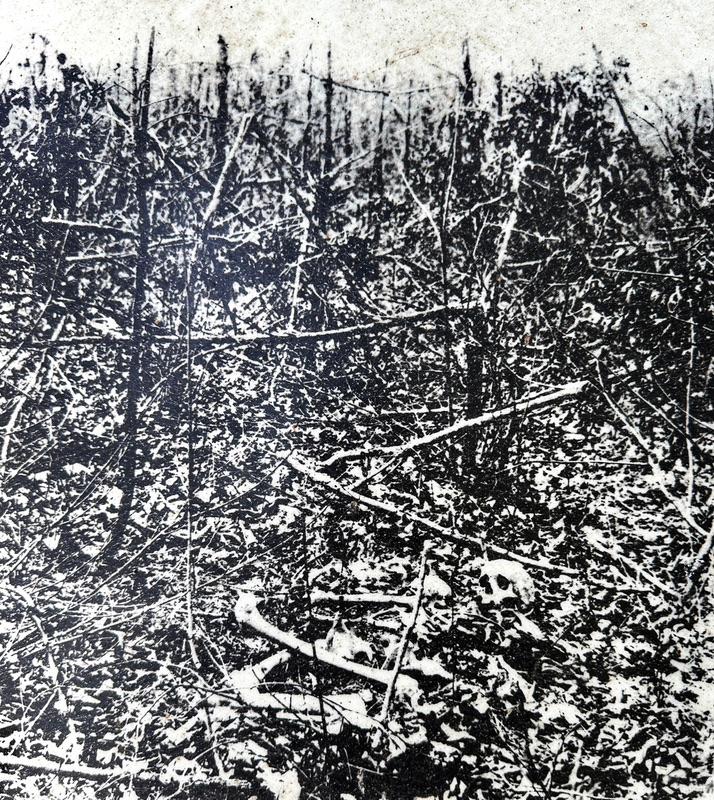
The undergrowth caught fire and many soldiers were burned alive. Unable to see, opposing units bumped into each other in a confusing mess. On occasion, each side nearly won, but as a brochure stated, “in the end, the Wilderness won.” Although Grant suffered more casualties than Lee, it was basically a stalemate. Instead of retreating, Grant moved around Lee’s right flank and pressed on to Spotsylvania. Lee knew he wasn’t dealing with the usual Northern commanders that retreated to lick their wounds. He anticipated Grant’s move and raced him to Spotsylvania.
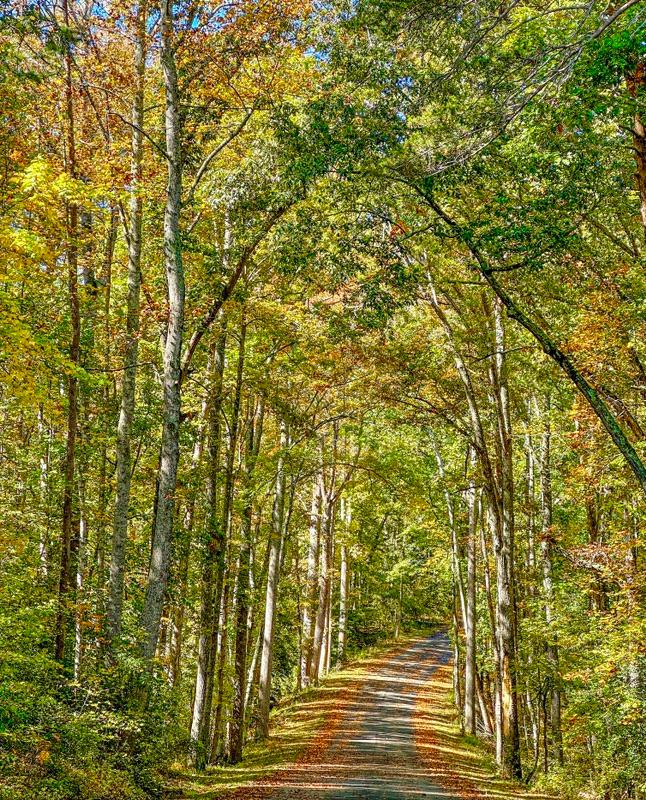
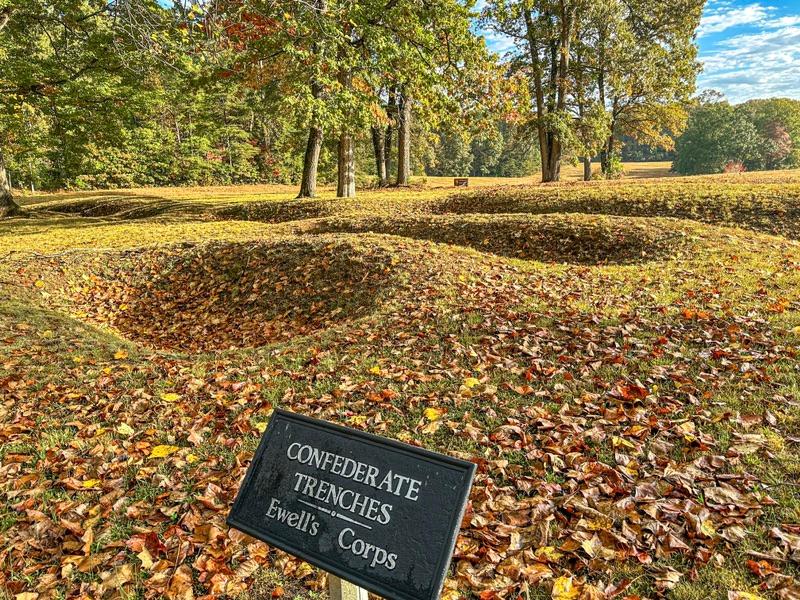
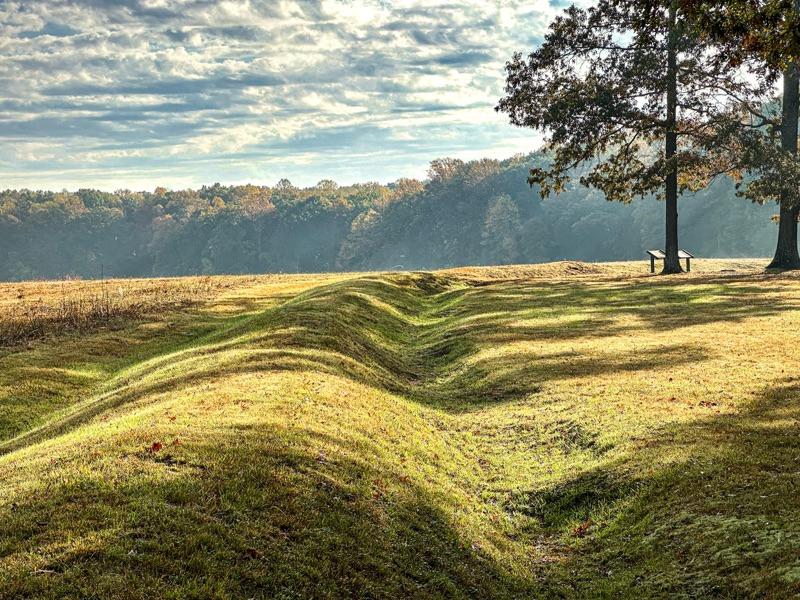
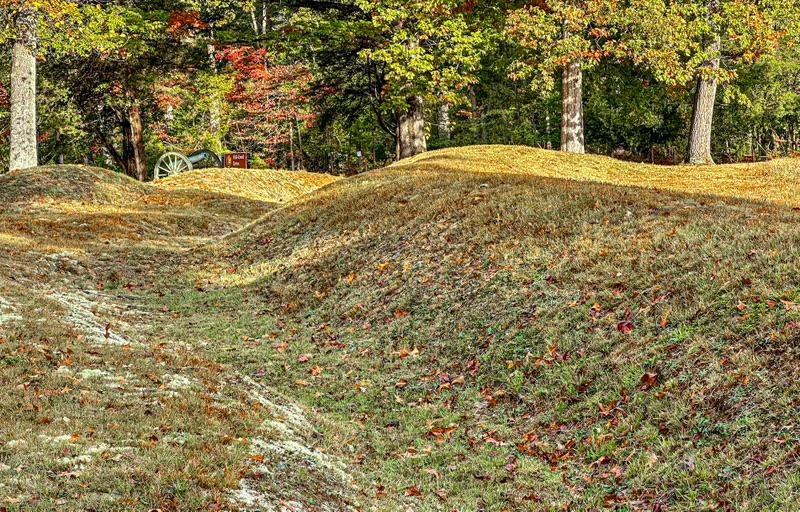
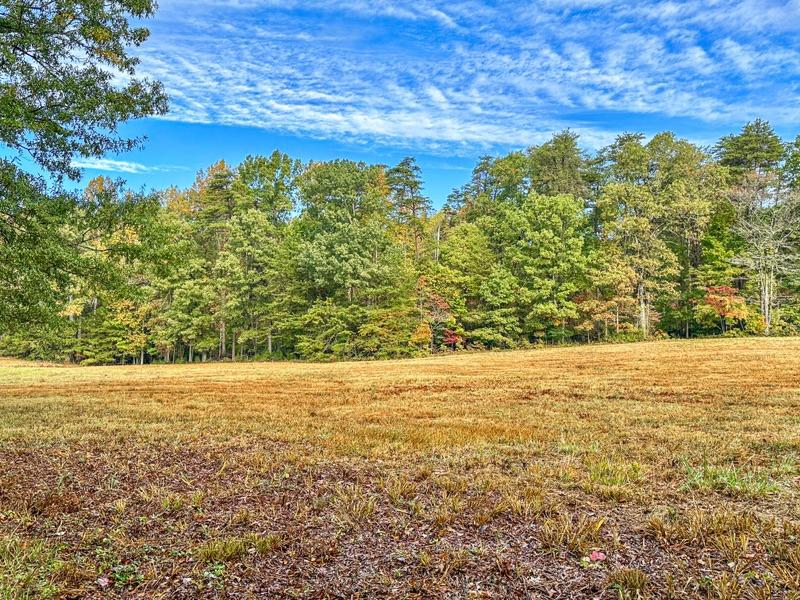
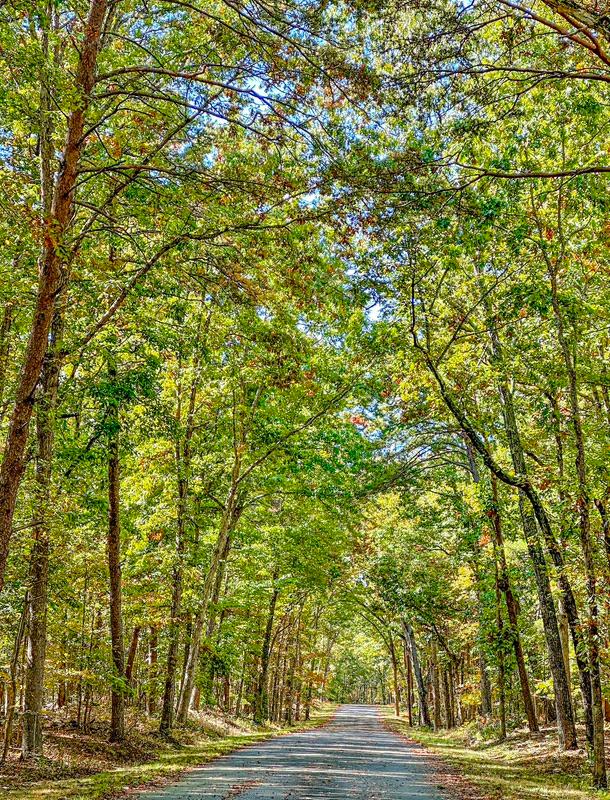
| 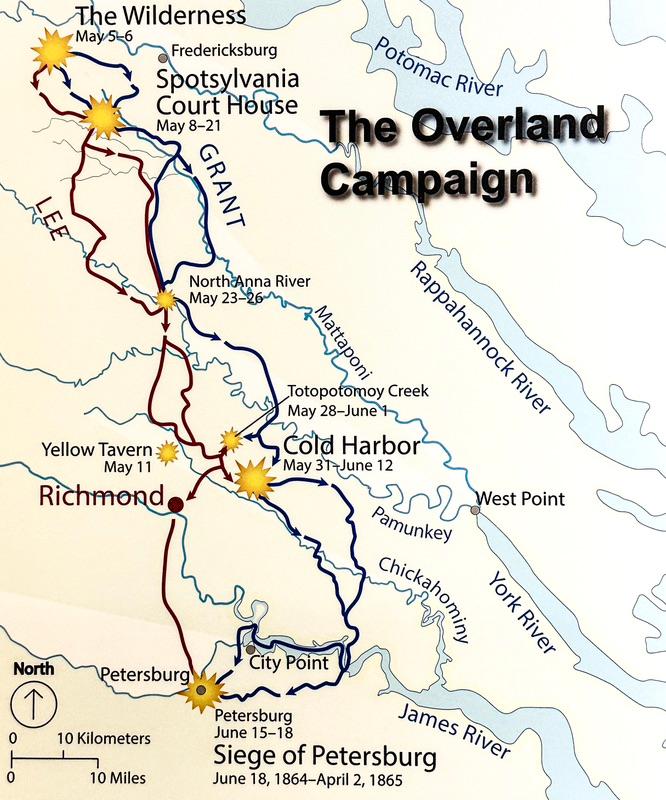 | The Wilderness is the first battle of Grant’s Overland Campaign. We visited the Wilderness Battlefield today. We will see Spotsylvania tomorrow, and then visit the Siege of Petersburg the following day. | An actual photo of the gruesome aftermath of the battle. The thicket, burned with bodies strewn about, graphically displays the horrors of war. The Civil War was the first war in history to be documented by photography. | The Wilderness Battlefield does not resemble what it looked like 158 years ago. Fields and forest have replaced the tangled thickets. Little is left of the trench lines dug by the combatants. | At this time in our tour, it was getting late. We returned to Lake Anna and vowed to catch Spotsylvania tomorrow. | This is an example of the idyllic roads that weave around the battlefield sites. Their beauty masks the horrific scenes that took place over 150 years ago. | |
Glossary of terms used for newcomers: 1) V-Jer. The name of our camper. 2) Saturn. The name of our Van. 3) Duende. Our mischievous gremlin that breaks things. 4) Tata. The good gremlin that helps us fix Duende’s dirty work. 5) The Black Hole. This is what we call Walmart because every time we go in for just a couple of items, we come out spending way more than we figured. 6) QT. Quaint Town. 7) Little Buddy. This is what we call our Dyson cordless stick vacuum. | | | | |