Weekly Digest Number #1 - January 4th, 2022 |
|
Welcome to another year of the RWU Rail & Labor News! This news bulletin is produced and emailed out each Tuesday morning. We hope you find each week's news and information useful. If so, please share with co-workers, friends, and colleagues. If you like, you can sign them up to get all the news from RWU right HERE. Or forward them the link. Note: If you read over this news bulletin each week, you will be sure to never miss the important news of what is going on in the railroad world from a worker's perspective!
|
|
(Editor's Note: Based upon what we have seen, this trend is expected to continue in 2022. Will railroad workers join the labor uprising?) |
|
From Essential Status to Strikes, 2021 was the 'Year of the Worker' |
|
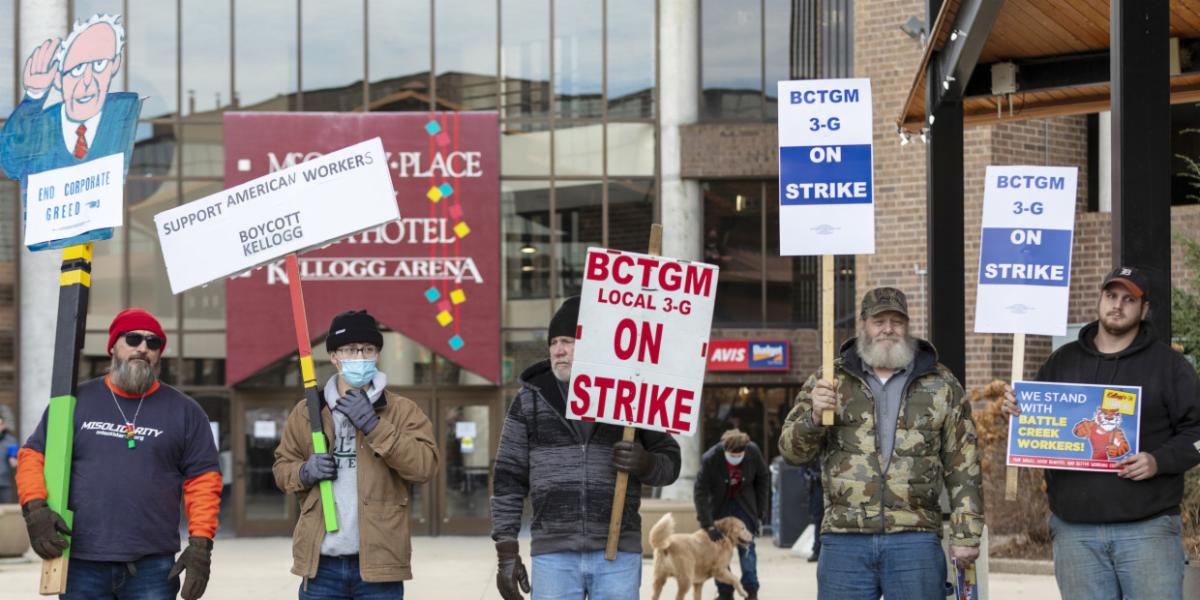
The monthslong Kellogg’s strike that ended last week capped a year of national unrest among workers in industries from entertainment to health care and manufacturing, as the country continues to grapple with the effects of the pandemic.
“There have been years where we thought we could see potential for ‘Year of the Worker’ but arguably it’s hard to see a year that’s been so full of worker activation,” said Ariel Avgar, a professor at Cornell University’s School of Industrial and Labor Relations. “This year happened really quickly but it happened on the foundation of a slower shift. I think there are factors that are economic and attitudinal that have collided in a way that’s rare.”
Many of the workers who mobilized for better working conditions this year were deemed essential by their employers, lawmakers and the media. However, after nearly two years of balancing their health and safety working on the front lines of the pandemic, some of these workers began to question that classification.
“There’s a huge gap between the claimed essentiality and the actual working conditions and lived realities of these workers,” Avgar said.
Low-wage workers suffered disproportionately during the pandemic and began demanding improvements in the form of increased wages, meal and rest breaks, better benefits and shorter shifts. The pandemic served as a wake-up call of sorts for them by exacerbating existing issues and highlighting the fact that work could literally pose a threat to their lives.
“The pandemic has shown that working conditions have clear implications for workers’ health and safety and that a lack of voice can affect workers’ health,” he said. “It gave it a much clearer sense of the stakes.”
|
|
(Editor's Note: The working class is the bedrock upon which a nation is built. And their organized expression - unions - are the basis of democracy, progress and civilization.) |
|
Unions Are Not Only Good for Workers, They’re Good for Communities and for Democracy
High unionization levels are associated with positive outcomes across multiple indicators of economic, personal, and democratic well-being
|
|
We know that unions promote economic equality and build worker power, helping workers to win increases in pay, better benefits, and safer working conditions.
But that’s not all unions do. Unions also have powerful effects on workers’ lives outside of work. In this report, we document the correlation between higher levels of unionization in states and a range of economic, personal, and democratic well-being measures. In the same way unions give workers a voice at work, with a direct impact on wages and working conditions, the data suggest that unions also give workers a voice in shaping their communities. Where workers have this power, states have more equitable economic structures, social structures, and democracies.
Income and economic protections
We find that, on average, the 17 U.S. states with the highest union densities:
· have state minimum wages that are on average 19% higher than the national average and 40% higher than those in low-union-density states
· have median annual incomes $6,000 higher than the national average
· have higher-than-average unemployment insurance recipiency rates (that is, a higher share of those who are unemployed actually receive unemployment insurance)
Health and personal well-being
We find that the states with the highest union densities:
· have an uninsured (without health insurance) population 4.5 percentage points lower, on average, than that of low-union-density states
· have all elected to expand Medicaid under the Affordable Care Act, protecting their residents from falling into the “coverage gap”
· are more likely to have passed paid sick leave laws and paid family and medical leave laws than states with lower union densities.
|
|
(Editor's Note: With the passage of the Infrastructure Investment & Jobs Act and the billions in funds for Amtrak, we might just be witnessing the birth of a railroad renaissance in the U.S that could lead to hundreds of more trains, thousands of additional route miles, Millions more passengers and thousands of good union rail jobs.) |
|
Building the Rail System America Deserves |
|
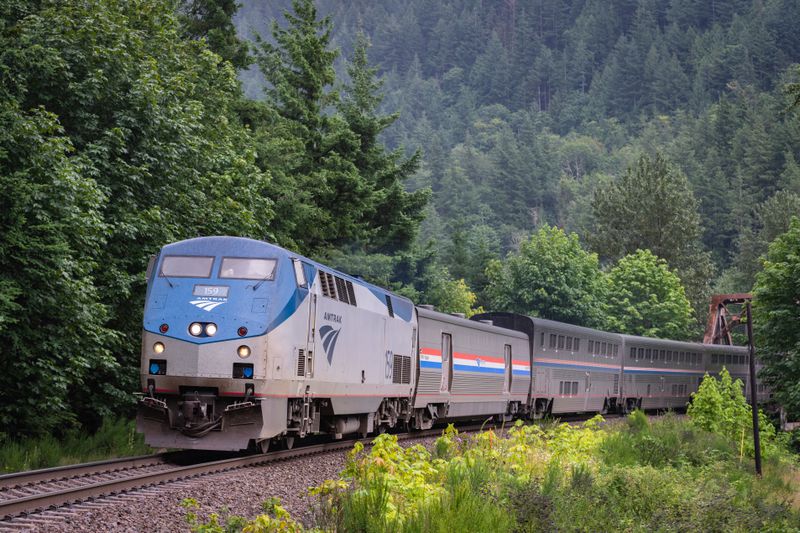
In November, President Biden signed into law a bill that represents a once-in-a-generation investment in America’s infrastructure and competitiveness. At Amtrak, the national rail operator where I serve as chair of the board, we are thrilled and ready to deliver on the responsibility given to us in this historic, bipartisan legislation.
In the 21st century, trains are an ideal means of transportation for much of the nation. With the lowest carbon footprint of all major modes of travel, efficient downtown-to-downtown service, and an ability to expand without massive impacts to our communities, Amtrak can be the mode of the future for big cities and small communities alike across the country.
Today, Amtrak operates hundreds of trains each day — at speeds up to 150 miles per hour — to more than 500 destinations in 46 states and the District of Columbia. But the simple reality is that our country has not moved fast enough to invest in much-needed rail infrastructure.
Over the 50 years since Amtrak’s founding, the United States has added roughly 120 million people, yet our network is largely unchanged since 1971. The vast majority of today’s rail system is only used for freight trains, and U.S. passenger rail investment has dwindled compared to that of other economies of comparable size. Repairing, upgrading and modernizing its rail infrastructure has been imperative for decades now.
|
|
(Editor's Note: Another great victory for railroad workers and rail safety. However, will BNSF appeal? How long will this worker - like so many others - be ultimately denied justice due to the rail carriers' deep pockets and endless ability to appeal?) |
|
Minnesota Jury Awards Former BNSF Employee $9.4 Million In Damages |
|
A former track inspector with BNSF Railway Company was awarded $9.4 million in damages following an eight-day trial Wednesday.
According to a release, a jury found that Don Sanders was retaliated against in violation of the Federal Railway Safety Act after he reported hazardous safety conditions on the railroad and reported the harassment to BNSF’s human resources.
“I just want to thank the Court and the jury for their time,” Sanders said. “I waited five years for this moment, and I am very thankful to have had the opportunity to share the full story of what happened during my employment with BNSF.”
Sanders began working for BNSF in 2007 and became a track inspector in their Twin Cities division in 2010.
Under federal regulations, Sanders was required to report defects in tracks rails and enter slow orders, which slow the speed of a train, according to the release.
Sanders says BNSF managers repeatedly harassed and threatened him for reporting the defects and slow orders, said the release.
The jury awarded Sanders $611,797 in lost wages, $250,000 in emotional distress, and $8,600,000 in punitive damages.
|
|
(Editor's Note: Things have gotten so bad on the Class One railroads that we now witness the spectacle of outfits like NS admitting their service levels suck. That said, their stockholders remain pleased with the record low Operating Ratio and the record stock prices and profits.) |
|
NS to STB: ‘Service Levels Do Not Meet Our Customers’ or Our Expectations’ |
|
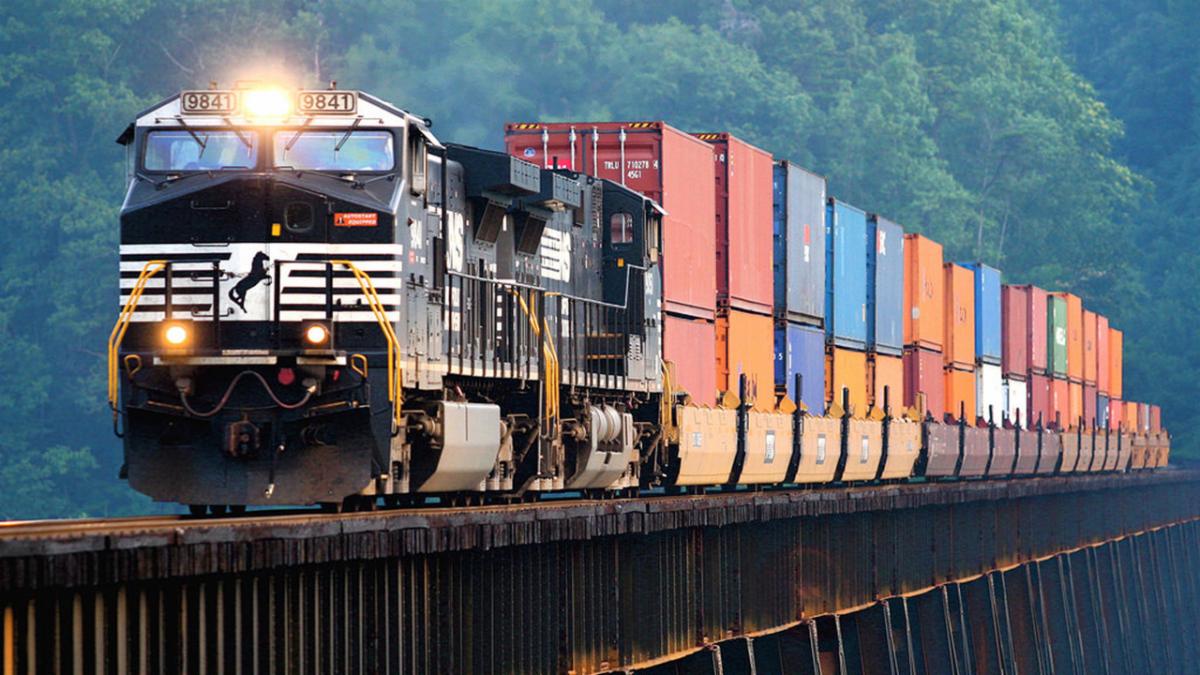
“Recovering our service is our highest priority, and we assure you we are taking action to achieve this as quickly as possible,” Norfolk Southern President Alan H. Shaw wrote in a Dec. 10 letter to Surface Transportation Board Chairman Martin Oberman, who asked the Class I railroad to address the deterioration of “key operating metrics” and the increasing number of customer complaints to STB about its “poor performance.”
“These metrics reflect an unfavorable trend in NSR’s overall performance in 2021,” Oberman wrote. “Yet, NSR’s number of ‘transportation’ employees has continued to decline over the last three months (8,281, 8,269, and 8,207, respectively). …”
At the same time, STB has received an “increasing number” of NS customer complaints, which include “missed switches, cars stranded at intermediate yards, longer transit times, operating plan changes without notice, and a lack of communications from customer service,” according to Oberman. He wrote that the customers—from NS’s Cincinnati to Chattanooga corridor as well as the deep South and mid-Atlantic—represent a “cross-section of key commodity groups.”
|
|
Government of Canada Approves Changes to Improve Railway Track Inspections |
|
The Government of Canada is continuing to move ahead with concrete actions which improve railway track safety to better protect those living and working near Canada’s rail corridors.
Today, the Minister of Transport, the Honourable Omar Alghabra, announced that Transport Canada has approved another phase of changes to the Rules Respecting Track Safety, which focus on track inspection frequency and the use of automated track inspection technology. These changes are the result of a Ministerial Order that was issued in 2020 to address major risks that could cause derailments due to the condition of railway infrastructure.
As a result of these latest changes, railway companies will be required to:
- increase the frequency of railway track inspections in higher risk areas where trains travel at faster speeds while carrying a greater tonnage of freight;
- follow new procedures governing the use of advanced automated track inspection technology; and
- ensure inspection data clearly identifies the exact date and track mileage of any track inspection so that rail safety inspectors can effectively verify compliance with regulatory requirements.
The Rules Respecting Track Safety specify safety requirements that railway companies must follow when inspecting and maintaining their railway track infrastructure.
Transport Canada continues to work with the railway industry to make our railway system even safer for Canadians.
|
|
(Editor's Note: This is a good sign that rail advocacy groups like RPA are finally starting to understand the value of recognizing and working with organized labor. As a member organization of RPA, Railroad Workers United has worked hard the last four years or so to build this alliance.) |
|
Rail Passengers Association Awards 'Golden Spike' to Amtrak Workers |
|
Although the Golden Spike Award is normally given to a single individual, no group of people has done more "to advance the cause of passenger trains in the United States over the past year than front-line Amtrak workers," association officials said in a press release.
"They risked their health and their lives by continuing to show up to work in the midst of a deadly pandemic, ensuring that millions of Americans still had access to this essential service," the release stated.
The Golden Spike was awarded to the following labor organizations that represent Amtrak workers: Brotherhood Of Locomotive Engineers and Trainmen; Transportation Communications Union; Transportation Communications Union-American Railway Supervisors Association; Transportation Division of the International Association of Sheet Metal, Air, Rail, and Transportation Workers; Transport Workers Union of America; and Unite-Here.
|
|
(Editor's Note: With rail CEO and Trump appointee Ron Batory now replaced as the head of the FRA, crew size laws that were adopted by various states have been ruled to be legal and binding. Hopefully more states will join the ranks of the existing eight states with 2-person crew laws.) |
|
Michigan Legislation Calls for Mandatory Two-person Train Crews |
|
A bill that would require two-person train crews has been introduced in the Michigan House of Representatives and Senate.
House Bill 5596 and Senate Bill 767 would require that railroads "not operate a train or locomotive engine engaged in transporting freight unless the train or locomotive engine is operated by a crew of not fewer than two individuals," according to a press release issued by the Brotherhood of Locomotive Engineers and Trainmen (BLET).
"This legislation will make our state safer for train crews and the general public," said BLET Michigan State Legislative Board Chairman B.J. Trumble.
The Association of American Railroads (AAR) opposes legislation that would mandate two-person train crews. Two-person crew bills "would upend decades of meaningful collective bargaining and undermine the industry’s ability to compete in a rapidly changing transportation space," AAR states on its website.
|
|
(Editor's Note: In the face of court rulings, Amtrak and the Class One carriers have backed down from their unilateral imposition of vaccine mandates. RWU encourages all rail workers to get vaccinated - gut not because you are ordered to - but because doing so is an act of solidarity with your co-workers to help make for a safe and healthy workplace for all. See out Statement HERE.)
|
|
Amtrak Announces Testing Alternative, Avoiding Cuts to Service |
|
Amtrak Chief Executive Officer Bill Flynn informed employees today that, in light of the near-universal COVID vaccine adoption among its employees, and a recent decision by a federal district court halting enforcement of an Executive Order mandating vaccines for federal contractors, it will allow employees to opt-in to a testing program on an interim basis.
Flynn stated that the railroad believes these changes will allow the company to avoid any system-wide service impacts in January.
"We applaud Bill Flynn, Stephen Gardner, and the rest of the Amtrak management team for finding a reasonably safer way to keep America’s passenger trains running,” said Rail Passengers President Jim Mathews. “For hundreds of communities across the U.S., Amtrak is a critical transportation connection. We’re pleased that Amtrak leadership has shown flexibility in light of new developments, and grateful to Amtrak workers for performing the essential tasks that keep America’s passengers moving. We continue to support the goal of universal vaccination -- for both workers and passengers -- as the surest way to keep everyone onboard safe.”
Amtrak stated that 97.3% of employees have received at least one shot, with fewer than 500 active Amtrak employees subject to the testing regime. The company said more details on the testing program will be provided soon, and that it will be provided as an alternative to vaccine mandates on a temporary basis, “pending the outcome of the executive order litigation or further statutory, administrative or regulatory actions.”
|
|
(Editor's Note: The struggle for racial equality goes hand in hand with the struggle for union rights, good wages, benefits and working conditions. MLK was a champion of both civil rights and union rights.) |
|
Let’s talk about what we built together in 2021. Let’s talk about what we’ll fight for in 2022.
Save the date, as we will gather virtually on Jan. 16–17 for the 2022 AFL-CIO Dr. Martin Luther King Jr. Civil and Human Rights Conference.
We will build on our victories and strategize about the continued fight for economic and racial justice with—and also within—the labor movement.
The theme of January’s conference is Honoring Our Past and Protecting Our Future.
History tells us where we’ve been. And it shows us the path for moving forward.
This conference will challenge us to look to the future. To ask and answer how we can build a multiracial, progressive labor movement reflective of America’s changing workforce.
Sessions and trainings will be held online so everyone can attend safely.
|
|
U.S. Railroads’ Intermodal Volume Dipped Slightly in Week 51 |
|
U.S. railroads hauled 420,373 carloads and intermodal units during the week ending Dec. 25, a 3.7% increase compared with the same week in 2020, according to Association of American Railroads (AAR) data.
Total carloads for the week were 201,222 units, up 8.7%, while U.S. weekly intermodal volume was 219,151 containers and trailers, down 0.4%.
Seven of the 10 carload commodity groups posted increases during the week. They included coal, up 8,600 carloads to 59,363; nonmetallic minerals, up 5,258 carloads to 22,901; and chemicals, up 2,999 carloads to 30,490.
The commodity groups that posted decreases were grain, down 2,611 carloads to 19,159; petroleum and petroleum products, down 1,591 carloads to 8,705; and motor vehicles and parts, down 337 carloads to 9,871.
|
|
Transport Canada Proposes Changes to Dangerous Goods Regulations |
|
Canada's Transport Minister Omar Alghabra this week announced proposed amendments to regulations that govern the transportation of dangerous goods across the country.
Transport Canada proposed the regulatory changes to promote more consistent training and certification for employees who handle and transport dangerous goods, including by rail, agency officials said in a press release.
The proposed amendments call for:
• introducing a competency-based approach to training and assessment;
• incorporating by reference the new training standard developed under the guidance of the Canadian General Standards Board; and
• aligning training requirements with a series of international codes.
The changes were proposed to help reduce the risk of incidents involving dangerous goods, said Alghabra.
About 70% of dangerous goods are transported by road in Canada. Air, marine and rail transportation account for the remaining 30%.
|
|
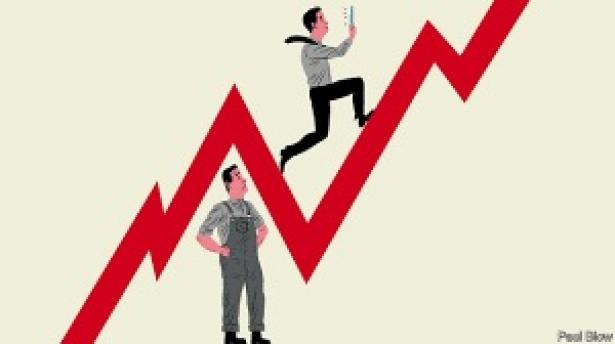
(Editor's Note: At the end of the day, this is the catalyst behind the recent wave of strikes, quite, and labor discontent. And why we need a strong and revitalized the Labor Movement to help redistribute some of that wealth to the ones who actually do the work!) |
|
Wage Inequality Continued to Increase in 2020 |
|
Top 1.0% of earners see wages up 179% since 1979 while share of wages for bottom 90% hits new low
Key numbers:
- In 2020, annual wages rose fastest for the top 1.0% of earners (up 7.3%) and top 0.1% (up 9.9%) while those in the bottom 90% saw wages grow by just 1.7%.
- The top 1.0% earned 13.8% of all wages in 2020, up from 7.3% in 1979.
- The bottom 90% received just 60.2% of all wages in 2020, the lowest share since data began in 1937 and far lower than the 69.8% share in 1979.
- Over the 1979–2020 period:
- Wages for the top 1.0% and top 0.1% skyrocketed by 179.3% and 389.1%, respectively.
- Wages for the bottom 90% grew just 28.2%.
Newly available wage data from the Social Security Administration allow us to analyze wage trends for the top 1.0% and other very high earners as well as for the bottom 90% during 2020. The upward distribution of wages from the bottom 90% to the top 1.0% that was evident over the period from 1979 to 2019 was especially strong in the 2020 pandemic year, yielding historically high wage levels and shares of all wages for the top 1.0% and 0.1%. Correspondingly, the share of wages earned by the bottom 95% fell in 2020.
|
|
|
|
|
|
|