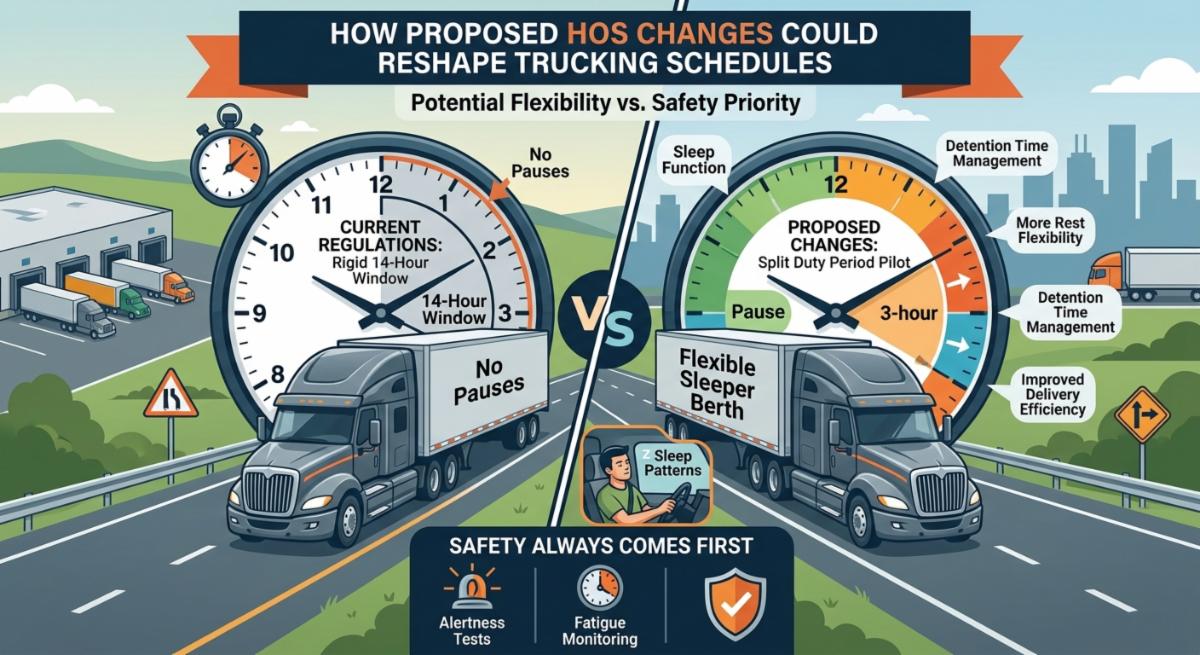
How Proposed HOS Changes Could Reshape Trucking Schedules and Delivery Planning

Greater flexibility for drivers could improve scheduling, reduce the impact of loading delays, and help carriers deliver freight more efficiently—but safety must remain the priority.

Hours-of-service (HOS) regulations play a critical role in the trucking industry. Designed to help prevent driver fatigue and improve highway safety, these federal rules determine how long commercial truck drivers can operate their vehicles, when they must take breaks, and how much rest they need between driving shifts.

BLOGS

Where Did the Trucks Go? The Capacity Shift Shippers Need to Watch


For shippers, transportation capacity can sometimes feel like a light switch: trucks are available when freight volumes are soft, rates are competitive, and carriers are actively looking for business. Then, seemingly overnight, capacity tightens, pickup options disappear, transit times stretch, and transportation costs begin climbing.


The important question is: Where did the trucks go?


The answer is more complicated than simply saying there are fewer loads—or more loads. Trucking capacity can shrink for a variety of reasons, including driver availability, rising insurance costs, equipment expenses, regulatory requirements, and carriers exiting lanes or entire segments of the market.

Barron’s Law: What New Trucking Legislation Could Mean for Carriers, Drivers and Safety


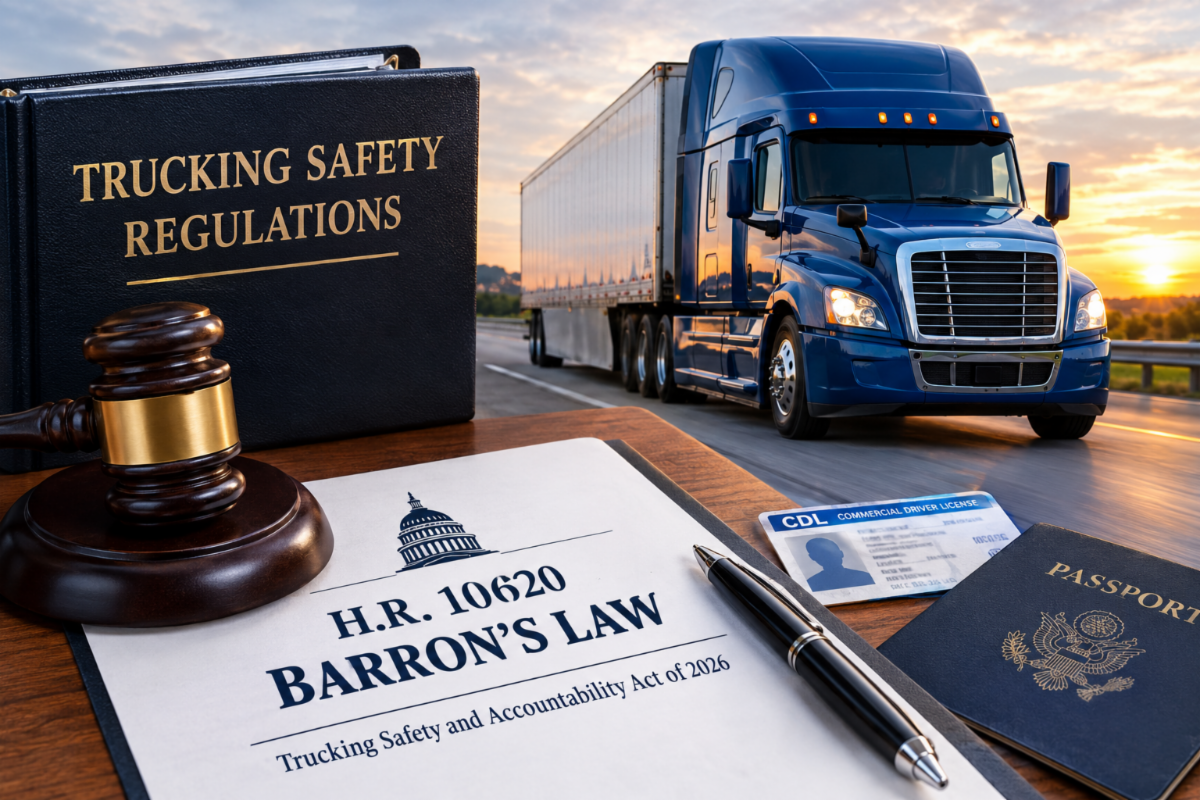
The trucking industry is facing another potential shift in federal safety and compliance requirements following the introduction of H.R. 10620, the Trucking Safety and Accountability Act of 2026, also known as “Barron’s Law.”


Introduced in the U.S. House on September 28, 2026, the legislation would make significant changes to commercial motor vehicle safety requirements, including stronger penalties for carriers that knowingly use ineligible drivers, standardized English-language testing for CDL applicants, additional requirements for non-citizen commercial drivers, tougher penalties for cabotage violations, and measures intended to prevent so-called “chameleon carriers” from avoiding federal safety sanctions. The bill has been referred to the House Committee on Transportation and Infrastructure.

Contact Us:

CustomerService@roadscholar.com

800-542-2301

www.roadscholar.com

 
Facebook  X  YouTube

View as Webpage