Welcome to the University of Oklahoma Carceral Studies Consortium Newsletter. The Carceral Studies Consortium strives to build a community for intellectual exploration that includes faculty, staff, graduate students, community members, practitioners, and organizers.
Carceral Studies is concerned with the independent function and nexus of the political and social systems that organize, shape, sustain, and entrench practices of punishment, surveillance, incarceration, and harm.
|
|
OU Carceral Studies Consortium Invites Applications for Faculty Director
The Carceral Studies Consortium invites applications from OU faculty for the role of Faculty Director. Applicants must be full or associate professors at OU at the time of application in any discipline with a connection to Carceral Studies. Review of applications will begin November 15 and continue until filled.
|
|
|
National Institute of Justice Releases FY 2021 W.E.B. Du Bois Research Program on Reducing Racial and Ethnic Disparities in the Justice System
The National Institute of Justice’s W.E.B. Du Bois program seeks “to fund research that uncovers ways to reduce empirical racial and ethnic inequalities at the criminal and juvenile levels of the justice system. Funding categories include proposal options for researchers that are early in their career at a minimum of $250,000 grants and advanced scholars/mentors with a minimum of $500,000 grants.
|
|
|
Carceral Studies Conversations Podcast |
|
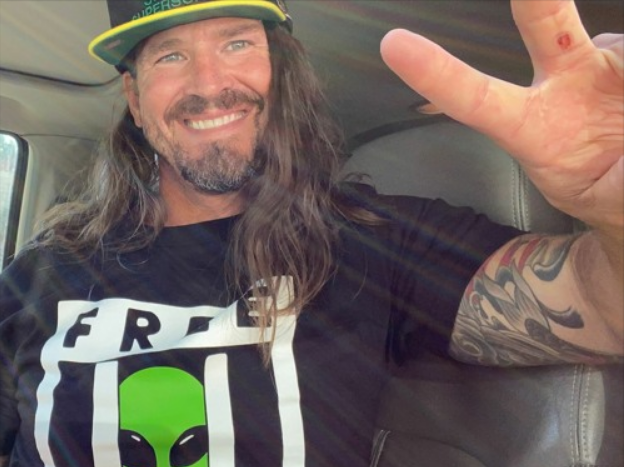
Jared Deveraux was recently paroled after serving five years of a 20 year sentence for Grand Theft-Embezzlement. Prior to incarceration, Jared was grinding away at a Fine Arts Doctorate at Texas Tech. In this conversation, Deveraux discusses the connection between race, incarceration, and capitalism. He explains how his experience in prison taught him to understand how racism cannot be eradicated without ending mass imprisonment. In the discussion of private prisons and spending time in a facility located in Texas, he discusses the impact of being separated from his community and family.
|
|
The Philadelphia Inquirer |
|
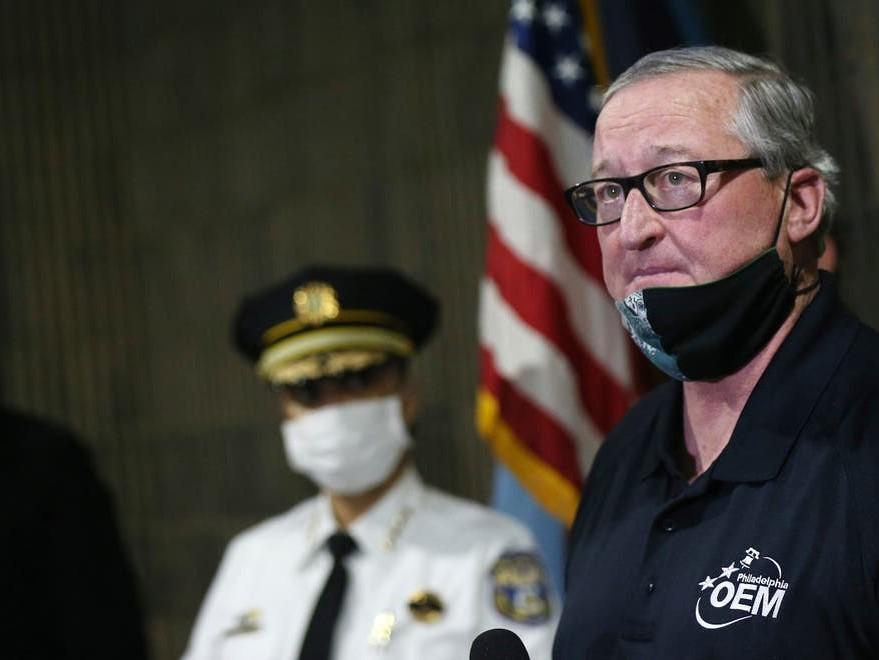
Philadelphia is the most recent city to ban traffic stops for minor violations. The Driving Equality Bill delineates between “primary violations” related to immediate public safety and “secondary violations” that refer to pretextual stops such as an expired tag or a broken taillight. Professor Dennis Kenney of the John Jay College of Criminal Justice stated that “Philadelphia has decided that pretextual stops are disruptive and the risk to the relationship between the police and the community is greater than the likely pay off of getting a bad guy every now and then.” Under the new bill, secondary violations will now eliminate the associated traffic stop and interaction with law enforcement for the alternative method of mailing a warning or citation to the accused driver. According to Maya Brown and Emma Tucker, the “bill was informed by the development of the Bailey pilot program…which require[d] the police department to collect data on all stop-and-frisks and store it in an electronic database.” The results of this program found high levels of racial bias for traffic stops involving minority travelers. The Driving Equality Bill will attempt to respond to the disparities in traffic stops and be the “first step to building more trust between our police and communities of color,” in the opinion of the acting chief defender for the Defender Association for Philadelphia Alan Tauber.
|
|
The former Alcatraz Federal Penitentiary has recently opened a self-guided exhibit on the costs of incarceration. The exhibit, titled “The Big Lockup: Mass Incarceration in the United States,” is comprised of visual and interactive content. According to Azul Dahlstrom-Eckman, “the exhibit features infographics explaining how the war on drugs and systemic racism has disproportionately incarcerated people of color, as well as panels describing how education, affluence, drug use and whether or not someone is placed in foster care can influence the likelihood that someone is incarcerated.” The experience also educates goers on the social costs for the families and communities connected to incarcerated individuals. In addition, Dahlstrom-Eckman states that the content and interactive components facilitate “a place for people to have discussions and exchanges of ideas [related to mass incarceration].” The exhibit is free to the public and will remain a permanent feature on Alcatraz Island.
|
|
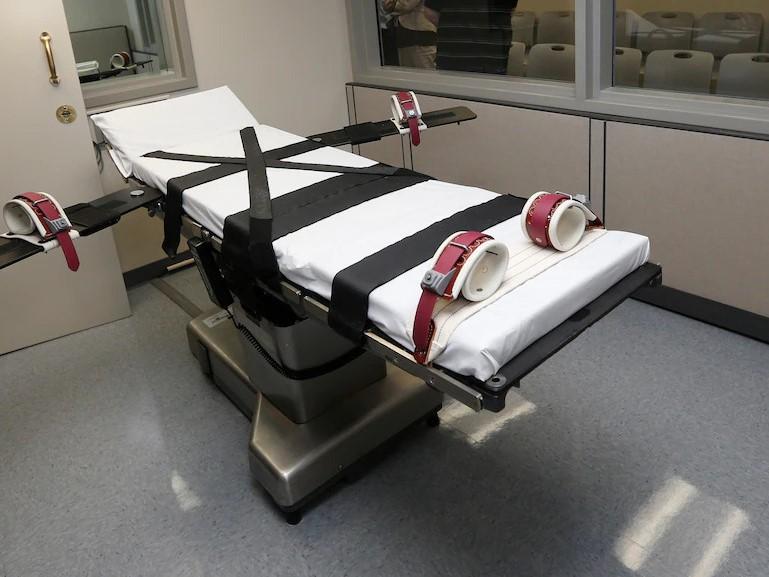
According to reporters, the recent execution of John Marion Grant in Oklahoma resulted in Grant convulsing and vomiting from the sedative before going unconscious for the remaining lethal injections. A total of twenty-one minutes from the first injection passed before Grant was declared deceased. The botched execution resembles the multiple errors that Oklahoma has had in its history of the death penalty. These past errors led former Oklahoma Governor Mary Fallin to place a moratorium on executions. Being the first execution in Oklahoma since the moratorium, Grant’s botched execution details were missing from the state’s initial summary. Reporter Joseph Brown remarks that the media must be present when the state is carrying out its punishments “because if the government can go and execute someone and no one but government-employed people get to view it, Lord knows what can happen.” The reporters in Grant’s room were able to expose the discrepancy in the initial statement and showcase the state’s use of cruel and unusual punishment for public scrutiny leading up to the other scheduled executions.
|
|
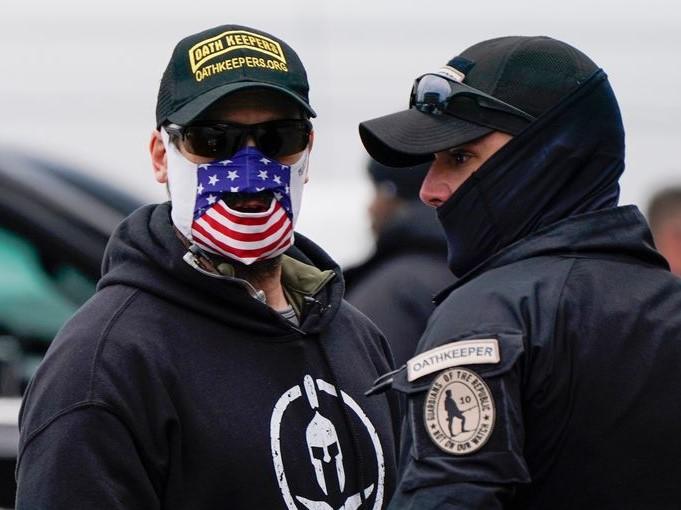
According to an analysis of hacked data conducted by Oregon Public Broadcast (OPB), “more than two dozen current and former police officers, sheriff’s deputies, correction officers, and members of the military in Oregon appear to have joined the Oath Keepers.” Johnathan Levinson explains that the Oath Keepers militia are “an anti-government [and] anti-immigration extremist group.” When the OPB reached out to the Oregon law enforcement members identified by the data, reporters were often hung up on or told that the member was not actively involved in the Oath Keepers. Regardless of their current status in the militia, OPB discovered social media posts from the supposed members which aligned with the core principles and attitudes of the Oath Keepers. These principles included a direct obligation not to obey “any orders to disarm Americans, to force Americans into concentration camps, to invade any states, to support foreign peacekeepers on U.S. soil, or to subject civilians to military tribunals,” explained Levinson. Clackamas County Sheriff Angela Brandenburg stated that “membership or participation in hate groups, racial supremacist organizations or militant groups erodes public trust in law enforcement officers and community safety.”
|
|
Please share recent research you would like to see featured, including your own!
Send it to carceralstudies@ou.edu
|
|
A recent special issue of Science focuses on mass incarceration in the United States, ranging from policing to structural racism. See below for highlights from the issue.
|
|
Abstract: The videos of police brutality in the United States that have been widely distributed across social media platforms in recent years gave rise to a mass movement for racial justice that has taken both nonviolent and violent forms. Government responses to this wave of protest point to discouraging linkages to the genesis of national crime control programs in the context of civil rights gains and the “Long, Hot Summers” of the 1960s. In the face of social science research indicating that addressing mass unemployment, failing public schools, and inhumane housing conditions offered an effective policy path to combat social unrest and collective violence, many policy-makers and officials consistently sought to manage the material consequences of socioeconomic problems (e.g., gun violence and drug abuse) with more police, more surveillance, and, eventually, more incarceration. But with growing awareness and recognition of the problem of systemic racism—grounded in a rich body of scientific and historical research that has illuminated the drivers of inequality—a host of social factors have converged to make the present an opportune moment to expect different results. The challenge is to draw from empirical evidence to enact a set of meaningful structural solutions beyond police.
|
|
Abstract: Facial recognition, body cameras, and other digital technologies are increasingly commonplace tools of police departments. These provide police with an increased ability to collect vast stores of information on our movements and habits, both online and in real life. These new forms of investigation have led to successes in ways that might not have been possible with traditional policing. But they also raise the specter of unchecked police surveillance. As a result, privacy and civil liberties groups have raised concerns about how much control we have over the most intimate details of our lives. But there is another, less obvious, challenge to democratic policing from these profound changes. Private companies, not public agencies, are typically responsible for the design, production, and sales of products like body cameras and facial recognition software. That the police neither design nor produce the tools that raise some of the most important questions about privacy and civil liberties today has profound consequences for how we think about democratic policing. Perhaps the central dilemma about this corporate shadow in policing is the tensions that exist between public accountability and private interests when police departments are customers.
|
|
Abstract: In this Review, we assess how mass incarceration, a monumental American policy experiment, has affected families over the past five decades. We reach four conclusions. First, family member incarceration is now common for American families. Second, individuals who will eventually have a family member incarcerated are worse off than those who never will, even before the incarceration takes place. Third, family member incarceration has negative effects on families above and beyond these preexisting disadvantages. And finally, policy interventions that address the precursors to family member incarceration and seek to minimize family member incarceration would best enhance family well-being. If the goal is to help all American families thrive, then the importance of simultaneous changes in social and criminal justice policy cannot be overstated.
|
|
Abstract: Understanding long-run patterns in the incarceration of Black Americans requires integrating the study of racial inequality with the study of political economy. I offer a parsimonious framework describing how the Black incarceration rate has been affected by the dynamics of exploitation and exclusion over time and across space. This framework helps to explain otherwise puzzling facts, like why the Black incarceration rate was lower in the South than in the North for much of the 20th century, why it was lowest in the South’s cotton belt, and why it began to tick upward when it did. It also enables us to better understand recent changes in racial and class inequality in incarceration in the United States.
|
|
Abstract: Racial inequality is a foundational feature of the criminal justice system in the United States. Here we offer a psychological account for how Americans have come to tolerate a system that is so at odds with their professed egalitarian values. We argue that beliefs about the nature of racism—as being solely due to prejudiced individuals rather than structural factors that disadvantage marginalized racial groups—work to uphold racial stratification in the criminal justice system. Although acknowledging structural racism facilitates the perception of and willingness to reduce racial inequality in criminal justice outcomes, many Americans appear willfully ignorant of structural racism in society. We reflect on the role of psychological science in shaping popular understandings of racism and discuss how to contribute more meaningfully to its reduction.
|
|
Abstract: Over the past 35 years, public and private actors have turned U.S. criminal justice institutions into a vast network of revenue-generating operations. Today, practices such as fines, fees, forfeitures, prison charges, and bail premiums transfer billions of dollars from oppressed communities to governments and corporations. Guided by scholarship on racial capitalism, we argue that to understand how and why criminal justice operates as it does today, one must attend to its predatory dimensions. Analytically and politically, the concept of predation connects diverse forms of criminal legal takings to one another, to the extractive regimes of earlier eras, and to contemporary businesses that financially exploit subjugated communities. Analyses that focus on predatory relations encourage a reconsideration of some dominant understandings in the study of criminal justice today.
|
|
Updates, Events & Opportunities |
|
CSC Member Dr. Sophia Sarantakos Receives Emerging Scholar Award
We want to congratulate CSC member Dr. Sophia Sarantakos of the University of Denver, who recently received the Emerging Scholar Award from the Association for Community Organization and Social Action (ACOSA). The award “honors the contribution of a person in the field who has demonstrated outstanding scholarly potential in an area of community practice.”
|
|
|
CSC Member Prof. Jermaine Thibodeaux Presents “When the Battles Go to War" on Nov. 12th
The Helmerich Center for American Works-In-Progress will feature a presentation by CSC member and OU Assistant Professor Jermaine Thibodeaux on November 12th. Professor Thibodeaux will present his current work titled, “When the Battles Go to War: An Exploration of How Bobby and Jasmine Battle Became the Oklahoma Faces of Mass Incarceration and the Black Family.” Those interested in the presentation and subsequent roundtable should register through the link below.
|
|
|
Abolitionist Organization HEARD Seeks Advocate
HEARD is a cross-disability abolitionist organization that unites across identities, communities, movements, and borders to end ableism, racism, capitalism, and all other forms of oppression and violence. The Advocate’s primary responsibility is to advocate for deaf/disabled incarcerated people who communicate their legal issues to HEARD.
|
|
|
OU Libraries and Carceral Studies Consortium Assemble “Racial Capitalism” Library Guide
In a collaborative effort between OU Libraries and the Carceral Studies Consortium, a library guide on “Racial Capitalism” is now available for all students, staff, and faculty. Racial capitalism contends that racist oppression is central to how capitalism operates. Racial subjugation is not one specific manifestation of a larger capitalist system, but rather, capitalism itself is a racial system. The guide includes resources (written, audiovisual, and contacts) for information about the carceral state, crimmigration, and race and labor.
|
|
|
OU PolicyMap Trial
OU Libraries is currently offering a trial subscription to the program PolicyMap until November 23, 2021. PolicyMap enables users to interact with data and mapping tools with indicators that include demographics, jobs, housing, crime, quality of life, education, socioeconomic factors, and much more. Some data sources include the Census Bureau, Department of Homeland Security, and Center for Disease Control Behavioral Risk Factor Surveillance Survey. If you would like to see OU subscribe to this program, it is important to try it out and respond to the feedback survey as soon as possible.
|
|
|
Call for Papers: 2022 Conference - "Perspectives on Carcerality" hosted by DePaul Philosophy Graduate Students
DePaul University at the University of Illinois, Chicago invites papers for their virtual and in-person graduate student conference. The conference, titled Perspectives on Carcerality, Surveillance, Policing, and Abolition, “aims to explore critical approaches to these technologies as well as the practices of subversion that allow us to both imagine and create a post-carceral society.” Interested parties can submit abstracts and panel proposals to depaulgradcon2022@gmail.com. The deadline for submissions is November 28th, 2021.
|
|
|
Join the Consortium for "Prison Lands,"
a Film/Discussion Series
The OU Carceral Studies Consortium is pleased to host its Fall 2021 documentary series, in partnership with the WGS Center for Social Justice and Poetic Justice, on the theme "Prison Lands." Each screening will be followed by a group discussion facilitated by scholars. The final film remaining in the series is The Prison in Twelve Landscapes (Weds., Dec. 1, 6pm). Please pre-register at the link below.
|
|
|
2021-2022 Carceral Studies Consortium Student Work Prize
The Carceral Studies Consortium is inviting original student essays or creative works developed as part of any course in any discipline during the 2021-2022 academic year that engages the topic of Carceral Studies, broadly conceived. Submissions are not limited to essays, but may be in any creative or scholarly format, including but not limited to art in any medium, story maps, and more.
|
|
|
ABOUT
The Consortium Newsletter will offer a roundup of a few selected articles that reflect today’s news, organizing, and thinking related to the carceral state. We understand that freedom work is built on education and engagement. Education requires an understanding of contemporary issues informed by their historical context. We hope that these curated articles will help you analyze the issues that we face and understand the community that we strive to construct.
Join the conversation!
We encourage feedback, suggestions, and article suggestions. Please reach out to carceralstudies@ou.edu with any ideas, thoughts, or recommendations.
If anyone you know is interested in receiving this newsletter and other information from the Carceral Studies Consortium, please forward them this email and they may click this link to subscribe.
|
|
Land Acknowledgment
The University of Oklahoma is on the traditional lands of the Caddo Nation and the Wichita & Affiliated Tribes. This land was also once part of the Muscogee Creek and Seminole nations. It also served as a hunting ground, trade exchange point, and migration route for the Apache, Cheyenne, Comanche, Kiowa, and Osage nations. Today, 39 federally-recognized Tribal nations dwell in what is now the State of Oklahoma as a result of settler colonial policies designed to confine and forcefully assimilate Indigenous peoples.
|
|
The University of Oklahoma is an equal opportunity institution. ou.edu/eoo |
|
|
|
|
|
|