Follow Us On

Facebook  X  Linkedin  YouTube


NEW Health Policy Perspective


Non-Partisan Proposal for Reforming Physician Payment System and Preserving Telehealth Services

Laxmaiah Manchikanti, MD, Paul J. Hubbell III, MD,

Ramarao Pasupuleti, MD, Ann Conn, MD, and Mahendra Sanapati, MD


ABSTRACT

Background: Physician payments have declined significantly due to budget neutrality rules and reimbursement cuts. Since 2001, Medicare payments to physicians have dropped by 33% when adjusted for inflation. These reductions have been compounded by 2% annual sequestration cuts introduced after the Affordable Care Act (ACA), which continues through 2032. Despite their long-term impact, sequestration cuts receive little public attention.


Congress has historically delayed or softened these cuts. However, in 2025, a bill that would have adjusted payment rates was removed from the continuing resolution, resulting in continued reductions. Meanwhile, insurance premiums have risen nearly 400%, highlighting the disparity between healthcare costs and physician compensation.


Ironically, while physicians face significant payment cuts, the Centers for Medicare & Medicaid Services (CMS) proposed on January 10, 2025, a 4.3% payment increase for Medicare Advantage plans—totaling $21 billion in 2026 and an estimated $210 billion over the following decade starting in calendar year 2026. This proposal comes amid ongoing concerns about Medicare Advantage overpayments, estimated at nearly $100 billion annually, and additional funding through annual premiums of $198 from all Medicare beneficiaries, amounting to roughly $13 billion per year.


In response, the American Society of Interventional Pain Physicians (ASIPP) submitted a nonpartisan reform proposal advocating for telehealth protections and elimination of sequester cuts—measures that have received strong bipartisan support in Congress.

Current Status


Both the House of Representatives and the Senate voted to pass a reconciliation bill—nicknamed the “Big Beautiful Bill”, which has been signed into law by the President recently. It proposes an $8.9 billion investment in the Medicare Physician Fee Schedule, with a 2.25% update in 2026.


The proposal does not address the budget neutrality provision, growing practice costs, inflationary pressures, or ongoing sequestration and pay-as-you-go (PAYGO) cuts. It also fails to resolve issues with the Medicare Access and CHIP Reauthorization Act (MACRA), particularly within the Merit-Based Incentive Payment System (MIPS).


Conclusion: On November 1, 2024, CMS finalized a 2.8% cut to physician payments—an estimated $20 billion—while also eliminating telehealth services. These cuts continue to threaten physician sustainability and patient access to care.


Key words: Physician payment reform, telehealth services, non-partisan proposal, Affordable Care Act (ACA), sequester cuts, budget neutrality adjustments, Pay-As-You-Go Act (PAYGO)


Click here to read the full article.

ABIPP Certification:


The 31.5 CME credits available through the TOBI Regenerative Medicine Review Course Webinar, Hands-On Cadaver Lab, and 2-Day Symposium meet the certification requirements for the American Board of Interventional Pain Physicians (ABIPP) competency certification in regenerative medicine. To apply for this certification, please visit abipp.org to submit the necessary documentation.


Judge nixes a Biden rule in order to keep medical debt on credit reports


Americans’ unpaid medical bills will remain on their credit reports after a federal judge last week vacated a Biden-era Consumer Financial Protection Bureau (CFPB) rule that would have removed such debt.


Judge Sean Jordan of the US District Court of Texas’ Eastern District found that the rule exceeded the bureau’s authority under the Fair Credit Reporting Act, agreeing with the arguments of two industry associations, which had filed a lawsuit against the rule that was later joined by the Trump administration.


The court found that “every major substantive provision of the Medical Debt Rule” exceeded the CFPB’s authority, Jordan, a President Donald Trump appointee, wrote in his opinion.


Read more

JOIN or RENEW your ASIPP Membership for the best registration rates.

Our Sponsor

Our Sponsor


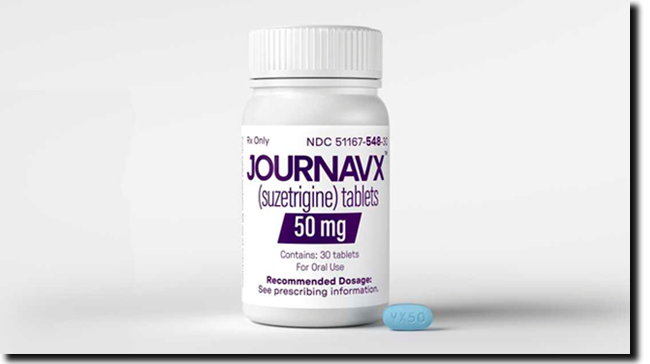
Why a new opioid alternative is out of reach for some pain patients


The Food and Drug Administration approved a new non-opioid drug earlier this year called Journavx. It's a pill for severe acute pain that works by blocking plain signals from where someone hurts.


It's offered hope for the 1 in 5 Americans who suffer from chronic pain, but it's also just out of reach. Journavx is the first new kind of painkiller in more than 20 years, and the medical community is cautiously optimistic that Journavx doesn't have the same addictive potential as opioids do.


But the new pills are expensive, and not everyone has been able to access them, thanks to a narrowly-focused FDA approval and limited insurance coverage.


Read More


New Dates Just Announced

Mark your calendars!


July 26, August 30,

September 27, October 25,

November 15, & December 13


  • ABIPP Part I

Four (4) hour virtual exam


  • ABIPP Path – Combined CCPM/ CSM Exam

For those with subspecialty in Pain Medicine

Two (2) hour virtual exam


  • ABIPP Competency Exam in IPM

For those without primary board certification

Two (2) hour virtual exam


  • ABIPP Competency Exam in Regenerative Medicine

Two (2) hour virtual exam


  • Controlled Substance Management Competency Exam

Two (2) hour virtual exam


  • Documentation, Coding, Compliance, Practice Management Competency Exam

Two (2) hour virtual exam

Exam Dates

ARPA-H Launches Program to Restore Brain Function and Return Patients to Independence

Development of regenerative grafts would aid stroke and injury victims, ease strain on families and the health care system, and position the U.S. as a leader in brain repair technology


The Advanced Research Projects Agency for Health (ARPA-H), an agency within the U.S. Department of Health and Human Services (HHS), today unveiled its groundbreaking Functional Repair of Neocortical Tissue (FRONT) program, a transformative initiative to restore brain function and position the U.S. as the global leader in brain repair technology. The FRONT program aligns directly with the priorities set by President Trump and Secretary Robert F. Kennedy, Jr., demonstrating a strong commitment to innovation, public health, and the economic well-being of the American people.


“Millions of Americans are living with the damage caused by strokes and traumatic brain injuries. Current treatments are not enough. ARPA-H hopes to deploy regenerative medicine to transform the treatment of neurological diseases and relieve the suffering,” said HHS Deputy Secretary Jim O'Neill.


The neocortex, the largest part of the brain, is critical for sensory perception, motor control, and decision-making. Damage to this area—due to conditions like stroke, traumatic injury, or neurodegeneration, such as Alzheimer's disease—has long led to irreversible damage, leaving individuals dependent on costly therapies or caregivers. The FRONT program aims to change that, using cutting-edge neurodevelopmental principles and stem cell technology to regenerate brain tissue and restore lost functions.


Read More


We're excited to let you know that the new ASIPP Community, hosted by DocMatter, is now live!


The ASIPP Community on DocMatter will serve as a place for members to collaborate around clinical and research topics to advance the care of their interventional pain patients.


Click here to be a part of the conversation!


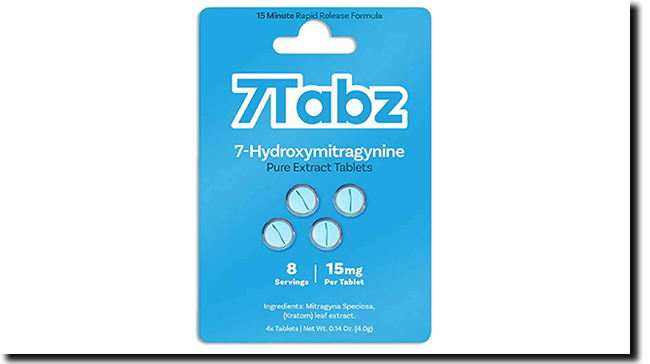
FDA Warns Companies Hawking ‘Legal Morphine’ Products


The FDA has sent warning letters to seven companies for illegally marketing products containing added or concentrated 7-hydroxymitragynine (7-OH), a potent metabolite of kratom.


“This action reflects the agency’s growing concern around novel potent opioid products being marketed to US consumers and sold online and in smoke shops, gas stations, and corner stores,” the FDA said in a statement.


Since late 2023, there has been a surge in “kratom” products marketed as “7-OH,” “7-Hydro,” or “legal morphine,” as reported by Medscape Medical News.


Read More

Did you miss ASIPP's AI webinar?


You can watch it for FREE on ASIPP's YouTube channel!


Click here to watch it now!

Pain Medicine Case Reports (PMCR) and Editor-in-Chief Alaa Abd-Elsayed, MD, PhD would like to invite you to submit case reports and case series to the PMCR journal. Your article will be published free of charge.


Open access journals are freely available online for immediate worldwide open access to the full text of published articles. There is no subscription fee for open access journals. Open access journals are no different from traditional subscription-based journals: they undergo the same peer review and quality control as any other scholarly journal.


Interested in becoming a member of the PMCR Editorial Board?

Editorial board members are asked to review 2-6 manuscripts per year. Please submit your most up-to-date CV to sgold@asipp.org for consideration.


For more information or to submit your articles, click here.

We are excited to announce that Pain Medicine Case Reports (PMCR) journal (eISSN 2768-5152) has been accepted for inclusion in MEDLINE and PubMed, the prestigious bibliographic database of the U.S. National Library of Medicine. PMCR, a companion publication to the prestigious Pain Physician journal by ASIPP, joins its counterpart in achieving indexing in both MEDLINE and PubMed, marking ASIPP’s dual presence in these renowned databases.


The inclusion of PMCR journal in MEDLINE signifies a higher level of selectivity, as MEDLINE consists of the top 5,200 biomedical journals. This indexing also means that articles from PMCR will be searchable using NLM Medical Subject Headings (MeSH terms) and other metadata.


The selection for MEDLINE follows a rigorous evaluation process by reviewers from the Literature Selection Technical Review Committee (LSTRC). According to their criteria, the scientific quality of a journal’s content is the primary factor considered for indexing.


We extend our congratulations to the Pain Medicine Case Reports Editor-in-Chief, Deputy Editor-in-Chief, Journal Team, and Editorial Board for this achievement, which underscores the significance and excellence of this esteemed journal.


CASE REPORTS

Prospective Case Series Evaluating the Efficacy of Radiofrequency Ablation With Stryker Venom Technology in the Treatment of Lumbar Facet Joint Pain

Emily A. Panteli, MCh, and Aaron K. Calodney, MD


A Case of Transverse Myelitis With an Intrathecal Pump: A Case Report

Jimmy Wen, BA, Shannon Dwyer, BA, Burhaan Syed, BS, Sugamjot Badhan, BS, Ramy Khalil, BS, and Foad Elahi, MD


RESTROSPECTIVE STUDIES

Correlation Between Meckel’s Cave Size and lohexol Dosage in Percutaneous Microballoon Compression for Trigeminal Neuralgia of Aged Patients


Yong Yu, MM, Jing Wang, MD, Chuanxi Peng, MB, Chengxing Qian, MM, Renbo Shen, MM, Yanqing Zuo, MB, Weibang Liang, PhD, Jie Chen, MB, and Yulong Chong, MD


Efficacy of Nerve Blocks for Managing Refractory Posttraumatic Headaches

Christopher File, BSA, Xiang Fang, MD, PhD, Rowaid Ahmad, MBBS, Ahmed Harazeen, MD, John Jung, BS, Fauwad Ahmed, MD, Naveed Ahmad, BS, Sean Pappolla, Remi Nader, MD, and Miguel A. Pappolla, MD, PhD


ASIPP is now in collaboration with Curi Medical Liability Program


Since this malpractice insurance program officially launched in November 2018, ASIPP has signed up hundreds of providers with an average savings of 30%. This is professional liability insurance tailored to our specialty and will stand up for us and defend our practices. 


Curi is a full-service advisory firm that serves physicians and their practices. Their valued advice is grounded in your priorities and elevated in your outcomes. They are driven by a deep understanding of your specific circumstances in medicine, business, and life. To read a few important points to keep in mind about the program, including discounts, administrative defense, cyber coverage, aggressive claims handling, and complimentary risk management CME activities, visit our website.


IMPORTANT UPDATE

SPRINT no longer misclassified as PNT 


SPR is happy to announce an important update regarding Humana Medicare Advantage. As of May 1, Humana is now recognizing SPRINT as a PNS therapy. Previously, SPRINT was categorized as PNT (Percutaneous Nerve Stimulation), which allowed denials on the grounds that the therapy fell outside the NCD.


Additional details are as follows:

Payer: Humana Medicare Advantage (click here to view policy)

Policy Title: Peripheral Nerve Stimulators

Policy changes: SPRINT no longer misclassified as PNT and is now appropriately classified as PNS. Humana is applying the Noridian Medicare LCD criteria to ALL PNS devices – Including SPRINT PNS!

Effective Date: 5/1/2025


Click here to view a PDF of the official policy update.


Group Purchasing Organization Offer Better Pricing and Creates Added Value


ASIPP has formed a partnership with Henry Schein and PedsPal, a national GPO that has a successful history of negotiating better prices on medical supplies and creating value-added services for independent physicians. Working with MedAssets, PedsPal provides excellent pricing on products like contrast media that alleviate some of the financial pressures you experience today.


Learn More


For updated information concerning tariffs on products, click here.


ASIPP, Fedora Healthcare Solutions Partnership


ASIPP offers our members the benefit of a unique revenue cycle management/ billing service.


We have received a tremendous amount of interest in the ASIPP billing and coding program.


Click here to learn more about the negotiated rate for practices and more!

Like and follow ASIPP® on Facebook, X, LinkedIn, and YouTube for the most up-to-date news related to you, your practice, and your patients!