A New Direction for the Dirty Ditch
Microsoft Investment in Lamparek Creek Reaches Key Milestone
| | |
|
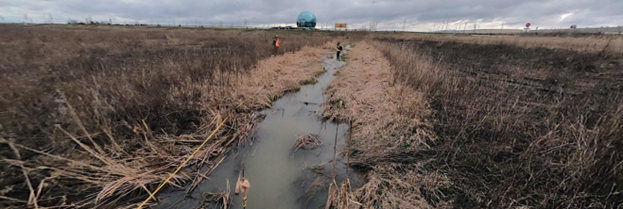
Natural stream corridors aren't straight and void of wetlands. Streams in the Root-Pike basin used to meander, move, and interact with the marshes. After settlement occurred, many streams were ditched, bermed, and straightened for traditional agricultural. Wetlands were drained directly to the river through underground tiles. As you can see, these practices created major environmental consequences.
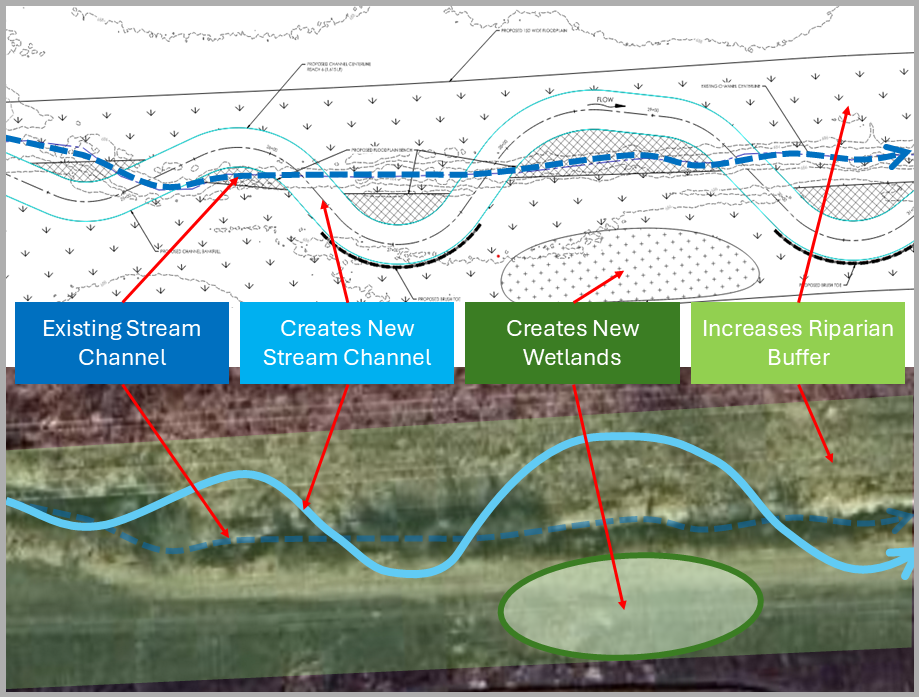
Bringing back Lamparek Creek's sinuosity (aka "wiggles") and adjacent marshes are essential to its rebirth. With the concept design now complete, this unique project has reached a key milestone.
|
 |
|
Microsoft’s commitment to southeastern Wisconsin has already been significant and far-reaching. Their voluntary restoration of one of the Pike River’s most degraded tributaries is based on an ongoing partnership idea from Root-Pike WIN. Integrating ecosystem restoration with corporate campuses here in Mount Pleasant breaks the mold of traditional development.
Flowing through the middle of Microsoft’s new data center site, Lamparek Creek has suffered long enough as a modified agricultural drainpipe. The challenge of its multi-million-dollar transformation from dirty ditch to clean creek is now underway.
|
With site research and concepting complete, there's a much brighter future for Lamparek Creek. |
|
Using the Pike River Plan
Since the project was announced in July of 2023, Microsoft, Stantec and Root-Pike WIN have advanced the project into the 30% design phase. There is incredible satisfaction in seeing an idea born in 2017 become reality in 2024.
Lamparek Creek, or 'ditch' as it was once called, has been in decline for decades. The stream is categorized as “highly impaired", an assessment based on the substantial water quality, habitat, and macroinvertebrate data from the EPA and DNR-approved Pike River Watershed Restoration Plan (2013).
As a project partner, Root-Pike WIN has provided this data from the Pike River Plan to better inform the conditions and desired outcomes. Today, we see this design unfolding and addressing the water quality and habitat improvement recommendations of the Pike River Plan. Root-Pike WIN continues to conduct water quality and habitat surveys on the creek given the constant changing conditions around the datacenter development.
|
 | Lamparek Creek’s stream buffer was determined to be “very poor” by the EPA/DNR-approved Pike River Plan. |
|
Historical Water Quality
Root-Pike WIN has been collecting water samples at County Highway H, just downstream of the Foxconn development, since November 2021. Of the seven monitoring events that have occurred, total suspended solid (TSS) concentrations have exceeded recommended levels five out of seven times. Total phosphorus concentrations have exceeded recommended levels three out of six times. Nitrogen and E. coli were both found to be within the recommended ranges. Dissolved oxygen levels did not meet criteria during one monitoring event, but this was likely due to low water levels and limited flow during the drought conditions of summer 2023.
|
The Microsoft / Root-Pike WIN partnership addresses serious water quality issues in the Lamparek's headwaters. |
|
Water Quality Monitoring
Beginning in July 2024, Root-Pike WIN began collecting water samples at three key sites throughout Lamparek Creek’s route. Samples will continue to be collected in 2024, 2026, and 2028. All water samples are analyzed by the Racine Health Department and University of Wisconsin-Oshkosh Laboratory. The broader picture of water quality in Lamparek Creek will continue to influence the design and provide meaningful before and after results.
|
| |
|
Importance of Macroinvertebrates
Macroinvertebrates are crucial in freshwater ecosystems because they serve as bioindicators of water quality and form the base of a stream's food chain.
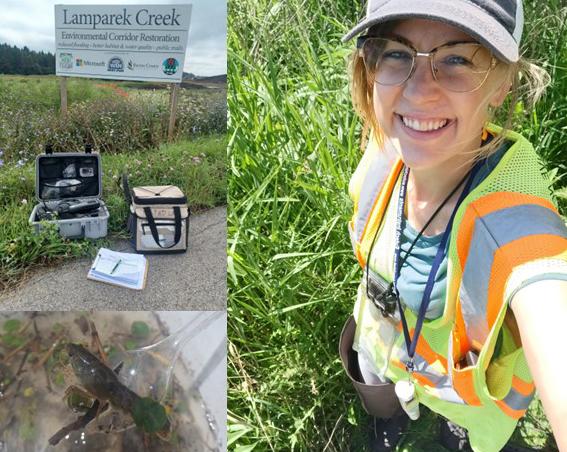
Macroinvertebrate surveys were conducted in June 2024 at three sites by Root-Pike WIN’s Kristi Heuser. All three sites received “Poor" scores due to limited diversity of macroinvertebrates and a lack of pollutant intolerant species. These scores mimic data collected in the Pike River Plan from 2013, which shows the stream corridor needs significant help.
| | | |
Macroinvertebrate data will be collected biannually in June and September during 2024, 2026, and 2028 throughout Lamparek Creek. Before and after results in the macroinvertebrate population will also help tell the story of transformation. |
| |
|
Undoing the Past
With no disrespect to past generations who fed the community, past agricultural modifications to the stream and its surrounding banks will need to be undone. This “undoing” includes the following:
- Sloping the angles of spoil berms back to support dynamic rises and falls in the floodplain
- Re-meandering the straightened stream channel to reduce velocities and create habitat in the stream bends
- Adding instream habitat to build back the aquatic food chain and increase dissolved oxygen
- Replanting the entire riparian zone along the stream with pollinator and erosion reducing native vegetation.
|
|
Stantec’s new concept design puts much-needed wiggles and wetlands back in Lamparek Creek. | |
|
Return of Native Fish
As this data confirms, Lamparek Creek fishery is also in bad shape. A recent fish survey by the Wisconsin Department of Natural Resources revealed a severe lack of diverse and tolerant fish species. In other words, the stream lacks a high-quality native fishery once common in the Pike River watershed more than a century ago. Where Brook Trout could still be found fifty years ago, today there are none.
The new design reflects the need for more traditional stream habitat in the form of bends where fish feed, rest, and hide. The restoration strategy also includes the creation of critical spawning grounds for native gamefish and habitat for forage fish lacking in the watershed’s food chain.
| |
Can Lamparek Creek be a Northern Pike nursery? That’s the plan. | |
|
Data Centered Design
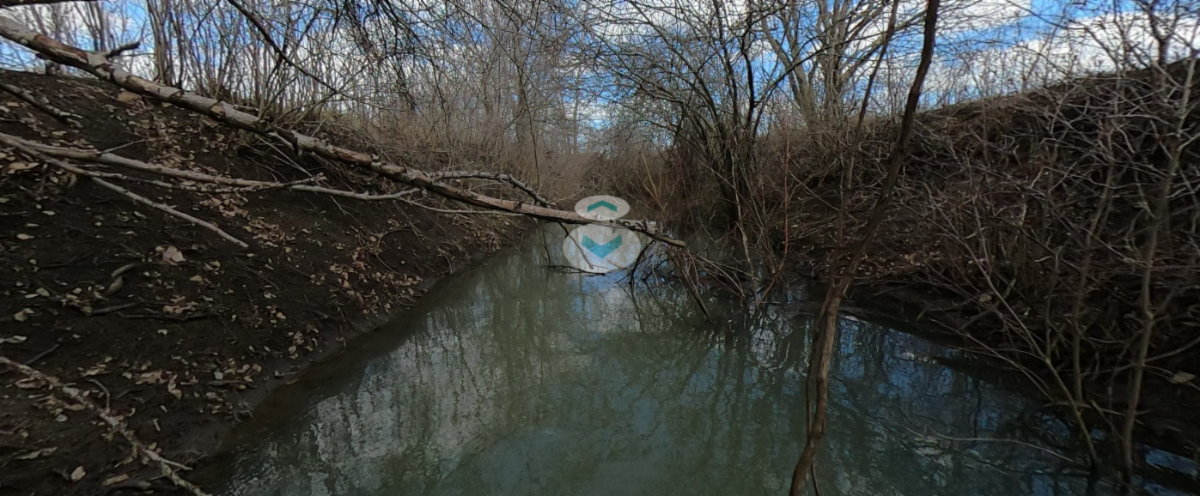
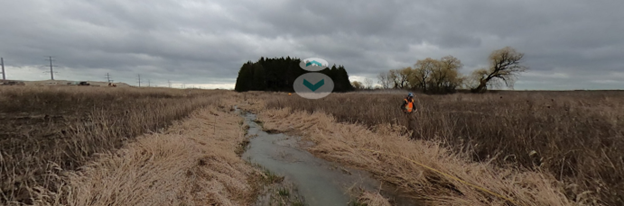
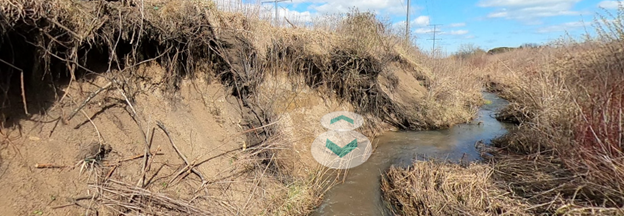
To ensure the design meets the challenges, Microsoft’s engineering partner, Stantec, is incorporating collected data, field assessments, water quality monitoring results, macroinvertebrate studies, and vegetation inventories. Stantec even developed a site where the on-the-ground site survey could be accessed and walked virtually. The data center's new stream will have a data-centered design.
| |
Restoring the eroded stream corridor will shape these eroded banks back to reconnect the floodplain. | | All the various data and monitoring results have been analyzed and incorporated into the nearly complete 30% design. Once complete, the design will be perfected, with construction documents finalized this fall. Moving into 2025, the plan will progress into the permitting and bidding process. Restoration of Lamparek Creek is anticipated to begin in summer 2025. | |
Starting at the source: engineers measure the critical headwaters of the Lamparek Creek just East of CTH H. | |
|
Making Results Meaningful and Measurable
While the restoration of this creek is not mandatory for Microsoft, the project represents a new way for corporations to make meaningful and measurable contributions to the local environment. Root-Pike WIN presented Microsoft with the challenge to turn one of southeastern Wisconsin’s worst streams into one of its best. The challenge was accepted, and the hard work is underway.
For our community, this project is a much-needed environmental transformation. The Lamparek Creek's "undoing" was unlikely to happen without a development partner willing to go beyond the status quo.
Let us know what you think about Lamparek's transformation!
Dave Giordano
Executive Director
dave@rootpikewin.org
| |
The Root-Pike Basin Watersheds | | | | |