|
Lent 2025: Doing What's Right is its Own Reward
by Fr. Michael S. Murray, OSFS
| |
|
“When you give alms, do not blow a trumpet before you, as the hypocrites do in the synagogues and in the streets to win the praise of others. Amen, I say to you, they have received their reward. But when you give alms, do not let your left hand know what your right is doing so that your almsgiving may be secret. And your Father who sees in secret will repay you. And when you pray, do not be like the hypocrites, for they love to pray standing in the synagogues and on the street corners to be seen by others. Truly I tell you, they have received their reward in full. But when you pray, go into your room, close the door and pray to your Father, who is unseen. Then your Father, who sees what is done in secret, will reward you. When you fast, do not look somber as the hypocrites do, for they disfigure their faces to show others they are fasting. Truly I tell you, they have received their reward in full. But when you fast, put oil on your head and wash your face, so that it will not be obvious to others that you are fasting, but only to your Father, who is unseen; and your Father, who sees what is done in secret, will reward you." (Matthew 6:2-4; 5-6; 16–18)
Jesus acknowledges that almsgiving, praying and fasting are noble activities. Jesus warns us, however, not to perform them merely to make a positive impression on other people. By contrast, Jesus urges us to pray, give alms and fast to more deeply appreciate the goods that we enjoy, to give thanks for those goods and to more generously share those goods with others.
|
|  |
|
We know the old saying: don’t judge by appearances. Francis de Sales would also encourage us not to give alms, pray, or fast merely for appearances’ sake. For him, these noble practices must go deeper, making each of us nobler in the process. In his "Introduction to the Devout Life," he wrote:
“Someone attached to fasting will consider himself devout because he doesn’t eat, even though his heart is filled with bitterness; and while, out of love for sobriety, he will not let a drop of wine, or even water, touch his tongue, he will not hesitate to drench it in the blood of his neighbor through gossip and slander. Another will consider himself devout because all day long he mumbles a string of prayers, yet remains heedless of the evil, arrogant and hurtful words that his tongue hurls at his servants and neighbors. Yet another will readily open his purse to give alms to the poor but cannot wring an ounce of mercy from his heart to forgive his enemies. Another still will pardon his enemies, yet never even think of paying his debts; it will take a lawsuit to make him do so.”
To the extent that we more intentionally pray, fast and give alms this Lenten season, let’s do what is right for its own reward: the reward that comes with bringing out more of the good in ourselves and bringing out more of the good in one another.
| |
|
BLA 2025 Spotlight: “Extending Our Branches”
Of all the encouraging/consoling words spoken by Jesus throughout the four Gospels, these are the ones that most deeply and profoundly impacted the heart of St. Francis de Sales:
“Come to me, all you who labor and are burdened, and I will give you rest. Take my yoke upon you and learn from me, for I am meek and humble of heart; and you will find rest for yourselves. For my yoke is easy, and my burden light.” (Matthew 1:28 – 30)
I think we can apply these same words to the ministries funded by the annual Bishop’s Lenten Appeal. So many of the people the BLA serves are folks who are worn down by the burdens of life that might otherwise be overwhelming. These ministries provide support by both sharing in and lightening the burdens of so many people less fortunate than we, giving them not only rest, but strength, courage, and hope.
In a conference to the Sisters of the Visitation, Francis de Sales observed: “In our love for others…we should allow love’s branches to spread out as far as they possibly can.” How might we extend the branches of our love and the love of Jesus to others by offering some of our treasures to the Bishop’s Annual Appeal?
| |
|
Walking Christ's Final Hours
by Elizabeth Connell Wright
In 2015, I was in Killeen, Texas, preparing to take our Catholic Women of the Chapel ministry group into the Stations of the Cross when our priest called to tell me he couldn’t make it.
“Then who should lead it?” I asked.
“You,” he said.
Until that moment, I honestly did not know that the devotion of Stations of the Cross could be led by lay people — because I had always prayed it with a priest or deacon, I had assumed that was a “requirement” of the devotion. In a faith as rich as ours, there are always new discoveries — in fact, this is one of my favorite aspects of Catholicism: there is always something new to learn or to delve deeper into with our faith. Though I have been devoted to Stations of the Cross for as long as I can remember, I learned something new that day and perhaps you will also learn something you didn't know about our Stations of the Cross tradition.
Throughout history, this centuries-old devotion has evolved to have basic guidance and requirements, while remaining open to many different interpretations, lenses, and cultural influences — meaning every iteration can be unique. You can have varying experiences depending on the church, or even a changing experience from week to week in the same church. Booklets can be traditional, modern, linked to social justice issues, or written from the lens of a particular person, such as Mary. The reflections and prayers can even be unique to the parish — for example, the version we pray on Good Friday was written by our H.S. Youth Ministry and our bilingual version is a collaboration of many SJN ministries. At the same time, there are consistencies that evolved throughout history to formulate the basis of the devotion as we know it.
Stations of the Cross are not actually wholly based on Scripture. Key figures and events in the most popular traditions of the devotion, such as Veronica and the falling of Jesus three times, are not taken from the Bible — this doesn’t mean these stations didn’t happen, it just means this is tradition not documented by Scripture. During the Holy Year of 1975, Pope Paul VI approved the first purely Scriptural Stations of the Cross. A version of these drew more popularity when Pope John Paul II used the Scriptural Way of the Cross to lead the traditional practice at the Coliseum on Good Friday in 1991.
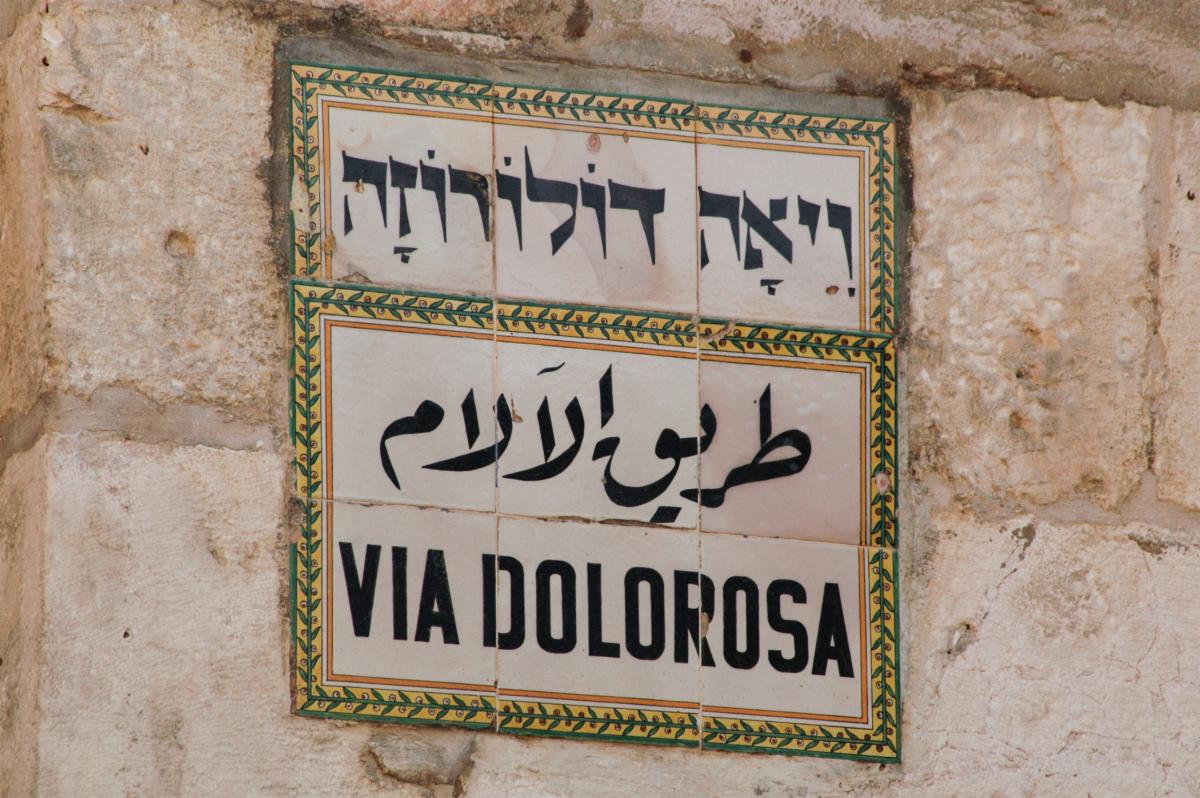
The Stations of the Cross that we practice today are believed to originate from the earliest days after Christ’s death and Resurrection. The devotional practice of Stations of the Cross, also commonly called the Way of the Cross or Via Crucis in Latin or Via Dolorosa (the Way of Sorrows) in the Holy Land, is believed to be first walked by Mary herself and other disciples of Jesus, who followed the path of his final hours in their continued devotion to him.
| |
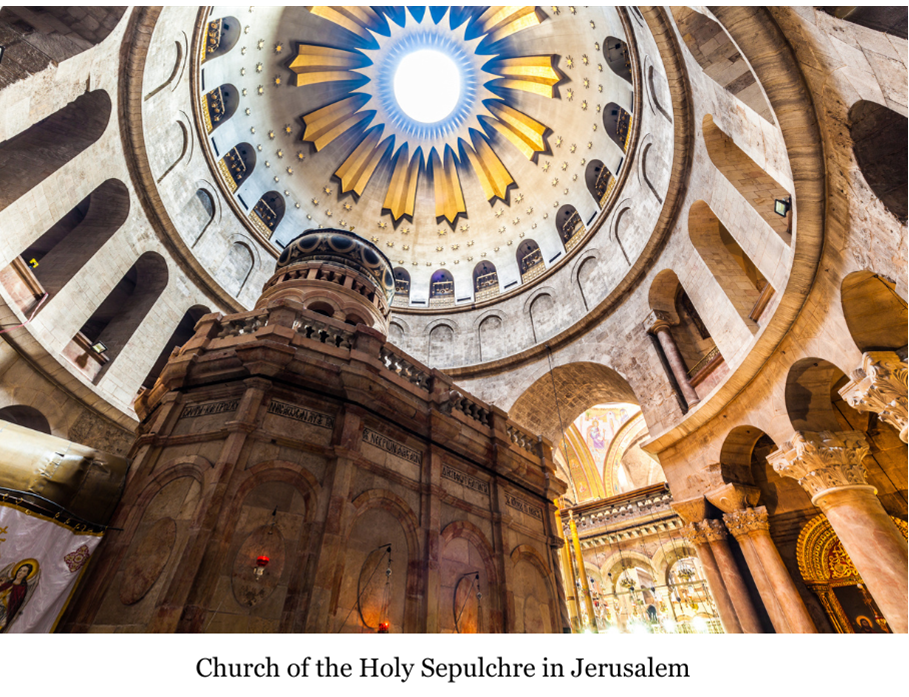
When Christianity was finally legalized by the Roman Emperor Constantine in 313, the various stops along the Via Dolorosa were marked. Around 335, the Church of the Holy Sepulchre was built in the place that was believed to be Calvary, where the last five stations happened: Jesus stripped of his garments, nailed to the cross, dies on the cross, is taken down from the cross, and is finally laid in the tomb. Though Christ also rose from the dead here, the Stations end on the laying in the tomb because we practice these as part of Lent, a penitential season of our Church. In these forty days, we patiently wait for the glory of the Resurrection.
St. Jerome (342-420), living in Bethlehem in his later life, witnessed the pilgrims who came from throughout the Roman Empire to walk the Via Dolorosa. In the fourth century, a French Christian pilgrim named Egeria wrote a detailed account of two hundred pilgrims accompanying the Bishop of Jerusalem in a candlelight procession beginning at the site of Jesus’ Holy Thursday agony with a prayer, a hymn, and a Gospel passage reading at each stop as they approached Jerusalem. She captured the zeal of the pilgrims who descended from far regions to walk in Christ’s footsteps. At this time, the Way was largely determined by one’s own interpretation — there were versions that had as few as seven stops and as many as 37; there were devotions that started with the death of Christ, working backward to the place where he was condemned to death, and others ending with his burial, as we do today. Pilgrimages of the Via Dolorosa eventually settled to a singular route that started at Antonia Fortress, the site where Pilate condemned Christ Jesus to death and proceeded to the Holy Sepulchre.
During the fifth century, ideas of reproducing images of the Way of the Cross first surfaced. Notably, around the year 432, St. Petronius, bishop of Bologna, erected the Basilica of Santo Stefano (St. Stephen), known as the Seven Churches, as a reflection of some of the stations in the Holy Land; many refer to the complex as the “Holy Jerusalem of Bologna.” In 1342, Pope Clement VI first began to give some guidance on this devotion and appointed Franciscans as custodians of the devotion. Franciscans had held a consistent presence at the actual sites in the Holy Land since St. Francis of Assisi, following his own pilgrimage to the Holy Land, sent Franciscan missionaries there to assist pilgrims in 1219.
In 1462, Wiliam Wey, an English Christian pilgrim, visited the Holy Land, documenting his visit in detail, and he is credited with coining the term we commonly use today, “Stations of the Cross.” His pilgrimages are colorfully detailed in the publication of his journals, “The Itineraries of William Wey,” which read something like an Old English Rick Steves travel guide. (“Itinerary for a Pilgrimage to Jerusalem” sample excerpt: “Ye shall tarry in the Holy Land thirteen or fourteen days. Also, take good heed of your knives and other small things that ye bear upon you, for the Saracens will go talking with you and make good cheer but they will steal from you what ye have, an' they may.”)
|
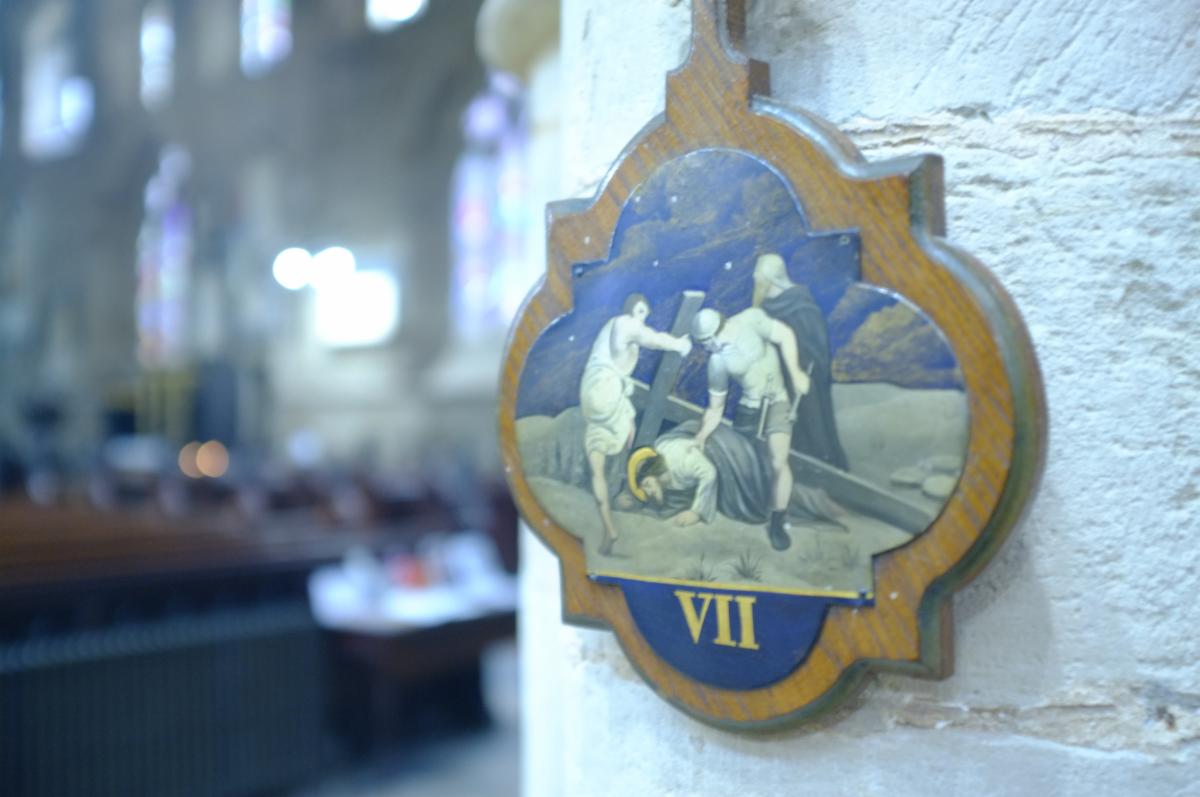
 | | In 1686, Pope Innocent XI recognized that difficulties of travel were making a Holy Land pilgrimage unobtainable to many and decreed that Franciscans could depict the events of the Way of the Cross in their churches, making the devotion accessible to a greater number of pilgrims. In 1731, Pope Clement XII extended the devotion to allow any church to depict and construct stations; he also fixed the number of stations at 14, which remains today. By 1742, Pope Benedict XIV was encouraging every Catholic church to display stations. There were two Franciscans at that time who wholeheartedly embraced this mission: St. Leonard of Port-Maurice, known as the “Preacher of the Way of the Cross,” who erected more than 572 stations throughout Italy between 1731 and 1751, and St. Alphonsus Ligouri, who authored “The Way of the Cross,” which was widely used for the devotion in American churches throughout the 19th and 20th centuries and remains a standard edition today. For all their efforts, the Franciscans are largely credited with the widespread devotion to Stations of the Cross. Today, you can walk into any Catholic Church, and you will find the fourteen Stations of the Cross — which may be as simple as wooden crosses or as elaborate as intricate carvings — lining the interior wall. In many places, you will also find outdoor Stations of the Cross.
As part of our penitential season of Lent, like Catholic Churches around the world, we will embrace this popular devotion. Each Friday, beginning March 6, our ministries will take turns “hosting” the Stations of the Cross and our soup supper fellowship. English Stations of the Cross will be prayed in the Church at 6:30 p.m., and Spanish Stations will be in the Chapel. On April 4 and 11, Stations of the Cross will be bilingual in the Church. We hope you will join us in this traditional devotion that is nearly as old as our Catholic faith, and afterwards, please enjoy soup, bread, and fellowship— another Catholic tradition to be cherished!
| |
Lent is a great time to visit The Franciscan Holy Monastery of the Holy Land in America, here in D.C., for a free tour of the Monastery church, including full-size replicas of the Mount Calvary and Holy Sepulchre shrines in Jerusalem, plus their Stations of the Cross. For a less traditional experience, the Smithsonian American Art Museum in D.C. has its own Stations of the Cross exhibit, that depicts the suffering of Christ reflected in the paths of so many people — migrant workers, victims of violence and discrimination, soldiers, prisoners, the poor, grieving, and mentally ill — throughout America’s history. | |
|
St. Joseph, My Intercessor
by Bill Lupinacci
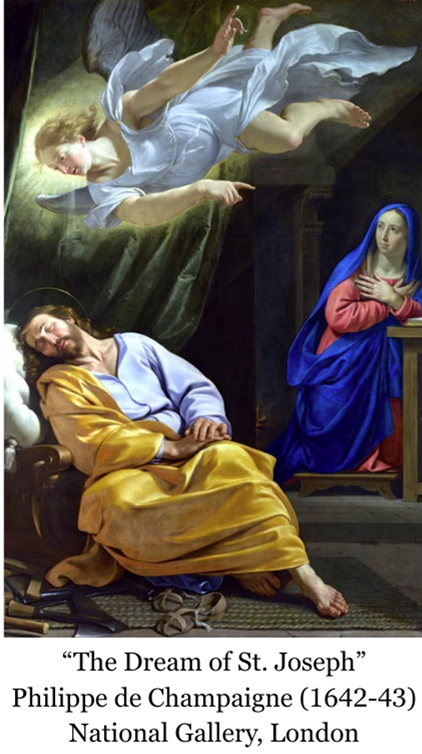
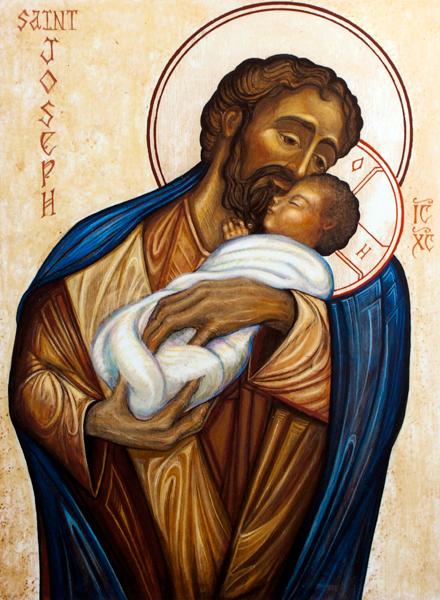
On my nightstand, next to our bed, I have a statue of a sleeping St. Joseph. Under that statue, I place my requests for St. Joseph’s intercession each night, and I sleep soundly knowing all that troubles me, is in God’s hands. Pope Francis has the same statue next to his bedside and places his prayer requests under St. Joseph as well. In my office, a statue of St Joseph standing with baby Jesus in his arms, is on the top shelf of my bookcase, overlooking my desk and all that I do during my workday. After I ask myself “what would Jesus do?” I often follow that question with “what would Joseph do?” St. Joseph plays a prominent role in my life and I often find myself relying upon his example to guide me in my life.
St. Joseph has two feast days: the first will be March 19, the feast day of St. Joseph, husband of Mary, and May 1 is the feast day of St. Joseph the Worker. He is the patron Saint of the Universal Church, families, fathers, expectant mothers, travelers, immigrants, house sellers and buyers, craftsmen, engineers, and working people, among others. Although the popular conception of his career was that of a carpenter, we know that a more accurate description is that he was a "tekton," which was a craftsman and builder — beyond just carpentry. We know that he was not a rich man, because he brought two turtledoves as a sacrifice for the temple for Jesus’ circumcision, which was only permitted to those who could not afford to bring a sacrificial lamb. Legally, Jesus was an heir to the house of King David from whence Joseph was descended, but physically Jesus is descended from the house of David through his mother Mary’s lineage.
We know from Joseph’s example that he was a man of integrity, that is, his heart, mind, and soul all worked together, in the same direction, seeking God’s will. We know that Joseph was an obedient man always putting God’s will ahead of his own. When angels came to Joseph in his dreams, he obediently followed their instructions. We know that Joseph believed in the primacy of conscience. He followed his conscious first and foremost ahead of cultural norms or even the law. We know this because when he discovered that Mary was pregnant, the cultural norms and laws of the day required him to turn her over for punishment, which likely included being stoned to death. But his conscience told him to put her away quietly so she would not be harmed.
St. Joseph is the foster father of Jesus and through the Grace of God, my wife Jean and I, are foster grandparents of two wonderful children. From our experience, we know that Joseph could not have loved Jesus any more even if He was his own son by blood. Foster parenthood reinforces the truth that we are all part of the same Body of Christ and all equally precious in God’s eyes.
| |
The apocryphal date of Joseph's death was roughly 20 A.D., meaning Joseph was not alive to see Jesus public ministry or His death and resurrection. But he likely died with Mary and Jesus by his side, and so Joseph is also known as the patron of a happy death. This notion of a happy death has intrigued me for many years, and I pray for my own death and the deaths of those whom I love to also be happy deaths. As a paramedic and a hospital orderly in my early years, I witnessed a lot of death, and I saw many troubled souls experiencing a somewhat tortured and fearful death. I also saw many faithful Christians depart this world content and confident in God’s soul-saving grace — a happy death.
Devotion to St. Joseph brings us closer to Jesus. Some argue that we should not go through an intercessor to become closer to Jesus. Why not bypass the Saints and go directly to Jesus? But, just as a telescope can bring us closer to the stars, an intercessor can bring us closer to Jesus. Mary said, “My soul magnifies the Lord.” In this way, a devotion to St. Joseph can bring us closer to Jesus.
Fully a third of the Book of Genesis is devoted to a man name Joseph, son of Jacob. Mary’s husband was also Joseph, son of Jacob. This Old Testament Joseph’s life has many parallels to Mary’s husband and, like so many stories from the Old Testament, helps us to better understand the New Testament.
As we approach the Feast of St. Joseph, let us resolve to use the example of his life to magnify the Lord and bring us closer to Jesus, especially during our Lenten season.
| |
|
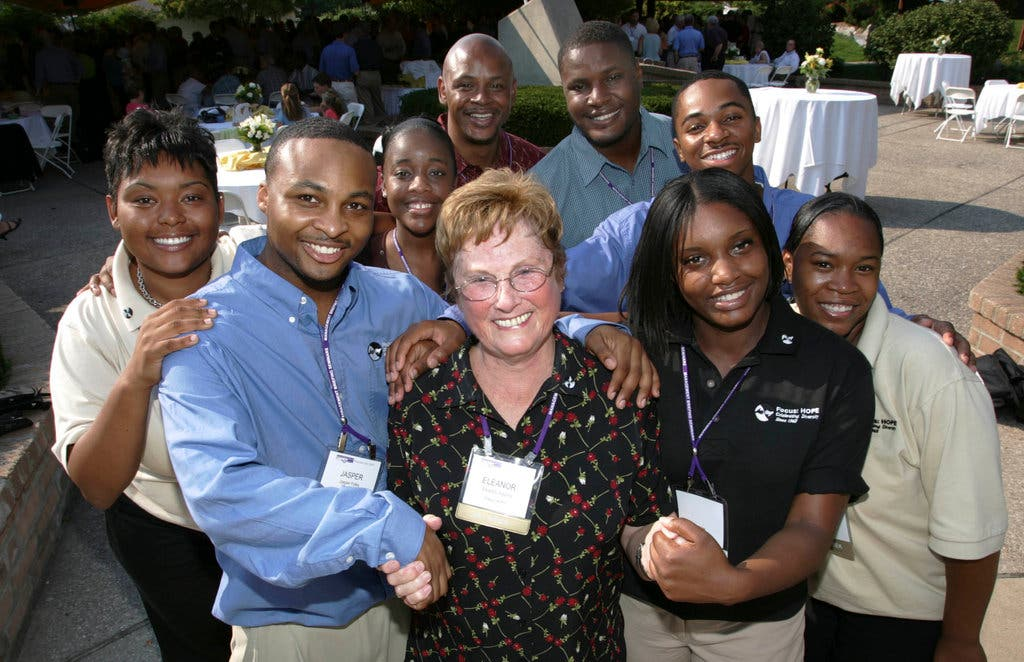
Eleanor Josaitis:
Unsung Hero to Many
by Elizabeth Connell Wright
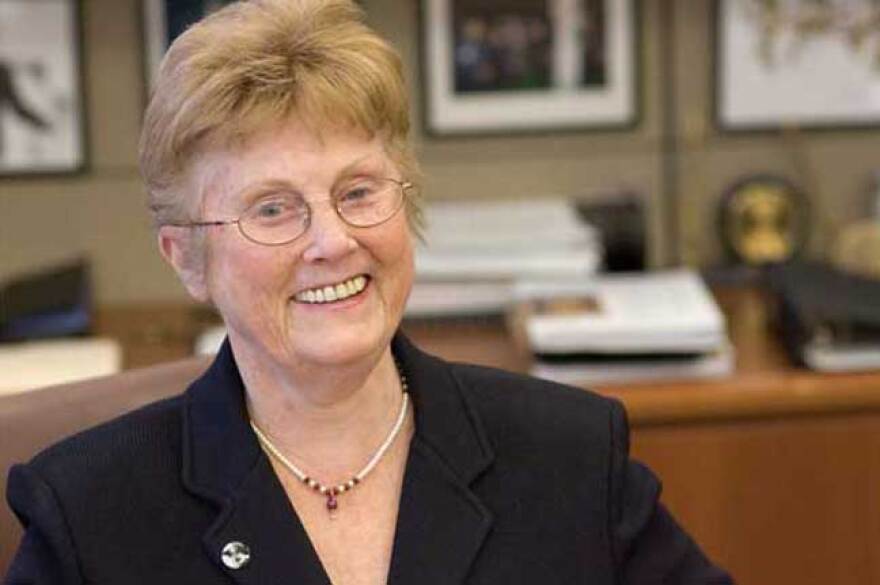
It is always the right time to learn from the great women who have changed our world for the better, but March is the month specifically dedicated to Women's History. There are so many to consider: brilliant women, like Marie Curie, who broke barriers for women in the field of science. Courageous women like Harriet Tubman, who escaped the binds of slavery, and then continued to risk her life to save countless others. Women like Mother Teresa, who dedicated her life to caring for the most vulnerable people among us, the sick and poor discarded by society. These extraordinary women, and so many others throughout history, loom larger than life. Allow me to tell you about a great woman you might not know: Eleanor Josaitis — a seemingly ordinary woman — a woman perhaps like your neighbor or a friend or even yourself, who chose to do something extraordinary with her life.
Eleanor Josaitis was born Eleanor Mary Reed in 1931 in Detroit and lived a pretty unremarkable life until 1965. She married Donald Josaitis and was raising their five children in Taylor, Michigan, about thirty miles outside of Detroit. In 1965, Eleanor was watching television when the program was interrupted. Eleanor later recalls this turning point in the trajectory of her life: “I was sitting in my living room watching a show on the Nuremberg trial and being caught up with the emotion of that trial, and then having the television series interrupted long enough to show me the Selma, Alabama march when the cameras took me into that march and showed the police horses riding through the crowds with the cattle pro-prodders knocking people over and listening to people scream, and seeing people fall, and seeing the troops come through. And I remember sitting there what seemed to be hours saying to myself, ‘What is the difference between Nazi Germany and the United States of America? What would I have done if I'd lived in Germany? Would I have tried to stop it in any way? Would I have been involved? Or would I have turned my head?’ And then asking myself, ‘What am I doing now? Am I doing all that I should do? Should I be doing more? What should I be doing, and what can I do?’”
A parishioner at St. Alfred Catholic Church in Taylor, Eleanor was already inviting Fr. William Cunningham, her pastor, to her home after Mass to discuss the tension in America. Eleanor was confused and concerned about the violence and the undertone of hate growing around her. On July 23, 1967, Eleanor was attending Mass at Sacred Heart Seminary in Detroit when she looked out the window and saw smoke and heard sirens; she was told to vacate the city as fast as possible. The civil unrest had come to Detroit, and soon troops were deployed to the city. With 43 deaths, Detroit became the bloodiest of the uprisings across America in the summer of 1967. When many of her neighbors were living in fear of the spread of violence, Eleanor knew this was her time to act. She called her friend and pastor, Fr. Cunningham. They collected food and clothing and returned to Sacred Heart Seminary the very next day, they walked the scarred streets of Detroit, and they formed a plan to address the root cause of the violence and injustice.
| |
By 1968, Eleanor and her husband decided that in a time of deep divide, they wanted to be a bridge. Despite criticism from neighbors and threats from their family to disown them and challenge them for custody of their five children, Eleanor and Donald Josaitis moved into an integrated neighborhood in Detroit.
Archbishop Allen Vigneron recalled Eleanor's response when many others wanted to flee Detroit, "Eleanor Josaitis decided not only to stand fast, but to do all she could to bring the love of Christ to a people so badly wounded by violence and division. The decision she and Fr. Bill Cunningham made to stay, to stand with the people of Detroit, has had consequences far beyond our ability to measure."
In March 1968, Eleanor and Fr. Cunningham cofounded Focus: HOPE with the mission statement: “Recognizing the dignity and beauty of every person, we pledge intelligent and practical action to overcome racism, poverty and injustice." Fifty-seven years later, the programs under Focus: HOPE are flourishing and are as vital as ever to the communities surrounding Detroit. Focus: HOPE is a community anchor in the continued fight against racism, poverty, and injustice.
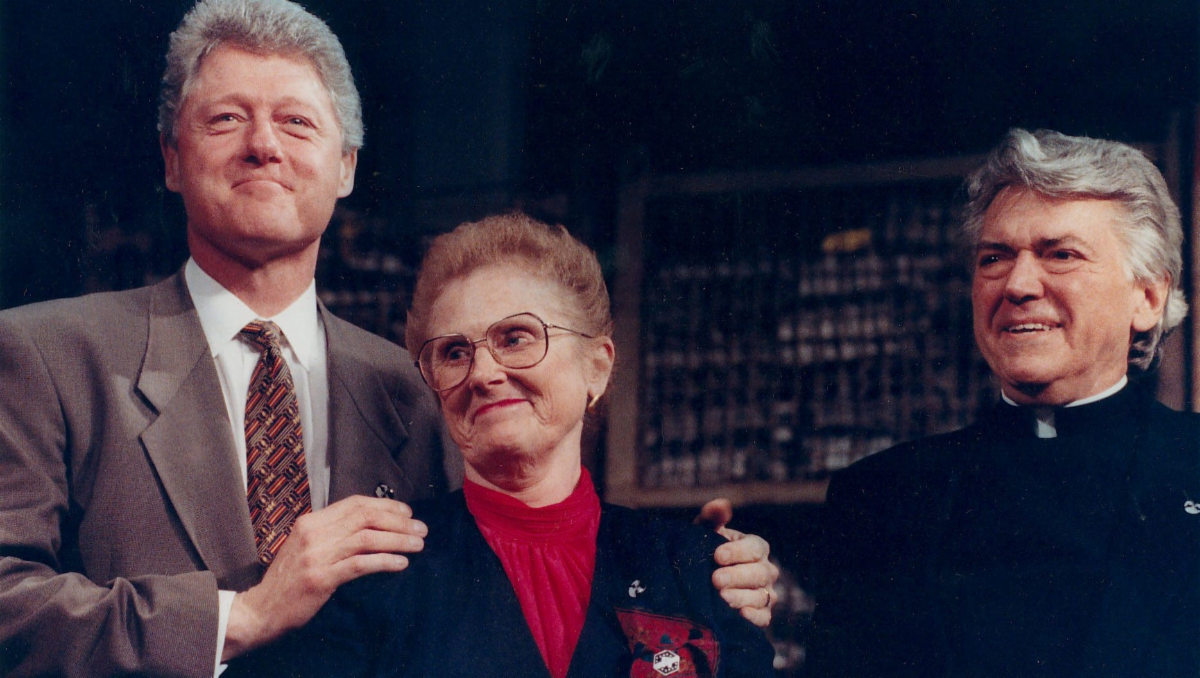
| Focus: HOPE grew into one of the nation’s largest programs to feed and train the poor. They have prepared more than 10,000 men and women for careers that allowed them to have victory over poverty. Eleanor testified before Congress and won Congressional approval of a national food program that has supported hundreds of thousands of low-income families. Today, they also have 269 food distribution centers for seniors throughout Detroit. They provide early learning programs for children as well and have over 7,000 volunteers who partner with them on this mission of HOPE. Eleanor believed and is known to have frequently said, “There’s no greater way to eliminate racism and poverty than to see that people have education, skills, jobs, and opportunities in life.” | |
Together, Eleanor and Fr. William Cunningham ran Focus: HOPE until his death in May 1997. At that point, Eleanor continued to lead until her death in Auguust 2011. U.S. Representative John Dingell of Michigan described her upon her passing: “Eleanor was about changing the world one person at a time.” Detroit mayor, David Bing, said, “She has touched the lives of countless Detroiters and built a legacy of hope and help that will last for generations.” The legacy of Eleanor Josaitis and Fr. William Cunningham shines on today through the continued work of Focus: HOPE.
This woman, who seemed so ordinary one day, became extraordinary all because, inspired by her own faith, she had hope in all people. She is an inspiration to all of us in these continued times of injustice and divide. When asked her philosophy of life in 2000, she said, “I am a firm believer that every person, no matter what their status in life, wants the same thing — to be loved, understood, and appreciated. It makes no difference what our skin color, religious beliefs, or national origin, we want to be loved. To make the world a better place, we all have to understand our brothers and sisters and appreciate our differences and celebrate our sameness.”
Amen, sister, amen.
| |
The Pope's Intention for
Prayer and Action for March
For families in crisis
Let us pray that broken families might discover the cure for their wounds through forgiveness, rediscovering each other's gifts, even in their differences.
| |
Current Mass Times
Saturday: 5 p.m.
Sunday: 7:30 a.m., 9:30 a.m., 11:30 a.m., 2 p.m. (Spanish), 5 p.m.
Monday-Friday: 9 a.m.
Monday-Wednesday-Friday: 12:10 p.m.
Ash Wednesday
6:30 a.m. (Mass), 9 a.m. (Mass), 12:10 p.m. (Service)
6 p.m. (Mass), 8 p.m. (Service in Spanish)
Watch a livestreamed or recorded Mass
Confession
Saturday: 10 a.m.-10:30 a.m. (English)
Sunday: 3 p.m.- 4 p.m. (Spanish)
|
| | | |