October 2026

Activated Charcoal

Background

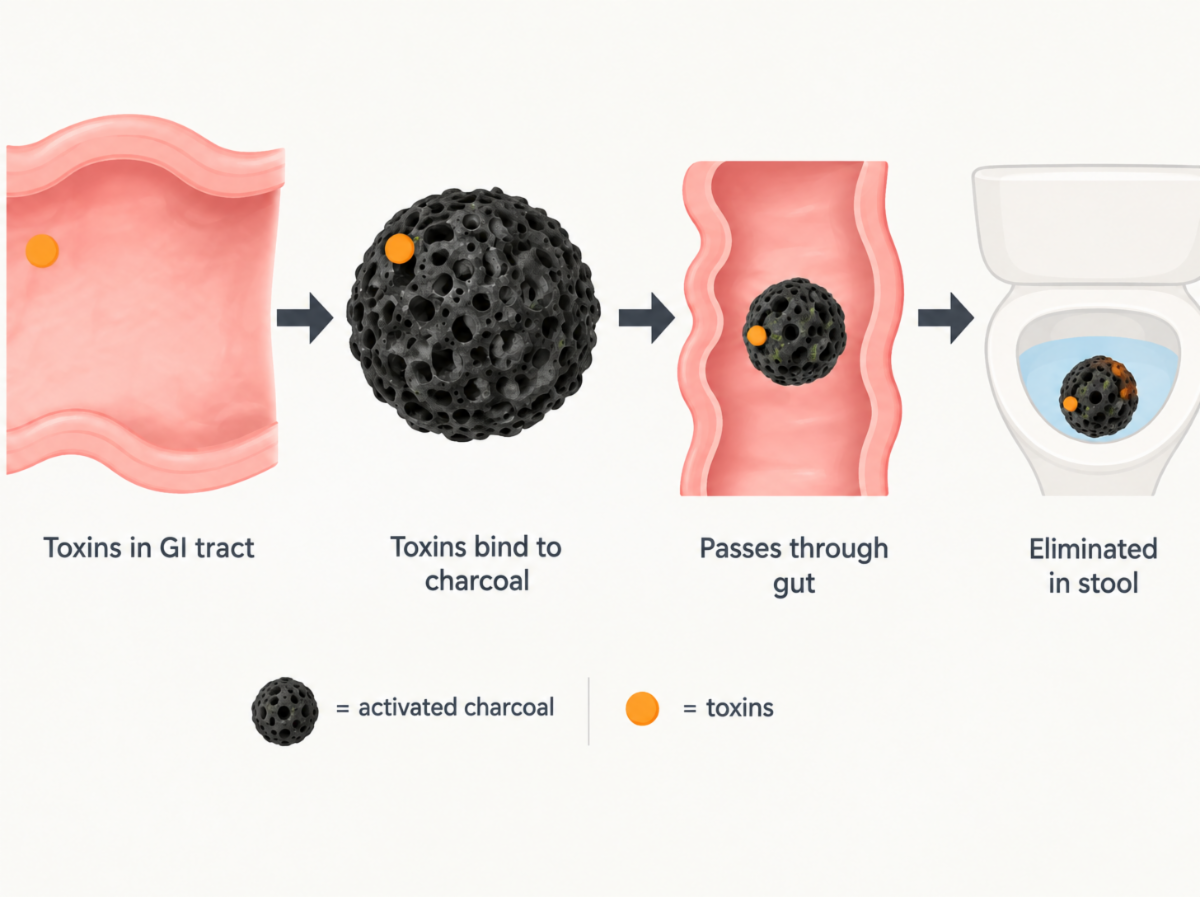
Activated charcoal (AC) is a highly processed, “activated” carbon material with an enormous surface area (over 1,000 m² per gram), created through steam or chemical treatment that opens millions of micropores. Clinically, it works through adsorption, meaning toxins bind to the charcoal’s surface via hydrophobic interactions and ionic attraction, preventing gastrointestinal absorption and promoting elimination in stool. It is most effective for large, lipophilic, non‑polar drugs such as many cardioactive agents, antidepressants, anticonvulsants, and extended‑release formulations, while offering little benefit for metals, alcohols, caustics, or hydrocarbons. Single‑dose AC can be used early after ingestion, and multiple‑dose charcoal can be considered for drugs with enterohepatic or enteroenteric recirculation, always balancing benefit against aspiration risk and using patient selection criteria (Taylor et al., 2026).


Good Practice Statements:


  • Do not perform endotracheal intubation just to administer AC​
  • Do not insert an NG or OG tube without airway protection to administer AC​
  • Single dose:
  • Adults: 50g
  • Pediatrics: 1g/kg
  • Multi-dose AC dosing is the same as single dose and may be repeated every 4 hours as a full dose or every 2 hours as a half-dose​
  • Additional doses may be given any time after the first dose when ongoing absorption is suspected
  • Apply adult indications and contraindications to pediatric patients

Patient Selection and Clinical Considerations

  • Anticipation of serious toxicity from ingestion of substance that binds charcoal
  • The patient is alert and cooperative
  • Airway reflexes intact or the airway is protected with an endotracheal tube
  • Single dose AC can be administered within an appropriate amount of time following ingestion
  • Multiple-dose activated charcoal (MDAC) considered in life-threatening ingestion of carbamazepine, dapsone, phenobarbital, phenytoin, quinine, valproic acid, salicylates, theophylline, and some hepatotoxic mushrooms

2026 Toxicology Position Statement Summary

Activated charcoal is appropriate up to 6 hours post-ingestion for many poisons. If ongoing absorption is suspected, which may occur, for example, with pharmacobezoar formation, certain modified-release preparations, or when drug burden exceeds the limits of solubility, then activated charcoal can be administered beyond 6 h post-ingestion for gastrointestinal decontamination. (ClinToxicol 2026, 64:6, 419-475).


Contraindications

  • Patients with an unprotected airway
  • Increased risk or severity of aspiration
  • Conditions associated with a high risk of gastrointestinal perforation or hemorrhage
  • Circumstances in which endoscopy is likely to be required
  • Presence of an intestinal obstruction
  • Ingestion of substances that are not meaningfully adsorbed by activated charcoal
  • Note: a patient may have both an indication and contraindication to AC administration

Written By: Jasmen White ,PharmD Candidate

Reviewed by: Dr. Goertemoeller, Dr. Pancioli, Dr. Hays, Dr. Yin

Edited by: Julia Conroy, MAEd, MCHES

For questions or to submit topic ideas contact:


OhioPoisonCenters@cchmc.org

OhioPoisonCenters.org

Subscribe to Poison Pearls


Email  Web