|
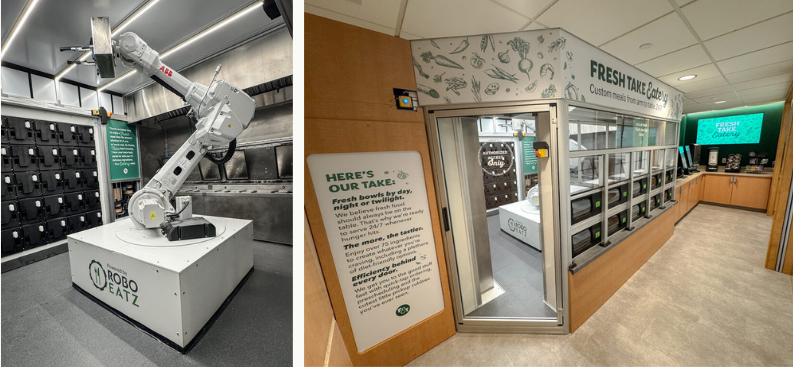
Of particular interest to institutional and commercial facility managers (FMs) exploring automated services for their dining facilities, WellSpan Health recently announced the launch of Fresh Take Eatery, a brand-new robotic dining system at WellSpan York Hospital. The AI-powered kitchen expands access to hot, healthy food choices for patients and team members, offering 24/7, on-demand food service and ensuring fresh meal availability regardless of time of day.
Developed in collaboration with leading technology companies RoboEatz and ABB Robotics, Fresh Take Eatery addresses a capacity gap at WellSpan York Hospital by effectively doubling dining capacity during peak periods. At just 400 square feet, Fresh Take Eatery occupies a fraction of the space that would be required for a traditional kitchen expansion needed to serve the 10,000 people on campus every day. The system’s capabilities include autonomous ingredient storage and retrieval, precision cooking, automated plating and serving, and self-cleaning functionality.
|
| |
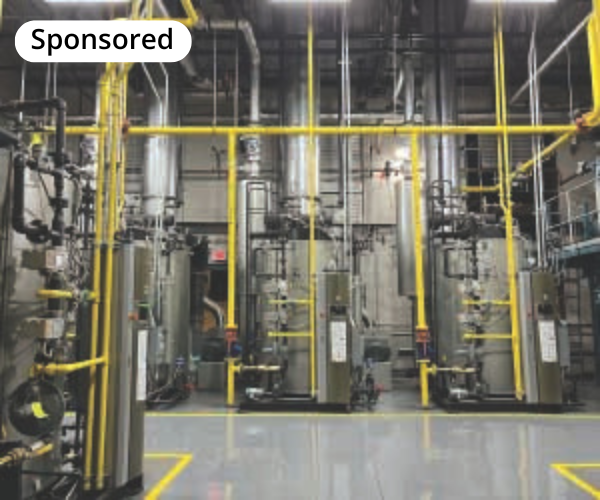
When steam reliability is critical, hospitals trust the Miura EX boiler
Healthcare facilities rely heavily on steam, and when steam production stops, numerous essential services are affected, including sterilization, HVAC, laundry, food service, and critical care support systems.
The Miura America EX Series dual-fuel steam boiler was designed with these crucial operating pressures in mind. The EX Series is particularly suitable for hospitals and other healthcare facilities that must maintain a secondary fuel source, a requirement for most acute care environments.
With just the push of a button, the EX boiler can go from a cold start to full steam output in less than five minutes, compared to the one to one-and-a-half hours required by traditional firetube boilers. In a healthcare setting, this level of responsiveness is not just a feature; it’s a non-negotiable lifeline.
| | |
Stinson, Anzea & Arc-Com Studios introduce their 2026 color trends
Stinson's color trends for 2026 are derived from three unique design perspectives. The studios of Stinson, Anzea, and Arc-Com have curated top color trends to spark creativity and help elevate designs. Taking cues from trends in fashion and industrial design, Stinson’s 2026 colors to watch provide a foundation to create fresh, inspired palettes for any environment:
Sangria: At the forefront is Sangria, a rich red tone rooted in depth and sophistication.
Cappuccino: Neutral palettes in 2026 are shifting from cool minimalism to warmer, inviting hues, exemplified by Cappuccino.
Sapphire: Deep, soothing blues like Sapphire have gained traction for their ability to dial up elegance while preserving calm.
Forest: As designers increasingly seek a link between the built environment and biophilic design principles, Forest emerges as a key color direction.
| | | | |
Hospital expenses grew twice as fast as hospital prices in 2025, finds AHA
The American Hospital Association (AHA) recently released the latest edition of its annual Costs of Caring report, which shows that hospitals and health systems continue to face increases in the costs of people, supplies, medicines and infrastructure needed to provide care and services to their communities. The report outlines key factors that are putting pressure on hospitals as they care for patients 24 hours a day, 7 days a week.
Key findings from the report include:
• Workforce spending remains top expense. Hospitals continue to invest heavily in workforce.
• Hospital costs to care for patients grew twice as fast as hospital prices. In 2025, total hospital expenses grew 7.5%, more than twice the rate of growth in hospital prices.
• Hospitals are caring for more patients who are sicker. From 2019 to 2024, 36% of expense growth reflected treating more patients, and 19% reflected treating sicker, more complex patients.
• Hospitals spend billions to address administrative burden from insurer claims denials, prior authorization. Hospitals in 2025 spent $43 billion trying to collect payments from insurers for care already delivered.
• Reimbursement for 56% of hospital services falls short of the cost of delivering care. OB, behavioral health, infectious disease, and burn/wound care are essential to health of community.
| | |
Outdoor structures foster connection and community well-being
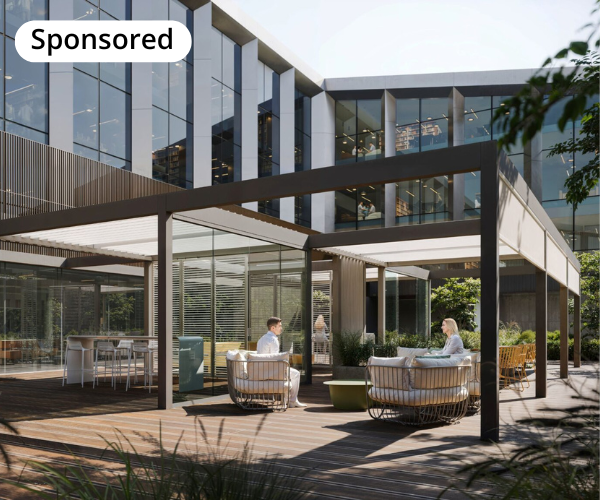
Across workplaces, campuses and mixed-use environments, the role of outdoor space is evolving. Once viewed primarily as an amenity or visual relief, the outdoors is increasingly understood as a meaningful extension of the facility itself — a setting where culture is expressed, relationships form and community takes shape.
Structured outdoor environments are central to this shift. When thoughtfully designed and integrated into a site, outdoor structures create places where people naturally gather, linger and connect. They support focused work and informal collaboration, accommodate programmed events and spontaneous encounters, and offer the simple but profound benefits of daylight, fresh air and connection to nature. For FMs, these environments represent an opportunity to shape how people interact with a site. Well-designed outdoor spaces expand not only a facility’s usable footprint, but also its ability to foster community participation and shared experience.
| | |
The healthcare sector is the hiring juggernaut in the U.S.
By Eileen McMorrow — Once again, the jobs report took an unexpected turn, rising to 178,000 in March 2026, a reversal from the 133,000 decline in February, and far better than the 59,000 job gain predicted by Dow Jones. Notably, the healthcare boom continues, adding 76,000 jobs. The FMLink Career Center lists over 1,400 healthcare built environment management jobs, such as:
• Director, Facilities Management, University Health Retama Hospital, San Antonio, TX
• FM Director, Encompass Health Rehabilitation Hospital of Montgomery, Camp Hill, AL
• Manager, Facilities-Ochsner Health, Baton Rouge, LA
• Medical Planner, Hoefer Wysocki Architecture, Orlando, FL
• Facilities Manager, Rarebreed Veterinary Partners, Portland, ME
• Facility Engineer Stationary Engineer 1C, Harris Health System, Portland, ME
• Manager Supply Chain-Broward Health, Nicklaus Children’s Health System, Ft. Lauderdale, FL
| | |
Marberry: Healthcare design is evolving. Are we explaining it enough?
By Sara Marberry — Last week at an event hosted by the International Interior Design Association (IIDA) and the American Institute of Architects Chicago (AIA Chicago), I heard architects and designers talk about one of my favorite subjects: healthcare design.
The conversations reminded me that healthcare design is evolving from institutional, clinical environments to community-integrated, experience-driven ecosystems — but the industry must better balance cost, safety, technology, and storytelling to fully realize its impact.
Here are four key insights:
1. Fancy-schmancy
2. Timing is everything
3. Design as an enabler for tech
4. Healthy building – huh?
| | |
Using real-time insight to influence sustainable kitchen operations
Just before noon, a university dining hall hums with the urgency of feeding thousands of people within a narrow service window. Steam rises from sheet pans, timers chirp at opposite ends of the line and conversations overlap beneath the sound of the hood vents. In the middle of it all is a chef with a clipboard, trying to jot down numbers on a sheet of paper that never stays dry for long.
While the setting varies, from universities and hospitals to corporate campuses and public institutions, the challenge is consistent. Facility management teams are asked to manage food service amid rising costs, tightening regulations and increasing pressure to document sustainability outcomes. What differs is not the problem, but the visibility available to manage it. Tools now allow kitchens to track production, serving, donation and leftovers in real time, with minimal disruption to service.
| | FMLink, powered by The McMorrow Reports | | | | |